
One of the most influential scientists of all
- Slides: 18
• One of the most influential scientists of all time • English physicist, mathematician, astronomer, natural philosopher, alchemist, and theologian • Invented a reflecting telescope, which brought him much fame and attention (1668) • Wrote Principia Mathematica, one of the most influential science books in history (discusses universal gravitation and laws of motion) (1687)
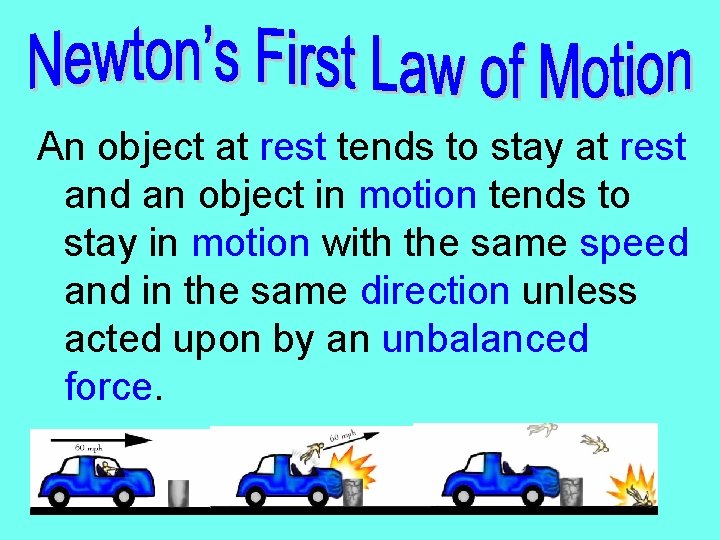
An object at rest tends to stay at rest and an object in motion tends to stay in motion with the same speed and in the same direction unless acted upon by an unbalanced force.
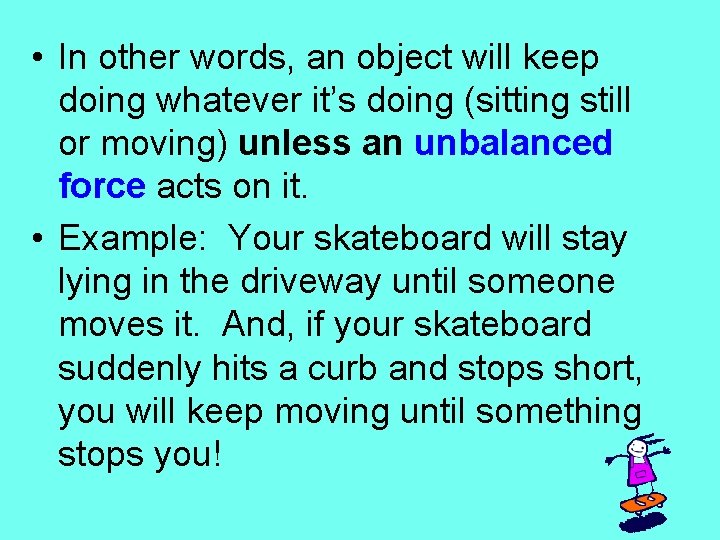
• In other words, an object will keep doing whatever it’s doing (sitting still or moving) unless an unbalanced force acts on it. • Example: Your skateboard will stay lying in the driveway until someone moves it. And, if your skateboard suddenly hits a curb and stops short, you will keep moving until something stops you!
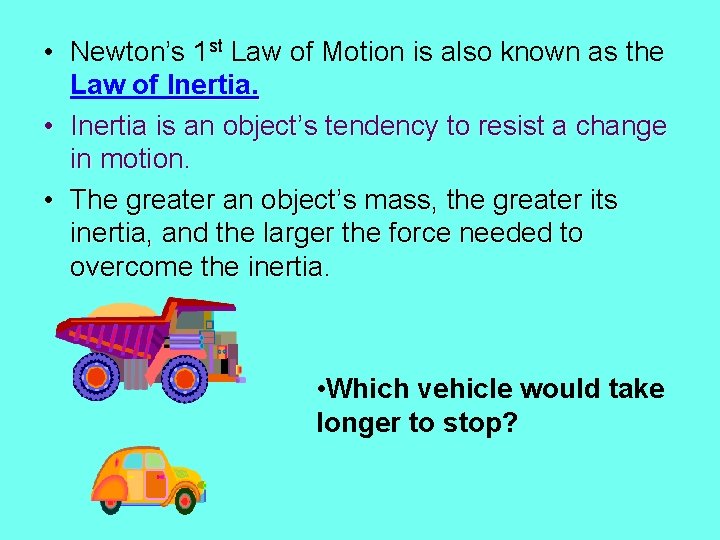
• Newton’s 1 st Law of Motion is also known as the Law of Inertia. • Inertia is an object’s tendency to resist a change in motion. • The greater an object’s mass, the greater its inertia, and the larger the force needed to overcome the inertia. • Which vehicle would take longer to stop?
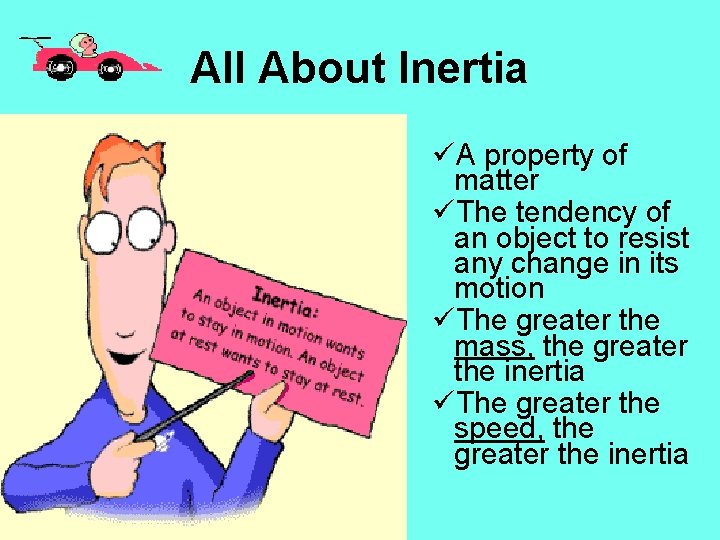
All About Inertia üA property of matter üThe tendency of an object to resist any change in its motion üThe greater the mass, the greater the inertia üThe greater the speed, the greater the inertia
Examples of Newton’s 1 st Law: The Law of Inertia Think about what you have learned about Newton’s 1 st Law, the Law of Inertia. With a partner, think of an example to share.
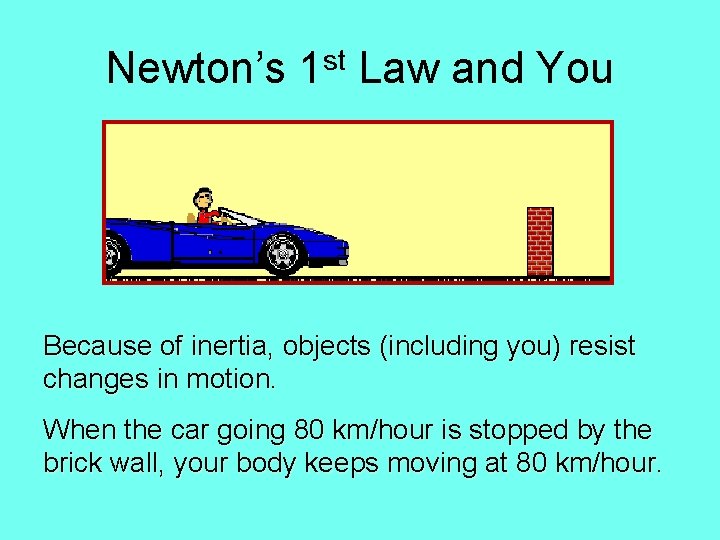
Newton’s 1 st Law and You Because of inertia, objects (including you) resist changes in motion. When the car going 80 km/hour is stopped by the brick wall, your body keeps moving at 80 km/hour.
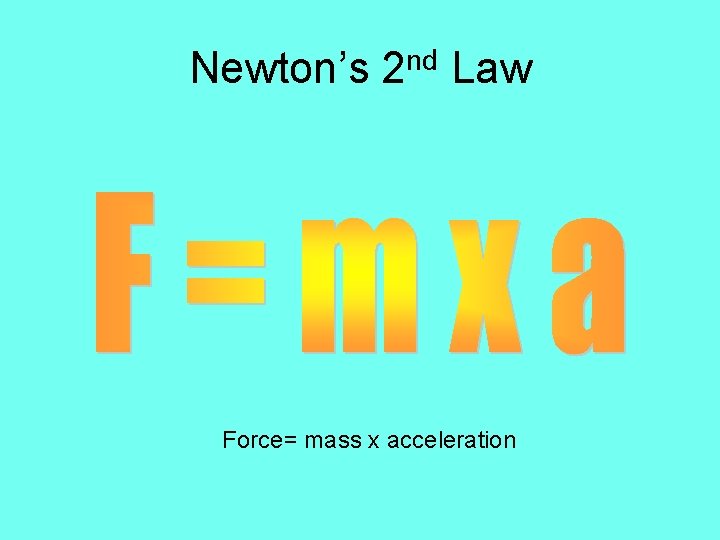
Newton’s 2 nd Law Force= mass x acceleration
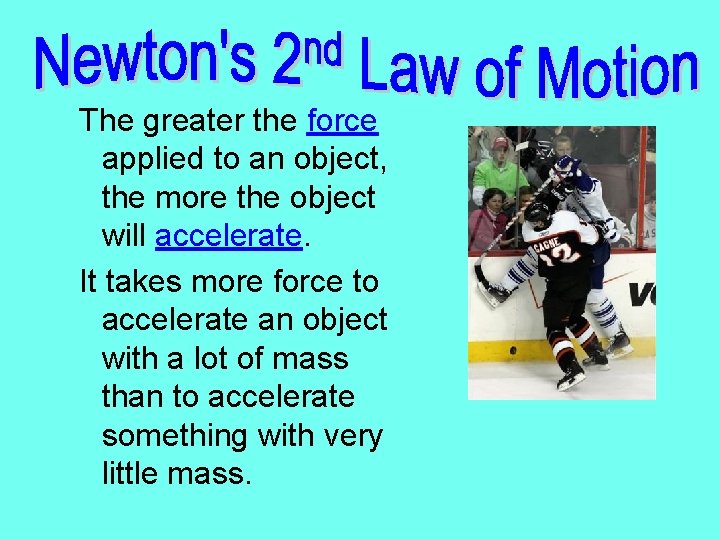
The greater the force applied to an object, the more the object will accelerate. It takes more force to accelerate an object with a lot of mass than to accelerate something with very little mass.
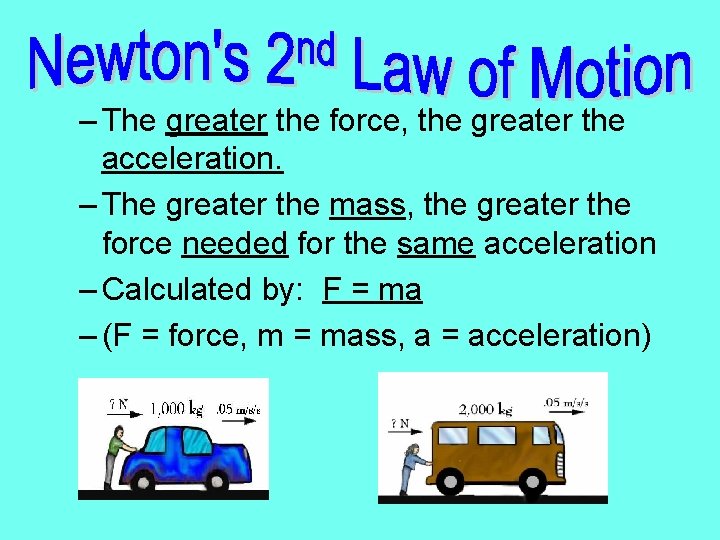
– The greater the force, the greater the acceleration. – The greater the mass, the greater the force needed for the same acceleration – Calculated by: F = ma – (F = force, m = mass, a = acceleration)
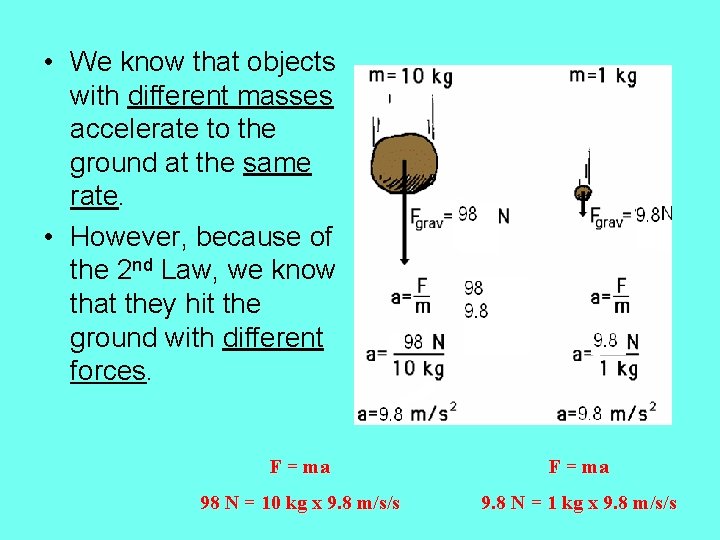
• We know that objects with different masses accelerate to the ground at the same rate. • However, because of the 2 nd Law, we know that they hit the ground with different forces. F = ma 98 N = 10 kg x 9. 8 m/s/s 9. 8 N = 1 kg x 9. 8 m/s/s
Examples of Newton’s 2 nd Law Think about what you have learned about Newton’s 2 nd Law. With a partner, think of an example to share.
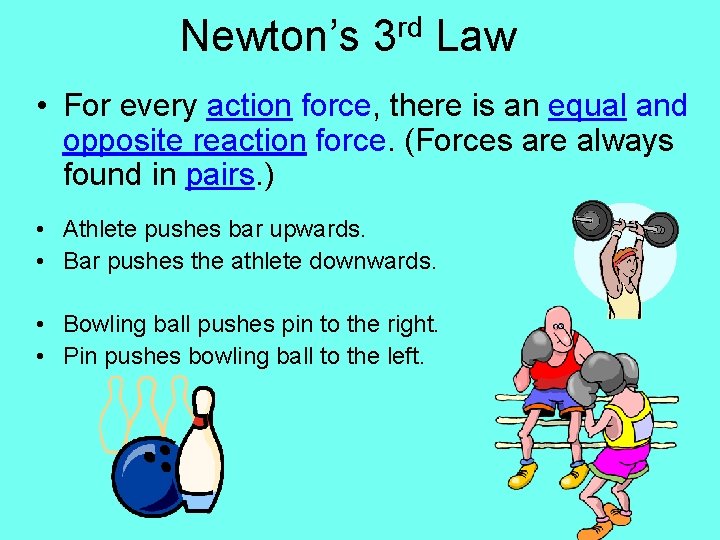
Newton’s 3 rd Law • For every action force, there is an equal and opposite reaction force. (Forces are always found in pairs. ) • Athlete pushes bar upwards. • Bar pushes the athlete downwards. • Bowling ball pushes pin to the right. • Pin pushes bowling ball to the left.
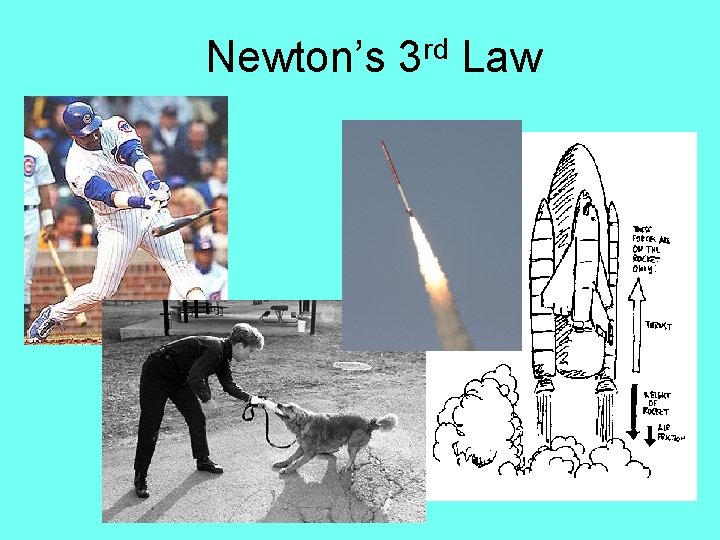
Newton’s 3 rd Law
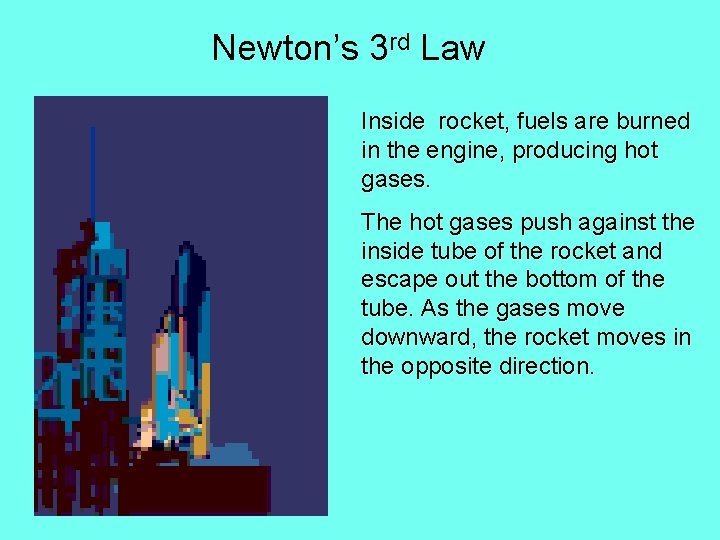
Newton’s 3 rd Law Inside rocket, fuels are burned in the engine, producing hot gases. The hot gases push against the inside tube of the rocket and escape out the bottom of the tube. As the gases move downward, the rocket moves in the opposite direction.
Examples 3 rd Law Think about what you have learned about Newton’s 3 rd Law. With a partner, think of an example to share.
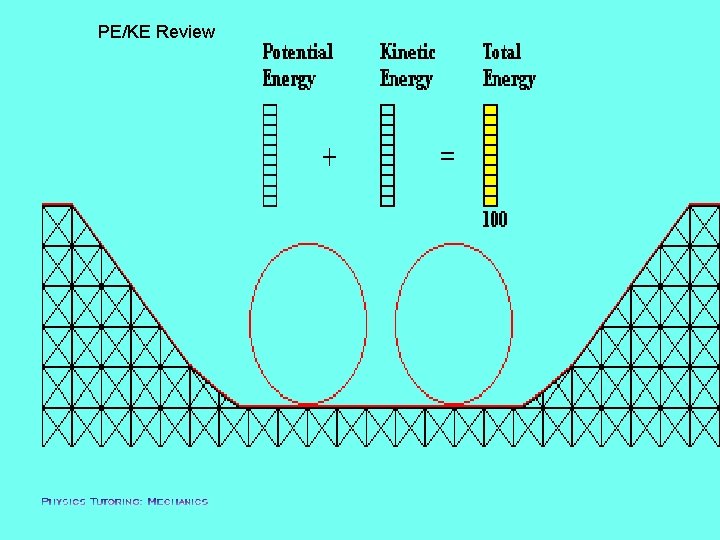
PE/KE Review