
ONE HEALTH PRINCIPLES AND CONCEPTS RISK COMMUNICATION LEARNING




- Slides: 32
ONE HEALTH PRINCIPLES AND CONCEPTS RISK COMMUNICATION
LEARNING OBJECTIVES § Introduce risk communication best practices § Practice key message development § Practice risk communication skills through examples
WHAT IS COMMUNICATION?
WHAT IS RISK COMMUNICATION?
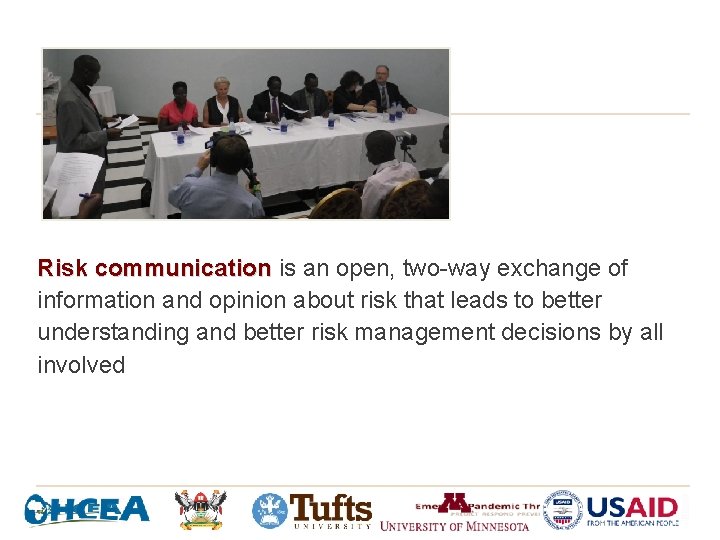
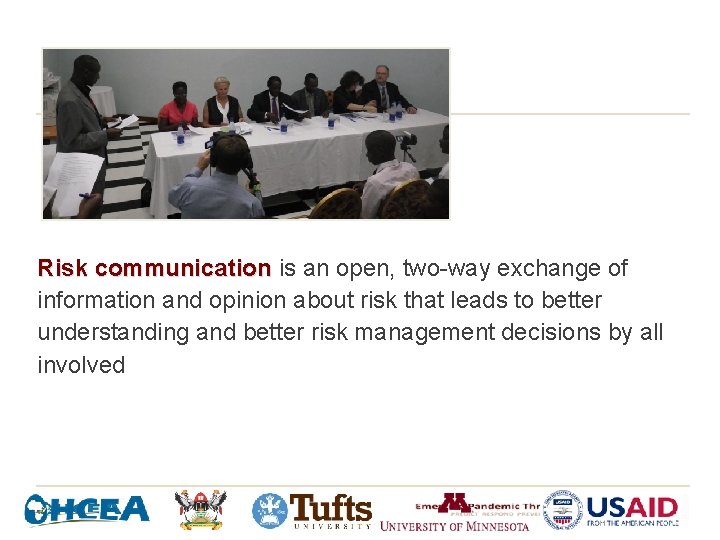
. Risk communication is an open, two-way exchange of information and opinion about risk that leads to better understanding and better risk management decisions by all involved
RISK ANALYSIS PARADIGM ― Everything we do involves risk ― Zero risk is unachievable ― Options exist for managing every risk
RISK ANALYSIS PARADIGM Risk Assessment Risk Management Risk Communication 1. Risk Assessment : § Hazards are identified § Risks are determined 2. Risk Management: § Options are identified § Best option chosen and implemented 3. Risk Communication: § Open exchange of information resulting in better decisions about risk and its management
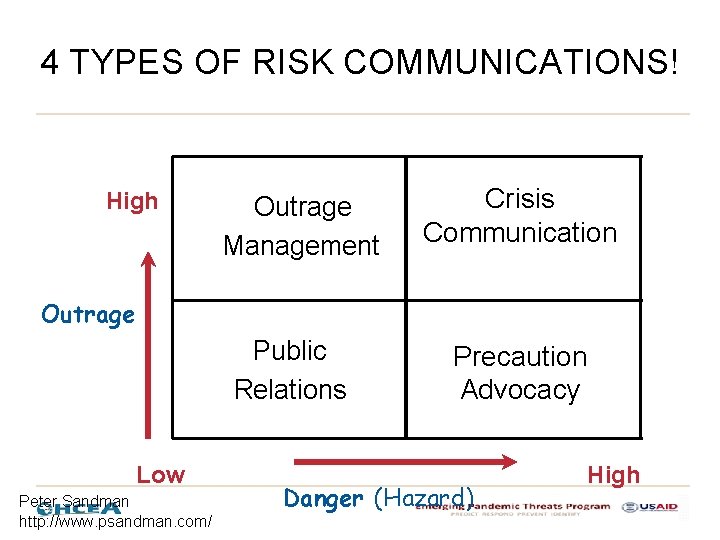
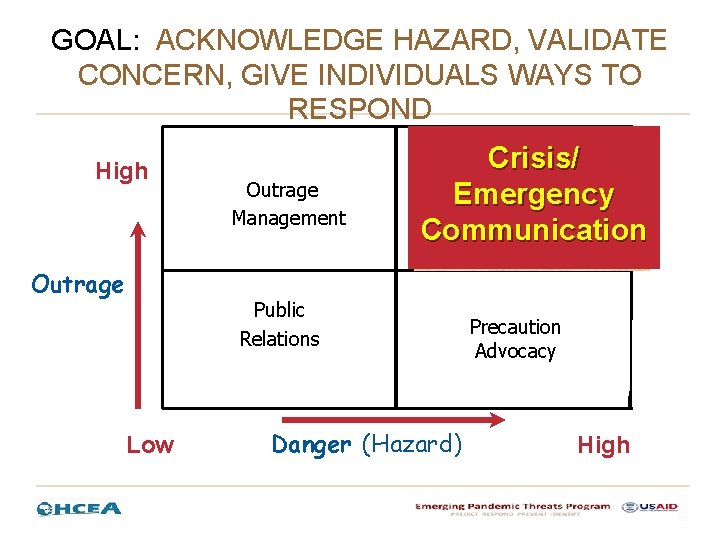
4 TYPES OF RISK COMMUNICATIONS! High Outrage Management Crisis Communication Outrage Public Relations Low Peter Sandman http: //www. psandman. com/ Precaution Advocacy Danger (Hazard) High
SUMMARY § Risk communication & risk analysis paradigm § Our perception of risk is a combination of facts (objective) and emotion (subjective). § Appreciate the disconnect between science and public perceptions of risk
APPLIED QUESTION #1 THINK, PAIR, SHARE § Moldy maize meal has been put into animal feed. § This can cause Aflatoxicosis, a fungal intoxication that will damage the liver. § Once the animal shows clinical signs such as poor appetite and jaundice, treatment may not help. § Who are the most important audiences to communicate this danger / risk to? § What communication methods will you use?
GOALS OF RISK COMMUNICATION § Decrease outrage! § Take into account emotional response to event § Empower audiences to make informed decisions • Discourage negative behavior • Encourage constructive responses to risk or danger Trust - one of the most important factors in determining the effectiveness of risk communication
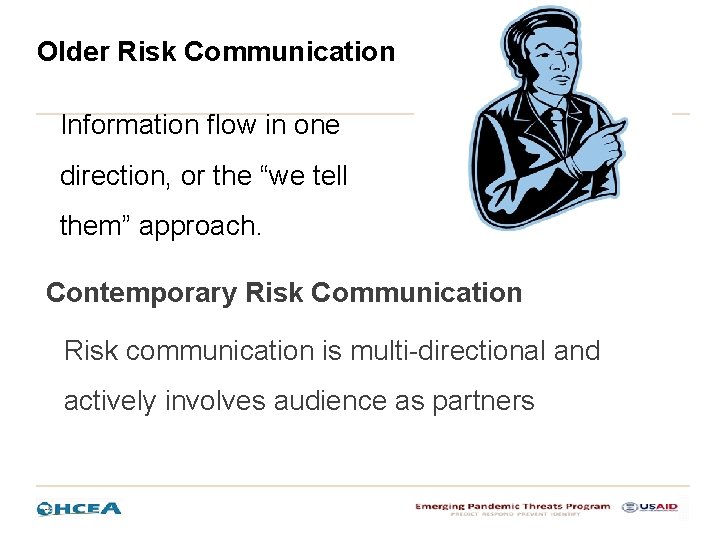
Older Risk Communication Information flow in one direction, or the “we tell them” approach. Contemporary Risk Communication Risk communication is multi-directional and actively involves audience as partners
RISK COMMUNICATION BEST PRACTICES (1) § Remember communication is two way street § Listen to your audience and seek understanding § Communicate with empathy and concern § Don’t assume § Be aware of cultural and language differences
RISK COMMUNICATION BEST PRACTICES (2) § Use appropriate terminology § Accept uncertainty § Use key messages § Provide resources for more information § Foster partnerships § Remain accessible
MYTHS! § Communicating risk is more likely to harm people versus calm them
MYTHS! § Communicating risk is more likely to harm people versus calm them
MYTHS! § Communication is less important than education – if people knew the true risks they would accept them
MYTHS! § Communication is less important than education – if people knew the true risks they would accept them
MYTHS! § Issues arising in crisis are too difficult for the public to understand, so it is better to say nothing or just tell them what to do
MYTHS! § Issues arising in crisis are too difficult for the public to understand, so it is better to say nothing or just tell them what to do
MYTHS! § Risk communication is someone else’s job / problem
MYTHS! § Risk communication is someone else’s job / problem
SUMMARY § Risk communication is an open, two-way exchange of information and opinion about risk which leads to better understanding and better risk management decisions. § Using risk communication best practices can help manage risks better
APPLIED QUESTION #1 THINK, PAIR, SHARE § You are spokesperson for the National Rift Valley Fever Taskforce leading government response to an outbreak in wildlife in a national park. § Following the initial press release about the outbreak you are miss-quoted in international media - miss-information which may cause undue concern or alarm (outrage!). § As a spokesperson how should you address inconsistent messages about the outbreak?
REDUCING OUTRAGE § Do not wait until all the answers are in! § Communicate ― What you know ― What you don’t know ― What you are doing to address the situation
GOAL: ACKNOWLEDGE HAZARD, VALIDATE CONCERN, GIVE INDIVIDUALS WAYS TO RESPOND High Outrage Management Crisis/ Emergency Communication Public Relations Low Danger (Hazard) Precaution Advocacy High
POLISHING YOUR “ELEVATOR PITCH” For use when you only have a minute or two with a key stakeholder!
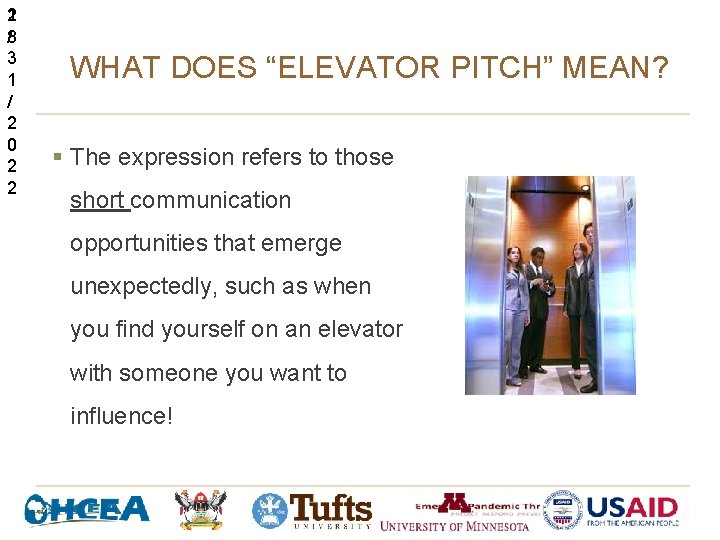
2 1 / 8 3 1 / 2 0 2 2 WHAT DOES “ELEVATOR PITCH” MEAN? § The expression refers to those short communication opportunities that emerge unexpectedly, such as when you find yourself on an elevator with someone you want to influence!
2 1 / 9 3 1 / 2 0 2 2 KEYS TO A GOOD ‘ELEVATOR PITCH’ 1. Keep it short (the fewer words the better) 2. Make it catchy (to capture their attention) 3. Use memorable phrases 4. Focus on 3 key messages 5. Wrap it up with a punch line!
3 1 / 0 3 1 / 2 0 2 2 EXAMPLE § “Thank you Mr/Mrs/Doctor xxx, your support inspired us to do more to help our country § The training you supported significantly improved our ability to respond to new diseases § Ten more teams of medical doctors, nurses, veterinarians and wildlife specialist now stand ready to react as soon as a deadly disease occurs § Please keep pushing us so we can get even better!”
. Risk communication is an open, two-way exchange of information and opinion about risk that leads to better understanding and better risk management decisions by all involved