
Onderwijsparade 2015 Keynote lecture Stella Cottrell Study skills


- Slides: 87
Onderwijsparade 2015 Keynote lecture Stella Cottrell
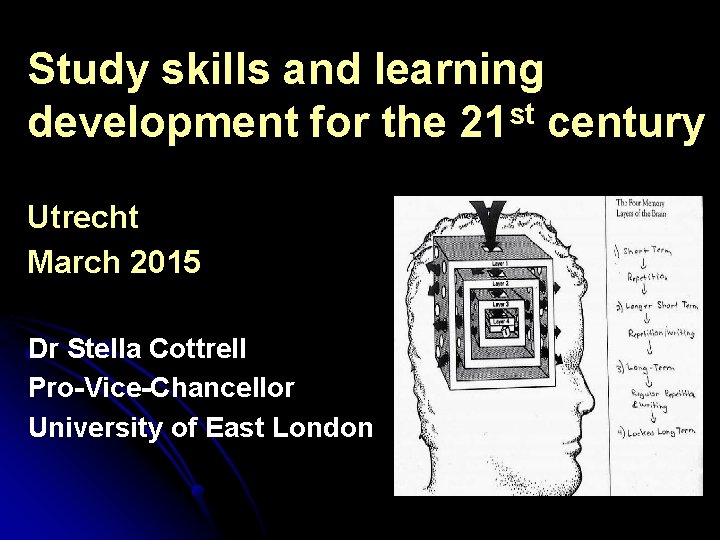
Study skills and learning st development for the 21 century Utrecht March 2015 Dr Stella Cottrell Pro-Vice-Chancellor University of East London
Study skills and learning development… The shape of things to come…?
Study skills and learning development… The shape of things to come…?
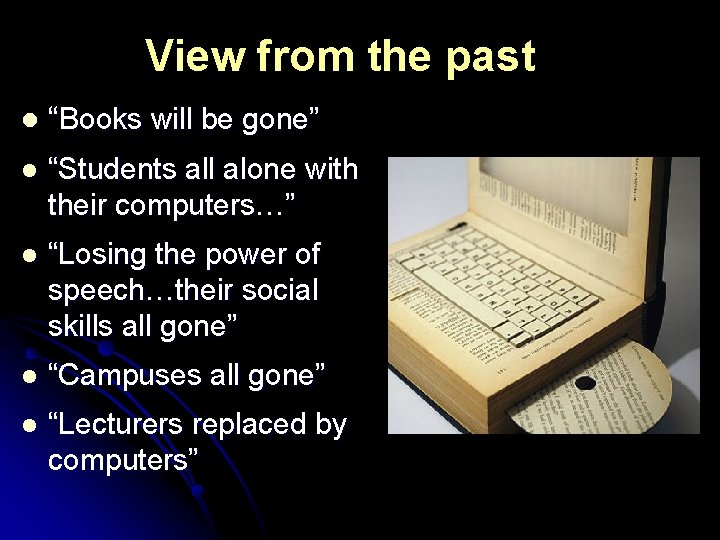
View from the past l “Books will be gone” l “Students all alone with their computers…” l “Losing the power of speech…their social skills all gone” l “Campuses all gone” l “Lecturers replaced by computers”
Outline Top 10 trends in study skills for the 21 st century ‘Take-aways’
10. Study skills will matter more….
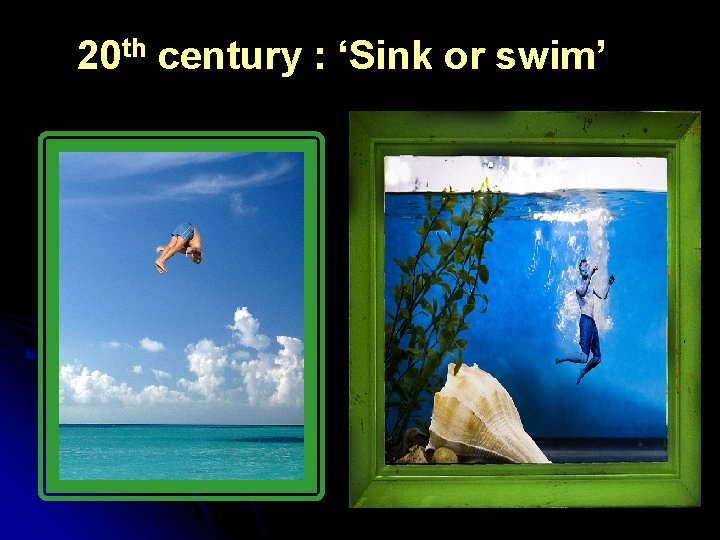
20 th century : ‘Sink or swim’
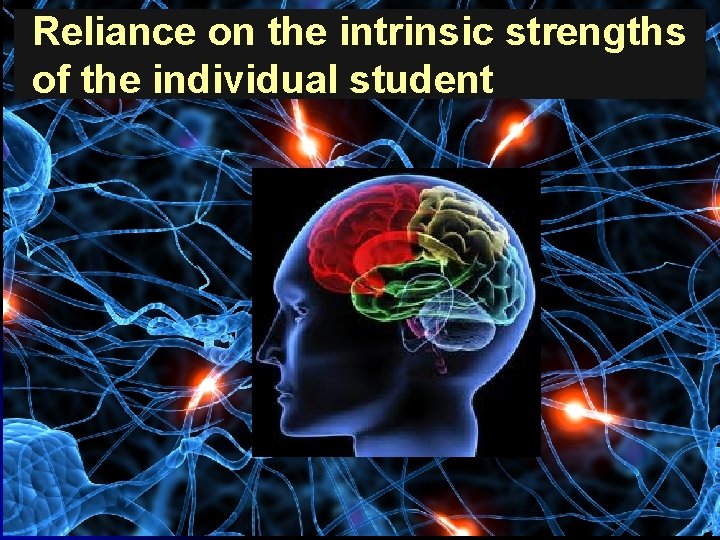
Reliance on the intrinsic strengths of the individual student
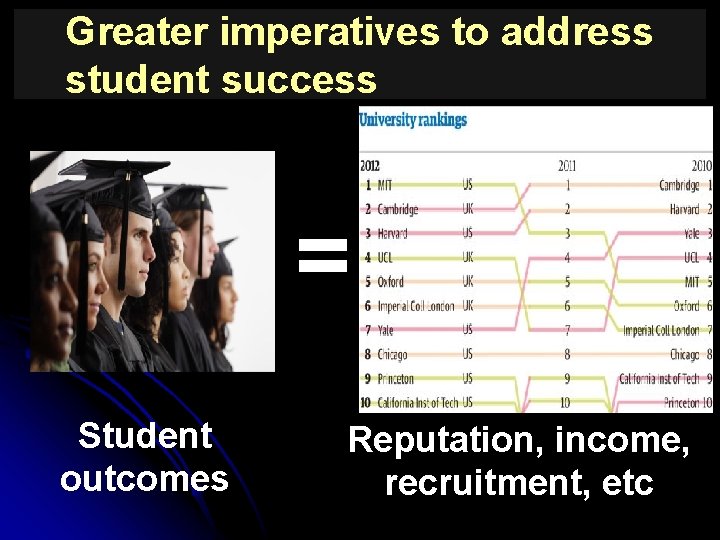
Greater imperatives to address student success = Student outcomes Reputation, income, recruitment, etc
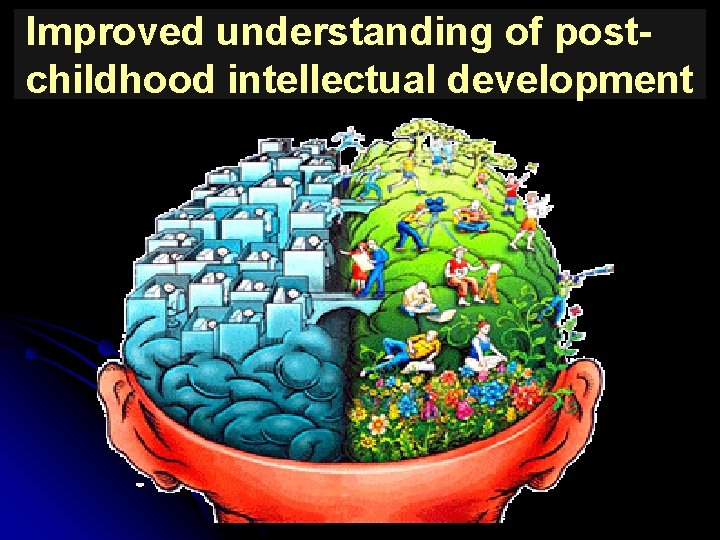
Improved understanding of postchildhood intellectual development
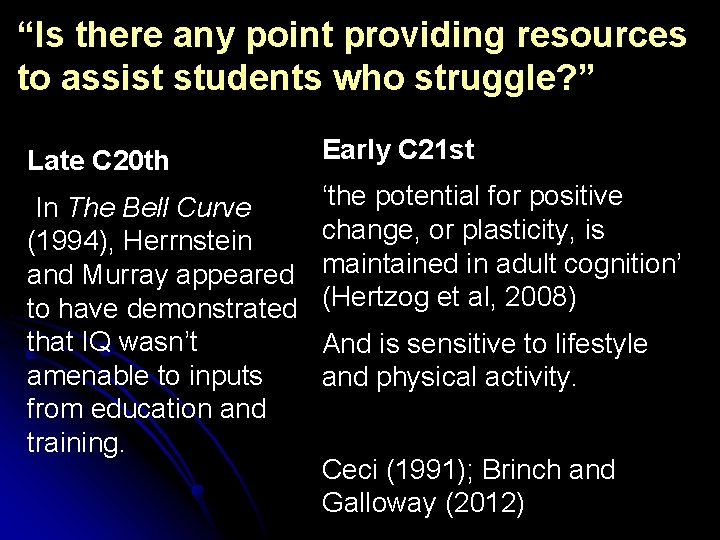
“Is there any point providing resources to assist students who struggle? ” Late C 20 th Early C 21 st In The Bell Curve (1994), Herrnstein and Murray appeared to have demonstrated that IQ wasn’t amenable to inputs from education and training. ‘the potential for positive change, or plasticity, is maintained in adult cognition’ (Hertzog et al, 2008) And is sensitive to lifestyle and physical activity. Ceci (1991); Brinch and Galloway (2012)
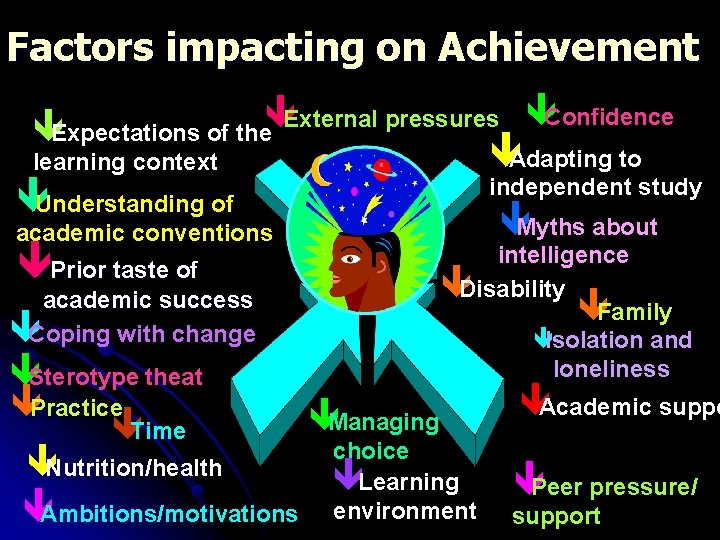
Factors impacting on Achievement Confidence ê External pressures ê êExpectations of the learning context êUnderstanding of academic conventions êPrior taste of academic success êCoping with change êAdapting to independent study êMyths about intelligence êDisability êFamily êIsolation and loneliness êSterotype theat ê Academic suppo êPractice êManaging êTime choice êNutrition/health êLearning êPeer pressure/ êAmbitions/motivations environment support
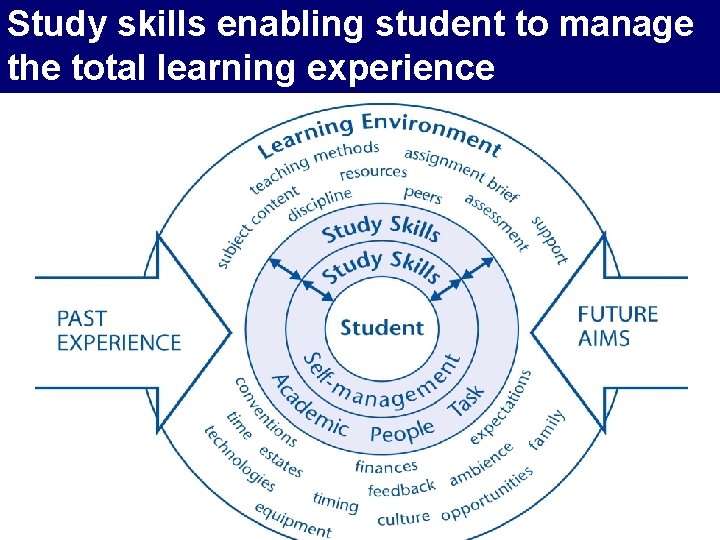
Study skills enabling student to manage the total learning experience
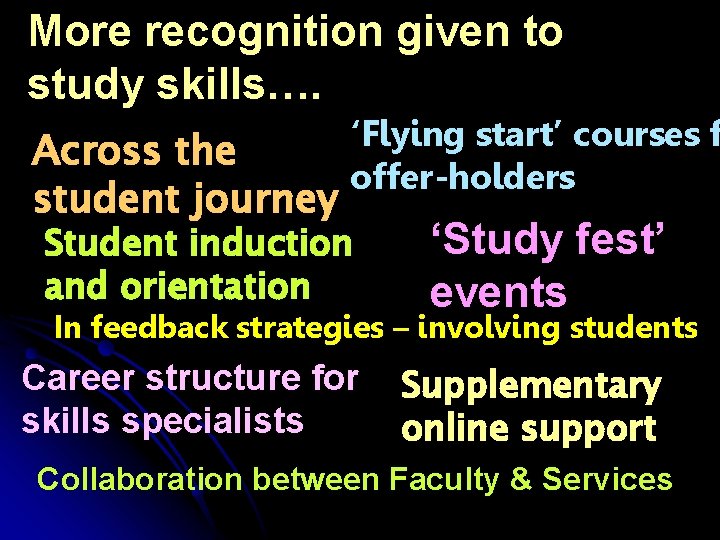
More recognition given to study skills…. Across the student journey ‘Flying start’ courses f offer-holders Student induction and orientation ‘Study fest’ events Career structure for skills specialists Supplementary online support In feedback strategies – involving students Collaboration between Faculty & Services
9. Increase in multi-faceted, multi-channel, ‘whole university’ approaches
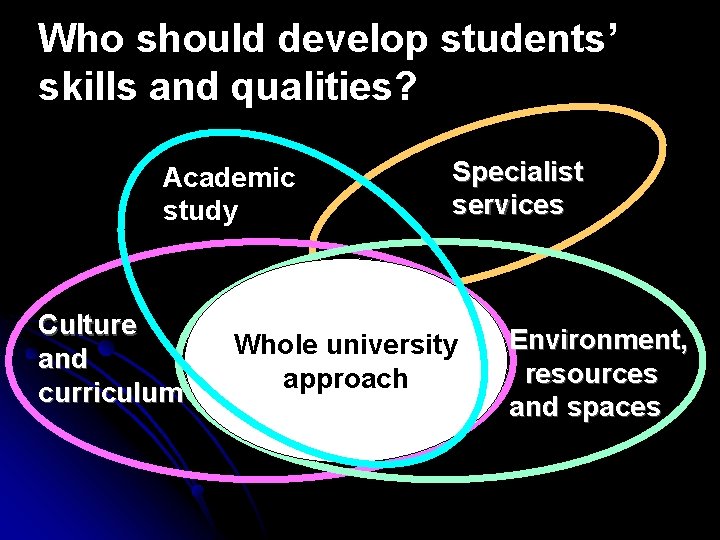
Who should develop students’ skills and qualities? Academic study Culture and curriculum Specialist services Whole university approach Environment, resources and spaces
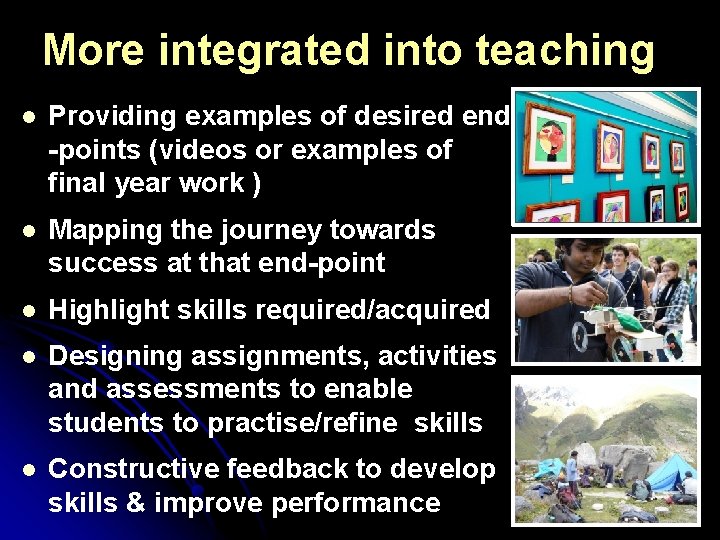
More integrated into teaching l Providing examples of desired end -points (videos or examples of final year work ) l Mapping the journey towards success at that end-point l Highlight skills required/acquired l Designing assignments, activities and assessments to enable students to practise/refine skills l Constructive feedback to develop skills & improve performance
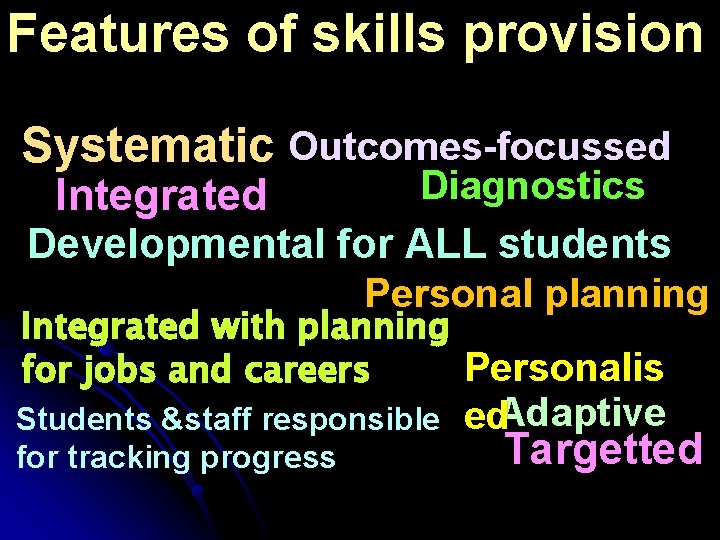
Features of skills provision Systematic Outcomes-focussed Diagnostics Integrated Developmental for ALL students Personal planning Integrated with planning Personalis for jobs and careers Students &staff responsible for tracking progress ed. Adaptive Targetted
8. Use of student analytics
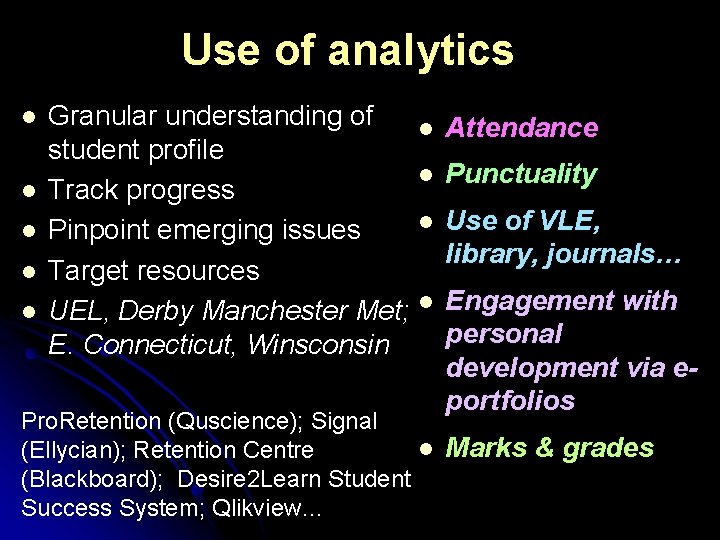
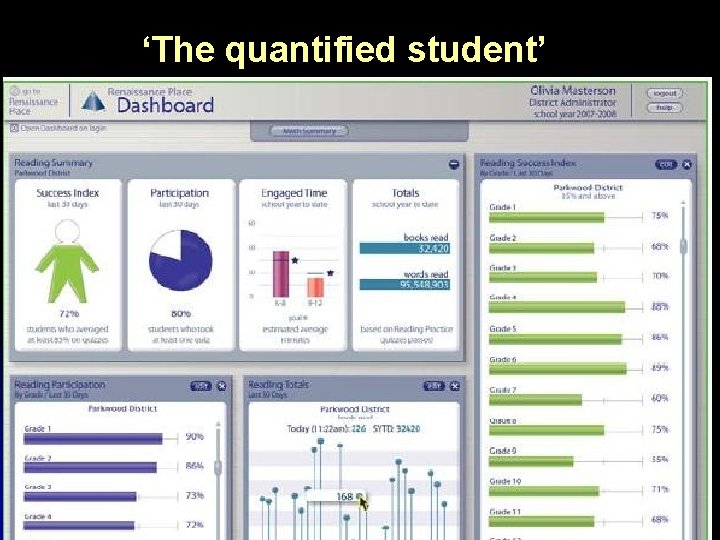
Use of analytics l l l Granular understanding of student profile Track progress Pinpoint emerging issues Target resources UEL, Derby Manchester Met; E. Connecticut, Winsconsin l Attendance l Punctuality l Use of VLE, library, journals… l Engagement with personal development via eportfolios Pro. Retention (Quscience); Signal l Marks & grades (Ellycian); Retention Centre (Blackboard); Desire 2 Learn Student Success System; Qlikview…
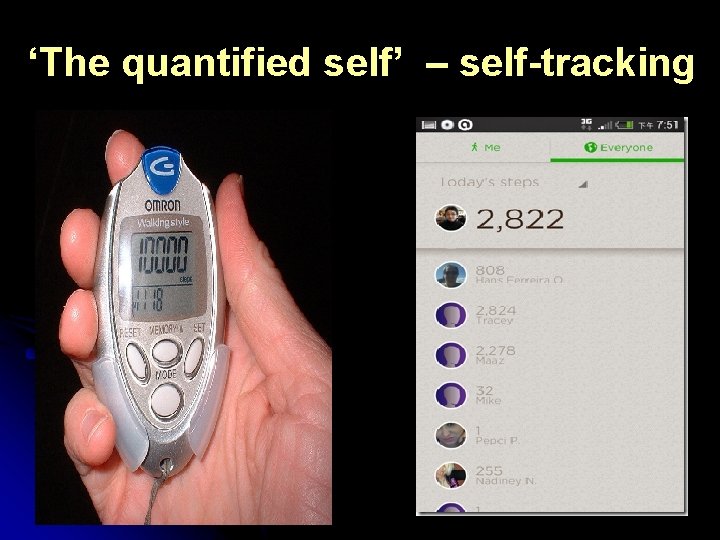
‘The quantified self’ – self-tracking
‘The quantified student’
7. Greater awareness of the impact of the relationship between the quality of teaching, study skills needs, and student outcomes
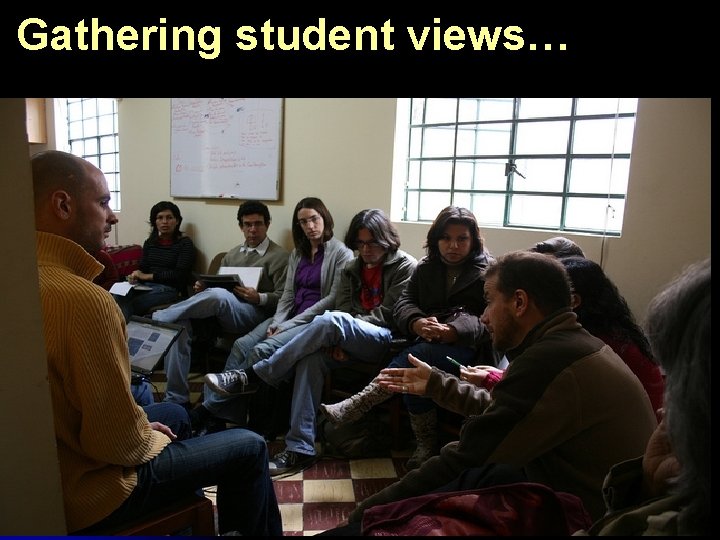
Gathering student views…
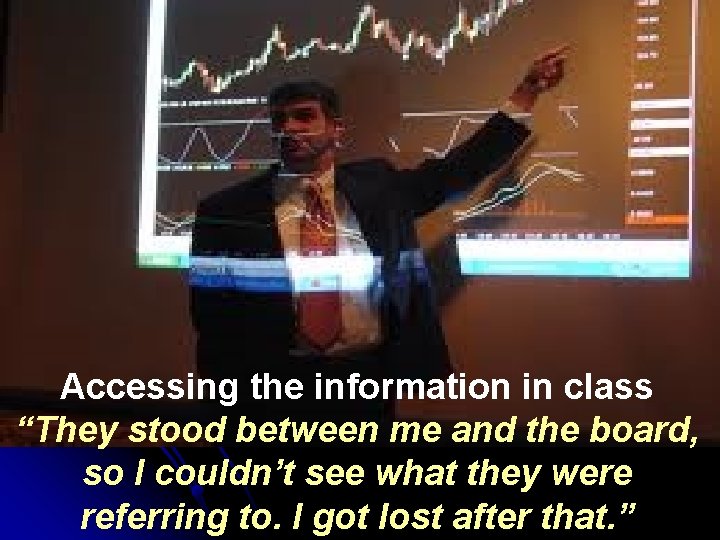
Accessing the information in class “They stood between me and the board, so I couldn’t see what they were referring to. I got lost after that. ”
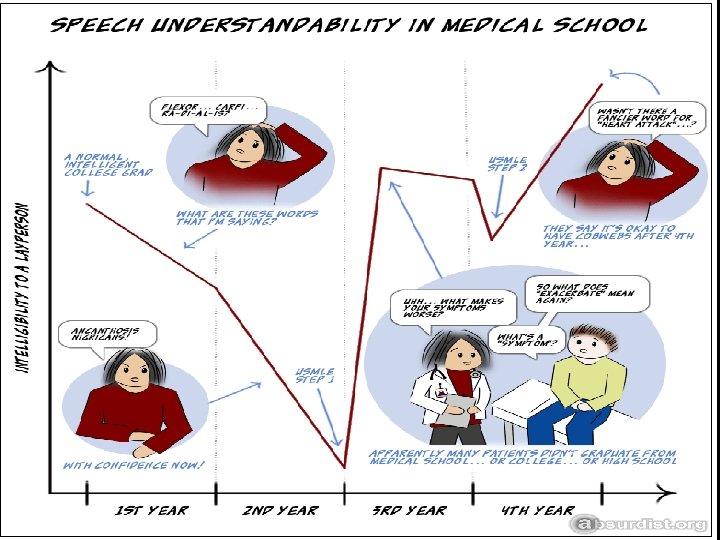
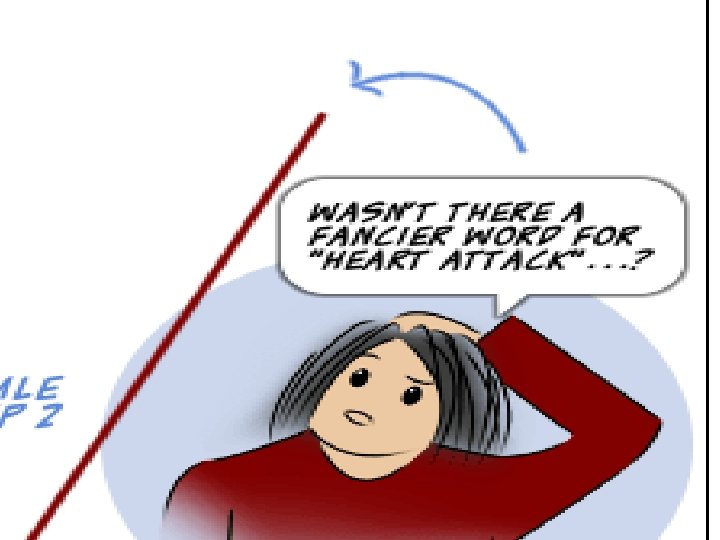
“I couldn’t make sense of what she was saying”
“I couldn’t make sense of what she was saying”
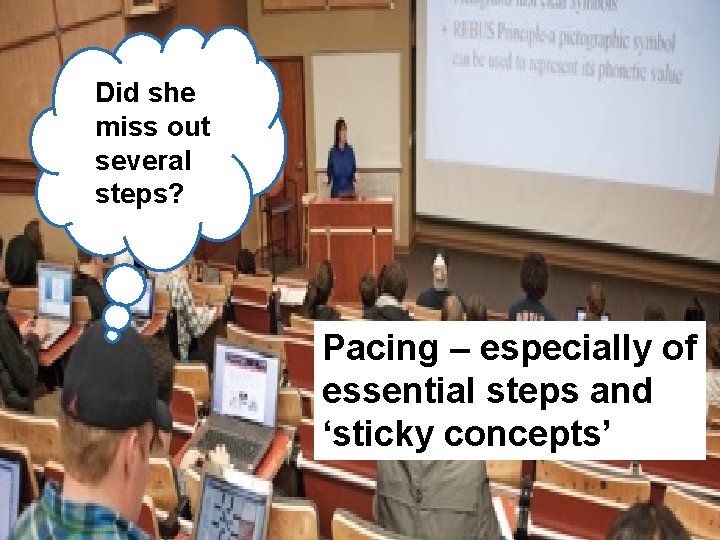
Did she miss out several steps? Pacing – especially of essential steps and ‘sticky concepts’
Often lecturers try to cram too much information onto a single slide and dense text or charts in a font size too small to read. Much like this slide in fact. You’re end up with probably squinting at it now, trying to make sense of what is written down and hoping that I am not talking about something important at the same time because it’s impossible to focus on both at once. If you are really unlucky I am reading this out at the same time, possibly even in monotone, and you might find that the will to live is slowly slipping away from you. Is it? Are you still with me or have you dropped off? I said, have you dropped off? Oh, you are still there - where did you get up to? It doesn’t really matter anyway as I have realised that at this rate I am not going to get through all of my slides in time so I am going to have to speed up and start reading through this really quickly. In a couple of slides time I am going to give up on the reading altogether and start flicking through the slides at a speed fast enough to make you dizzy. You never know, learning might be taking place subliminally. “
“We only have a few minutes so I’ll need to speed up. ” Often lecturers try to cram too much information onto a single slide and end up with dense text in a font size too small to read. Much like this slide in fact. You’re probably squinting at it now, trying to make sense of what is written down and hoping that I am not talking about something important at the same time because it’s impossible to focus on both at once. If you are really unlucky I am reading this out at the same time, possibly even in monotone, and you might find that the will to live is slowly slipping away from you. Is it? Are you still with me or have you dropped off? I said, have you dropped off? Oh, you are still there - where did you get up to? It doesn’t really matter anyway as I have realised that at this rate I am not going to get through all of my slides in time so I am going to have to speed up and read very fast! Soon, I am going to give up on the reading altogether and start flicking through the slides just so you know they are there - fast enough to make you dizzy. You never know, learning might be taking place subliminally.
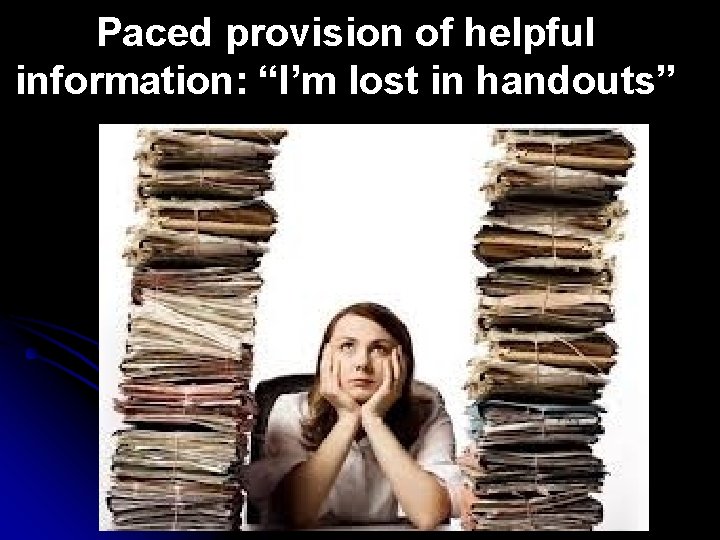
Paced provision of helpful information: “I’m lost in handouts”
6. HEIs will look to nurture a wider range of skills, qualities, and behaviours …
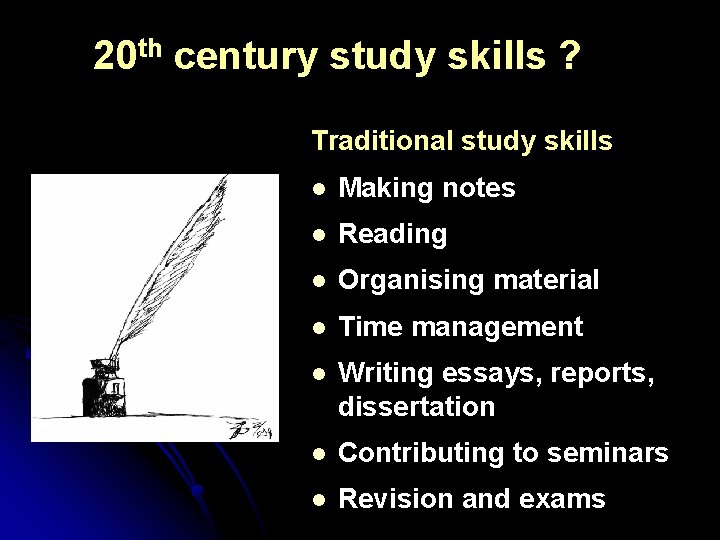
20 th century study skills ? Traditional study skills l Making notes l Reading l Organising material l Time management l Writing essays, reports, dissertation l Contributing to seminars l Revision and exams
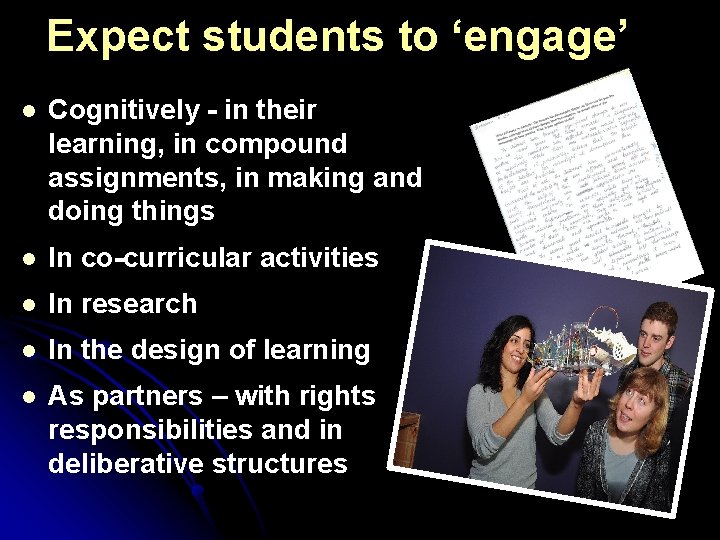
Expect students to ‘engage’ l Cognitively - in their learning, in compound assignments, in making and doing things l In co-curricular activities l In research l In the design of learning l As partners – with rights responsibilities and in deliberative structures &
What skills do employers seek in graduates? ‘Future Fit’(CBI 2009) Confederation of British Industry Self-management l Awareness of business & customer issues l Ability to work within a team l Written communication l Numerical skills l Ability to solve problems and generate solutions l
l Internationalisation l Mobility l ‘Global issues’ l Cross-disciplinary & trans-national
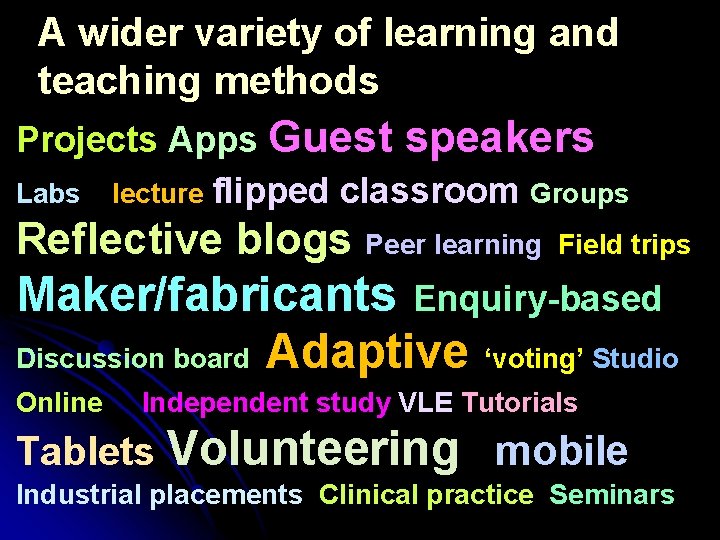
A wider variety of learning and teaching methods Projects Apps Guest speakers Labs lecture flipped classroom Groups Reflective blogs Peer learning Field trips Maker/fabricants Enquiry-based Discussion board Adaptive ‘voting’ Studio Online Independent study VLE Tutorials Tablets Volunteering mobile Industrial placements Clinical practice Seminars
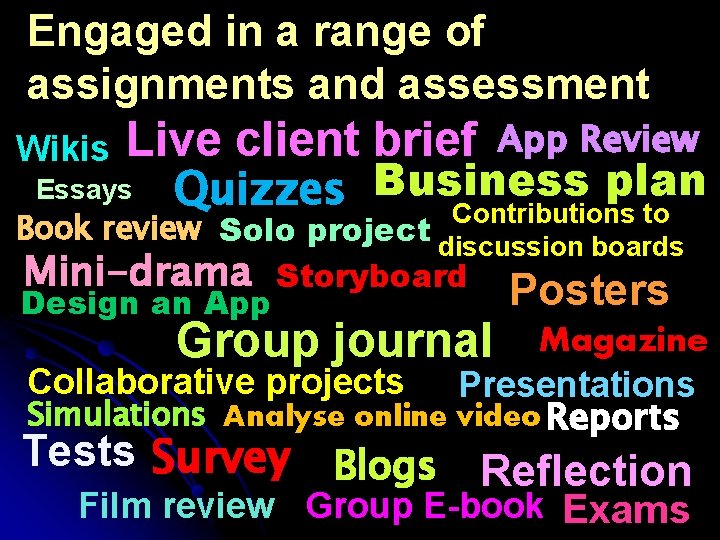
Engaged in a range of assignments and assessment Wikis Live client brief Essays App Review plan Quizzes Business Contributions to Book review Solo project discussion boards Mini-drama Storyboard Posters Design an App Group journal Magazine Collaborative projects Presentations Simulations Analyse online video Reports Tests Survey Blogs Reflection Film review Group E-book Exams
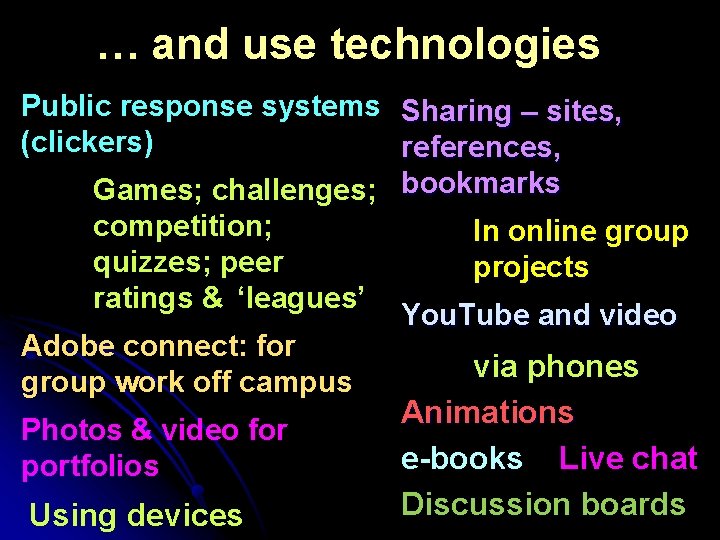
… and use technologies Public response systems Sharing – sites, (clickers) references, Games; challenges; bookmarks competition; In online group quizzes; peer projects ratings & ‘leagues’ You. Tube and video Adobe connect: for via phones group work off campus Photos & video for portfolios Using devices Animations e-books Live chat Discussion boards
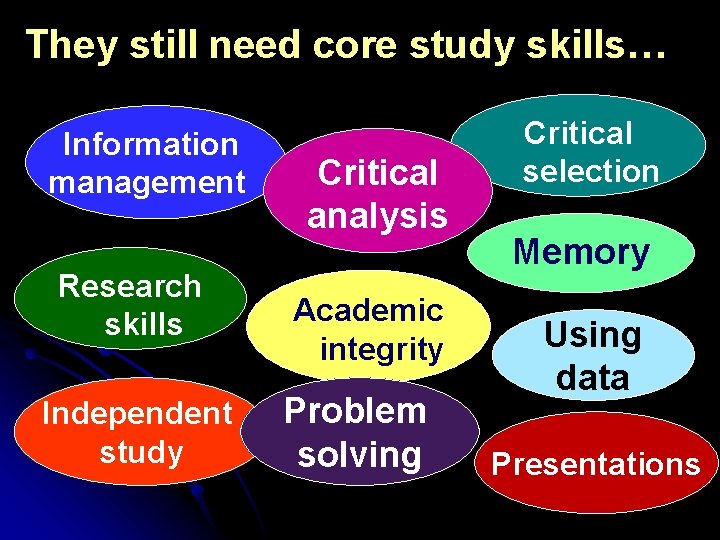
They still need core study skills… Information management Research skills Independent study Critical analysis Academic integrity Problem solving Critical selection Memory Using data Presentations
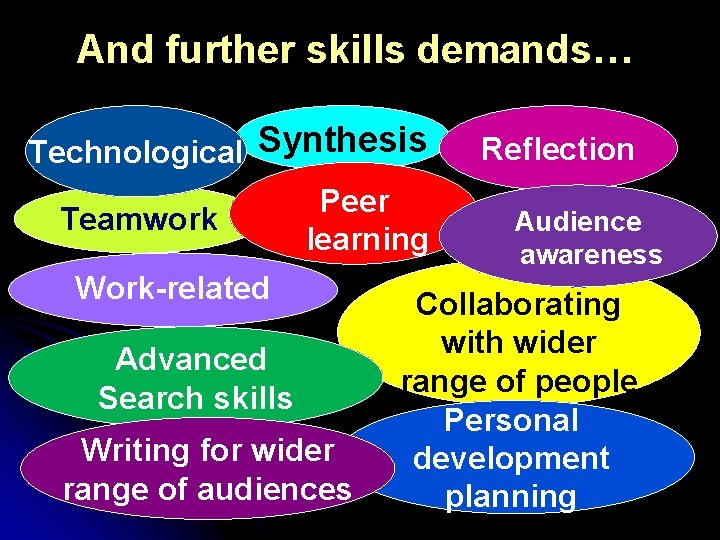
And further skills demands… Technological Synthesis Teamwork Peer learning Work-related Advanced Search skills Writing for wider range of audiences Reflection Audience awareness Collaborating with wider range of people earning Personal development planning
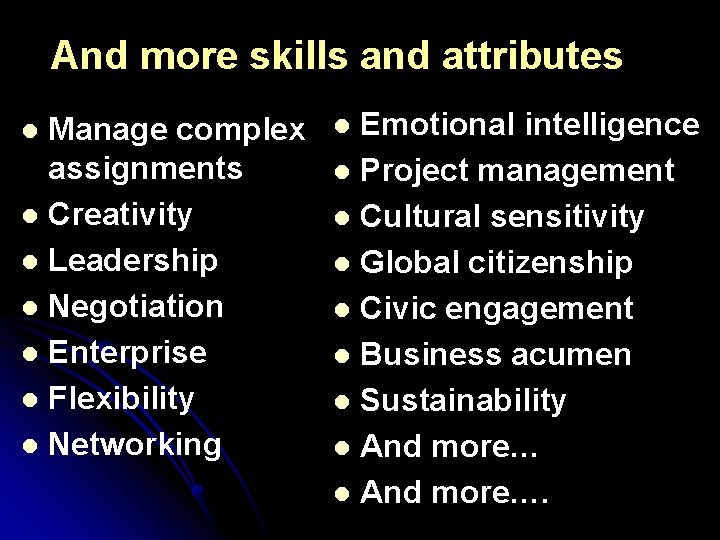
And more skills and attributes Manage complex assignments l Creativity l Leadership l Negotiation l Enterprise l Flexibility l Networking l Emotional intelligence l Project management l Cultural sensitivity l Global citizenship l Civic engagement l Business acumen l Sustainability l And more…. l
5. Streamlined, clearer frameworks to help students manage skills demands
Academic skills
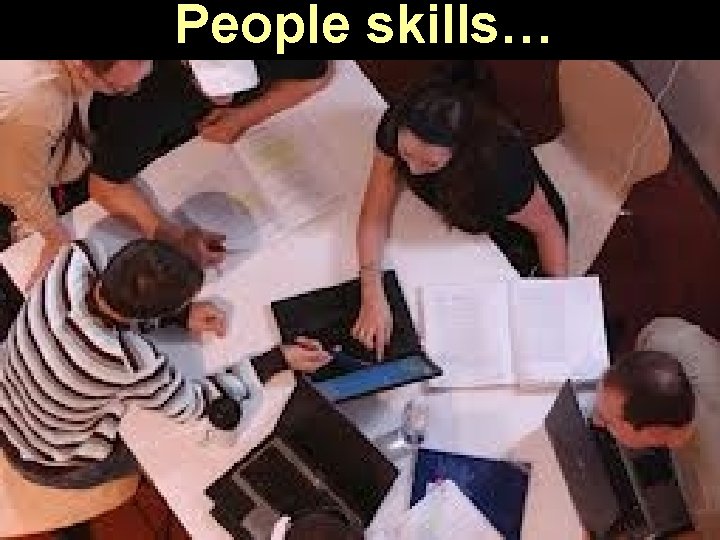
People skills…
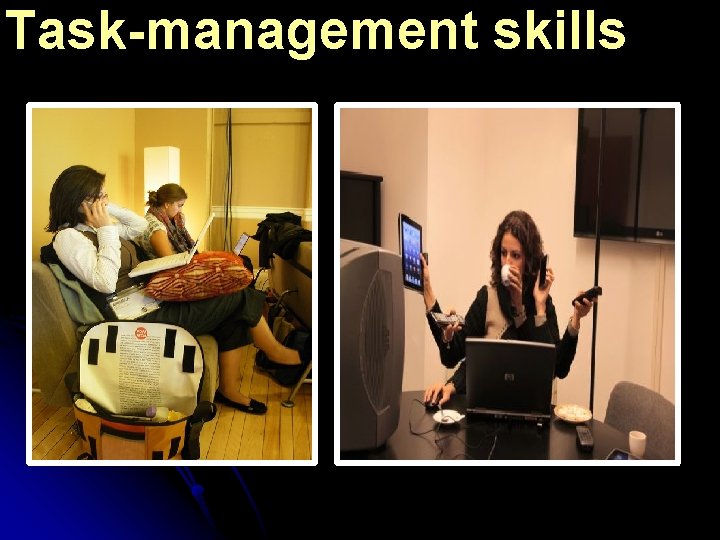
Task-management skills…
Self-management skills…
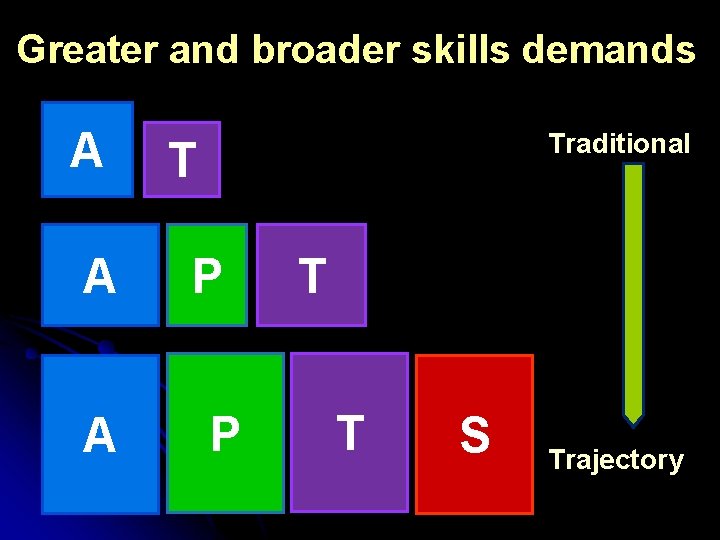
Greater and broader skills demands A A A Traditional T P P T T S Trajectory
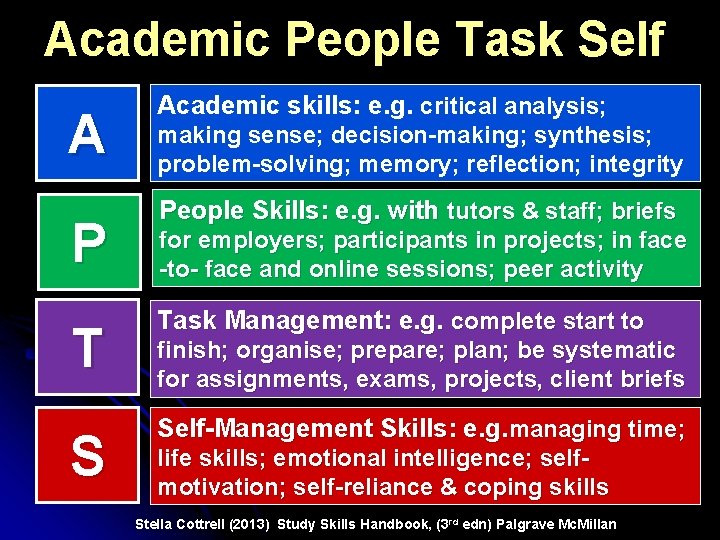
Academic People Task Self A P Academic skills: e. g. critical analysis; making sense; decision-making; synthesis; problem-solving; memory; reflection; integrity People Skills: e. g. with tutors & staff; briefs for employers; participants in projects; in face -to- face and online sessions; peer activity T Task Management: e. g. complete start to S Self-Management Skills: e. g. managing time; finish; organise; prepare; plan; be systematic for assignments, exams, projects, client briefs life skills; emotional intelligence; selfmotivation; self-reliance & coping skills Stella Cottrell (2013) Study Skills Handbook, (3 rd edn) Palgrave Mc. Millan
4. Increasing emphasis on selfmanagement abilities
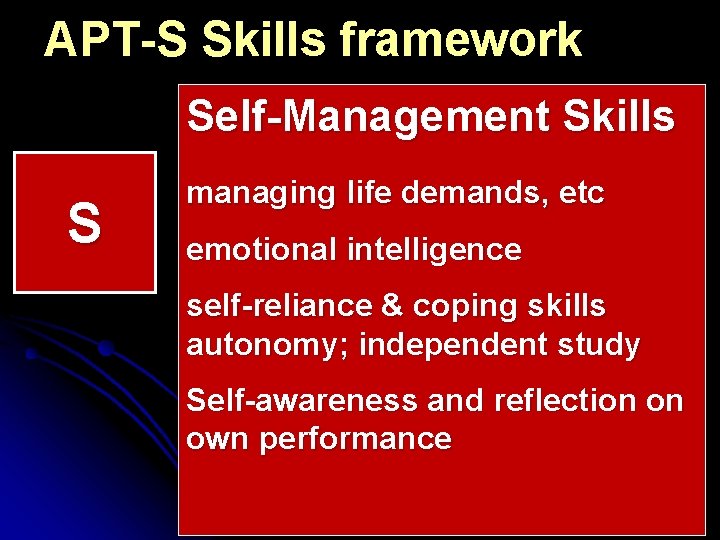
APT-S Skills framework Self-Management Skills S managing life demands, etc emotional intelligence self-reliance & coping skills autonomy; independent study Self-awareness and reflection on own performance
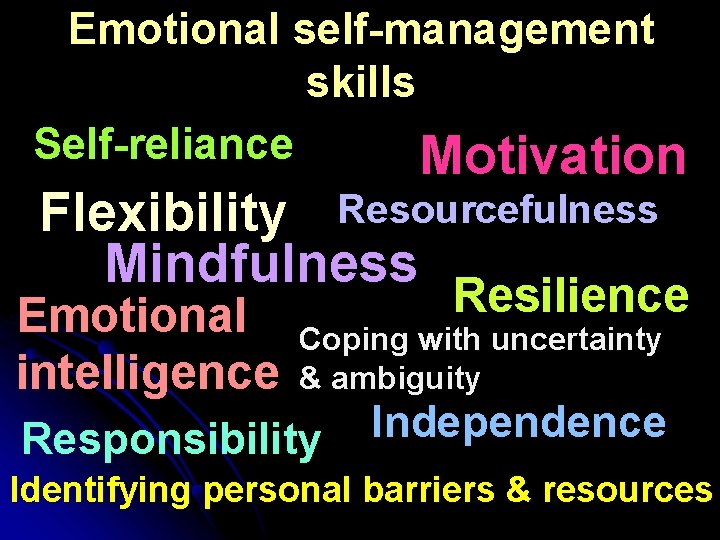
Emotional self-management skills Self-reliance Motivation Flexibility Resourcefulness Mindfulness Emotional intelligence Resilience Coping with uncertainty & ambiguity Responsibility Independence Identifying personal barriers & resources
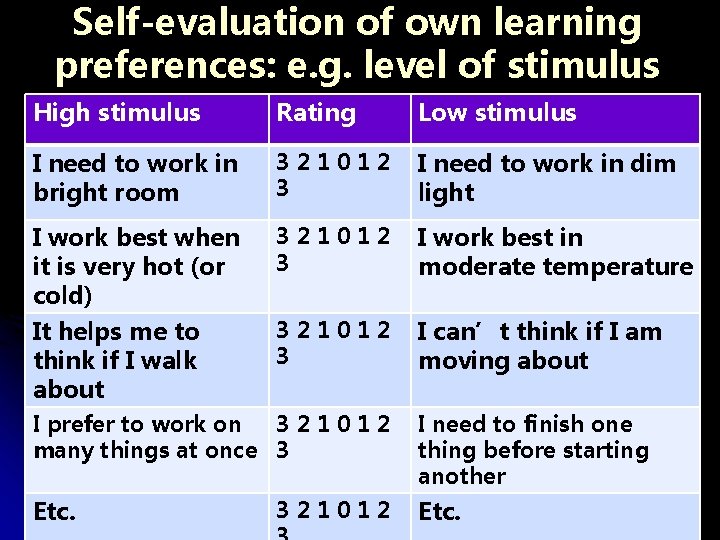
Self-evaluation of own learning preferences: e. g. level of stimulus High stimulus Rating Low stimulus I need to work in bright room 321012 3 I need to work in dim light I work best when it is very hot (or cold) It helps me to think if I walk about 321012 3 I work best in moderate temperature 321012 3 I can’t think if I am moving about I prefer to work on 321012 many things at once 3 I need to finish one thing before starting another Etc. 321012
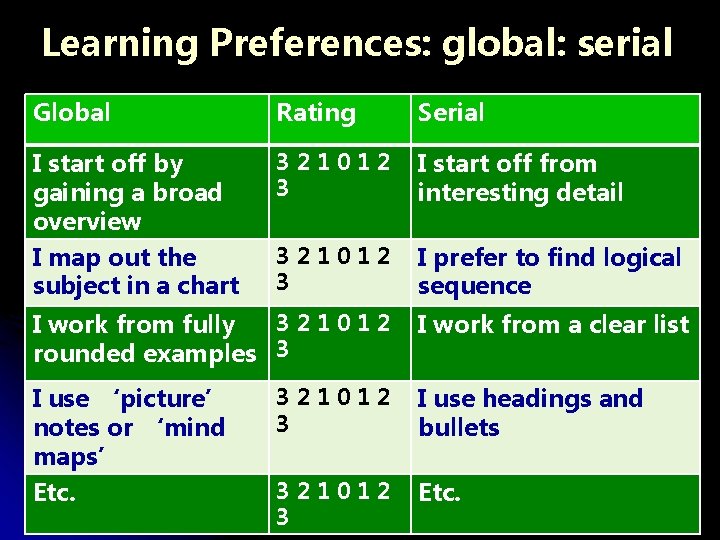
Learning Preferences: global: serial Global Rating Serial I start off by gaining a broad overview 321012 3 I start off from interesting detail I map out the subject in a chart 321012 3 I prefer to find logical sequence 321012 I work from fully rounded examples 3 I work from a clear list I use ‘picture’ notes or ‘mind maps’ 321012 3 I use headings and bullets Etc. 321012 3 Etc.
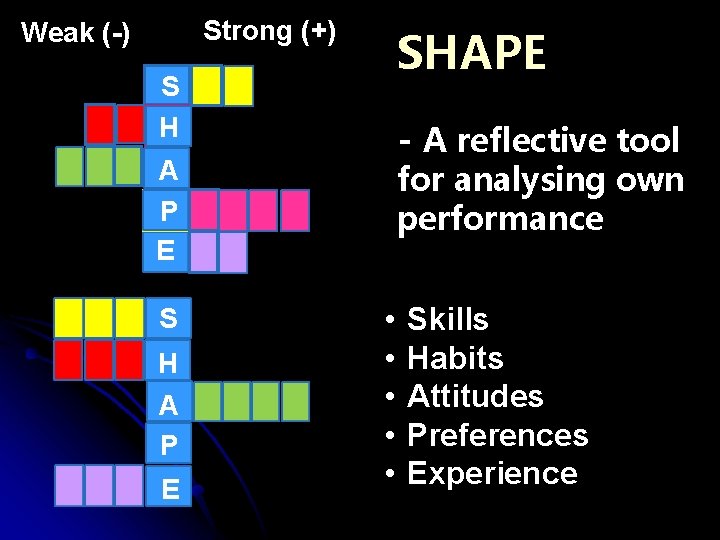
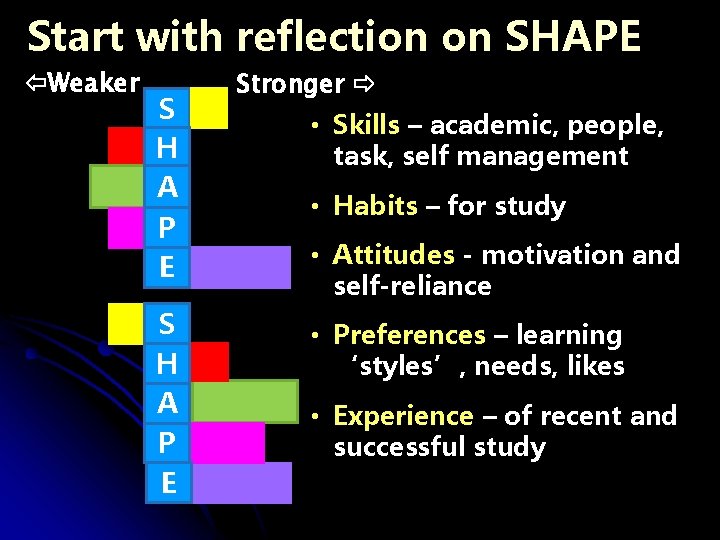
Strong (+) Weak (-) SHAPE S H - A reflective tool A P E S H A P E for analysing own performance • • • Skills Habits Attitudes Preferences Experience
Start with reflection on SHAPE Weaker S H A P E Stronger • Skills – academic, people, task, self management • Habits – for study • Attitudes - motivation and self-reliance • Preferences – learning ‘styles’, needs, likes • Experience – of recent and successful study
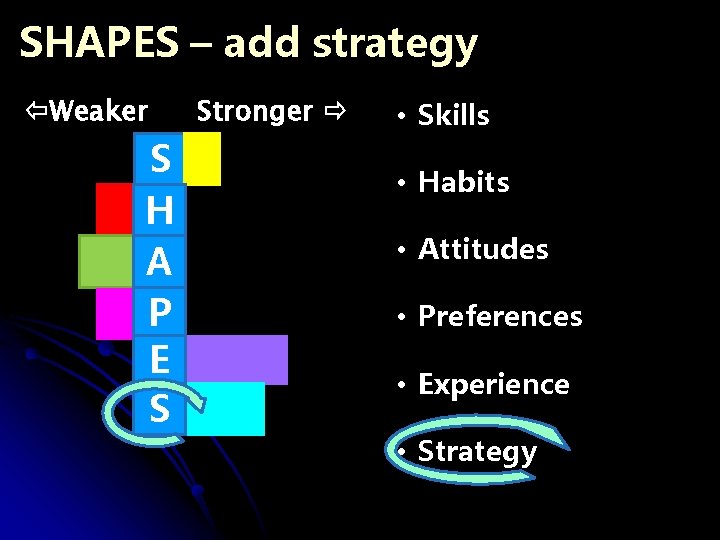
SHAPES – add strategy Weaker S H A P E S Stronger • Skills • Habits • Attitudes • Preferences • Experience • Strategy
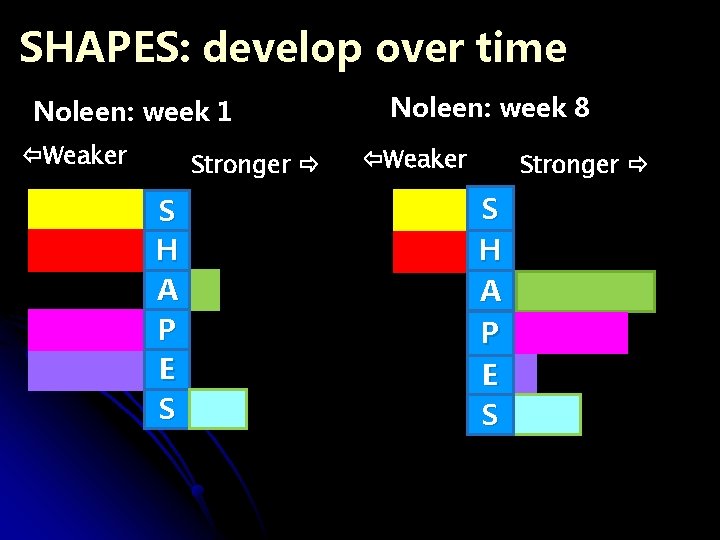
SHAPES: develop over time Noleen: week 1 Weaker Stronger S H A P E S Noleen: week 8 Weaker Stronger S H A P E S
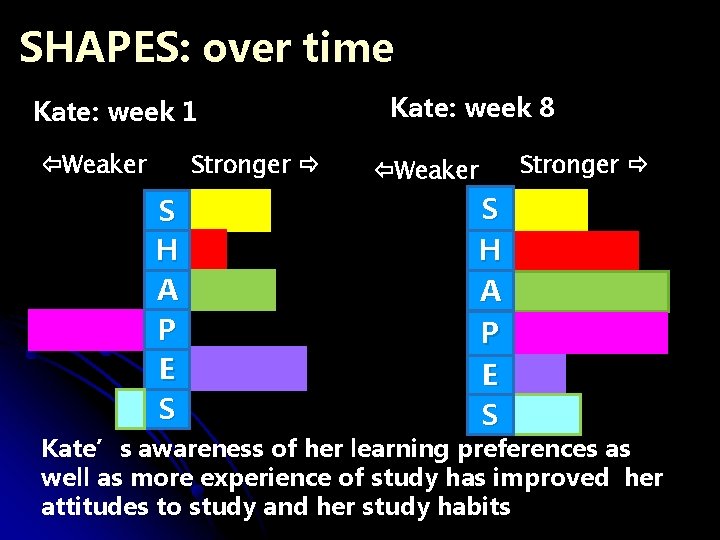
SHAPES: over time Kate: week 1 Stronger Weaker S H A P E S Kate: week 8 Weaker S H A P E S Stronger Kate’s awareness of her learning preferences as well as more experience of study has improved her attitudes to study and her study habits
3. Wider range of ‘peer’ schemes
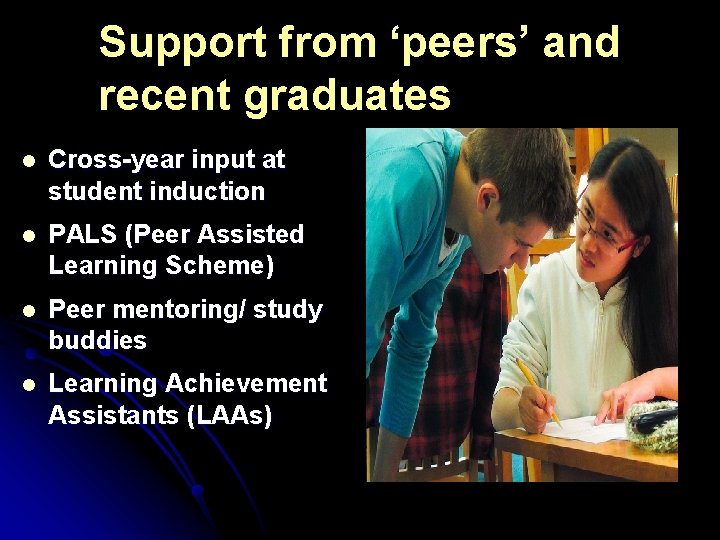
Support from ‘peers’ and recent graduates l Cross-year input at student induction l PALS (Peer Assisted Learning Scheme) l Peer mentoring/ study buddies l Learning Achievement Assistants (LAAs)
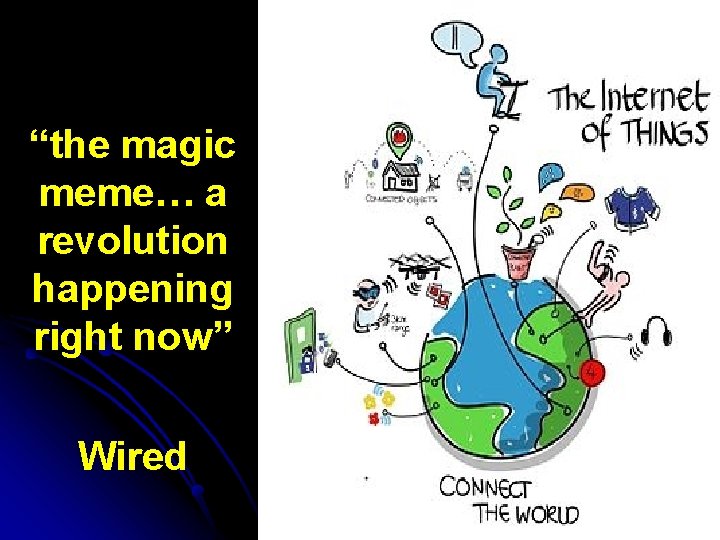
2. Responding to the impact of technology
Challenges of Technology-enhanced learning tasks Social networking and Apps are great – but what have they got to do with study? Great opportunities - but need new skills in… l managing quantity and quality of information l preparing in advance for ‘flipped classroom’ l applying study skills when working with mobile devices l combining technologies and using the apps and resources available
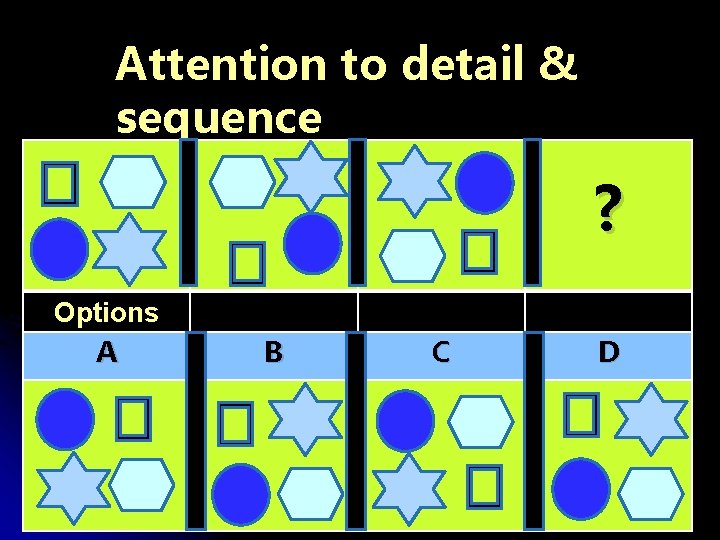
Attention to detail & sequence ? Options A B C D
“the magic meme… a revolution happening right now” Wired
Have you started your essay yet Phil? Bob has …. And he’s had his ‘ 5 -a-day’ today too
And on page 5 of that essay you’re writing, your assertions about Hegel’s Philosophy of Mind aren’t entirely convincing …
1. More emphasis on engagement, enjoyment, ‘fun’ and hands-on learning
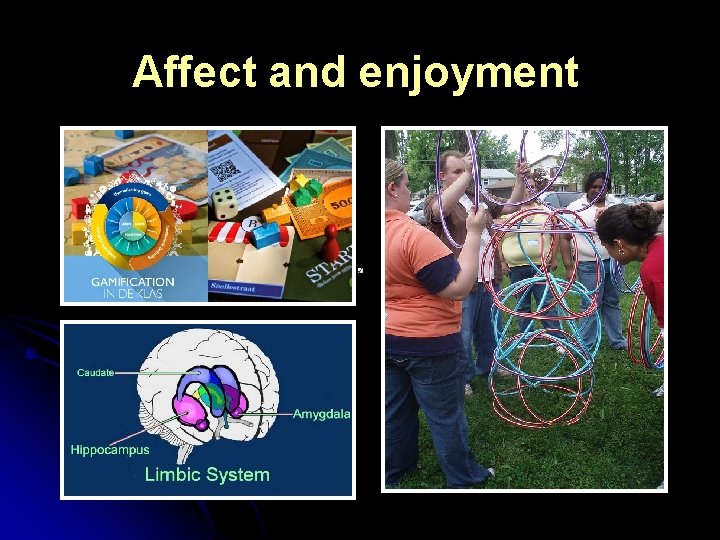
Affect and enjoyment
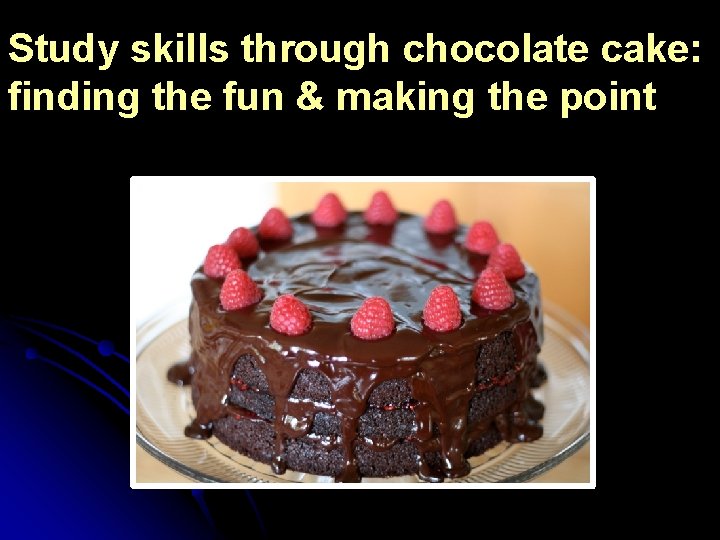
Study skills through chocolate cake: finding the fun & making the point
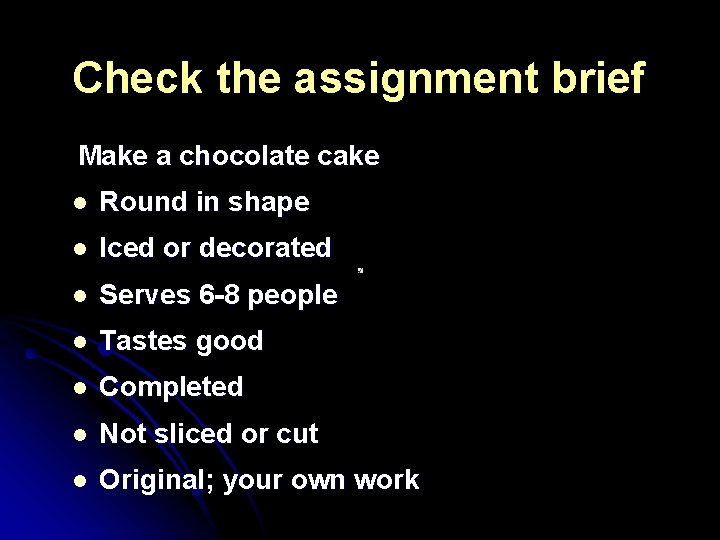
Check the assignment brief Make a chocolate cake l Round in shape l Iced or decorated l Serves 6 -8 people l Tastes good l Completed l Not sliced or cut l Original; your own work
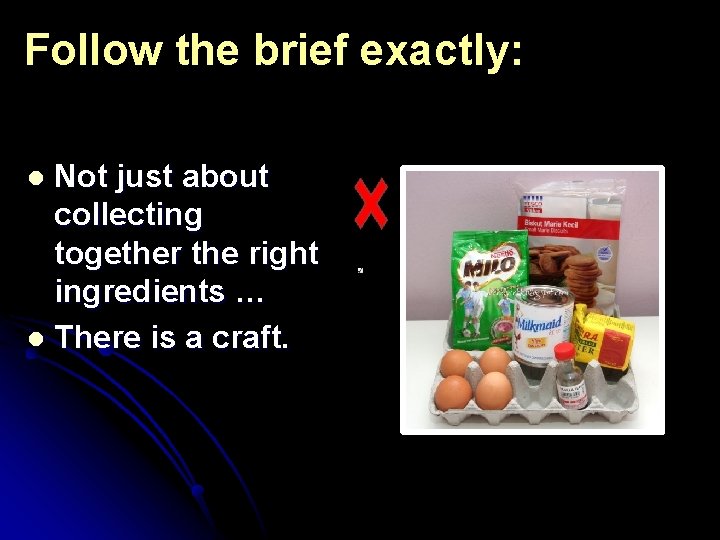
Follow the brief exactly: Not just about collecting together the right ingredients … l There is a craft. l
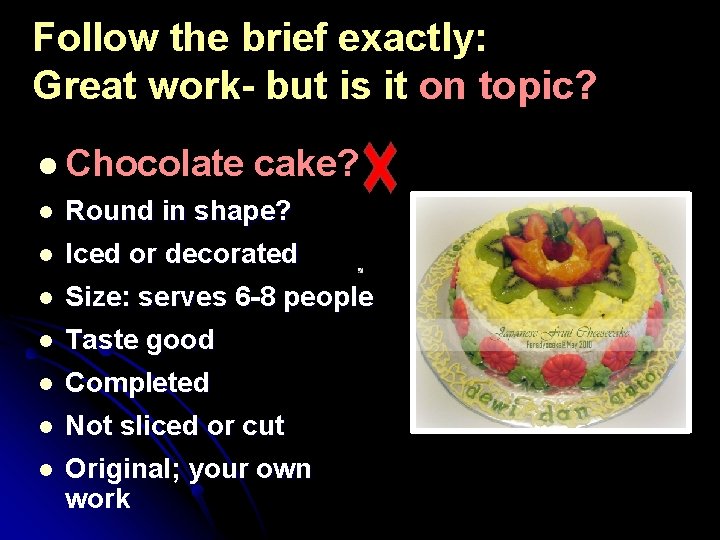
Follow the brief exactly: Great work- but is it on topic? l Chocolate l l l l cake? Round in shape? Iced or decorated Size: serves 6 -8 people Taste good Completed Not sliced or cut Original; your own work
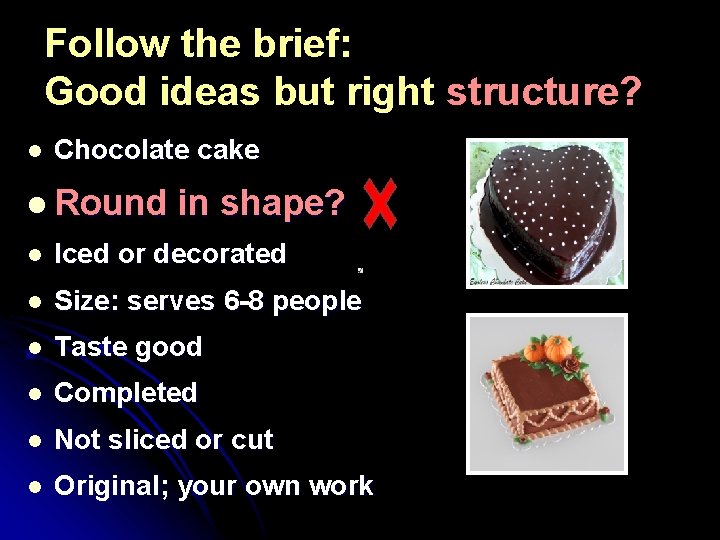
Follow the brief: Good ideas but right structure? l Chocolate cake l Round in shape? l Iced or decorated l Size: serves 6 -8 people l Taste good l Completed l Not sliced or cut l Original; your own work
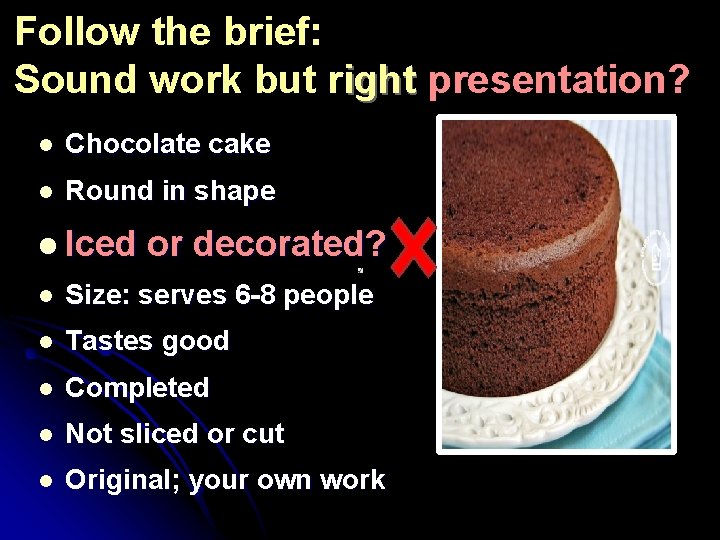
Follow the brief: Sound work but right presentation? l Chocolate cake l Round in shape l Iced or decorated? l Size: serves 6 -8 people l Tastes good l Completed l Not sliced or cut l Original; your own work
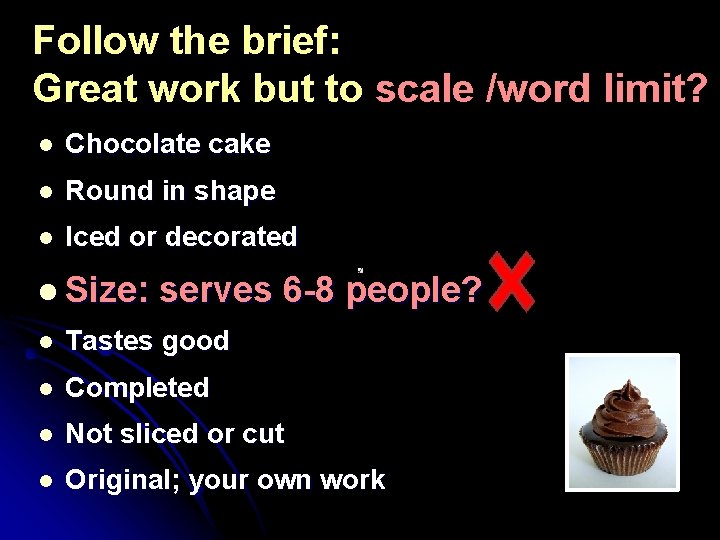
Follow the brief: Great work but to scale /word limit? l Chocolate cake l Round in shape l Iced or decorated l Size: serves 6 -8 people? l Tastes good l Completed l Not sliced or cut l Original; your own work
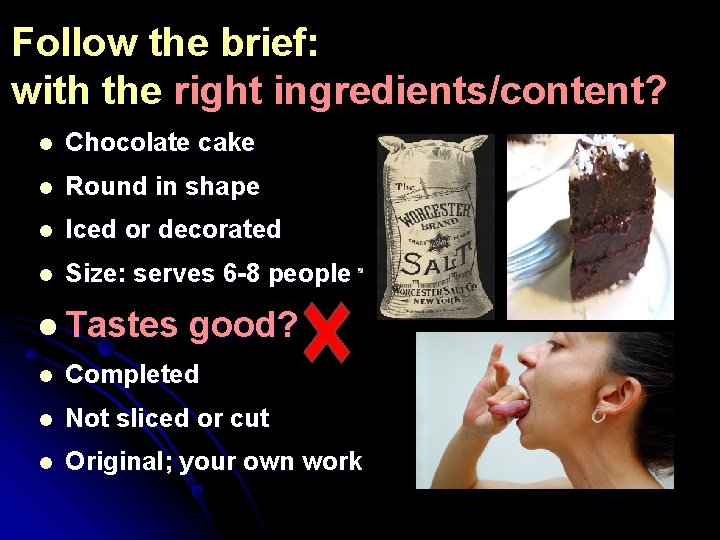
Follow the brief: with the right ingredients/content? l Chocolate cake l Round in shape l Iced or decorated l Size: serves 6 -8 people l Tastes good? l Completed l Not sliced or cut l Original; your own work
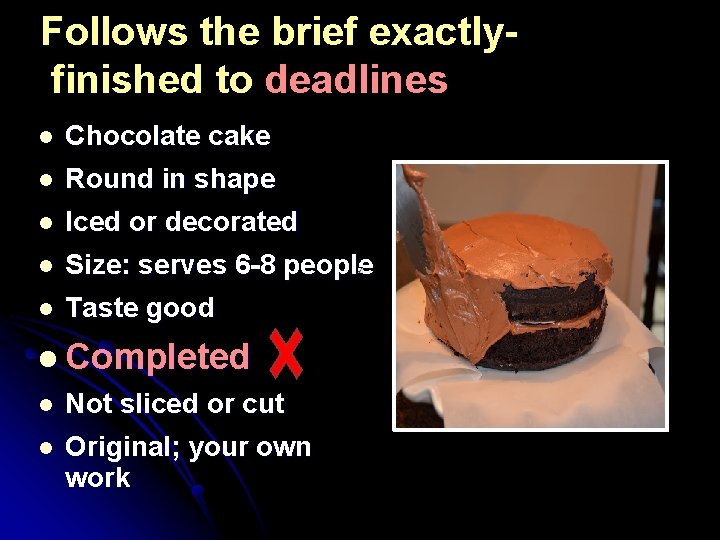
Follows the brief exactlyfinished to deadlines l l Chocolate cake Round in shape l Iced or decorated Size: serves 6 -8 people l Taste good l l Completed l l Not sliced or cut Original; your own work
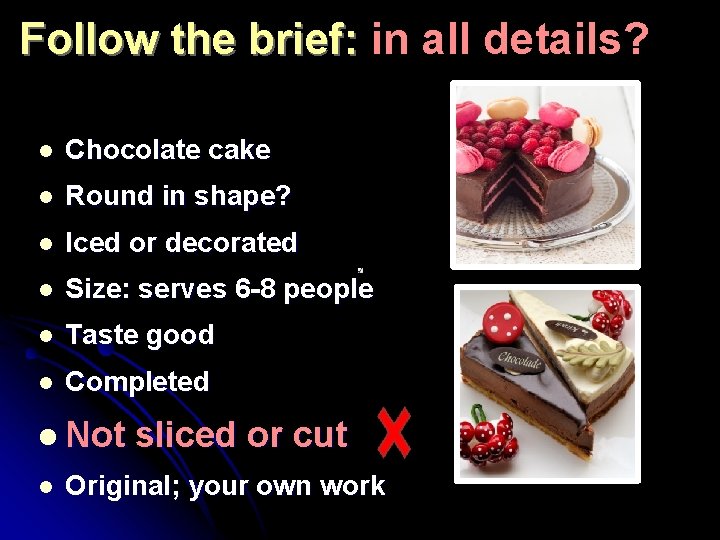
Follow the brief: in all details? l Chocolate cake l Round in shape? l Iced or decorated l Size: serves 6 -8 people l Taste good l Completed l Not l sliced or cut Original; your own work
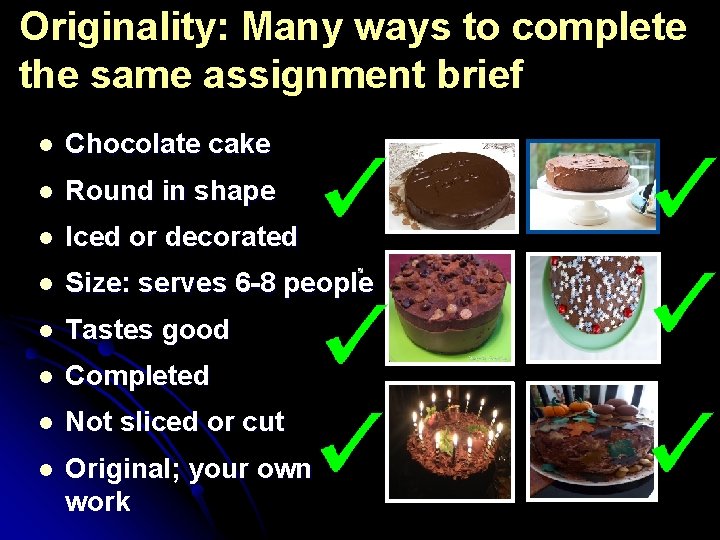
Originality: Many ways to complete the same assignment brief l Chocolate cake l Round in shape l Iced or decorated l Size: serves 6 -8 people l Tastes good l Completed l Not sliced or cut l Original; your own work
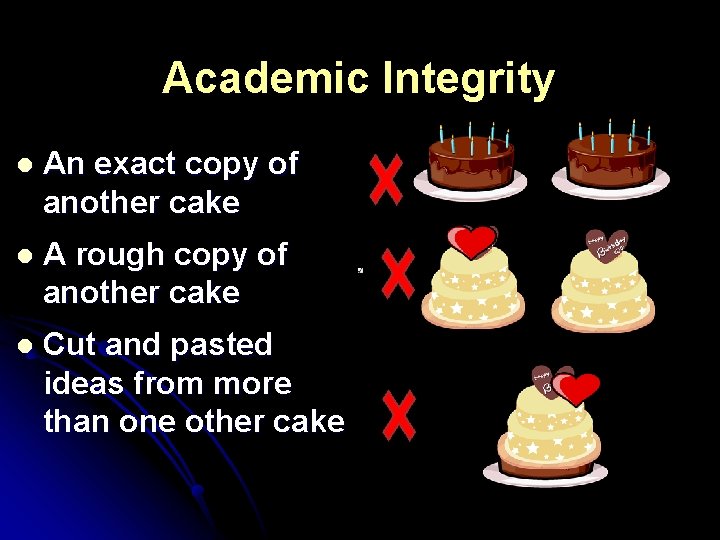
Academic Integrity l An exact copy of another cake l A rough copy of another cake l Cut and pasted ideas from more than one other cake
There was a lot of cake to eat that week!
And then what? What’s next?
Thank you!