
Oncorhynchus mykiss Rainbow trout External Anatomy Tail Trunk
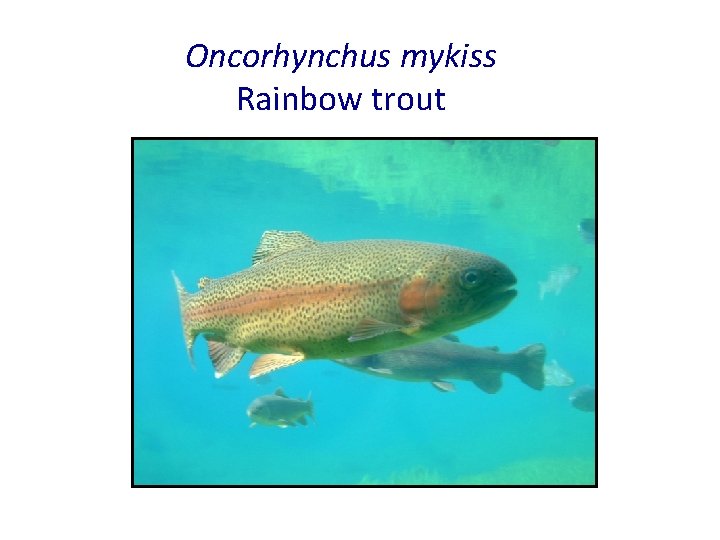
Oncorhynchus mykiss Rainbow trout
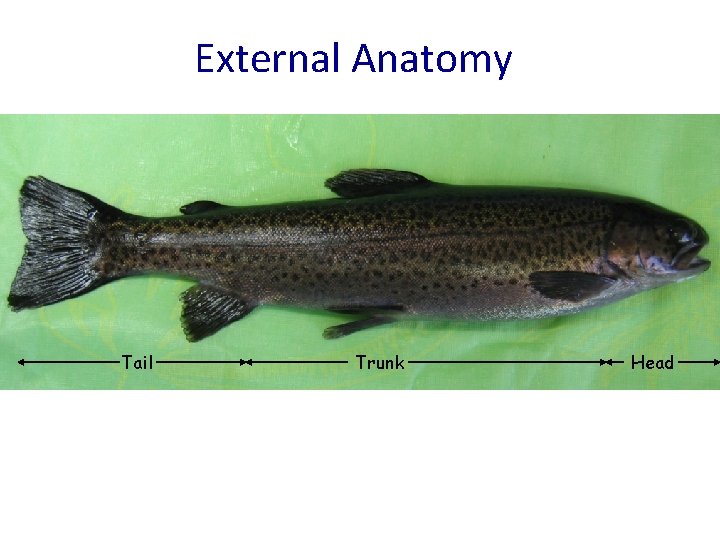
External Anatomy Tail Trunk Head

External Anatomy Adipose Fin Caudal or Tail Anal or Ventral Fin Dorsal Fin Pelvic Fins Pectoral fins: The caudal pectoral actfin as brakes and help the Caudal fin: The finfins or tail is the biggest fin. Itfish turn Pelvic fins: The pelvic fins help the fish move up and down. Anal, left adipose and dorsal fins: finsto are usedmoving for swimming and right. provides the “push” for. These the trout start and alsoand balance. acts as a rudder for steering through the water.

External Anatomy Operculum Eye Scales Mouth Lateral Line Lateral line: Runs from the head of the fish to the tail. It detects Eyes: The pupils have afish. slight triangle shape which helps Scales: Protect the They grow as the fish grows. vibrations or waves in the water. This helps keep the trout from Mouth: Operculum: Trout This use is their a hard mouths plate to that grab covers food and the delicate feel things. gills the trout see above, in front and below its body. bumping into things and helps the fish sense danger. Dar
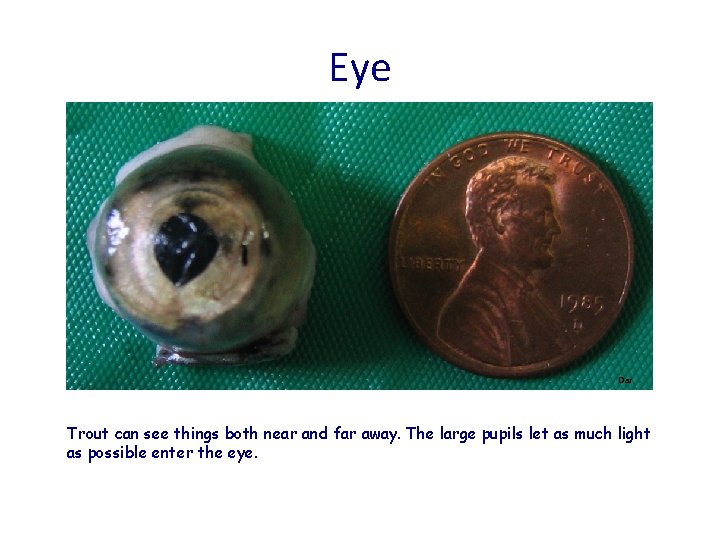
Eye Dar Trout can see things both near and far away. The large pupils let as much light as possible enter the eye.
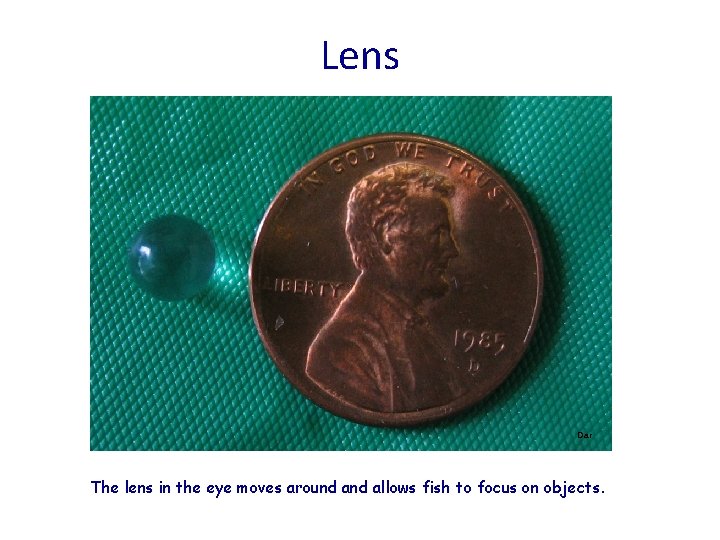
Lens Dar The lens in the eye moves around allows fish to focus on objects.
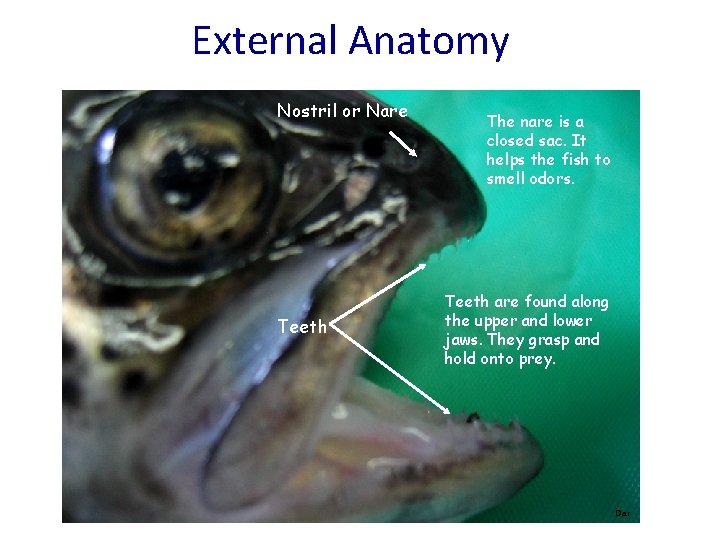
External Anatomy Nostril or Nare Teeth The nare is a closed sac. It helps the fish to smell odors. Teeth are found along the upper and lower jaws. They grasp and hold onto prey. Dar
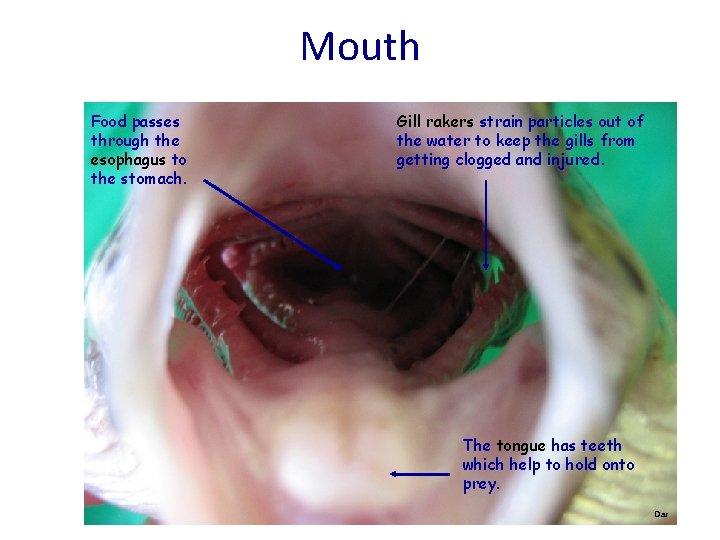
Mouth Food passes through the esophagus to the stomach. Gill rakers strain particles out of the water to keep the gills from getting clogged and injured. The tongue has teeth which help to hold onto prey. Dar
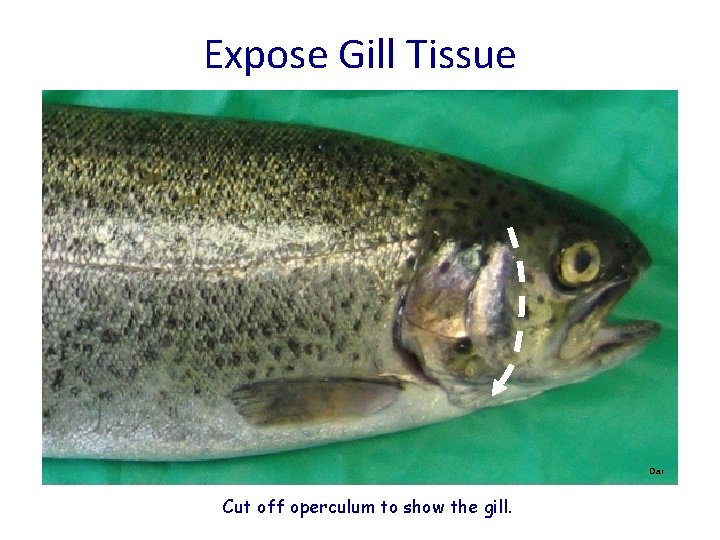
Expose Gill Tissue Dar Cut off operculum to show the gill.
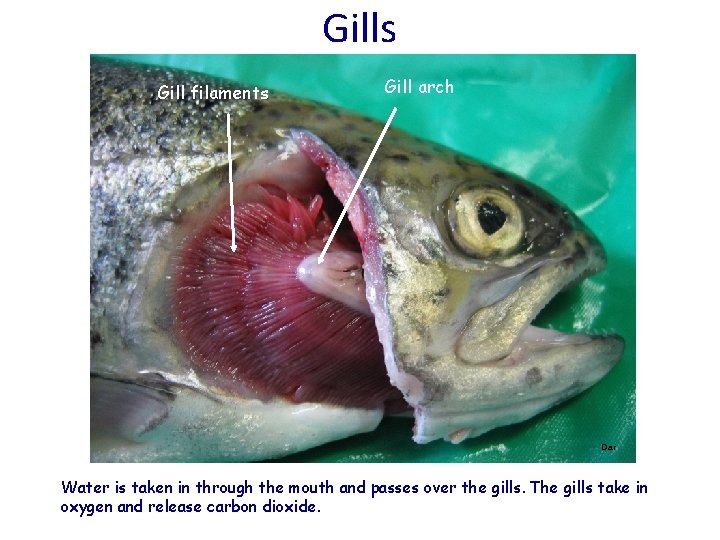
Gills Gill filaments Gill arch Dar Water is taken in through the mouth and passes over the gills. The gills take in oxygen and release carbon dioxide.
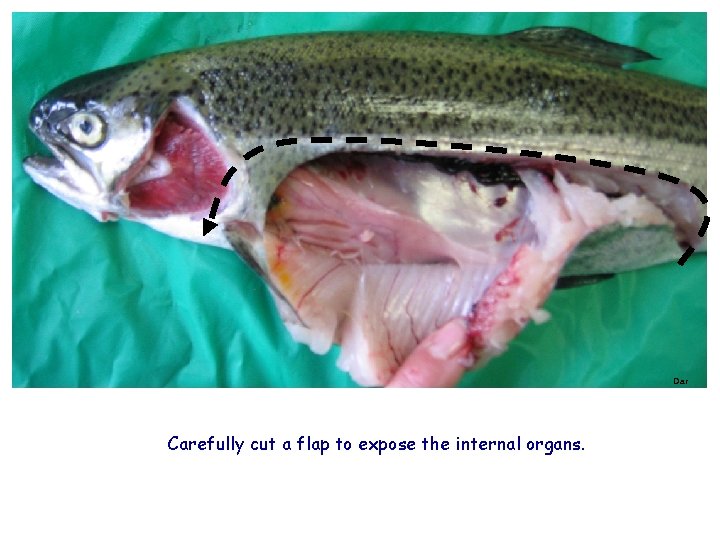
Dar Carefully cut a flap to expose the internal organs.
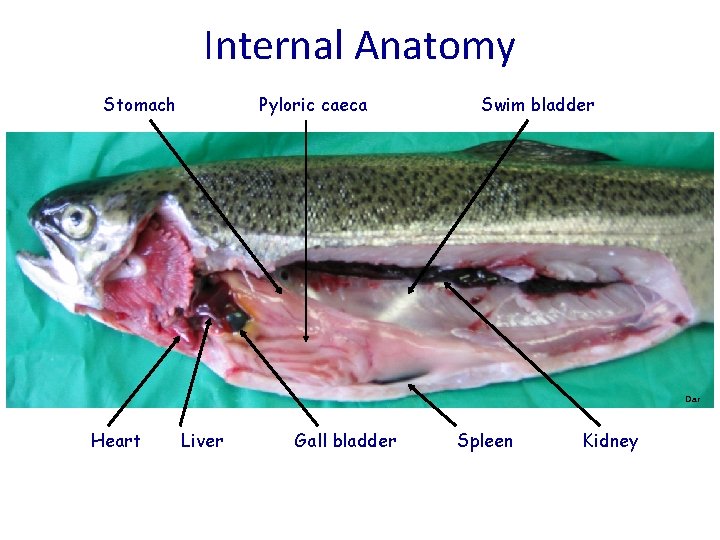
Internal Anatomy Stomach Pyloric caeca Swim bladder Dar Heart Liver Gall bladder Spleen Kidney
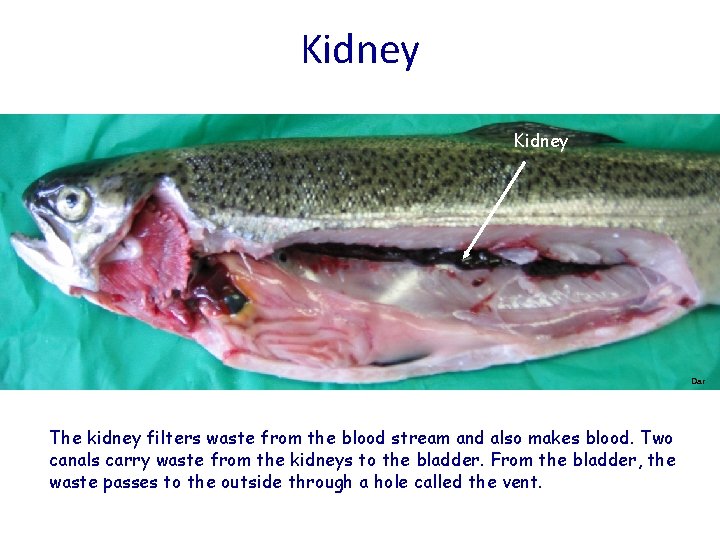
Kidney Dar The kidney filters waste from the blood stream and also makes blood. Two canals carry waste from the kidneys to the bladder. From the bladder, the waste passes to the outside through a hole called the vent.
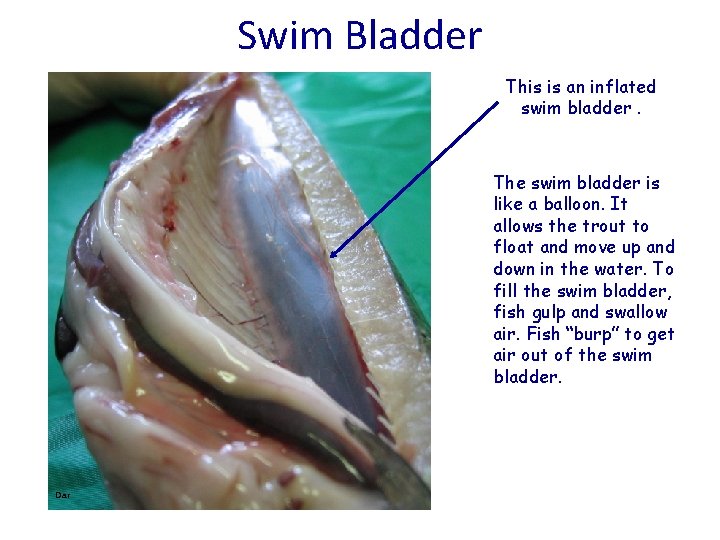
Swim Bladder This is an inflated swim bladder. The swim bladder is like a balloon. It allows the trout to float and move up and down in the water. To fill the swim bladder, fish gulp and swallow air. Fish “burp” to get air out of the swim bladder. Dar
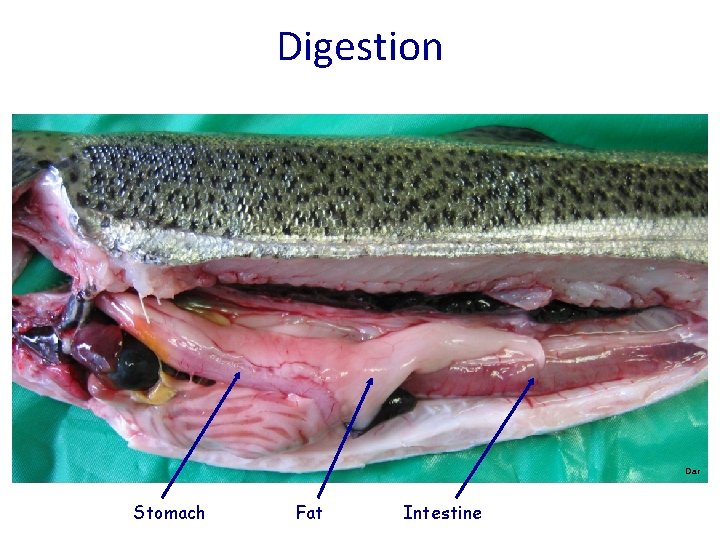
Digestion Dar Stomach Fat Intestine
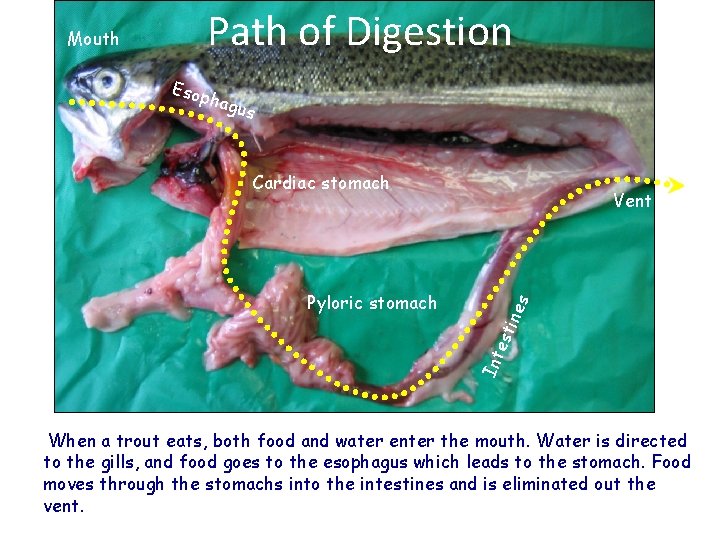
Mouth Path of Digestion Esop hagu s Cardiac stomach nes Int est i Pyloric stomach Vent When a trout eats, both food and water enter the mouth. Water is directed to the gills, and food goes to the esophagus which leads to the stomach. Food moves through the stomachs into the intestines and is eliminated out the vent.
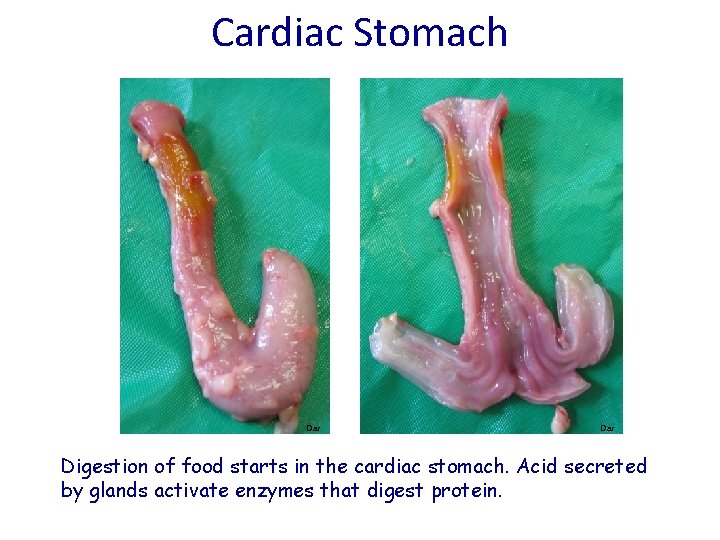
Cardiac Stomach Dar Digestion of food starts in the cardiac stomach. Acid secreted by glands activate enzymes that digest protein.
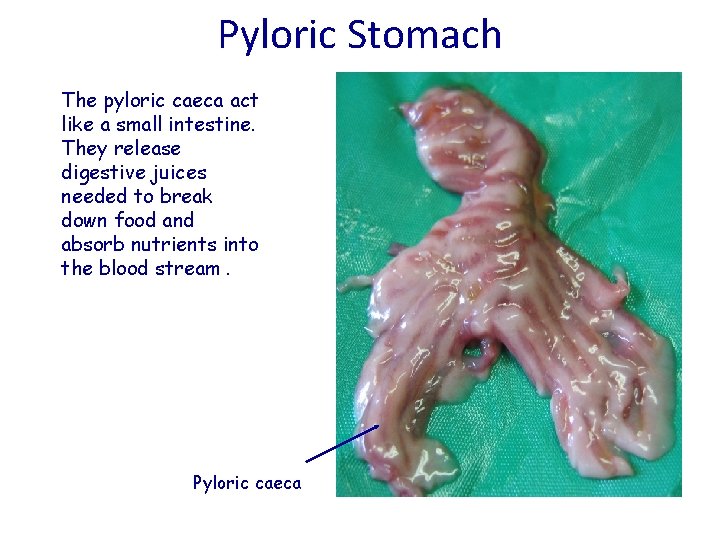
Pyloric Stomach The pyloric caeca act like a small intestine. They release digestive juices needed to break down food and absorb nutrients into the blood stream. Pyloric caeca
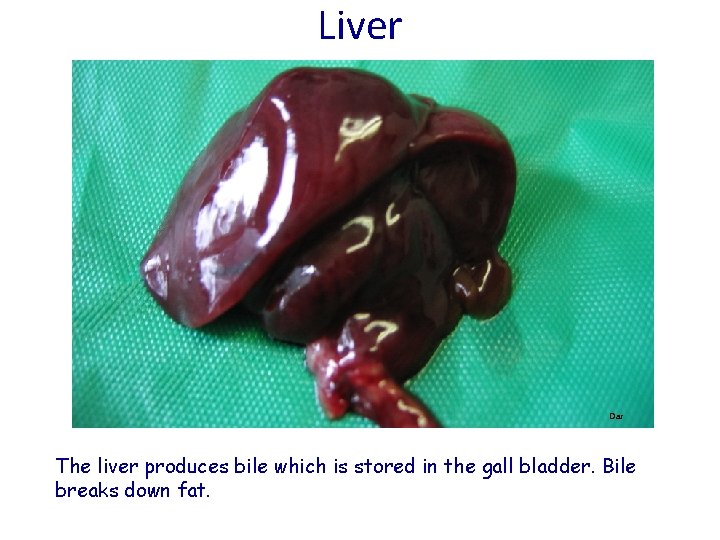
Liver Dar The liver produces bile which is stored in the gall bladder. Bile breaks down fat.
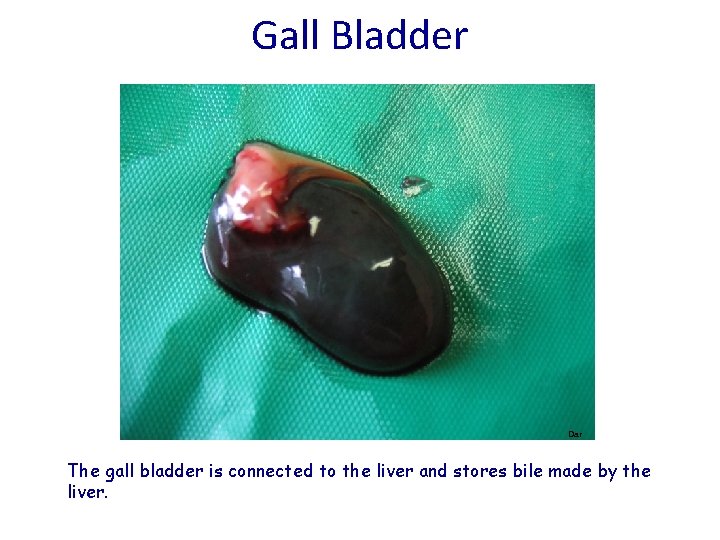
Gall Bladder Dar The gall bladder is connected to the liver and stores bile made by the liver.
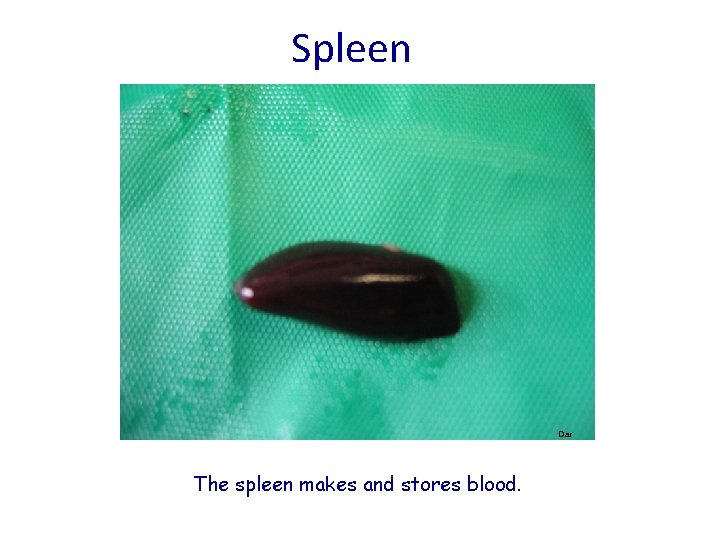
Spleen Dar The spleen makes and stores blood.
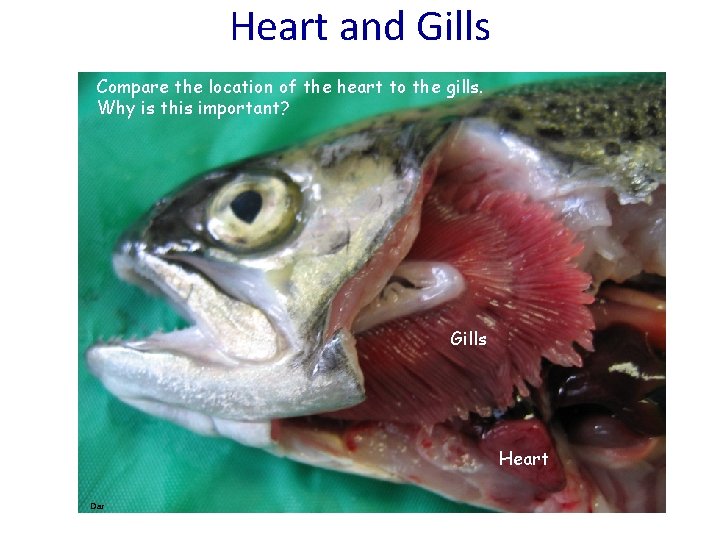
Heart and Gills Compare the location of the heart to the gills. Why is this important? Gills Heart Dar
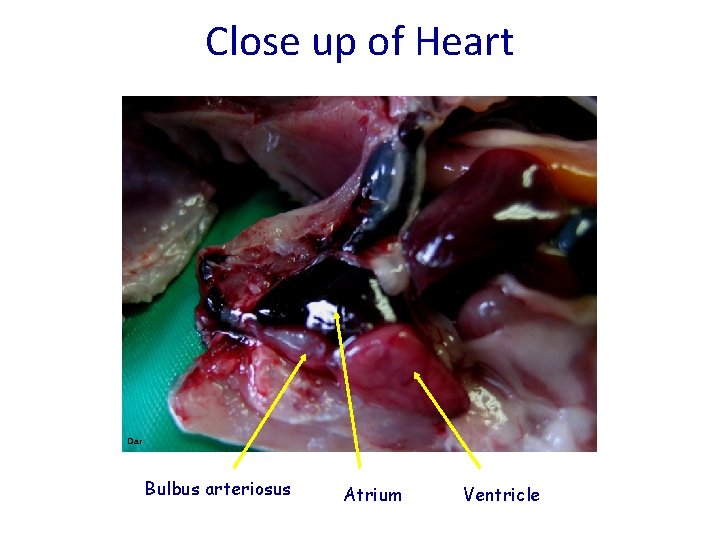
Close up of Heart Dar Bulbus arteriosus Atrium Ventricle
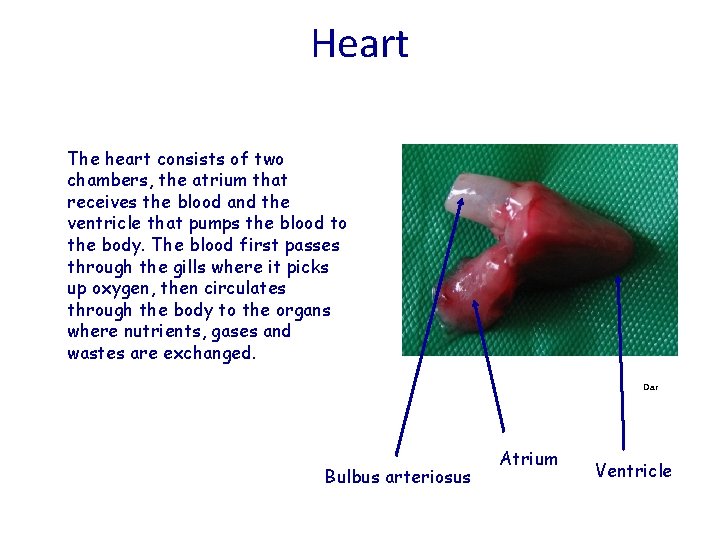
Heart The heart consists of two chambers, the atrium that receives the blood and the ventricle that pumps the blood to the body. The blood first passes through the gills where it picks up oxygen, then circulates through the body to the organs where nutrients, gases and wastes are exchanged. Dar Bulbus arteriosus Atrium Ventricle
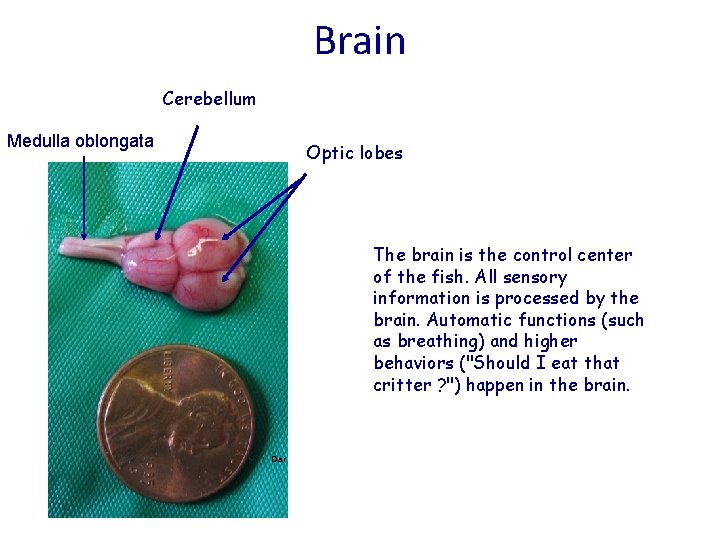
Brain Cerebellum Medulla oblongata Optic lobes The brain is the control center of the fish. All sensory information is processed by the brain. Automatic functions (such as breathing) and higher behaviors ("Should I eat that critter ? ") happen in the brain. Dar
- Slides: 25