
Oncolytic Viruses An Innovative Cancer Treatment Chris Lee


- Slides: 11
Oncolytic Viruses An Innovative Cancer Treatment Chris Lee 2019 Summer TALK Intern
Background: School: Rising 10 th Grader at Montgomery Blair High School Interests: Medical Science Computer Science
Outline 1. 2. 3. 4. 5. 6. Definitions What is Cancer? Conventional Cancer Treatment Oncolytic Viruses Applications in the Present My Idea
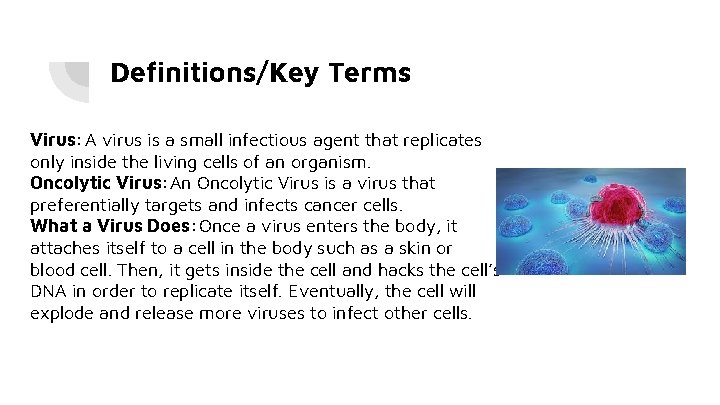
Definitions/Key Terms Virus: A virus is a small infectious agent that replicates only inside the living cells of an organism. Oncolytic Virus: An Oncolytic Virus is a virus that preferentially targets and infects cancer cells. What a Virus Does: Once a virus enters the body, it attaches itself to a cell in the body such as a skin or blood cell. Then, it gets inside the cell and hacks the cell’s DNA in order to replicate itself. Eventually, the cell will explode and release more viruses to infect other cells.
Cancer: A disease in which abnormal cells divide uncontrollably and destroy body tissue. Stats: (Based on 2018) ● 1. 7 Million cases of cancer in the US alone ● Around 600, 000 deaths from cancer ● Over 100 types of cancer currently known
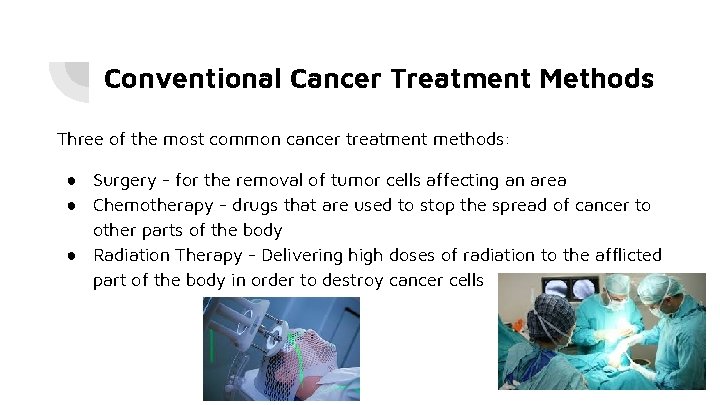
Conventional Cancer Treatment Methods Three of the most common cancer treatment methods: ● Surgery - for the removal of tumor cells affecting an area ● Chemotherapy - drugs that are used to stop the spread of cancer to other parts of the body ● Radiation Therapy - Delivering high doses of radiation to the afflicted part of the body in order to destroy cancer cells
Drawbacks of Conventional Cancer Treatment Methods ● All three methods share the same problem, they cannot eliminate all cancer cells; there is a chance that the cancer may come back ● For chemo and radiation therapy, other healthy cells in our body will also be damaged, because these methods do not target a specific cell. No white cells means the weakening of the immune system. Various infections may follow.
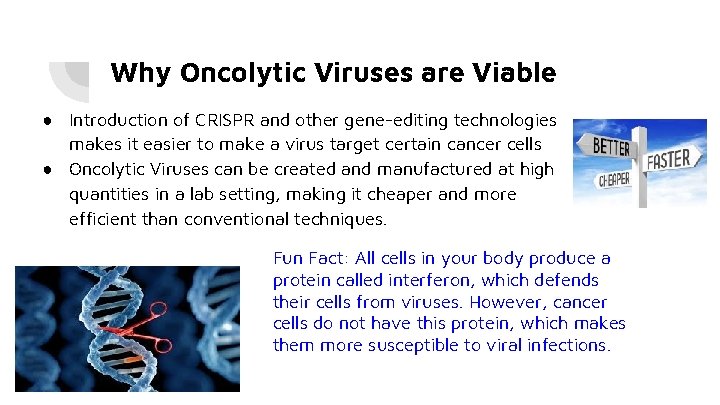
Why Oncolytic Viruses are Viable ● Introduction of CRISPR and other gene-editing technologies makes it easier to make a virus target certain cancer cells ● Oncolytic Viruses can be created and manufactured at high quantities in a lab setting, making it cheaper and more efficient than conventional techniques. Fun Fact: All cells in your body produce a protein called interferon, which defends their cells from viruses. However, cancer cells do not have this protein, which makes them more susceptible to viral infections.
Where are Oncolytic Viruses being Studied? The National Cancer Institute, which is a branch of the NIH, is currently studying the oncolytic virus and how it may be used in future cancer treatments.
Applications in Today’s Society ● The FDA has already approved one type of oncolytic virus cancer treatment, which is a modified version of herpesvirus which can treat melanoma, which is a type of skin cancer ● A team of researchers have also recently modified the Zika virus vaccine, which successfully targeted and killed glioblastoma stem cells in trials of mice. Glioblastoma is a lethal brain cancer which kills around 15, 000 adults every year in the USA
My Idea ● If oncolytic viruses can be mutated to be a treatment for cancer, why not other diseases? ● Finding cures and treatments for infectious diseases can be incredibly time-consuming ● Gene-editing technologies can be a major breakthrough into the prevention and cure of specific diseases