
Once Upon a Research Consultation Using consultation statistics

- Slides: 13
Once Upon a Research Consultation Using consultation statistics to tell stories about relationship building, workload, and organizational change Amy Mc. Lay Paterson Thompson Rivers University
My Context • TRU is a small, non-CARL library • 10 faculty librarians • Most librarians have both functional and liaison roles • Large contingent of Open Learning students who take courses at a distance
Background Issues • Liaison vs. Functional models • Library reorganization • Move to single service desk • Diminishing desk traffic • Strategic and workload planning • Critical assessment
How has organizational change affected interaction with your communities?
Traditional reporting methods • Librarian-student interactions assumed to take place at service desk • One form for all reference questions, including research consultations • No access to individual librarian records • Used solely for reporting to consortial bodies
What are research consultation statistics used for in your library?
Changes to TRU Library • Move to single service desk in 2017 • Librarian role at service desk in question • New consultation booking system precipitated a sharp rise in bookings • Workload balance difficult to track
What we needed to know • What kind of reference interactions were happening • How much time was spent on liaison responsibilities • Where did we need to balance workload • What kind of impact were we making • How do we want to direct our efforts in the future?
What questions could your consultations help answer?
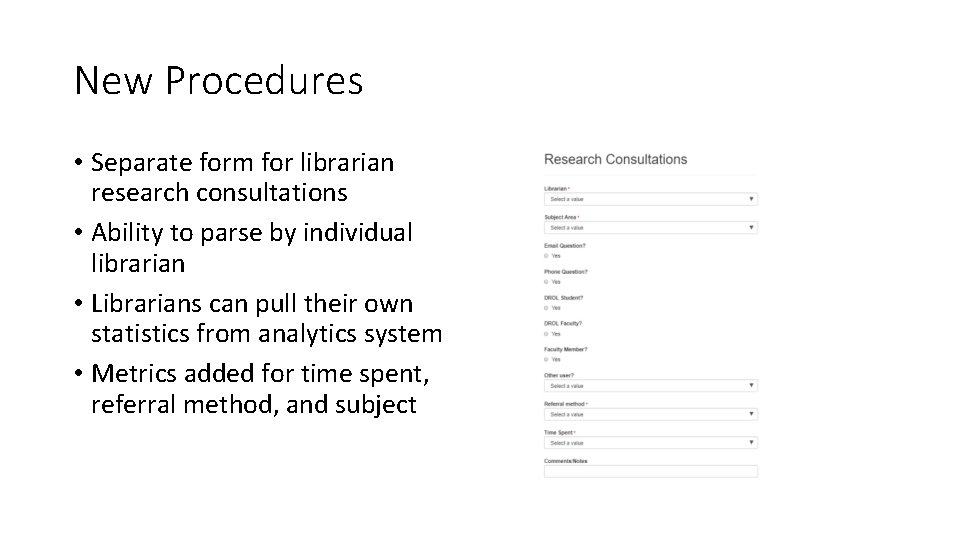
New Procedures • Separate form for librarian research consultations • Ability to parse by individual librarian • Librarians can pull their own statistics from analytics system • Metrics added for time spent, referral method, and subject
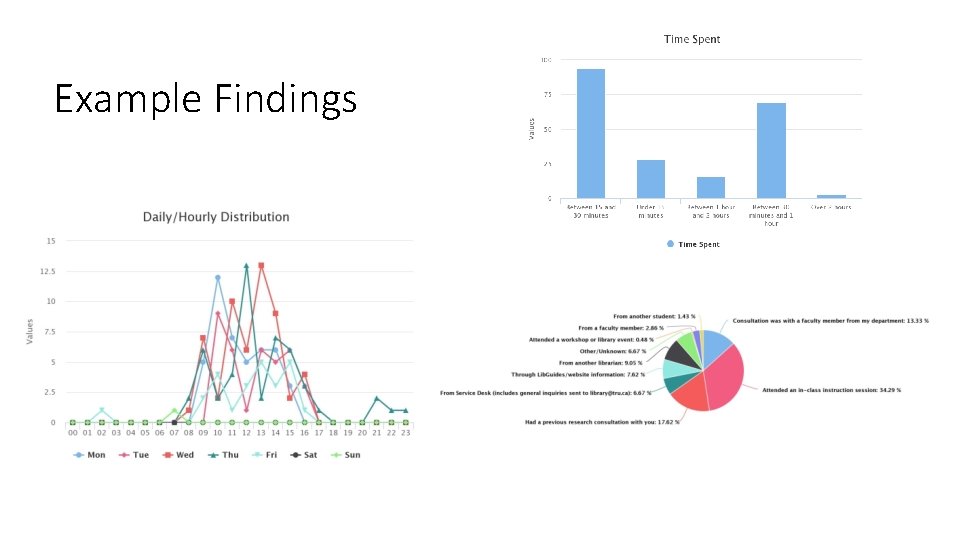
Example Findings
Opportunities and Challenges Opportunities • Better understanding of individual workloads • Examine context of interactions • Track changes over time • Shift from quantitative to qualitative understanding of value • Allow for individual librarians to tailor outreach Challenges • Resistance to change • Urge to compare • Encouraging everyone to record, access, and analyze their own statistics
Questions? apaterson@tru. ca