
On the structure of arguments and what it
- Slides: 51
On the structure of arguments, and what it means for dialogue Henry Prakken COMMA-08 Toulouse, 28 -05 -2008
Overview n n n The structure of arguments: overview of state -of-the art Argument schemes A legal example n n n Abstraction in dialogue Combining modes of reasoning Conclusions
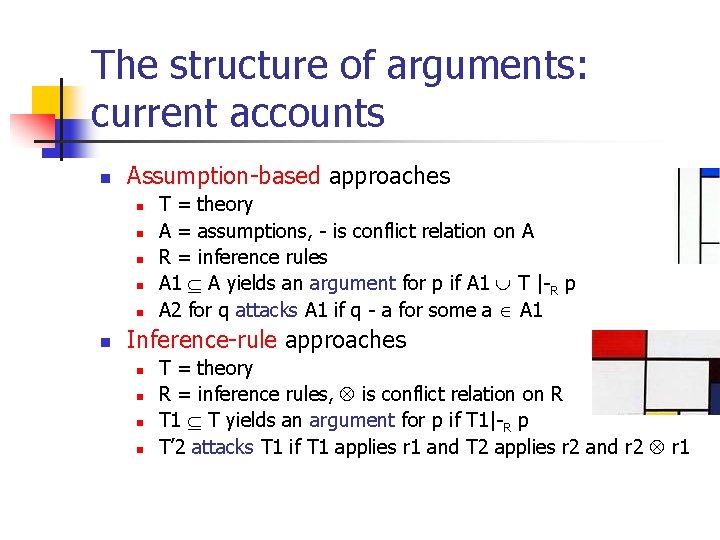
The structure of arguments: current accounts n Assumption-based approaches n n n T = theory A = assumptions, - is conflict relation on A R = inference rules A 1 A yields an argument for p if A 1 T |-R p A 2 for q attacks A 1 if q - a for some a A 1 Inference-rule approaches n n T = theory R = inference rules, is conflict relation on R T 1 T yields an argument for p if T 1|-R p T’ 2 attacks T 1 if T 1 applies r 1 and T 2 applies r 2 and r 2 r 1
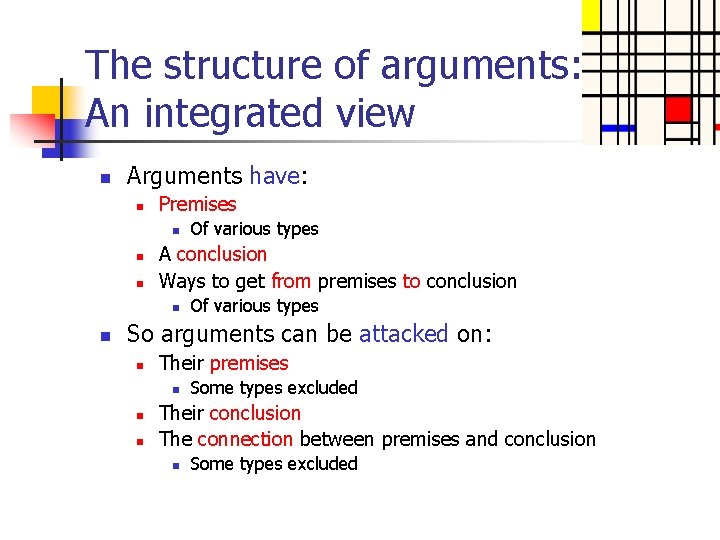
The structure of arguments: An integrated view n Arguments have: n Premises n n n A conclusion Ways to get from premises to conclusion n n Of various types So arguments can be attacked on: n Their premises n n n Some types excluded Their conclusion The connection between premises and conclusion n Some types excluded
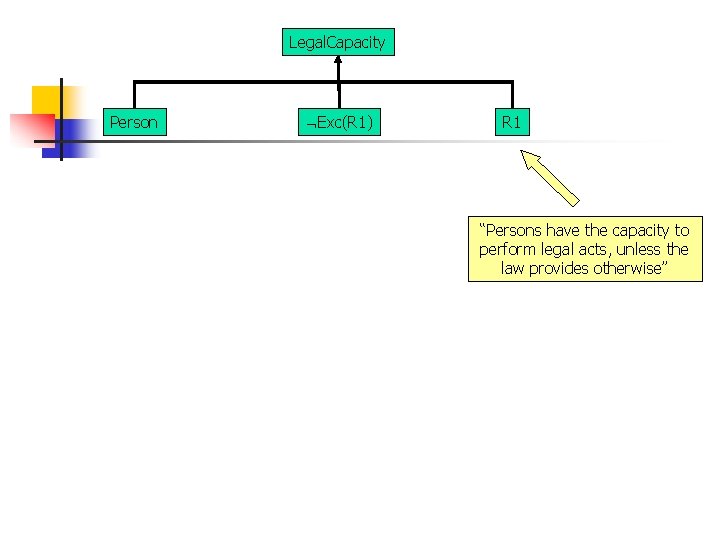
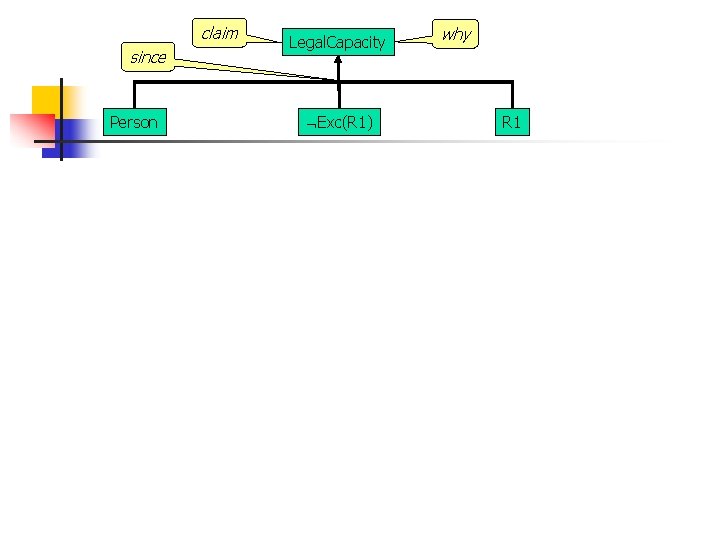
Legal. Capacity Person Exc(R 1) R 1 “Persons have the capacity to perform legal acts, unless the law provides otherwise”
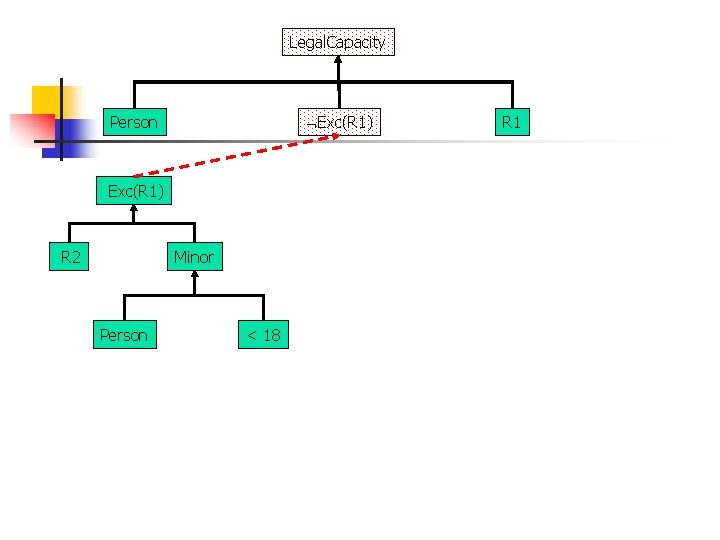
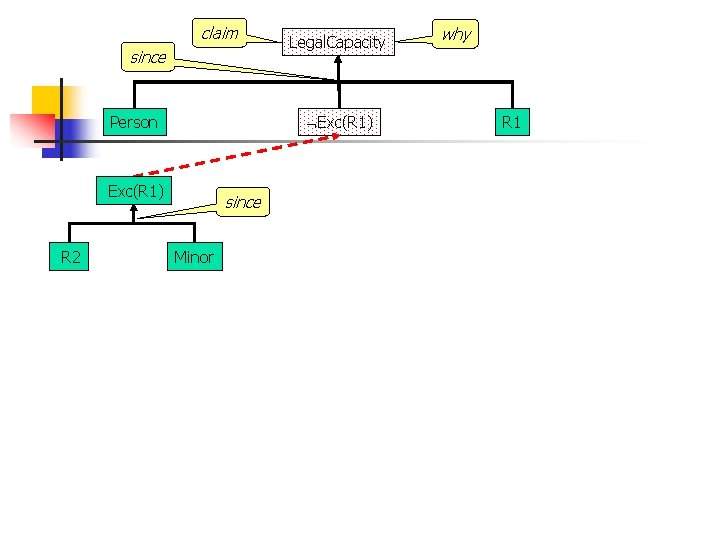
Legal. Capacity Exc(R 1) Person Exc(R 1) R 2 Minor Person < 18 R 1
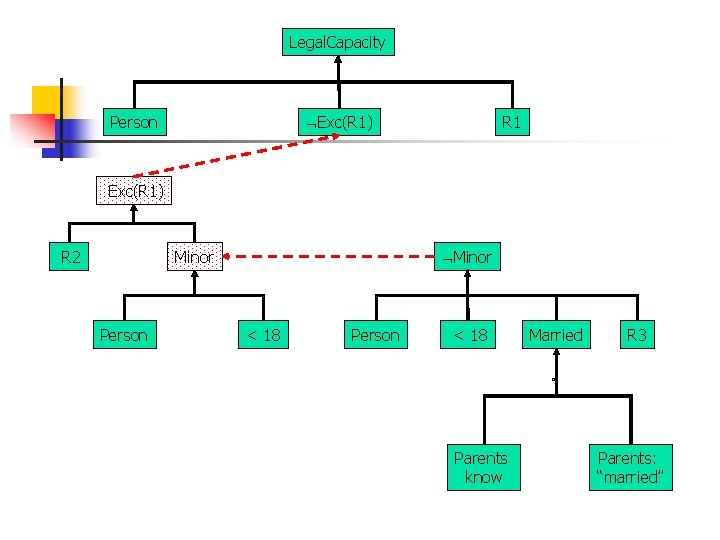
Legal. Capacity Exc(R 1) Person R 1 Exc(R 1) R 2 Minor Person < 18 Parents know Married R 3 Parents: “married”
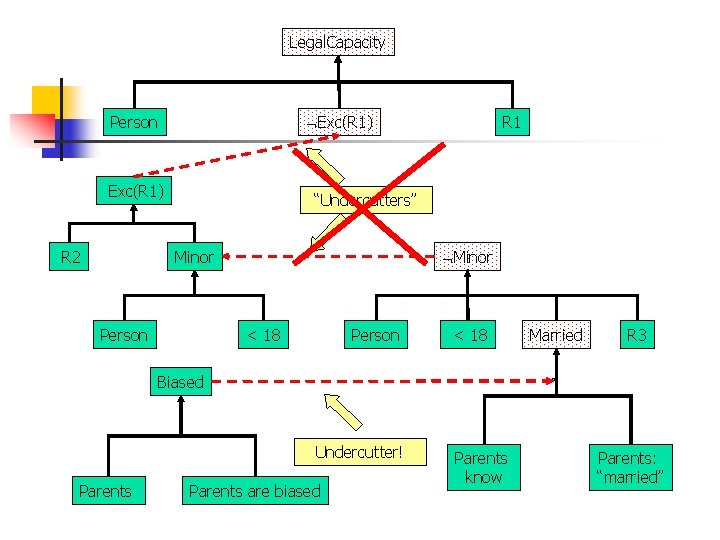
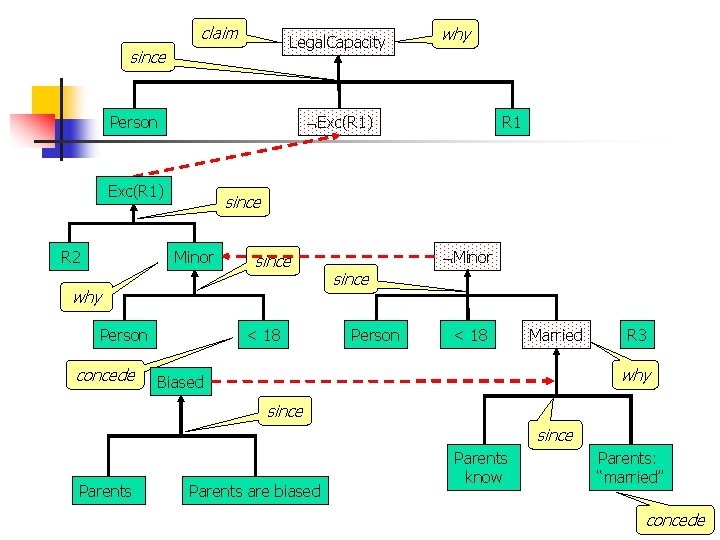
Legal. Capacity Exc(R 1) Person Exc(R 1) R 2 R 1 “Undercutters” Minor Person < 18 Married R 3 Biased Undercutter! Parents are biased Parents know Parents: “married”
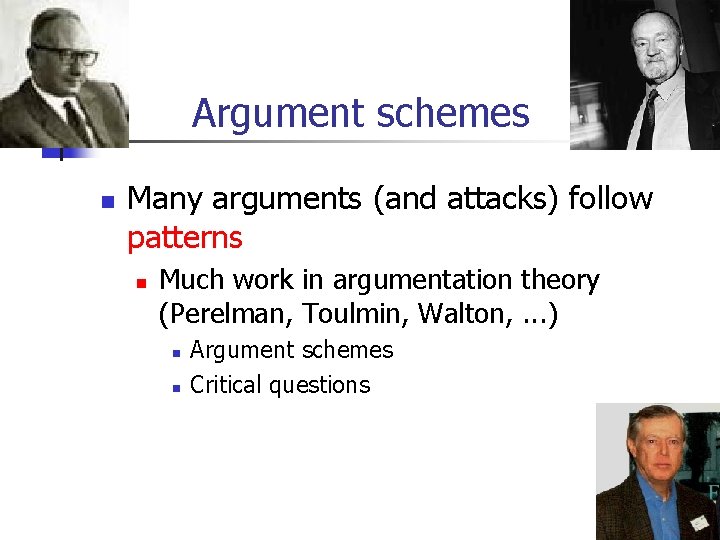
Argument schemes n Many arguments (and attacks) follow patterns n Much work in argumentation theory (Perelman, Toulmin, Walton, . . . ) n n Argument schemes Critical questions
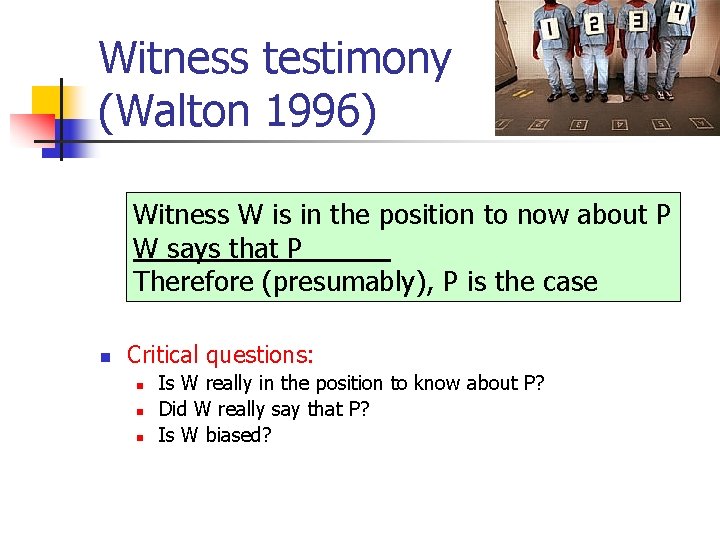
Witness testimony (Walton 1996) Witness W is in the position to now about P W says that P Therefore (presumably), P is the case n Critical questions: n n n Is W really in the position to know about P? Did W really say that P? Is W biased?
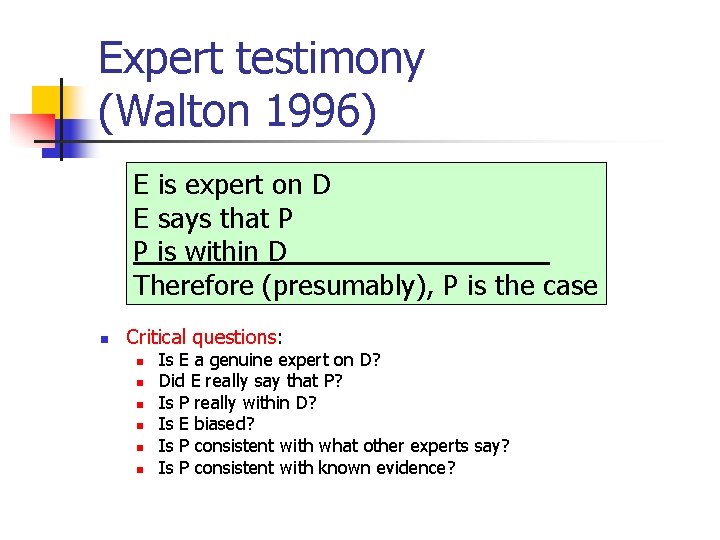
Expert testimony (Walton 1996) E is expert on D E says that P P is within D Therefore (presumably), P is the case n Critical questions: n n n Is E a genuine expert on D? Did E really say that P? Is P really within D? Is E biased? Is P consistent with what other experts say? Is P consistent with known evidence?
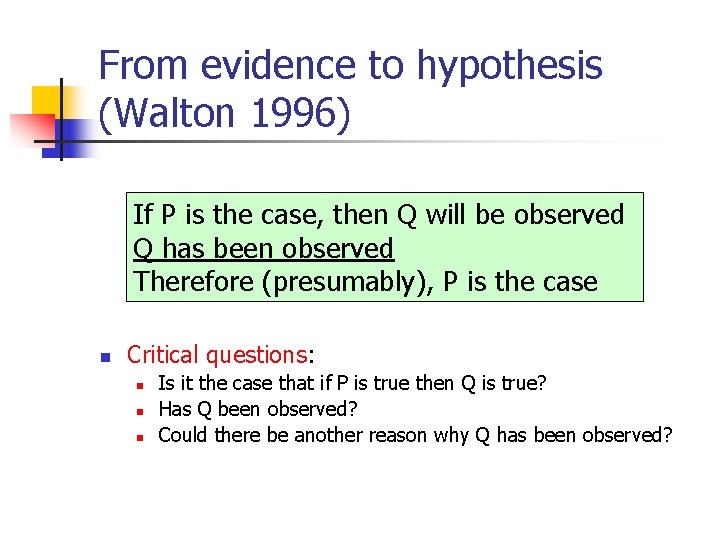
From evidence to hypothesis (Walton 1996) If P is the case, then Q will be observed Q has been observed Therefore (presumably), P is the case n Critical questions: n n n Is it the case that if P is true then Q is true? Has Q been observed? Could there be another reason why Q has been observed?
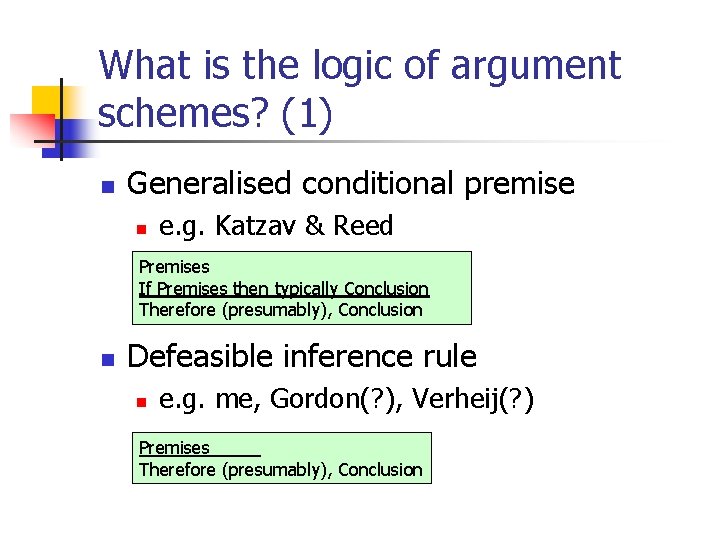
What is the logic of argument schemes? (1) n Generalised conditional premise n e. g. Katzav & Reed Premises If Premises then typically Conclusion Therefore (presumably), Conclusion n Defeasible inference rule n e. g. me, Gordon(? ), Verheij(? ) Premises Therefore (presumably), Conclusion
Argumentation schemes in AI n Pollock’s reasons n n n Perception Memory Induction Statistical syllogism Temporal persistence. . .
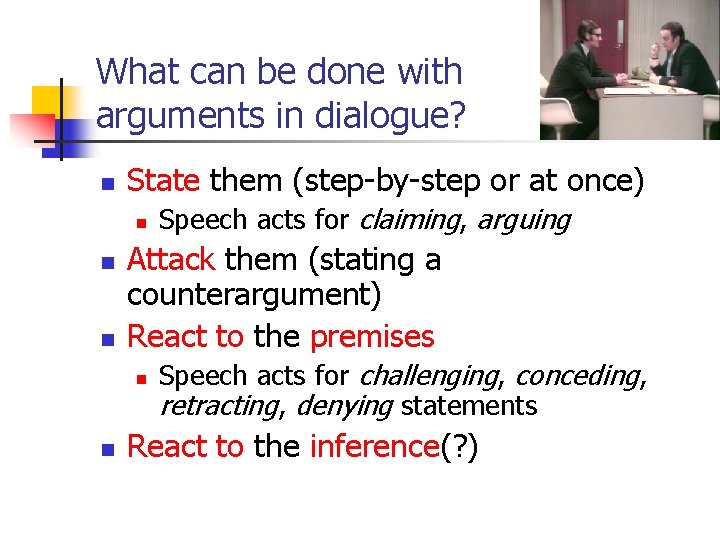
What can be done with arguments in dialogue? n State them (step-by-step or at once) n n n Attack them (stating a counterargument) React to the premises n n Speech acts for claiming, arguing Speech acts for challenging, conceding, retracting, denying statements React to the inference(? )
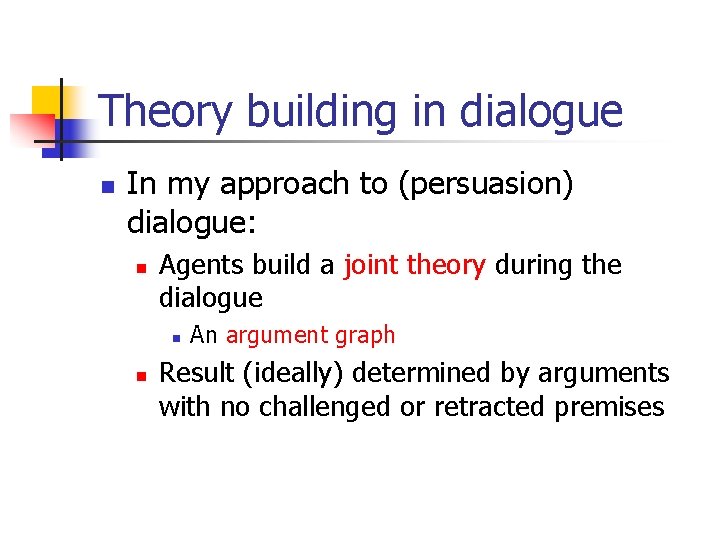
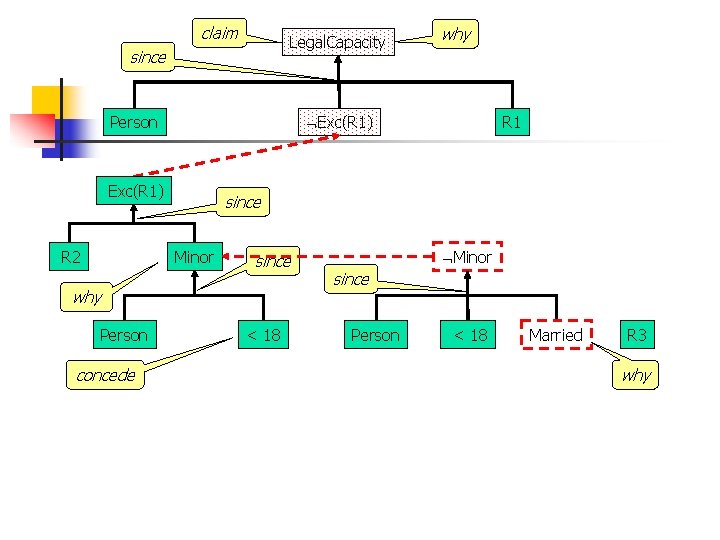
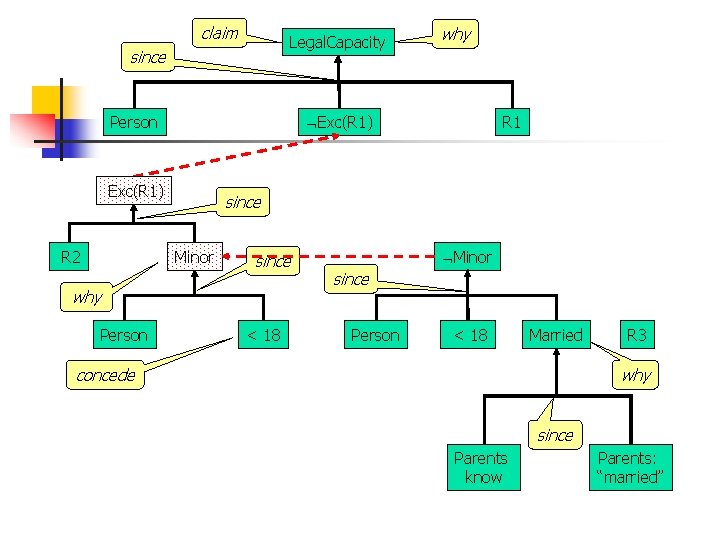
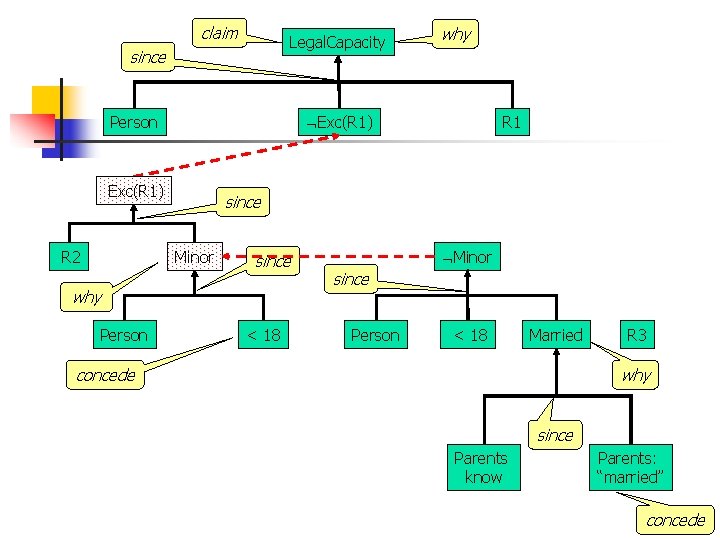
Theory building in dialogue n In my approach to (persuasion) dialogue: n Agents build a joint theory during the dialogue n n An argument graph Result (ideally) determined by arguments with no challenged or retracted premises
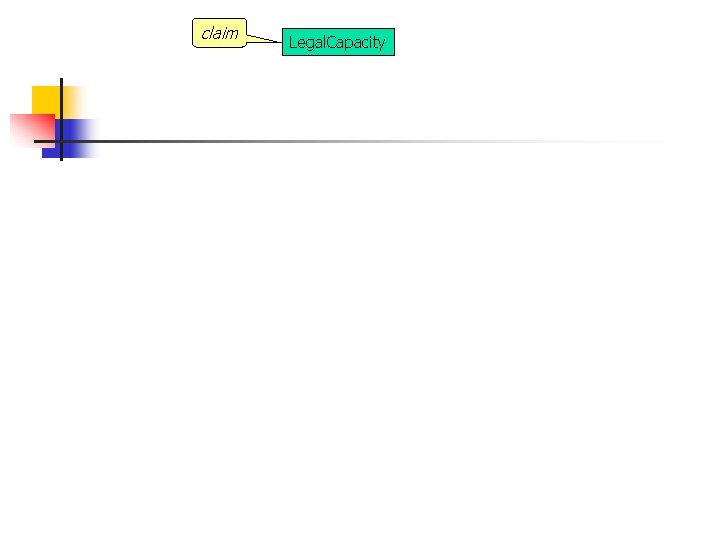
claim Legal. Capacity
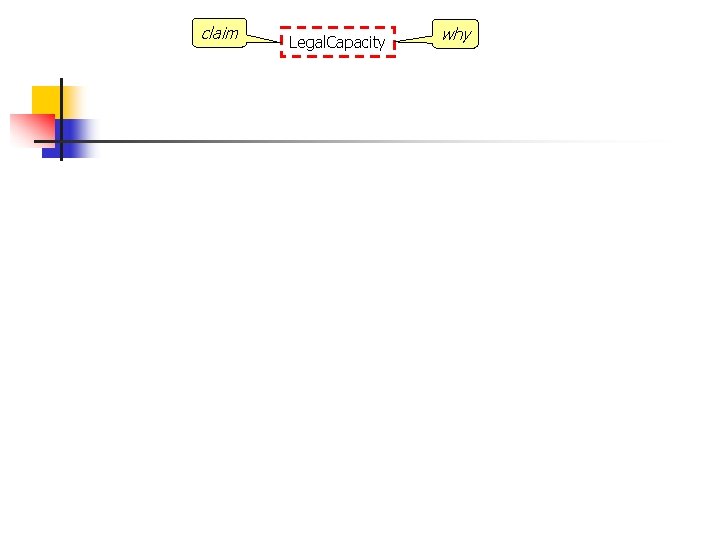
claim Legal. Capacity why
claim since Person Legal. Capacity Exc(R 1) why R 1
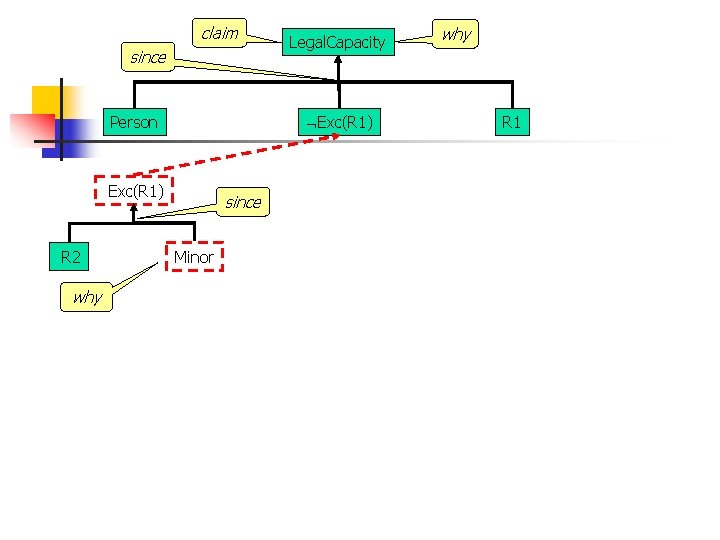
claim since Exc(R 1) Person Exc(R 1) R 2 Legal. Capacity since Minor why R 1
claim since Exc(R 1) Person Exc(R 1) R 2 why Legal. Capacity since Minor why R 1
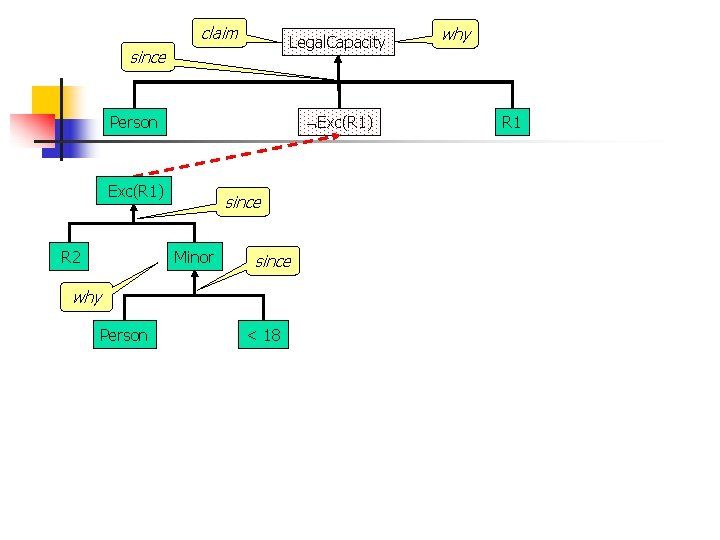
claim Legal. Capacity since Exc(R 1) Person Exc(R 1) R 2 since Minor since why Person < 18 why R 1
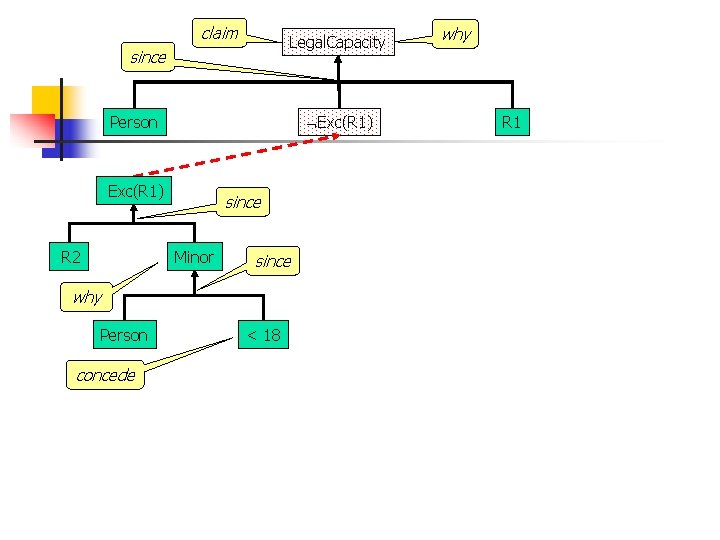
claim Legal. Capacity since Exc(R 1) Person Exc(R 1) R 2 since Minor since why Person concede < 18 why R 1
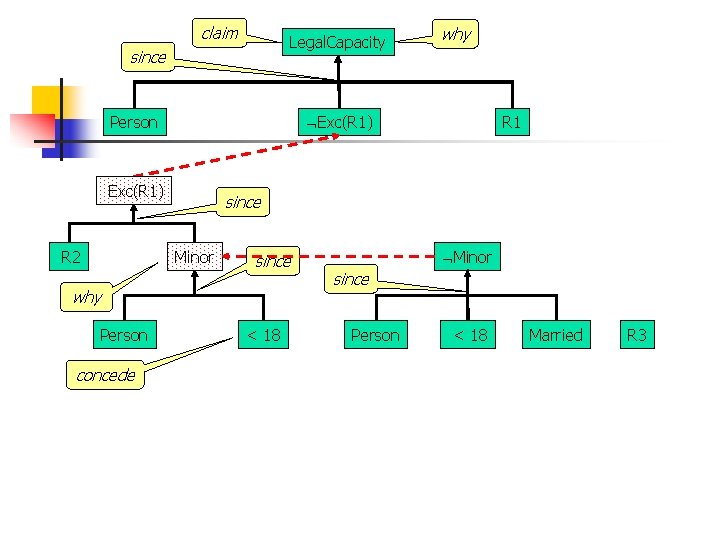
claim Legal. Capacity since Exc(R 1) Person Exc(R 1) R 2 since why concede R 1 since Minor Person why < 18 Minor since Person < 18 Married R 3
claim Legal. Capacity since Exc(R 1) Person Exc(R 1) R 2 since why concede R 1 since Minor Person why < 18 Minor since Person < 18 Married R 3 why
claim Legal. Capacity since Exc(R 1) Person Exc(R 1) R 2 R 1 since Minor since why Person why < 18 Minor since Person < 18 Married concede R 3 why since Parents know Parents: “married”
claim Legal. Capacity since Exc(R 1) Person Exc(R 1) R 2 R 1 since Minor since why Person why < 18 Minor since Person < 18 Married concede R 3 why since Parents know Parents: “married” concede
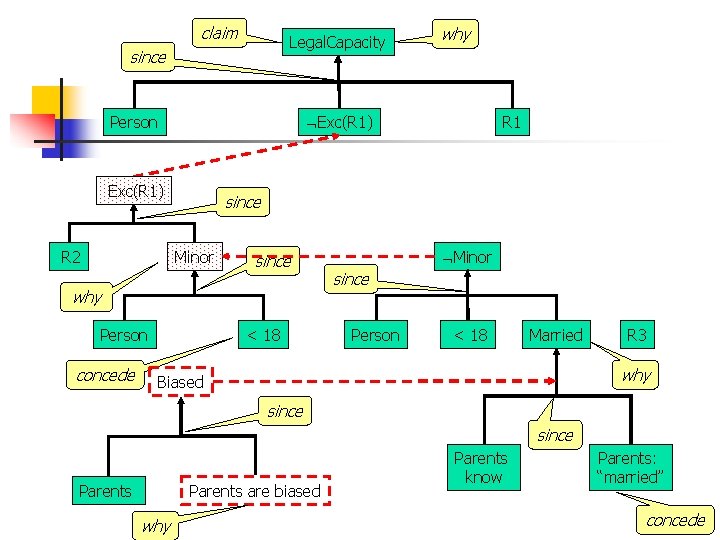
claim Legal. Capacity since Exc(R 1) Person Exc(R 1) R 2 R 1 since Minor since why Person concede why < 18 Minor since Person < 18 Married R 3 why Biased since Parents are biased Parents know Parents: “married” concede
claim Legal. Capacity since Exc(R 1) Person Exc(R 1) R 2 R 1 since Minor since why Person concede why < 18 Minor since Person < 18 Married R 3 why Biased since Parents are biased why Parents know Parents: “married” concede
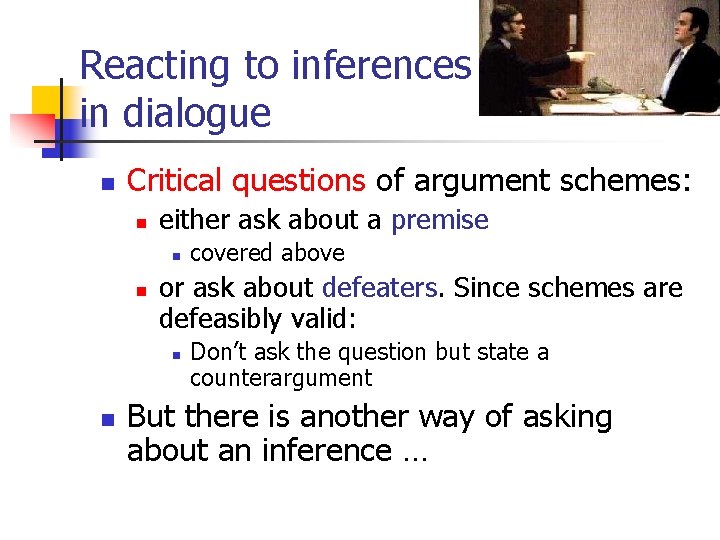
Reacting to inferences in dialogue n Critical questions of argument schemes: n either ask about a premise n n or ask about defeaters. Since schemes are defeasibly valid: n n covered above Don’t ask the question but state a counterargument But there is another way of asking about an inference …
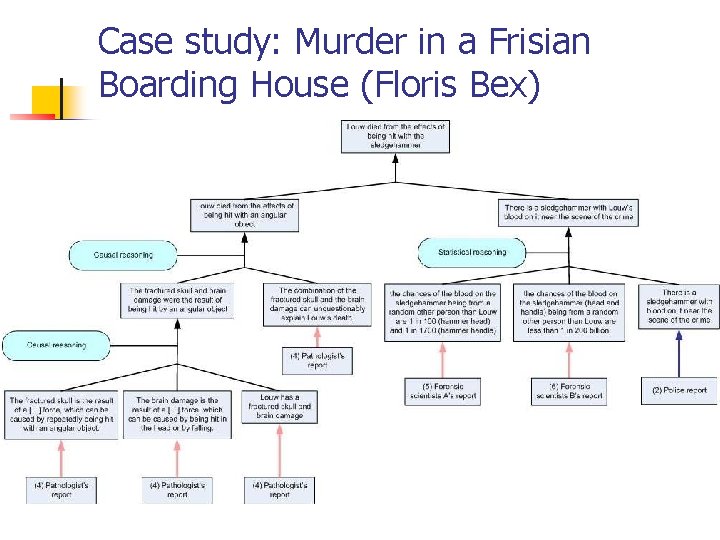
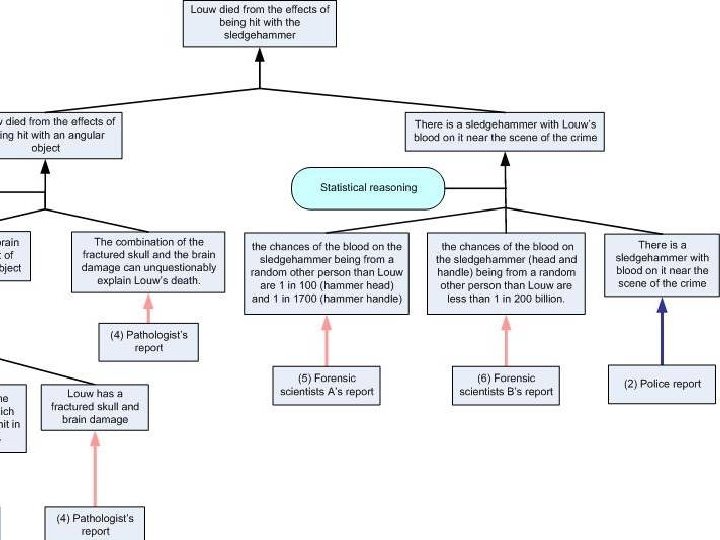
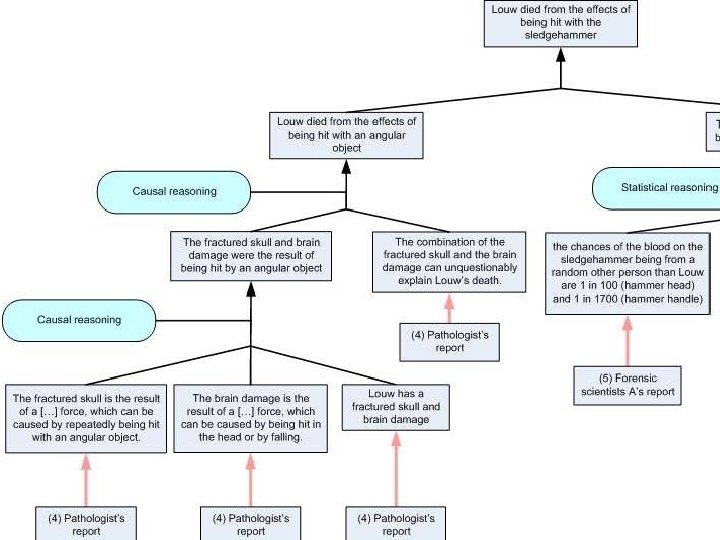
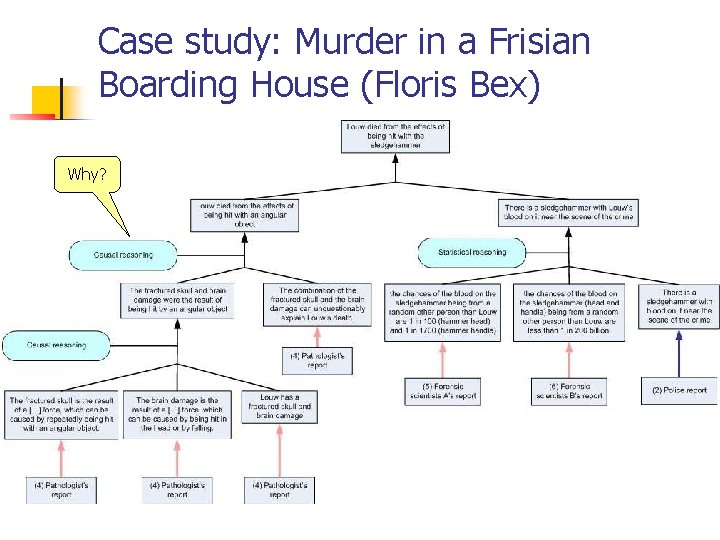
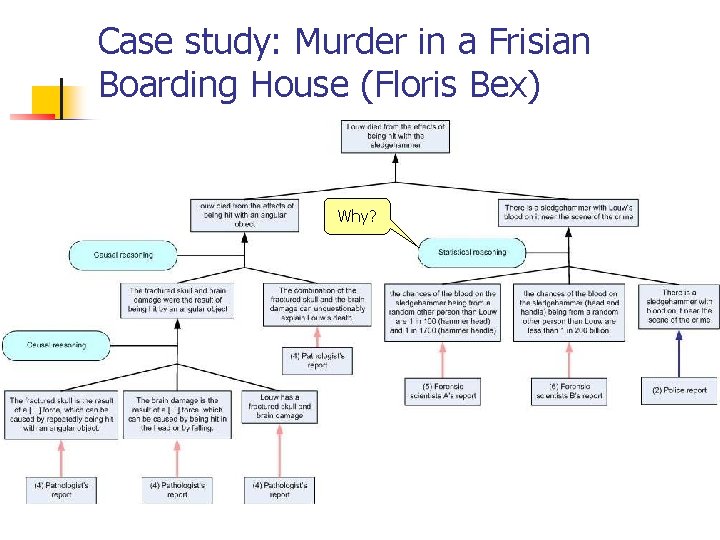
Case study: Murder in a Frisian Boarding House (Floris Bex) Why?
Why?
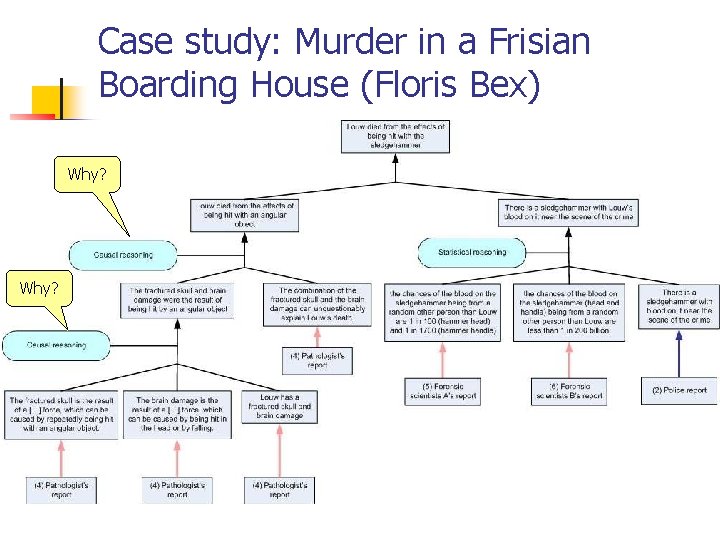
Why?
Case study: Murder in a Frisian Boarding House (Floris Bex) Why?
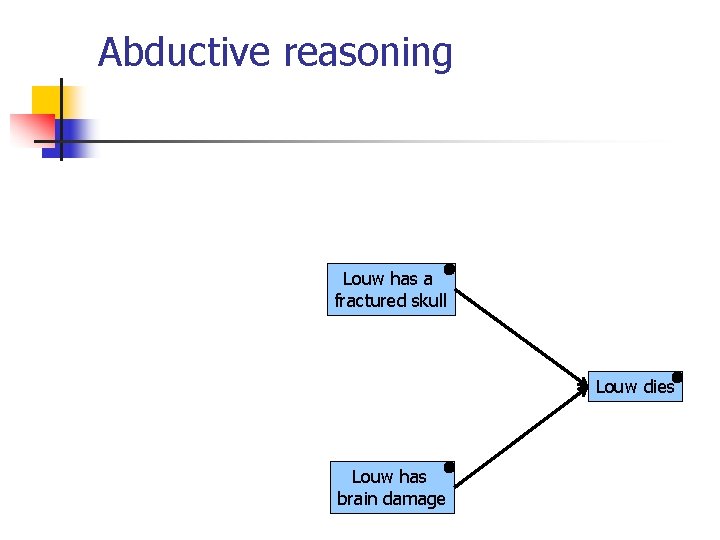
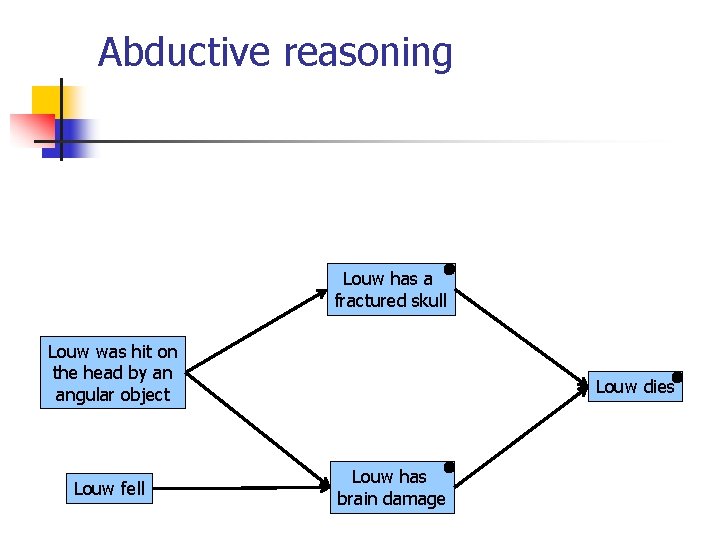
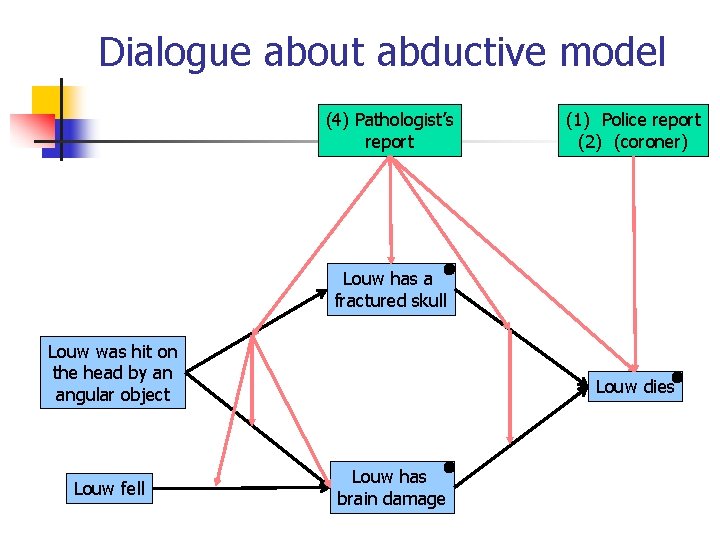
Abductive reasoning Louw has a fractured skull Louw dies Louw has brain damage
Case study: Murder in a Frisian Boarding House (Floris Bex) Why?
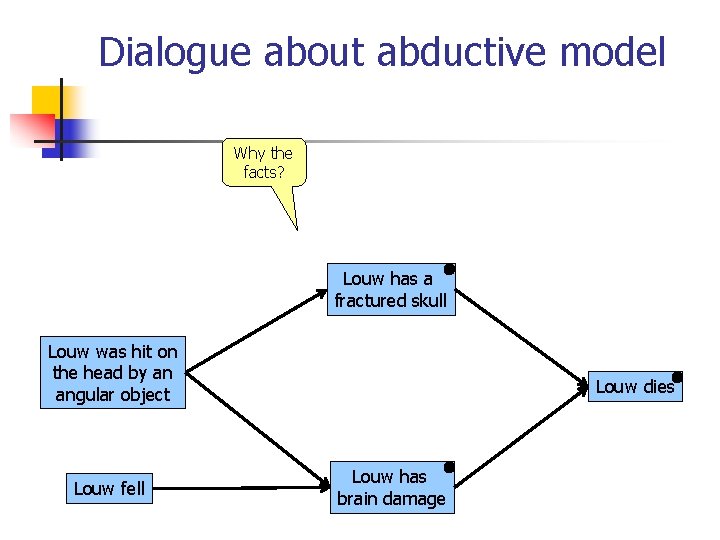
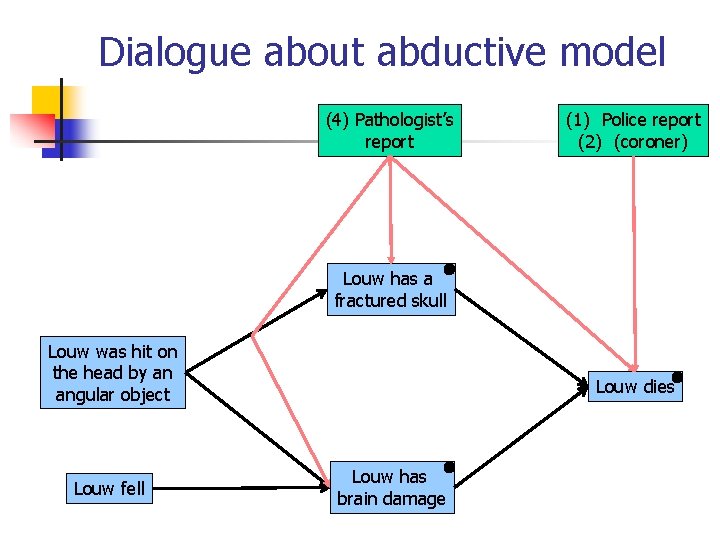
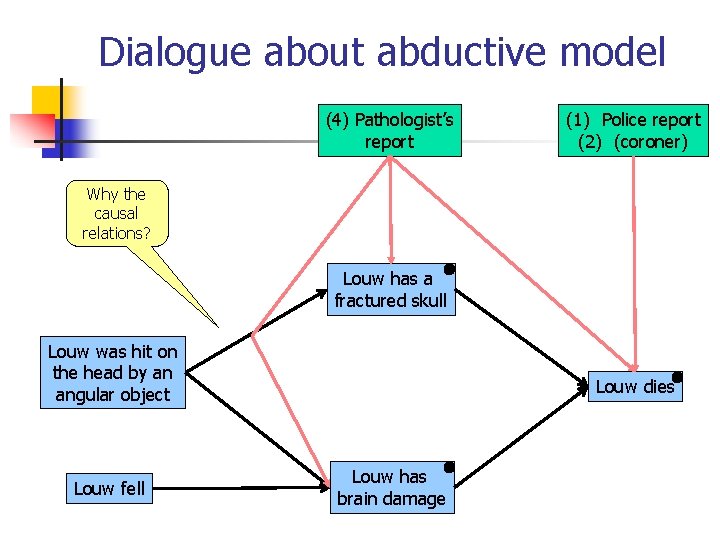
Abductive reasoning Louw has a fractured skull Louw was hit on the head by an angular object Louw fell Louw dies Louw has brain damage
Dialogue about abductive model Why the facts? Louw has a fractured skull Louw was hit on the head by an angular object Louw fell Louw dies Louw has brain damage
Dialogue about abductive model (4) Pathologist’s report (1) Police report (2) (coroner) Louw has a fractured skull Louw was hit on the head by an angular object Louw fell Louw dies Louw has brain damage
Dialogue about abductive model (4) Pathologist’s report (1) Police report (2) (coroner) Why the causal relations? Louw has a fractured skull Louw was hit on the head by an angular object Louw fell Louw dies Louw has brain damage
Dialogue about abductive model (4) Pathologist’s report (1) Police report (2) (coroner) Louw has a fractured skull Louw was hit on the head by an angular object Louw fell Louw dies Louw has brain damage
Case study: Murder in a Frisian Boarding House (Floris Bex) Why?
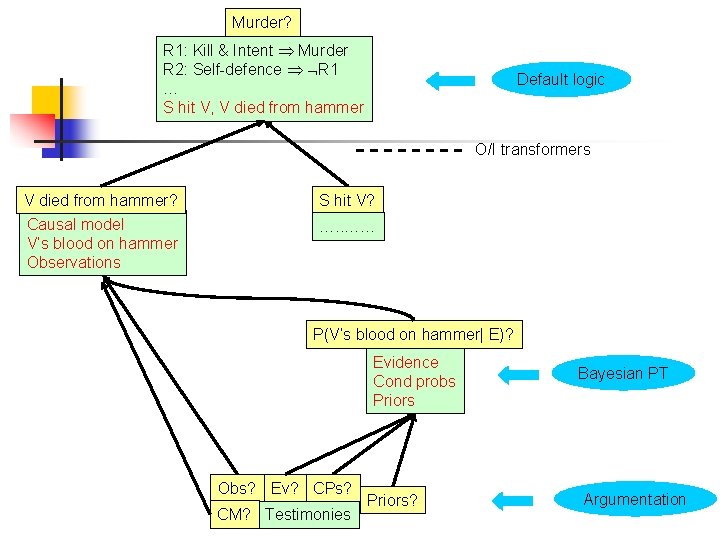
Conclusions from the case study n Steps in an argument sometimes compress complex lines of reasoning n n n Dialogue systems should allow for ‘unpacking’ Sometimes dialogues build theories that are not argument graphs Sometimes these theories combine several forms of reasoning n A ‘logic’ for such combinations is needed
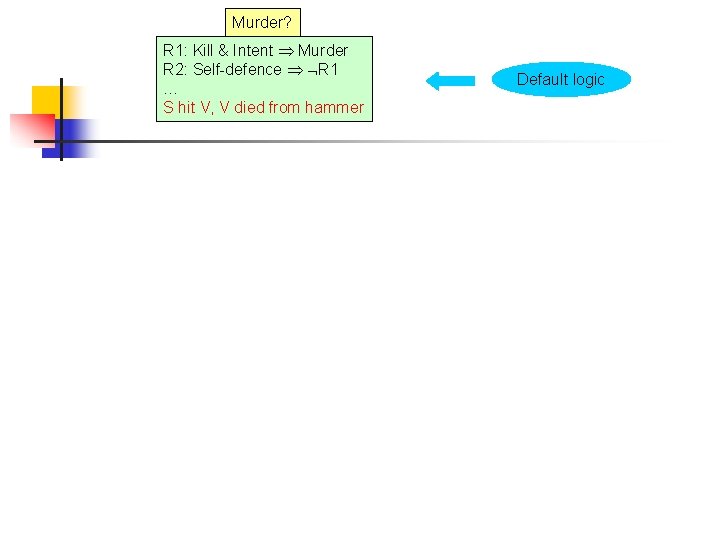
Murder? R 1: Kill & Intent Murder R 2: Self-defence R 1 … S hit V, V died from hammer Default logic
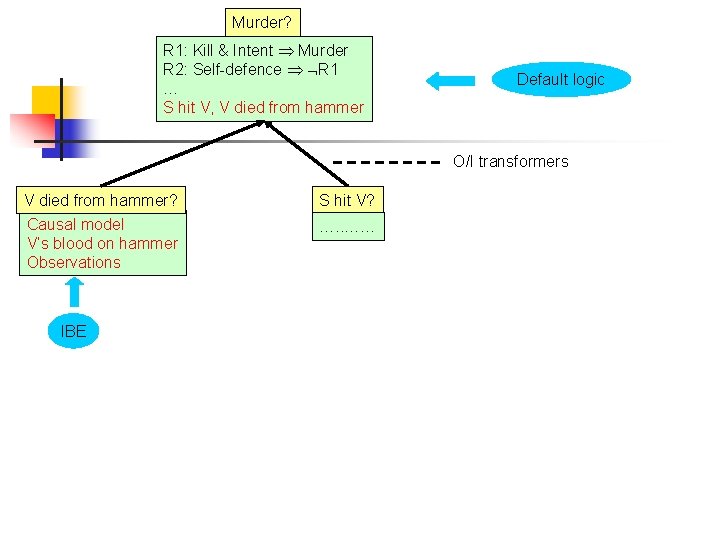
Murder? R 1: Kill & Intent Murder R 2: Self-defence R 1 … S hit V, V died from hammer Default logic O/I transformers V died from hammer? S hit V? Causal model V’s blood on hammer Observations …. . …… IBE
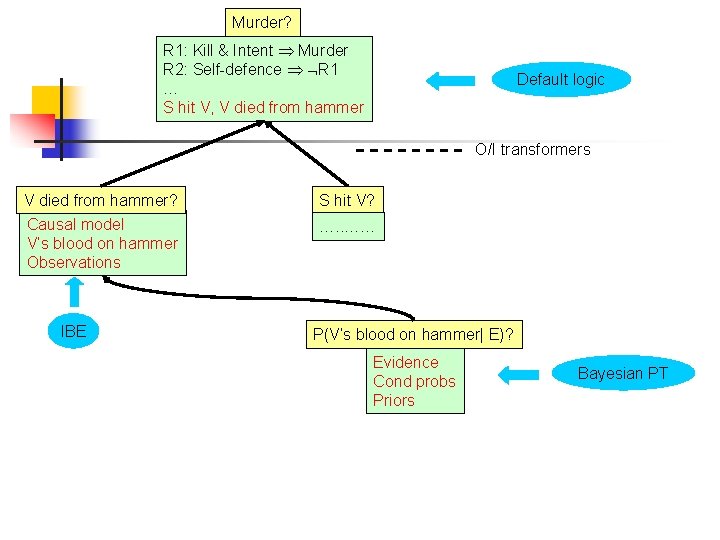
Murder? R 1: Kill & Intent Murder R 2: Self-defence R 1 … S hit V, V died from hammer Default logic O/I transformers V died from hammer? S hit V? Causal model V’s blood on hammer Observations …. . …… IBE P(V’s blood on hammer| E)? Evidence Cond probs Priors Bayesian PT
Murder? R 1: Kill & Intent Murder R 2: Self-defence R 1 … S hit V, V died from hammer Default logic O/I transformers V died from hammer? S hit V? Causal model V’s blood on hammer Observations …. . …… P(V’s blood on hammer| E)? Evidence Cond probs Priors Obs? Ev? CPs? CM? Testimonies Priors? Bayesian PT Argumentation
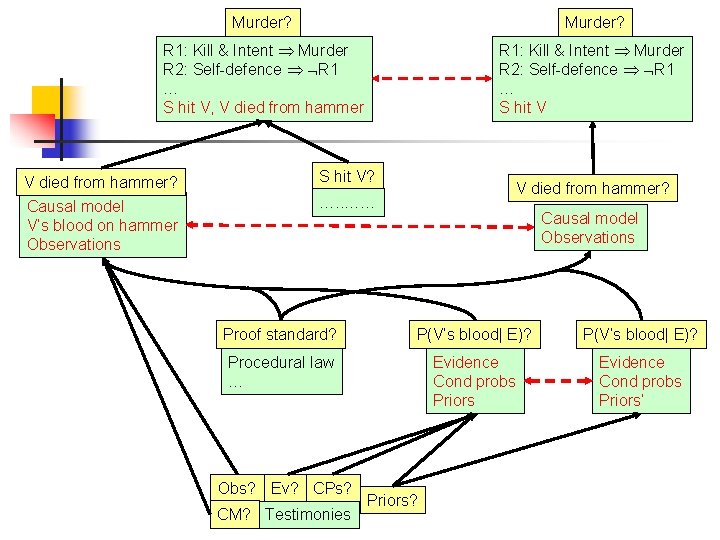
Murder? R 1: Kill & Intent Murder R 2: Self-defence R 1 … S hit V, V died from hammer R 1: Kill & Intent Murder R 2: Self-defence R 1 … S hit V V died from hammer? S hit V? Causal model V’s blood on hammer Observations …. . …… V died from hammer? Causal model Observations Proof standard? P(V’s blood| E)? Procedural law … Evidence Cond probs Priors’ Obs? Ev? CPs? CM? Testimonies Priors?
Final conclusions n Inference: n Study the combination of reasoning forms n n Be open-minded: don’t force everything into the format of arguments Dialogue: n Allow that argument can be about something else than arguments n Allow for switching between levels of abstraction
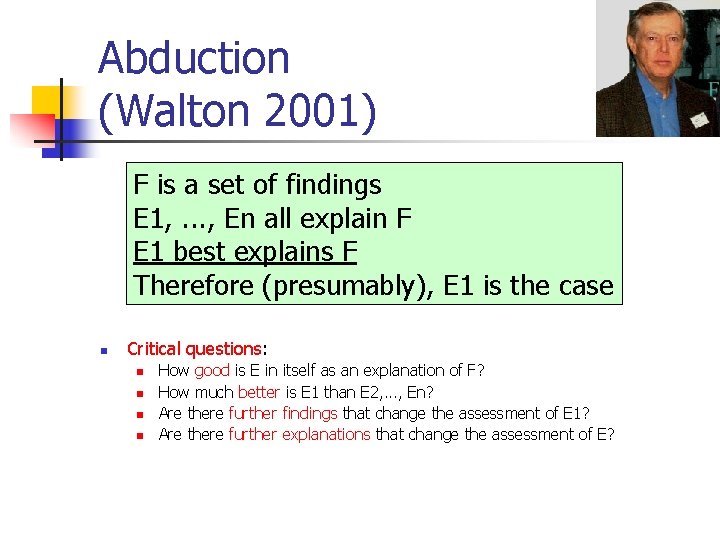
Abduction (Walton 2001) F is a set of findings E 1, . . . , En all explain F E 1 best explains F Therefore (presumably), E 1 is the case n Critical questions: n n How good is E in itself as an explanation of F? How much better is E 1 than E 2, . . . , En? Are there further findings that change the assessment of E 1? Are there further explanations that change the assessment of E?