
On the Road to Competency Based Medical Education
On the Road to Competency Based Medical Education! Jo. Ann Corey, CBME Lead Dept. of Psychiatry, Mc. Master University
CREDITS for TODAY 2 hours Dept. CBME Learning Requirement & Two Section 1 Royal College Mo. COMP credits
Go-Live for General Program July 1 2020 Only applies to the incoming residents!
General Program Soft Launch July 1 2019 Only applies to the incoming residents!
Go-Live for Forensic Subspecialty Program July 1 2021 ? Only applies to the incoming residents!
We are doing well… Why would we change anything?
Why Move to CBME? Feedback. Exposure to experiences.
Why move to Competency Based Medical Education?
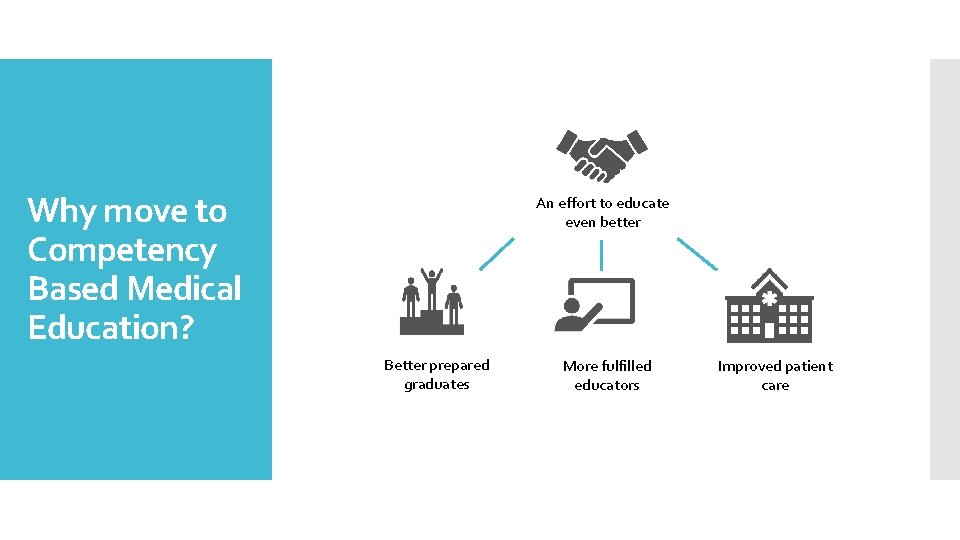
Why move to Competency Based Medical Education? An effort to educate even better Better prepared graduates More fulfilled educators Improved patient care
MANY THINGS STILL THE SAME Defined Rotations Psychotherapy Current Evaluations ITARs
What is different ab 0 ut Competency Based Medical Education?
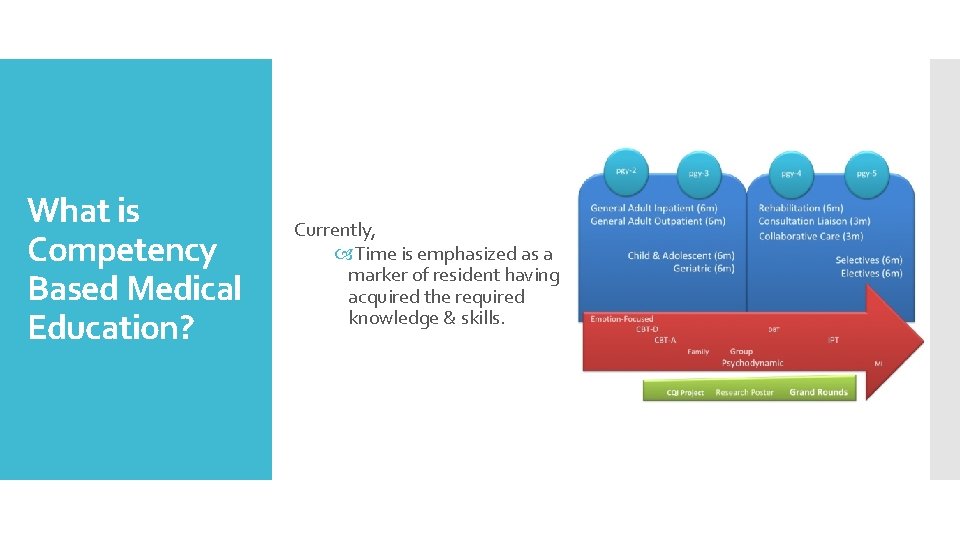
What is Competency Based Medical Education? Currently, Time is emphasized as a marker of resident having acquired the required knowledge & skills.
What is Competency Based Medical Education? Problem with our current system of assessment: Mainly at the end of the experience Evaluations are not always useful Inter-evaluator inconsistency Not capturing concerns early Less effective at promoting development
What is Competency Based Medical Education? CBME: Rotations will still be defined times Emphasize acquisition of knowledge & skills Organized around outcomes expected of a resident Advancement dependent on achieving those expected outcomes Allow more frequent, low-stakes assessments & feedback Foster effective feedback Allow residents to be more open to feedback
Time will still matter. Its all about Feedback & Assessment Early completion will be exception Quality Acceptance & Incorporation Key Points
What is this going to look like?
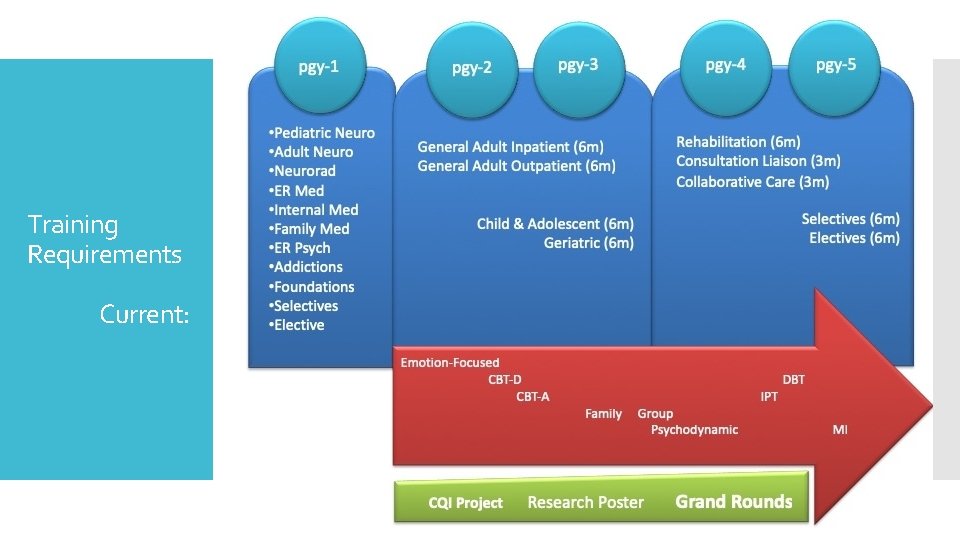
Training Requirements Current:
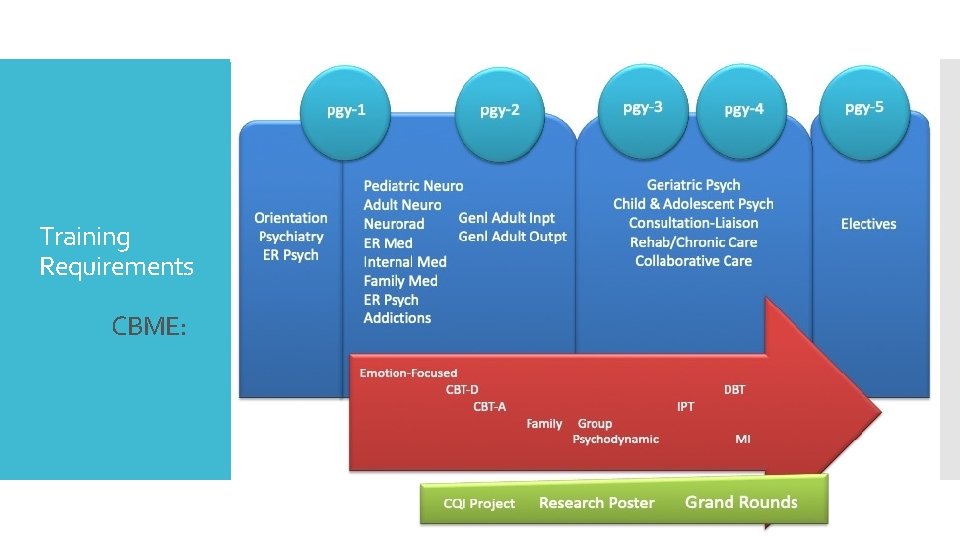
Training Requirements CBME:
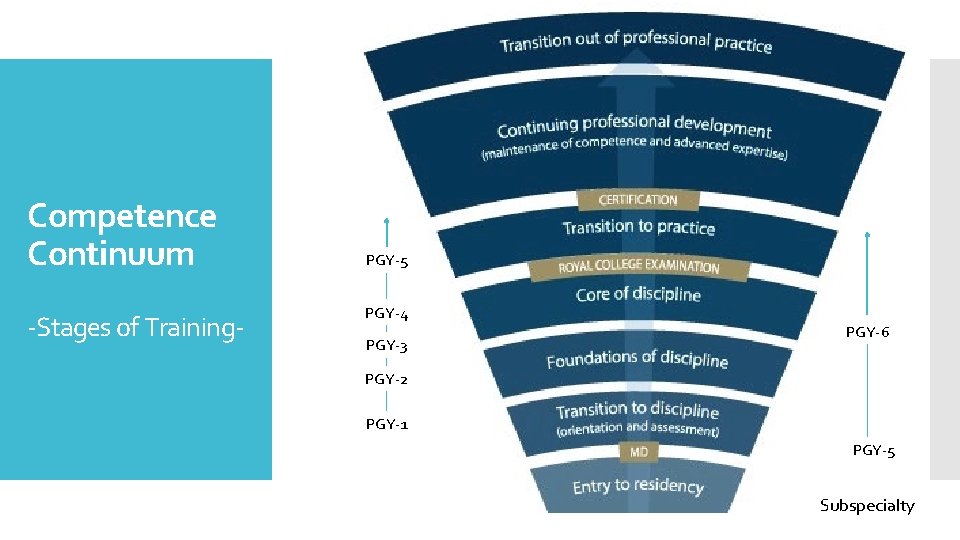
Competence Continuum -Stages of Training- PGY-5 PGY-4 PGY-3 PGY-6 PGY-2 PGY-1 PGY-5 Subspecialty
Residents will progress through Stages of Training along the Competence Continuum. There will be defined Required Training Experiences in each stage of training. Key Points
During each stage of training there will be defined Competencies (i. e. knowledge & skills) that a resident must acquire
These competencies are called Entrustable Professional Activities (EPAs)
Entrustable Professional Activities (EPAs) Key tasks that an individual can be trusted to perform in a given health care context Example: Obtaining a psychiatric history, which includes a preliminary diagnostic impression that informs a management plan for patients presenting with mental health concerns.
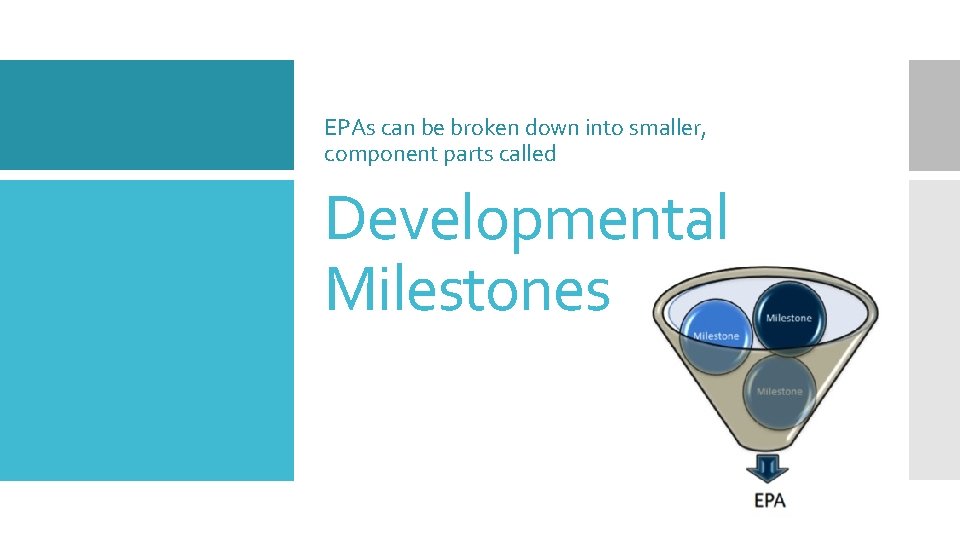
EPAs can be broken down into smaller, component parts called Developmental Milestones
The smaller, defined components that are needed to complete the full EPA Observable markers of an individual’s ability Developmental Milestones Reference the Can. MEDS roles applicable to that EPA Examples: Conduct a mental status exam Respect professional boundaries
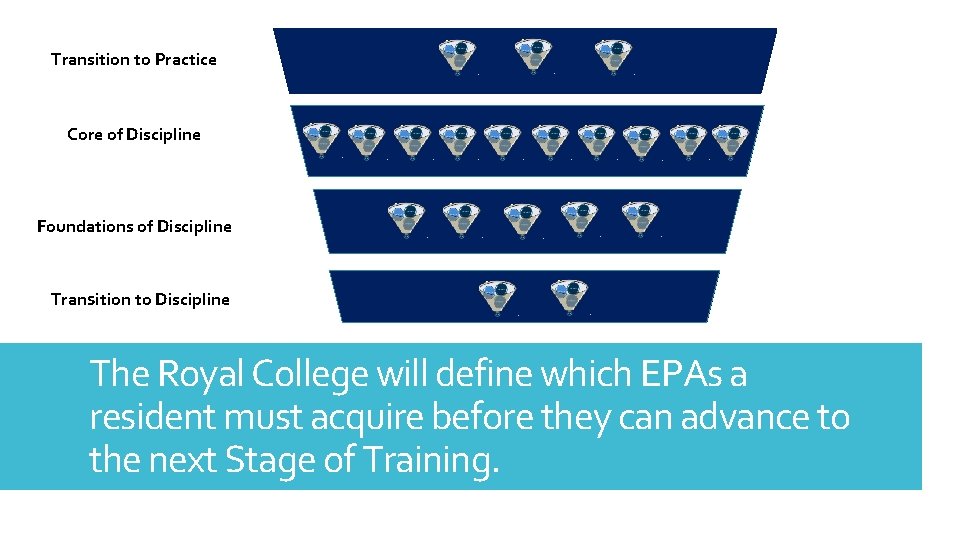
Transition to Practice Core of Discipline Foundations of Discipline Transition to Discipline The Royal College will define which EPAs a resident must acquire before they can advance to the next Stage of Training.
EPAs are competencies residents must acquire. Milestones are the small tasks that make up an EPA. Key Points Residents will need to achieve specific EPAs in each stage of training.
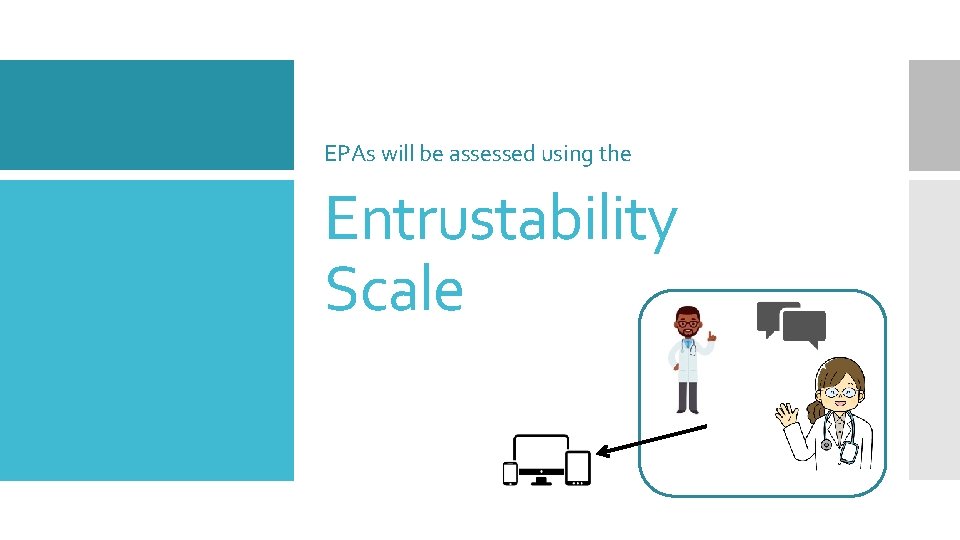
EPAs will be assessed using the Entrustability Scale
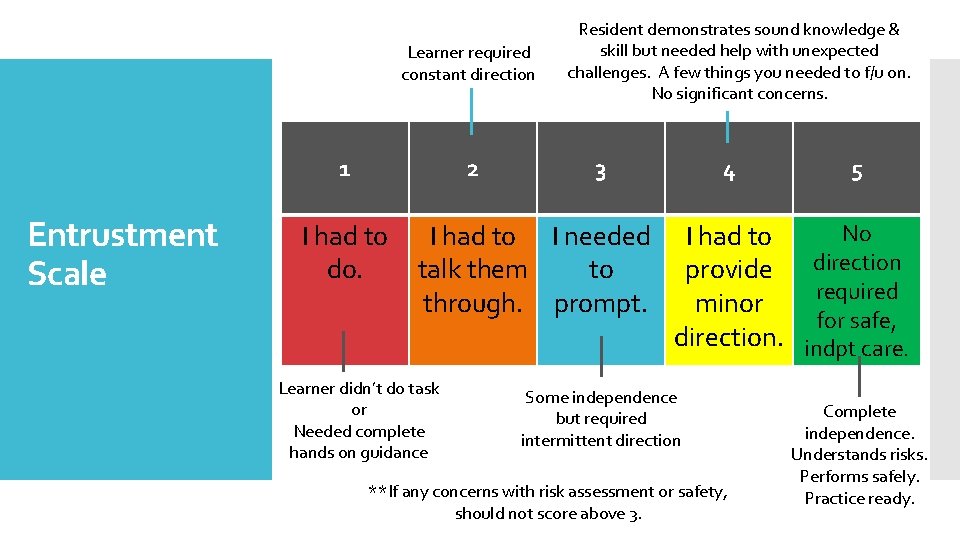
Learner required constant direction 1 Entrustment Scale 2 I had to do. Resident demonstrates sound knowledge & skill but needed help with unexpected challenges. A few things you needed to f/u on. No significant concerns. 3 I had to I needed talk them to through. prompt. Learner didn’t do task or Needed complete hands on guidance 4 5 No I had to provide direction required minor for safe, direction. indpt care. Some independence but required intermittent direction **If any concerns with risk assessment or safety, should not score above 3. Complete independence. Understands risks. Performs safely. Practice ready.
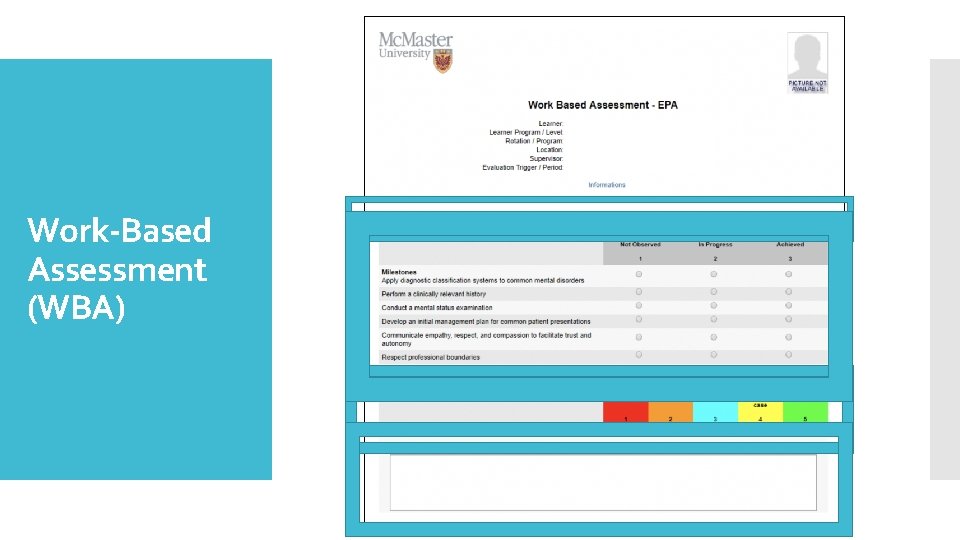
Work-Based Assessment (WBA)
Assessment of EPAs MAY INVOLVE DIRECT OR INDIRECT OBSERVATION COMPLETE WBAS EVEN IF TASK RATED LESS THAN A 4 OR 5, TO PROMOTE KNOWLEDGE & SKILL DEVELOPMENT IT MAY TAKE 2 -3 ATTEMPTS BEFORE A RESIDENT ACHIEVES A SUCCESSFUL ASSESSMENT.
Other Evals Will Still Matter ITARs Scholarly Projects Longitudinal F/U Mid- & end- rotation Evaluations Grand Rounds Logs Poster presentation
EPAs assessed using Entrustability Scale. Milestones guide rating & feedback. Key Points Still using other Evals
How will this work?
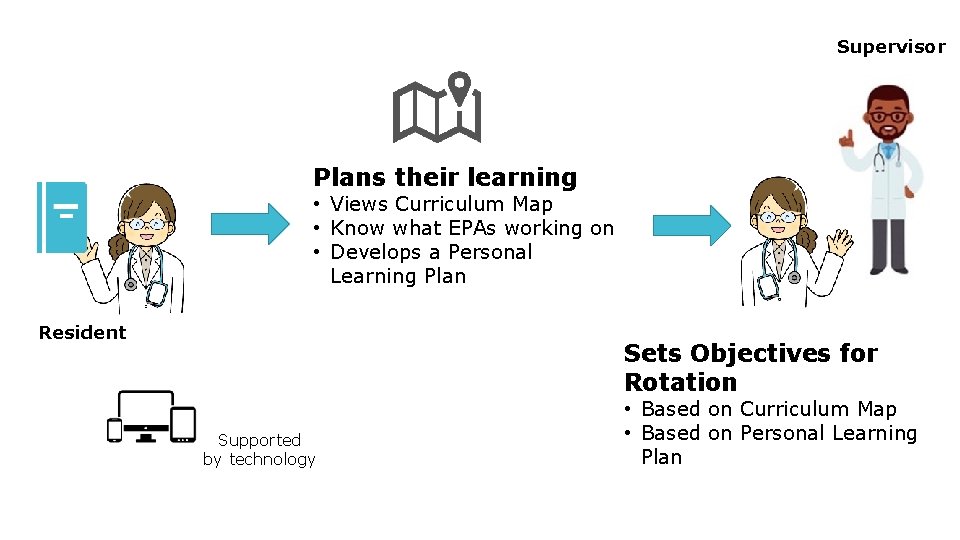
Supervisor Plans their learning • Views Curriculum Map • Know what EPAs working on • Develops a Personal Learning Plan Resident Sets Objectives for Rotation Supported by technology • Based on Curriculum Map • Based on Personal Learning Plan
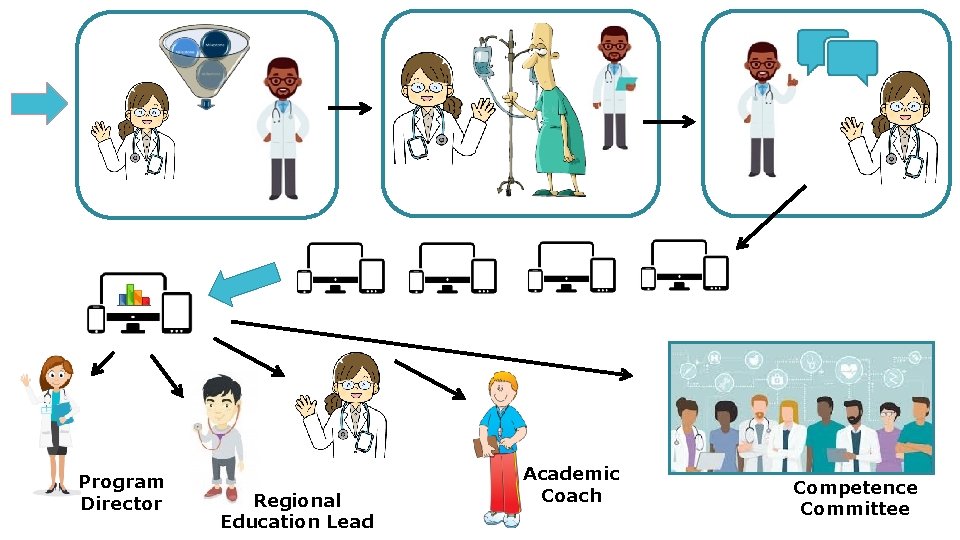
Program Director Regional Education Lead Academic Coach Competence Committee
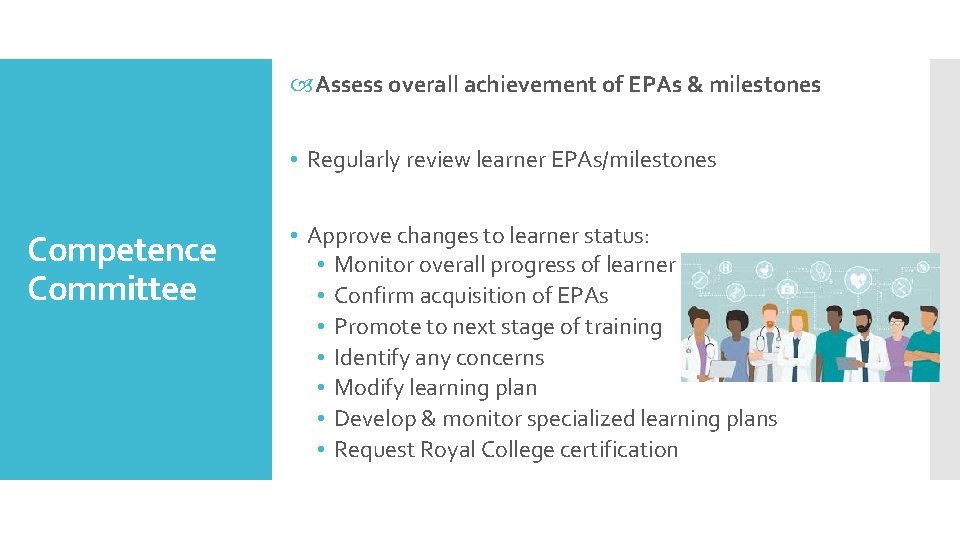
Assess overall achievement of EPAs & milestones • Regularly review learner EPAs/milestones Competence Committee • Approve changes to learner status: • Monitor overall progress of learner • Confirm acquisition of EPAs • Promote to next stage of training • Identify any concerns • Modify learning plan • Develop & monitor specialized learning plans • Request Royal College certification
Regular assessment & feedback. Competence Committee assesses overall achievement. Cued by the resident Key Points
Residents will be assisted by Academic Coaches
Academic Coaches Help facilitate resident’s learning & development over time Help resident navigate curriculum map Longitudinal relationship with resident
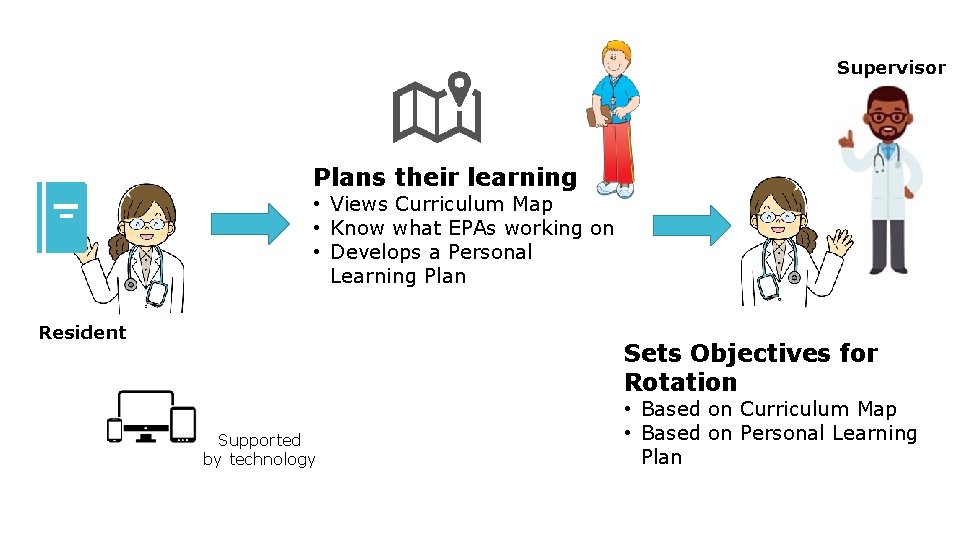
Supervisor Plans their learning • Views Curriculum Map • Know what EPAs working on • Develops a Personal Learning Plan Resident Sets Objectives for Rotation Supported by technology • Based on Curriculum Map • Based on Personal Learning Plan
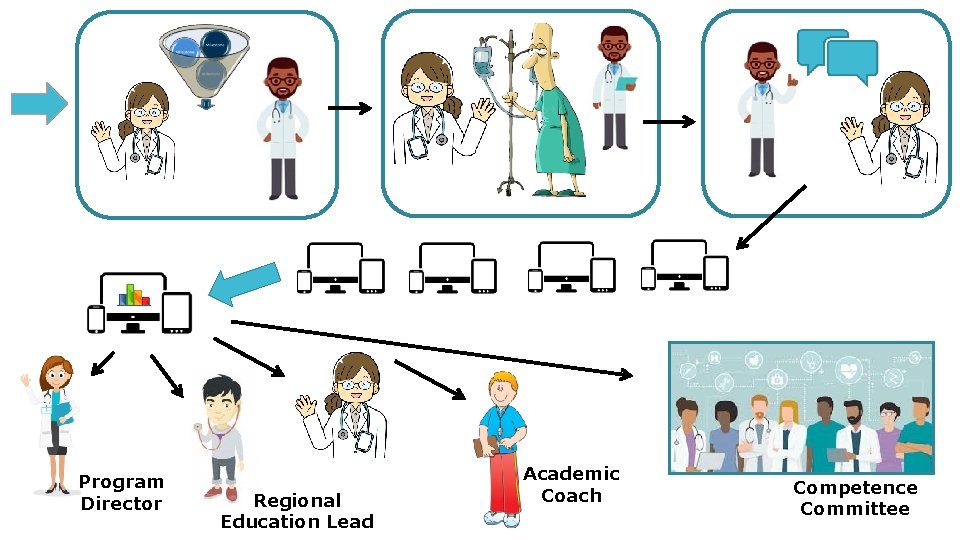
Program Director Regional Education Lead Academic Coach Competence Committee
Proposed Timeline
Go-Live for General Program July 1 2020 Only applies to the incoming residents!
General Program Soft Launch July 1 2019 Only applies to the incoming residents!
Go-Live for Forensic Subspecialty Program July 1 2021 ? Only applies to the incoming residents!
Competence Committee is in place. *Subspecialty CC planned; to begin July 2, 2019 We have the draft EPAs, Milestones & Required Training Experiences from Royal College (General Program) Roll-Out Working on potential general program revisions based on new CBME requirements Development of Curriculum Maps
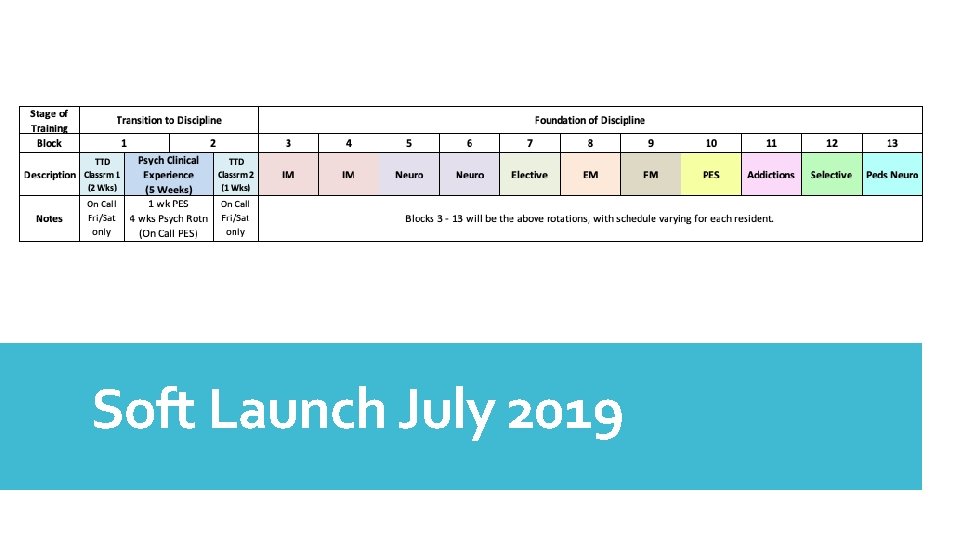
Soft Launch July 2019
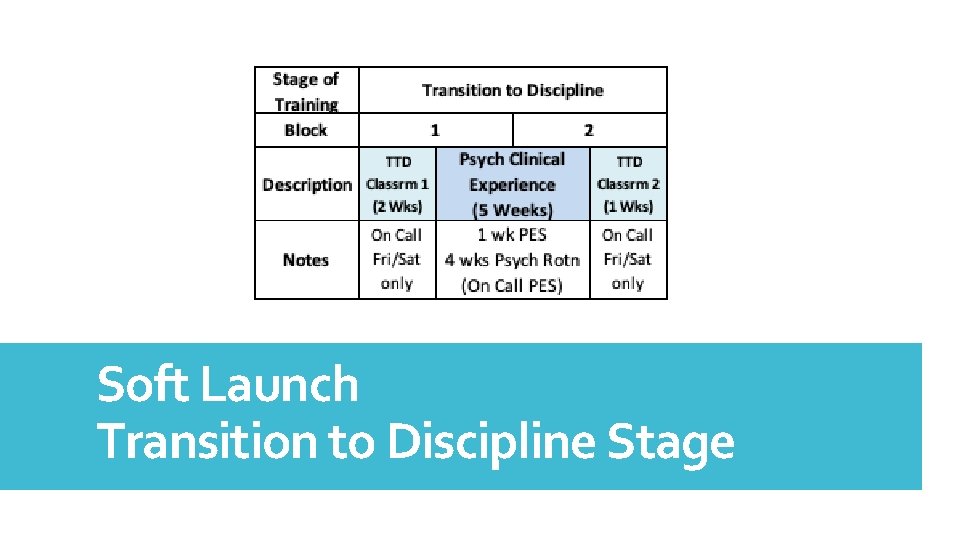
Soft Launch Transition to Discipline Stage
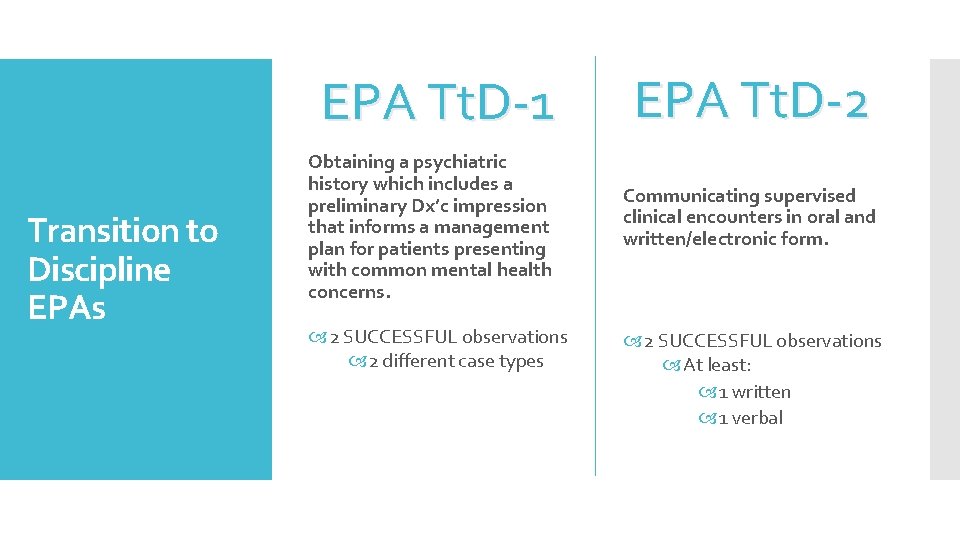
Transition to Discipline EPAs EPA Tt. D-1 EPA Tt. D-2 Obtaining a psychiatric history which includes a preliminary Dx’c impression that informs a management plan for patients presenting with common mental health concerns. Communicating supervised clinical encounters in oral and written/electronic form. 2 SUCCESSFUL observations 2 different case types 2 SUCCESSFUL observations At least: 1 written 1 verbal
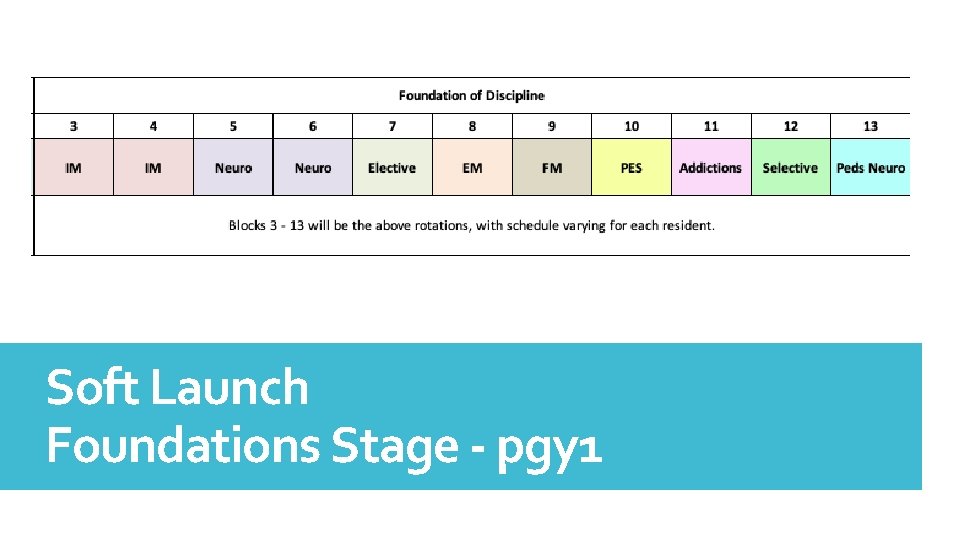
Soft Launch Foundations Stage - pgy 1
Soft Launch Cohort will begin Chronic Care Rotations in 2022 -2023
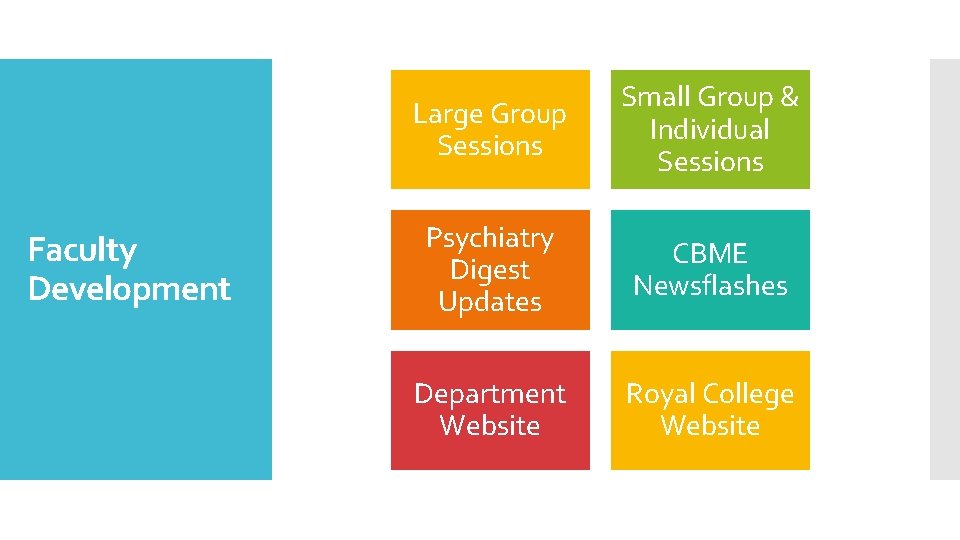
Faculty Development Large Group Sessions Small Group & Individual Sessions Psychiatry Digest Updates CBME Newsflashes Department Website Royal College Website
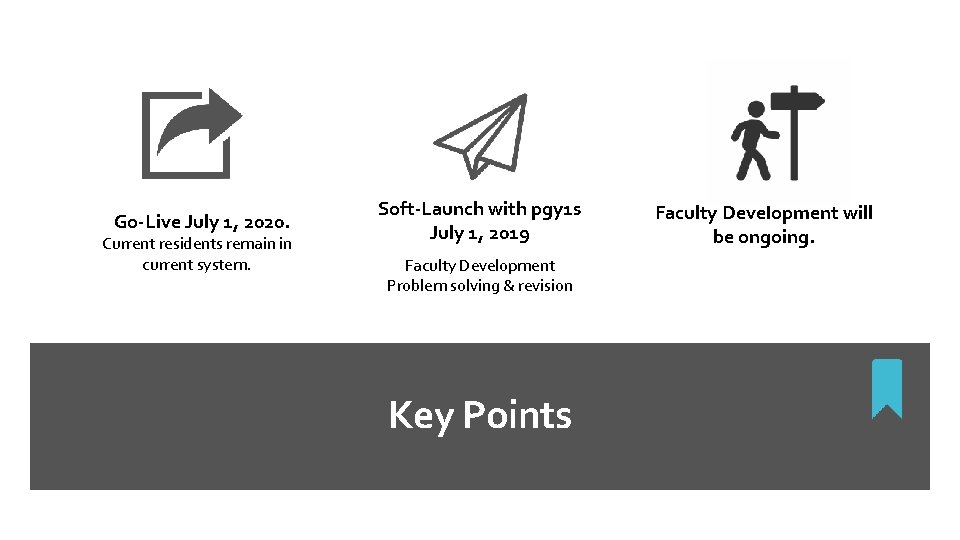
Go-Live July 1, 2020. Current residents remain in current system. Soft-Launch with pgy 1 s July 1, 2019 Faculty Development Problem solving & revision Key Points Faculty Development will be ongoing.

Questions?
EPAs Relevant to Forensic Clinical Experiences For General Psychiatry Program Residents
EPA F-4 Foundations EPA Performing a risk assessment that informs the development of an acute safety plan for patients posing risk of harm to self or others.
Core of Discipline EPA C-1 Performing psychiatric assessments, providing differential diagnoses & developing a comprehensive Tx/management plan for all presentations in adults patients of medium to high complexity.
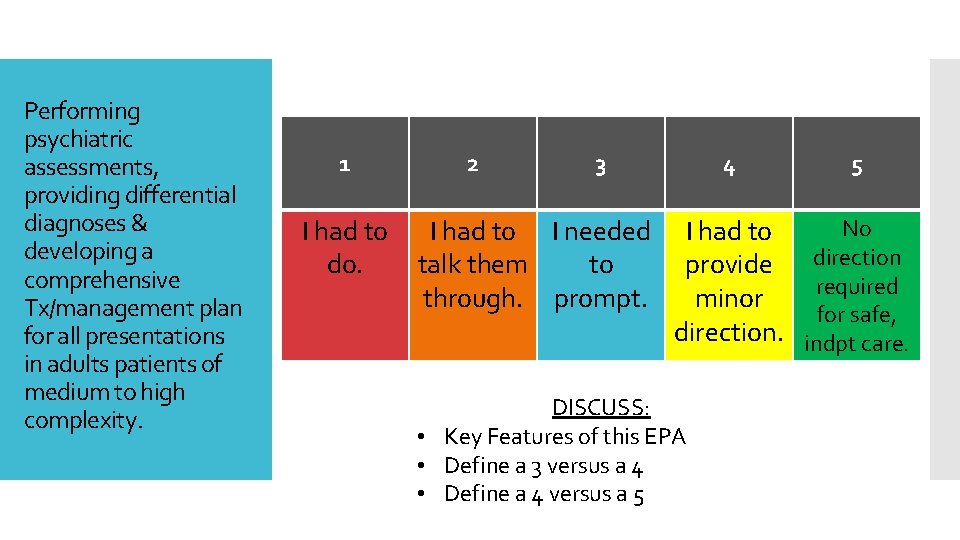
Performing psychiatric assessments, providing differential diagnoses & developing a comprehensive Tx/management plan for all presentations in adults patients of medium to high complexity. 1 I had to do. 2 3 I had to I needed talk them to through. prompt. 4 5 No I had to provide direction required minor for safe, direction. indpt care. DISCUSS: • Key Features of this EPA • Define a 3 versus a 4 • Define a 4 versus a 5

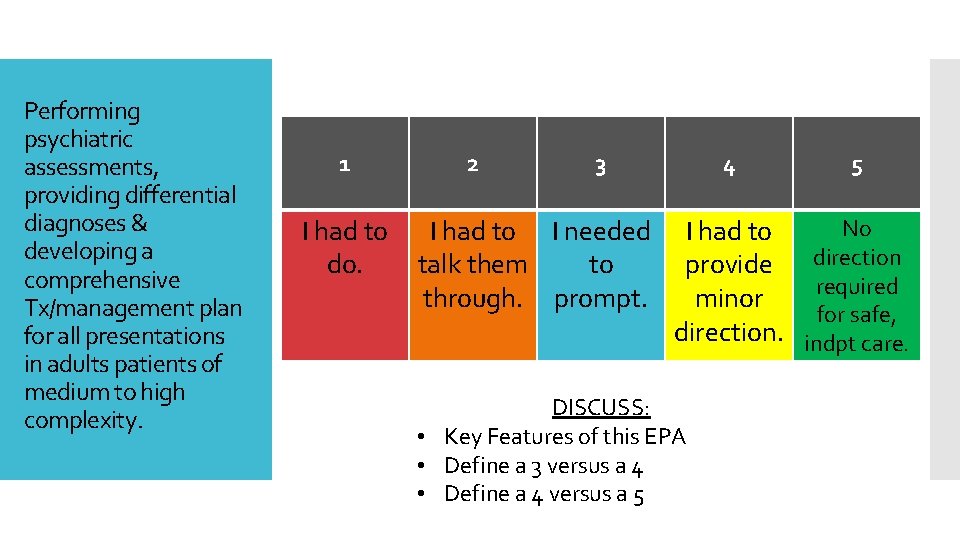
Performing psychiatric assessments, providing differential diagnoses & developing a comprehensive Tx/management plan for all presentations in adults patients of medium to high complexity. 1 I had to do. 2 3 I had to I needed talk them to through. prompt. 4 5 No I had to provide direction required minor for safe, direction. indpt care. DISCUSS: • Key Features of this EPA • Define a 3 versus a 4 • Define a 4 versus a 5
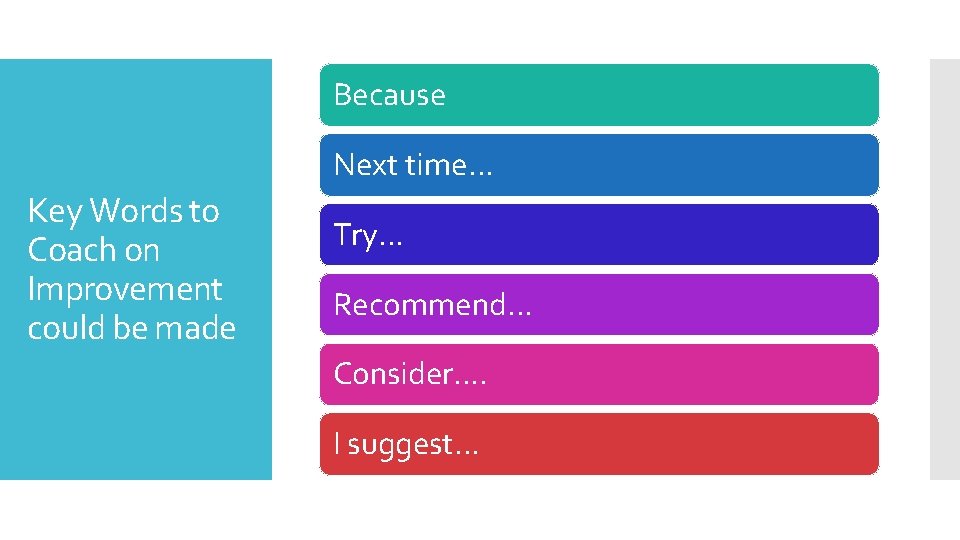
Because Next time… Key Words to Coach on Improvement could be made Try… Recommend… Consider…. I suggest…

Questions?
Part 2: Supervisors as Coaches …. and applying this to Child & Adolescent Psychiatry experiences
Workplace Based Assessments https: //youtu. be/ui. Er. Uw 8 Kj 1 A
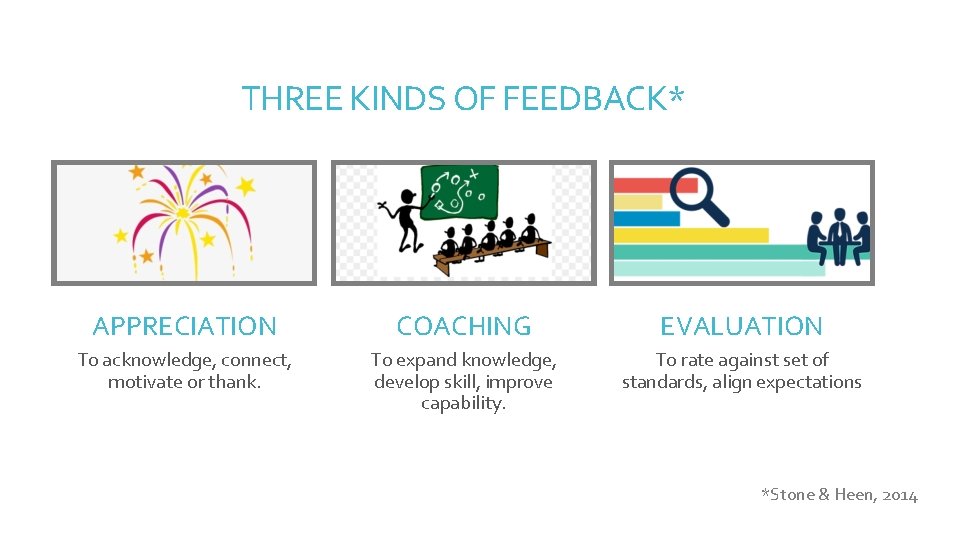
THREE KINDS OF FEEDBACK* APPRECIATION COACHING EVALUATION To acknowledge, connect, motivate or thank. To expand knowledge, develop skill, improve capability. To rate against set of standards, align expectations *Stone & Heen, 2014
CBME Coaching Model Facilitating learning & development of a resident’s competence 68
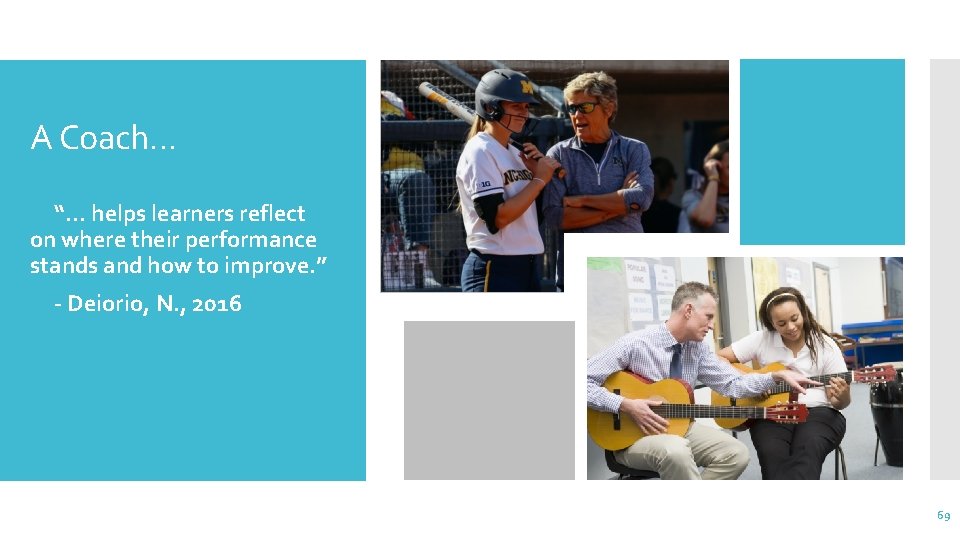
A Coach… “… helps learners reflect on where their performance stands and how to improve. ” - Deiorio, N. , 2016 69
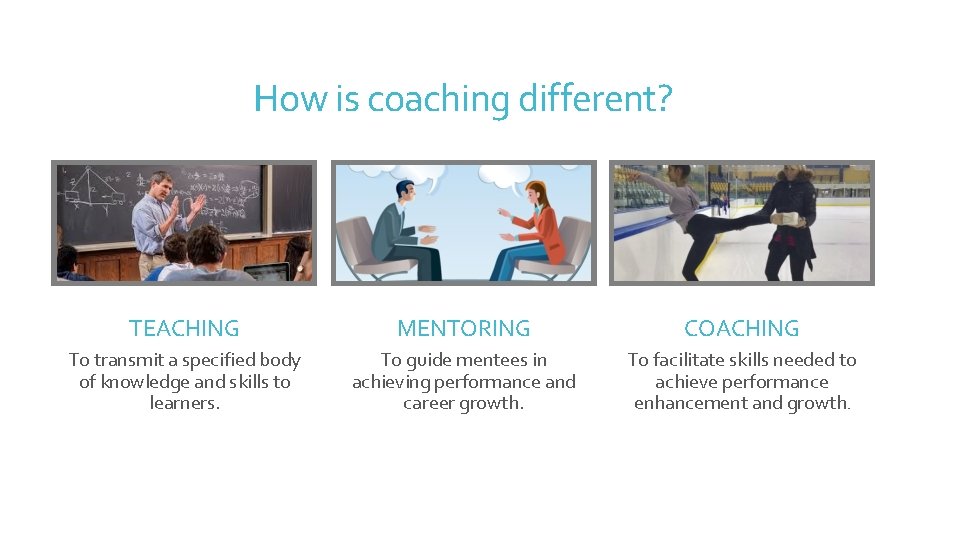
How is coaching different? TEACHING MENTORING COACHING To transmit a specified body of knowledge and skills to learners. To guide mentees in achieving performance and career growth. To facilitate skills needed to achieve performance enhancement and growth.
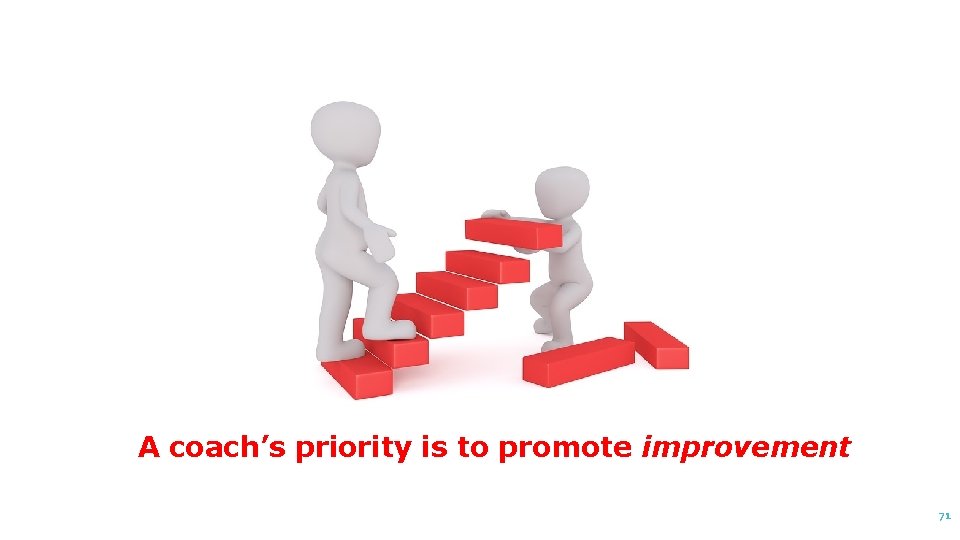
Coaching A coach’s priority is to promote improvement 71
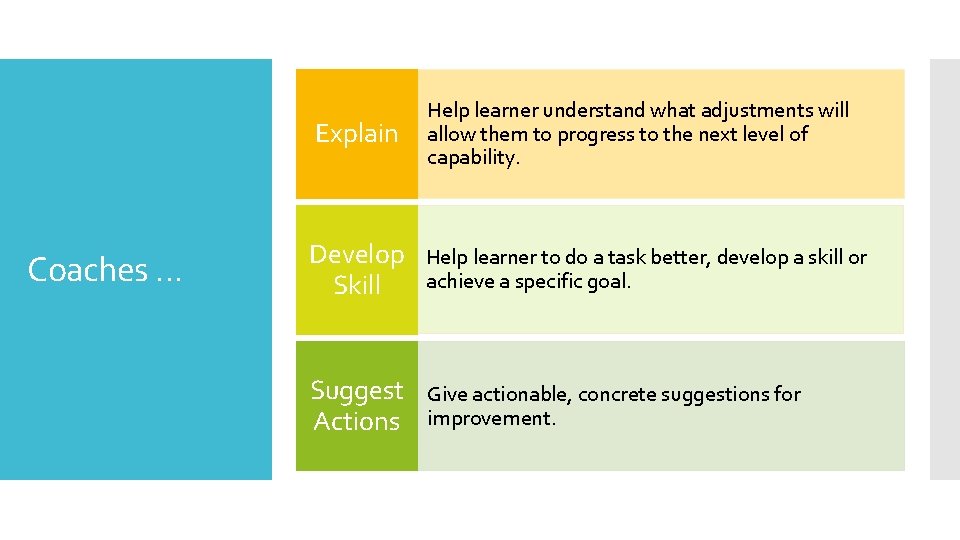
Coaches … Explain Help learner understand what adjustments will allow them to progress to the next level of capability. Develop Skill Help learner to do a task better, develop a skill or achieve a specific goal. Suggest Actions Give actionable, concrete suggestions for improvement.
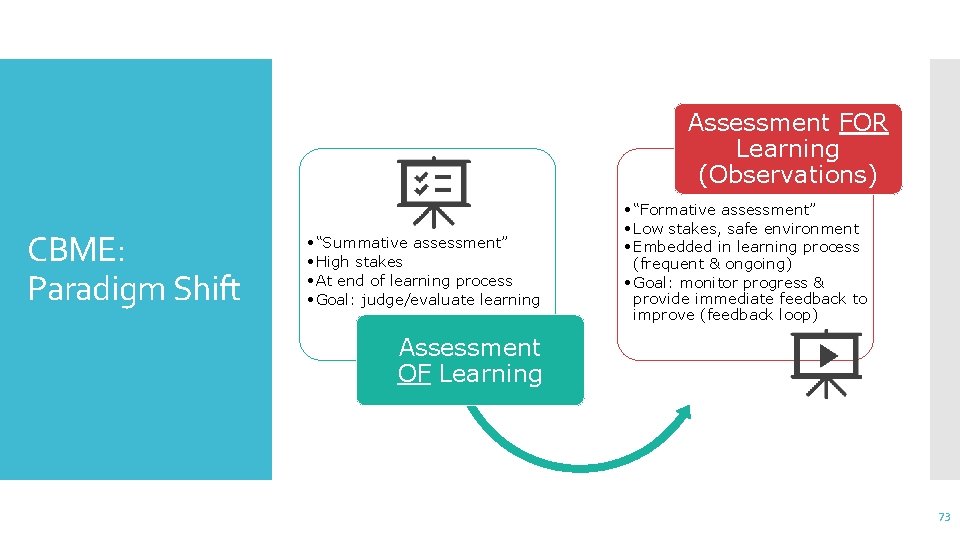
Assessment FOR Learning (Observations) CBME: Paradigm Shift • “Summative assessment” • High stakes • At end of learning process • Goal: judge/evaluate learning • “Formative assessment” • Low stakes, safe environment • Embedded in learning process (frequent & ongoing) • Goal: monitor progress & provide immediate feedback to improve (feedback loop) Assessment OF Learning 73
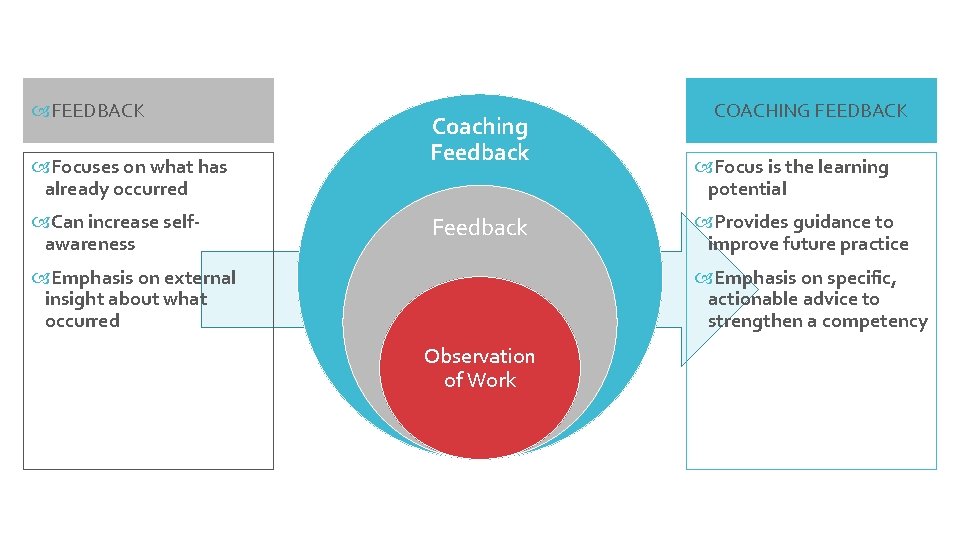
FEEDBACK Focuses on what has already occurred Can increase selfawareness Coaching Feedback Emphasis on external insight about what occurred COACHING FEEDBACK Focus is the learning potential Provides guidance to improve future practice Emphasis on specific, actionable advice to strengthen a competency Observation of Work
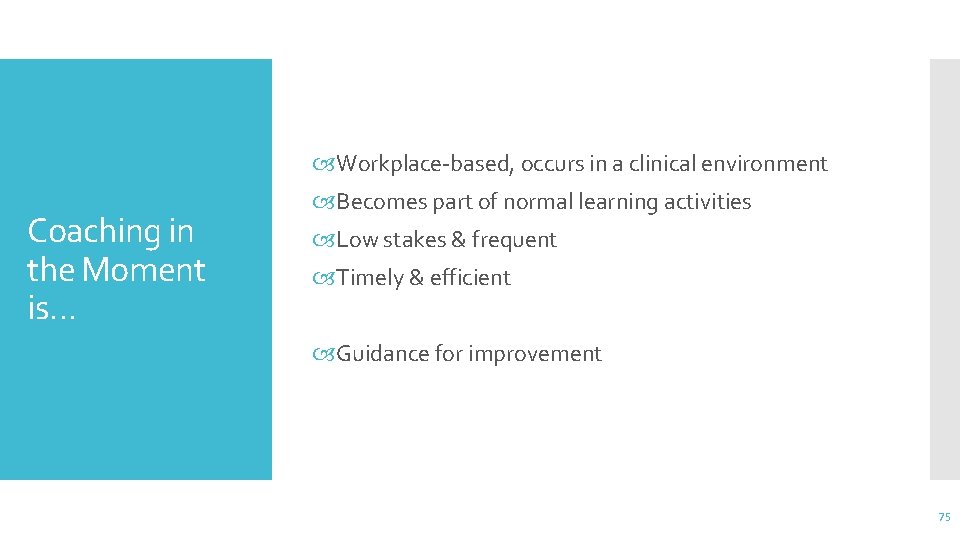
Workplace-based, occurs in a clinical environment Coaching in the Moment is… Becomes part of normal learning activities Low stakes & frequent Timely & efficient Guidance for improvement 75
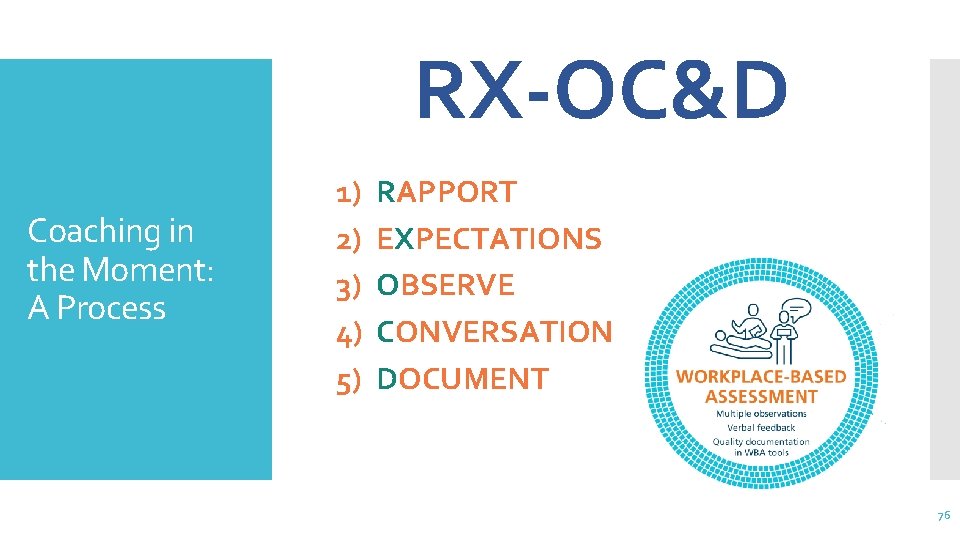
RX-OC&D Coaching in the Moment: A Process 1) 2) 3) 4) 5) RAPPORT EXPECTATIONS OBSERVE CONVERSATION DOCUMENT 76
RX-OC&D RAPPORT Create a safe learning environment Be explicit about role as a learning coach Form an educational partnership – Growth mindset 77
RX-OC&D EXPECTATIONS Discuss: Specific learning goals Components of EPA Previous feedback 78
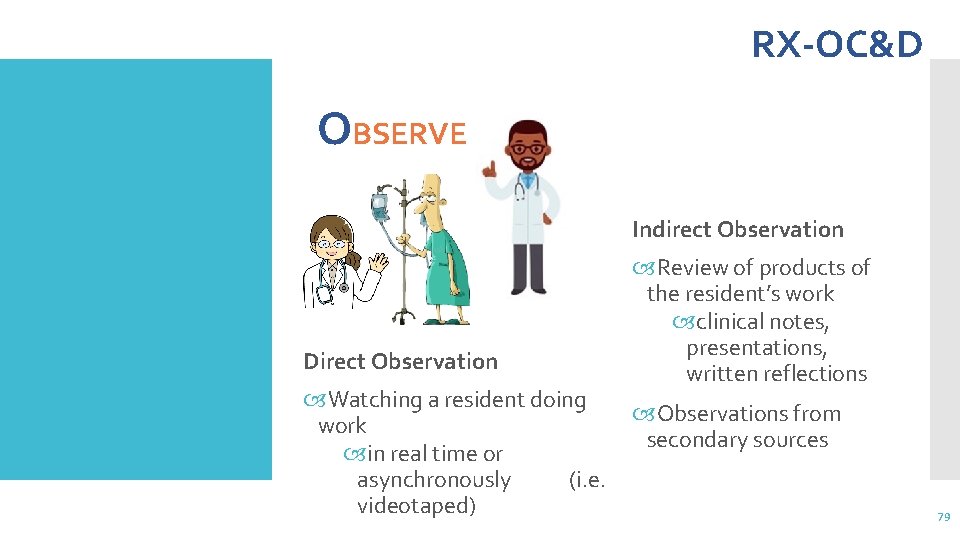
RX-OC&D OBSERVE Indirect Observation Direct Observation Watching a resident doing work in real time or asynchronously (i. e. videotaped) Review of products of the resident’s work clinical notes, presentations, written reflections Observations from secondary sources 79
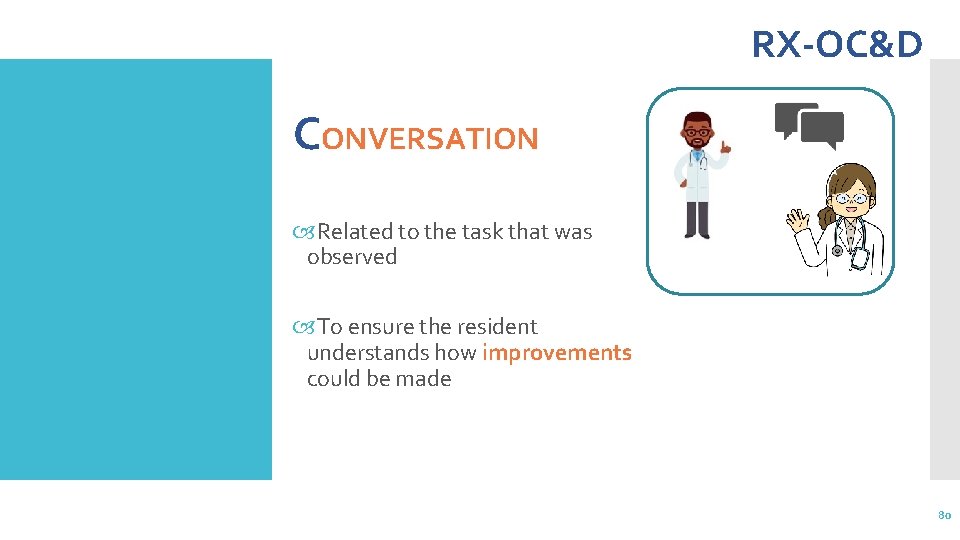
RX-OC&D CONVERSATION Related to the task that was observed To ensure the resident understands how improvements could be made 80
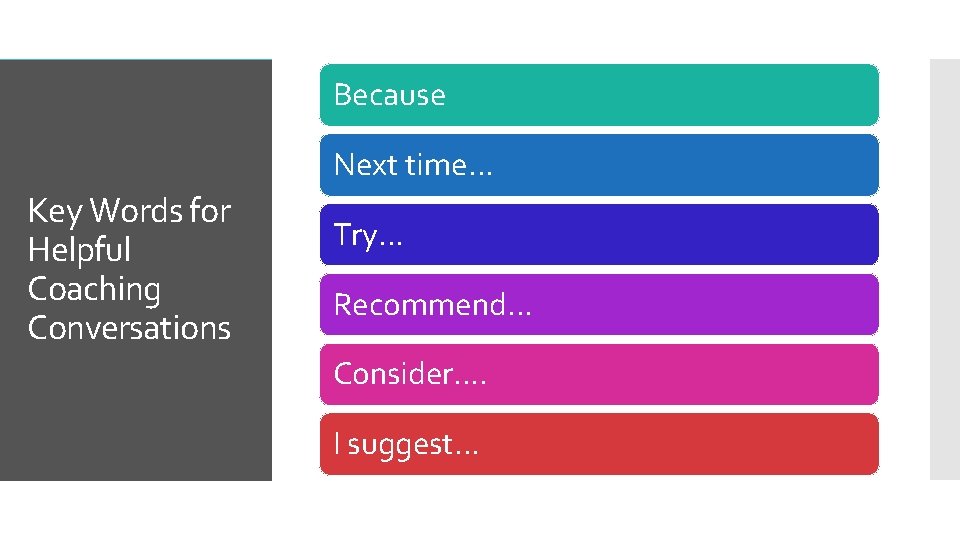
Because Next time… Key Words for Helpful Coaching Conversations Try… Recommend… Consider…. I suggest…
RX-OC&D DOCUMENT Summarize feedback & actionable suggestions for improvement It is important to document outlier performances because they could be rare but important 82
Extra Slides
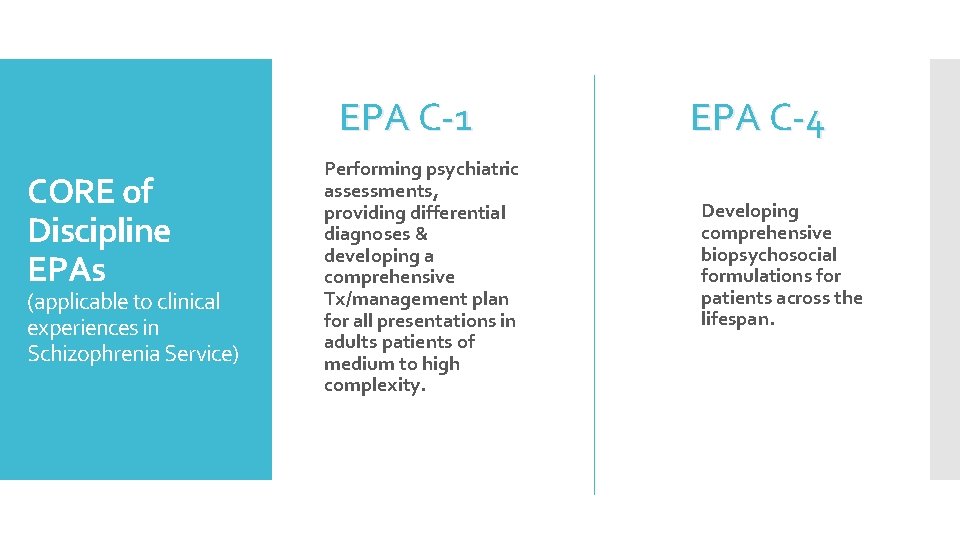
EPA C-1 CORE of Discipline EPAs (applicable to clinical experiences in Schizophrenia Service) Performing psychiatric assessments, providing differential diagnoses & developing a comprehensive Tx/management plan for all presentations in adults patients of medium to high complexity. EPA C-4 Developing comprehensive biopsychosocial formulations for patients across the lifespan.
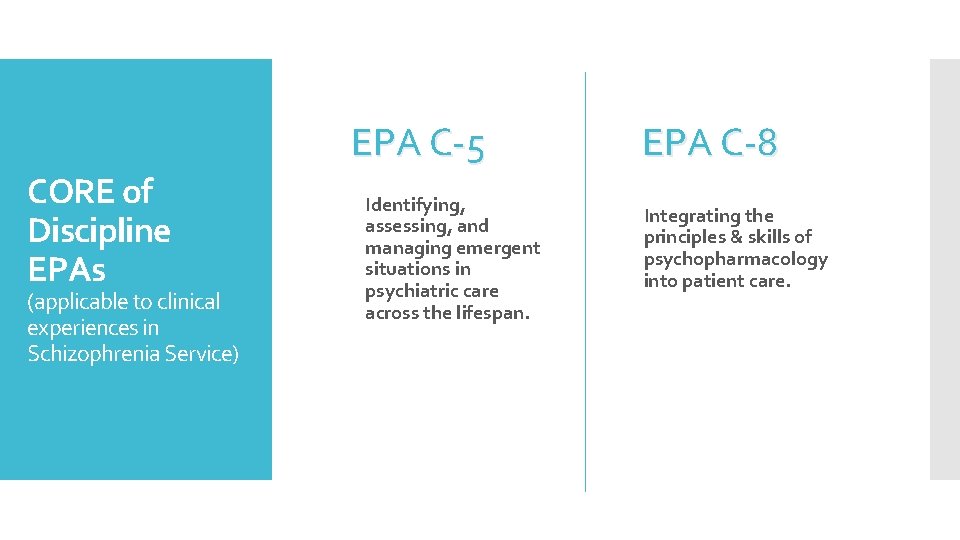
EPA C-5 CORE of Discipline EPAs (applicable to clinical experiences in Schizophrenia Service) Identifying, assessing, and managing emergent situations in psychiatric care across the lifespan. EPA C-8 Integrating the principles & skills of psychopharmacology into patient care.
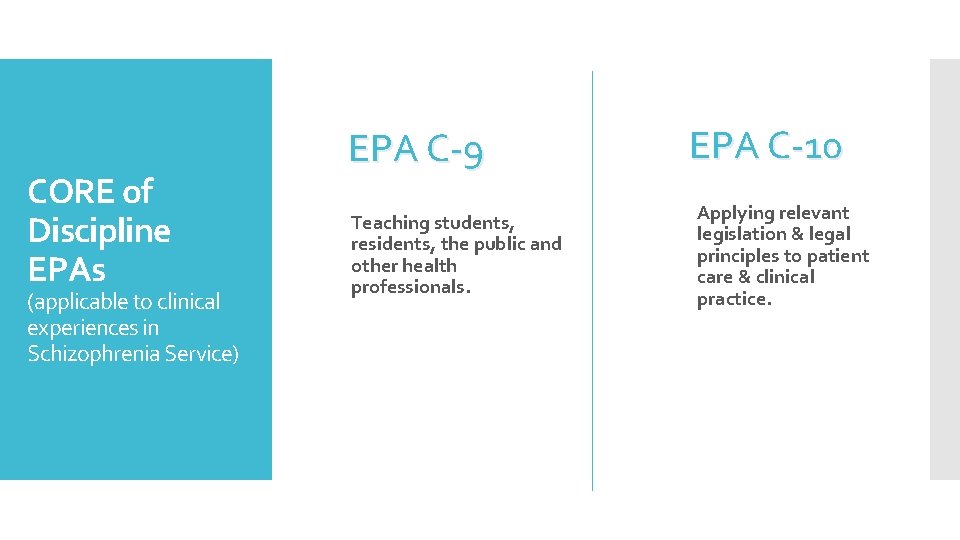
CORE of Discipline EPAs (applicable to clinical experiences in Schizophrenia Service) EPA C-9 Teaching students, residents, the public and other health professionals. EPA C-10 Applying relevant legislation & legal principles to patient care & clinical practice.
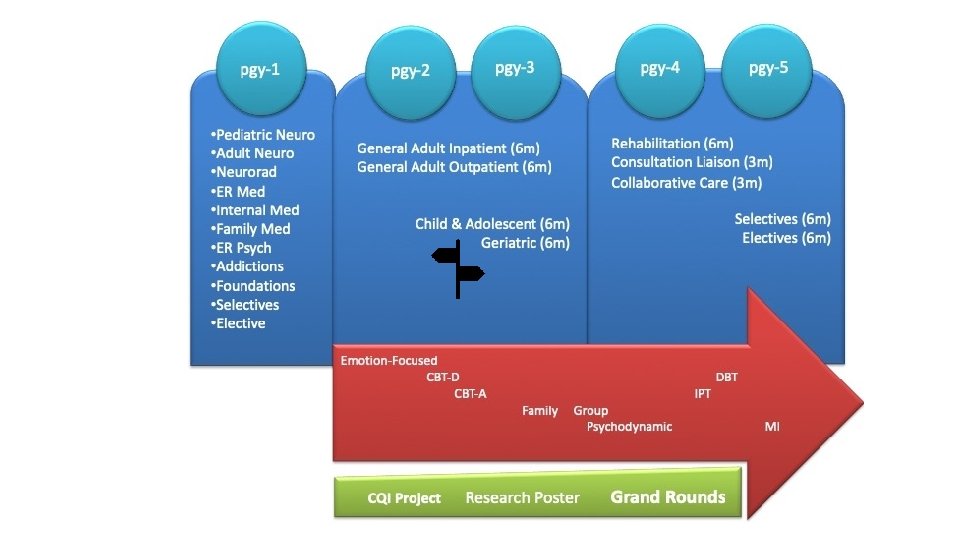
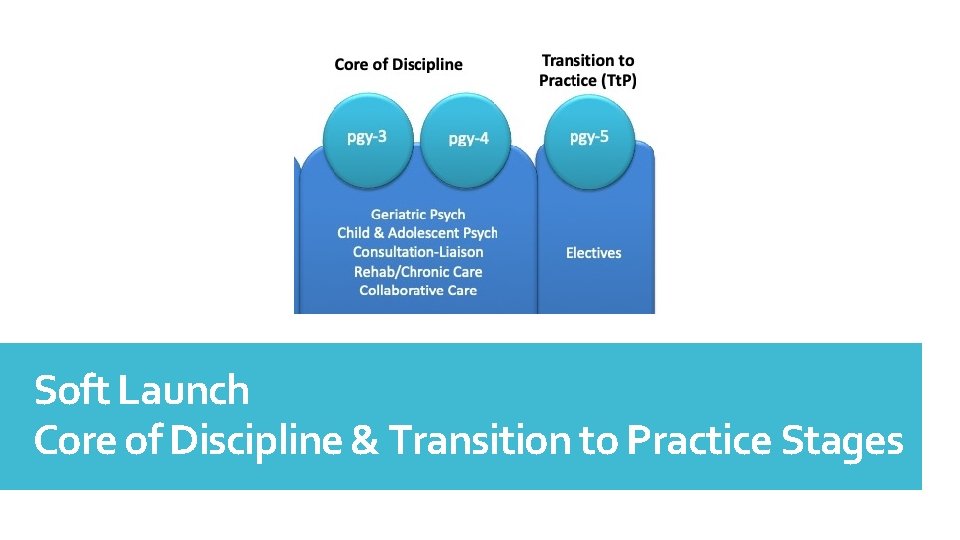
General Adult Inpatient General Adult Outpatient Soft Launch Core of Discipline & Transition to Practice Stages
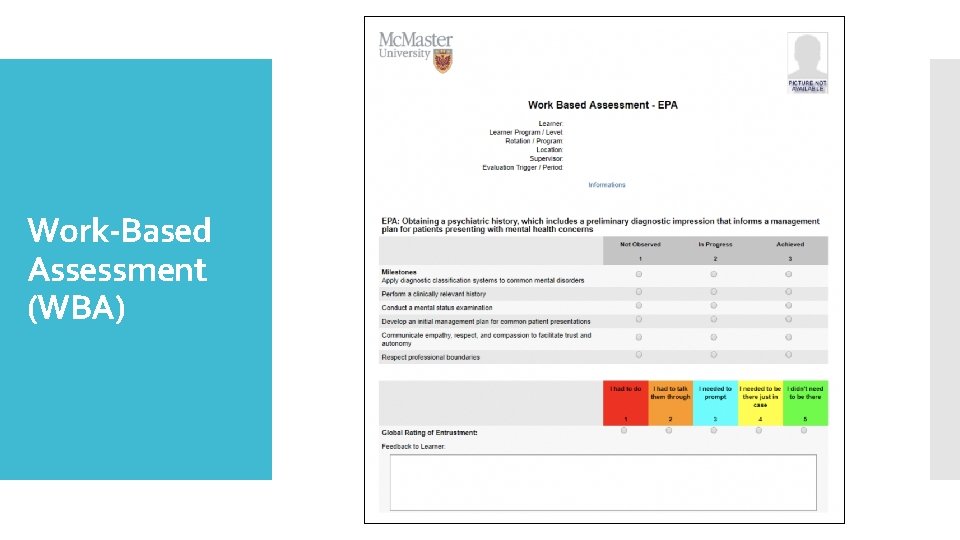
Work-Based Assessment (WBA)
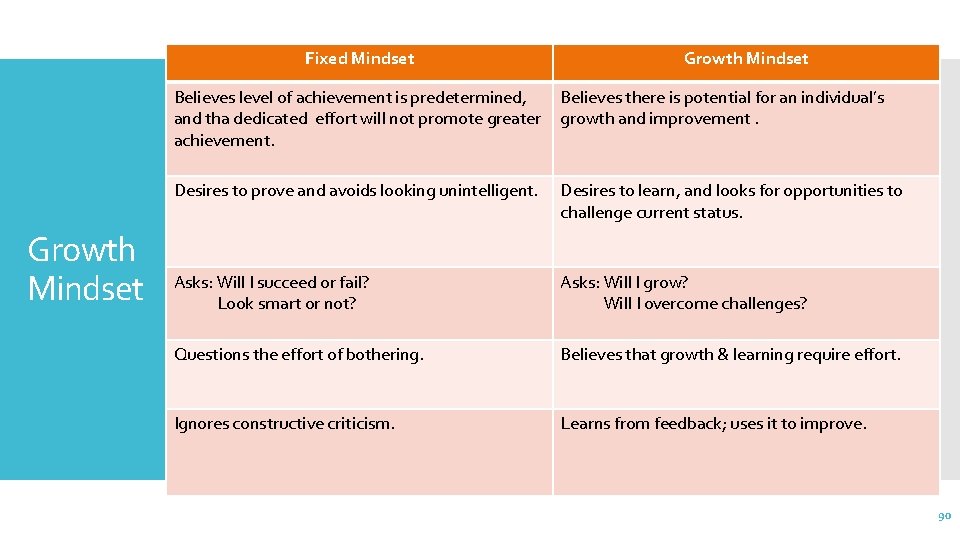
Fixed Mindset Growth Mindset Believes level of achievement is predetermined, and tha dedicated effort will not promote greater achievement. Believes there is potential for an individual’s growth and improvement. Desires to prove and avoids looking unintelligent. Desires to learn, and looks for opportunities to challenge current status. Asks: Will I succeed or fail? Look smart or not? Asks: Will I grow? Will I overcome challenges? Questions the effort of bothering. Believes that growth & learning require effort. Ignores constructive criticism. Learns from feedback; uses it to improve. Dweck, 2006 90
- Slides: 90