
On Lightweight Design of Submarine Pressure Hulls Subtitless
On Lightweight Design of Submarine Pressure Hulls Subtitless Challenge the future 1
Introduction Challenge the future 2

Introduction Challenge the future 3
Introduction • Search for a lightweight solution • Literature shows that • composite materials can be used for a lightweight pressure hull • description of composite mechanics and failure can be complex • only rough composite pressure hull models are optimized Challenge the future 4
Purpose of the present work • Formulate a basis for a lightweight design framework that uses composite pressure hull FE models to accomplish an optimization procedure • Indicate the weight savings found by this procedure Challenge the future 5
Content ØLightweight potential of conventional pressure hulls ØDescribe the composite pressure hulls ØDescribe and perform the weight minimization ØComparison ØConclusions and recommendations Challenge the future 6
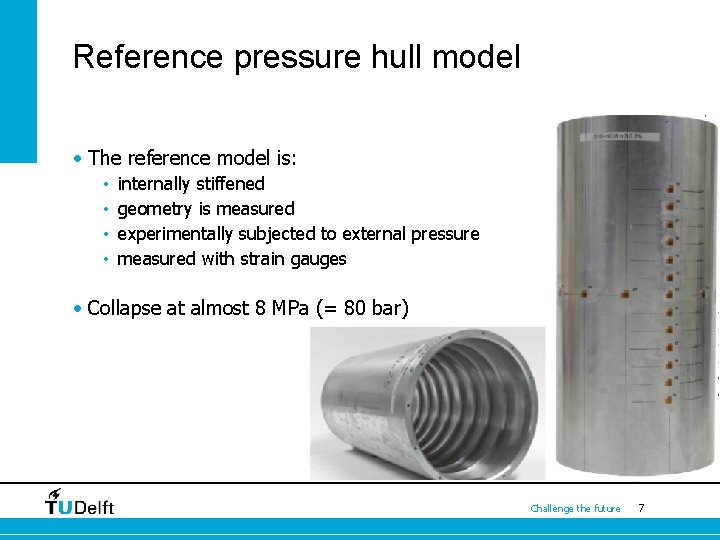
Reference pressure hull model • The reference model is: • • internally stiffened geometry is measured experimentally subjected to external pressure measured with strain gauges • Collapse at almost 8 MPa (= 80 bar) Challenge the future 7
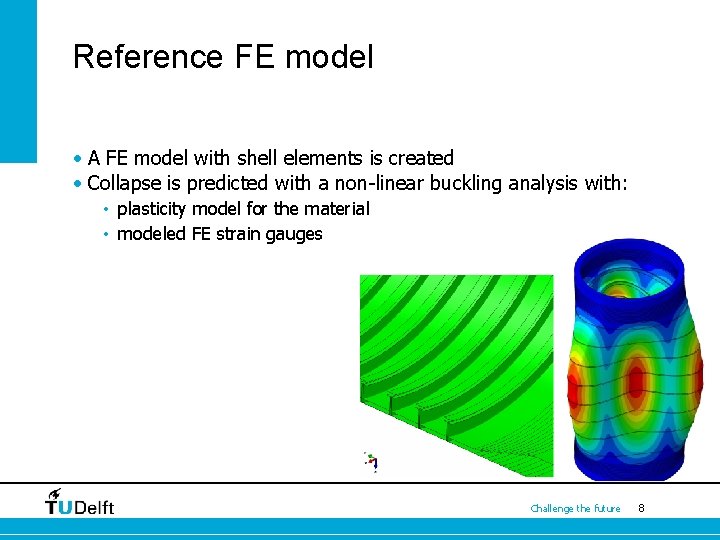
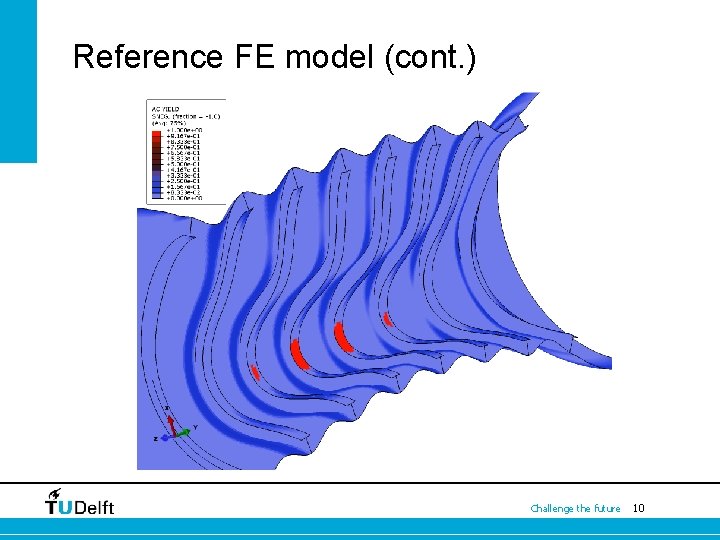
Reference FE model • A FE model with shell elements is created • Collapse is predicted with a non-linear buckling analysis with: • plasticity model for the material • modeled FE strain gauges Challenge the future 8
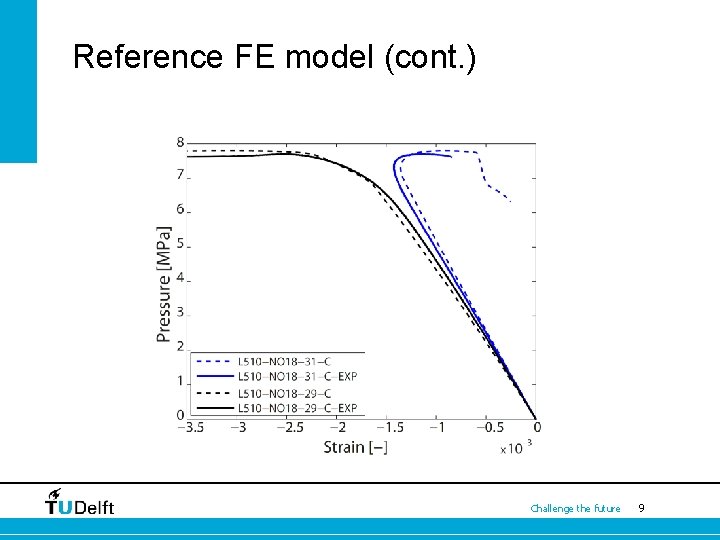
Reference FE model (cont. ) Challenge the future 9
Reference FE model (cont. ) Challenge the future 10
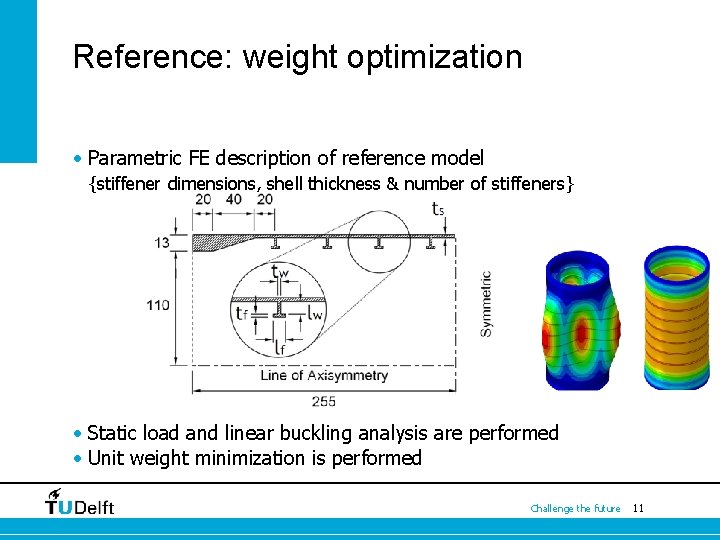
Reference: weight optimization • Parametric FE description of reference model {stiffener dimensions, shell thickness & number of stiffeners} • Static load and linear buckling analysis are performed • Unit weight minimization is performed Challenge the future 11
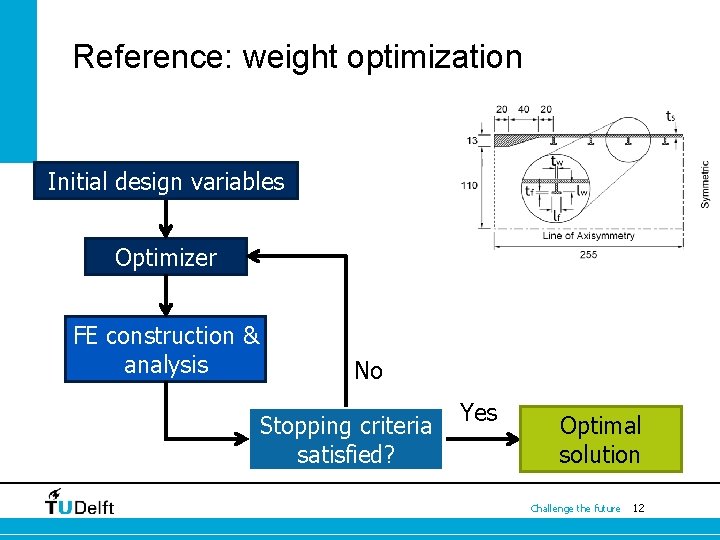
Reference: weight optimization Initial design variables Optimizer FE construction & analysis No Stopping criteria satisfied? Yes Optimal solution Challenge the future 12
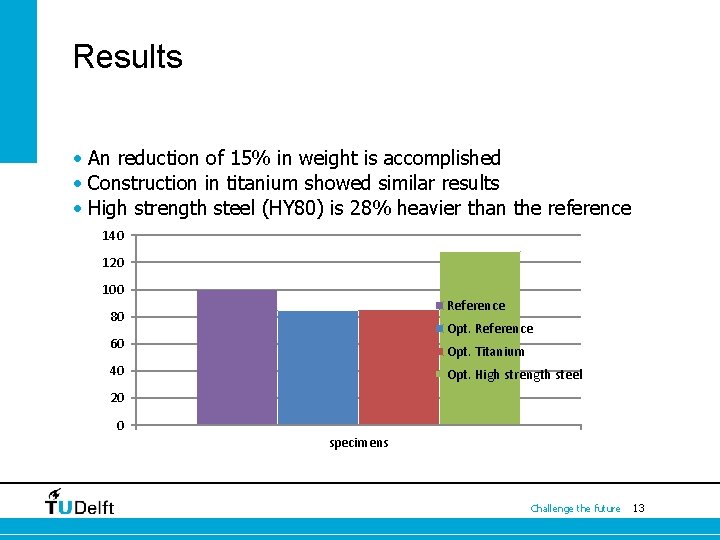
Results • An reduction of 15% in weight is accomplished • Construction in titanium showed similar results • High strength steel (HY 80) is 28% heavier than the reference 140 120 100 Reference 80 Opt. Reference 60 Opt. Titanium 40 Opt. High strength steel 20 0 specimens Challenge the future 13
Content ØLightweight potential of conventional pressure hulls ØDescribe the composite pressure hulls ØDescribe and perform the weight minimization ØComparison ØConclusions and recommendations Challenge the future 14
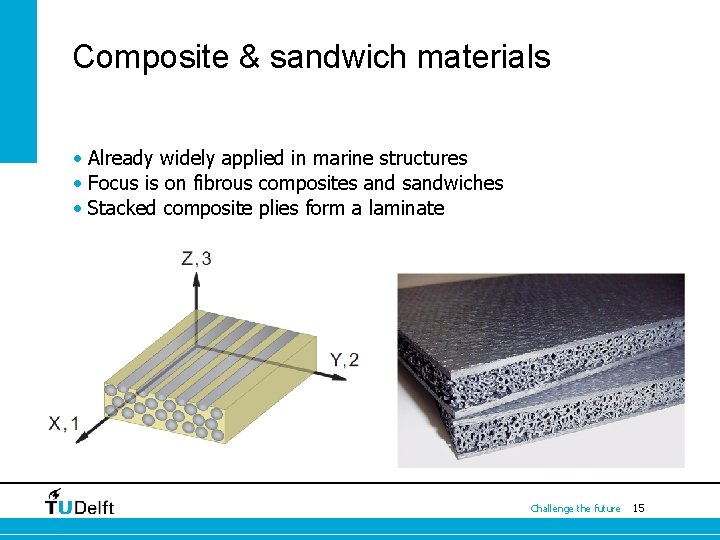
Composite & sandwich materials • Already widely applied in marine structures • Focus is on fibrous composites and sandwiches • Stacked composite plies form a laminate Challenge the future 15
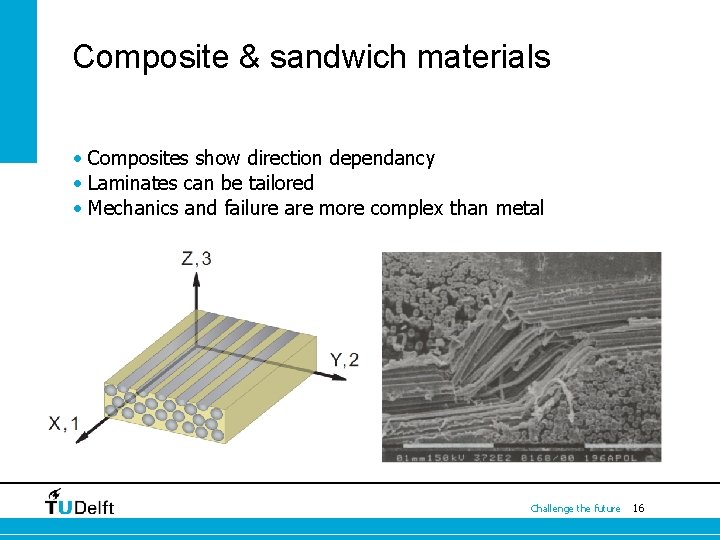
Composite & sandwich materials • Composites show direction dependancy • Laminates can be tailored • Mechanics and failure are more complex than metal Challenge the future 16
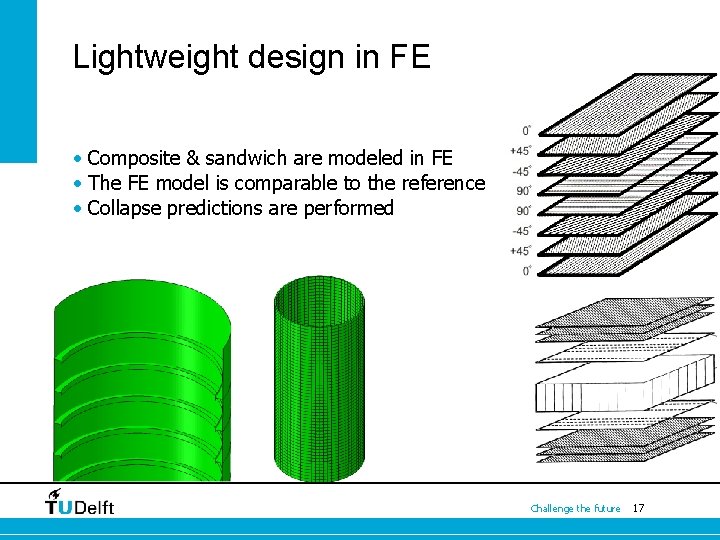
Lightweight design in FE • Composite & sandwich are modeled in FE • The FE model is comparable to the reference • Collapse predictions are performed Challenge the future 17
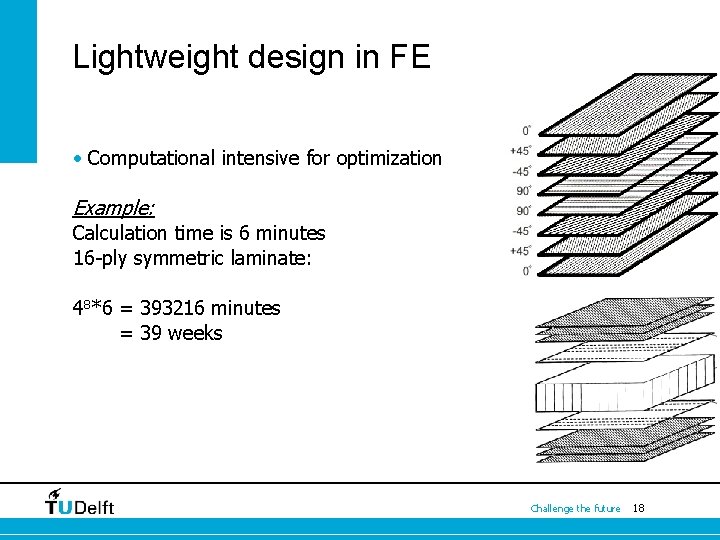
Lightweight design in FE • Computational intensive for optimization Example: Calculation time is 6 minutes 16 -ply symmetric laminate: 48*6 = 393216 minutes = 39 weeks Challenge the future 18
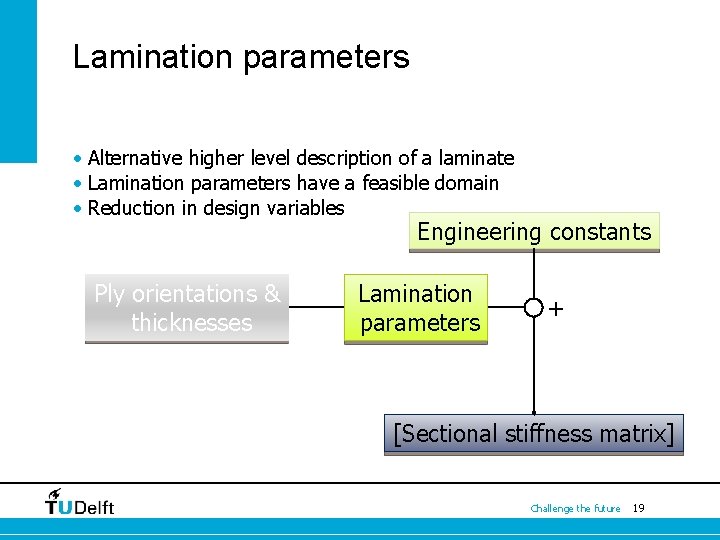
Lamination parameters • Alternative higher level description of a laminate • Lamination parameters have a feasible domain • Reduction in design variables Engineering constants Ply orientations & thicknesses Lamination parameters + [Sectional stiffness matrix] Challenge the future 19
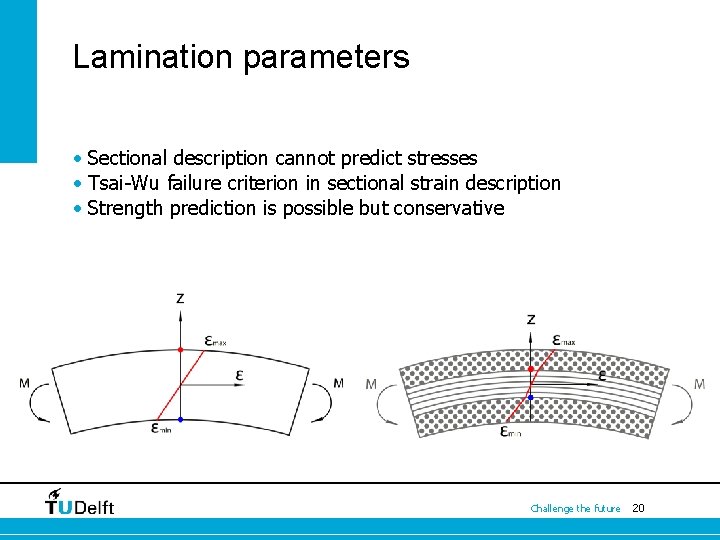
Lamination parameters • Sectional description cannot predict stresses • Tsai-Wu failure criterion in sectional strain description • Strength prediction is possible but conservative Challenge the future 20
Content ØLightweight potential of conventional pressure hulls ØDescribe the composite pressure hulls ØDescribe and perform the weight minimization ØComparison ØConclusions and recommendations Challenge the future 21
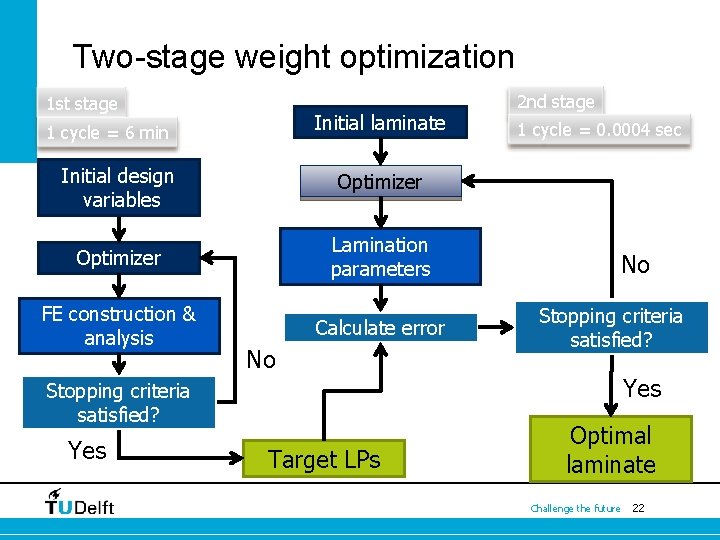
Two-stage weight optimization 1 st stage Initial laminate 1 cycle = 6 min Initial design variables Optimizer Lamination parameters FE construction & analysis Calculate error No 1 cycle = 0. 0004 sec No Stopping criteria satisfied? Yes 2 nd stage Target LPs Optimal laminate Challenge the future 22
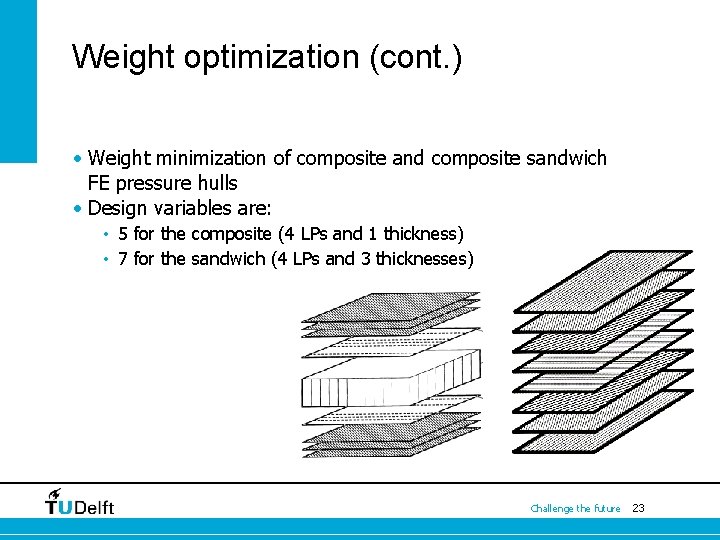
Weight optimization (cont. ) • Weight minimization of composite and composite sandwich FE pressure hulls • Design variables are: • 5 for the composite (4 LPs and 1 thickness) • 7 for the sandwich (4 LPs and 3 thicknesses) Challenge the future 23
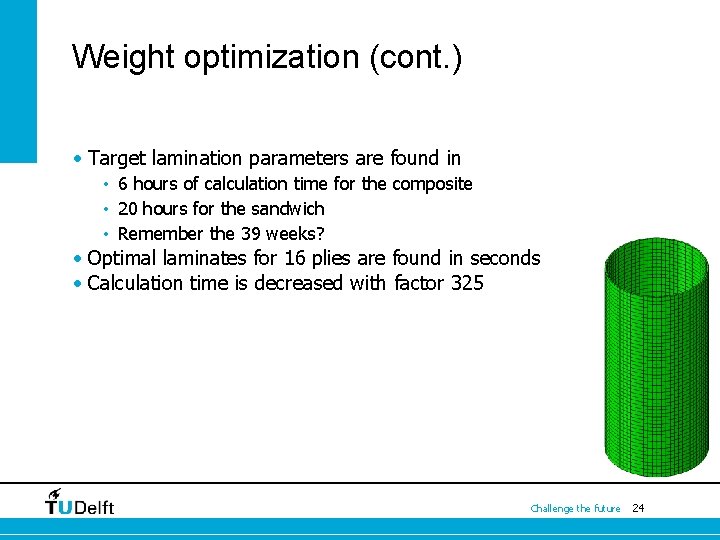
Weight optimization (cont. ) • Target lamination parameters are found in • 6 hours of calculation time for the composite • 20 hours for the sandwich • Remember the 39 weeks? • Optimal laminates for 16 plies are found in seconds • Calculation time is decreased with factor 325 Challenge the future 24
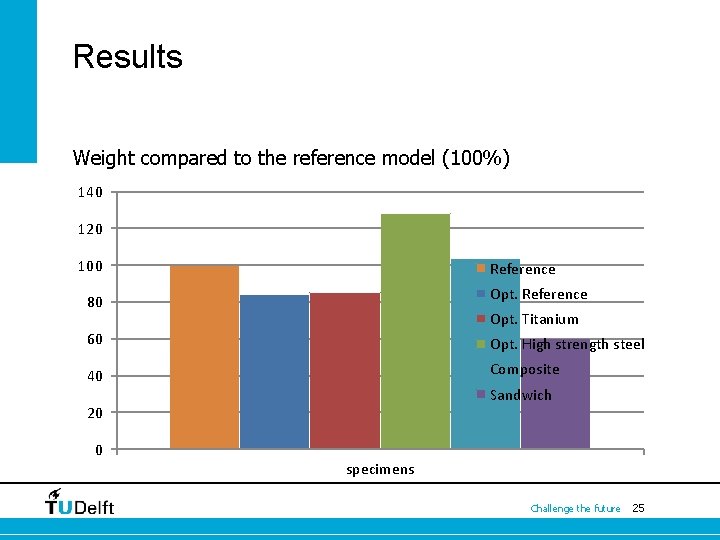
Results Weight compared to the reference model (100%) 140 120 100 Reference Opt. Reference 80 Opt. Titanium 60 Opt. High strength steel 40 Composite Sandwich 20 0 specimens Challenge the future 25
Conlusions ØIs it possible to find a lightweight design framework that uses composite pressure hull FE models to accomplish an optimization procedure? ØYes, the use of lamination parameters opens the possibility to formulate this framework! Challenge the future 26
Conclusions (cont. ) • For the considered external pressure, the sandwich design is shown to be at least 28% lighter than conventional designs • Compared to the conventional steel pressure hull, a reduction of 50% in weight is possible, i. e. 15% of the total dry weight • With this framework it is shown that composites are promising for lightweight pressure hull design Challenge the future 27
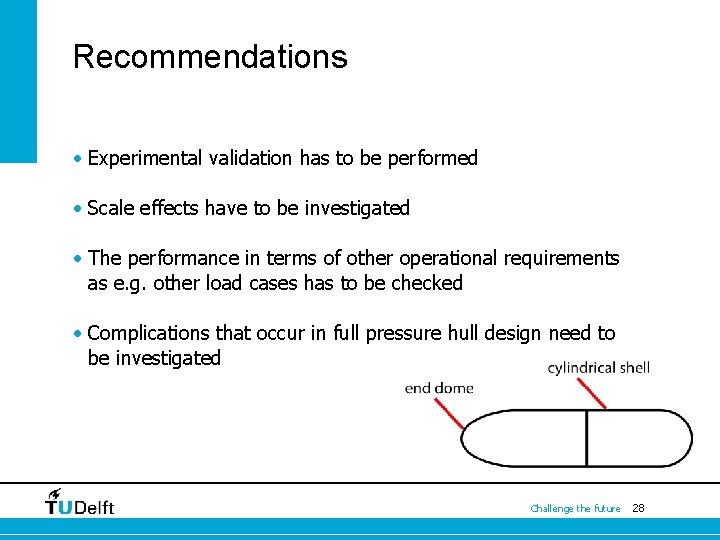
Recommendations • Experimental validation has to be performed • Scale effects have to be investigated • The performance in terms of other operational requirements as e. g. other load cases has to be checked • Complications that occur in full pressure hull design need to be investigated Challenge the future 28
Thank you for your attention! Challenge the future 29
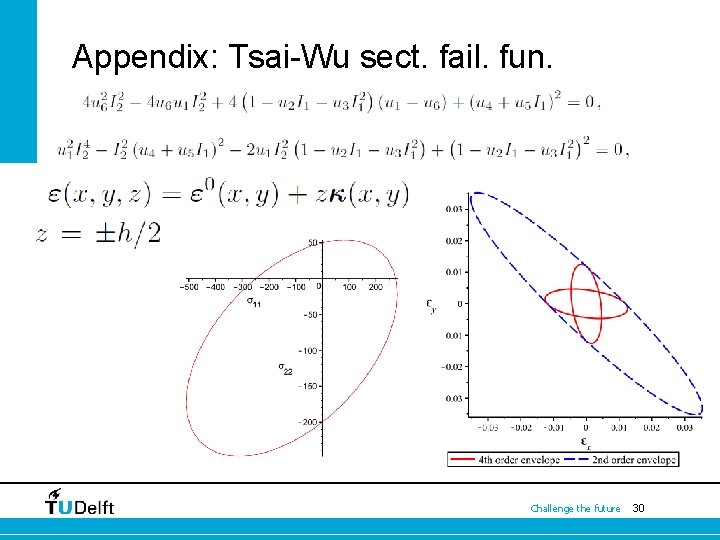
Appendix: Tsai-Wu sect. fail. fun. Challenge the future 30
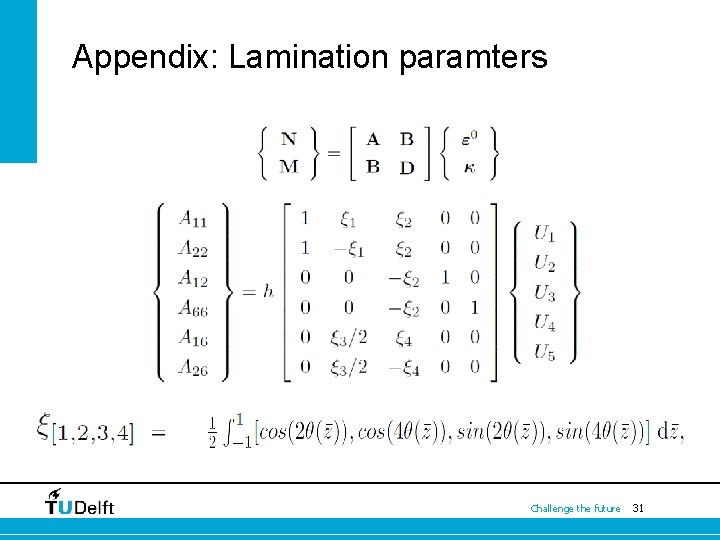
Appendix: Lamination paramters Challenge the future 31
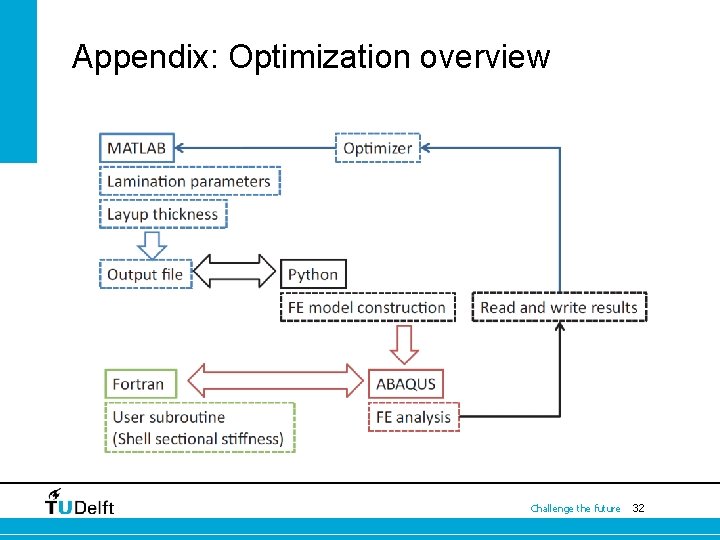
Appendix: Optimization overview Challenge the future 32
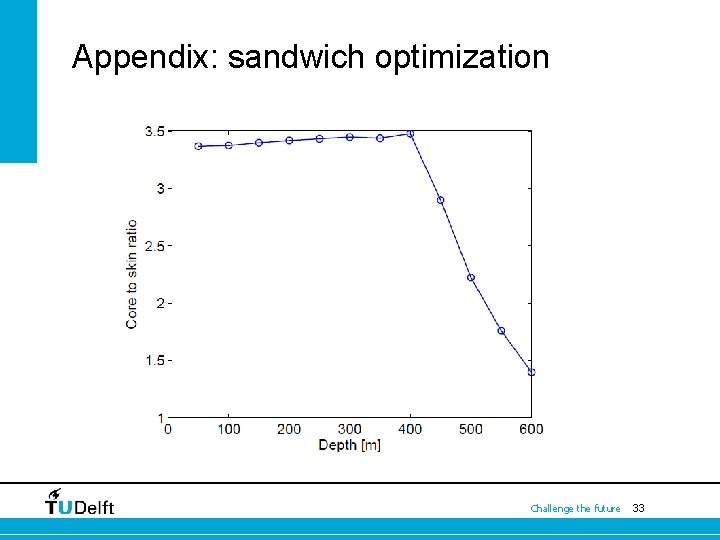
Appendix: sandwich optimization Challenge the future 33
- Slides: 33