
On Beyond Luther Ulrich Zwingli 1484 1531 All
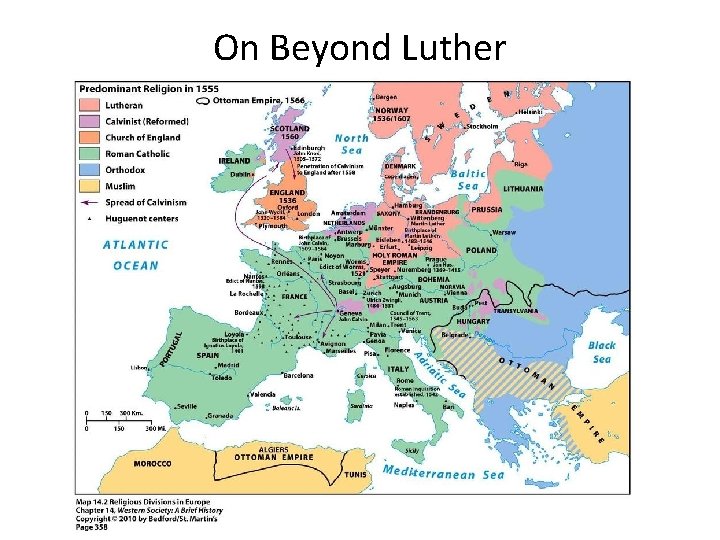
On Beyond Luther
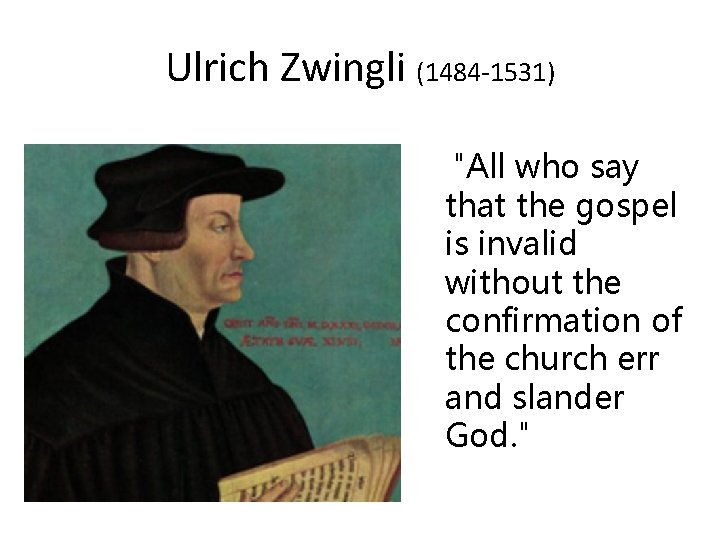
Ulrich Zwingli (1484 -1531) "All who say that the gospel is invalid without the confirmation of the church err and slander God. "
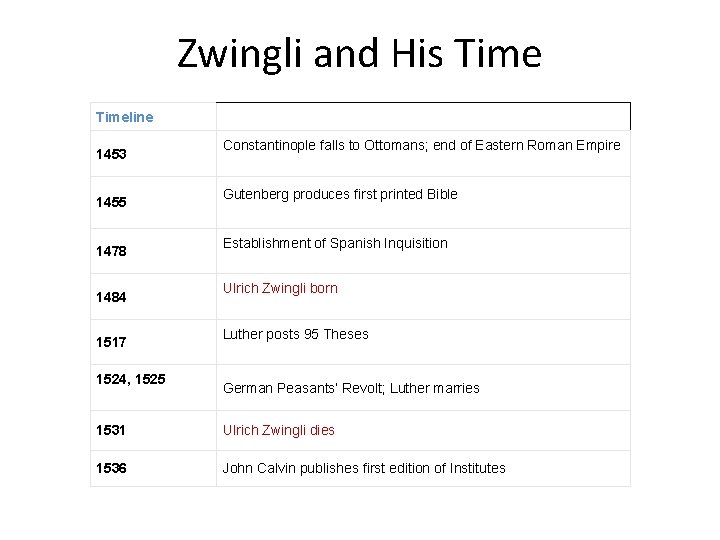
Zwingli and His Timeline 1453 1455 1478 1484 1517 1524, 1525 Constantinople falls to Ottomans; end of Eastern Roman Empire Gutenberg produces first printed Bible Establishment of Spanish Inquisition Ulrich Zwingli born Luther posts 95 Theses German Peasants’ Revolt; Luther marries 1531 Ulrich Zwingli dies 1536 John Calvin publishes first edition of Institutes
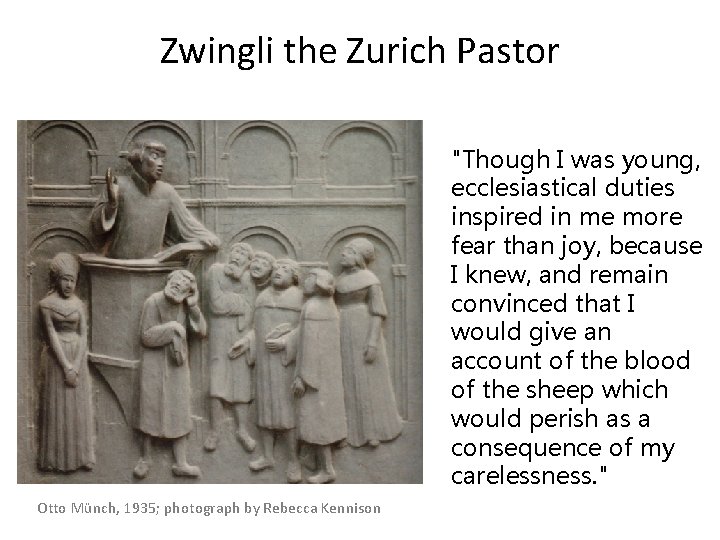
Zwingli the Zurich Pastor "Though I was young, ecclesiastical duties inspired in me more fear than joy, because I knew, and remain convinced that I would give an account of the blood of the sheep which would perish as a consequence of my carelessness. " Otto Münch, 1935; photograph by Rebecca Kennison
Making the Church “Biblical” • "For God's sake, do not put yourself at odds with the Word of God. For truly it will persist as surely as the Rhine follows its course. One can perhaps dam it up for awhile, but it is impossible to stop it. “ • Used Erasmus’ Greek Bible
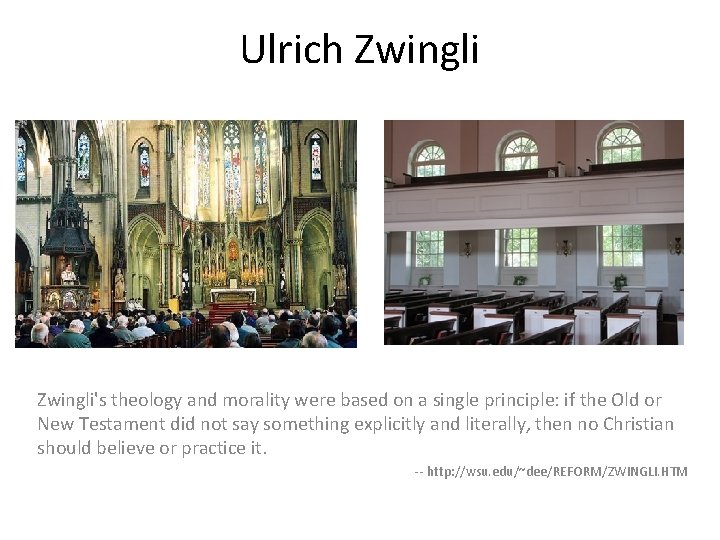
Ulrich Zwingli's theology and morality were based on a single principle: if the Old or New Testament did not say something explicitly and literally, then no Christian should believe or practice it. -- http: //wsu. edu/~dee/REFORM/ZWINGLI. HTM
Zwingli Reforms Continue • Rejected celibacy of priests and from 1522 the marriage of priests in Zurich became frequent; • Zwingli married Anna Reinhard in 1522 • A second religious disputation in October, 1523, dealt with the practical institution of a state church, ended the veneration of saints and called for the removal of images • Around Easter, 1524, indulgences and pilgrimages were abolished, the sacraments of Penance and Extreme Unction rejected, and pictures, statues, relics, altars, sacred vessels and organs destroyed, • Church property was seized by the State. • In the spring of 1525 the Eucharist was deemed to be not a repetition of Christ’s sacrifice, but only a memorial of it.
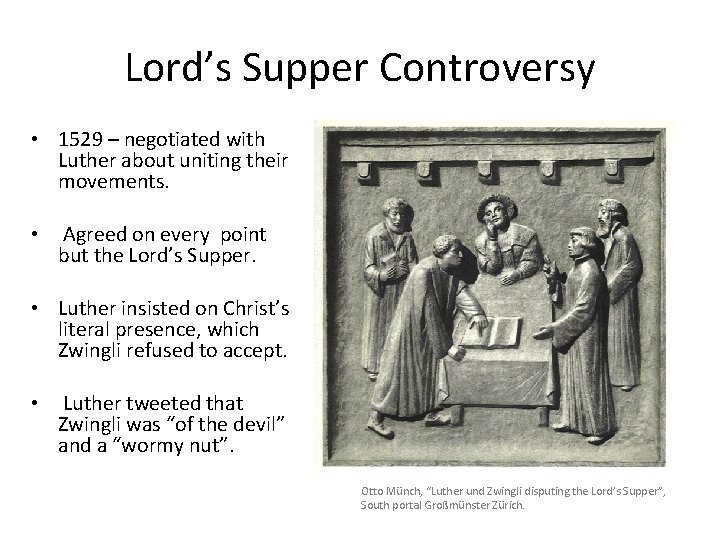
Lord’s Supper Controversy • 1529 – negotiated with Luther about uniting their movements. • Agreed on every point but the Lord’s Supper. • Luther insisted on Christ’s literal presence, which Zwingli refused to accept. • Luther tweeted that Zwingli was “of the devil” and a “wormy nut”. Otto Münch, “Luther und Zwingli disputing the Lord’s Supper”, South portal Großmünster Zürich.
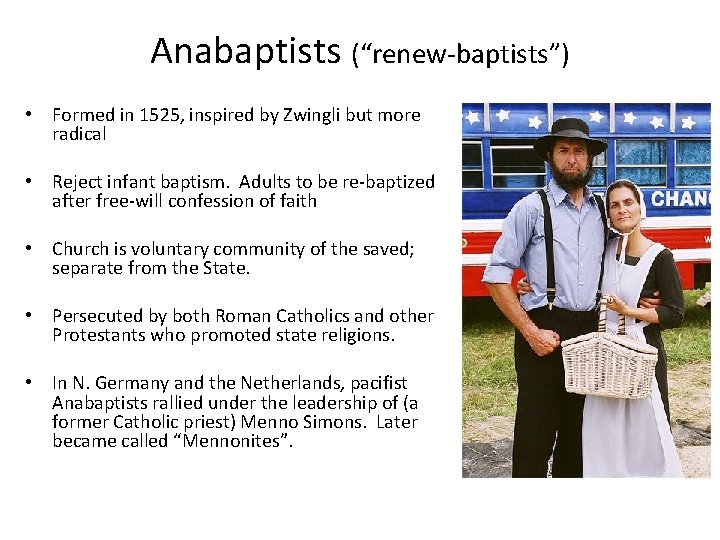
Anabaptists (“renew-baptists”) • Formed in 1525, inspired by Zwingli but more radical • Reject infant baptism. Adults to be re-baptized after free-will confession of faith • Church is voluntary community of the saved; separate from the State. • Persecuted by both Roman Catholics and other Protestants who promoted state religions. • In N. Germany and the Netherlands, pacifist Anabaptists rallied under the leadership of (a former Catholic priest) Menno Simons. Later became called “Mennonites”.
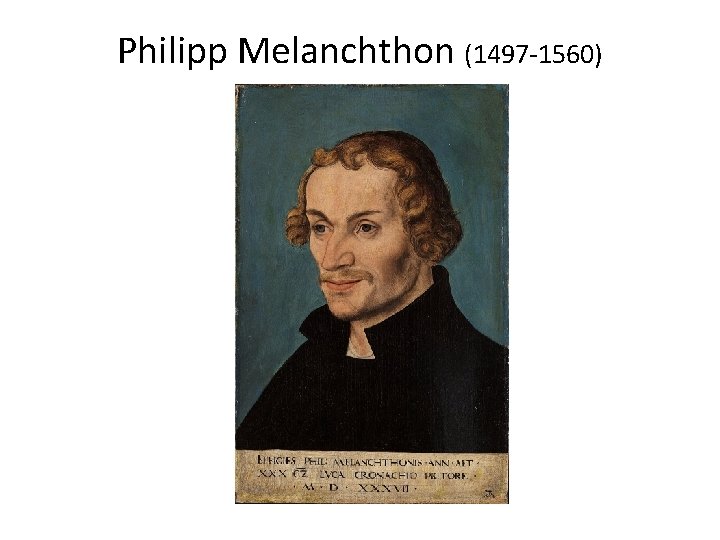
Philipp Melanchthon (1497 -1560)
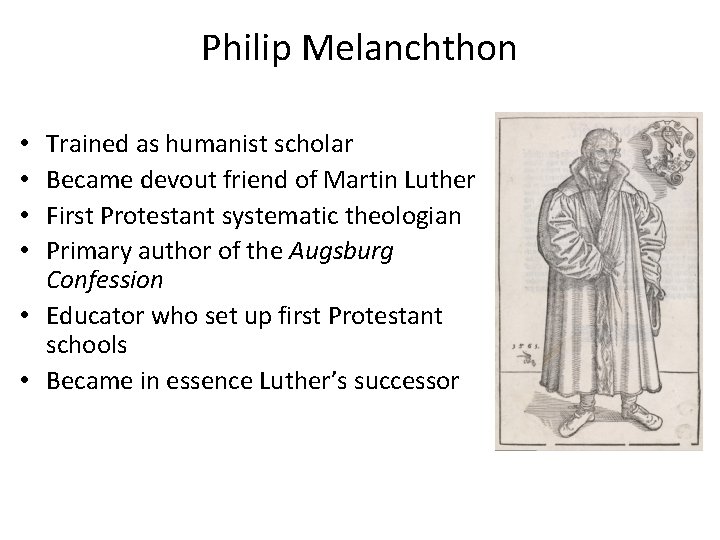
Philip Melanchthon Trained as humanist scholar Became devout friend of Martin Luther First Protestant systematic theologian Primary author of the Augsburg Confession • Educator who set up first Protestant schools • Became in essence Luther’s successor • •
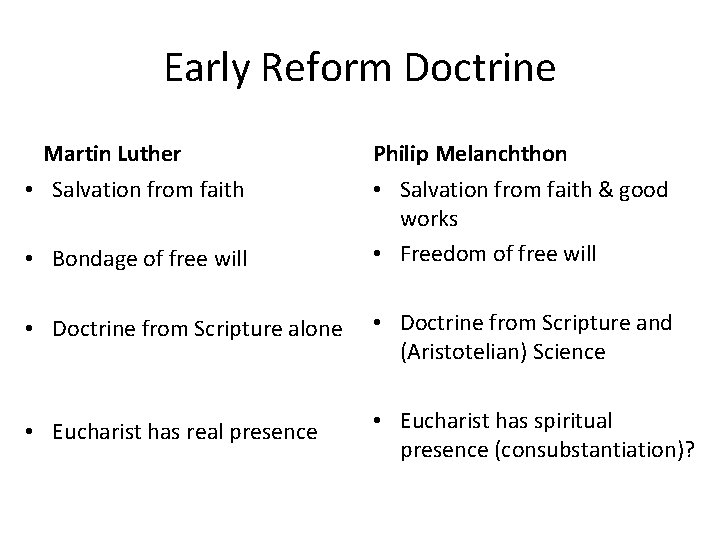
Early Reform Doctrine Martin Luther • Salvation from faith • Bondage of free will Philip Melanchthon • Salvation from faith & good works • Freedom of free will • Doctrine from Scripture alone • Doctrine from Scripture and (Aristotelian) Science • Eucharist has real presence • Eucharist has spiritual presence (consubstantiation)?

Coming Up: Johannes Calvin
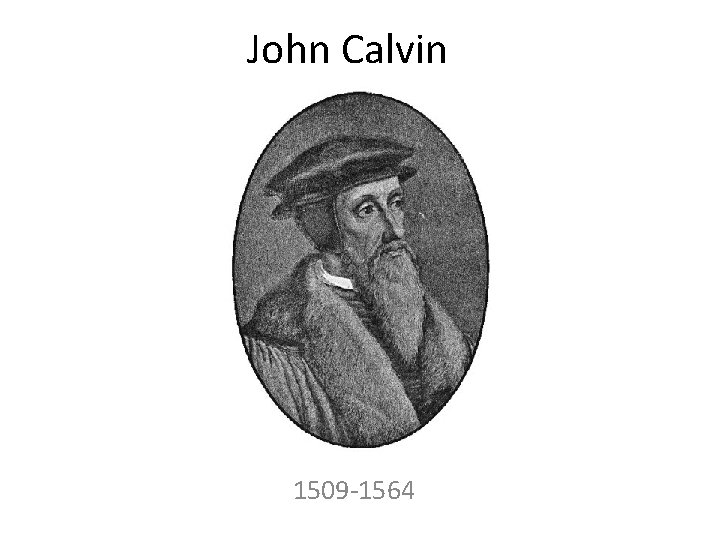
John Calvin 1509 -1564
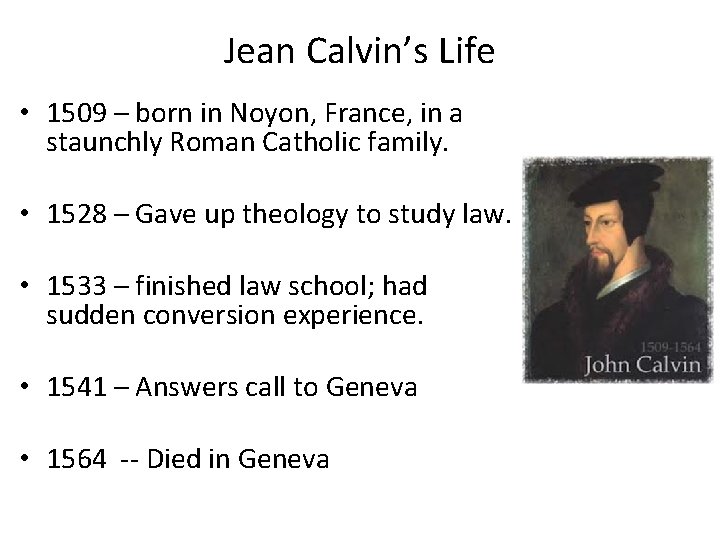
Jean Calvin’s Life • 1509 – born in Noyon, France, in a staunchly Roman Catholic family. • 1528 – Gave up theology to study law. • 1533 – finished law school; had sudden conversion experience. • 1541 – Answers call to Geneva • 1564 -- Died in Geneva
Calvin: Gospel Truth …[T]he Spirit, promised to us, has not the task of inventing new and unheard-of revelations, or of forging a new kind of doctrine, to lead us away from the received doctrine of the gospel, but of sealing our minds with that very doctrine which is commended by the gospel. ~ Institutes of the Christian Religion
Calvin: Simplicity of Worship • “Musical instruments in celebrating the praises of God would be no more suitable than the burning of incense, the lighting of lamps, and the restoration of the other shadows of the law. The Papists therefore, have foolishly borrowed, this, as well as many other things, from the Jews. Men who are fond of outward pomp may delight in that noise; but the simplicity which God recommends to us by the apostles is far more pleasing to him. Paul allows us to bless God in the public assembly of the saints, only in a known tongue (1 Corinthians 14: 16) What shall we then say of chanting, which fills the ears with nothing but an empty sound? ”
Calvin: Justification by Faith “. . . a man will be justified by faith when, excluded from righteousness of works, he by faith lays hold of the righteousness of Christ, and clothed in it, appears in the sight of God not as a sinner, but as righteous. . . ” “A perfect faith is nowhere to be found, so it follows that all of us are partly unbelievers. ”
Calvin: Acceptance of Providence “We ought to contemplate providence not as curious and fickle persons are wont to do but as a ground of confidence and excitement to prayer. When he informs us that the hairs of our head are all numbered it is not to encourage trivial speculations but to instruct us to depend on the fatherly care of God which is exercised over these frail bodies. ”
Calvin: Predestination “Though Satan instills his poison, and fans the flames of our corrupt desires within us, we are yet not carried by any external force to the commission of sin, but our own flesh entices us, and we willingly yield to its allurements. ” “God preordained, for his own glory and the display of His attributes of mercy and justice, a part of the human race, without any merit of their own, to eternal salvation, and another part, in just punishment of their sin, to eternal damnation. ”
Calvinist Doctrine 1. Total depravity of humankind – since the Fall people are incapable of not sinning; 2. Unconditional Election – once a person is saved, that person is always in a state of salvation; 3. Limited Atonement – Christ came to save the Elect only; 4. Irresistible Grace – One can neither provoke nor reject Election; 5. Perseverance of Saints – No one can presume Election, but must presevere in leading a good life.
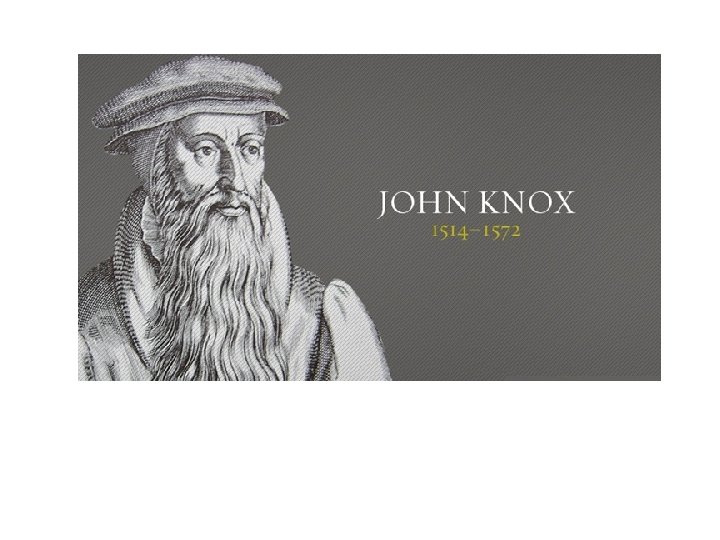
John Knox • Born near Edinburgh in 1505. Attended university in St Andrews. Became a Roman Catholic priest. • 1542 -- Scotland governed by James Hamilton as regent for infant Mary (Stuart; later Queen of Scots). Promoted Protestantism • 1547 – Knox captured and imprisoned by the French • 1553 -- Mary I (Tudor, of England; aka “Bloody Mary”) became Queen. Knox fled to Frankfurt and then Geneva, where he met John Calvin.
John Knox: Predestination • “. . . the general consent of all that sect [i. e. “Papists”]is that God (by his foreknowledge, counsel, and wisdom) has no assured election, neither yet any certain reprobation, but that every man may elect or reprobate himself by his own free will, which he has (say they) to do good or evil. . . [All these things are] forged by their own brains, and polished by the finest of their wits, when yet in very deed they are but the rotten heresies of. . . Pelagius, long ago confuted by Augustine. . . ” Letter to his Brethren in Scotland (Dieppe, the first of December 1557)
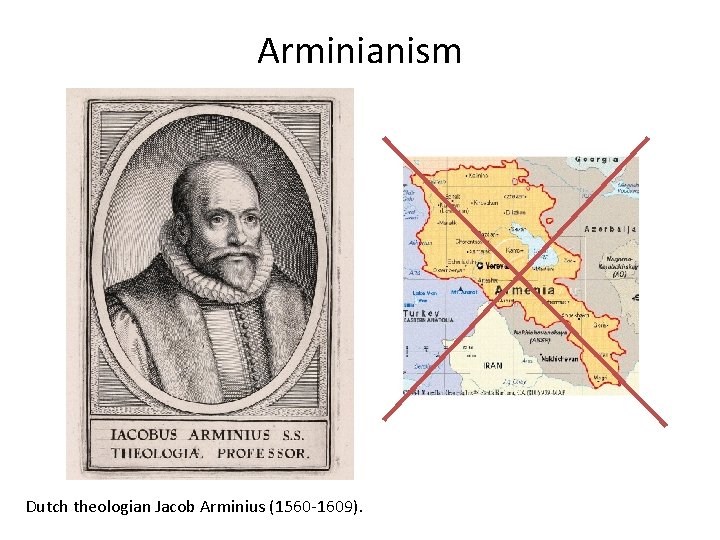
Arminianism Dutch theologian Jacob Arminius (1560 -1609).
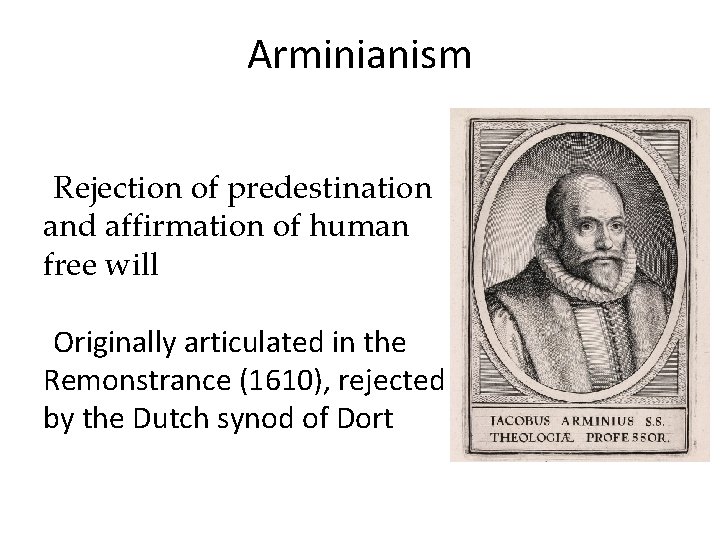
Arminianism Rejection of predestination and affirmation of human free will Originally articulated in the Remonstrance (1610), rejected by the Dutch synod of Dort
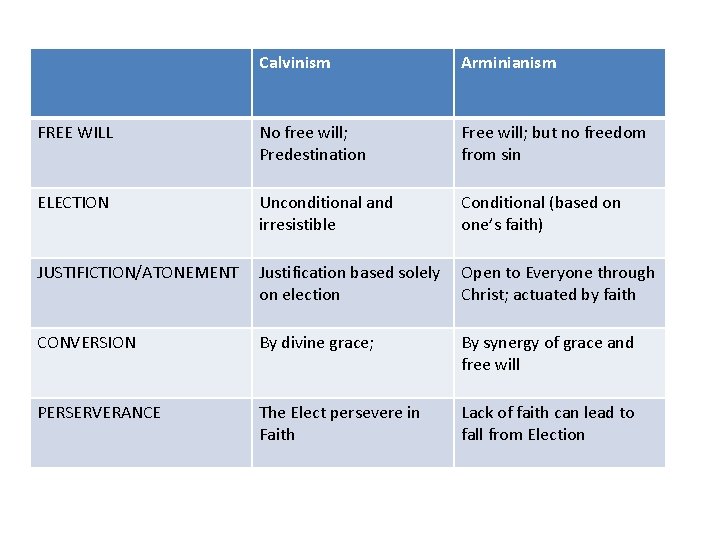
Calvinism Arminianism FREE WILL No free will; Predestination Free will; but no freedom from sin ELECTION Unconditional and irresistible Conditional (based on one’s faith) JUSTIFICTION/ATONEMENT Justification based solely Open to Everyone through on election Christ; actuated by faith CONVERSION By divine grace; By synergy of grace and free will PERSERVERANCE The Elect persevere in Faith Lack of faith can lead to fall from Election
Coming Attractions: The English Reformation
- Slides: 33