
On and OffPremise Signage and Pointof Purchase Communications
- Slides: 43
On- and Off-Premise Signage and Point-of. Purchase Communications
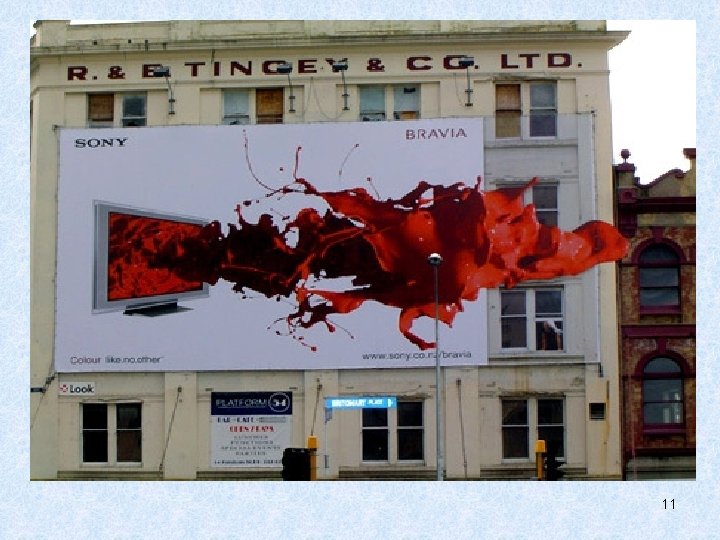
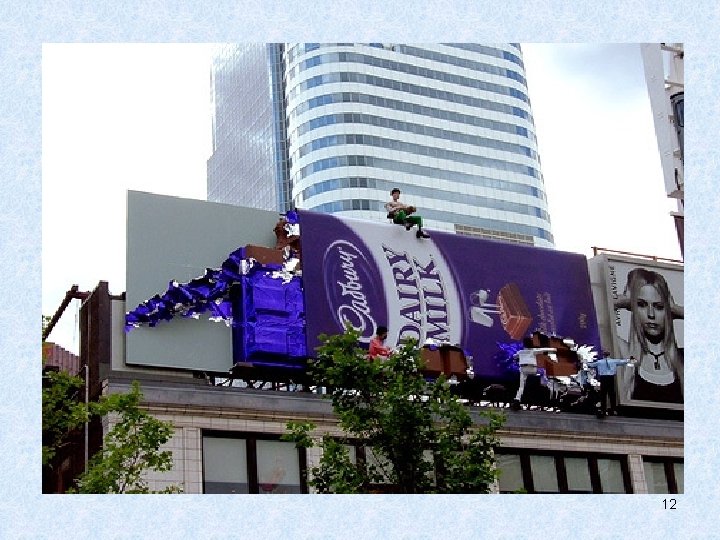
Out-of-Home (Outdoor) Advertising • $7. 2 billion annually in the US • Regarded as supplementary • e. g. , billboard(major), bus shelters, giant inflatables, shopping-mall displays, airports, etc. • Americans report traveling an average of slightly over 300 miles in a vehicle in a typical week with an average round-trip commute totaling about 55 minutes. 2
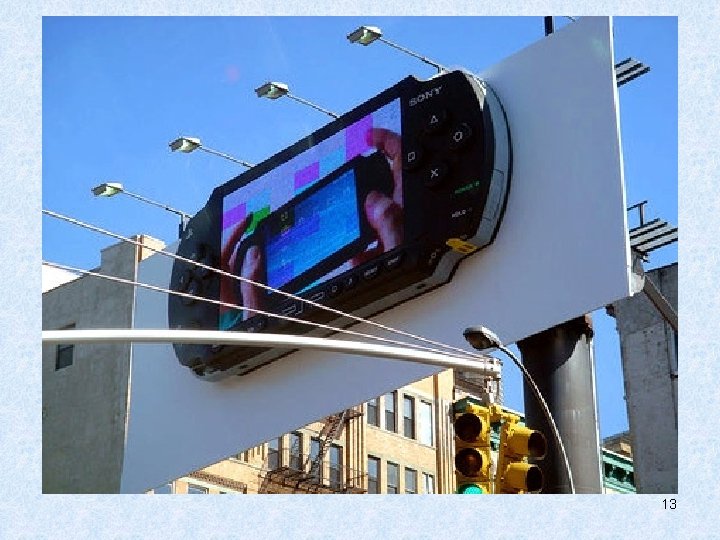
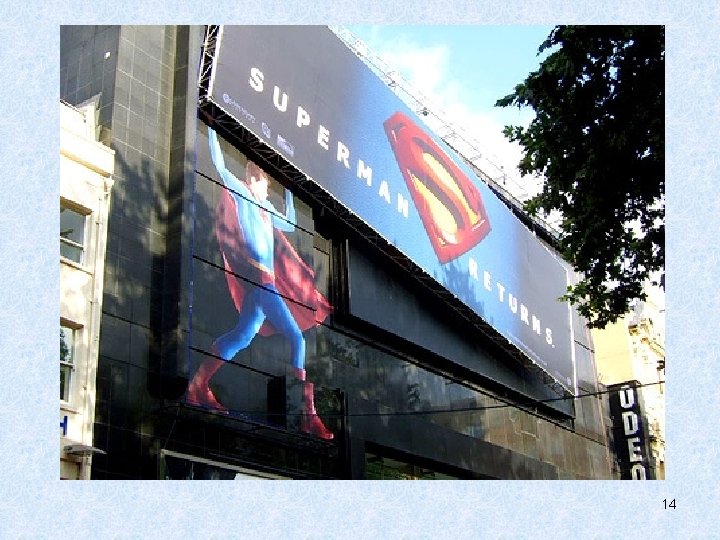
Billboard Advertising • 400, 000 billboards in the US • Designed with name recognition as the primary objective Two major forms: (1) Poster Panels (2) Painted Bulletins (3) Digital billboards 3
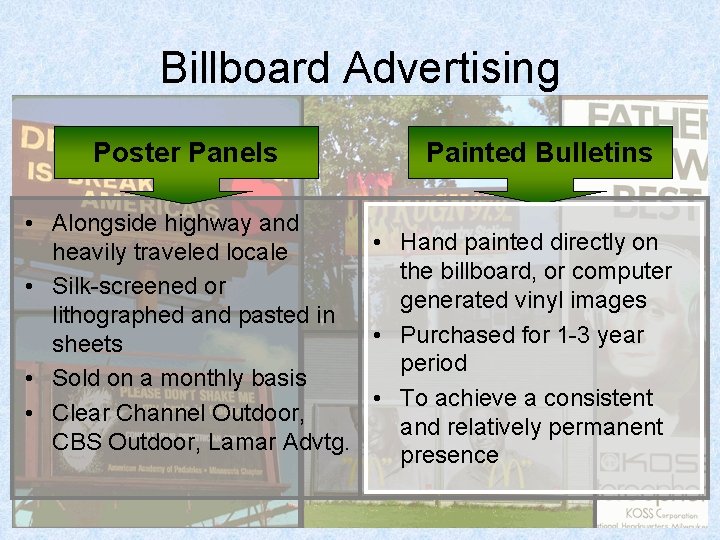
Billboard Advertising Poster Panels Painted Bulletins • Alongside highway and • Hand painted directly on heavily traveled locale the billboard, or computer • Silk-screened or generated vinyl images lithographed and pasted in • Purchased for 1 -3 year sheets period • Sold on a monthly basis • To achieve a consistent • Clear Channel Outdoor, and relatively permanent CBS Outdoor, Lamar Advtg. presence 4
Digital Billboards • Huge flat screen TV that rotates messages every so often • Potential for increased revenue for the billboard owner • Expensive to install ($250, 000 each); represent visual pollution and distracts drivers • Offer flexibility to advertisers (messages can be changed frequently) 5
Buying Out-of-Home Advertising • Purchased through companies that own billboards, called plants e. g. Clear Channel Outdoor; Viacom Outdoor • Plants sell space in terms of showings – Showings are percent of population exposed – #25: 25% of population exposed • Recently, GRPs (gross rating points) are used - % of population in a market reached at least once. 6
Outdoor Advertising’s • Broad reach and high frequency • Geographic flexibility • Low cost per thousand ($0. 85 & $1. 78 as opposed to $9. 62 for a full page color magazine ad) • Demographic Nonselectivity • Short exposure time • Environmental concerns • Prominent brand identification • Opportune purchase reminder 7
Measuring OOH Audience Size and Characteristics • The size of the audience to be reached when using these media – Traffic Audit Bureau – How many people pass by a billboard site. • Audience characteristics not measurable • Nielsen Media Research – Npods (Nielsen Personal Outdoor Devices) & GPS systems 8
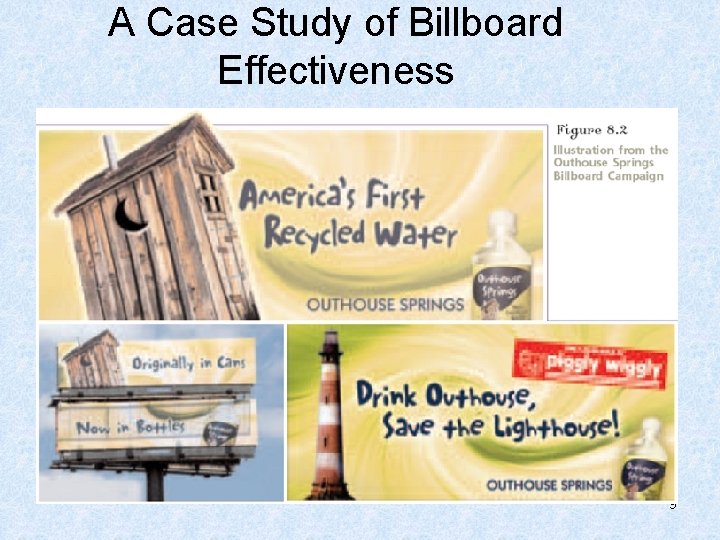
A Case Study of Billboard Effectiveness 9
Study Findings • Adams Outdoor and Cognetix Advtg. • Charleston area – achieved 75 showing at a four week cots of $25, 000. • By week 3 – 67% indicated awareness – 77% had neutral to favorable attitudes – 85% indicated positive purchase intentions 10
11
12
13
14
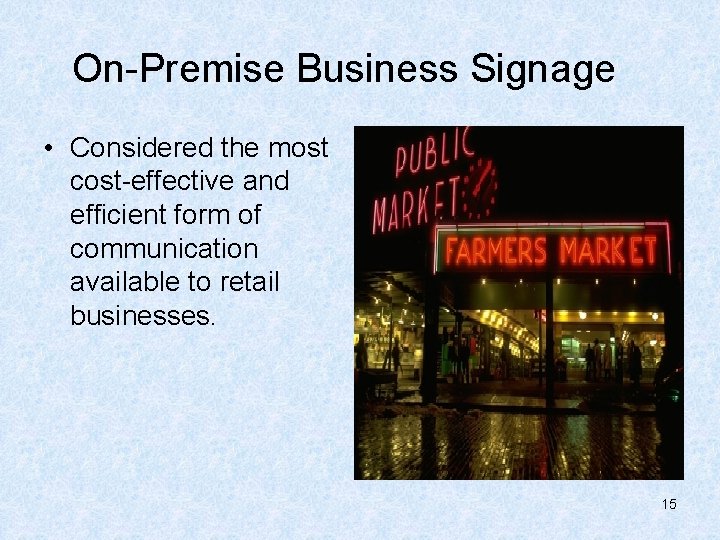
On-Premise Business Signage • Considered the most cost-effective and efficient form of communication available to retail businesses. 15
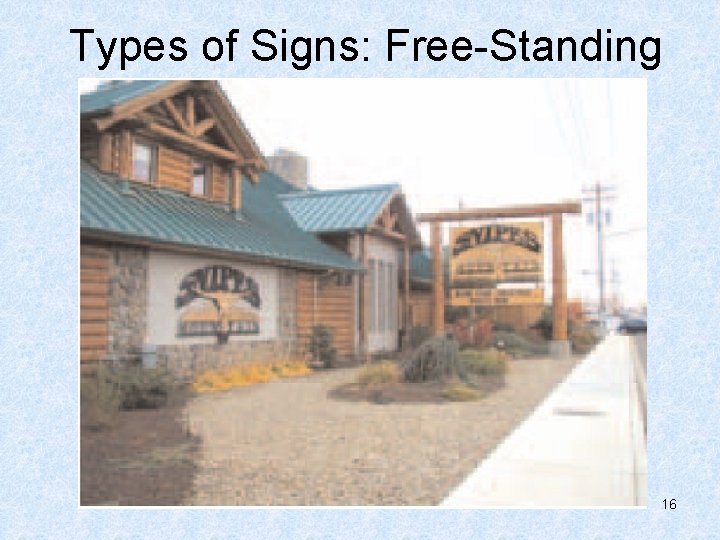
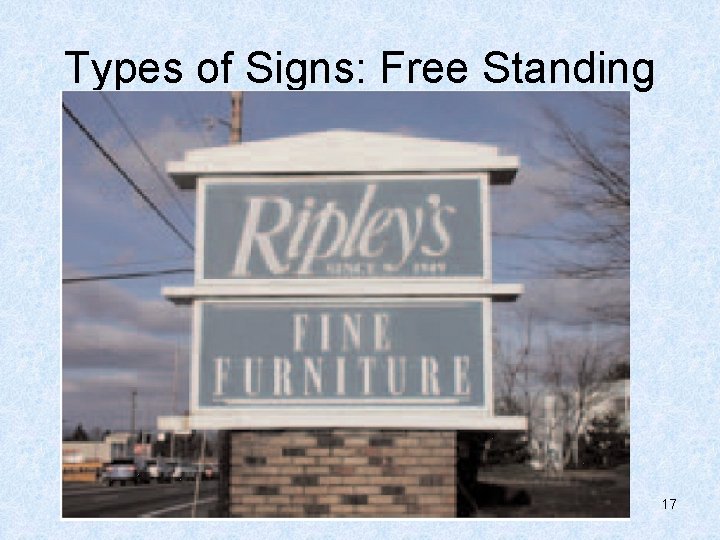
Types of Signs: Free-Standing 16
Types of Signs: Free Standing 17
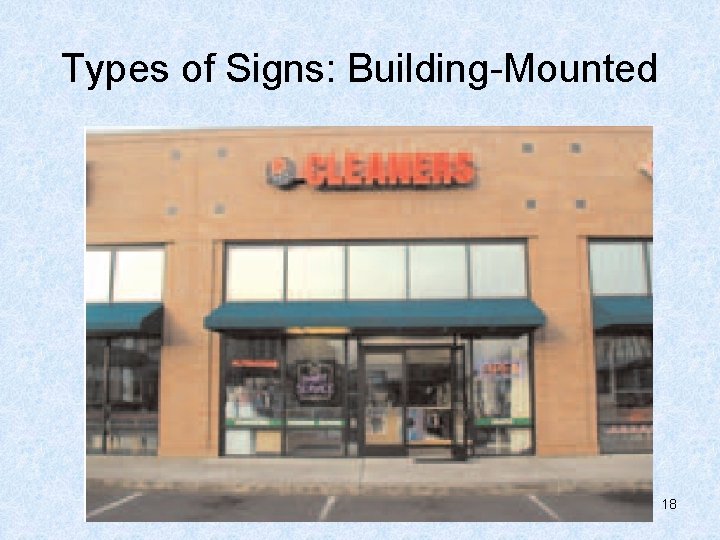
Types of Signs: Building-Mounted 18
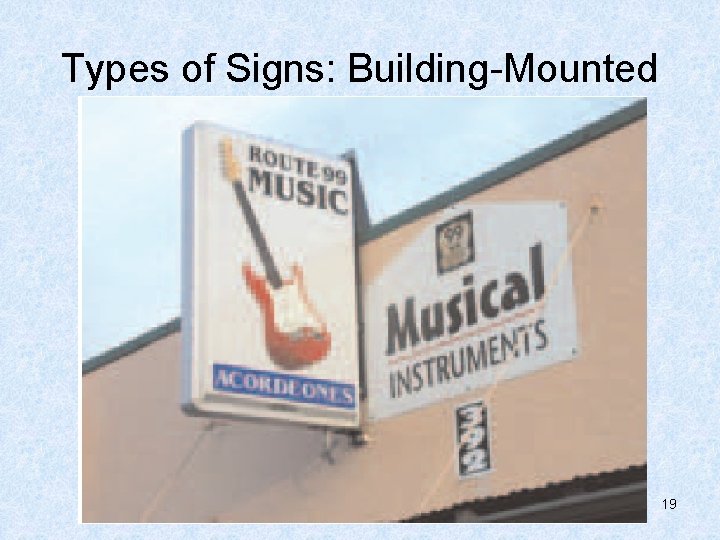
Types of Signs: Building-Mounted 19
ABC’s of On-Premise Signs ttract New Customers rand the retail site in consumers’ minds reate impulse purchases Conspicuity: the ability of a sign to capture attention. 20
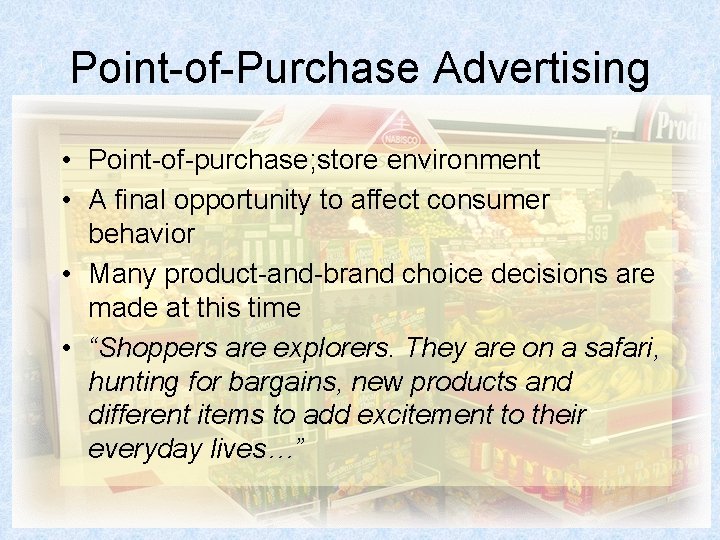
Point-of-Purchase Advertising • Point-of-purchase; store environment • A final opportunity to affect consumer behavior • Many product-and-brand choice decisions are made at this time • “Shoppers are explorers. They are on a safari, hunting for bargains, new products and different items to add excitement to their everyday lives…” 21
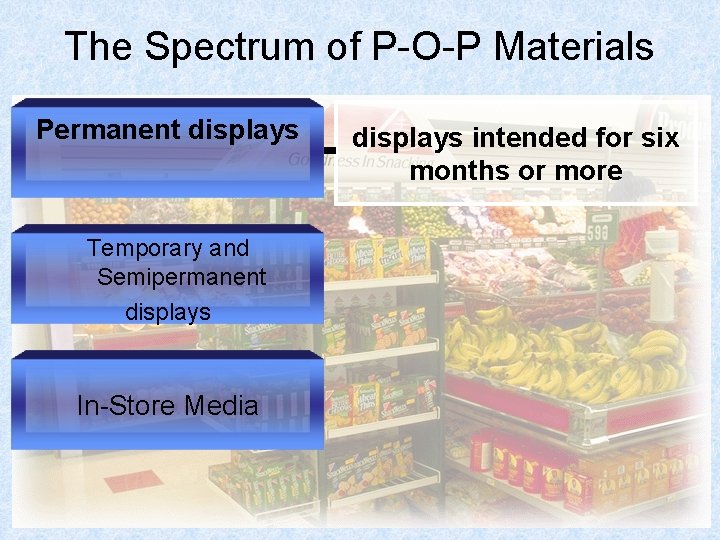
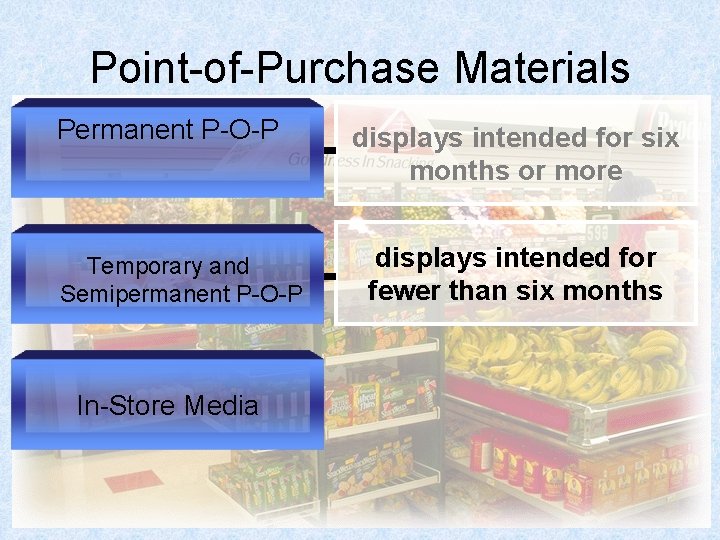
The Spectrum of P-O-P Materials Permanent displays intended for six months or more Temporary and Semipermanent displays In-Store Media 22
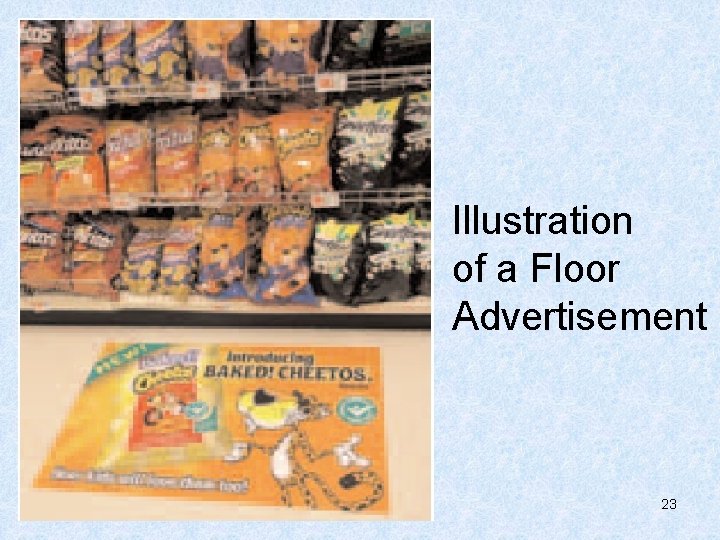
Illustration of a Floor Advertisement 23
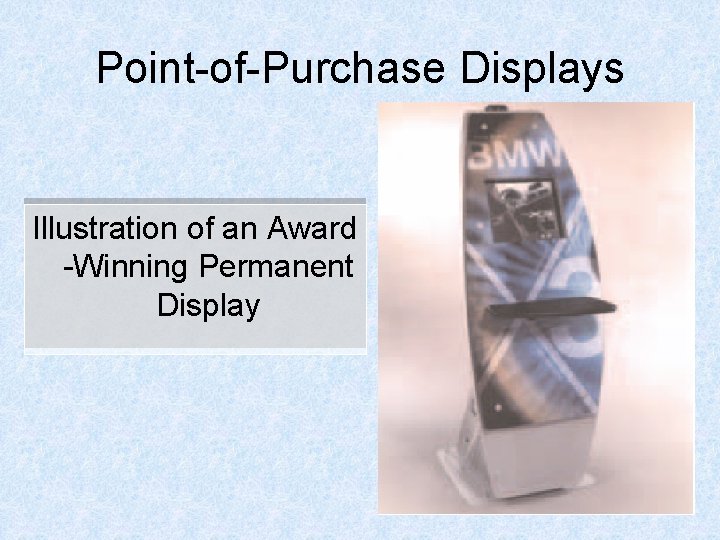
Point-of-Purchase Displays Illustration of an Award -Winning Permanent Display 24
Point-of-Purchase Materials Permanent P-O-P Temporary and Semipermanent P-O-P displays intended for six months or more displays intended for fewer than six months In-Store Media 25
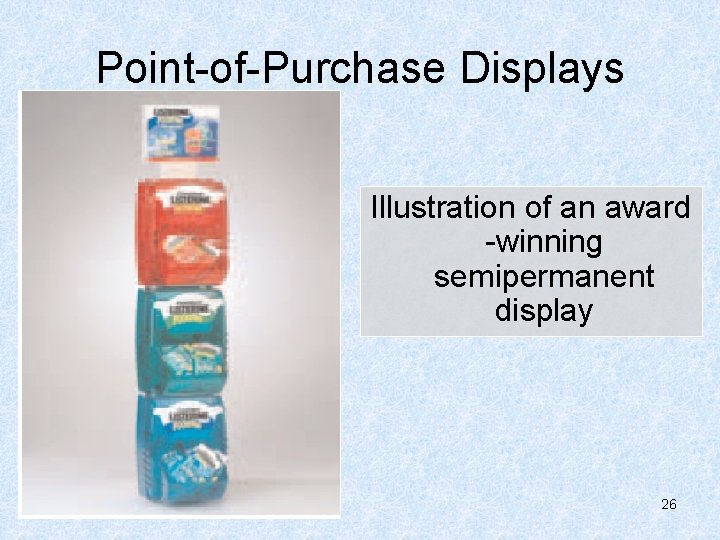
Point-of-Purchase Displays Illustration of an award -winning semipermanent display 26
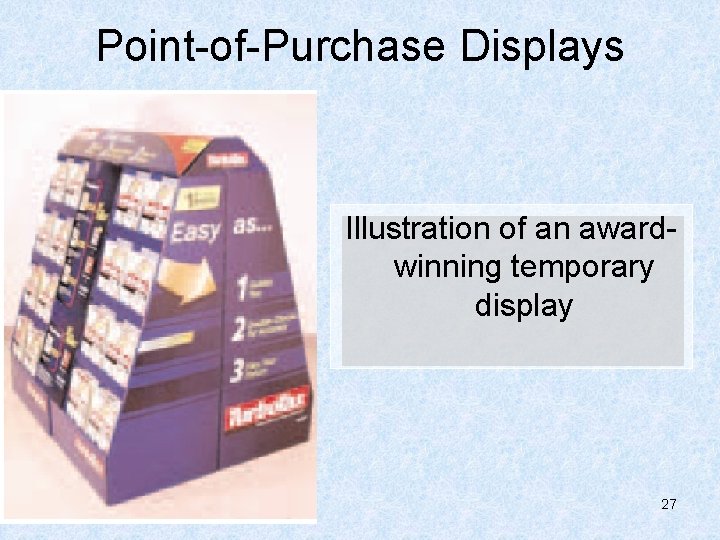
Point-of-Purchase Displays Illustration of an awardwinning temporary display 27
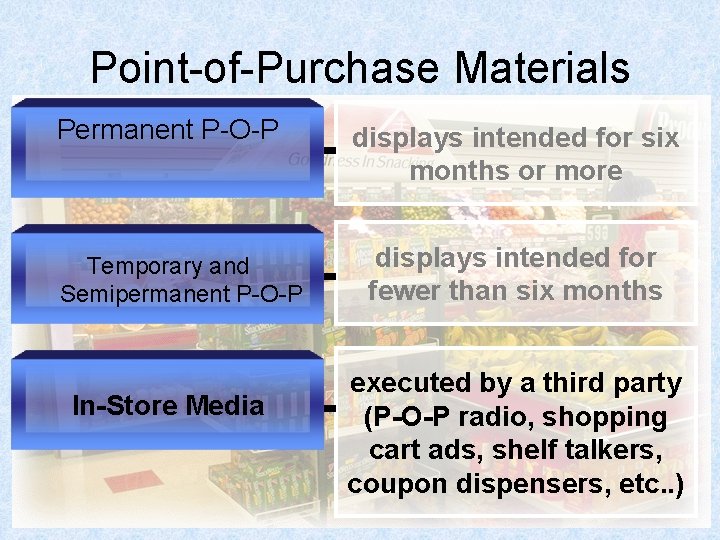
Point-of-Purchase Materials Permanent P-O-P Temporary and Semipermanent P-O-P In-Store Media displays intended for six months or more displays intended for fewer than six months executed by a third party (P-O-P radio, shopping cart ads, shelf talkers, coupon dispensers, etc. . ) 28
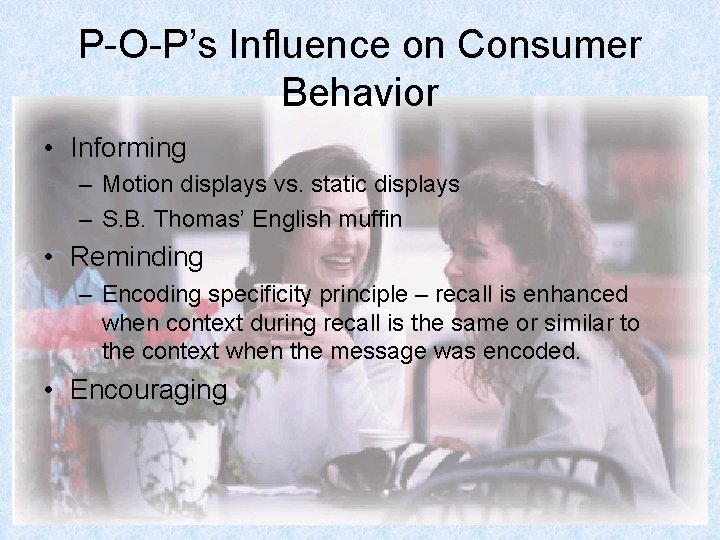
P-O-P’s Influence on Consumer Behavior • Informing – Motion displays vs. static displays – S. B. Thomas’ English muffin • Reminding – Encoding specificity principle – recall is enhanced when context during recall is the same or similar to the context when the message was encoded. • Encouraging 29
POPAI consumer buying habits study • Confirms that in-store media, signage and displays heavily influence consumer buying decisions • 4200 consumers interviewed at Bradlees, Target, Walmart and Kmart in 14 major US markets • Entry and exit interviews 30
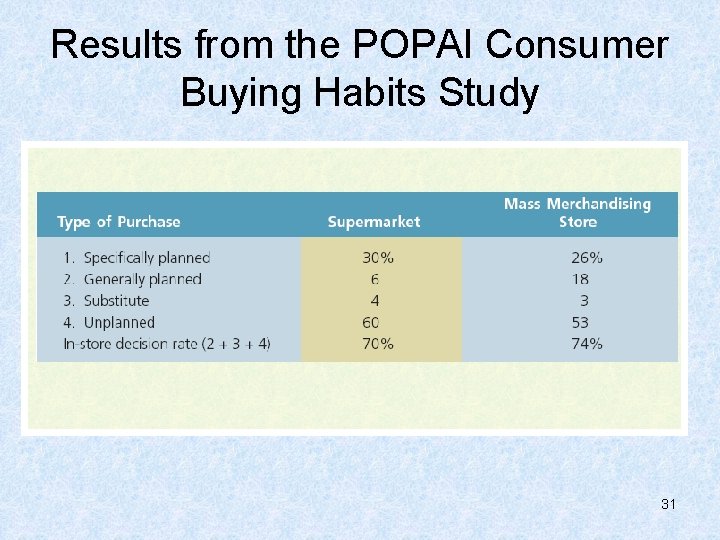
Results from the POPAI Consumer Buying Habits Study 31
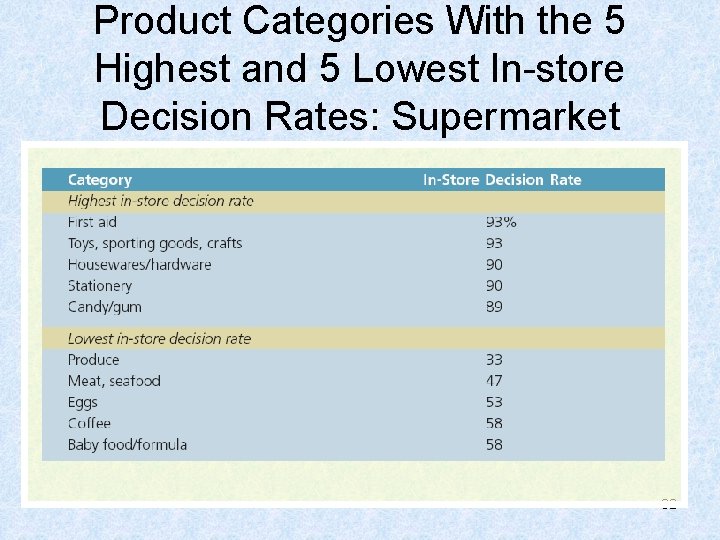
Product Categories With the 5 Highest and 5 Lowest In-store Decision Rates: Supermarket 32
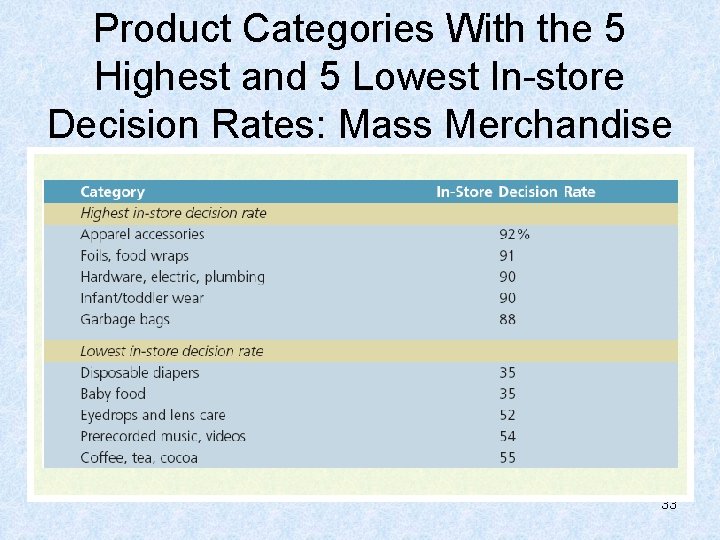
Product Categories With the 5 Highest and 5 Lowest In-store Decision Rates: Mass Merchandise 33
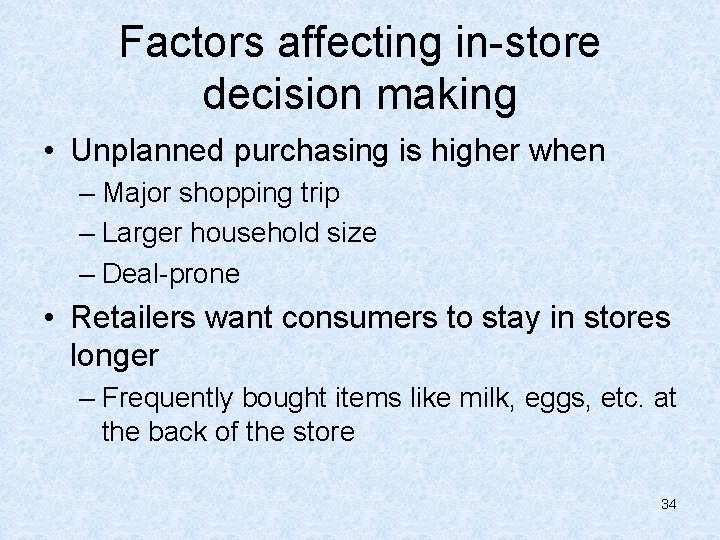
Factors affecting in-store decision making • Unplanned purchasing is higher when – Major shopping trip – Larger household size – Deal-prone • Retailers want consumers to stay in stores longer – Frequently bought items like milk, eggs, etc. at the back of the store 34
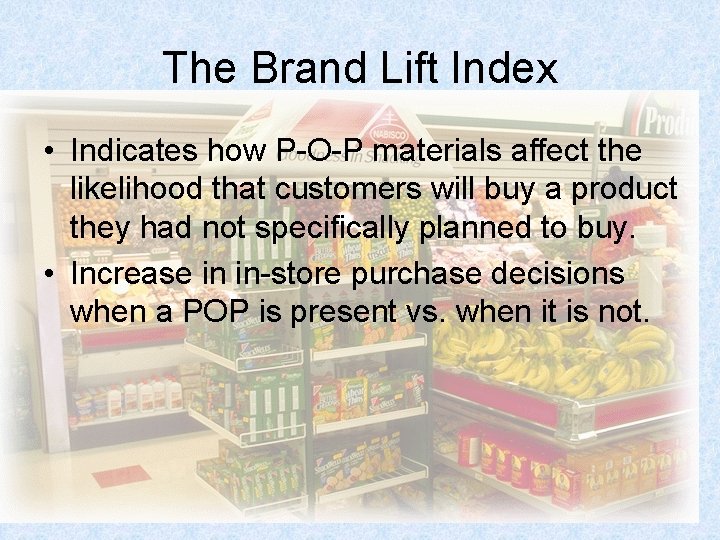
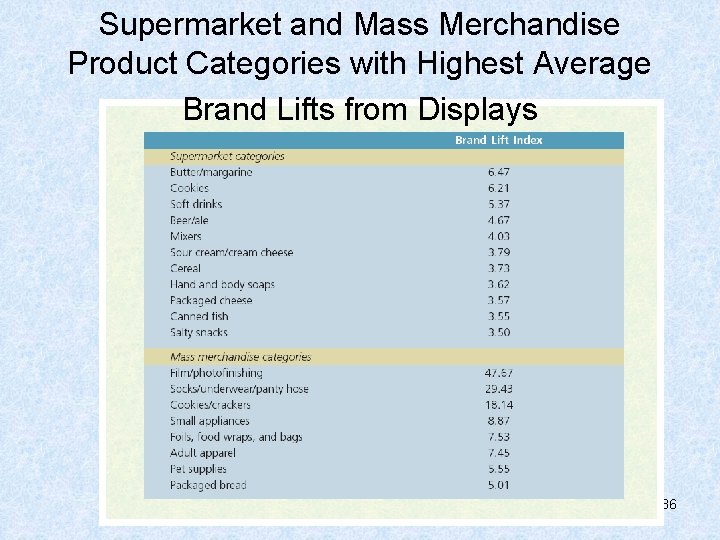
The Brand Lift Index • Indicates how P-O-P materials affect the likelihood that customers will buy a product they had not specifically planned to buy. • Increase in in-store purchase decisions when a POP is present vs. when it is not. 35
Supermarket and Mass Merchandise Product Categories with Highest Average Brand Lifts from Displays 36
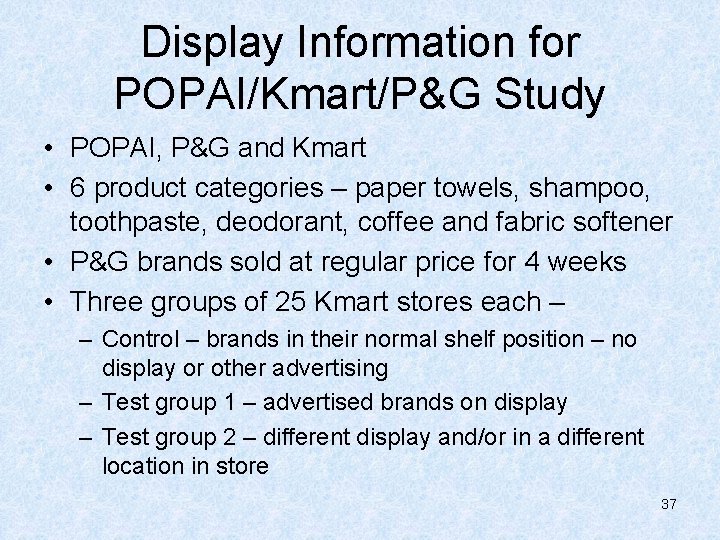
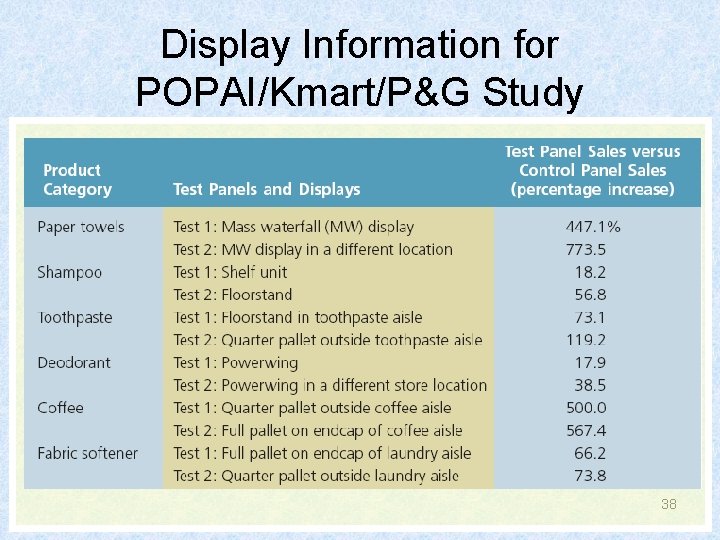
Display Information for POPAI/Kmart/P&G Study • POPAI, P&G and Kmart • 6 product categories – paper towels, shampoo, toothpaste, deodorant, coffee and fabric softener • P&G brands sold at regular price for 4 weeks • Three groups of 25 Kmart stores each – – Control – brands in their normal shelf position – no display or other advertising – Test group 1 – advertised brands on display – Test group 2 – different display and/or in a different location in store 37
Display Information for POPAI/Kmart/P&G Study 38
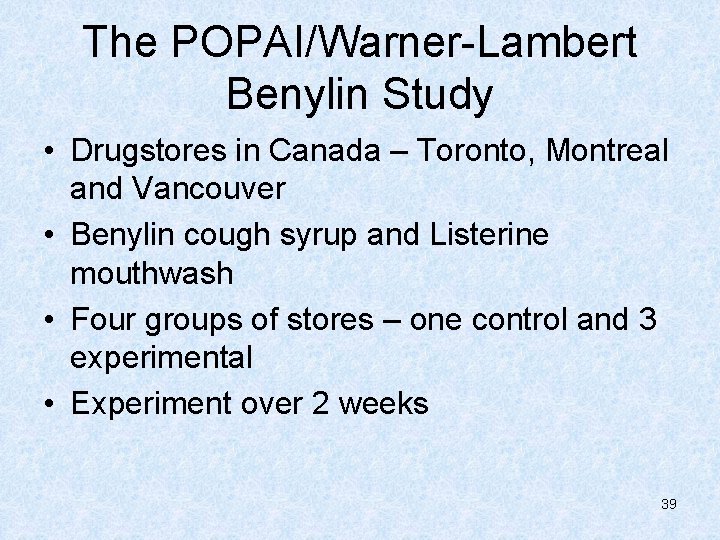
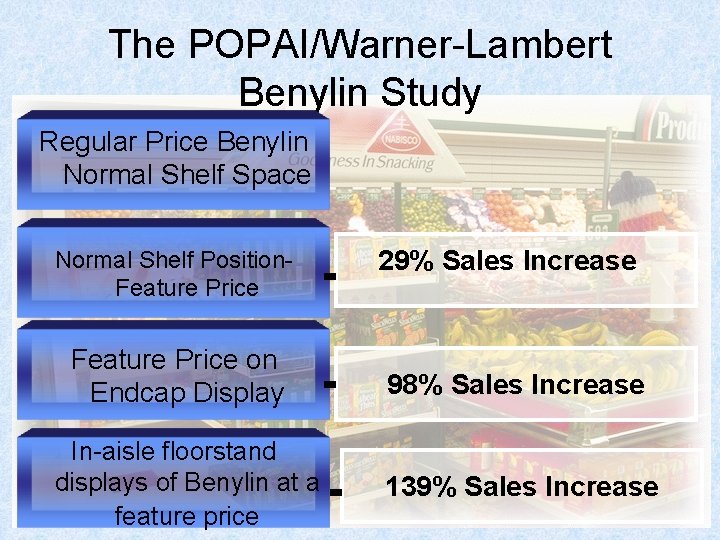
The POPAI/Warner-Lambert Benylin Study • Drugstores in Canada – Toronto, Montreal and Vancouver • Benylin cough syrup and Listerine mouthwash • Four groups of stores – one control and 3 experimental • Experiment over 2 weeks 39
The POPAI/Warner-Lambert Benylin Study Regular Price Benylin Normal Shelf Space Normal Shelf Position. Feature Price on Endcap Display In-aisle floorstand displays of Benylin at a feature price 29% Sales Increase 98% Sales Increase 139% Sales Increase 40
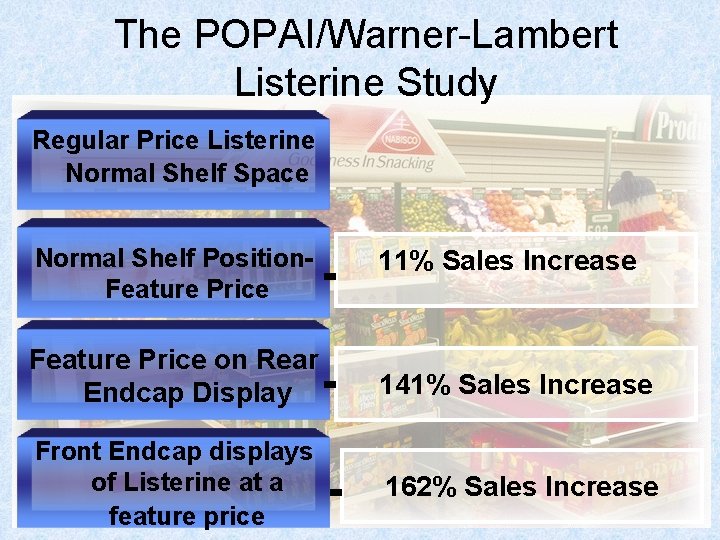
The POPAI/Warner-Lambert Listerine Study Regular Price Listerine Normal Shelf Space Normal Shelf Position. Feature Price 11% Sales Increase Feature Price on Rear Endcap Display 141% Sales Increase Front Endcap displays of Listerine at a feature price 162% Sales Increase 41
Reasons Why P-O-P Materials Go Unused • There is no incentive for the retailer because the materials are poorly designed and don’t meet their needs. • Some displays take up too much space for the amount of sales generated. • Some materials are too unwieldy, difficult to set up, or flimsy. • They lack eye appeal. • Sales may transfer from one brand to another but not increase retailers’ overall sales and profits. 42
Persuading Retailers to Use P-O-P Materials • P-O-P must satisfy the retailer’s need and the needs of the consumer – Right size and format – Fit the store décor – User friendly – Sent to stores when they are needed – Properly coordinated with other marketing communications program – Attractive, convenient, and useful for consumers 43