
On a piece of paper with your name





- Slides: 70
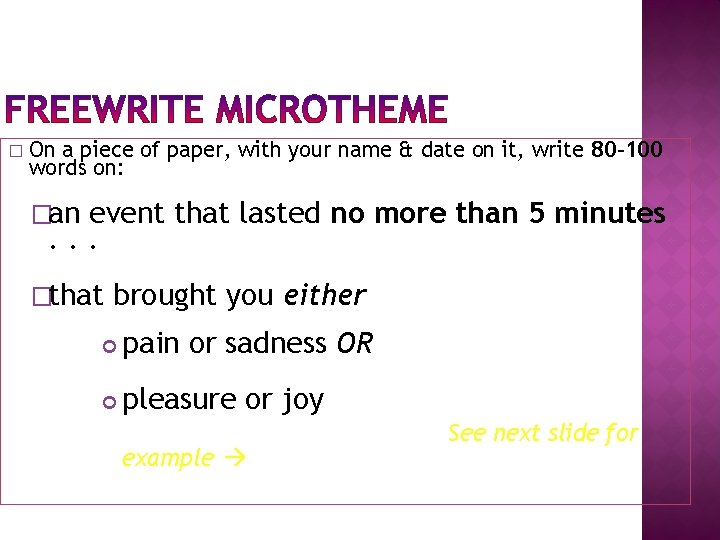
� On a piece of paper, with your name & date on it, write 80 -100 words on: �an event that lasted no more than 5 minutes. . . �that brought you either pain or sadness OR pleasure or joy example See next slide for
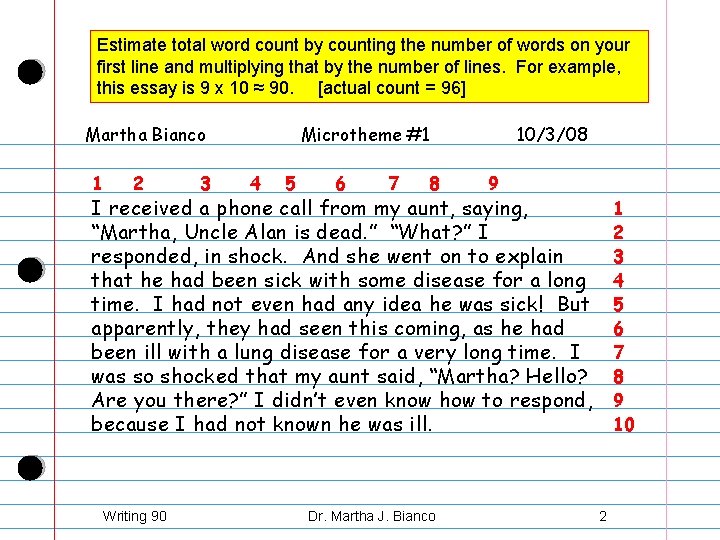
Estimate total word count by counting the number of words on your first line and multiplying that by the number of lines. For example, this essay is 9 x 10 ≈ 90. [actual count = 96] Martha Bianco 1 2 3 Microtheme #1 4 5 6 7 8 10/3/08 9 I received a phone call from my aunt, saying, “Martha, Uncle Alan is dead. ” “What? ” I responded, in shock. And she went on to explain that he had been sick with some disease for a long time. I had not even had any idea he was sick! But apparently, they had seen this coming, as he had been ill with a lung disease for a very long time. I was so shocked that my aunt said, “Martha? Hello? Are you there? ” I didn’t even know how to respond, because I had not known he was ill. Writing 90 Dr. Martha J. Bianco 1 2 3 4 5 6 7 8 9 10 2
Week 2 Grammar: Subjects, Verbs, and Types of Sentences
Subjects
Grammar Warm Up Activity
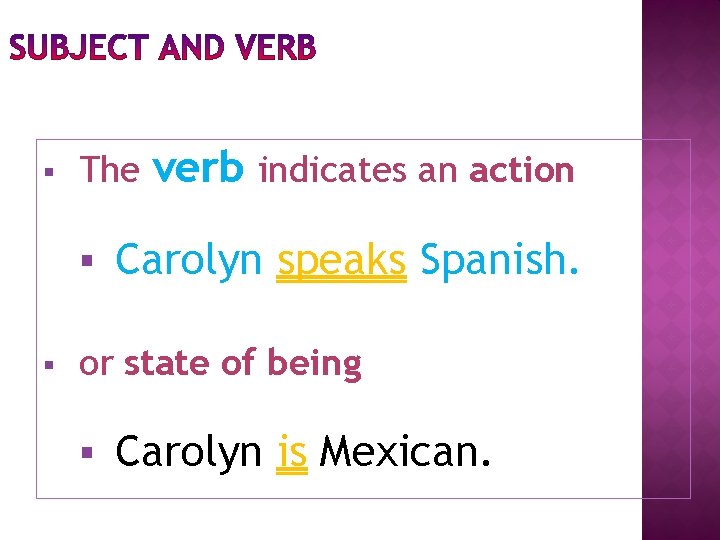
§ The verb indicates an action § § Carolyn speaks Spanish. or state of being § Carolyn is Mexican.
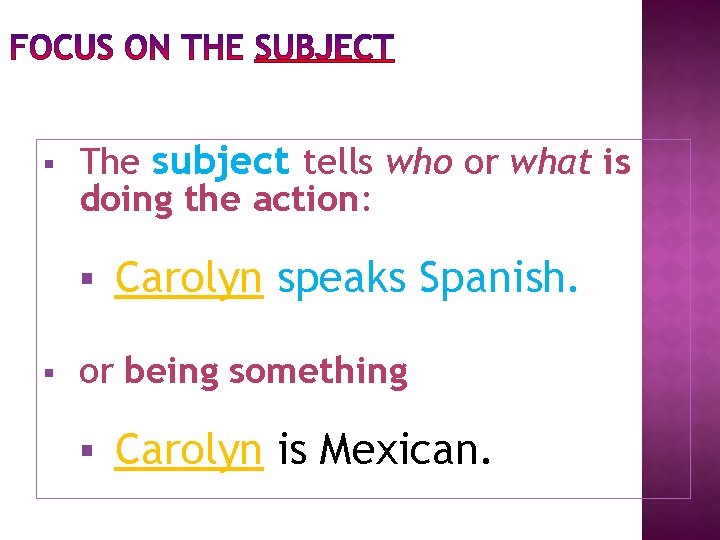
§ The subject tells who or what is doing the action: § § Carolyn speaks Spanish. or being something § Carolyn is Mexican.
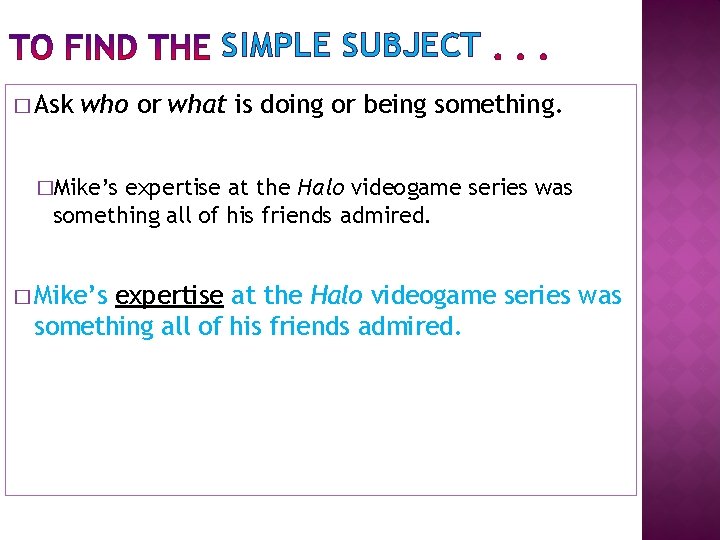
SIMPLE SUBJECT � Ask who or what is doing or being something. �Mike’s expertise at the Halo videogame series was something all of his friends admired. � Mike’s expertise at the Halo videogame series was something all of his friends admired.
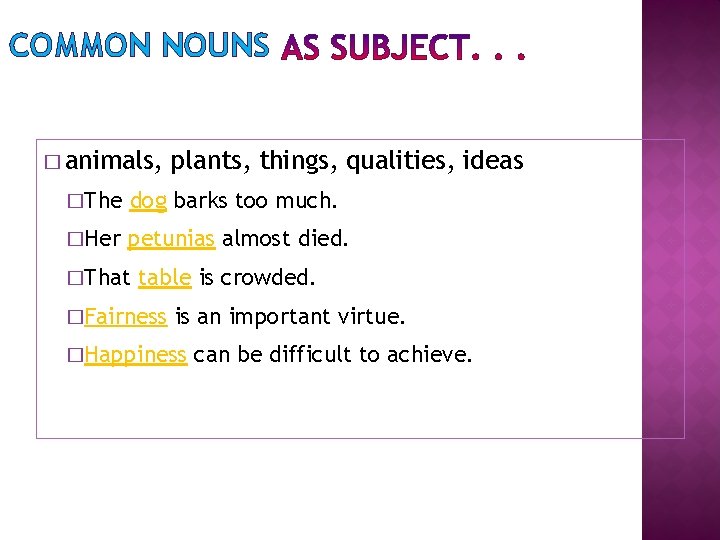
COMMON NOUNS � animals, plants, things, qualities, ideas �The dog barks too much. �Her petunias almost died. �That table is crowded. �Fairness is an important virtue. �Happiness can be difficult to achieve.
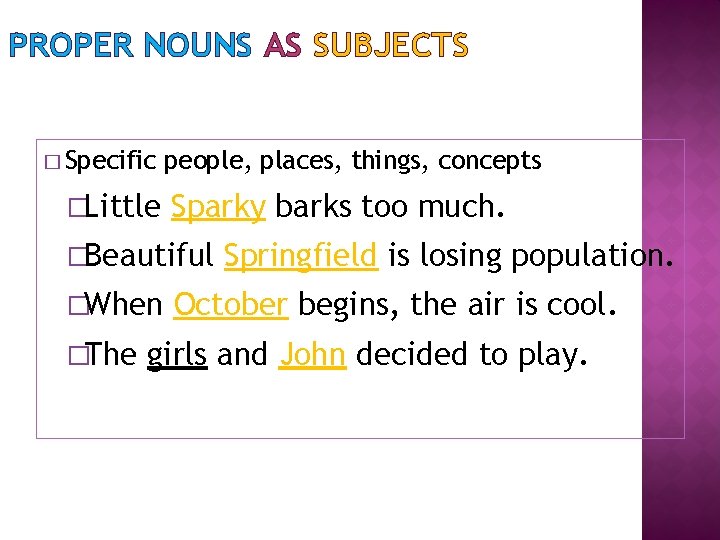
PROPER NOUNS AS SUBJECTS � Specific �Little people, places, things, concepts Sparky barks too much. �Beautiful �When �The Springfield is losing population. October begins, the air is cool. girls and John decided to play.
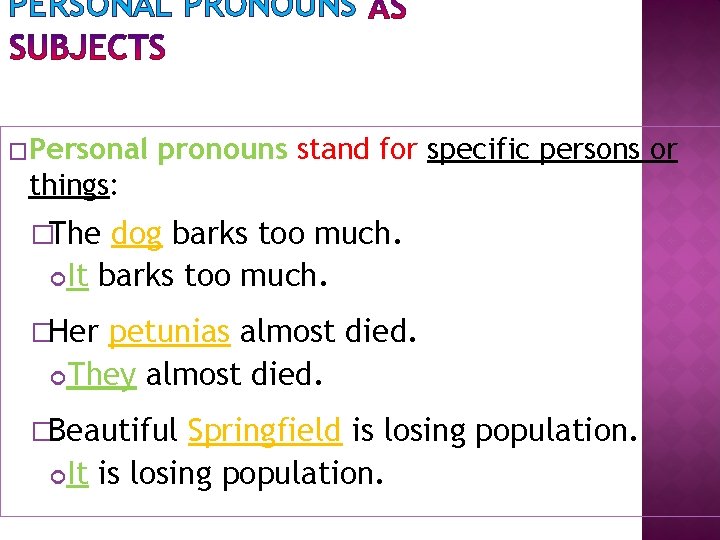
PERSONAL PRONOUNS �Personal pronouns stand for specific persons or things: �The dog barks too much. It barks too much. �Her petunias almost died. They almost died. �Beautiful Springfield is losing population. It is losing population.
PERSONAL PRONOUNS �Personal pronouns stand for specific persons or things: �John called the girls. He called the girls. �The girls and John decided to play. They decided to play. �Anne and I ate lunch. We ate lunch.
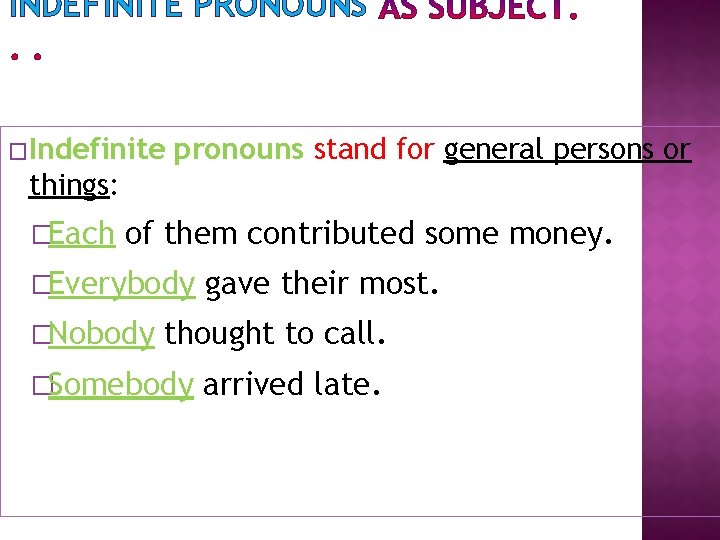
INDEFINITE PRONOUNS �Indefinite pronouns stand for general persons or things: �Each of them contributed some money. �Everybody �Nobody gave their most. thought to call. �Somebody arrived late.
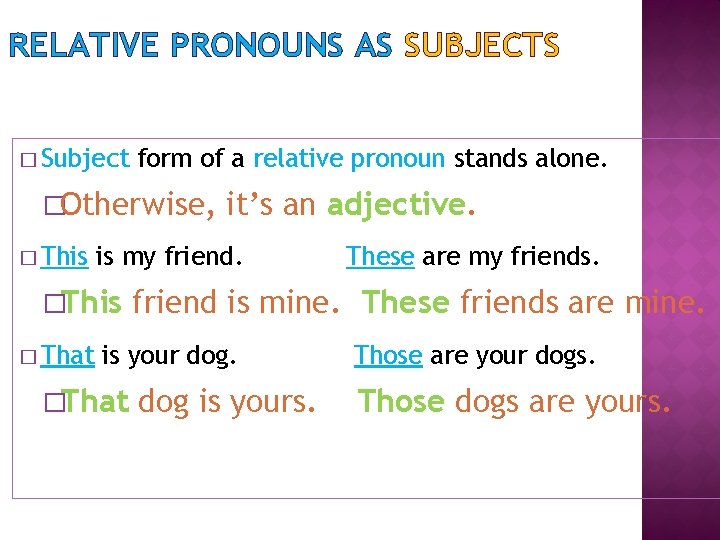
RELATIVE PRONOUNS AS SUBJECTS � Subject form of a relative pronoun stands alone. �Otherwise, � This is my friend. �This � That it’s an adjective. friend is mine. These friends are mine. is your dog. �That These are my friends. dog is yours. Those are your dogs. Those dogs are yours.
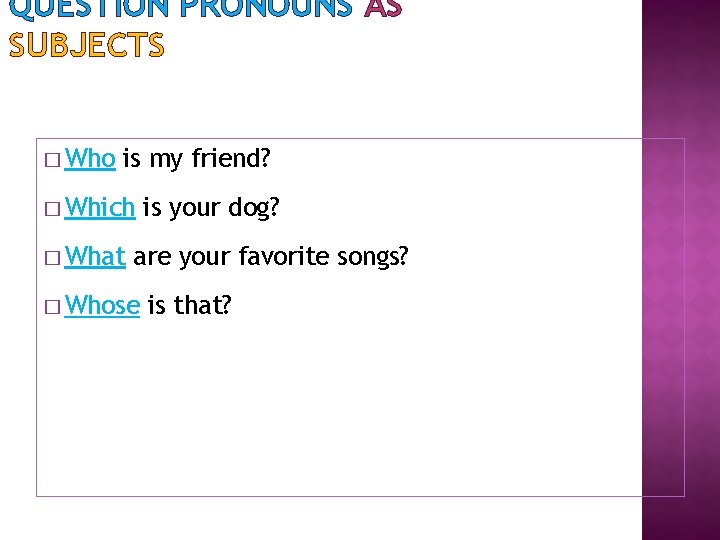
QUESTION PRONOUNS AS SUBJECTS � Who is my friend? � Which � What is your dog? are your favorite songs? � Whose is that?
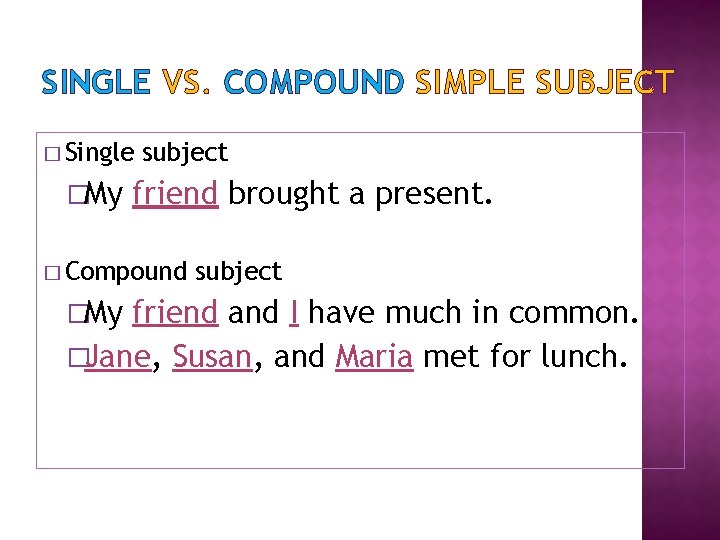
SINGLE VS. COMPOUND SIMPLE SUBJECT � Single �My subject friend brought a present. � Compound �My subject friend and I have much in common. �Jane, Susan, and Maria met for lunch.
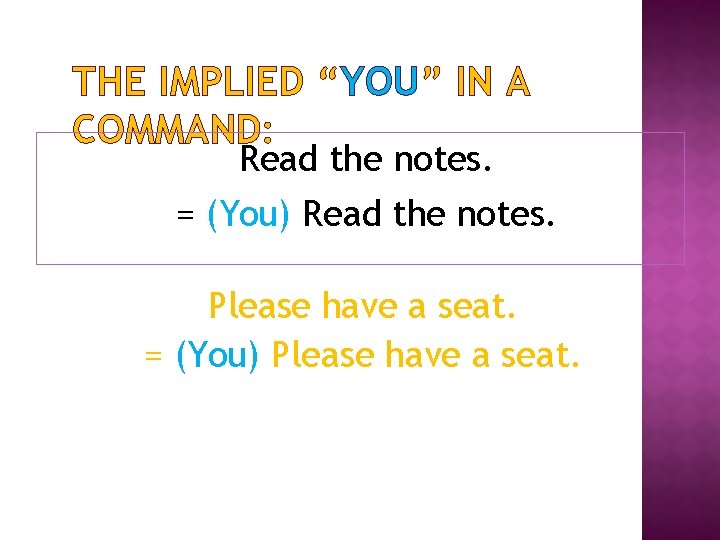
THE IMPLIED “YOU” IN A COMMAND: Read the notes. = (You) Read the notes. Please have a seat. = (You) Please have a seat.
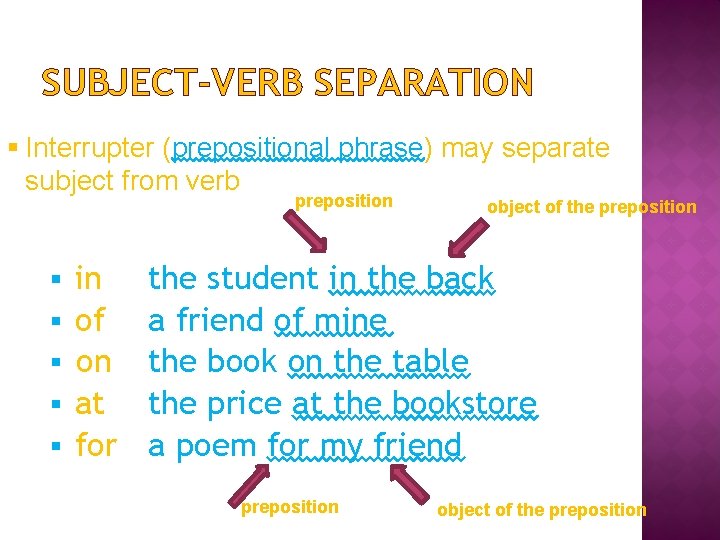
SUBJECT-VERB SEPARATION § Interrupter (prepositional phrase) may separate subject from verb preposition § § § in of on at for object of the preposition the student in the back a friend of mine the book on the table the price at the bookstore a poem for my friend preposition object of the preposition
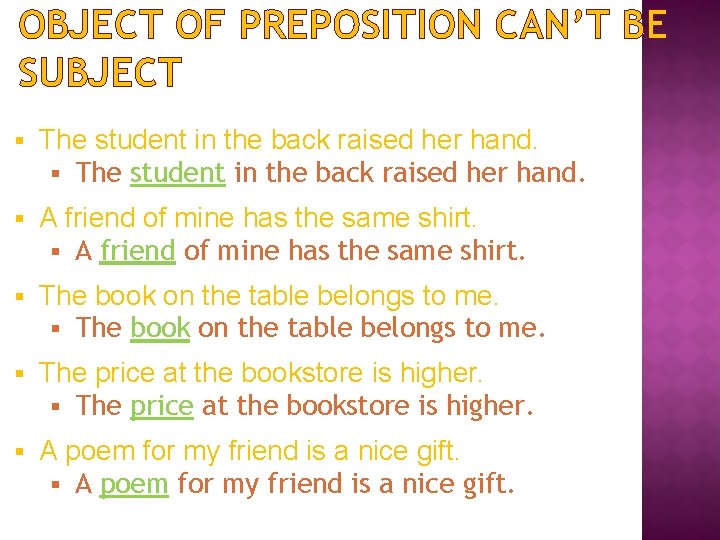
OBJECT OF PREPOSITION CAN’T BE SUBJECT § The student in the back raised her hand. § A friend of mine has the same shirt. § The book on the table belongs to me. § The price at the bookstore is higher. § A poem for my friend is a nice gift.
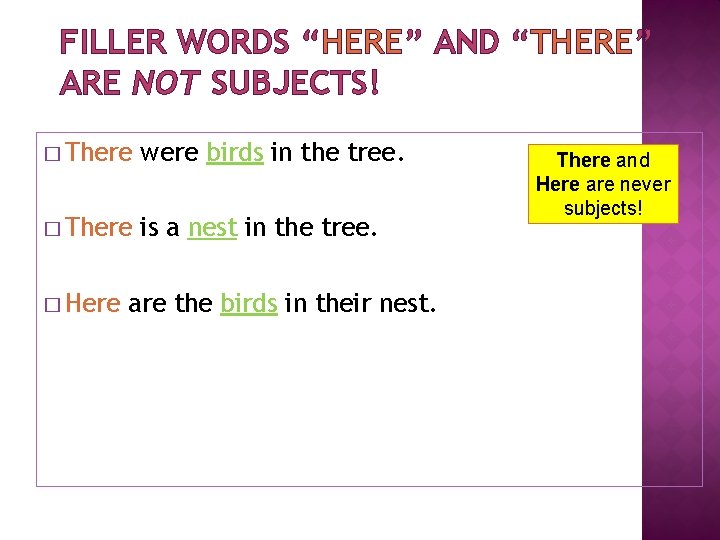
FILLER WORDS “HERE” AND “THERE” ARE NOT SUBJECTS! � There were birds in the tree. � There is a nest in the tree. � Here are the birds in their nest. There and Here are never subjects!
Exercises 1 & 2, p. 44
Verbs
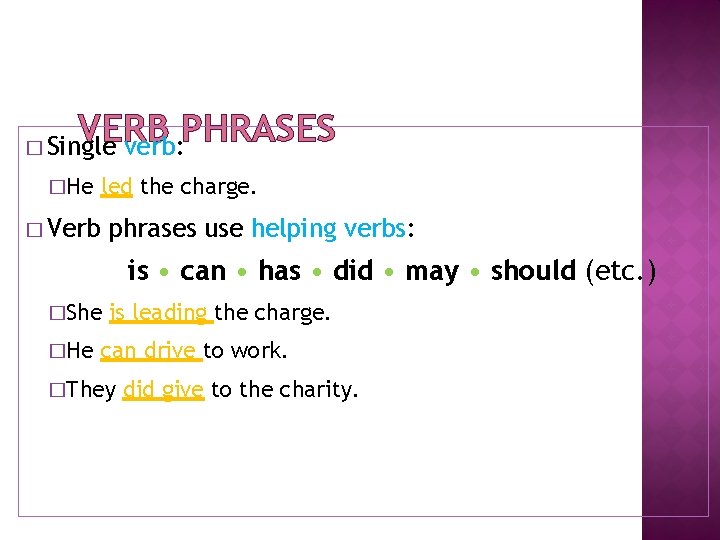
VERB PHRASES verb: � Single �He led the charge. � Verb phrases use helping verbs: is • can • has • did • may • should (etc. ) �She �He is leading the charge. can drive to work. �They did give to the charity.
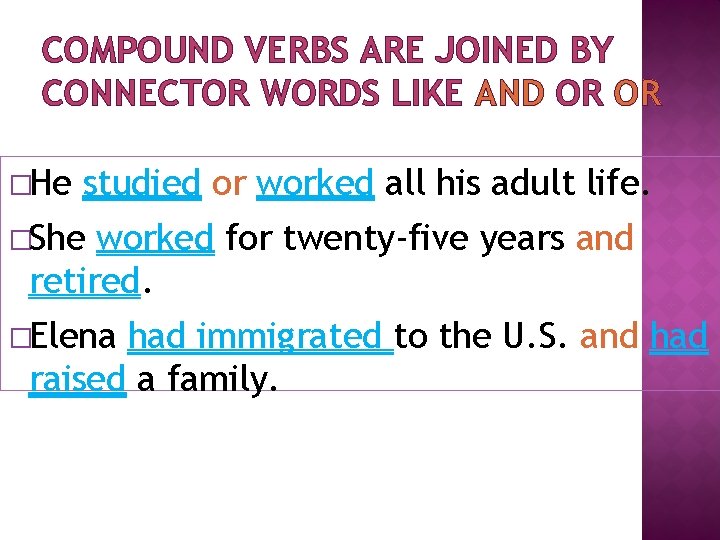
COMPOUND VERBS ARE JOINED BY CONNECTOR WORDS LIKE AND OR OR �He studied or worked all his adult life. �She worked for twenty-five years and retired. �Elena had immigrated to the U. S. and had raised a family.
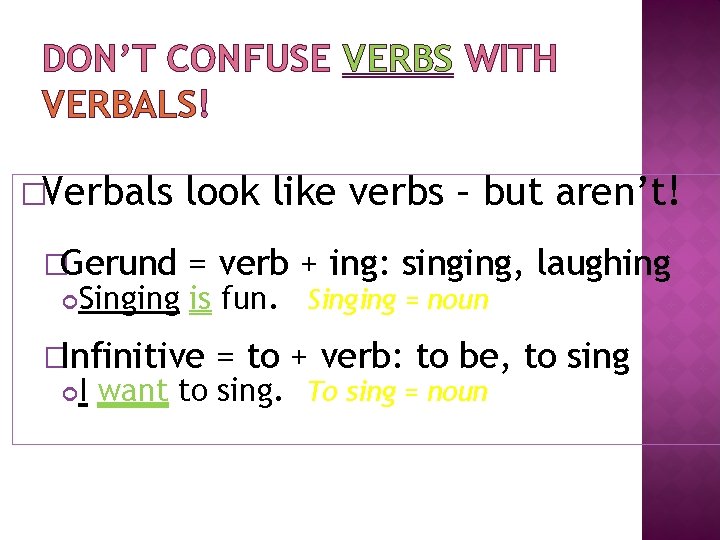
DON’T CONFUSE VERBS WITH VERBALS! �Verbals �Gerund look like verbs – but aren’t! = verb + ing: singing, laughing Singing is fun. Singing = noun �Infinitive = to + verb: to be, to sing I want to sing. To sing = noun
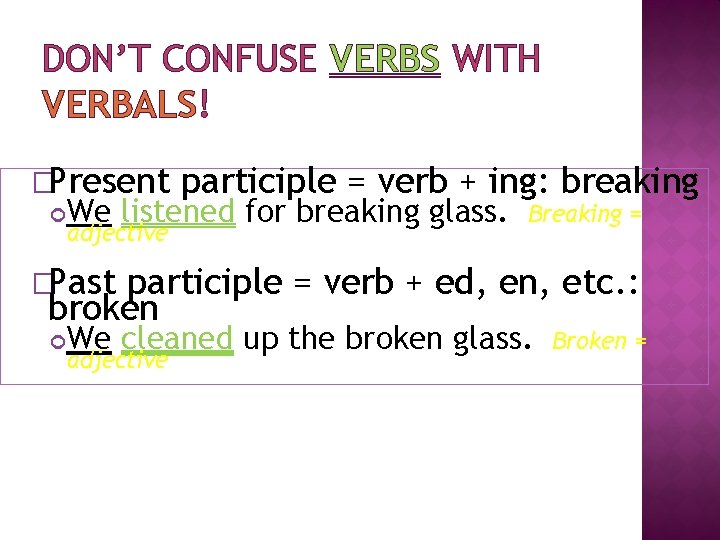
DON’T CONFUSE VERBS WITH VERBALS! �Present participle = verb + ing: breaking We listened for breaking glass. adjective Breaking = �Past participle = verb + ed, en, etc. : broken We cleaned up the broken glass. adjective Broken =
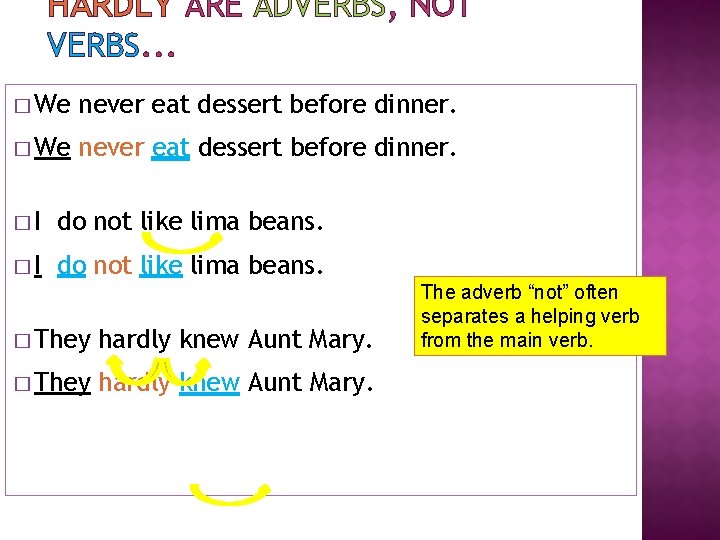
HARDLY ARE ADVERBS, NOT VERBS. . . � We never eat dessert before dinner. �I do not like lima beans. � They hardly knew Aunt Mary. The adverb “not” often separates a helping verb from the main verb.
Exercises 3 & 4, p. 47
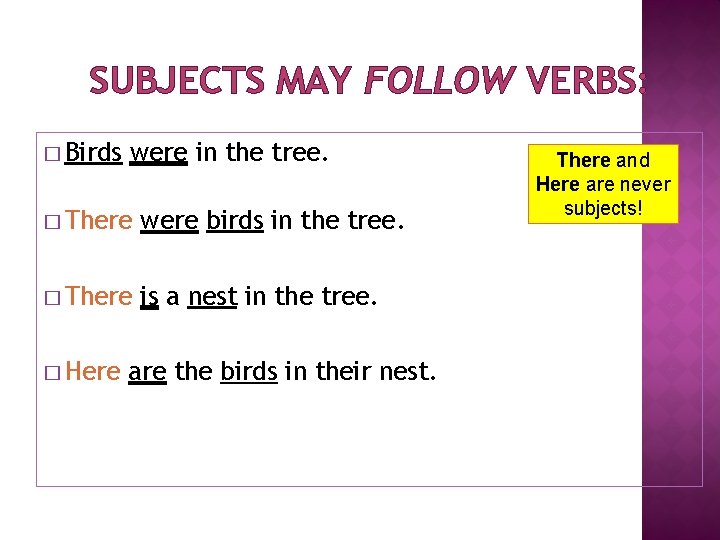
SUBJECTS MAY FOLLOW VERBS: � Birds were in the tree. � There were birds in the tree. � There is a nest in the tree. � Here are the birds in their nest. There and Here are never subjects!
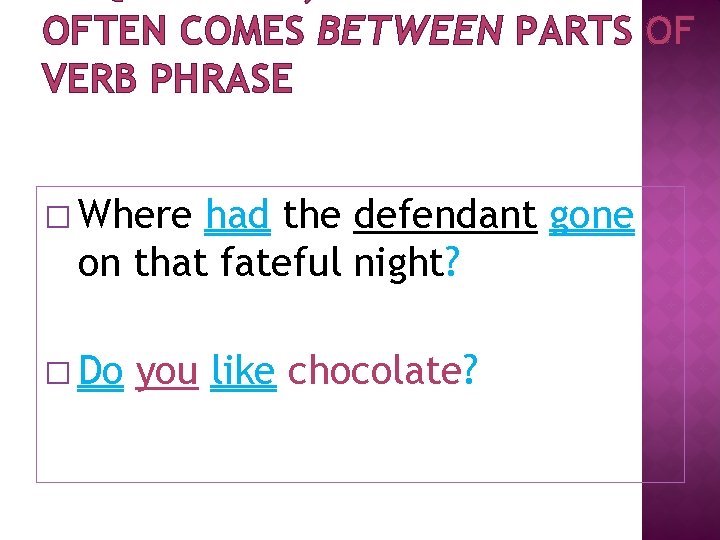
OFTEN COMES BETWEEN PARTS OF VERB PHRASE � Where had the defendant gone on that fateful night? � Do you like chocolate?
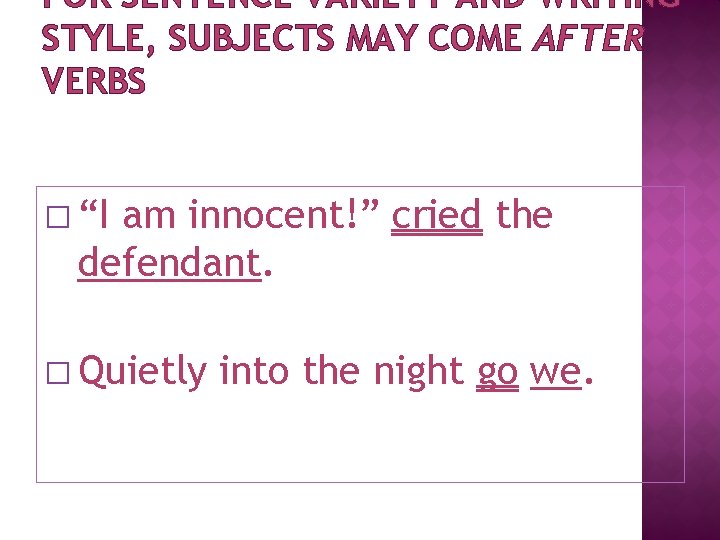
FOR SENTENCE VARIETY AND WRITING STYLE, SUBJECTS MAY COME AFTER VERBS � “I am innocent!” cried the defendant. � Quietly into the night go we.
Exercises 5 & 6, p. 48 -49 Review 1 & 2, p. 51 -53 Microtheme: Underline subjects and circle verbs in the first two sentences. Put your name on your paper and turn in!
Sentence Types
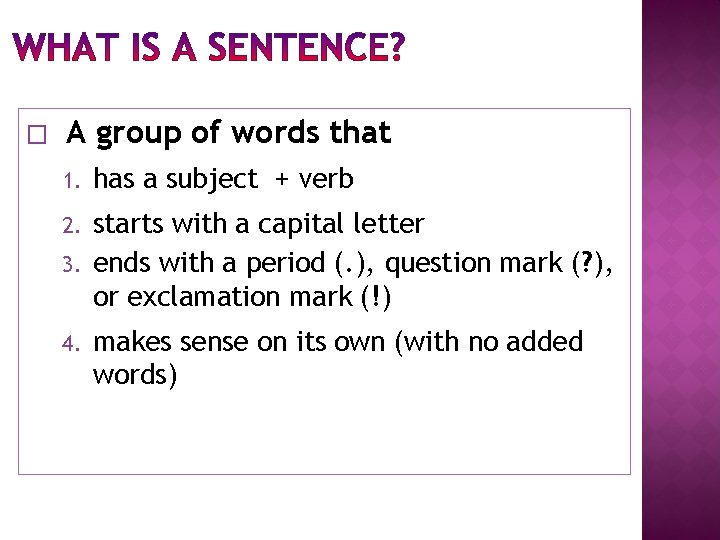
� A group of words that 1. has a subject + verb starts with a capital letter 3. ends with a period (. ), question mark (? ), or exclamation mark (!) 2. 4. makes sense on its own (with no added words)
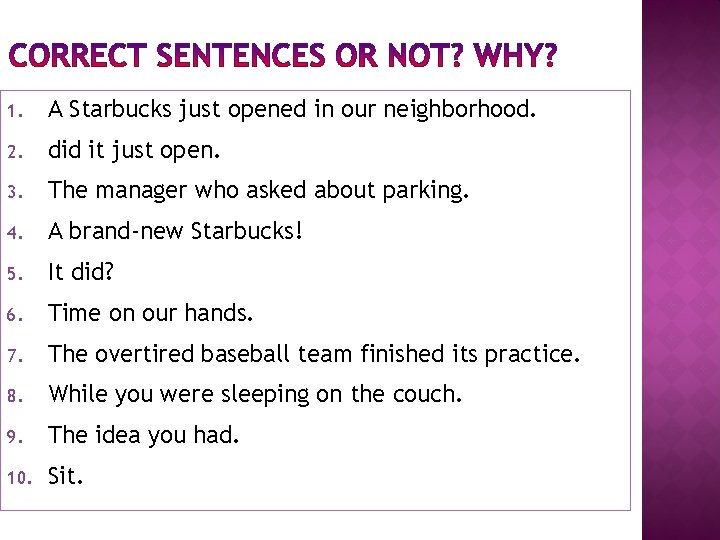
1. A Starbucks just opened in our neighborhood. 2. did it just open. 3. The manager who asked about parking. 4. A brand-new Starbucks! 5. It did? 6. Time on our hands. 7. The overtired baseball team finished its practice. 8. While you were sleeping on the couch. 9. The idea you had. 10. Sit.
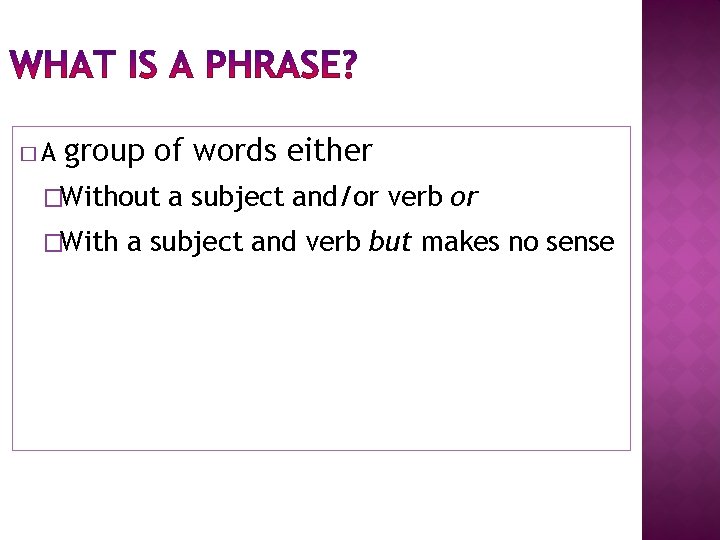
�A group of words either �Without �With a subject and/or verb or a subject and verb but makes no sense
1. The dog in the back yard continues to bark. 2. The dog, who is in the back yard, barks. 3. John, running down the street. 4. John ran down the street. 5. The final pages of the book. 6. The supervisor liked what he saw. 7. Hurrying away from the car. 8. About the future. 9. Worries about the future. 10. We worry about the future.
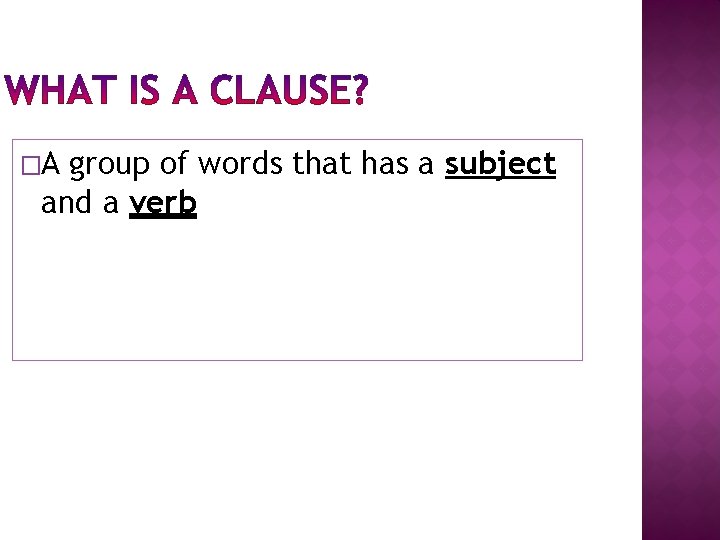
�A group of words that has a subject and a verb
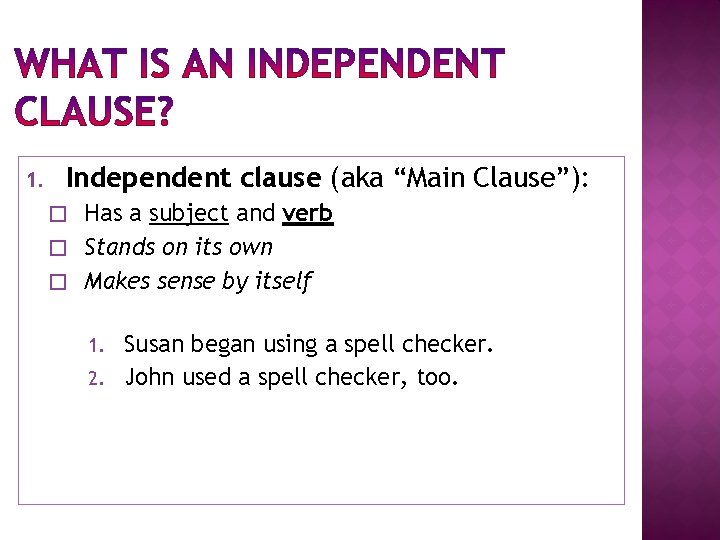
1. Independent clause (aka “Main Clause”): Has a subject and verb � Stands on its own � Makes sense by itself � Susan began using a spell checker. 2. John used a spell checker, too. 1.
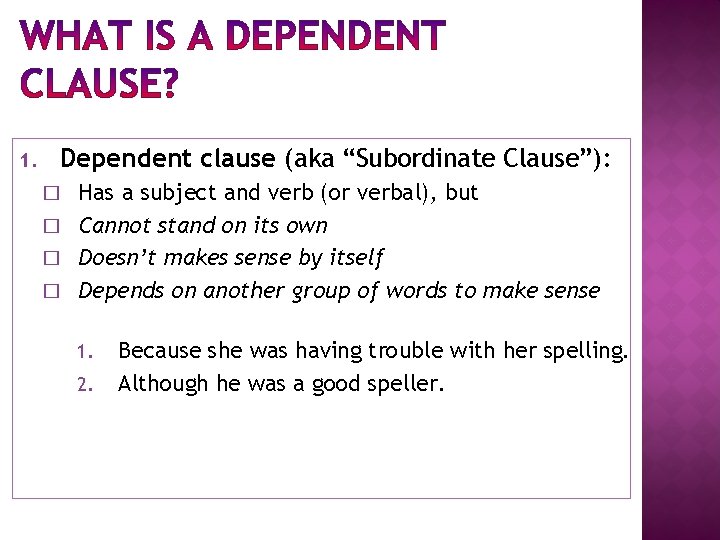
1. Dependent clause (aka “Subordinate Clause”): Has a subject and verb (or verbal), but � Cannot stand on its own � Doesn’t makes sense by itself � Depends on another group of words to make sense � 1. 2. Because she was having trouble with her spelling. Although he was a good speller.
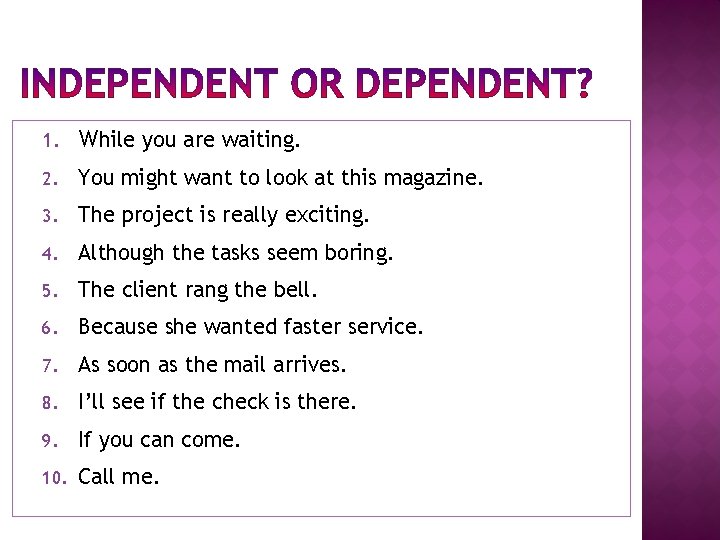
1. While you are waiting. 2. You might want to look at this magazine. 3. The project is really exciting. 4. Although the tasks seem boring. 5. The client rang the bell. 6. Because she wanted faster service. 7. As soon as the mail arrives. 8. I’ll see if the check is there. 9. If you can come. 10. Call me.
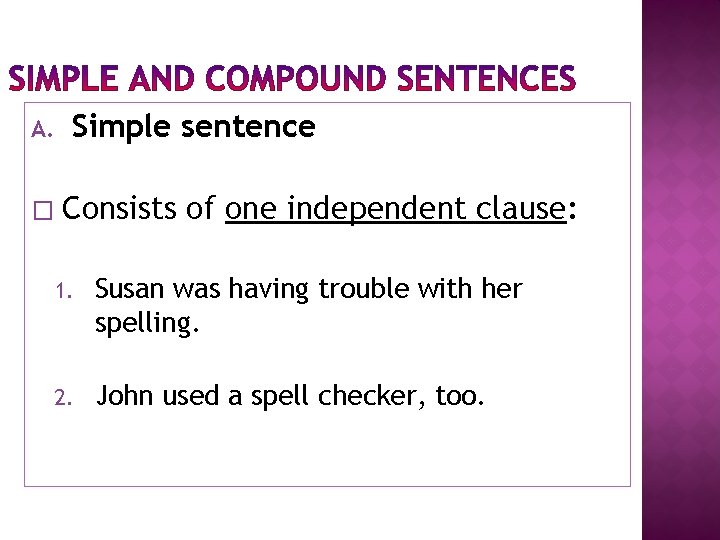
A. � Simple sentence Consists of one independent clause: 1. Susan was having trouble with her spelling. 2. John used a spell checker, too.
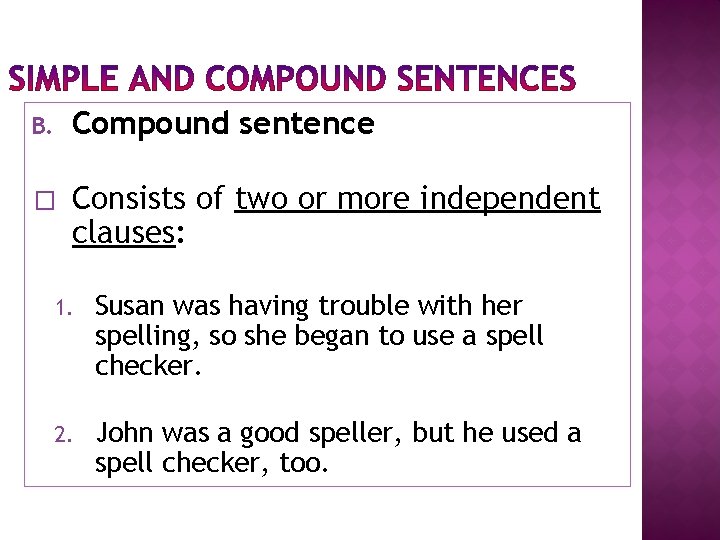
B. Compound sentence � Consists of two or more independent clauses: 1. Susan was having trouble with her spelling, so she began to use a spell checker. 2. John was a good speller, but he used a spell checker, too.
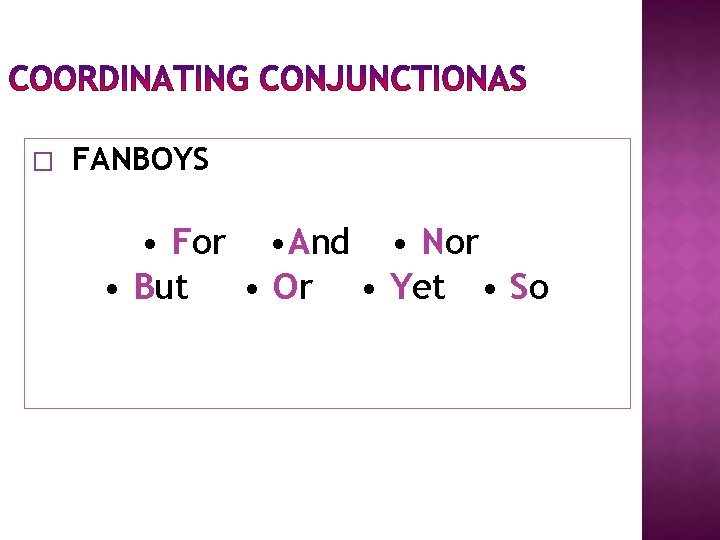
� FANBOYS • For • And • Nor • But • Or • Yet • So
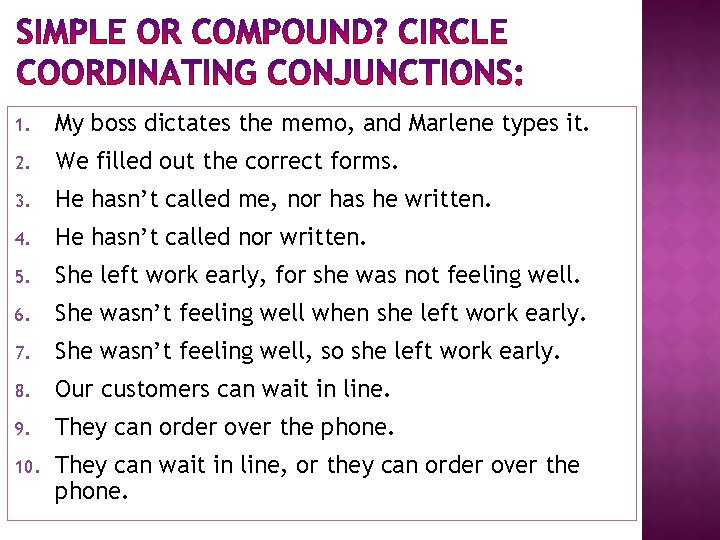
1. My boss dictates the memo, and Marlene types it. 2. We filled out the correct forms. 3. He hasn’t called me, nor has he written. 4. He hasn’t called nor written. 5. She left work early, for she was not feeling well. 6. She wasn’t feeling well when she left work early. 7. She wasn’t feeling well, so she left work early. 8. Our customers can wait in line. 9. They can order over the phone. 10. They can wait in line, or they can order over the phone.
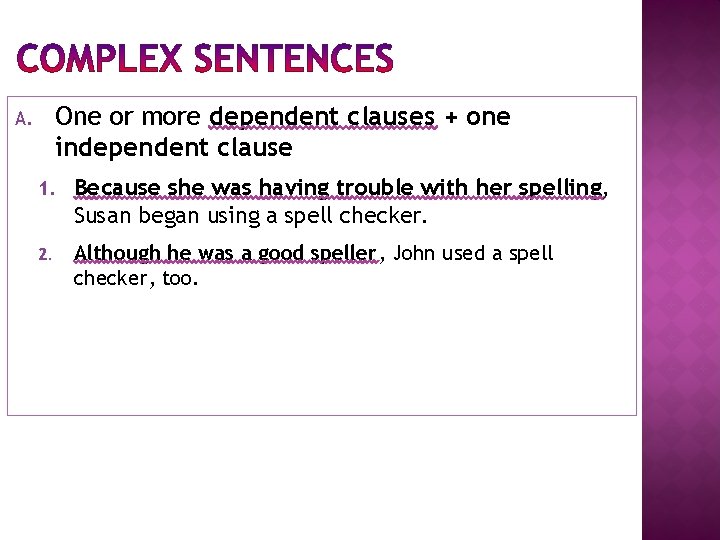
One or more dependent clauses + one independent clause A. 1. Because she was having trouble with her spelling, Susan began using a spell checker. 2. Although he was a good speller, John used a spell checker, too.
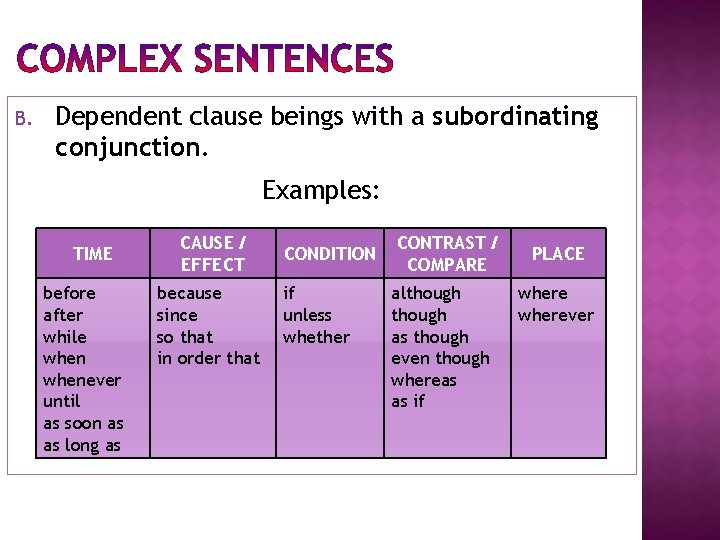
B. Dependent clause beings with a subordinating conjunction. Examples: TIME before after while whenever until as soon as as long as CAUSE / EFFECT because since so that in order that CONDITION if unless whether CONTRAST / COMPARE although as though even though whereas as if PLACE wherever
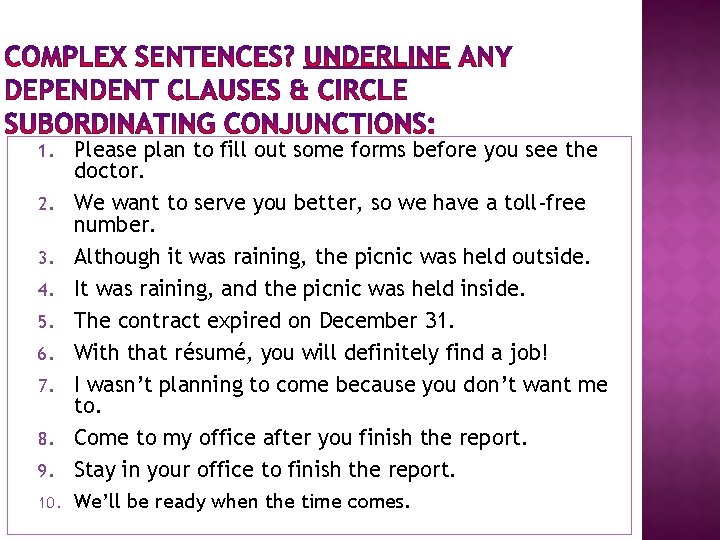
9. Please plan to fill out some forms before you see the doctor. We want to serve you better, so we have a toll-free number. Although it was raining, the picnic was held outside. It was raining, and the picnic was held inside. The contract expired on December 31. With that résumé, you will definitely find a job! I wasn’t planning to come because you don’t want me to. Come to my office after you finish the report. Stay in your office to finish the report. 10. We’ll be ready when the time comes. 1. 2. 3. 4. 5. 6. 7. 8.
Exercises 6 - 9, p. 62 -63 Review 1, 2 & 3 p. 67 -69
Week 2 Writing Process: Warm-Up
� Evaluate �Exercise the summary on p. 17: 4: “Summary About One of My Favorite Garments”
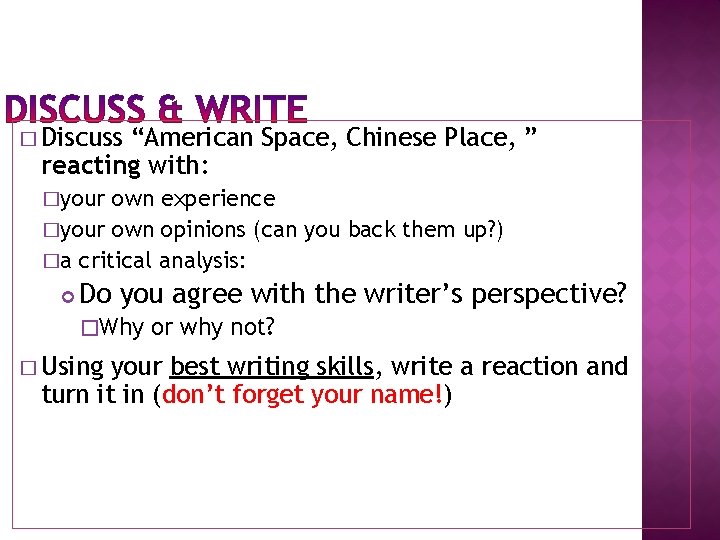
� Discuss “American Space, Chinese Place, ” reacting with: �your own experience �your own opinions (can you back them up? ) �a critical analysis: Do you agree with the writer’s perspective? �Why � Using or why not? your best writing skills, write a reaction and turn it in (don’t forget your name!)
Week 2 Writing Process: Stage One: Prewriting
�A group of sentences � Each �To sentence has a function: state a topic sentence contains the controlling idea �To support the topic sentence
TWO PARTS OF A PARAGRAPH: �Topic sentence contains �Subject (topic) �Treatment (what you will do with the topic) �Supporting �Evidence sentence(s) contain or reasoning �Details �Examples �Explanations
COMMON COLLEGE PARAGRAPH PATTERNS: � Pattern �Topic A sentence �Supporting � Pattern �Topic sentences B sentence �Supporting sentences �Concluding sentence
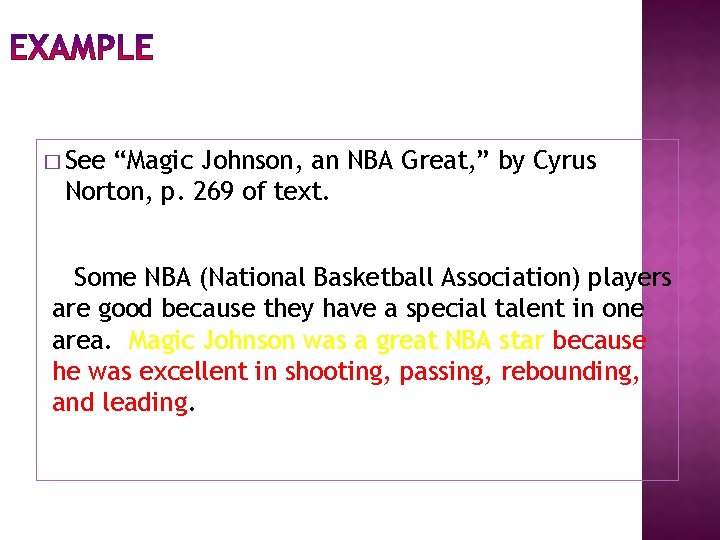
� See “Magic Johnson, an NBA Great, ” by Cyrus Norton, p. 269 of text. Some NBA (National Basketball Association) players are good because they have a special talent in one area. Magic Johnson was a great NBA star because he was excellent in shooting, passing, rebounding, and leading.
� Your Writing Topic �assigned �unassigned � Exploration � Use & Information Gathering different graphic organizer techniques
� Surf the Internet for �Ideas �Leads �Issues �Questions
�PCC Research Library �http: //www. pcc. edu/library/resear ch/ Databases by Subject �Opposing Viewpoints
�Google �http: //www. google. com/intl/en/options/ Book Search Earth Images News Scholar Web Search
�Wikipedia �http: //en. wikipedia. org Languages �Citations
� Reliability & bias: �http: //en. wikipedia. org/wiki/Wikipedia#Reliability_and_ bias � “Tertiary source, ” not as good as: �Primary source Original thing, like the Constitution �Secondary source Academic book or article about the original thing, like a book about the Constitution
�Freewriting �Brainstorming �Clustering
� Freewriting �writing forth is: without stopping, letting your ideas tumble � Freewriting helps you �break mental barriers �generate topics �discover & explore ideas � There is really no wrong way to freewrite!
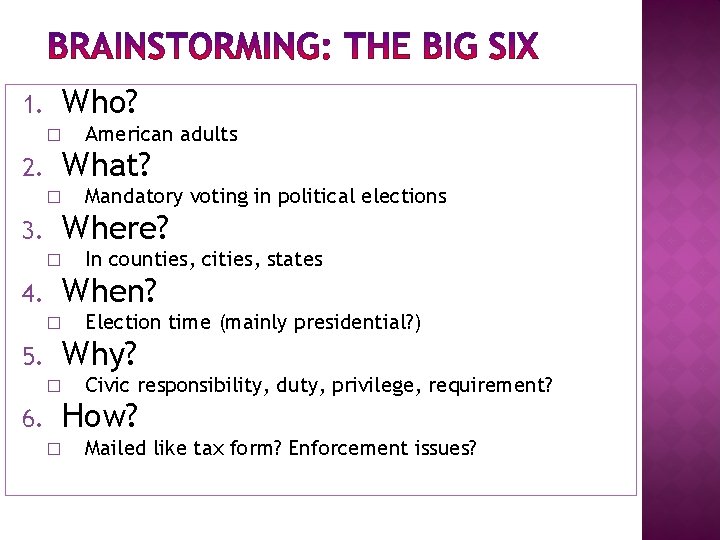
Who? 1. � American adults What? 2. � Mandatory voting in political elections Where? 3. � In counties, cities, states When? 4. � Election time (mainly presidential? ) Why? 5. � Civic responsibility, duty, privilege, requirement? How? 6. � Mailed like tax form? Enforcement issues?
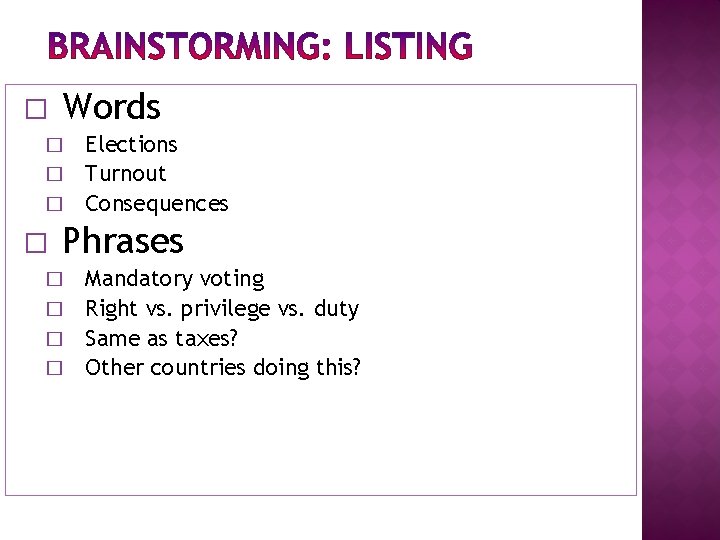
� Words Elections � Turnout � Consequences � � Phrases Mandatory voting � Right vs. privilege vs. duty � Same as taxes? � Other countries doing this? �
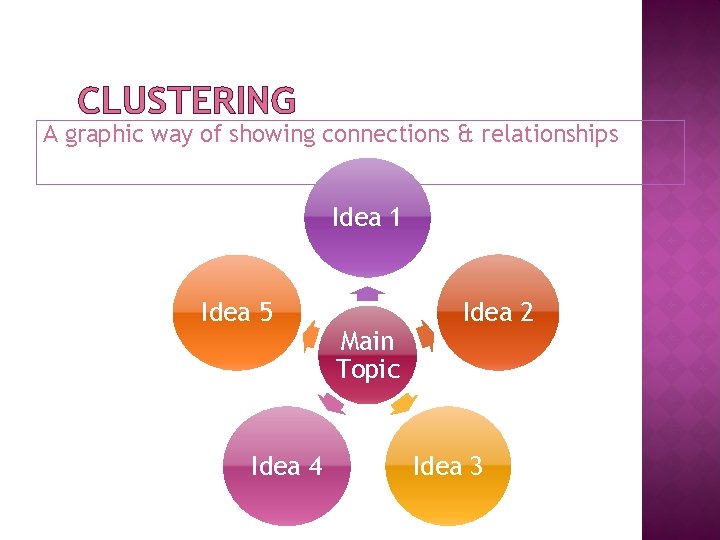
CLUSTERING A graphic way of showing connections & relationships Idea 1 Idea 5 Idea 4 Main Topic Idea 2 Idea 3
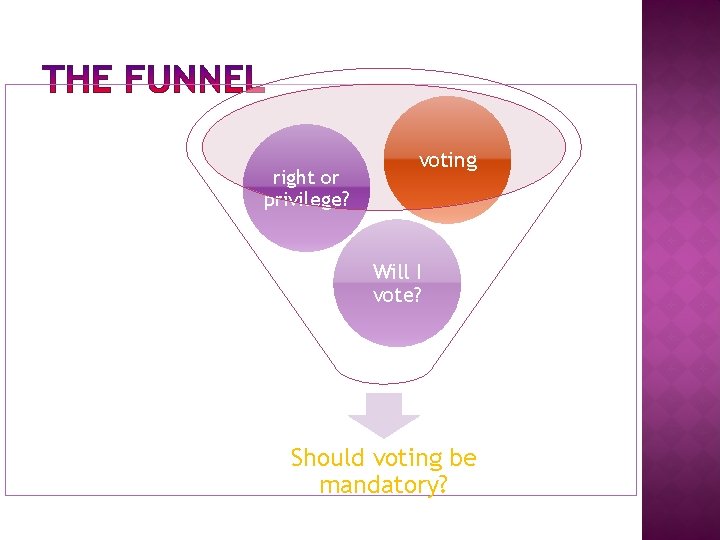
right or privilege? voting Will I vote? Should voting be mandatory?
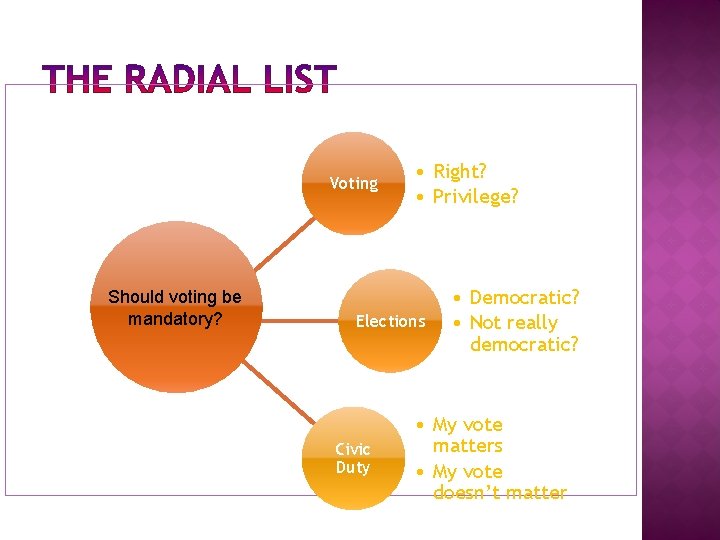
Voting Should voting be mandatory? • Right? • Privilege? Elections Civic Duty • Democratic? • Not really democratic? • My vote matters • My vote doesn’t matter