
On a hot sunny day did you ever

- Slides: 16
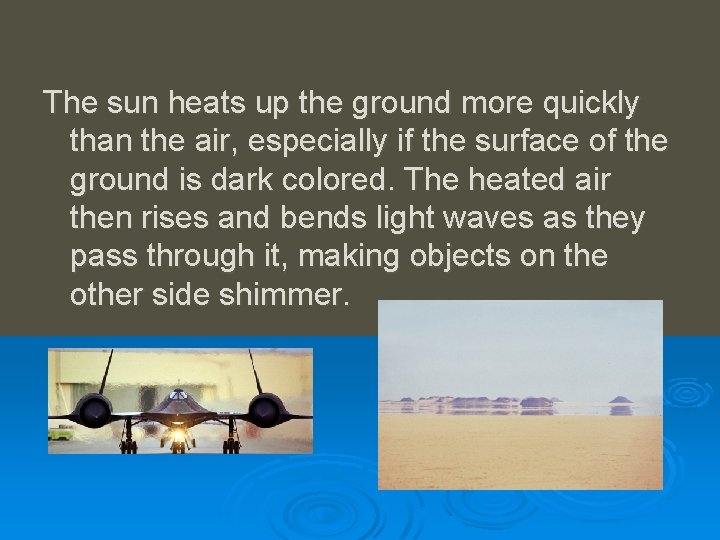
On a hot sunny day, did you ever see cars, buildings, or other objects appear to shimmer or waver on the other side of a street or parking lot? What causes this effect?
The sun heats up the ground more quickly than the air, especially if the surface of the ground is dark colored. The heated air then rises and bends light waves as they pass through it, making objects on the other side shimmer.
Section 2: Heat Transfer Pages 48 -51 https: //www. youtube. com/watch? v=rbc_Lxfh. So. Y
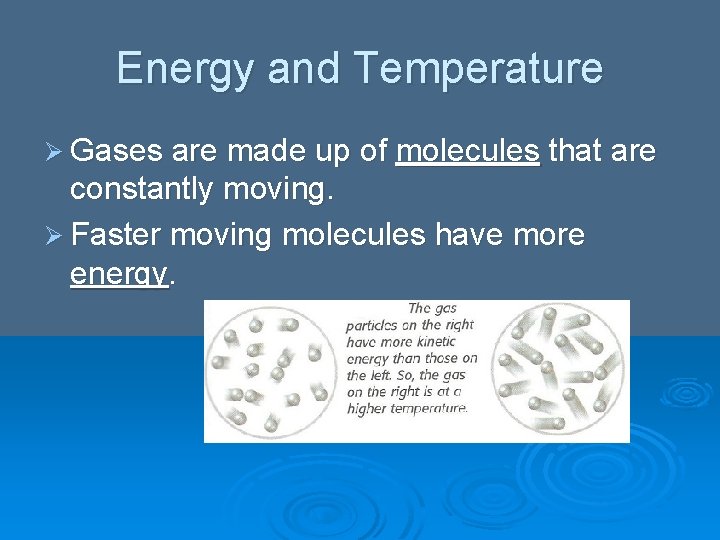
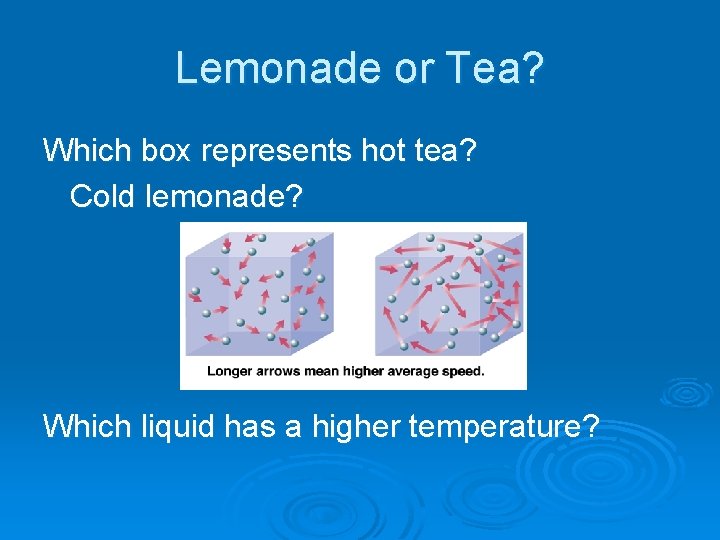
Energy and Temperature Ø Gases are made up of molecules that are constantly moving. Ø Faster moving molecules have more energy.
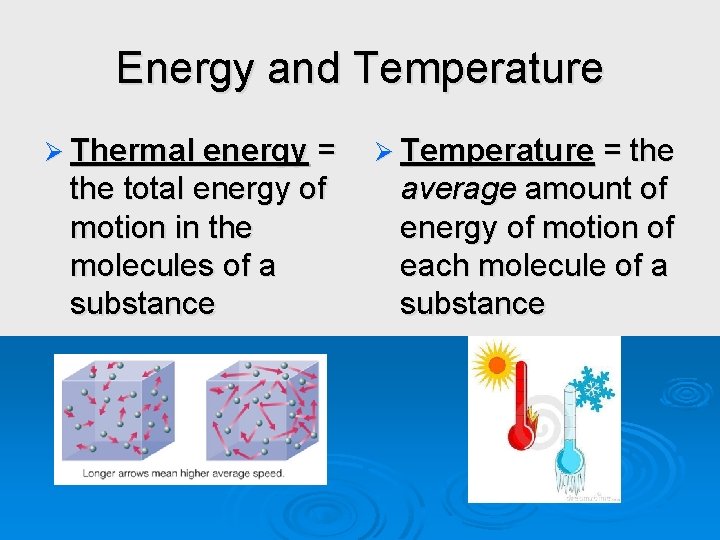
Energy and Temperature Ø Thermal energy = the total energy of motion in the molecules of a substance Ø Temperature = the average amount of energy of motion of each molecule of a substance
Lemonade or Tea? Which box represents hot tea? Cold lemonade? Which liquid has a higher temperature?
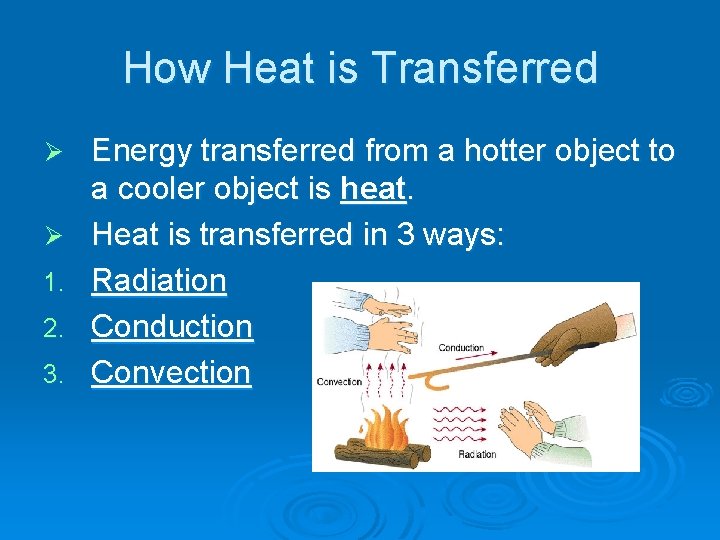
How Heat is Transferred Ø Ø 1. 2. 3. Energy transferred from a hotter object to a cooler object is heat. Heat is transferred in 3 ways: Radiation Conduction Convection
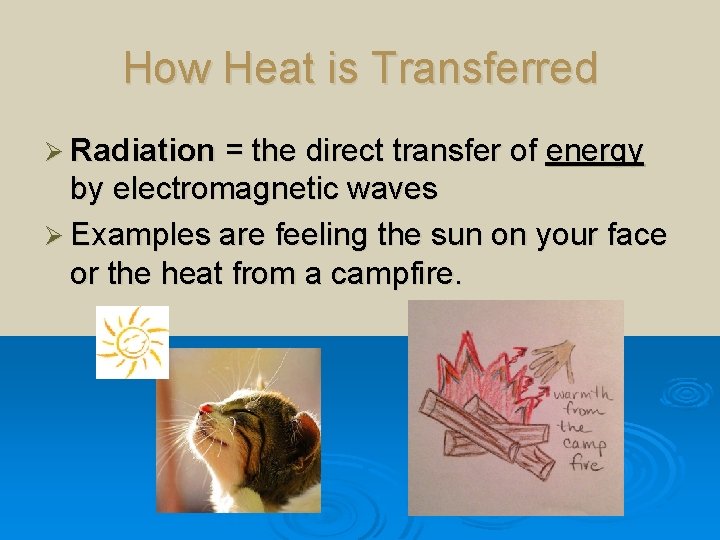
How Heat is Transferred Ø Radiation = the direct transfer of energy by electromagnetic waves Ø Examples are feeling the sun on your face or the heat from a campfire.
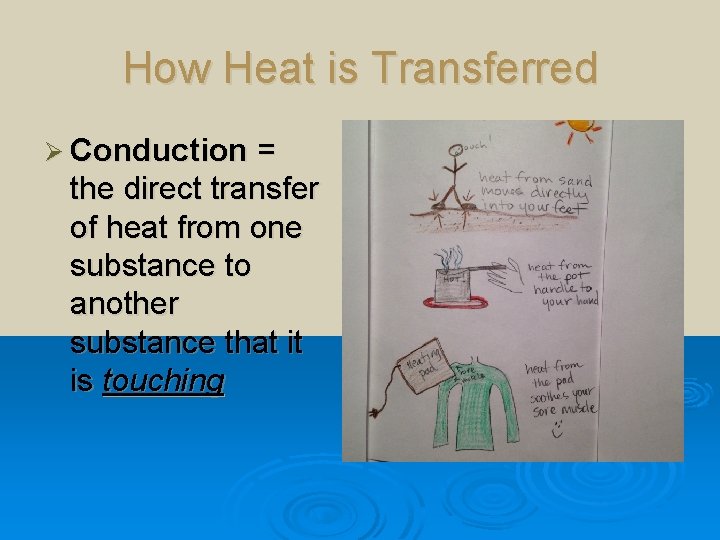
How Heat is Transferred Ø Conduction = the direct transfer of heat from one substance to another substance that it is touching
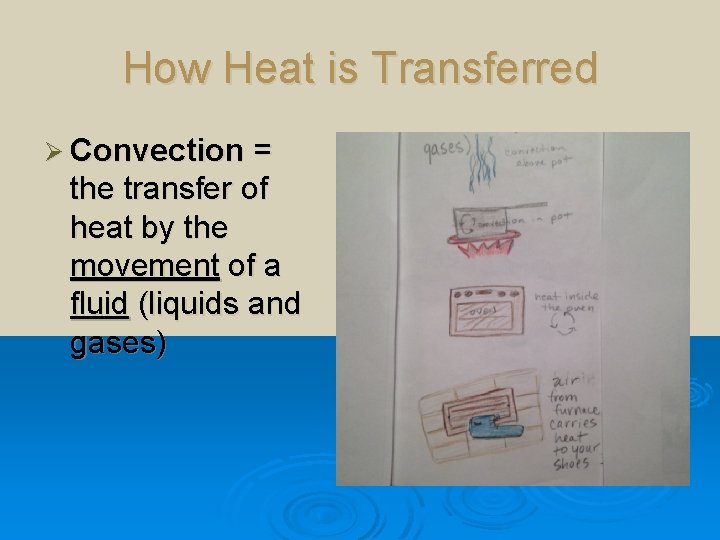
How Heat is Transferred Ø Convection = the transfer of heat by the movement of a fluid (liquids and gases)
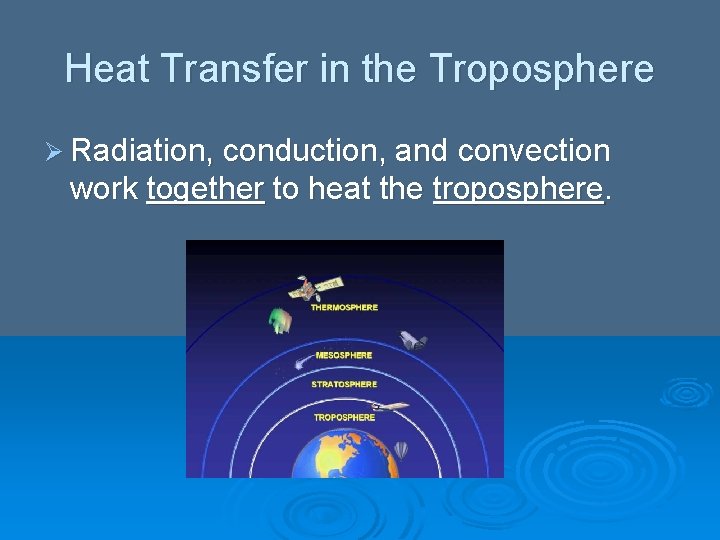
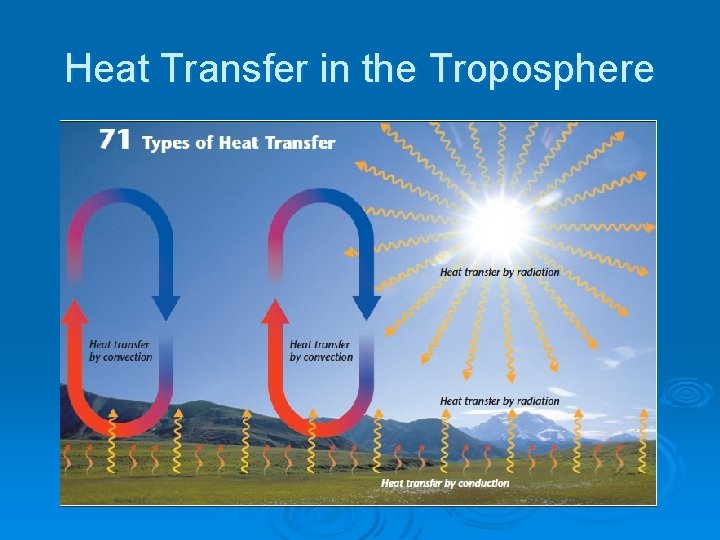
Heat Transfer in the Troposphere Ø Radiation, conduction, and convection work together to heat the troposphere.
Heat Transfer in the Troposphere Ø Earth’s surface absorbs solar energy during the day. (radiation) Ø Heat is transferred from the surface of the Earth back into the air above the surface. (radiation and conduction)
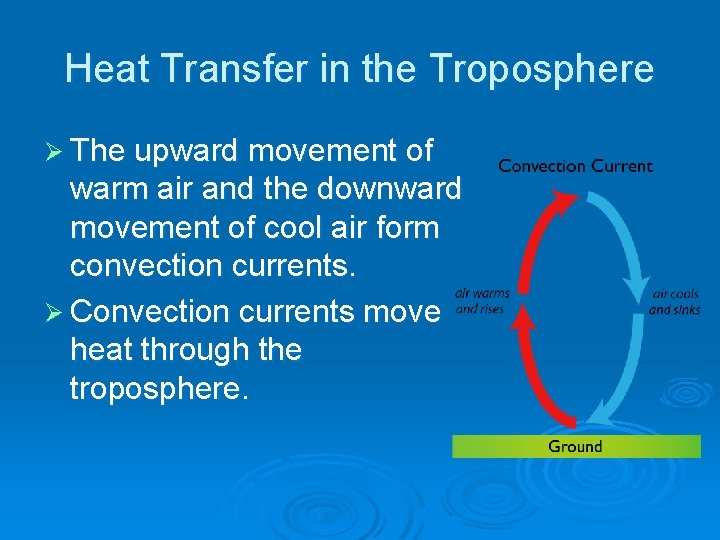
Heat Transfer in the Troposphere Ø Convection causes most of the heating of the troposphere. Ø Air near the ground is warmer. The molecules have more energy so they move faster. Ø Cooler, denser air sinks, forcing the warmer, less dense air to rise.
Heat Transfer in the Troposphere
Heat Transfer in the Troposphere Ø The upward movement of warm air and the downward movement of cool air form convection currents. Ø Convection currents move heat through the troposphere.
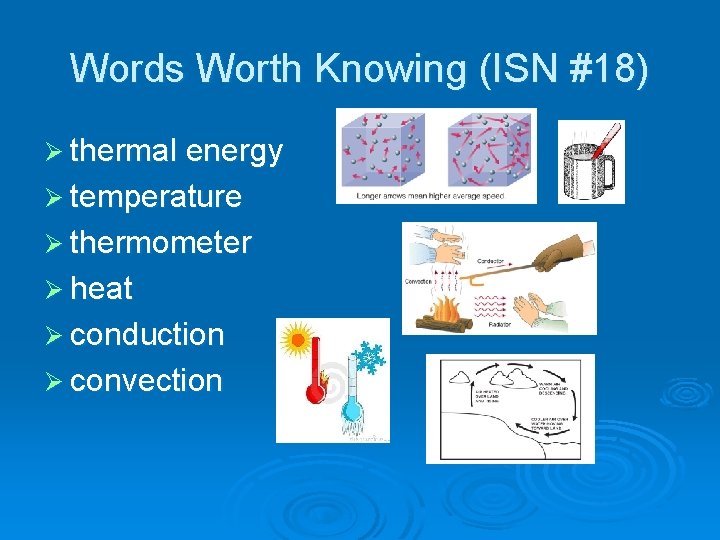
Words Worth Knowing (ISN #18) Ø thermal energy Ø temperature Ø thermometer Ø heat Ø conduction Ø convection