
Ominous Octect Pathophysiological Contributions to Hyperglycemia in Type
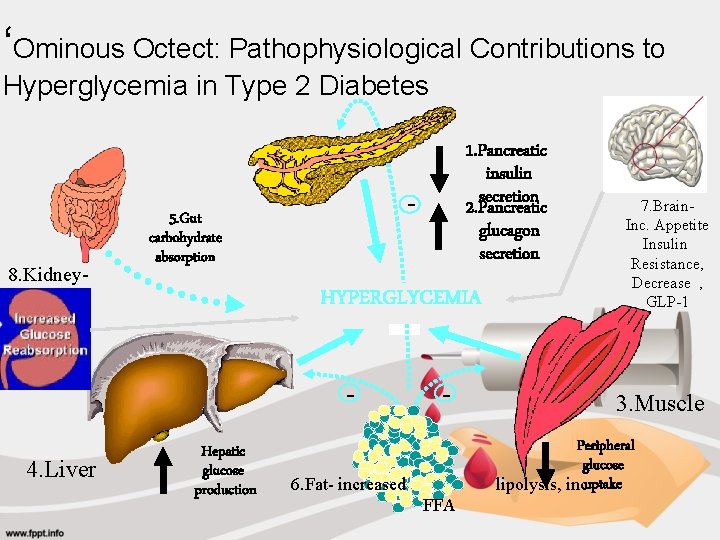
‘Ominous Octect: Pathophysiological Contributions to Hyperglycemia in Type 2 Diabetes 8. Kidney- - 5. Gut carbohydrate absorption HYPERGLYCEMIA - 4. Liver 1. Pancreatic insulin secretion 2. Pancreatic glucagon secretion Hepatic glucose production - 6. Fat- increased FFA 7. Brain. Inc. Appetite Insulin Resistance, Decrease , GLP-1 3. Muscle Peripheral glucose lipolysis, incuptake
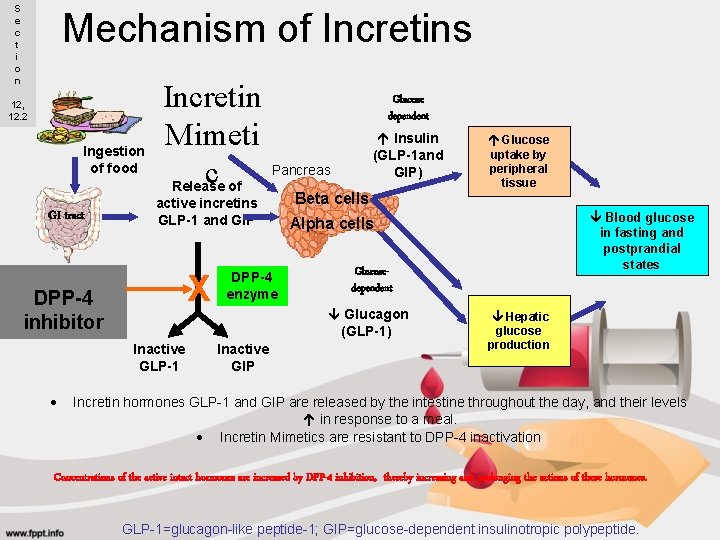
S e c t i o n Mechanism of Incretins 12, 12. 2 Ingestion of food GI tract Incretin Mimeti Pancreas c Release of active incretins GLP-1 and GIP X DPP-4 inhibitor Inactive GLP-1 · DPP-4 enzyme Glucose dependent Insulin (GLP-1 and GIP) Beta cells Blood glucose in fasting and postprandial states Alpha cells Glucosedependent Glucagon (GLP-1) Inactive GIP Glucose uptake by peripheral tissue Hepatic glucose production Incretin hormones GLP-1 and GIP are released by the intestine throughout the day, and their levels in response to a meal. · Incretin Mimetics are resistant to DPP-4 inactivation Concentrations of the active intact hormones are increased by DPP-4 inhibition, thereby increasing and prolonging the actions of these hormones. GLP-1=glucagon-like peptide-1; GIP=glucose-dependent insulinotropic polypeptide.
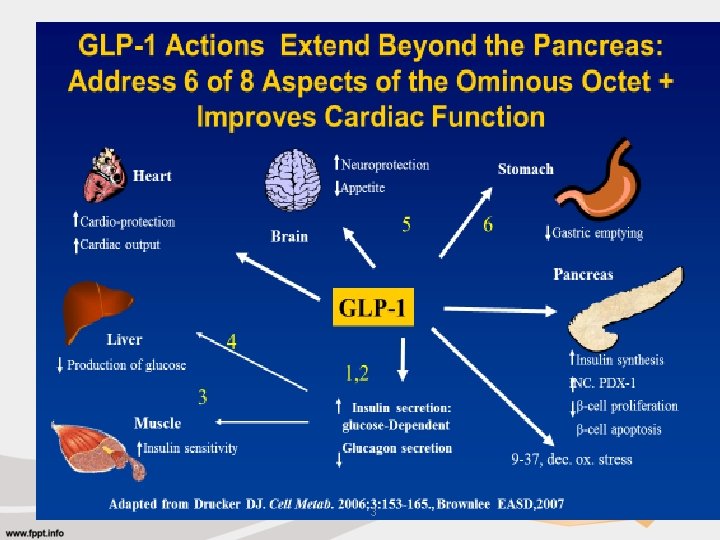
3
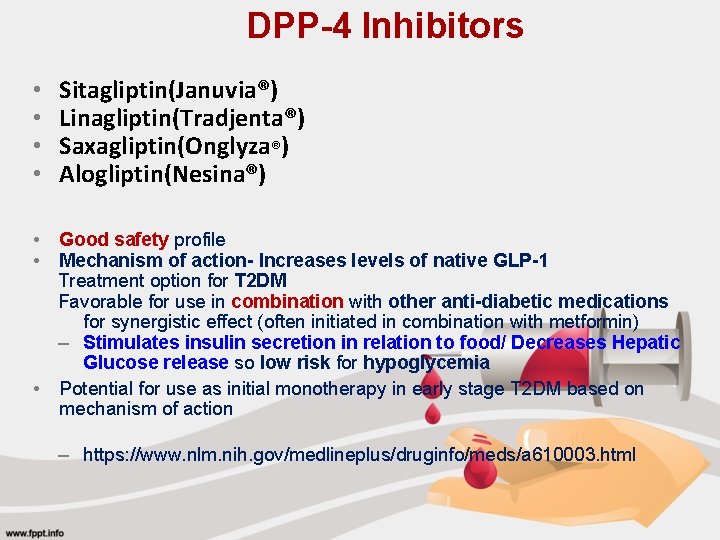
DPP-4 Inhibitors • • Sitagliptin(Januvia®) Linagliptin(Tradjenta®) Saxagliptin(Onglyza®) Alogliptin(Nesina®) • • Good safety profile Mechanism of action- Increases levels of native GLP-1 Treatment option for T 2 DM Favorable for use in combination with other anti-diabetic medications for synergistic effect (often initiated in combination with metformin) – Stimulates insulin secretion in relation to food/ Decreases Hepatic Glucose release so low risk for hypoglycemia • Potential for use as initial monotherapy in early stage T 2 DM based on mechanism of action – https: //www. nlm. nih. gov/medlineplus/druginfo/meds/a 610003. html
SGLT-2 Inhibitors • Canagliflozin (Invokana®) • Dapagliflozin (Farxiga®) • Empagliflozin (Jardiance®) • Good safety profile • Insulin-independent mechanism of action Treatment option for T 1 DM & T 2 DM Favorable for use in combination with other anti-diabetic medications for synergistic effect (often initiated in combination with metformin) – Does not stimulate insulin secretion so low risk for hypoglycemia • Potential for use as initial monotherapy in early stage T 2 DM based on mechanism of action Development and potential role of type-2 sodium-glucose transporter inhibitors for management of type 2 diabetes. Timothy CH, Simon WD. Diabetes Ther. 2011 September; 2(3): 133– 145.
SGLT-2 Inhibitors Hb. A 1 C reduction of 0. 5 -0. 9% • Amount of glucose excretion in urine dependent on blood glucose concentration – Greatest amount of glucose excretion when blood glucose levels are highest (post-prandial) • Excretion of 80 -90 g of glucose/day – Reduction in 300 -400 calories/day in T 2 DM – Significant weight loss • Reduced hepatic glucose production • Reversal of glucotoxicity • Enhanced insulin sensitivity in muscle & liver • Preserved pancreatic B-cell function Development and potential role of type-2 sodium-glucose transporter inhibitors for management of type 2 diabetes. Timothy CH, Simon WD. Diabetes Ther. 2011 September; 2(3): 133– 145.
GLP-1 Agonists Medications: Byetta® (exenatide) Bydureon® (exenatide extended-release) Victoza® (liraglutide) Tanzeum® (albiglutide) Trulicity® (dulagutide) Indication: Treatment of type 2 diabetes (noninsulin dependent) to improve glycemic control Mechanism of Action: GLP-1 agonists are analogues of the natural hormone incretin which increases glucose-dependent insulin secretion, decreases inappropriate glucagon secretion, increases β-cell growth/replication, slows gastric emptying, and decreases food intake.
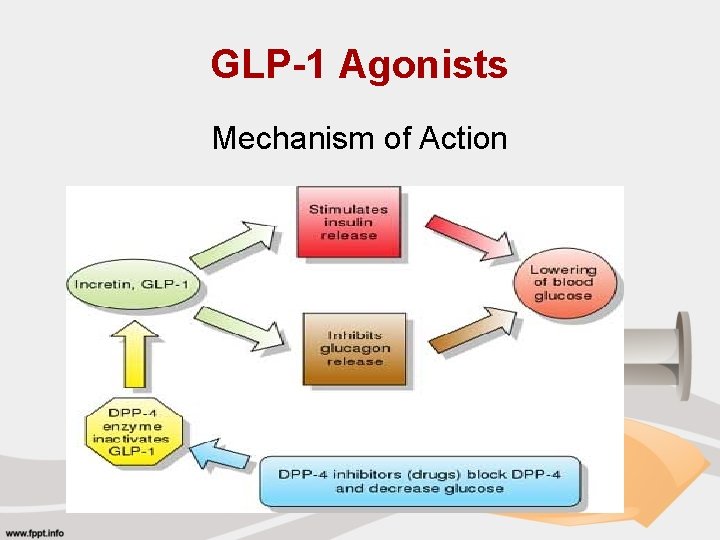
GLP-1 Agonists Mechanism of Action
GLP-1 Agonists Contraindications: Contraindicated in patients with prior severe hypersensitivity reactions to GLP-1 agonists or to any of the products components. Exenatide is not recommended for patients with severe renal impairment (GFR <30 ml/min), ESRD, or in patients on dialysis. Warnings/Precautions: GLP-1 agonists have been associated with acute pancreatitis, including fatal and non-fatal hemorrhagic or necrotizing pancreatitis, based on postmarketing data. It is unknown whether patients with a history of pancreatitis are at increased risk for pancreatitis while using these drugs; consider other antidiabetic therapies for these patients. Use GLP-1 agonists with caution in patients with renal impairment , pacreatitis, and/or history of thyroid carcinomas. Drug Interactions: Oral Medications: GLP-1 agonists slow gastric emptying and can reduce the rate of absorption of orally administered drugs. Use with caution with oral medications. Warfarin: Postmarketing reports show increased international normalized ratio (INR) sometimes associated with bleeding with concomitant use of warfarin. Monitor INR frequently until stable upon initiation or alteration of therapy. DO NOT TAKE IN COMBINATION WITH DPP-4 INHIBITORS
GLP-1 Agonists Medications: Twice Daily Byetta® (exenatide) Once Daily Victoza® (liraglutide) Once Weekly Tanzeum® (albiglutide) Trulicity® (dulagutide) Bydureon® (exenatide extended-release) Indication: Treatment of type 2 diabetes (noninsulin dependent) to improve glycemic control Mechanism of Action: GLP-1 agonists are analogues of the natural hormone incretin which increases glucosedependent insulin secretion, decreases inappropriate glucagon secretion, increases β-cell growth/replication, slows gastric emptying, and decreases food intake.
GLP-1 Agonists Most Common Side Effects: Adverse reactions include: Nausea , constipation, nervousness, headache, vomiting, weakness, fatigue
- Slides: 11