
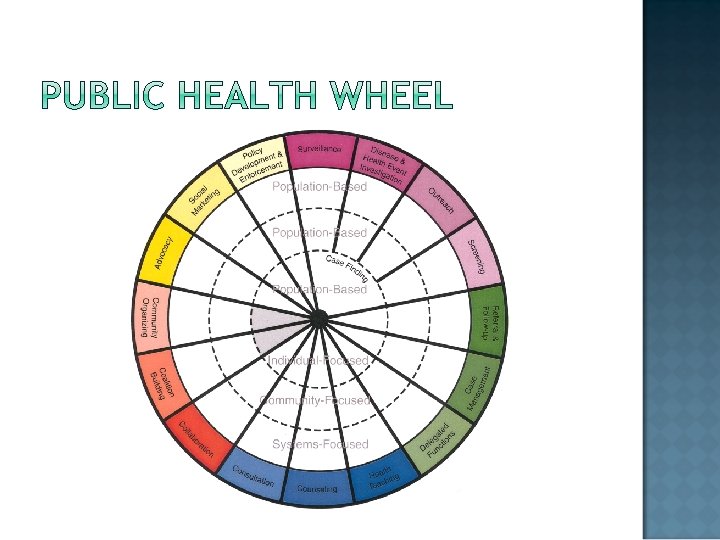
Omaha System Documentation System Public Health Wheel Intervention

Omaha System – Documentation System Public Health Wheel – Intervention Model

Began in 1975 by Visiting Nurse Association of Omaha, Nebraska Rigorous development and research studies funded by U. S federal Division of Nursing between 1975 -1986
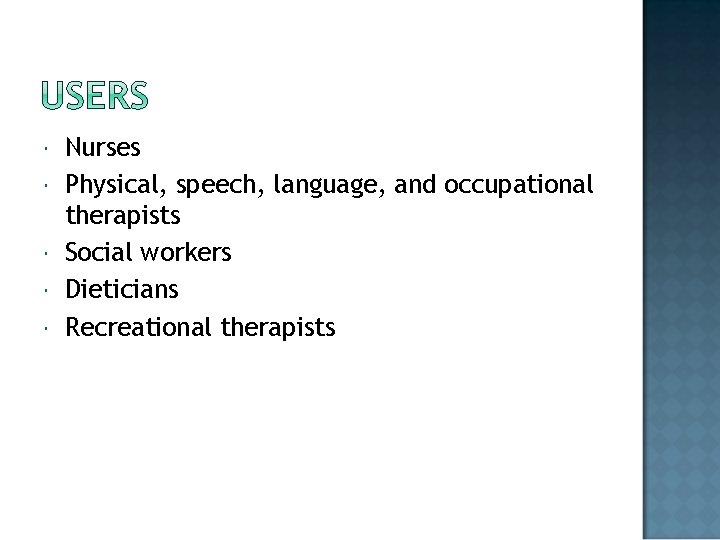
Nurses Physical, speech, language, and occupational therapists Social workers Dieticians Recreational therapists
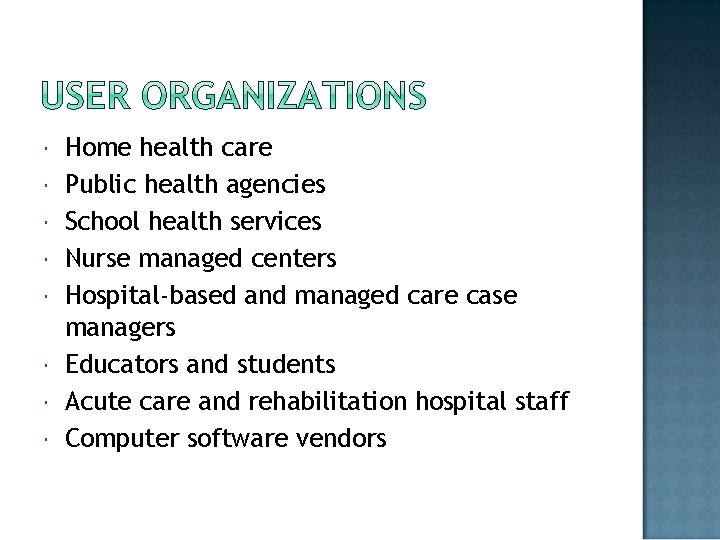
Home health care Public health agencies School health services Nurse managed centers Hospital-based and managed care case managers Educators and students Acute care and rehabilitation hospital staff Computer software vendors
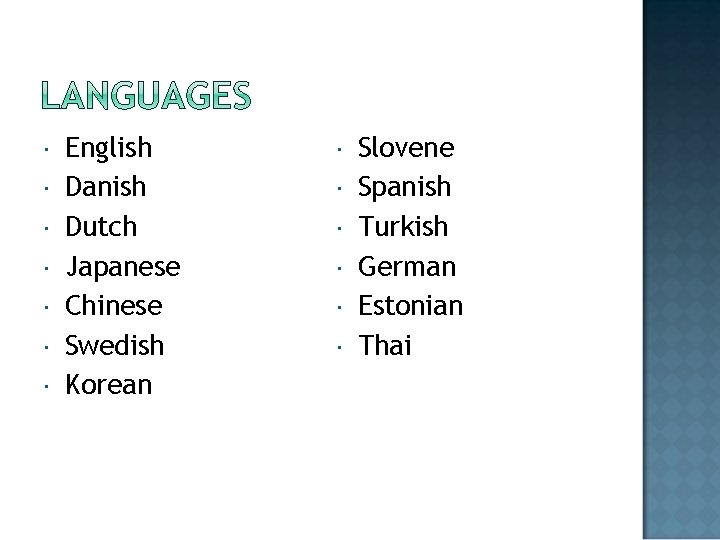
English Danish Dutch Japanese Chinese Swedish Korean Slovene Spanish Turkish German Estonian Thai
Care for individuals, families, and community of all ages, geographic locations, medical diagnoses, socio-economic ranges, spiritual beliefs, ethnicity, and cultural values
Problem classification – client assessment Intervention scheme – care plans and services Problem Rating Scale for Outcomes – client change and evaluation
Environmental Domain – material resources and physical surroundings both inside and outside living area, neighborhood, and broader community Psychological Domain – Patterns of behavior, emotions, communication, relationships, and development
Physiological Domain – functions and processes that maintain life Health-Related Behavior Domain – patterns of activity that maintain or promote wellness, promote recovery, and decrease risk of disease
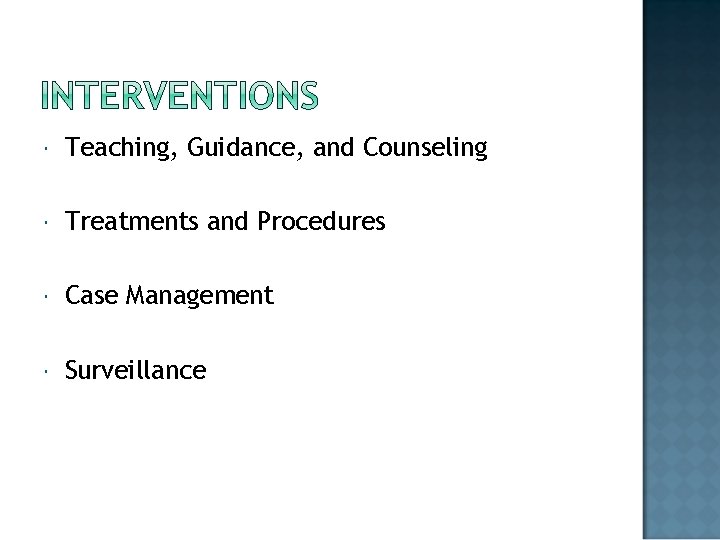
Teaching, Guidance, and Counseling Treatments and Procedures Case Management Surveillance
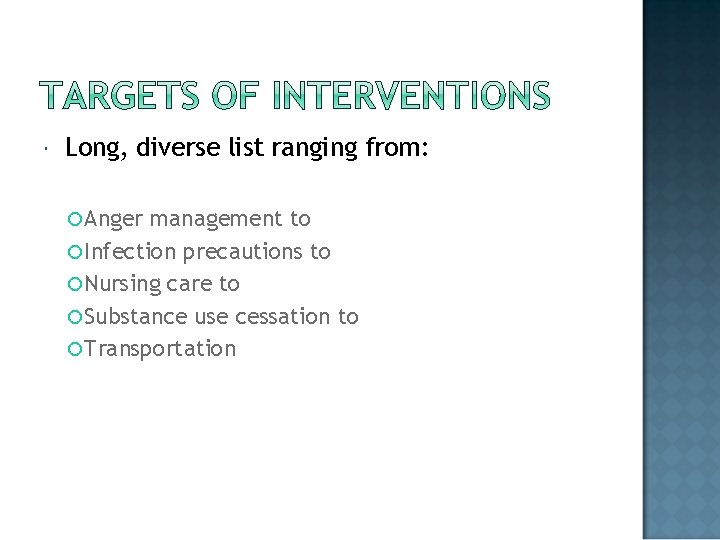
Long, diverse list ranging from: Anger management to Infection precautions to Nursing care to Substance use cessation to Transportation
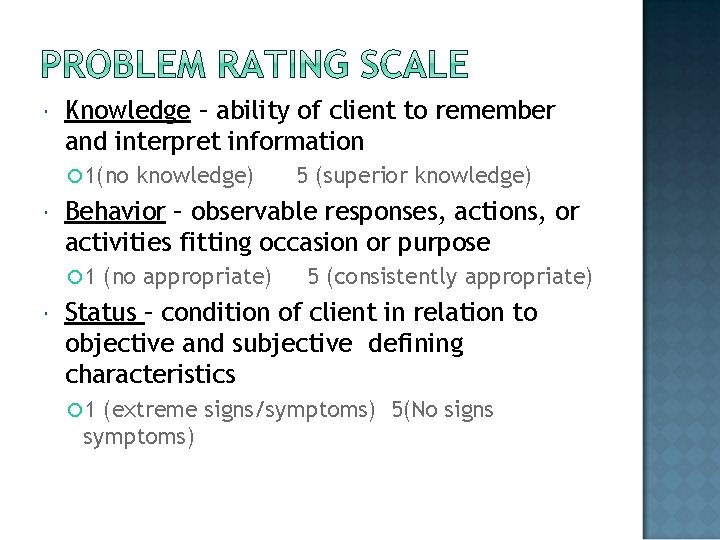
Knowledge – ability of client to remember and interpret information 1(no 5 (superior knowledge) Behavior – observable responses, actions, or activities fitting occasion or purpose 1 knowledge) (no appropriate) 5 (consistently appropriate) Status – condition of client in relation to objective and subjective defining characteristics 1 (extreme signs/symptoms) 5(No signs symptoms)
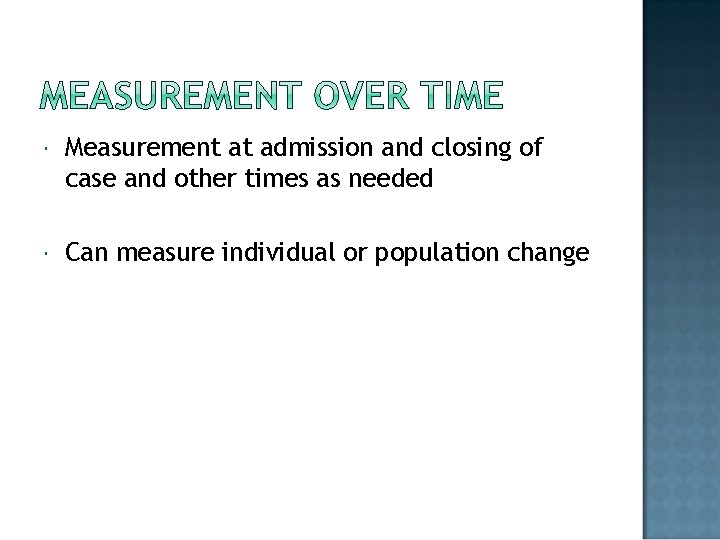
Measurement at admission and closing of case and other times as needed Can measure individual or population change
Tamika, 19 years old, comes to the public health agency because she doesn’t have enough food. She works part-time, no home -moves from friend to friend, is probably 7 months pregnant with a 1 st child. Sick with nausea and vomiting for first 5 months. No health care; smokes about ½ pack each day. Says smoking no problem – others smoke and their babies are fine.
Income (high priority) Intervention Scheme Teach about community resources Case management – referral to resources Knowledge – 2 Behavior – 2 Status -- 1
Pregnancy ( high priority) Teaching – A/P, dietary, fetal development, medical/dental care Case Management – referral to prenatal provider Surveillance– make sure she follows through to a prenatal provider Knowledge – 2 Behavior – 2 Status -- 2
Substance Use (high priority) Teaching – effects of smoking on Tamika and the fetus Surveillance – changes in use of cigarettes Knowledge – 1 Behavior – 1 Status -- 2
Recognized by many standards for electronic records such as LOINC, SNOMED, Health Level 7 Congruent with reference terminology for International Organization for Standardization Mapped to International Classification of Nursing Practice
www. omahasystem. org Karen Martin, RN, MSN, FAAN martinks@tconl. com
1990 s Health Reform Public Health for the 21 st Century National satellite programs
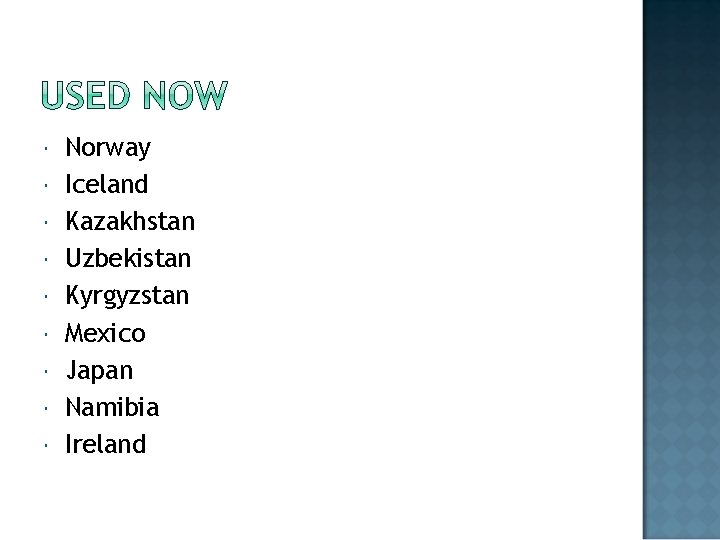
Norway Iceland Kazakhstan Uzbekistan Kyrgyzstan Mexico Japan Namibia Ireland
Information Linda Olson Keller, DNP, RN, FAAN olson 173@umn. edu

Thank you for your attention
- Slides: 26