
Olympic Delivery Authority Assurance framework for ODA Transport





- Slides: 24
Olympic Delivery Authority Assurance framework for ODA Transport: how to assure now the multi modal complex operation of getting athletes, officials, spectators and workforce to the games will be successful in 2012 May 2010
Agenda Background to the Games Olympic Transport Overview Assuring Effective and Efficient Transport Operations The Assurance Process Outcomes Summary
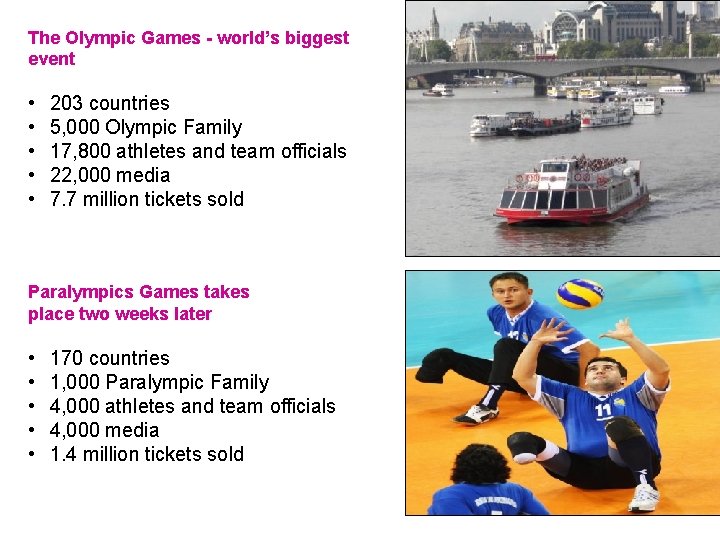
The Olympic Games - world’s biggest event • • • 203 countries 5, 000 Olympic Family 17, 800 athletes and team officials 22, 000 media 7. 7 million tickets sold Paralympics Games takes place two weeks later • • • 170 countries 1, 000 Paralympic Family 4, 000 athletes and team officials 4, 000 media 1. 4 million tickets sold
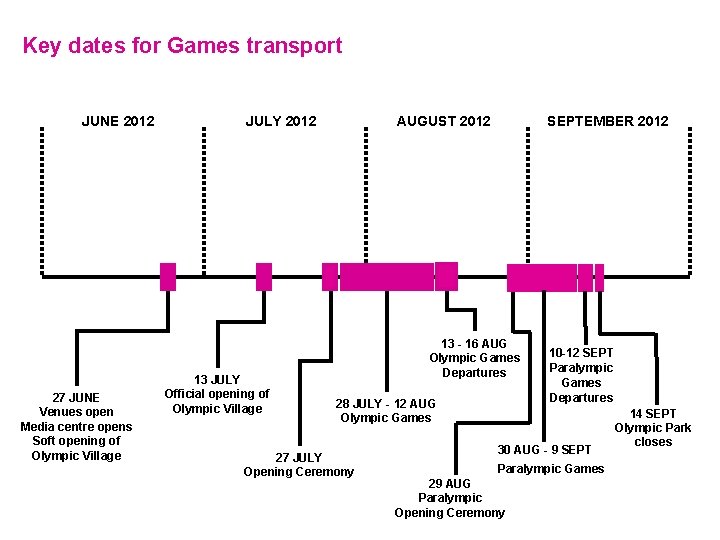
Key dates for Games transport JUNE 2012 27 JUNE Venues open Media centre opens Soft opening of Olympic Village JULY 2012 13 JULY Official opening of Olympic Village AUGUST 2012 SEPTEMBER 2012 13 - 16 AUG Olympic Games Departures 28 JULY - 12 AUG Olympic Games 27 JULY Opening Ceremony 10 -12 SEPT Paralympic Games Departures 30 AUG - 9 SEPT Paralympic Games 29 AUG Paralympic Opening Ceremony 14 SEPT Olympic Park closes
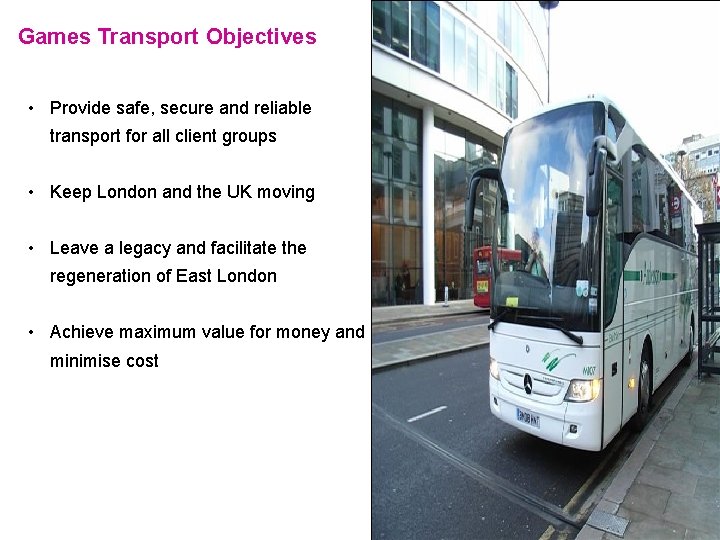
Games Transport Objectives • Provide safe, secure and reliable transport for all client groups • Keep London and the UK moving • Leave a legacy and facilitate the regeneration of East London • Achieve maximum value for money and minimise cost
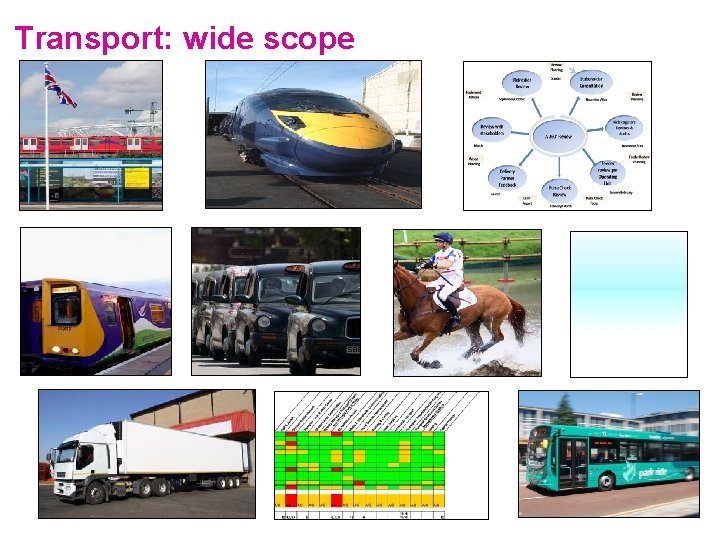
Transport: wide scope
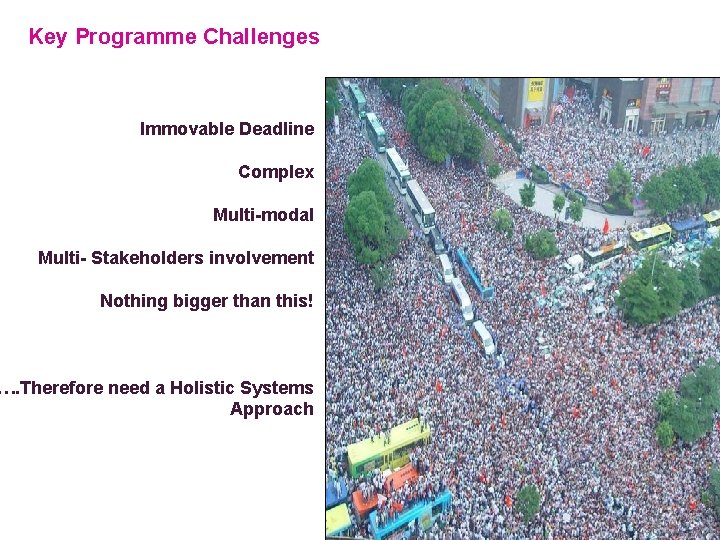
Key Programme Challenges Immovable Deadline Complex Multi-modal Multi- Stakeholders involvement Nothing bigger than this! …. Therefore need a Holistic Systems Approach
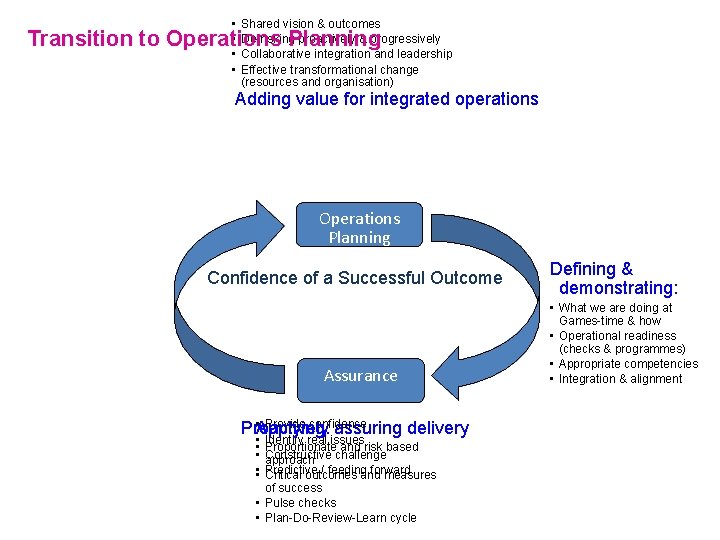
How do we assure effective and efficient Transport operations? – Quantified analysis does not necessarily provide full confidence for success – It’s no more about project-based assurance, but overall holistic confidence – It’s trust, fingers on the pulse and believing in soft as well as hard evidence – Projects are different to operations: Operations is about See, Do, Teach (instantaneous lessons learnt and used) – So. . . what does this mean to us? – Projects transition to Operations require a different approach to Assurance
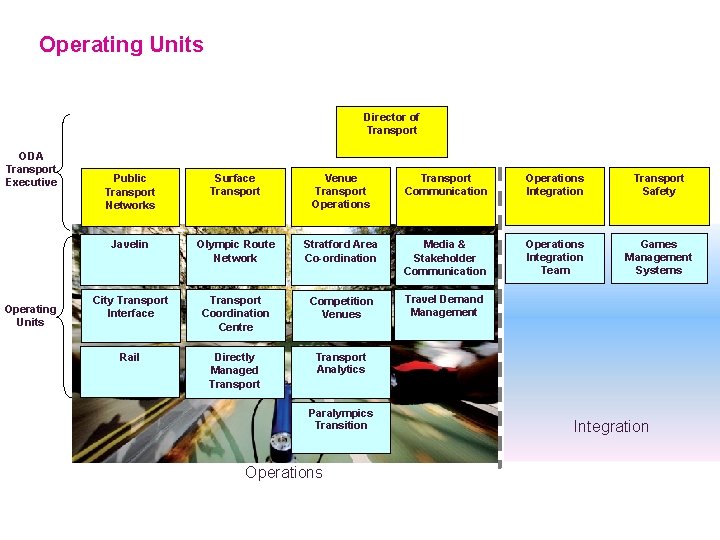
Operating Units Director of Transport ODA Transport Executive Operating Units Public Transport Networks Surface Transport Venue Transport Operations Transport Communication Operations Integration Transport Safety Javelin Olympic Route Network Stratford Area Co-ordination Media & Stakeholder Communication Operations Integration Team Games Management Systems City Transport Interface Transport Coordination Centre Competition Venues Travel Demand Management Rail Directly Managed Transport Analytics Paralympics Transition Operations Integration
• • Shared vision & outcomes De-risking proactively & progressively Collaborative integration and leadership Effective transformational change (resources and organisation) Transition to Operations Planning Adding value for integrated operations Operations Planning Confidence of a Successful Outcome Assurance • Applying: Provide confidence Proactively assuring delivery • • • Identify real issues Proportionate and risk based Constructive challenge approach Predictive / feeding forward Critical outcomes and measures of success • Pulse checks • Plan-Do-Review-Learn cycle Defining & demonstrating: • What we are doing at Games-time & how • Operational readiness (checks & programmes) • Appropriate competencies • Integration & alignment
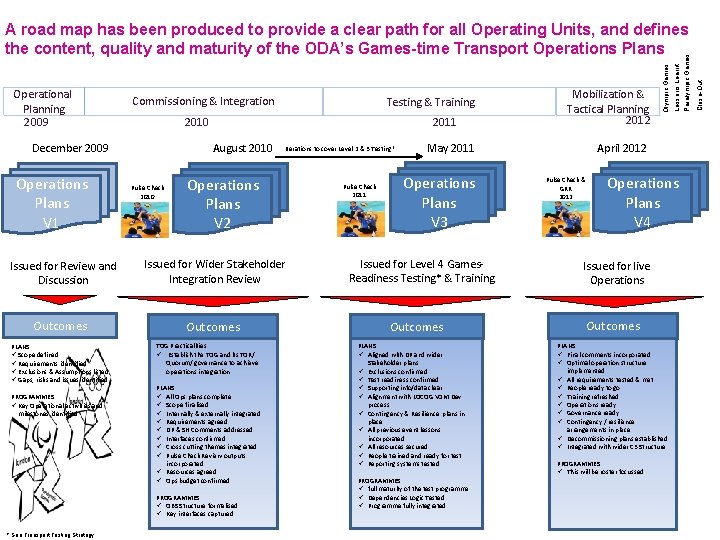
2011 2010 December 2009 Operations Plans V 1 Testing & Training August 2010 Pulse Check 2010 Iterations to cover Level 2 & 3 Testing* Operations Plans V 2 Issued for Review and Discussion Issued for Wider Stakeholder Integration Review Outcomes PLANS ü Scope defined ü Requirements identified ü Exclusions & Assumptions listed ü Gaps, risks and issues identified PROGRAMMES ü Key Operational activities and milestones identified TOG Practicalities ü Establish the TOG and its TOR/ Quorum/ governance to achieve operations integration PLANS ü All Ops plans complete ü Scope finalised ü Internally & externally integrated ü Requirements agreed ü DP & SH Comments addressed ü Interfaces confirmed ü Cross cutting themes integrated ü Pulse Check Review outputs incorporated ü Resources agreed ü Ops budget confirmed PROGRAMMES ü OBS Structure formalised ü Key interfaces captured * See Transport Testing Strategy Pulse Check 2011 Mobilization & Tactical Planning 2012 May 2011 Operations Plans V 3 Issued for Level 4 Games. Readiness Testing* & Training Outcomes PLANS ü Aligned with DP and wider Stakeholder plans ü Exclusions confirmed ü Test readiness confirmed ü Supporting info/data clear ü Alignment with LOCOG VOM Dev process ü Contingency & Resilience plans in place ü All previous event lessons incorporated ü All resources secured ü People trained and ready for test ü Reporting systems tested PROGRAMMES ü full maturity of the test programme ü Dependencies Logic Tested ü Programme fully integrated April 2012 Pulse Check & GRR 2012 Operations Plans V 4 Issued for live Operations Outcomes PLANS ü Final comments incorporated. ü Optimal operation structure implemented ü All requirements tested & met ü People ready to go ü Training refreshed ü Operations ready ü Governance ready ü Contingency / resilience arrangements in place ü Decommissioning plans established ü Integrated with wider C 3 Structure PROGRAMMES ü This will be roster focussed Close-Out Commissioning & Integration Lessons Learnt Paralympic Games Operational Planning 2009 Olympic Games A road map has been produced to provide a clear path for all Operating Units, and defines the content, quality and maturity of the ODA’s Games-time Transport Operations Plans
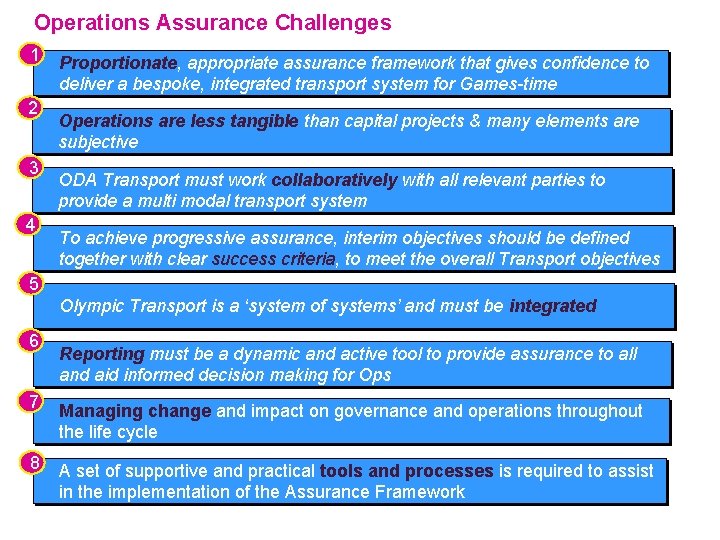
Operations Assurance Challenges 1 2 3 4 Proportionate, appropriate assurance framework that gives confidence to deliver a bespoke, integrated transport system for Games-time Operations are less tangible than capital projects & many elements are subjective ODA Transport must work collaboratively with all relevant parties to provide a multi modal transport system To achieve progressive assurance, interim objectives should be defined together with clear success criteria, to meet the overall Transport objectives 5 Olympic Transport is a ‘system of systems’ and must be integrated 6 Reporting must be a dynamic and active tool to provide assurance to all and aid informed decision making for Ops 7 Managing change and impact on governance and operations throughout the life cycle 8 A set of supportive and practical tools and processes is required to assist in the implementation of the Assurance Framework
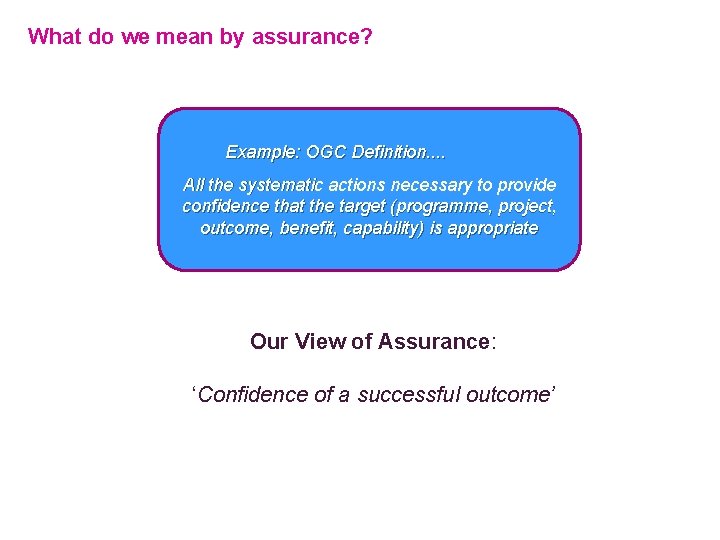
What do we mean by assurance? Example: OGC Definition. . All the systematic actions necessary to provide confidence that the target (programme, project, outcome, benefit, capability) is appropriate Our View of Assurance: ‘Confidence of a successful outcome’
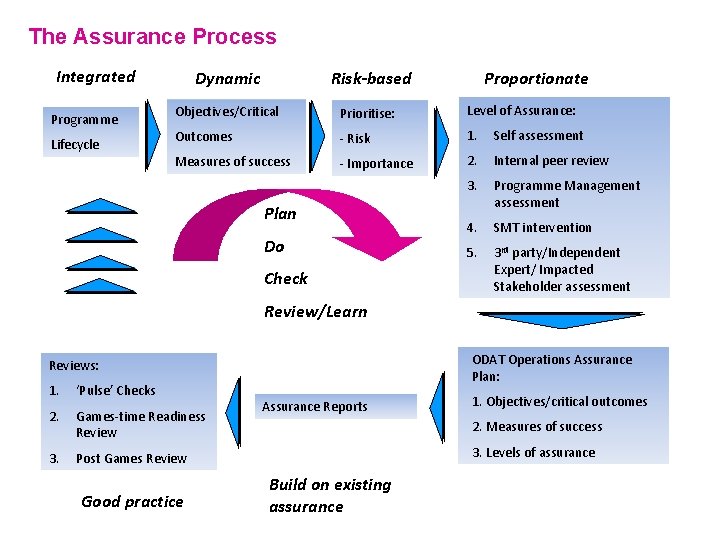
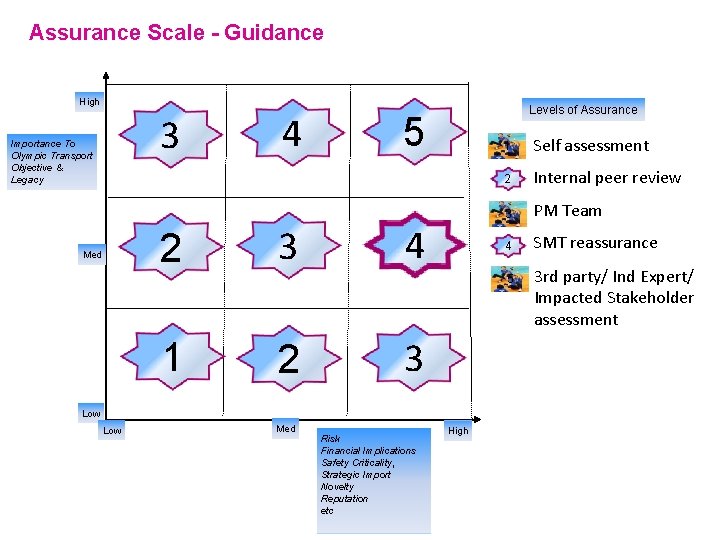
The Assurance Process Integrated Programme Lifecycle Dynamic Risk-based Objectives/Critical Prioritise: Level of Assurance: Outcomes - Risk 1. Self assessment Measures of success - Importance 2. Internal peer review 3. Programme Management assessment 4. SMT intervention 5. 3 rd party/Independent Expert/ Impacted Stakeholder assessment Plan Do Check Proportionate Review/Learn ODAT Operations Assurance Plan: Reviews: 1. ‘Pulse’ Checks 2. Games-time Readiness Review 3. Post Games Review Good practice Assurance Reports 1. Objectives/critical outcomes 2. Measures of success 3. Levels of assurance Build on existing assurance
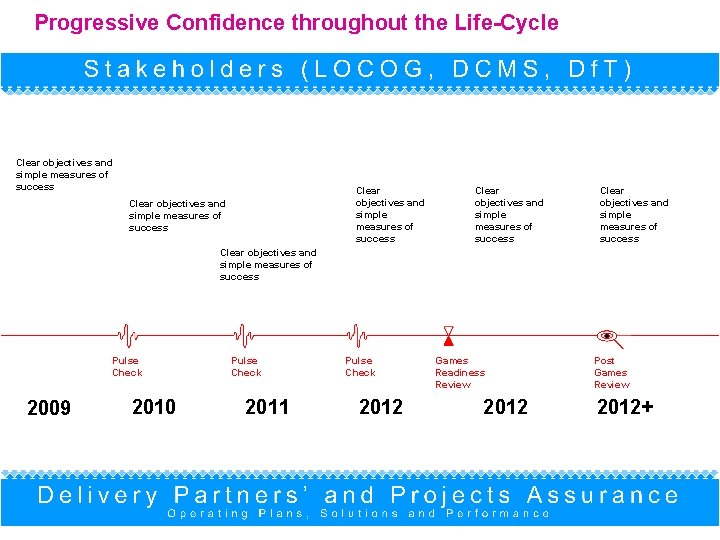
Progressive Confidence throughout the Life-Cycle Clear objectives and simple measures of success Clear objectives and simple measures of success Pulse Check 2009 2010 Pulse Check 2011 Pulse Check 2012 Games Readiness Review 2012 Post Games Review 2012+
Assurance Scale - Guidance High 3 Importance To Olympic Transport Objective & Legacy 2 Med 4 3 Levels of Assurance 5 4 1 Self assessment 2 Internal peer review 3 PM Team 4 SMT reassurance 5 1 2 3 Low Med Risk Financial Implications Safety Criticality, Strategic Import Novelty Reputation etc High 3 rd party/ Ind Expert/ Impacted Stakeholder assessment
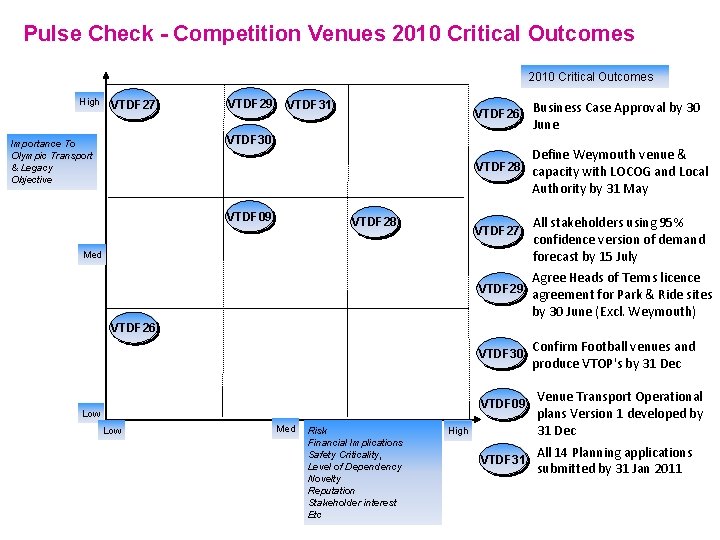
Pulse Check - Competition Venues 2010 Critical Outcomes High VTDF 27 VTDF 29 VTDF 31 VTDF 26 VTDF 30 Importance To Olympic Transport & Legacy Objective Business Case Approval by 30 June Define Weymouth venue & VTDF 28 capacity with LOCOG and Local Authority by 31 May VTDF 09 VTDF 28 VTDF 27 Med All stakeholders using 95% confidence version of demand forecast by 15 July VTDF 29 Agree Heads of Terms licence agreement for Park & Ride sites by 30 June (Excl. Weymouth) VTDF 30 Confirm Football venues and produce VTOP's by 31 Dec VTDF 26 VTDF 09 Low Med Risk Financial Implications Safety Criticality, Level of Dependency Novelty Reputation Stakeholder interest Etc High VTDF 31 Venue Transport Operational plans Version 1 developed by 31 Dec All 14 Planning applications submitted by 31 Jan 2011
Guide to Assurance Pulse-Check 360° Review
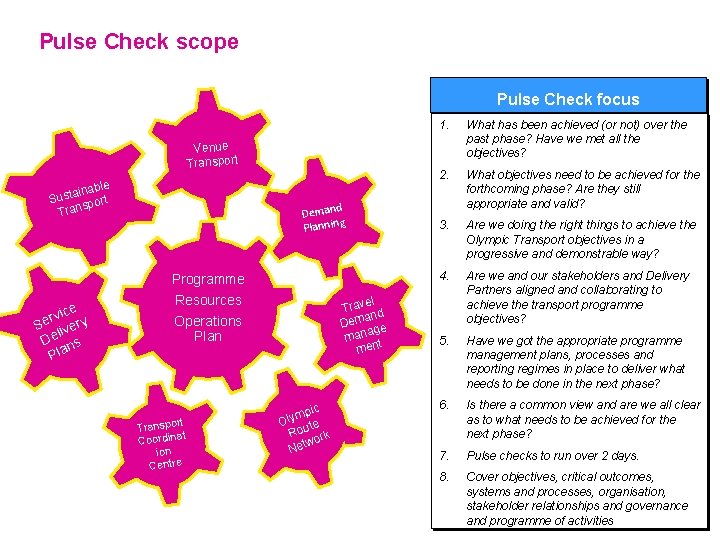
Pulse Check scope Pulse Check focus Venue Transport le ainab t s u S t spor Tran Demand Planning Programme e rvic ry e S ive l De ns Pla Resources el Trav d an Dem ge a man t e m n Operations Plan rt Transpo t a Coordin ion Centre c mpi Oly ute Ro ork w Net 1. What has been achieved (or not) over the past phase? Have we met all the objectives? 2. What objectives need to be achieved for the forthcoming phase? Are they still appropriate and valid? 3. Are we doing the right things to achieve the Olympic Transport objectives in a progressive and demonstrable way? 4. Are we and our stakeholders and Delivery Partners aligned and collaborating to achieve the transport programme objectives? 5. Have we got the appropriate programme management plans, processes and reporting regimes in place to deliver what needs to be done in the next phase? 6. Is there a common view and are we all clear as to what needs to be achieved for the next phase? 7. Pulse checks to run over 2 days. 8. Cover objectives, critical outcomes, systems and processes, organisation, stakeholder relationships and governance and programme of activities
Outcomes of the Pulse Check § The two strategic objectives for 2010 are that ODAT will be fully ‘operationalised’ and ‘venueised’. § Over 100 critical outcomes being agreed for 2010. § The review has concluded that the Transport Programme is in good shape with some key challenges to be managed
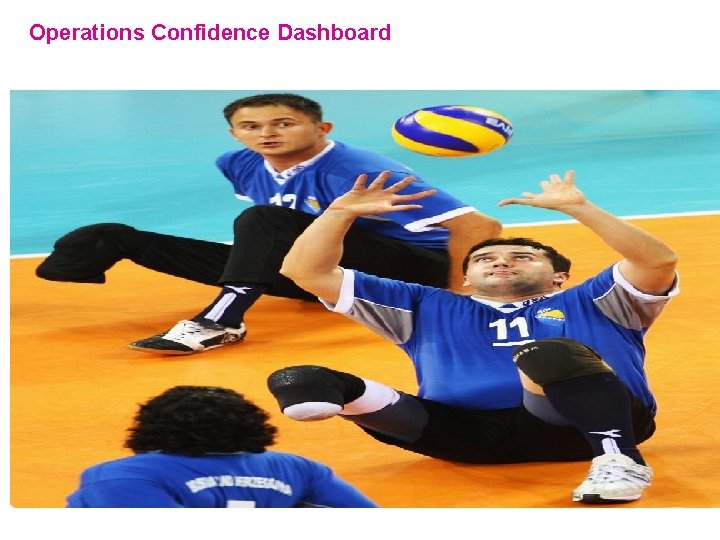
Operations Confidence Dashboard
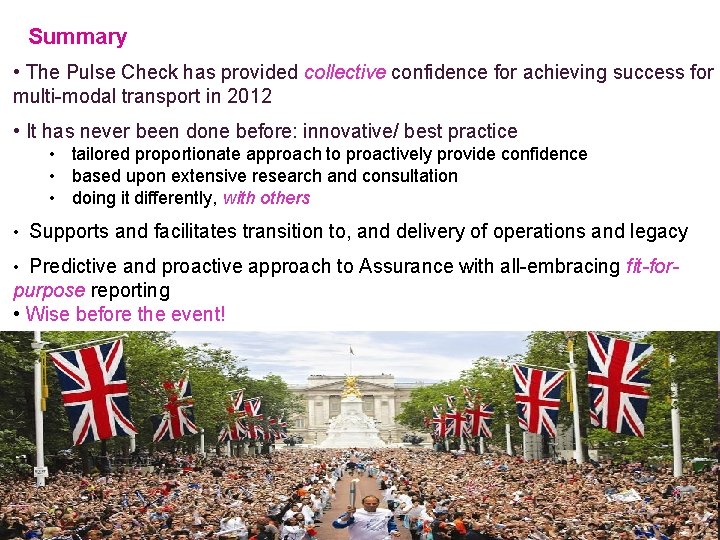
Summary • The Pulse Check has provided collective confidence for achieving success for multi-modal transport in 2012 • It has never been done before: innovative/ best practice • tailored proportionate approach to proactively provide confidence • based upon extensive research and consultation • doing it differently, with others • Supports and facilitates transition to, and delivery of operations and legacy • Predictive and proactive approach to Assurance with all-embracing fit-for- purpose reporting • Wise before the event!
Thank you The official Emblem of the London Organising Committee of the Olympic Games and Paralympic Games Ltd is protected by copyright. © London Organising Committee of the Olympic Games and Paralympic Games Ltd 2007. All rights reserved.