
Olympic CFM 600 Cerebral Function Monitor Group 14
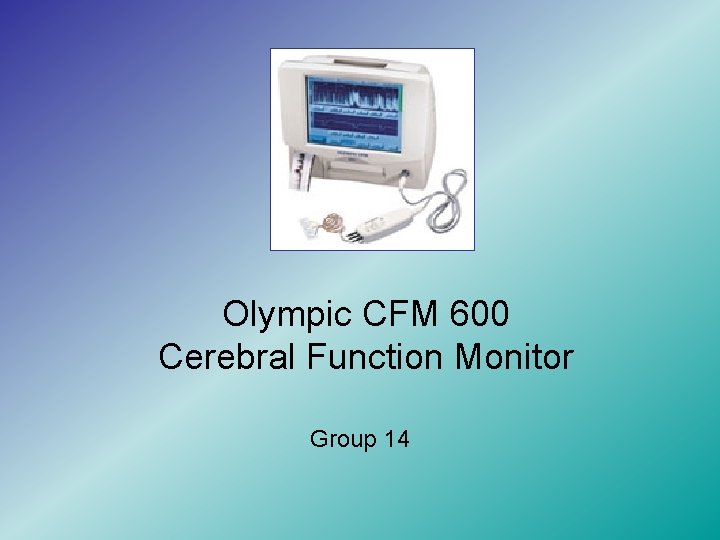
Olympic CFM 600 Cerebral Function Monitor Group 14

Members • JP Day, BME • Brian Snelling, BME • Colin Compas, BME • Dr. Paul King, Faculty Advisor • Dr. Bill Walsh, Advisor • Dr. John Wikswo, Collaborator • Dr. A. B. Bonds, Collaborator
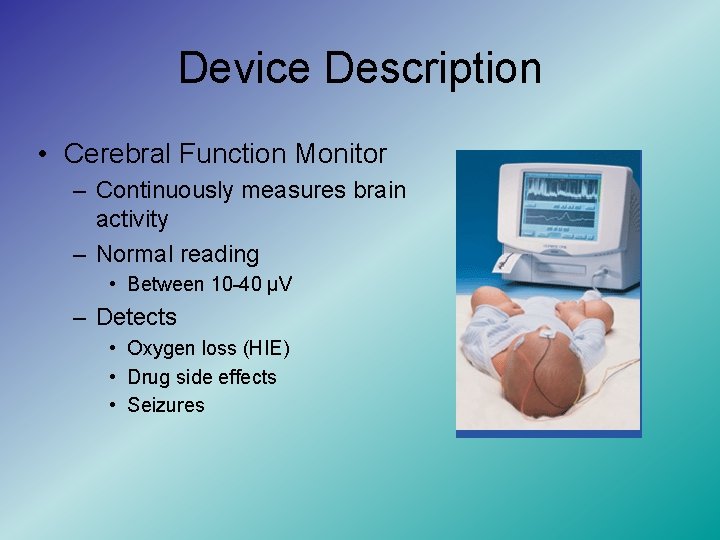
Device Description • Cerebral Function Monitor – Continuously measures brain activity – Normal reading • Between 10 -40 μV – Detects • Oxygen loss (HIE) • Drug side effects • Seizures
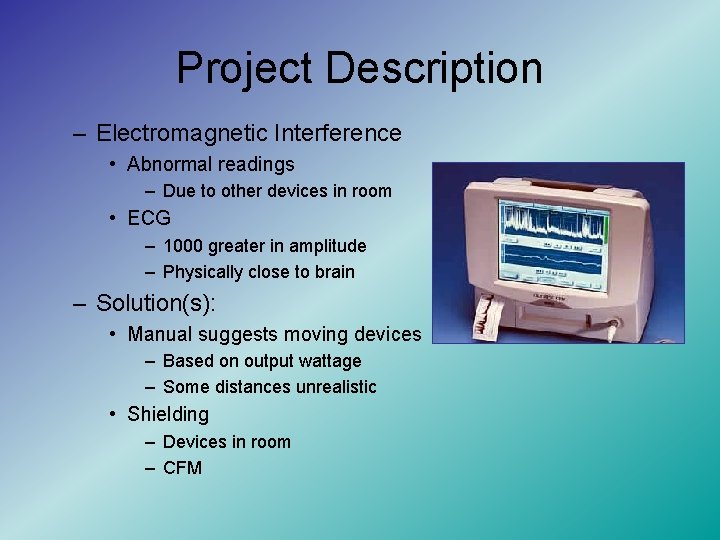
Project Description – Electromagnetic Interference • Abnormal readings – Due to other devices in room • ECG – 1000 greater in amplitude – Physically close to brain – Solution(s): • Manual suggests moving devices – Based on output wattage – Some distances unrealistic • Shielding – Devices in room – CFM

CFM Tracings Normal tracing characterized by central band in the 10 -40µV range with a normal sleep wake cycle Abnormal tracing characterized by lower, narrow band of activity with spikes indicating burst suppression EMI can lead a normal signal to resemble the abnormal signal which can lead to misdiagnosis of a baby’s cognitive function.

Completed Work • Met with Dr. Bill Walsh – Discussed problem – Solution parameters • Background Reading – CFM Manuals – EM shielding literature – Journal articles • Established Firm Timeline – Meet with advisors – Use gathered knowledge in NICU room • Ruled out Moving Devices
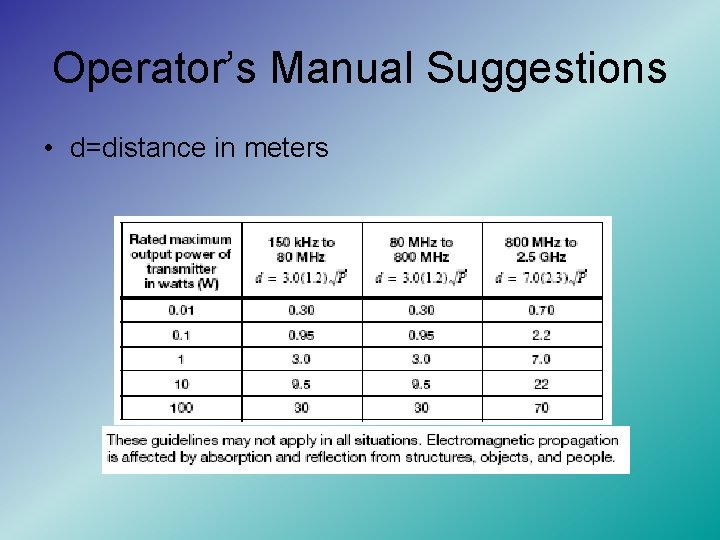
Operator’s Manual Suggestions • d=distance in meters
Shielding Techniques • Faradays Box – This is a box that fits around the device and has one grounding wire • EMI Mesh – Woven wire of different materials helping to block outside interference • Jackets and Sheaths – Made out of Various Materials • EMJ Foil Tape – Adhesive layered foil that can be crafted around most geometries
Current Work • Scheduled Meetings: – Dr. AB Bonds – John Wikswo • Explore shielding options • Contact Olympic Medical – Waiting for return call • Discuss nature & frequency of problem • Possible solution • NICU room – Map room – Get specs for devices – Contact nurse familiar with CFM
Future Work • Develop EM shield – Based on: • Professors’ suggestions • Shielding literature • Improve CMR of amplifiers • Actively filter ECG signal • Test posed solutions
References • Vries L, Hellstrom-Westas L. Role of cerebral function monitoring in the newborn. Archives of Disease in Childhood, 2007; 27. • Spitzer A. Neonatal Cerebral Function Monitoring. Neonatalogy Today, 2006; 1: 1 -12. • Gluckman P, Wyatt J, et al. Selective head cooling with mild systemic hypothermia after neonatal encephalopathy: multi-centre randomized trial. Lancet. 2005; 365: 663 -70. al Naqeeb N, Edwards AD, Cowan FM, Azzopardi D. Assessment of neonatal encephalopathy by amplitude integrated electroencephalography. Pediatrics 1999; 103(6): 1263– 1271. • • Archbald F, Verma UL, Tejani NA, Handwerker SM. Cerebral function monitor in the neonate. II: Birth asphyxia. Dev Med Child Neurol 1984; 26(2): 162– 168. • Greisen G. Tape-recorded EEG and the cerebral function monitor: amplitude-integrated, time-compressed EEG. J Perinat Med 1994; 22(6): 541– 546. • Thornberg E, Thiringer K. Normal pattern of the cerebral function monitor trace in term and preterm neonates. Acta Paediatr Scand 1990; 79(1): 20– 25. • Verma UL, Archbald F, Tejani NA, Handwerker SM. Cerebral function monitor in the neonate. I: Normal patterns. Dev Med Child Neurol 1984; 26(2): 154– 161.
- Slides: 11