
Oluwakemi Izomo Natural and Anthropogenic Hazards Overview Natural


- Slides: 22
Oluwakemi Izomo
Natural and Anthropogenic Hazards: Overview Natural Hazards Trends Hans-Peter Plag September 15, 2014
Distinction between trends and hazardous events Trends change the hazard spectrum: • can cause more frequent, more extreme hazards • can lead to new hazards or eliminate old ones
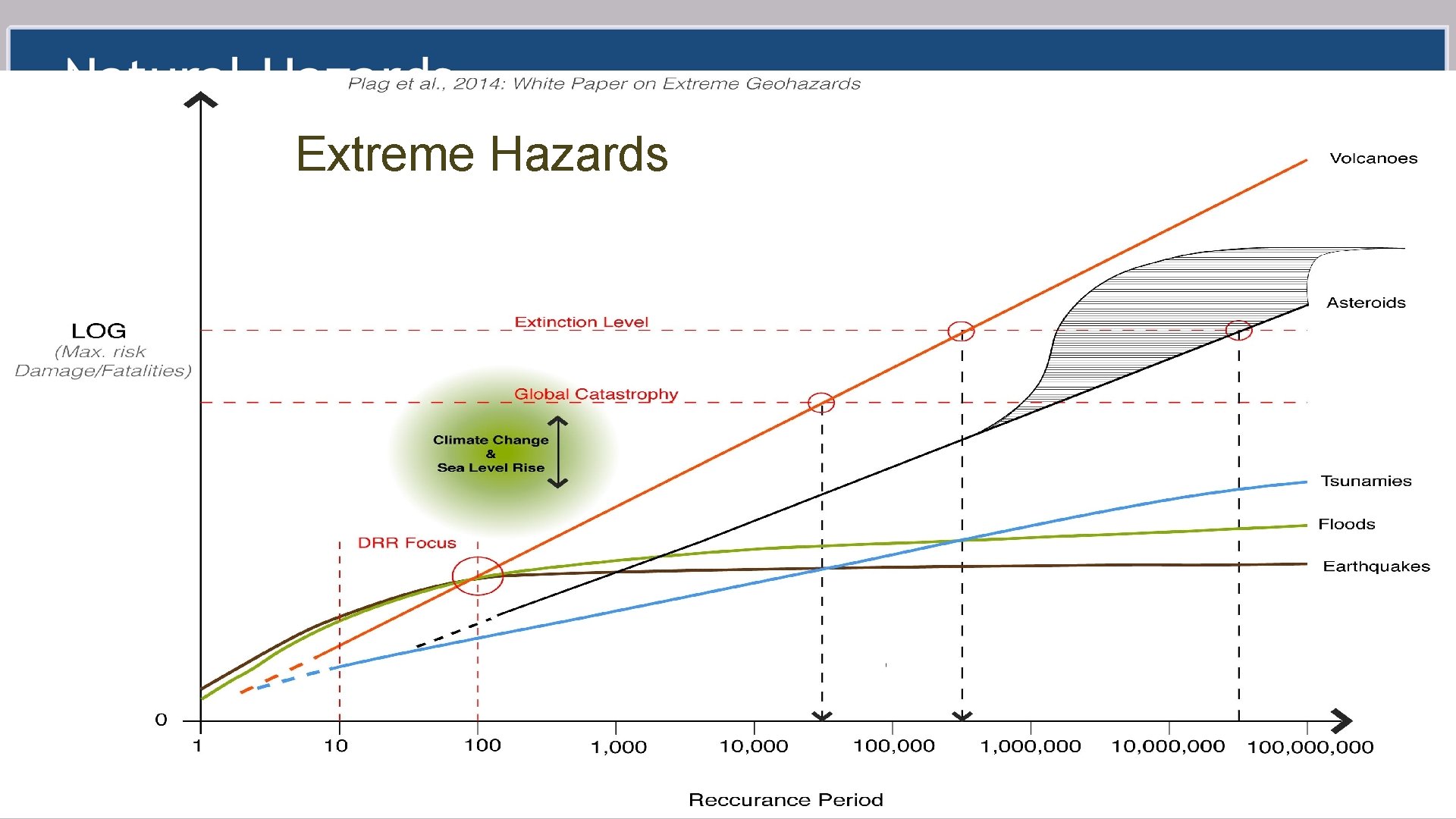
We distinguish four categories of large disasters: Extinction Level Events are so devastating that more than a quarter of all life on Earth is killed and major species extinction takes place. Global Catastrophes are events in which more than a quarter of the world human population dies and that place civilization in serious risk. Global Disasters are global scale events in which a few percent of the population die. Major Disasters are events exceeding $100 Billion in damage and/or causing more than 10, 000 fatalities. Modified from Hempsell (2004). Distinction between hazards and disasters Understanding the processes that lead from hazard to disaster
Casti (2012): X-events: rare, surprising events with potentially huge impact on human life. Outliers of the “normal” region; could lead to the collapse of everything.
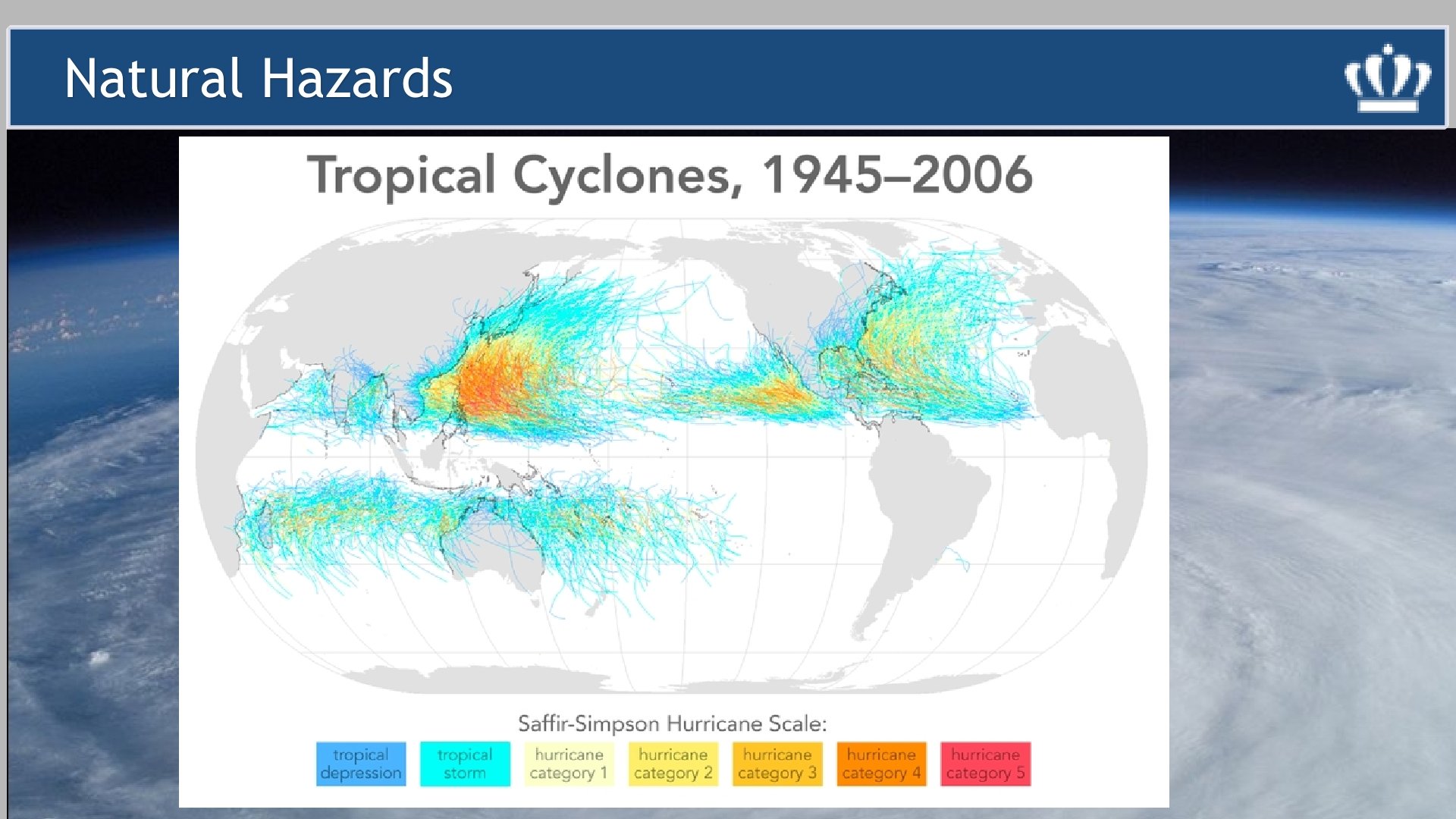
Hazardous events: disturbances • natural hazards • geohazards (earthquakes, landslides, tsunamis, volcanic eruptions, subsidences) • hydrometeorological hazards (floods, droughts, storm surges, hurricanes, tornadoes) • epidemics and pandemics • wild fires • extraterrestrial objects • anthropogenic hazards • wars and conflicts • terrorist attacks • crime • social unrest • industrial/infrastructure failure • economic crisis
Trends and slow changes • Trends in the environment: • climate change and its consequences • global warming • sea level rise and ocean circulation • ocean chemistry • ecosystem impacts • crossing global boundaries (leaving the Holocene) • biodiversity • Nitrogen cycle • water cycle • land use • diseases and resistance • Trends in the anthroposphere • political changes • economic changes • technological changes and revolutions
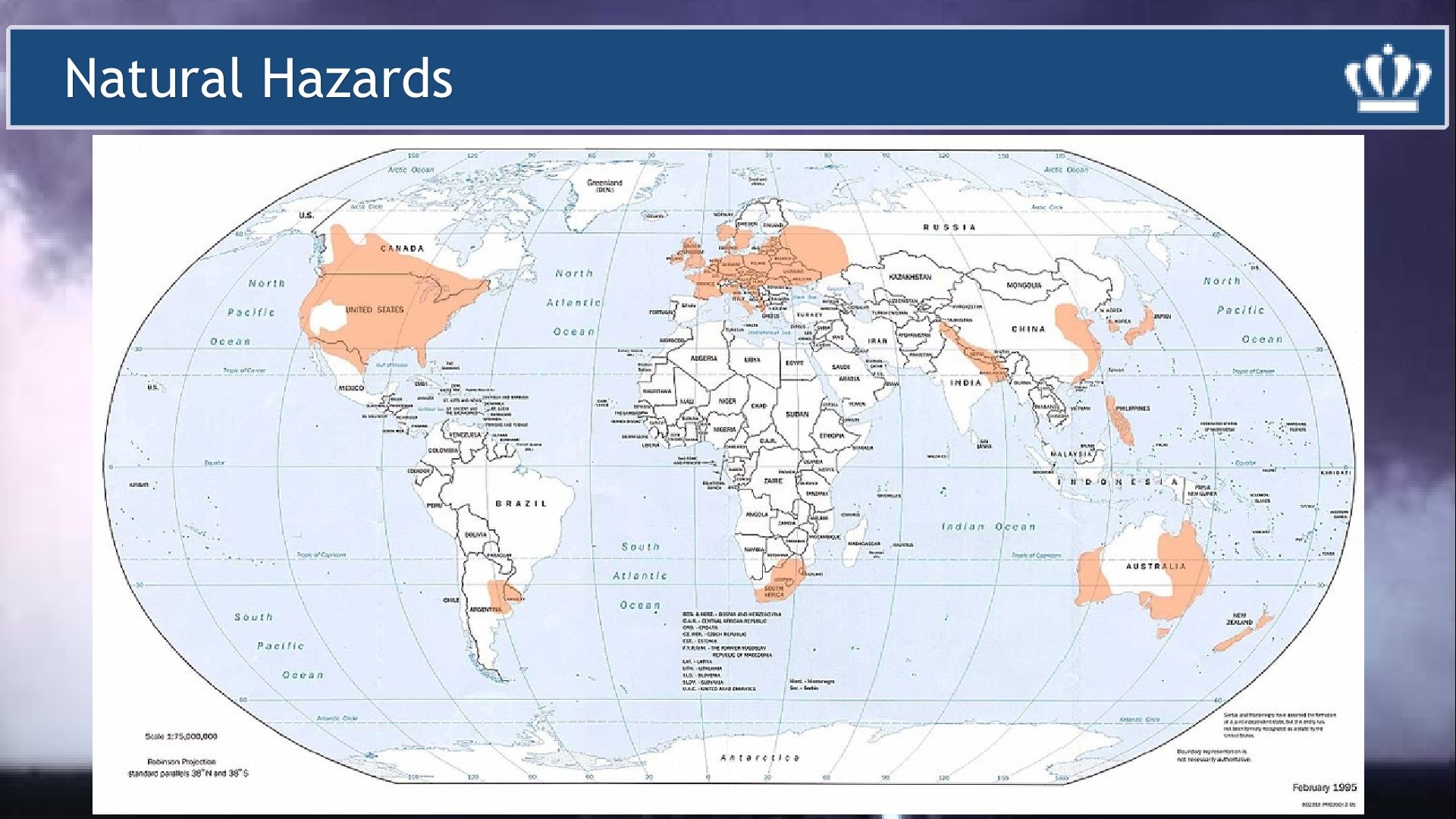
Natural hazards • geohazards (earthquakes, landslides, tsunamis, volcanic eruptions, subsidences) • hydrometeorological hazards (floods, droughts, storm surges, hurricanes, tornadoes) • epidemics and pandemics • wild fires • extraterrestrial objects
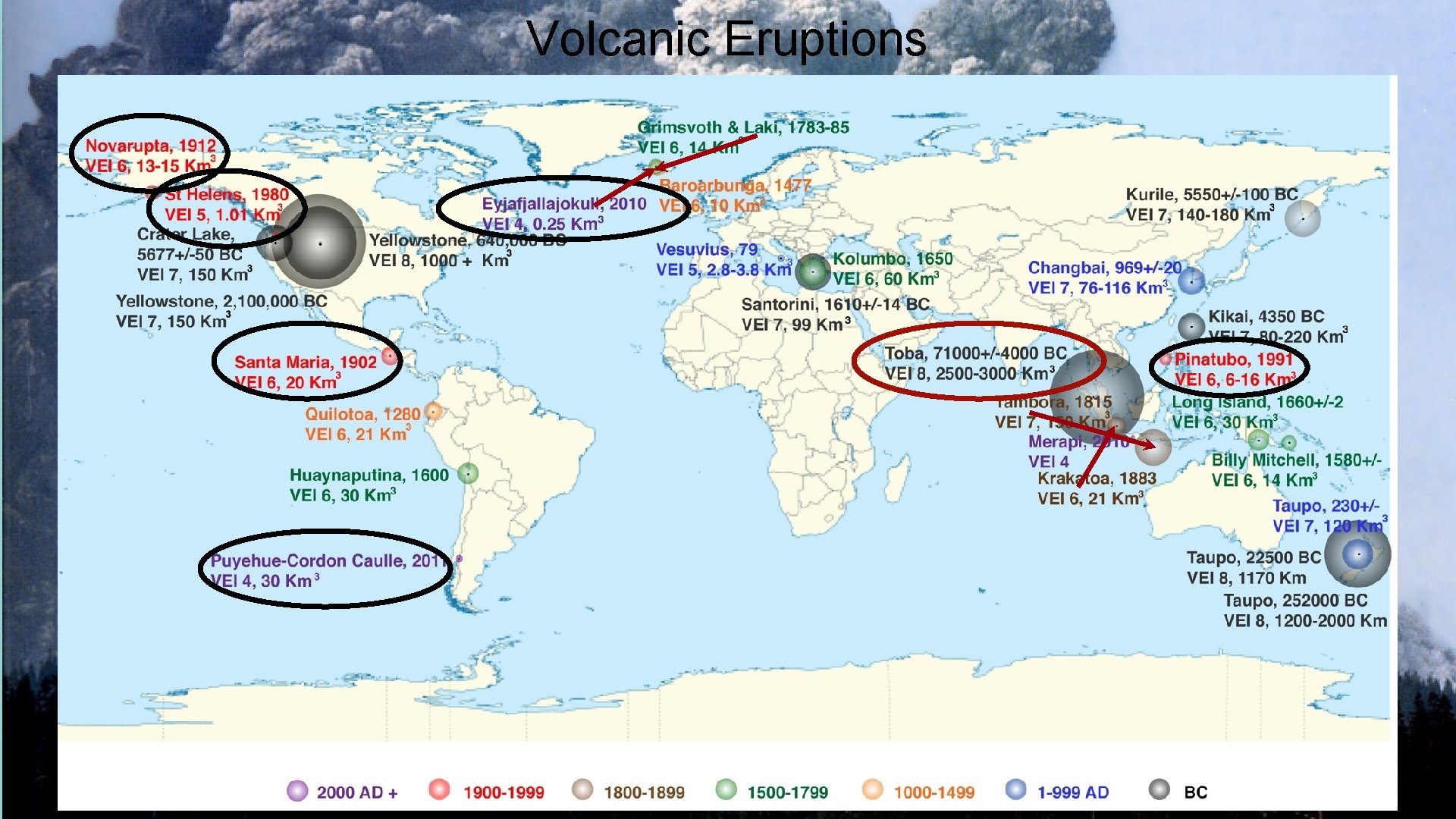
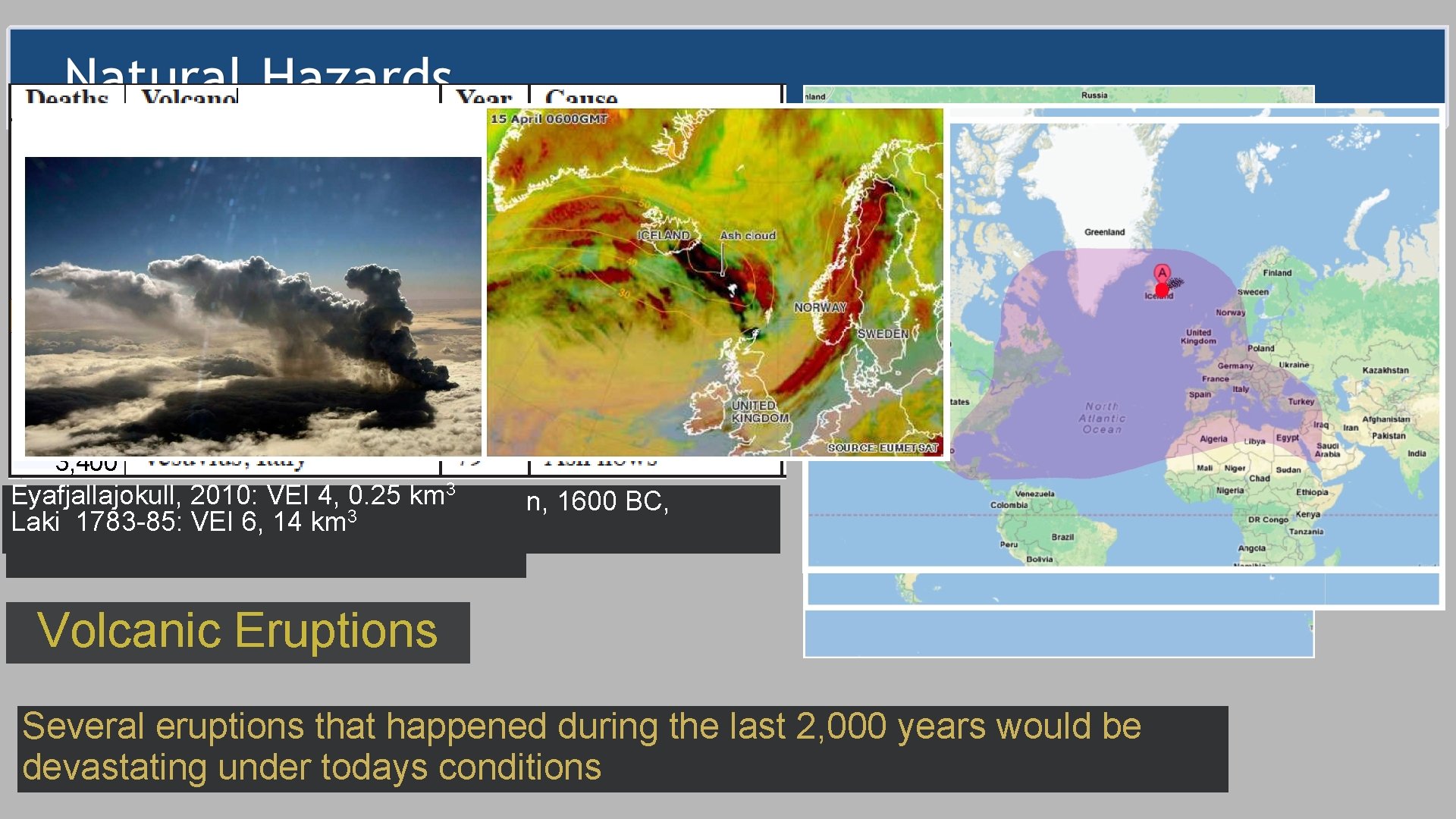
Volcanic Eruptions
100, 000 40, 000 30, 000 25, 000 10, 000 5, 000 4, 000 3, 500 3, 400 3 Eyafjallajokull, 2010: VEI 4, 0. 25 km 1) Krakatau was similar to Santorini eruption, 1600 BC, 3 Laki 1783 -85: VEI 6, 14 km although 4 times smaller Volcanic Eruptions Several eruptions that happened during the last 2, 000 years would be devastating under todays conditions
Natural hazards • geohazards (earthquakes, landslides, tsunamis, volcanic eruptions, subsidences) • hydrometeorological hazards (floods, droughts, storm surges, hurricanes, tornadoes) • epidemics and pandemics • wild fires • extraterrestrial objects
Extreme Hazards
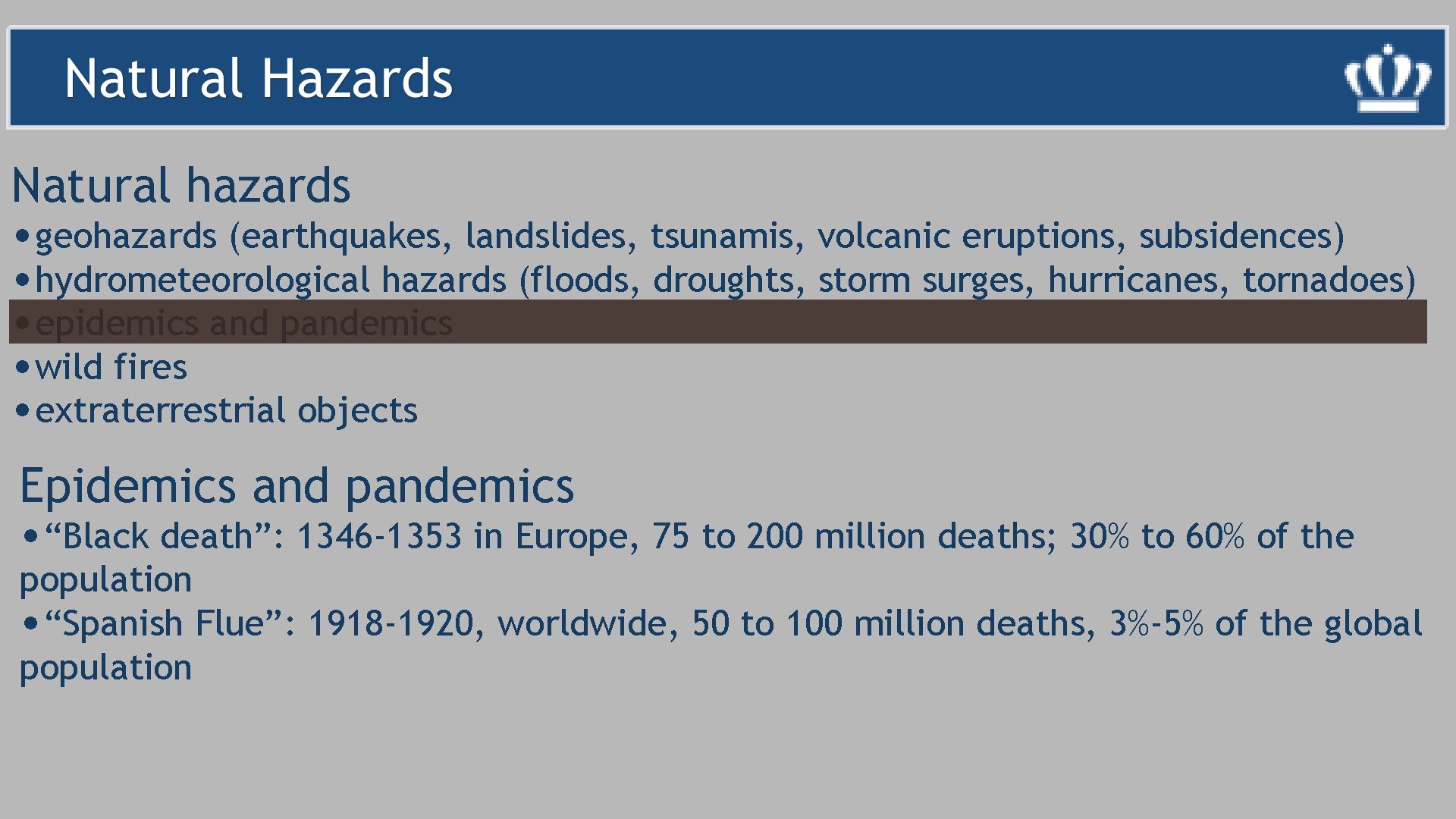
Natural hazards • geohazards (earthquakes, landslides, tsunamis, volcanic eruptions, subsidences) • hydrometeorological hazards (floods, droughts, storm surges, hurricanes, tornadoes) • epidemics and pandemics • wild fires • extraterrestrial objects Epidemics and pandemics • “Black death”: 1346 -1353 in Europe, 75 to 200 million deaths; 30% to 60% of the population • “Spanish Flue”: 1918 -1920, worldwide, 50 to 100 million deaths, 3%-5% of the global population
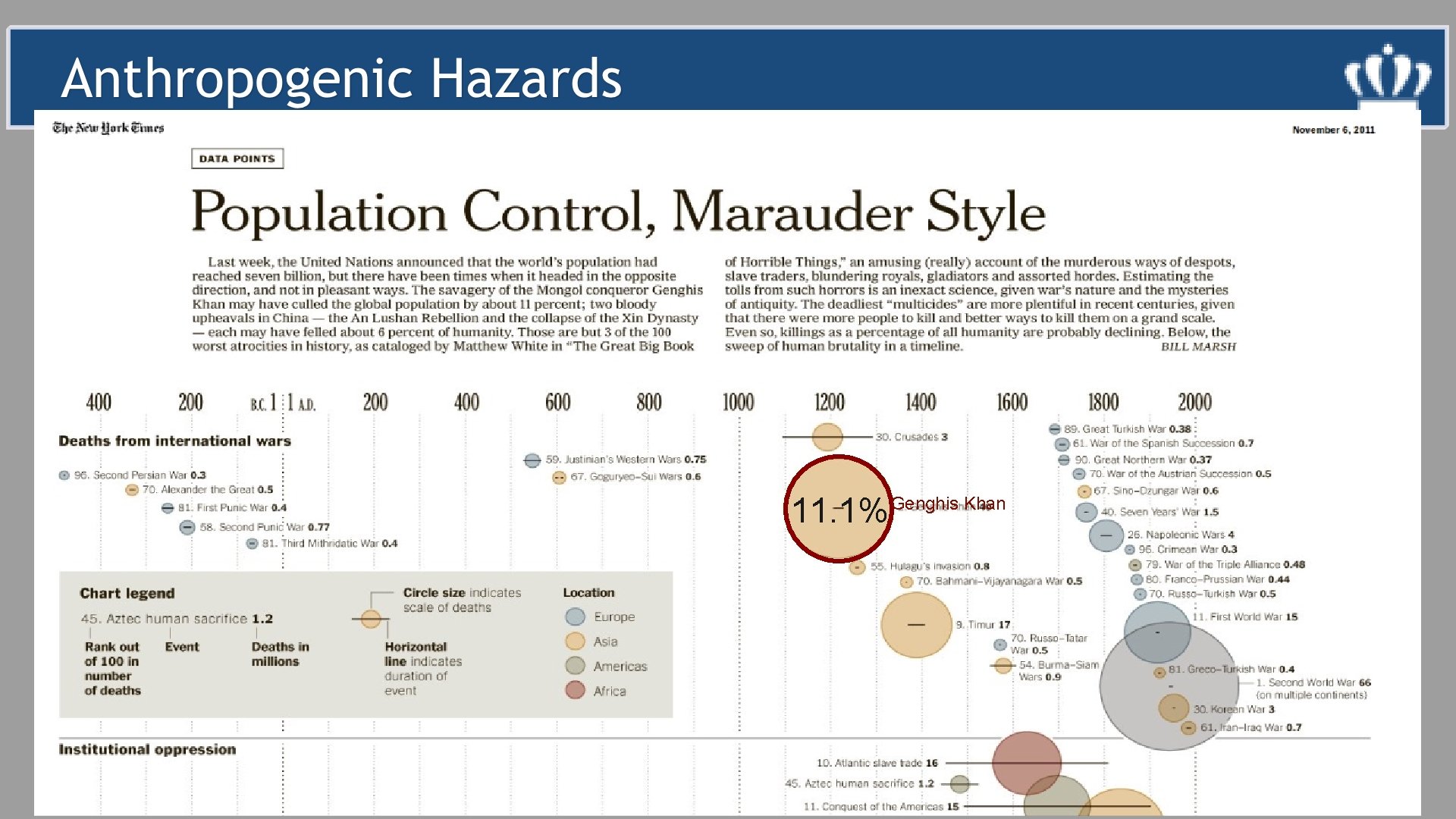
Anthropogenic hazards • wars and conflicts • terrorist attacks • crime • social unrest • industrial/infrastructure failure • economic crisis
11. 1% Genghis Khan
Trends in the anthroposphere • political changes • economic changes • technological changes and revolutions
Trends in the environment: • climate change and its consequences • global warming • sea level rise and ocean circulation • ocean chemistry • ecosystem impacts • crossing global boundaries (leaving the Holocene) • biodiversity • Nitrogen cycle • water cycle • land use • diseases and resistance
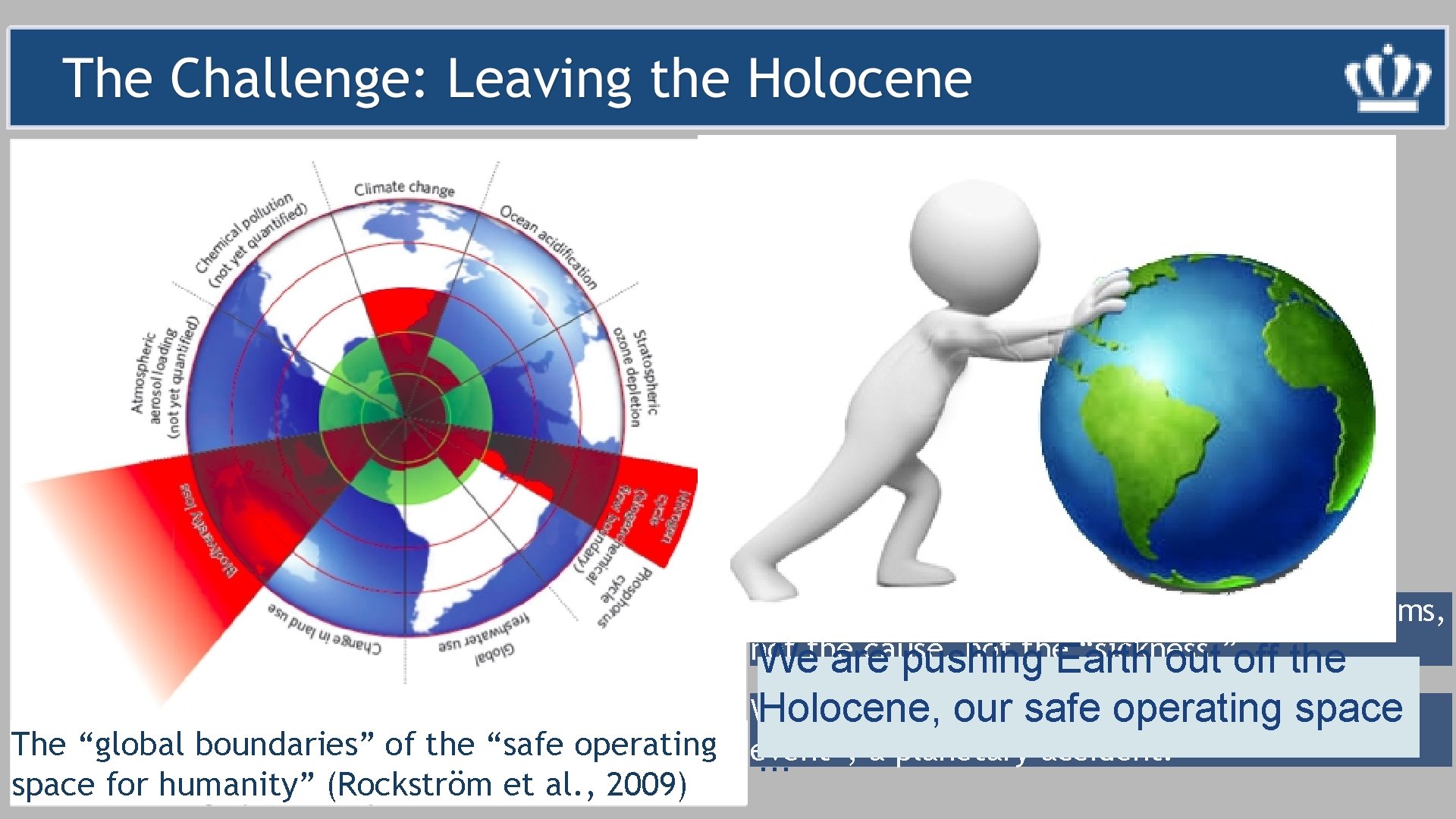
We are leaving the Holocene: Climate Change (***) Ocean acidification (**) Stratospheric ozone depletion (*) Nitrogen (******) and Phosphorous cycles (**) Global freshwater (*) Change in land use (*) Biodiversity loss (*******) Atmospheric aerosols (? ) Chemical pollution (? ) Climate change and sea level rise are symptoms, not the cause, not the “sickness. ” We are pushing Earth out off the The “global boundaries” of the “safe operating space for humanity” (Rockström et al. , 2009) Holocene, our safe operating space We are in the middle of an “extinction-type event”, a planetary accident. .