
Oleochemical Products 3 Sharifah Zati Hanani Syed Zuber
Oleochemical Products 3 Sharifah Zati Hanani Syed Zuber sharifahzati@unimap. edu. my
Oleochemicals • Oleochemicals: chemicals derived from plant and animal fats. • - 5 basic oleochemical substances: Fatty acids Methyl ester (other alkyl) Fatty alcohol Fatty nitrogen Glycerin/ glycerol
Fatty nitrogen • Among the important fatty nitrogen compounds derived from fatty acid include: v Fatty amides v. Fatty nitriles v. Fatty amines v. Quaternary ammonium compounds
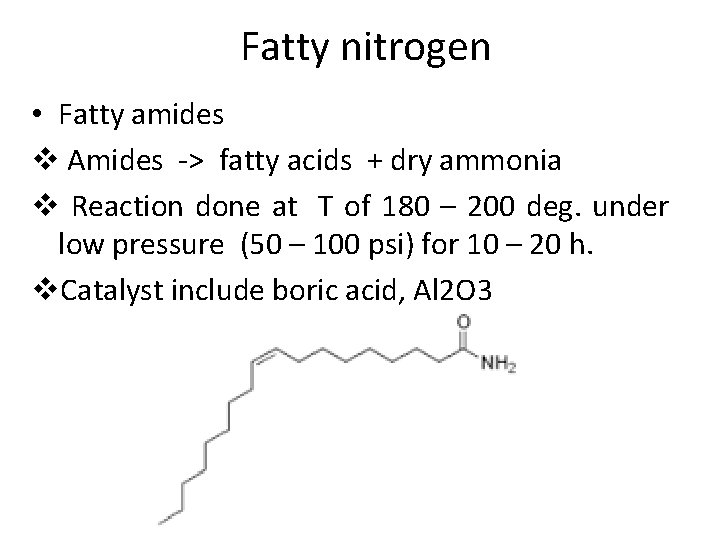
Fatty nitrogen • Fatty amides v Amides -> fatty acids + dry ammonia v Reaction done at T of 180 – 200 deg. under low pressure (50 – 100 psi) for 10 – 20 h. v. Catalyst include boric acid, Al 2 O 3
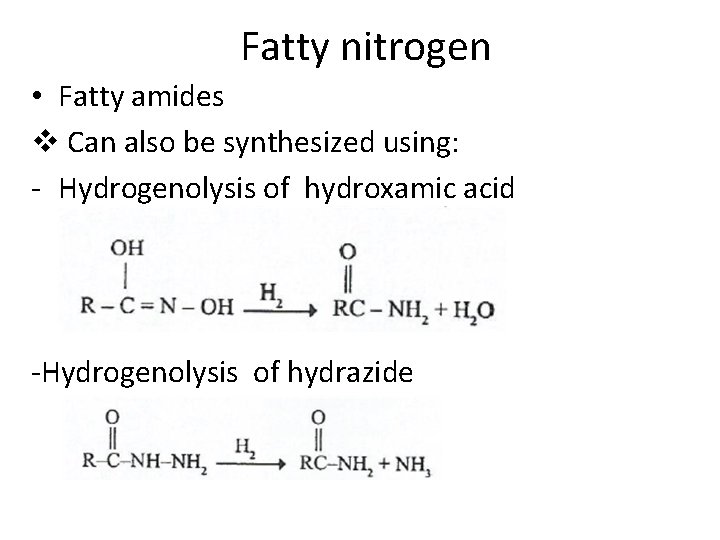
Fatty nitrogen • Fatty amides v Can also be synthesized using: - Hydrogenolysis of hydroxamic acid -Hydrogenolysis of hydrazide
Fatty nitrogen • Fatty amides v Properties: - Highest m. p among the fatty acid derivatives - Water insoluble - Soluble in polar solvent (decreasing solubility with increasing chain length) - High stability against air, heat, weak acid and base
Fatty nitrogen • Fatty amides v Uses: - Widely used in rubber production as lubricant
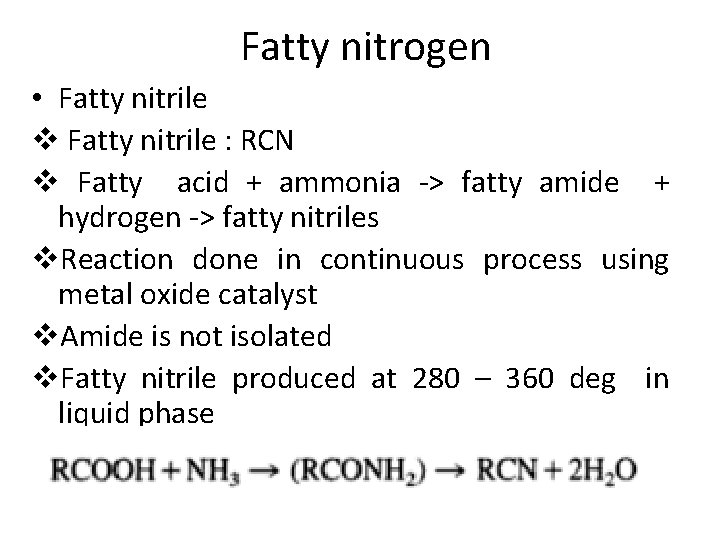
Fatty nitrogen • Fatty nitrile v Fatty nitrile : RCN v Fatty acid + ammonia -> fatty amide + hydrogen -> fatty nitriles v. Reaction done in continuous process using metal oxide catalyst v. Amide is not isolated v. Fatty nitrile produced at 280 – 360 deg in liquid phase
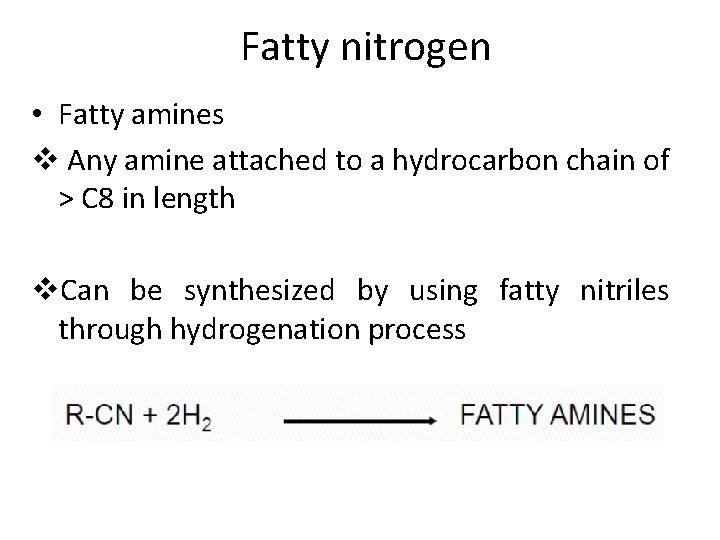
Fatty nitrogen • Fatty amines v Any amine attached to a hydrocarbon chain of > C 8 in length v. Can be synthesized by using fatty nitriles through hydrogenation process
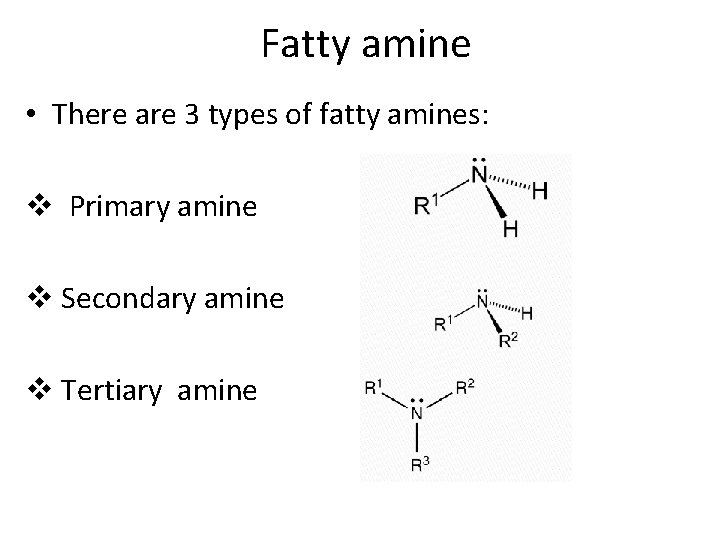
Fatty amine • There are 3 types of fatty amines: v Primary amine v Secondary amine v Tertiary amine
Fatty nitrogen • Fatty amines v Amines produced depends on - Reaction condition Ø ammonia pressure Ø Temperature -Catalyst choice Ø Raney nickel/ sponge catalyst Ø Supported Ni powders
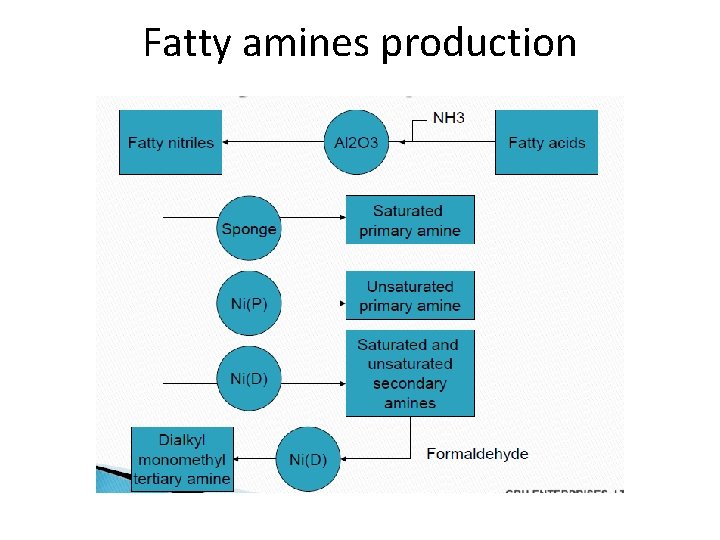
Fatty amines production
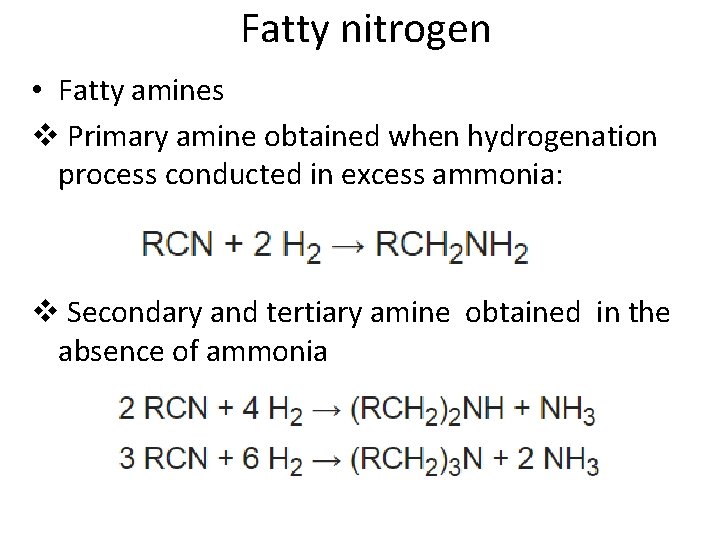
Fatty nitrogen • Fatty amines v Primary amine obtained when hydrogenation process conducted in excess ammonia: v Secondary and tertiary amine obtained in the absence of ammonia
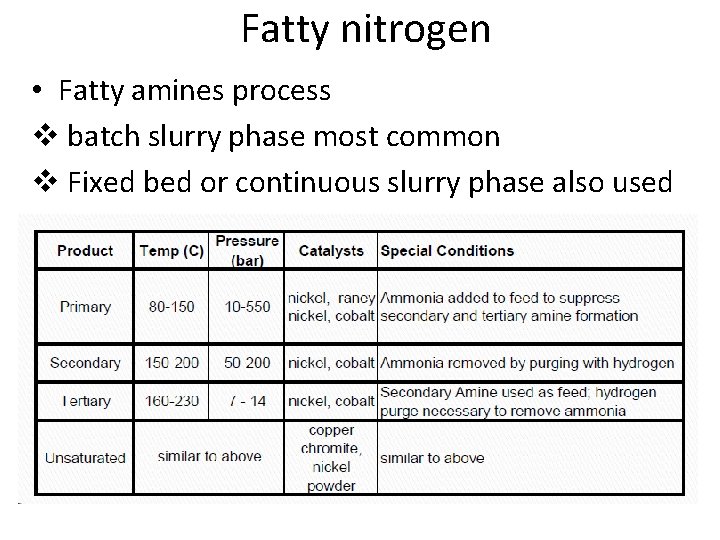
Fatty nitrogen • Fatty amines process v batch slurry phase most common v Fixed bed or continuous slurry phase also used
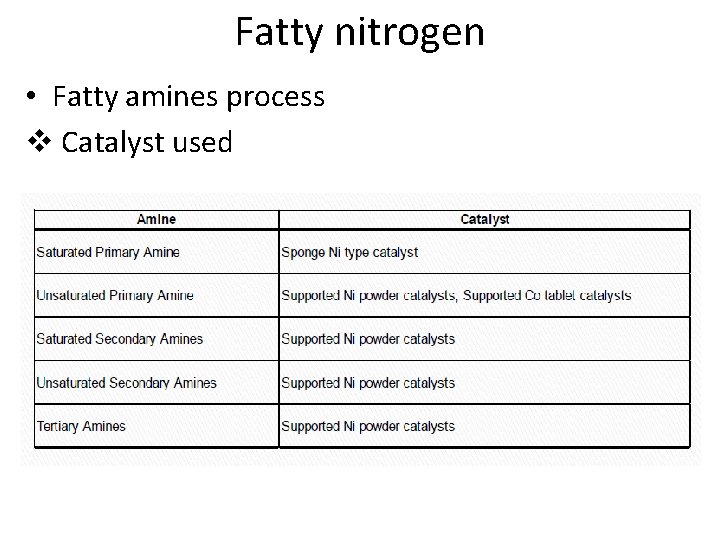
Fatty nitrogen • Fatty amines process v Catalyst used
Fatty nitrogen • Fatty amine - Properties v Amphiphilic substance v water insoluble v Dissolve in organic solvent
Fatty nitrogen • Fatty amines - Uses Ø corrosion inhibitors Ø Emulsifiers
Oleochemicals • Oleochemicals: chemicals derived from plant and animal fats. • - 5 basic oleochemical substances: Fatty acids Methyl ester (other alkyl) Fatty alcohol Fatty nitrogen Glycerin/ glycerol
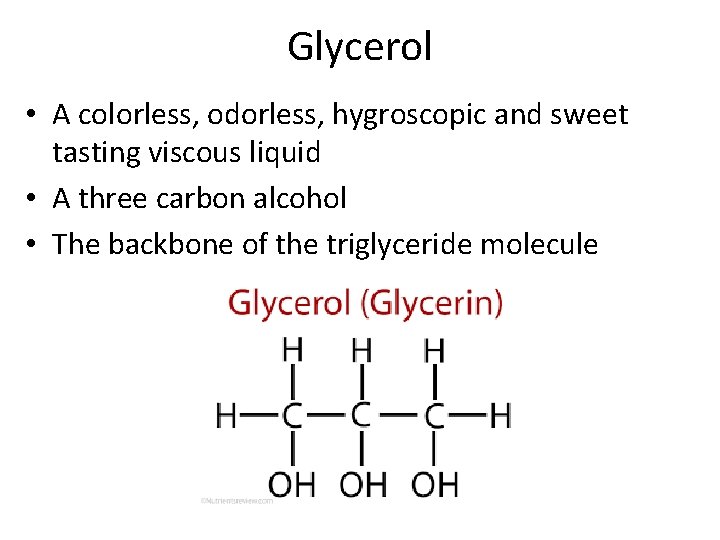
Glycerol • A colorless, odorless, hygroscopic and sweet tasting viscous liquid • A three carbon alcohol • The backbone of the triglyceride molecule
Glycerol • Other names: Ø Propane-1, 2, 3 -triol Ø Glycerin Ø 1, 2, 3 -propanetriol
Sources of Glycerin • Natural – Soap production (soap lye) – Fat splitting – Methyl ester production • Synthetic - Using propylene
Properties of glycerin • Glycerol contains one secondary and two primary alcohol groups per molecule • Reacts with organic and inorganic acids to form aldehydes, esters, ethers and etc. • The presence of multiple alcohol groups facilitates the formation of polymers and coatings – Polyglycerol ester – Alkyd resins (use in paints as ‘binder’, glycerin + phthalic acid)
Properties of glycerin • • Non-toxic Water soluble (3 OH group) Viscous Hygroscopic
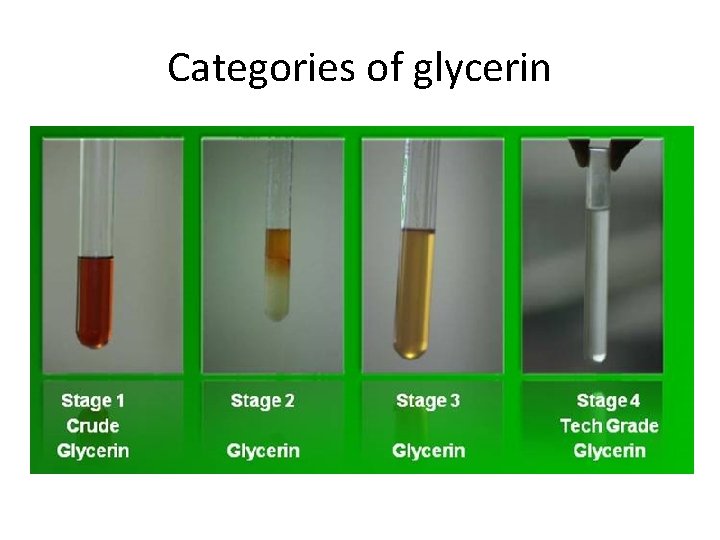
Categories of glycerin • Crude glycerin (80% Purity) Ø Byproduct produced during transesterification in the biodiesel production process • Technical grade glycerin (85 – 97% Pure) Ø Purification process required Ø Suitable for industrial type application • Refined glycerin( > 99. 7% Pure)
Categories of glycerin • Refined glycerin( > 99. 7% Pure) Ø USP (United States Pharmacopeia) and FCC (Food Chemical Codex) grade Ø Used in food, pharmaceutical and cosmetics
Categories of glycerin
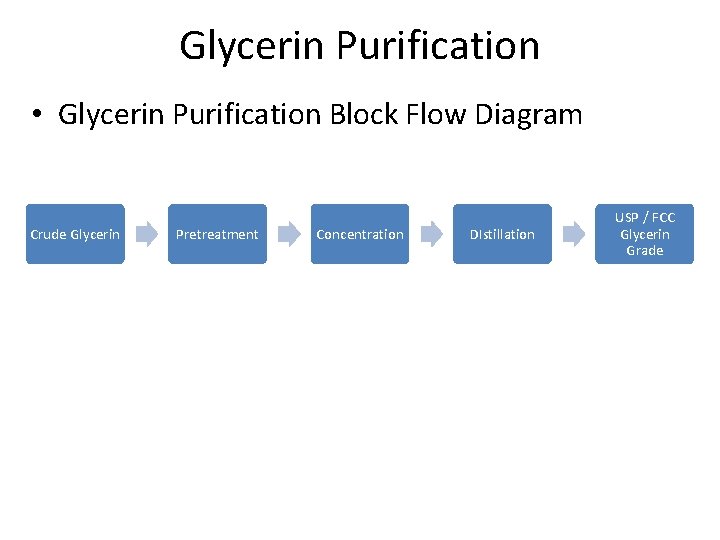
Glycerin Purification • Glycerin Purification Block Flow Diagram Crude Glycerin Pretreatment Concentration DIstillation USP / FCC Glycerin Grade
Glycerin Purification • Pretreatment Ø Involve acidifying with strong acid to remove soaps + catalyst Ø Acid + Soaps -> free fatty acids Ø Acid + base catalyst -> salt + water Ø Acidification give 3 layer: - FFA (top layer) - glycerol (middle layer) - Inorganic salt (bottom)
Glycerin Purification • Concentration Ø Excess methanol is used during the transesterification process Ø Has to be removed Ø Method used: - Rotary Evaporator - Falling Film Evaporators (most industrial used this, prevent glycerol decomposition) Ø Glycerol concentration after this step: 85 %
Glycerin Purification • Purification and Refinery/ Distillation Ø 3 methods can be used: - Vacuum Distillation o p. H, temp and pressure must be controlled o Costly - Ion Exchange Adsorption o remove fatty acid, salt, free ion impurities - Adsorption using activated carbon o activated C used to adsorb fatty acid
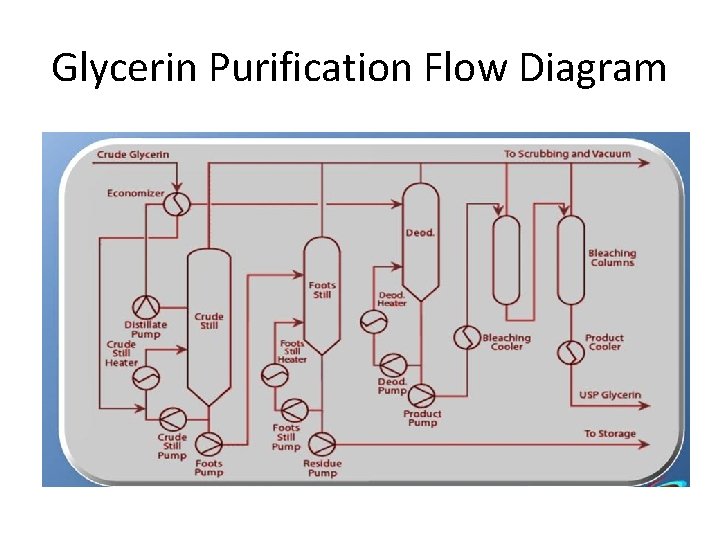
Glycerin Purification Flow Diagram
Glycerin application • Sweetener • Humectant • Used in surface coatings and paints
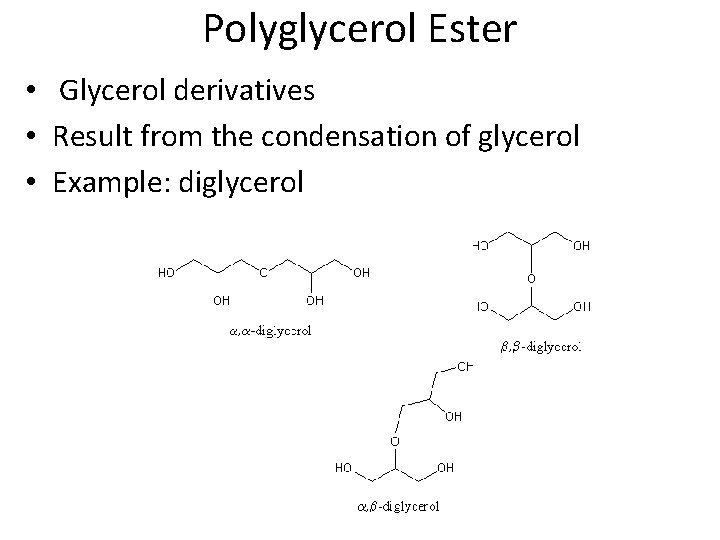
Polyglycerol Ester • Glycerol derivatives • Result from the condensation of glycerol • Example: diglycerol
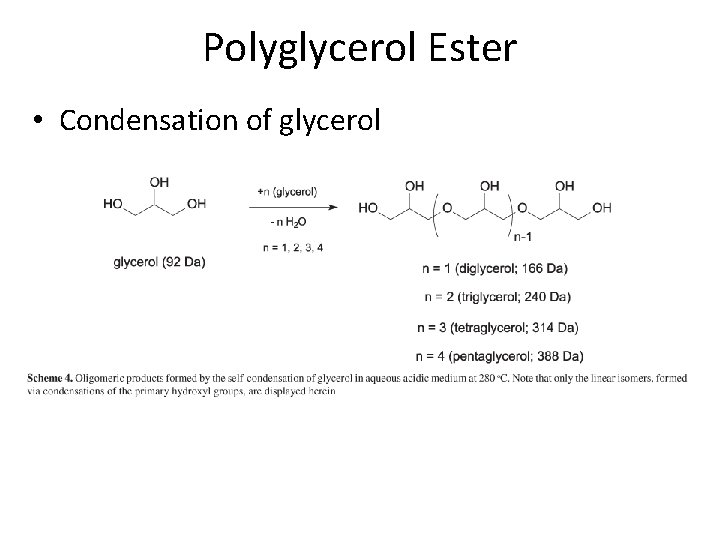
Polyglycerol Ester • Condensation of glycerol
Polyglycerol Ester • Properties: - Degradable - Amphiphilic character
Polyglycerol Ester • Uses: Ø In cosmetics, used as emulsifier, final mixture stabilizer in skin cleanser, baby creams, moisturizing cream etc. Ø Replacement for fats to reduce human calorie consumption --PE were found to resist hydrolysis by digestive enzymes
Surfactant • Surfactant: Organic compounds that contain both hydrophobic and hydrophilic groups, and are thus semi-soluble in both organic and aqueous solvents • Surface active molecules because of their amphiphilic nature • Compounds that lower the surface tension (or interfacial tension) between two liquids or between a liquid and a solid
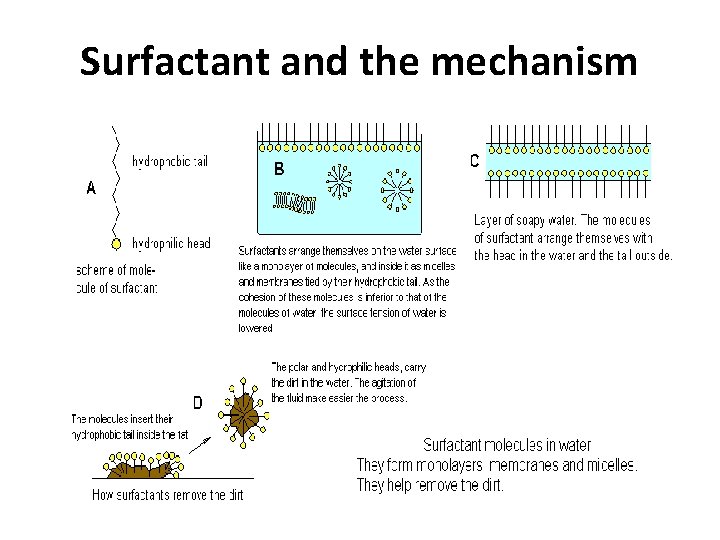
Surfactant and the mechanism
Surfactant • One part of the surfactant molecule contain lipophilic (hydrophobic) and other part (the polar head group) contain hydrophilic/ lipophobic • Balance between the forces is important property of surfactant molecule • The forces can be defined as hydrophobic lipophilic balance (HLB)
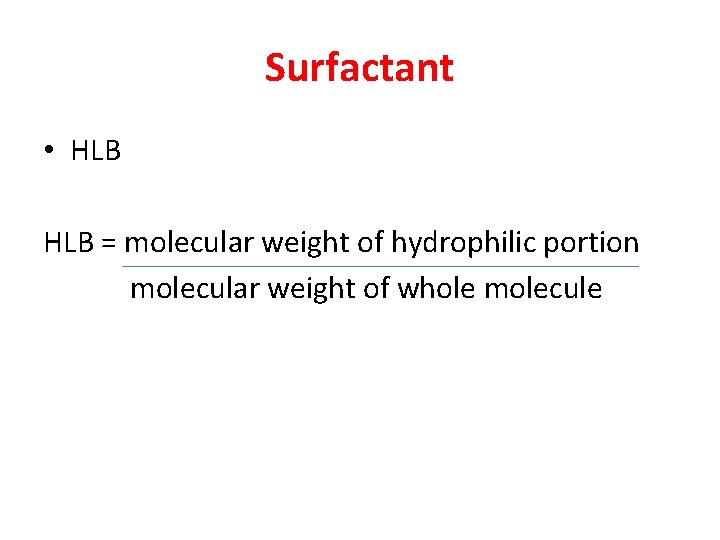
Surfactant • HLB = molecular weight of hydrophilic portion molecular weight of whole molecule
Surfactant • Hydrophobic lipophilic balance (HLB) Ø HLB value is a values to serve as a measure of the Hydrophile - Lipophile Balance (HLB) of surface active agents. Ø HLB is the ratio of oil soluble and water-soluble portions of a molecule. Ø HLB value is increased with increased hydrophilic nature, and decreased hydrophobic nature of surfactant.
Surfactant • Depends on HLB properties, appropriate amphiphilic molecules influence a range of important surfactant properties • Important surfactant properties such as: Ø emulsification Ø Foaming Ø Lubricity Ø Detergency
Surfactant • Example: - Emulsifiers need to have HLB value of 5 -6 - Detergents need to have value of 13 - 15
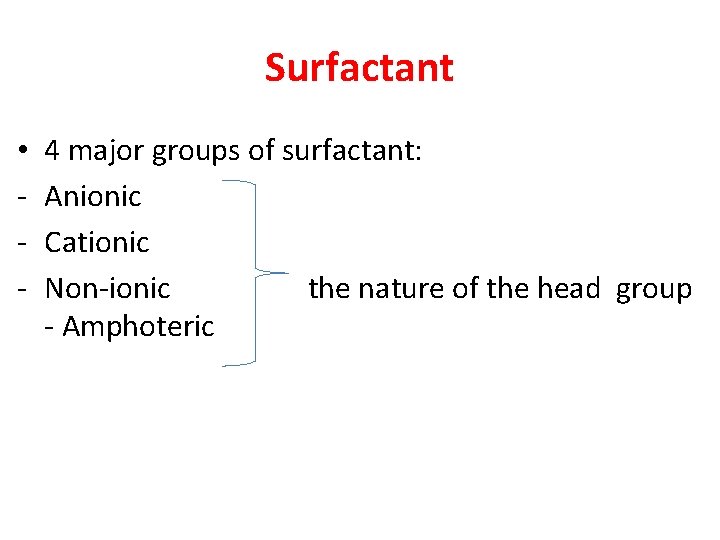
Surfactant • - 4 major groups of surfactant: Anionic Cationic Non-ionic the nature of the head group - Amphoteric
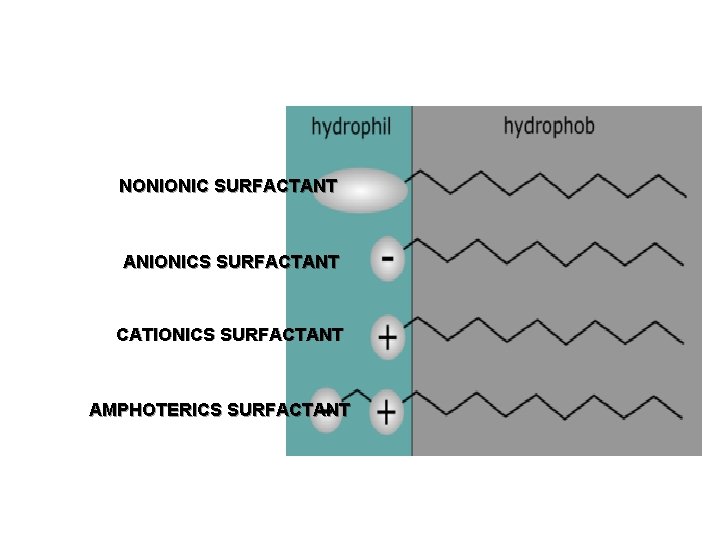
NONIONIC SURFACTANT ANIONICS SURFACTANT CATIONICS SURFACTANT AMPHOTERICS SURFACTANT
Surfactant • Anionic surfactant Ø water soluble and have a negative charge in aqueous solution Ø They ionize (are converted to electrically charged particles) in solution, carry a negative charge, have excellent cleaning properties and generally are high sudsing (foaming) Ø Tend to be flaky/ powder when dry
Surfactant • Anionic surfactant Ø Example: Linear alkylbenzene sulfonate, alcohol ethoxysulfates, alkyl sulfates and soap are the most common anionic surfactants. Ø Uses: laundry and hand dishwashing detergents; household cleaners; and personal cleansing products, shampoo
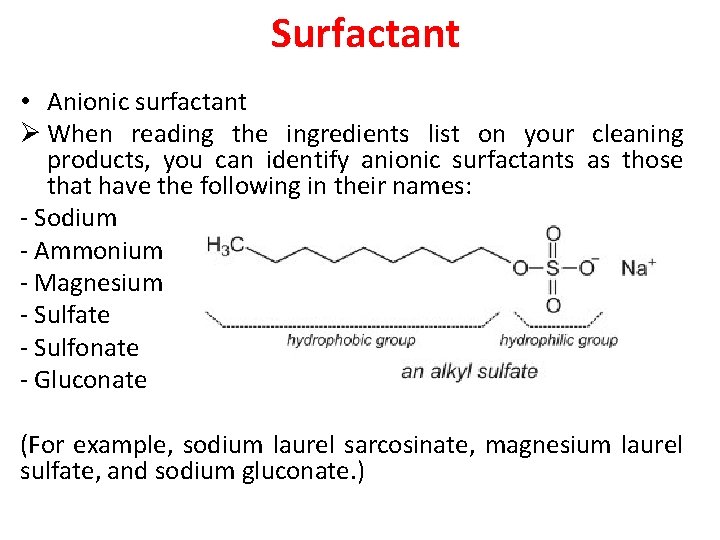
Surfactant • Anionic surfactant Ø When reading the ingredients list on your cleaning products, you can identify anionic surfactants as those that have the following in their names: - Sodium - Ammonium - Magnesium - Sulfate - Sulfonate - Gluconate (For example, sodium laurel sarcosinate, magnesium laurel sulfate, and sodium gluconate. )
Surfactant • Cationic Surfactant Ø Cationic surfactants have a positive charge in aqueous solution. Ø No wash activities effect, less/ none used in cleansing products. Ø Have antimicrobial properties. Ø Provide softening, anti-static effect Ø Use: in fabric softeners and in fabric-softening laundry detergents.
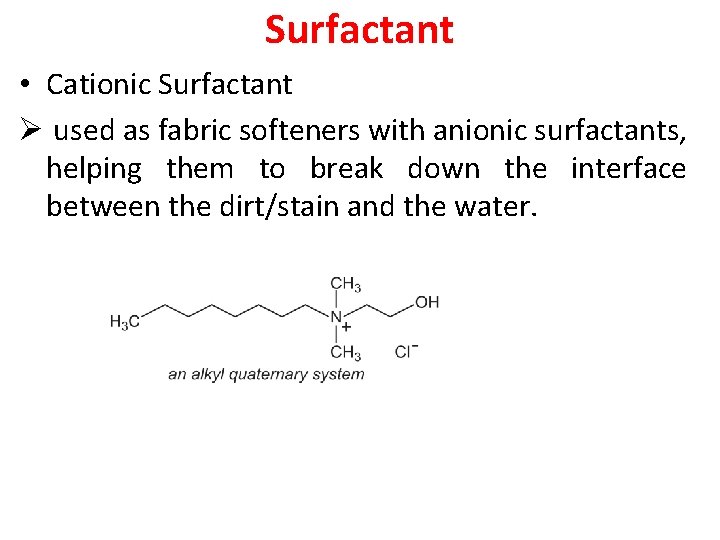
Surfactant • Cationic Surfactant Ø used as fabric softeners with anionic surfactants, helping them to break down the interface between the dirt/stain and the water.
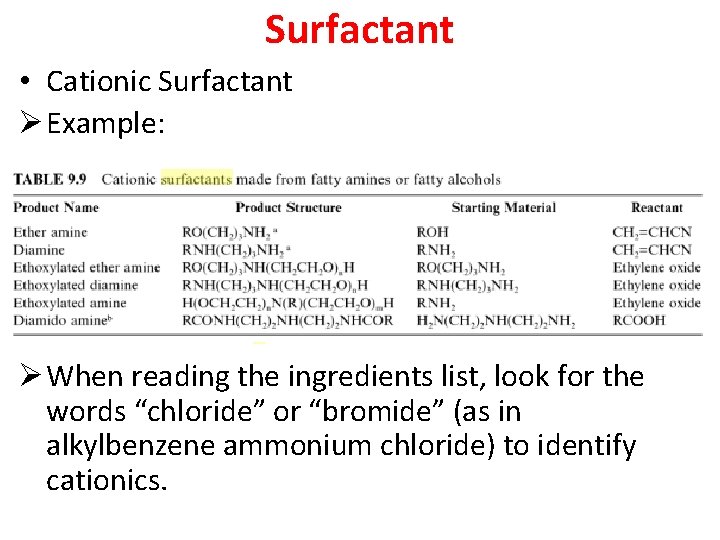
Surfactant • Cationic Surfactant Ø Example: Ø When reading the ingredients list, look for the words “chloride” or “bromide” (as in alkylbenzene ammonium chloride) to identify cationics.
Surfactant • Non-ionic Ø no charge in aqueous solutions. Ø Nonionic surfactants are low sudsing and are typically used in laundry and automatic dishwasher detergents and rinse aids. Ø Do not interact with calcium and magnesium ions in hard water. Ø often used together with anionic surfactants
Surfactant • Non-ionic Ø Although they do not contain an ionic group as their hydrophilic component, hydrophilic properties are conferred on them by the presence of a number of oxygen atoms in one part of the molecule which are capable of forming hydrogen bonds with molecules of water.
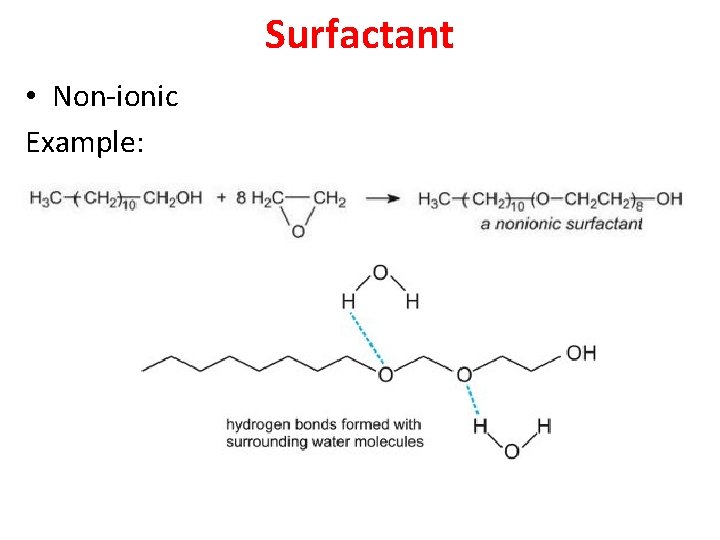
Surfactant • Non-ionic Example:
Surfactant • Non-ionic Ø As the temperature of the surfactant solution is increased the hydrogen bonds gradually break causing the surfactant to come out of solution Ø Nonionics are more surface active and better emulsifiers than anionics at similar concentrations Ø less soluble than anionics in hot water and produce less foam.
Surfactant • Non-ionic Ø more efficient in removing oily and organic dirt than anionics. Ø Depending on the type of fibre, they can be active in cold solution and so are useful in countries which lack hot water supplies and in developed countries where there is a desire to lower the wash temperatures either to save energy or because of the type of fabric being washed
Surfactant • Nonionics Ø used in fabric washing detergents (both powders and liquids), in hard surface cleaners
Surfactant • Amphoteric Ø a negative or positive charge depending on whether the solution is alkaline or acidic. Ø Amphoteric surfactants are used in personal cleansing and household cleaning products for their mildness, sudsing and stability. Ø contain a quaternary ammonium ion (a cation)
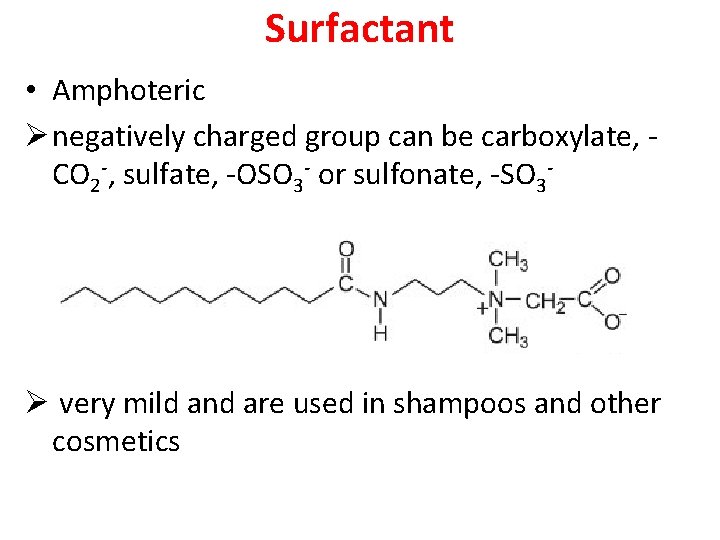
Surfactant • Amphoteric Ø negatively charged group can be carboxylate, CO 2 -, sulfate, -OSO 3 - or sulfonate, -SO 3 - Ø very mild and are used in shampoos and other cosmetics
Surfactant • Amphoteric Ø Fatty alcohol as surfactant ü The amphiphilic character of fatty alcohols, which results from the combination of a nonpolar, lipophilic carbon chain with a polar, hydrophilic hydroxyl group, confers surface activity upon these compounds. ü If the hydroxy group of the fatty alcohols is substituted by other, larger hydrophilic groups, the polar character is enhanced and surfactants are obtained.
- Slides: 60