
Older Ethernet Standards Do Not Use Hubs or
Older Ethernet Standards • Do Not Use Hubs or Switches • Daisy-Chain Layouts • 10 Base 5 – 10 Mbps, Baseband, 500 meters per segment (daisy chain) • 10 Base 2 – 10 Mbps, Baseband, 185 meters per segment (daisy chain) – Less expensive than 10 Base 5 – Often called Cheapernet
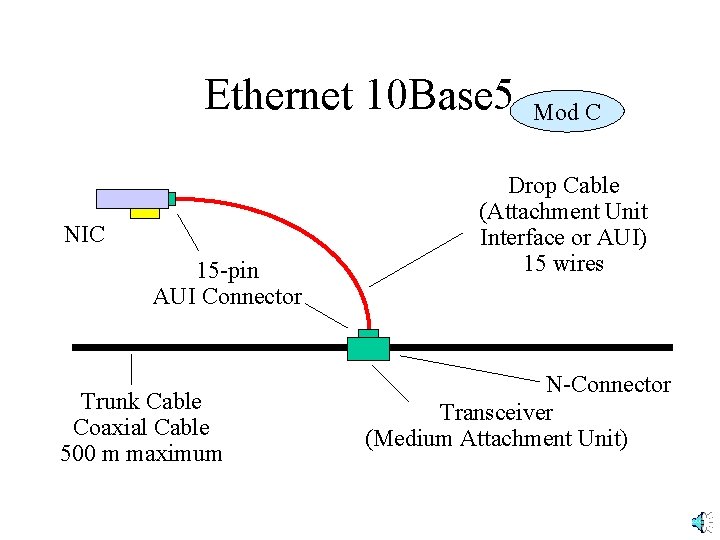
Ethernet 10 Base 5 NIC 15 -pin AUI Connector Trunk Cable Coaxial Cable 500 m maximum Mod C Drop Cable (Attachment Unit Interface or AUI) 15 wires N-Connector Transceiver (Medium Attachment Unit)
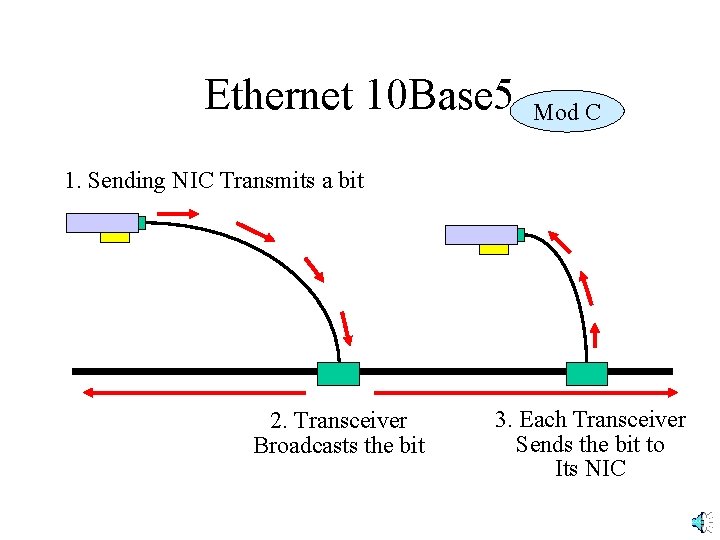
Ethernet 10 Base 5 Mod C 1. Sending NIC Transmits a bit 2. Transceiver Broadcasts the bit 3. Each Transceiver Sends the bit to Its NIC
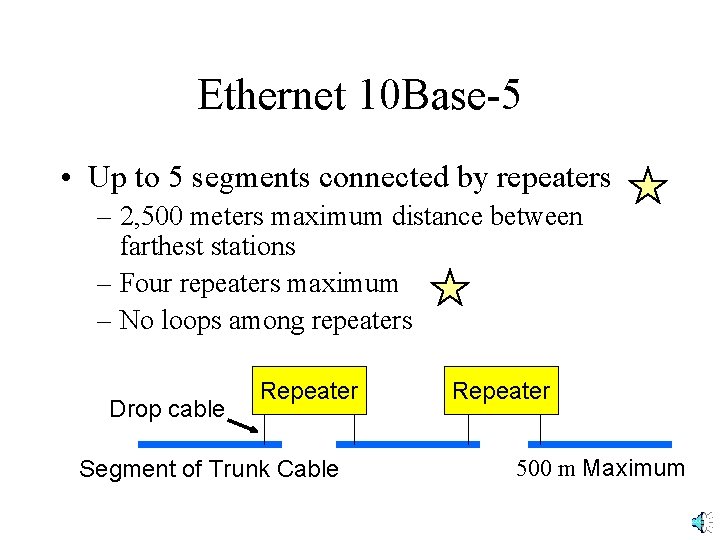
Ethernet 10 Base-5 • Up to 5 segments connected by repeaters – 2, 500 meters maximum distance between farthest stations – Four repeaters maximum – No loops among repeaters Drop cable Repeater Segment of Trunk Cable Repeater 500 m Maximum
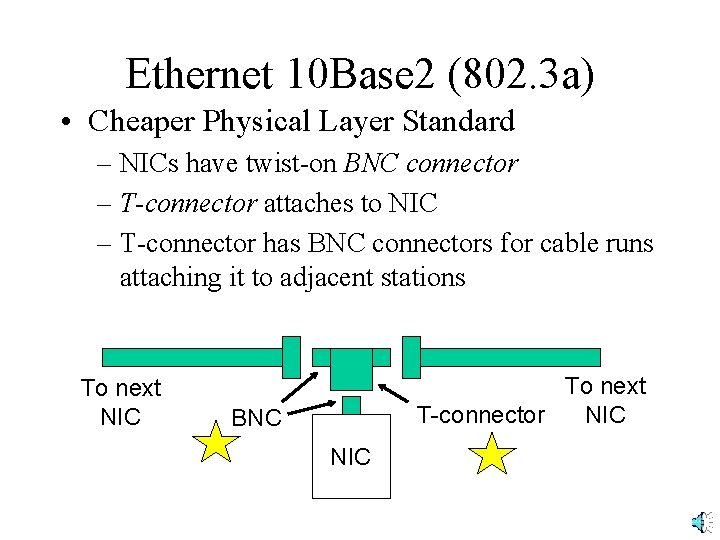
Ethernet 10 Base 2 (802. 3 a) • Cheaper Physical Layer Standard – NICs have twist-on BNC connector – T-connector attaches to NIC – T-connector has BNC connectors for cable runs attaching it to adjacent stations To next NIC To next T-connector NIC BNC NIC
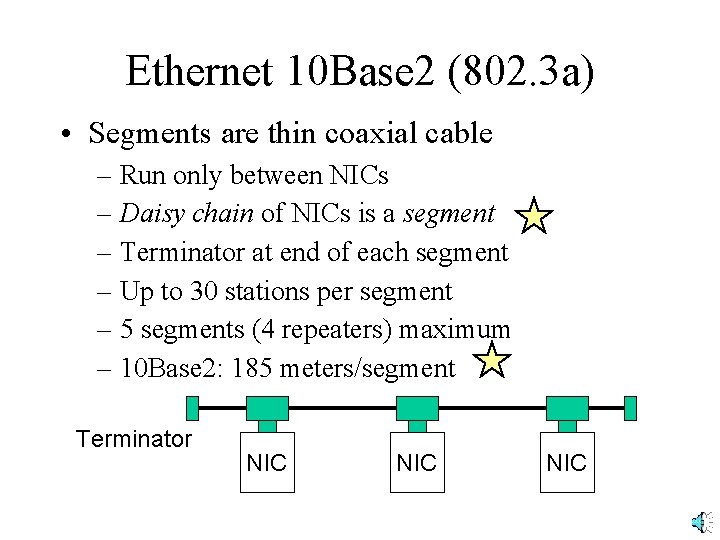
Ethernet 10 Base 2 (802. 3 a) • Segments are thin coaxial cable – Run only between NICs – Daisy chain of NICs is a segment – Terminator at end of each segment – Up to 30 stations per segment – 5 segments (4 repeaters) maximum – 10 Base 2: 185 meters/segment Terminator NIC NIC
- Slides: 6