
Old English Ptur Kntsson 2005 Adjectives Old English
- Slides: 9
Old English Pétur Knútsson 2005 Adjectives
• Old English adjectives can be weak or strong. • Week and strong adjectival declensions: one of the Germanic innovations. • Often called “Definite” and “Indefinite” declensions
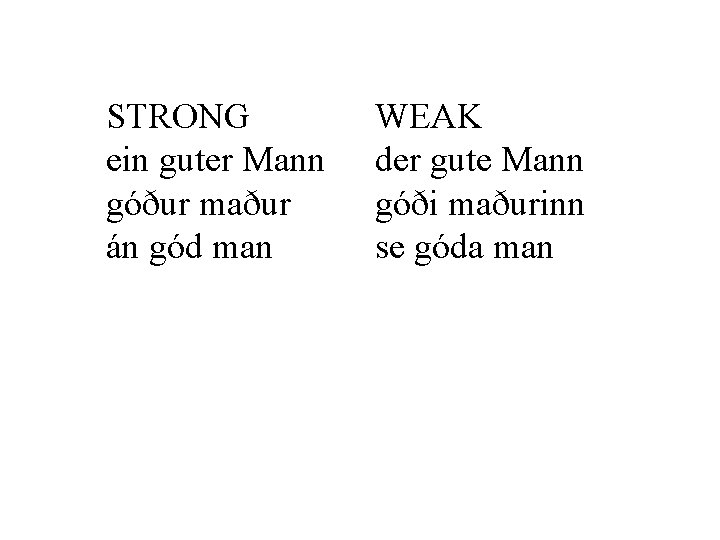
STRONG ein guter Mann góður maður án gód man WEAK der gute Mann góði maðurinn se góda man
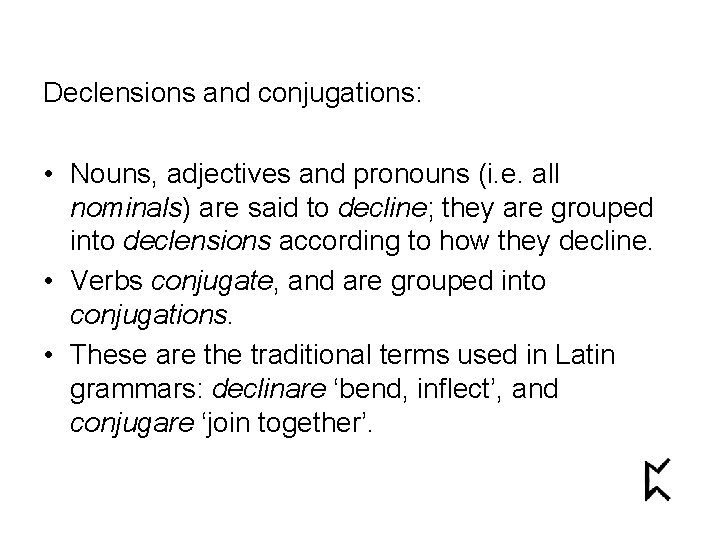
Declensions and conjugations: • Nouns, adjectives and pronouns (i. e. all nominals) are said to decline; they are grouped into declensions according to how they decline. • Verbs conjugate, and are grouped into conjugations. • These are the traditional terms used in Latin grammars: declinare ‘bend, inflect’, and conjugare ‘join together’.
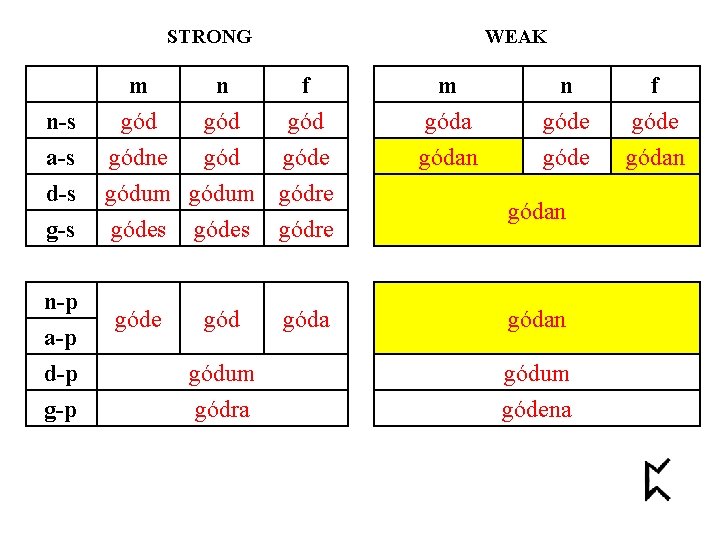
The weak ande strong declensions of adjectives are similar in form to the weak and strong declensions of nouns.
STRONG WEAK n-s a-s d-s m n f gód gódne góde gódum gódre g-s gódes gódre gód góda n-p a-p d-p gódum gódra m gódan n góde gódan gódum gódena f góde gódan
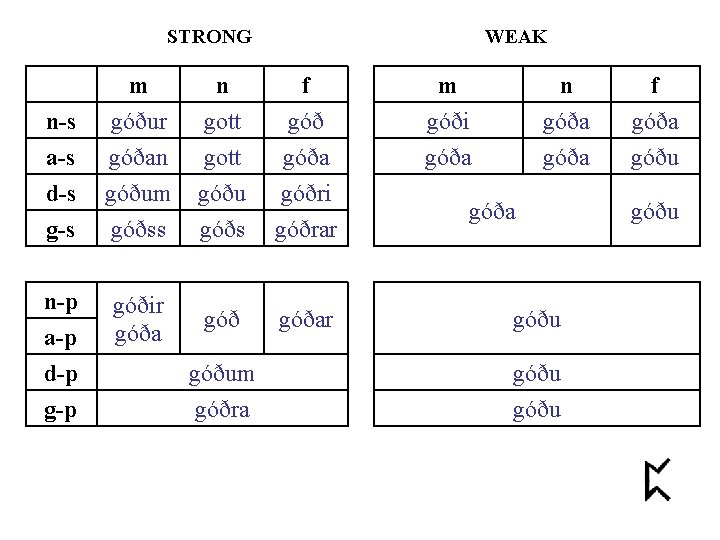
STRONG WEAK n-s a-s d-s m góður góðan góðum n gott góðu f góða góðri g-s góðs góðrar n-p a-p d-p góðir góðar góðum góðra m góði góða n góða góðu f góða góðu
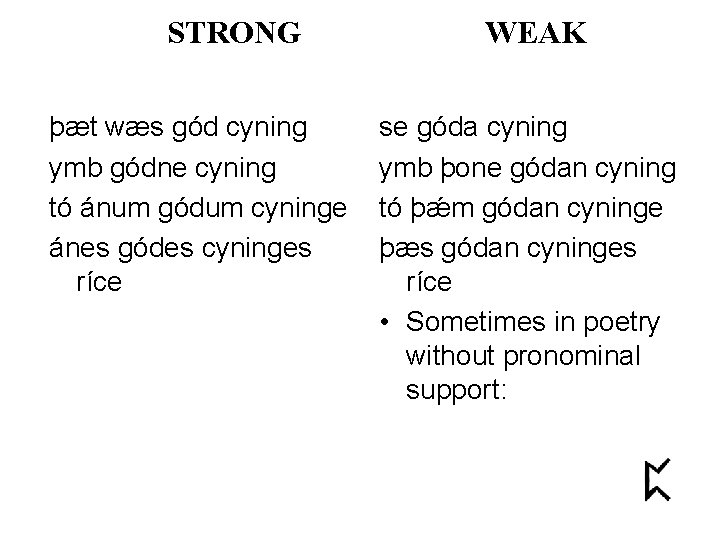
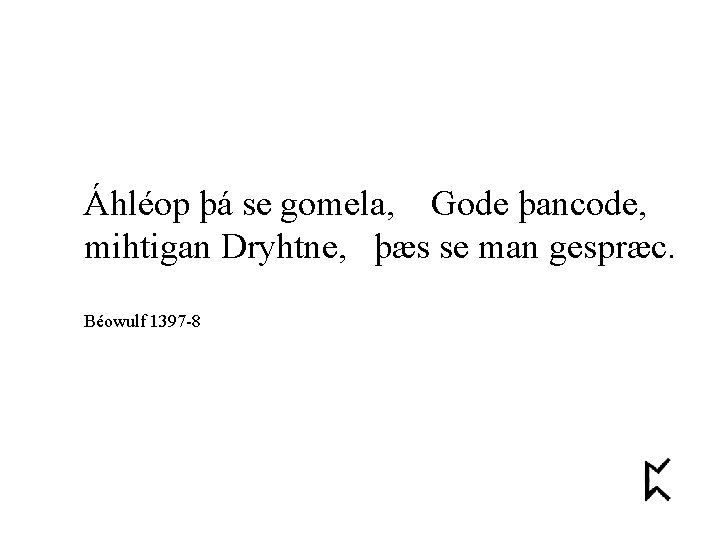
STRONG þæt wæs gód cyning ymb gódne cyning tó ánum gódum cyninge ánes gódes cyninges ríce WEAK se góda cyning ymb þone gódan cyning tó þǽm gódan cyninge þæs gódan cyninges ríce • Sometimes in poetry without pronominal support:
Áhléop þá se gomela, Gode þancode, mihtigan Dryhtne, þæs se man gespræc. Béowulf 1397 -8