
Old and New Atheism Problems in the World
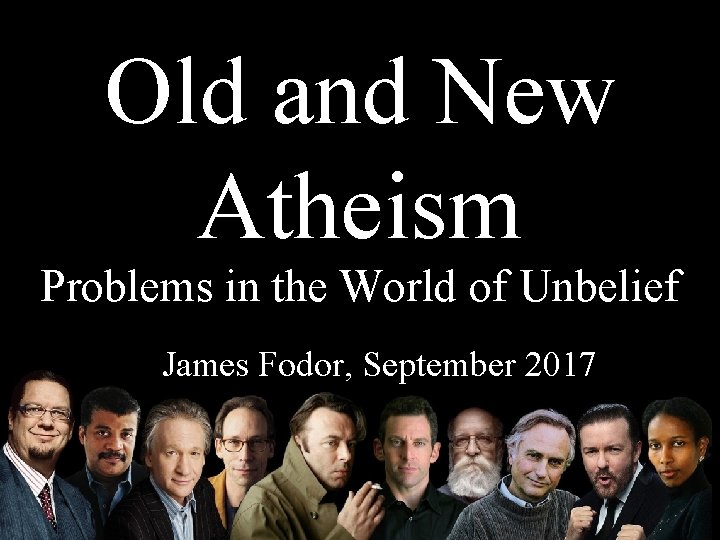
Old and New Atheism Problems in the World of Unbelief James Fodor, September 2017
Key Ideas • Intellectually and philosophically atheism is on the decline • Intellectually and philosophically evangelical Christianity is on the rise • These two developments combined will result in diverse negative consequences
Key Ideas • Old Atheism: 20 th century, more ‘ivory tower’ • New Atheism: 21 st century, more political and combatative
Problems with New Atheism
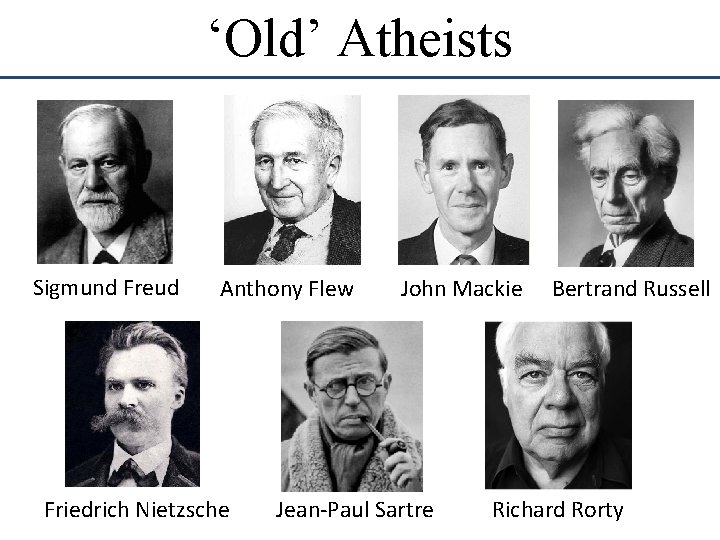
‘Old’ Atheists Sigmund Freud Anthony Flew Friedrich Nietzsche John Mackie Jean-Paul Sartre Bertrand Russell Richard Rorty
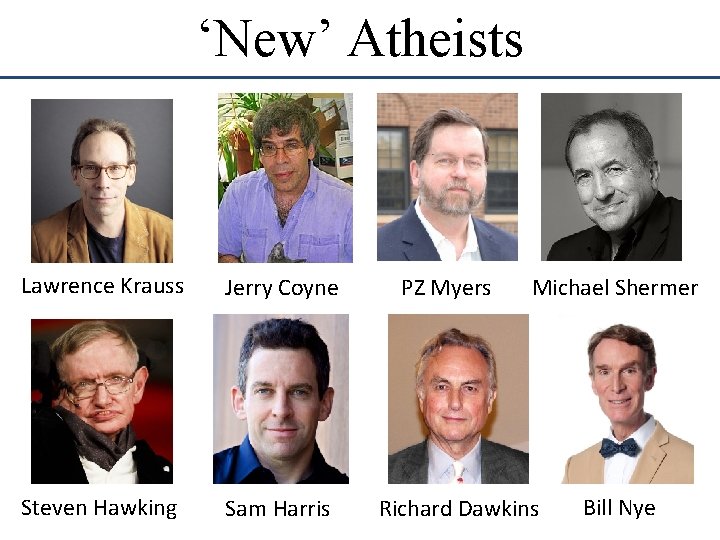
‘New’ Atheists Lawrence Krauss Jerry Coyne Steven Hawking Sam Harris PZ Myers Michael Shermer Richard Dawkins Bill Nye
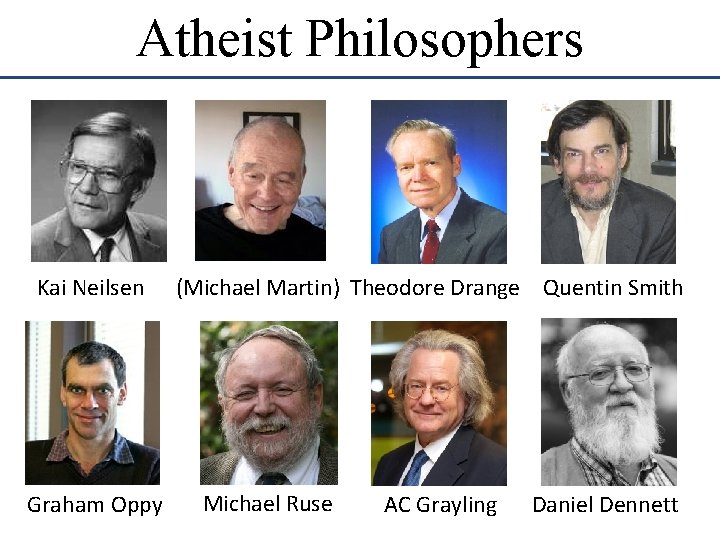
Atheist Philosophers Kai Neilsen Graham Oppy (Michael Martin) Theodore Drange Quentin Smith Michael Ruse AC Grayling Daniel Dennett
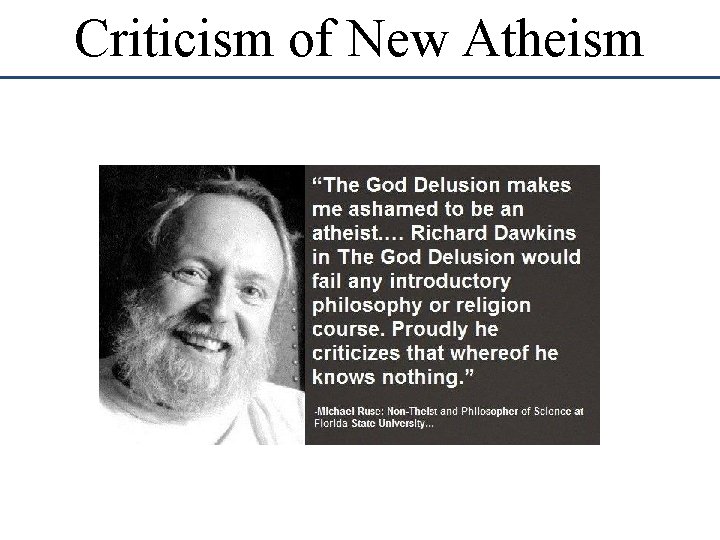
Criticism of New Atheism
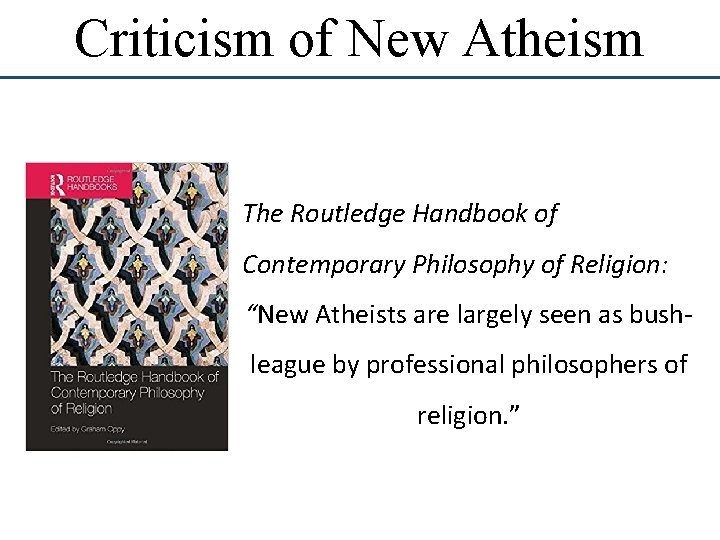
Criticism of New Atheism The Routledge Handbook of Contemporary Philosophy of Religion: “New Atheists are largely seen as bushleague by professional philosophers of religion. ”
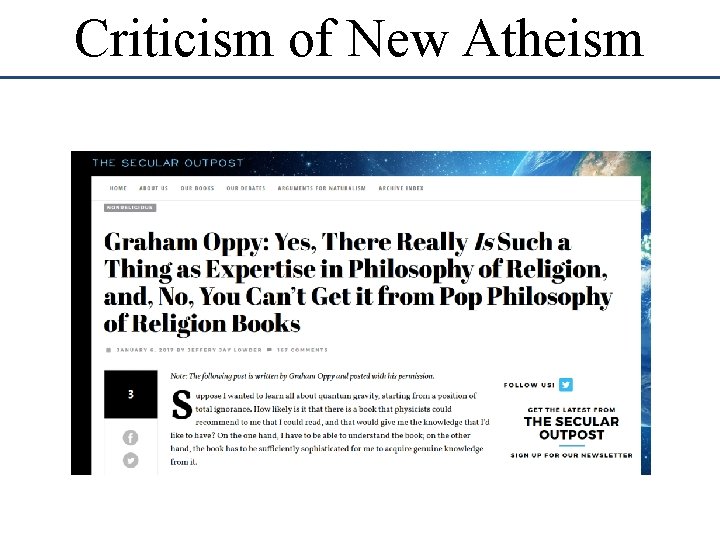
Criticism of New Atheism
Criticism of New Atheism “My assessment of New Atheism as a movement is that it represents a shift away from the philosopher and towards the scientist, and consequently has led to a relative decline in the intellectual standing of atheism as a worldview. Indeed, whilst New Atheism has been successful in raising the profile of non-belief and in drawing greater attention to the harm and injustice perpetrated in the name of religion, I believe it has failed in its endeavour to provide a rigorous, carefully constructed, philosophically defensible account of the world around us and our place within it. ”
Rise of Christian Apologetics
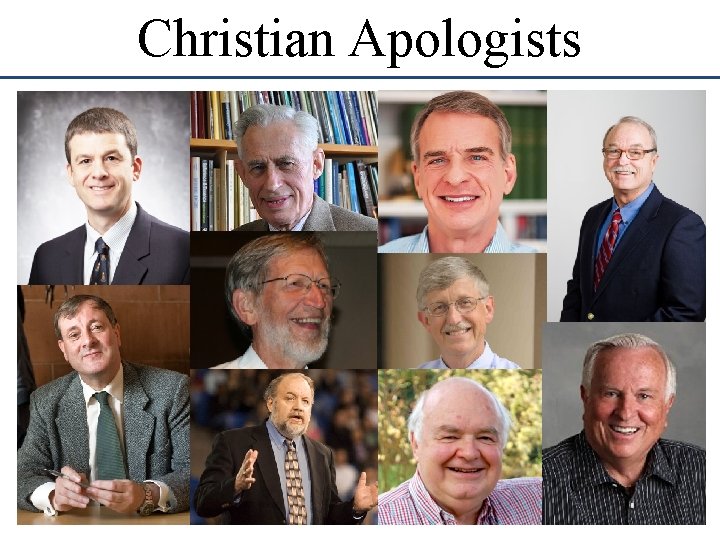
Christian Apologists
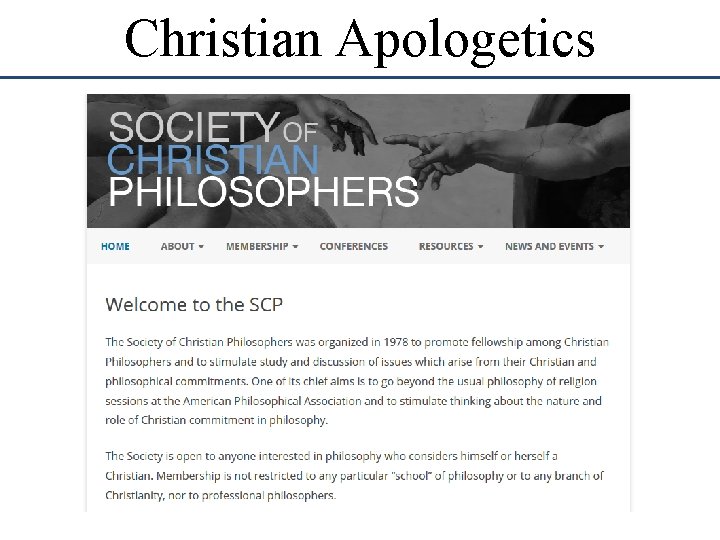
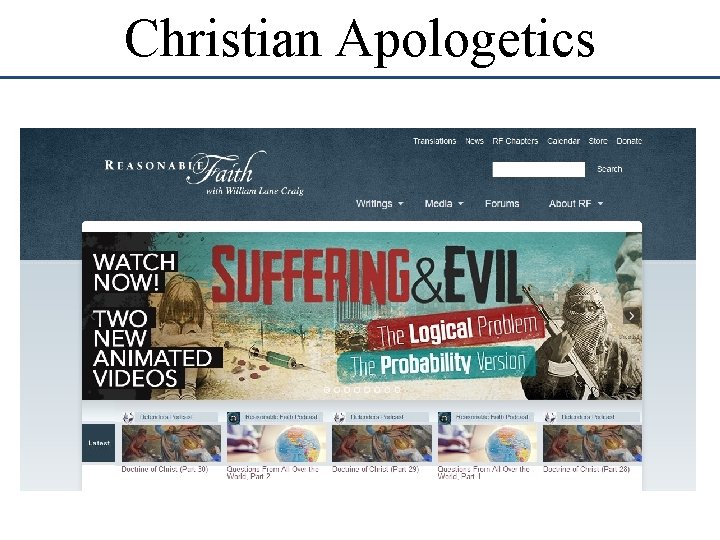
The Christian Resurgence “Since the late 1960 s Christian philosophers have been coming out of the closet and defending the truth of the Christian worldview with philosophically sophisticated arguments in the finest scholarly journals and professional societies. . . Today Philosophy of Religion flourishes in young journals such as the International Journal for Philosophy of Religion, Religious Studies, Sophia, Faith and Philosophy, Philosophia Christi, American Catholic Philosophical Quarterly, and other journals devoted to the discipline. . . ” - The Revolution in Anglo-American Philosophy, William Lane Craig
The Christian Resurgence “The secularization of mainstream academia began to quickly unravel upon the publication of Alvin Plantinga’s influential book on realist theism, God and Other Minds, in 1967. It became apparent to the philosophical profession that this book displayed that realist theists were not outmatched by naturalists in terms of the most valued standards of analytic philosophy: conceptual precision, rigor of argumentation, technical erudition, and an in-depth defense of an original world-view… God is not ‘dead’ in academia; he returned to life in the late 1960 s and is now alive and well in his last academic stronghold, philosophy departments. ” - The Metaphilosophy of Naturalism, Quentin Smith
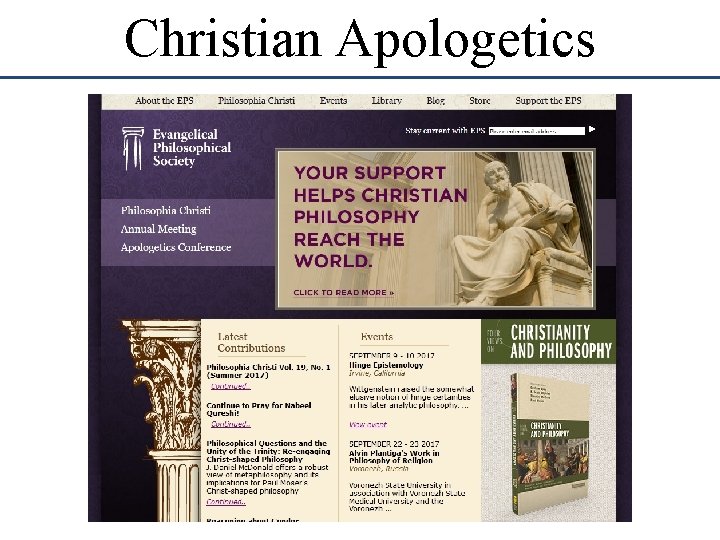
Christian Apologetics
Christian Apologetics
Christian Apologetics
Christian Apologetics
Christian Apologetics
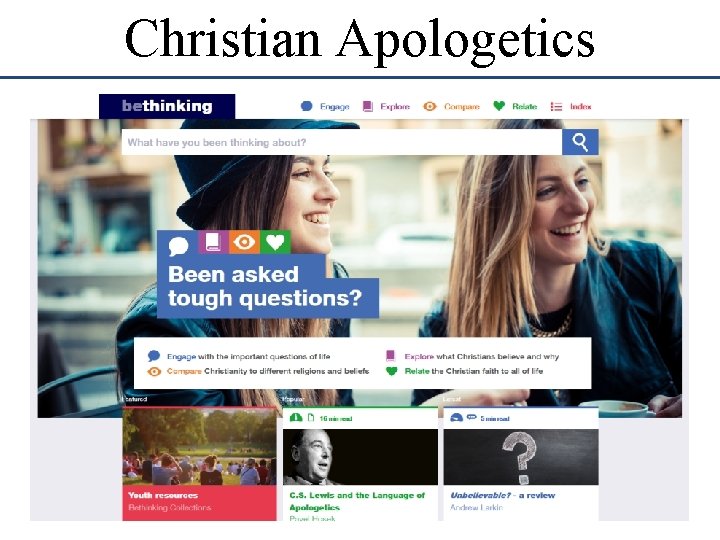
Christian Apologetics
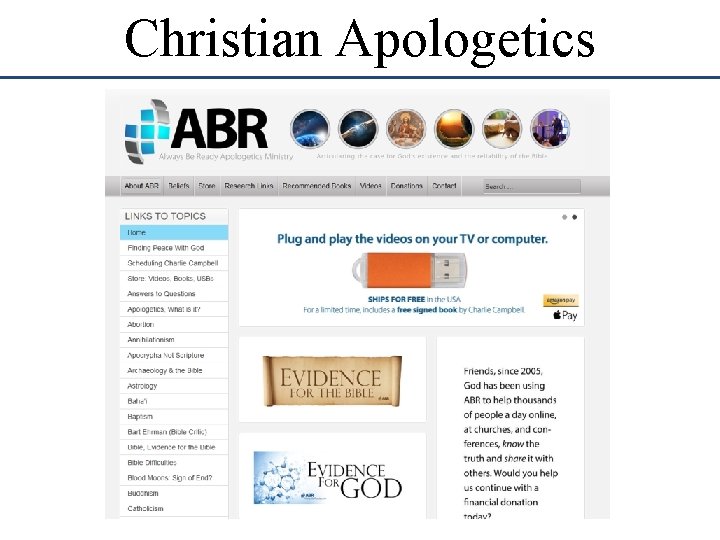
Christian Apologetics
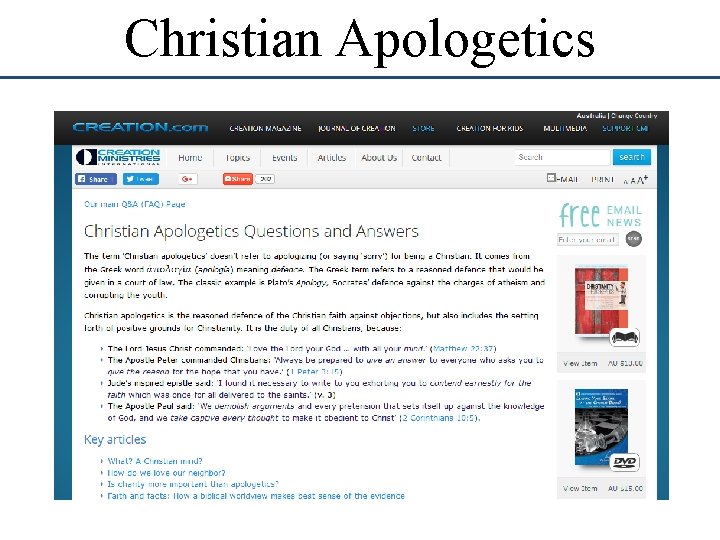
Christian Apologetics
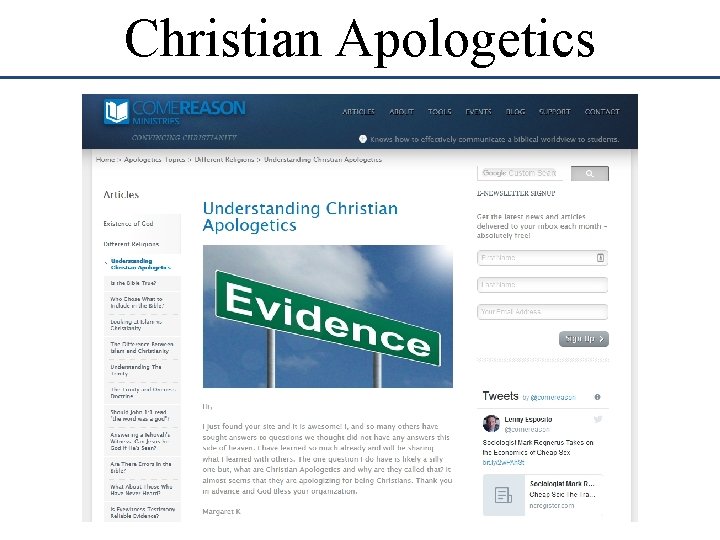
Christian Apologetics
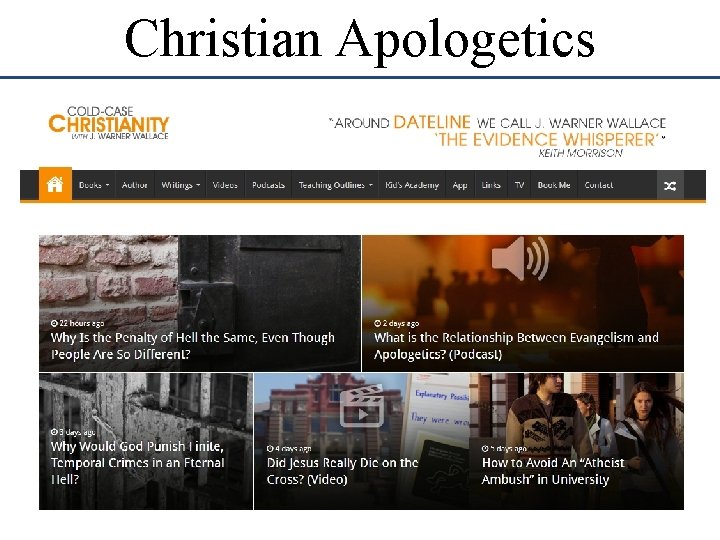
Christian Apologetics
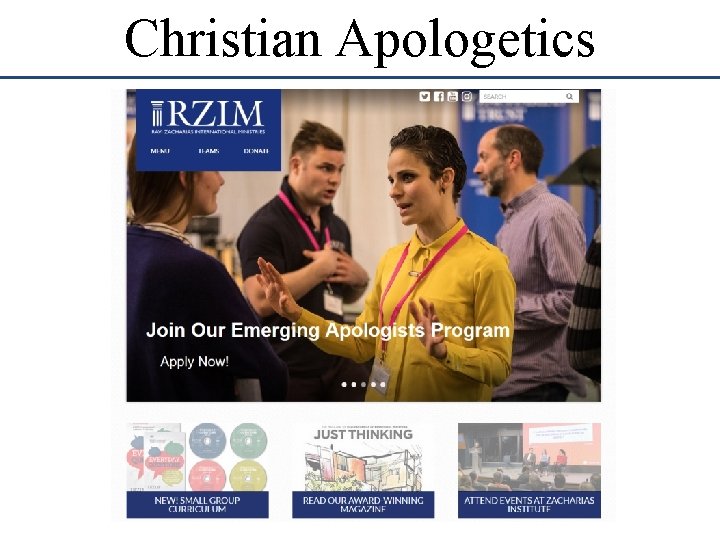
Christian Apologetics
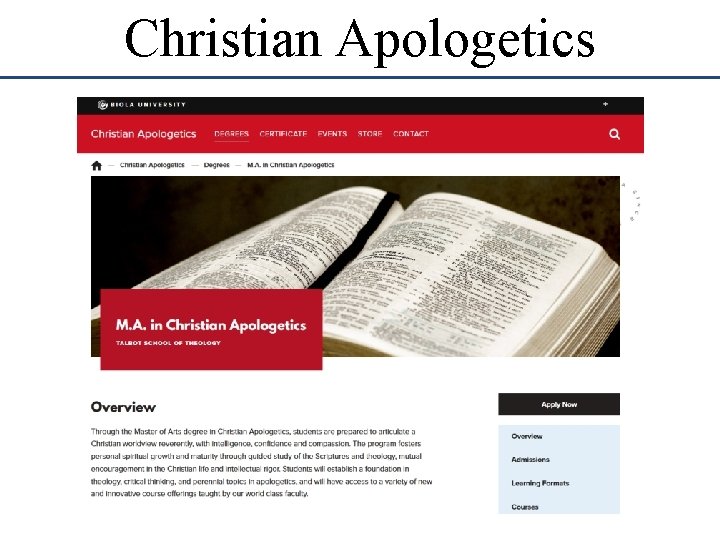
Christian Apologetics
Christian Arguments • William Lane Craig: synthesises old philosophical arguments with new scientific discoveries such as the Borde-Guth-Vilenkin Theorem and quantum cosmology in his Kalam Cosmological Argument • Alvin Plantinga: constructed a version of the ontological argument using modal logic, and built upon work in reliabilist epistemology to develop an argument for belief in God as properly basic • Richard Swinburne: uses principles of inductive logic and Bayesian inference to argue for the Resurrection of Jesus • Francis Collins: argued on the basis of modern findings in molecular biology and neuroscience for the compatibility of Christianity with evolutionary biology
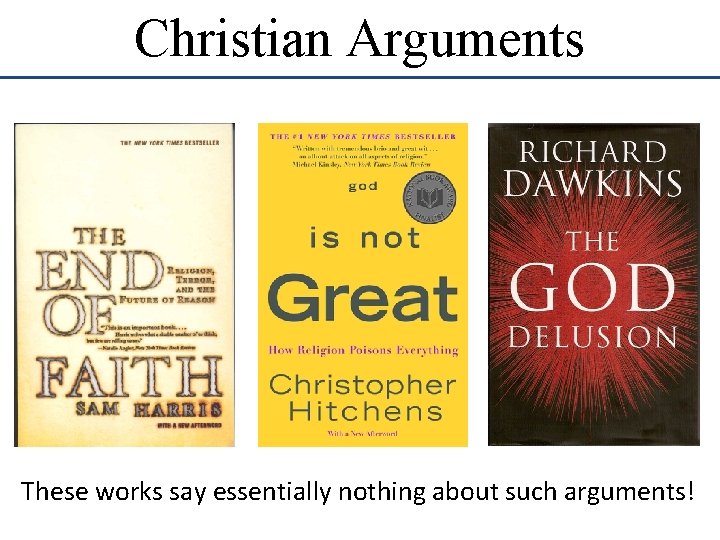
Christian Arguments These works say essentially nothing about such arguments!
Why it Matters
Why it Matters 1. Truth-seeking and developing good arguments is intrinsically important. 2. Christian philosophers divert young talent into less useful endeavours such as apologetics, theology, and Christian ministry. 3. The worldview defended by many evangelical apologists tends to support and sustain socially harmful beliefs.
Why it Matters • Lack of respect for science and scholarship, or an attitude that such things are merely tools for the service and support of existing theological beliefs (‘alt facts’) • Relative lack of interest in environmental conservation (climate change skepticism) • Tendency towards simplistic black and white, legalistic views of morality and justice (criminal justice reform) • Tendency towards simplistic black and white, authoritarian views of truth (Trump)
Why it Matters • General expectation of a special protected place for their views in the public sphere (anti-secularism) • Relative disinterest in and dismissal of the history, culture, beliefs, and achievements of non-Western, non. Christian cultures (racism/xenophobia) • Tendency to oppose protections for LGBT persons and support traditional gender roles (gay marriage) • Opposition to many forms of family planning and sex education (abstinence-only education)
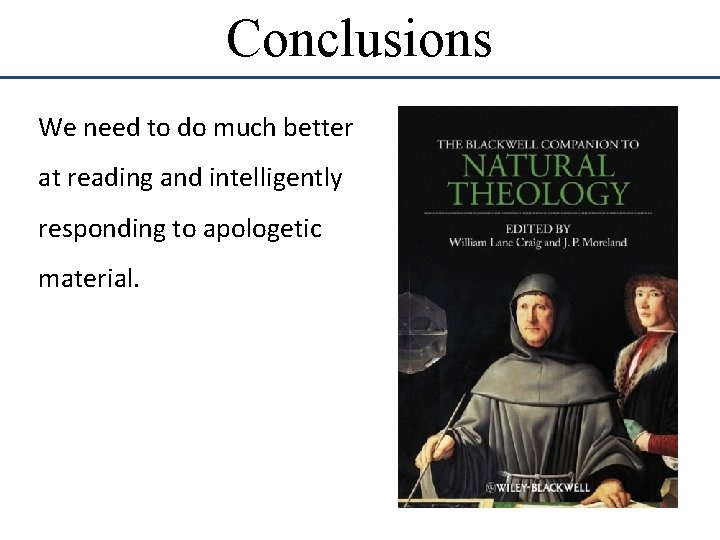
Conclusions We need to do much better at reading and intelligently responding to apologetic material.
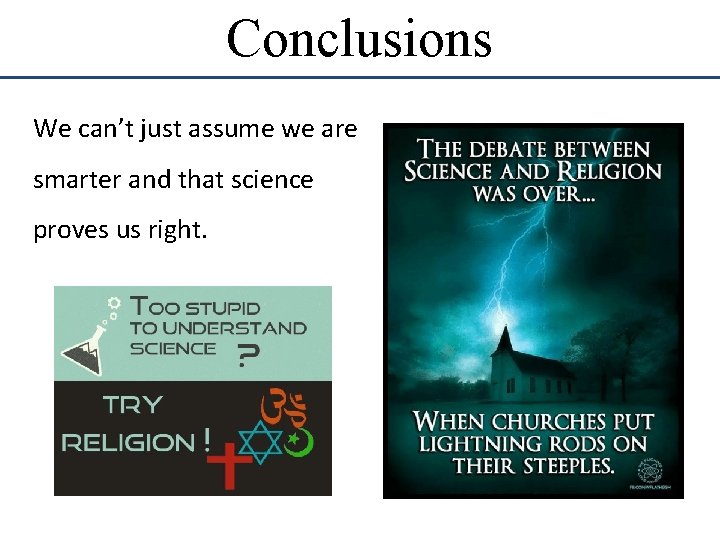
Conclusions We can’t just assume we are smarter and that science proves us right.
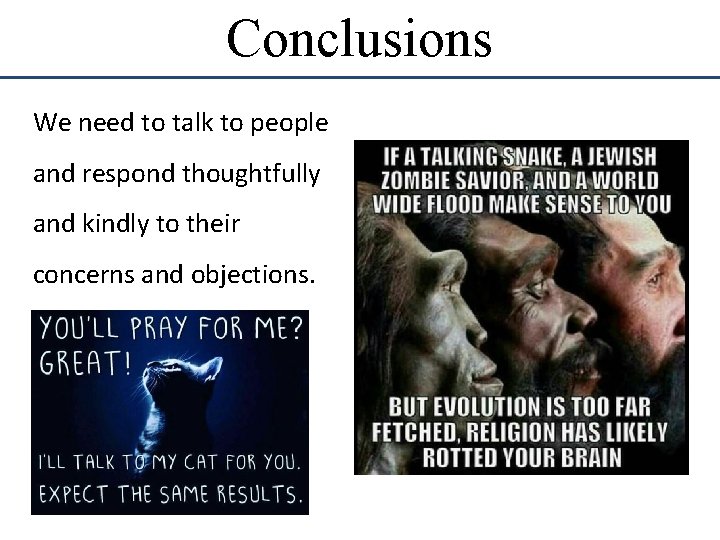
Conclusions We need to talk to people and respond thoughtfully and kindly to their concerns and objections.
- Slides: 36