
Oklahomas Diverse Land Chapter One Ten Geographical Regions
- Slides: 23
Oklahoma’s Diverse Land Chapter One
Ten Geographical Regions High Plains Sandstone Hills Gypsum Hills Prairie Plains Wichita Mountains Ozark Plateau Ouachita Mtns. Red Bed Plains Arbuckle Mtns. Red River Plains
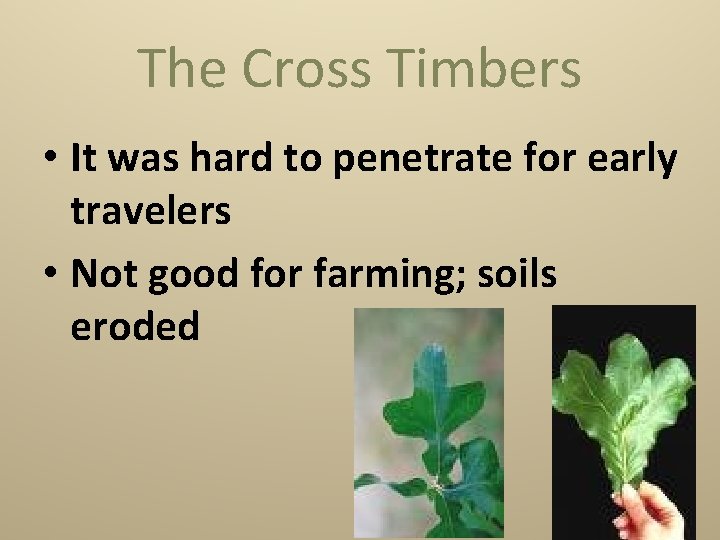
The Cross Timbers • Vegetation zone that cuts across several regions • Post Oak and Blackjack Oak Trees • Forms a natural barrier between west plains and eastern prairies
The Cross Timbers • It was hard to penetrate for early travelers • Not good for farming; soils eroded
Tornado Alley • Variable weather in Oklahoma, seasonal extremes • 53 tornadoes annually • 3 climate regions meet: humid, sub humid, and semiarid
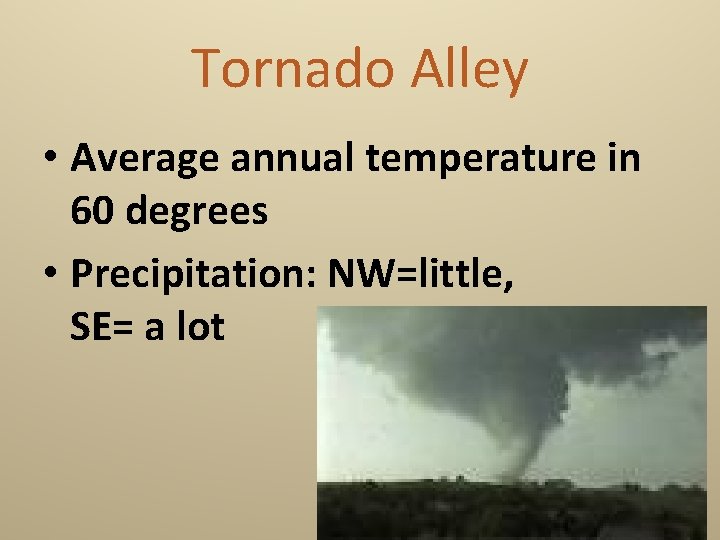
Tornado Alley • Average annual temperature in 60 degrees • Precipitation: NW=little, SE= a lot
Fertile Soils • Among world’s most fertile • SE=least productive due to excessive rain • NW=not as much rain as needed for crops
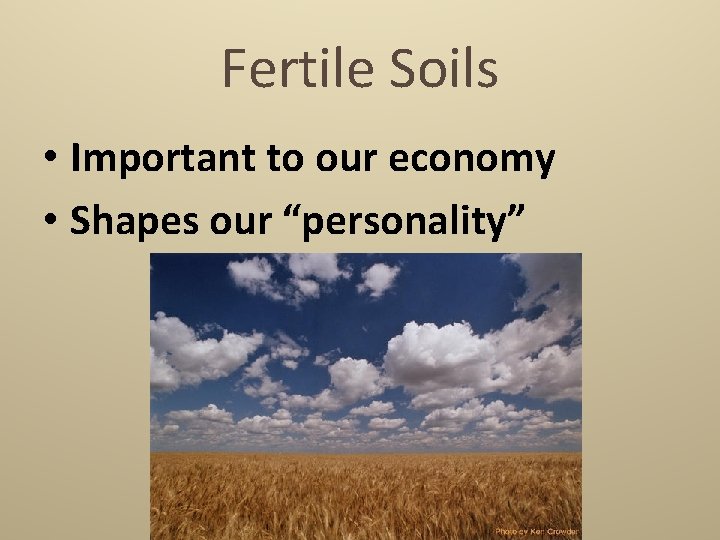
Fertile Soils • Important to our economy • Shapes our “personality”
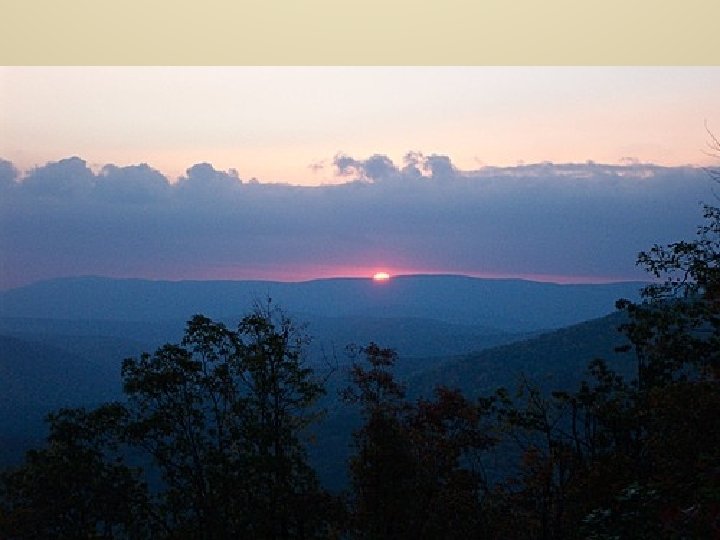
Forest • 1/5 of our land • $ after Civil War • “Cut out and get out”, then a conservation plan • Half a billion $/year business today
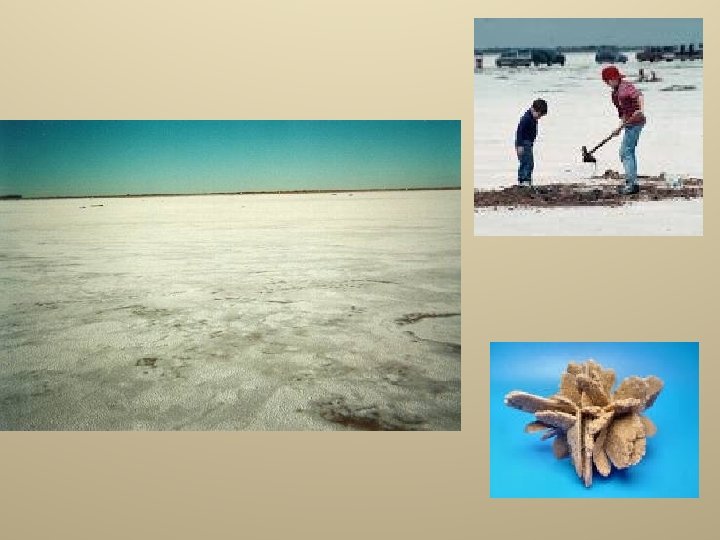
Salt Plains • Alfalfa County has 120 sq. miles of pure salt deposits • Important source for people and animals • National Wildlife Refuge in 1930 • A few other salt springs/flats
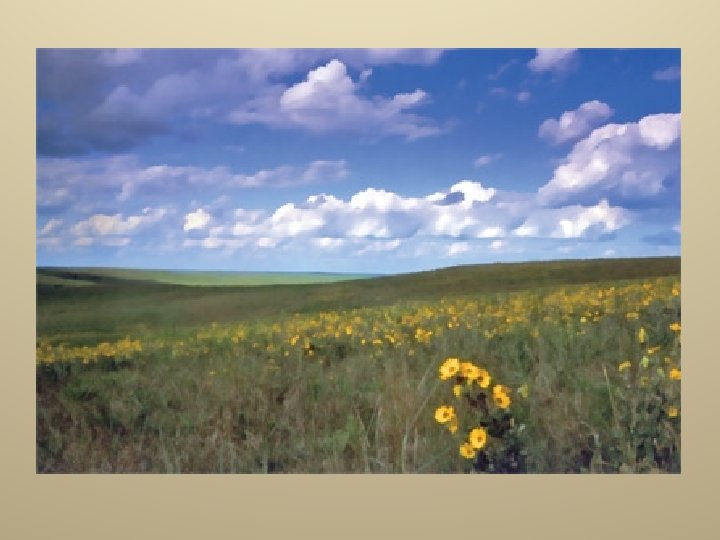
Tallgrass Prairie • Soils are dark and deep • Climate is warm and somewhat wet • Preserve---excessive plowing and grazing destroys grasses (Dust Bowl)
Mesas and Mountains • Black Mesa=highest point in state, dinosaur bones, prehistoric human skeletons, wagon ruts • Wichita Mountains=granite and rhyolite, Mt. Scott
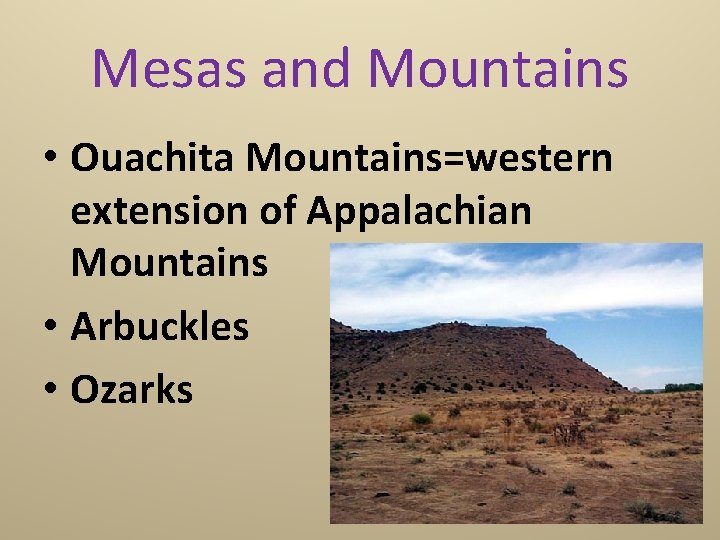
Mesas and Mountains • Ouachita Mountains=western extension of Appalachian Mountains • Arbuckles • Ozarks
Wildlife • Many species due to the variety of the geography • Important to the livelihood of early inhabitants • Songbirds and game birds
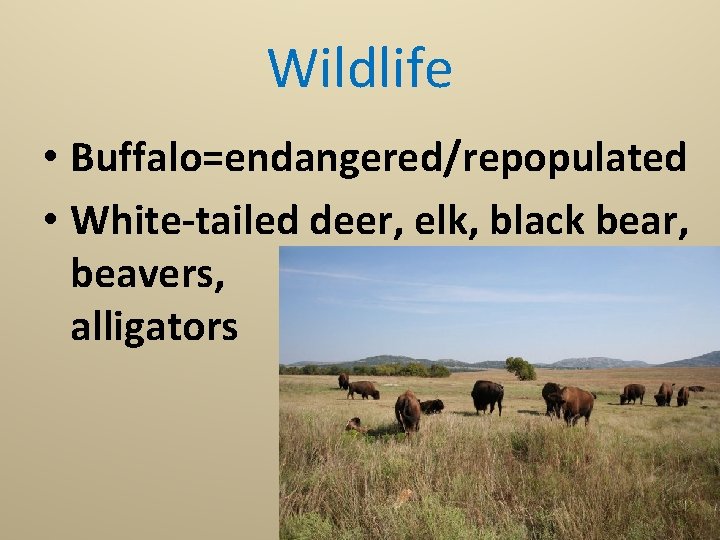
Wildlife • Buffalo=endangered/repopulated • White-tailed deer, elk, black bear, beavers, alligators
Water • Springs=Sulphur, Springs of Everlasting Water • Waterfalls=Turner Falls • Two major river systems=Arkansas (2/3) and Red • Important channels of commerce
Water • Steamboats in 1828 • “Great Raft” on Red • 1946 Mc. Clellan-Kerr Arkansas River Navigation System • Port of Catoosa connected with Mississippi River
Water Conservation • More water carried out of state than into state • Water Banking upstream • 1800 man-made lakes, 34 federal reservoirs
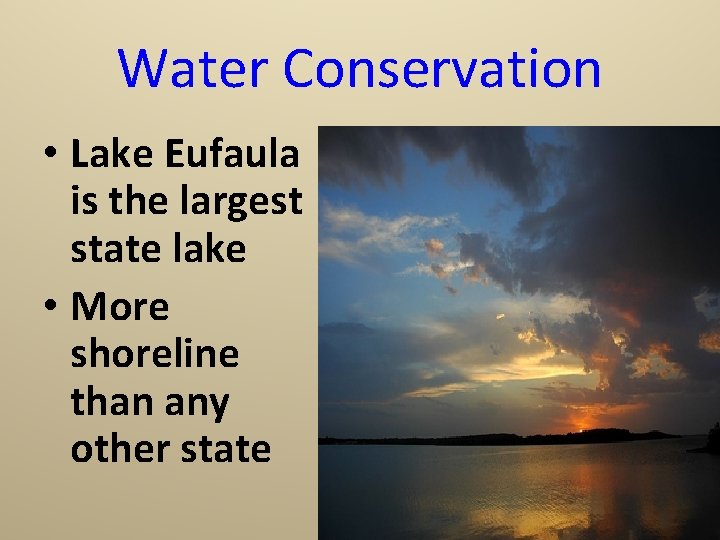
Water Conservation • Lake Eufaula is the largest state lake • More shoreline than any other state
Why is all of this important? Our geography has influenced our history, and therefore it has and does influence our lives today.