
OISBF Audit Preparation Presented by Jacqueline Woodard Director
OISBF Audit Preparation Presented by Jacqueline Woodard Director of Finance Janine Warren Accounting Coordinator October 13, 2020
Audit Requirements • Title 70, Chapter 1, Section 22 – Requires an annual independent audit – Forms and lists can be found here https: //sde. ok. gov/financial -accounting • Auditor must be selected and contract approved by your board by June 30 of the year to be audited (example: FY 20 audit contract must be approved by 6/30/20) • Auditors must be on SDE Approved Auditor List – List comes out in January of every year • After audit is complete, the audit must be approved by your board an audit acknowledgement form completed. Your audit and form must be filed with the SDE by March 31. • Audits will need to be filed with the State Auditor and possibly other entities such as the Federal Clearing House. Please check with your auditors on who files and when they are due. 8. 7%
Audit Preparation • After audit contract is signed/approved, we recommend having a preliminary meeting with your auditor to discuss responsibilities – District and Auditor • Single Audit Required if: Spend more than $750, 000 in total federal funds (Alert! CARES Act funds could push you over this limit!) • Single Audit will require the audit of a specific federal program chosen by your auditor. You will have to provide specific documentation requested by your auditor. • Establish an audit schedule with auditor based on when you plan to take your audit for board approval. Stick with your timelines! • Designate a Point of Contact/Audit Manager at your school • Use Technology – Electronic copies, access to your software system 8. 7%
Audit Types • Cash Basis – Revenue is recorded when cash is received and expenses are recorded when cash is paid to vendors and employees. Most Oklahoma schools are cash basis. • Example: Receive Title I FY 20 reimbursement on 7/21/20. Payment is recorded in FY 21. • Accrual Basis – Revenue is recorded when earned and expenses are recorded when consumed. • Example: Receive Title I FY 20 reimbursement on 7/21/20. Payment is recorded in FY 20. Know which audit applies to your school! 8. 7%
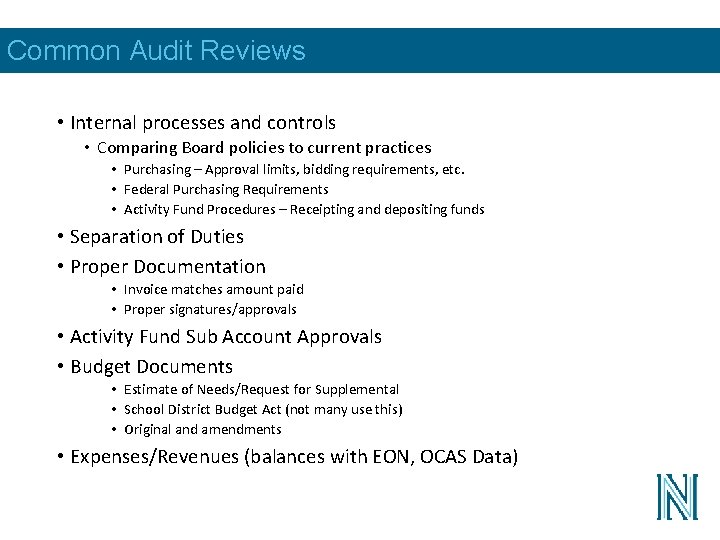
Common Audit Reviews • Internal processes and controls • Comparing Board policies to current practices • Purchasing – Approval limits, bidding requirements, etc. • Federal Purchasing Requirements • Activity Fund Procedures – Receipting and depositing funds • Separation of Duties • Proper Documentation • Invoice matches amount paid • Proper signatures/approvals • Activity Fund Sub Account Approvals • Budget Documents • Estimate of Needs/Request for Supplemental • School District Budget Act (not many use this) • Original and amendments • Expenses/Revenues (balances with EON, OCAS Data) 8. 7%
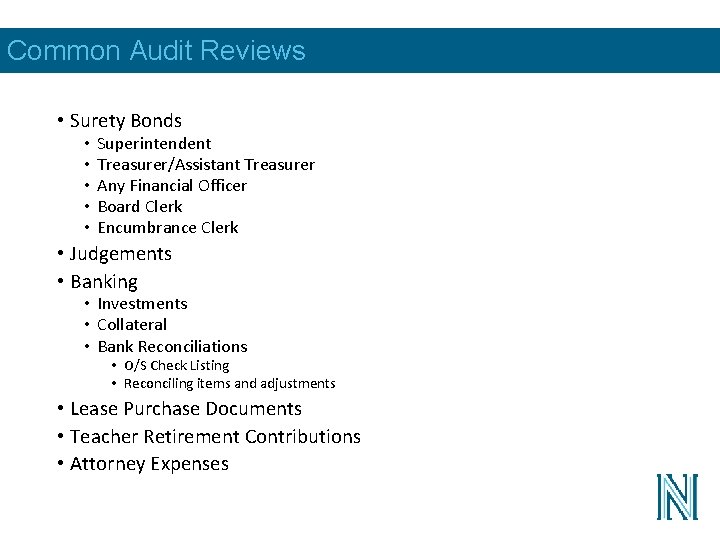
Common Audit Reviews • Surety Bonds • • • Superintendent Treasurer/Assistant Treasurer Any Financial Officer Board Clerk Encumbrance Clerk • Judgements • Banking • Investments • Collateral • Bank Reconciliations • O/S Check Listing • Reconciling items and adjustments • Lease Purchase Documents • Teacher Retirement Contributions • Attorney Expenses 8. 7%
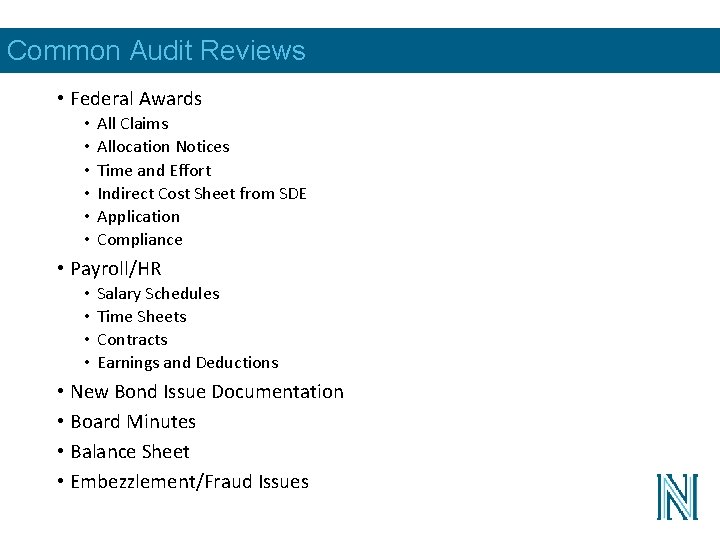
Common Audit Reviews • Federal Awards • • • All Claims Allocation Notices Time and Effort Indirect Cost Sheet from SDE Application Compliance • Payroll/HR • • Salary Schedules Time Sheets Contracts Earnings and Deductions • New Bond Issue Documentation • Board Minutes • Balance Sheet • Embezzlement/Fraud Issues 8. 7%
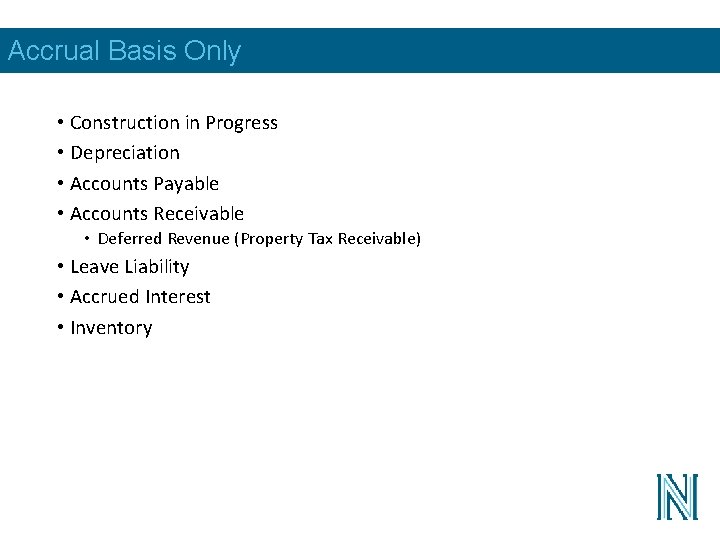
Accrual Basis Only • Construction in Progress • Depreciation • Accounts Payable • Accounts Receivable • Deferred Revenue (Property Tax Receivable) • Leave Liability • Accrued Interest • Inventory 8. 7%
How Do You Prepare? • Balance Expenses/Revenues Regularly • Review Policies and Procedures to ensure they meet the law • Review Policies and Procedures to ensure procedures match policy • Standardized Federal Documentation/Organization • Conduct self audits throughout the year • Purchasing • Accounts Payable • Receipting/Depositing Procedures • Ask questions of your auditor during the year (new processes, issues) 8. 7%
Common Findings • Purchase Prior to PO • Depositing revenue in timely manner • Internal Control • Segregation of Duties • Not following your own policies 8. 7%
Just Remember “An audit will help, not hurt, your operations. It can protect and be a deterrent against fraud as the district’s internal controls are assessed and documented through the audit, guides decision-making through substantiated financial information, and demonstrates a commitment to accuracy and fiscal responsibility. It validates the hard work you do every day, every year. ” 8. 7% Source: B&R Boyer & Ritter LLC
THANK YOU Jacqueline Woodard jacquelinew@norman. k 12. ok. us Janine Warren janiner@norman. k 12. ok. us
- Slides: 12