
Oil Spill Response Planning Coastal and Marine Environmental
- Slides: 20
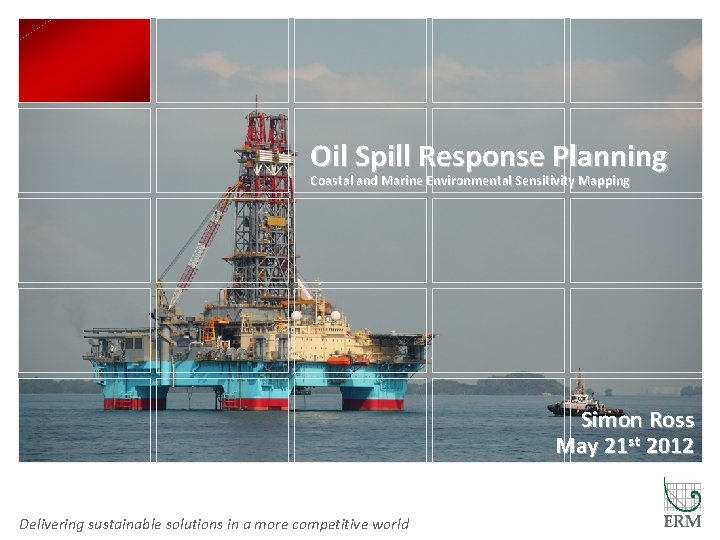
Oil Spill Response Planning Coastal and Marine Environmental Sensitivity Mapping Simon Ross May 21 st 2012 Delivering sustainable solutions in a more competitive world
Overview · What are sensitivities and why do we map them? · Environmental sensitivity mapping approach · Challenges for sensitivity mapping projects · Lessons learned and next developments · Questions Delivering sustainable solutions in a more competitive world
What Are Environmental Sensitivities? IMO/IPIECA Definition · Resources, habitats, sites or activities are considered sensitive to oil spills because they are: 1. of environmental, economic, or cultural importance; 2. at risk of coming in contact with spilled oil; and 3. likely to be affected once oiled or affected by the oil even without direct contact. w (Michel, Christopherson and Whiple, 1994). Delivering sustainable solutions in a more competitive world
Why Map Environmental Sensitivities? · Sensitivity mapping enables: w Most sensitive sites/resources to be identified w Priorities for spill response and clean up to be defined · Successful sensitivity mapping informs the development of: w Oil spill response strategy and contingency plans w Waste management strategies w Response equipment deployment w Response maps and databases Delivering sustainable solutions in a more competitive world
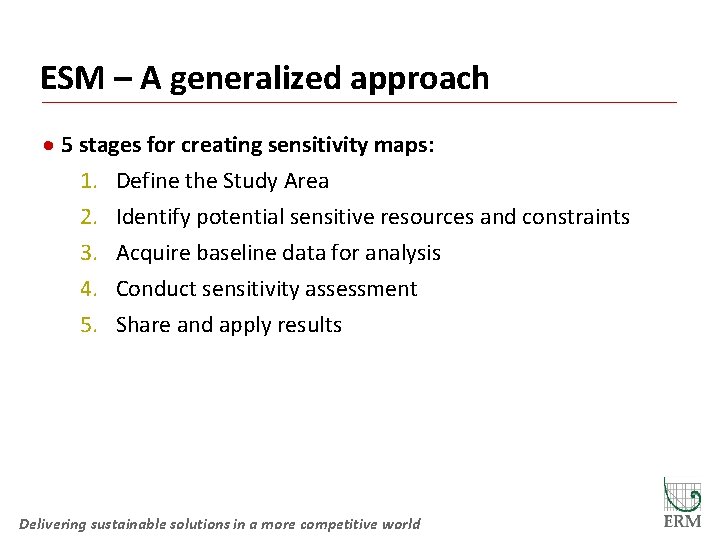
ESM – A generalized approach · 5 stages for creating sensitivity maps: 1. Define the Study Area 2. Identify potential sensitive resources and constraints 3. Acquire baseline data for analysis 4. Conduct sensitivity assessment 5. Share and apply results Delivering sustainable solutions in a more competitive world
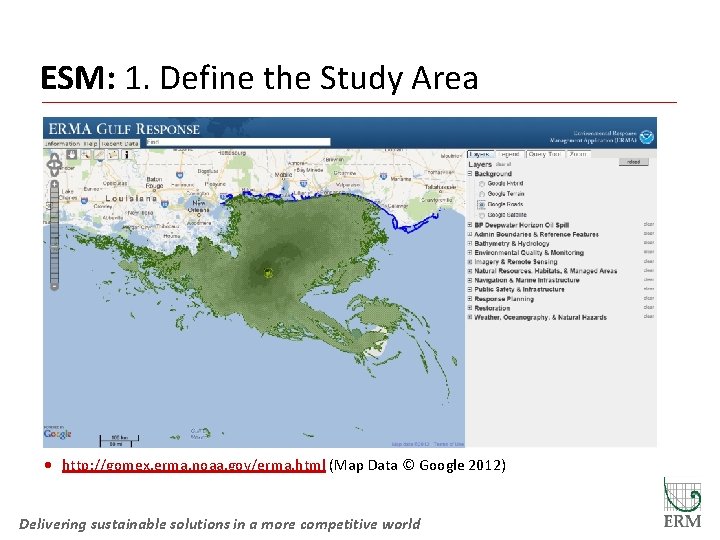
ESM: 1. Define the Study Area · http: //gomex. erma. noaa. gov/erma. html (Map Data © Google 2012) Delivering sustainable solutions in a more competitive world
ESM: 2. Identify resources and constraints · Characterize the Study Area w General environmental characteristics » Identify key environments » Build appropriate assessment team w Regulatory environment and stakeholders » International, National, Oil Company w Project schedule and budget » Does schedule allow for field surveys, seasonality? » What type of data can be purchased (e. g. satellite imagery)? Delivering sustainable solutions in a more competitive world
ESM: 3. Acquire baseline data · Define the data model: w GIS Data Management (formats, coordinate systems, quality control procedures) w Document data procedures at project outset · Typical data categories: w Shoreline Type w Ecological/Biological Resources w Social/Cultural Resources w Marine Resources Delivering sustainable solutions in a more competitive world
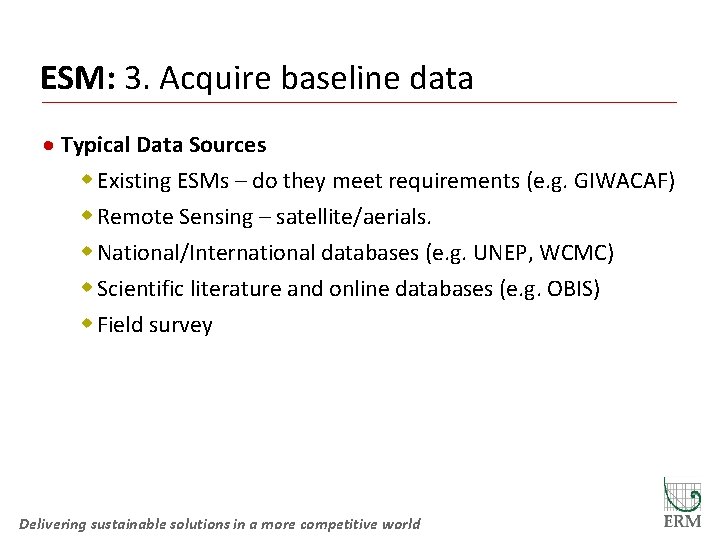
ESM: 3. Acquire baseline data · Typical Data Sources w Existing ESMs – do they meet requirements (e. g. GIWACAF) w Remote Sensing – satellite/aerials. w National/International databases (e. g. UNEP, WCMC) w Scientific literature and online databases (e. g. OBIS) w Field survey Delivering sustainable solutions in a more competitive world
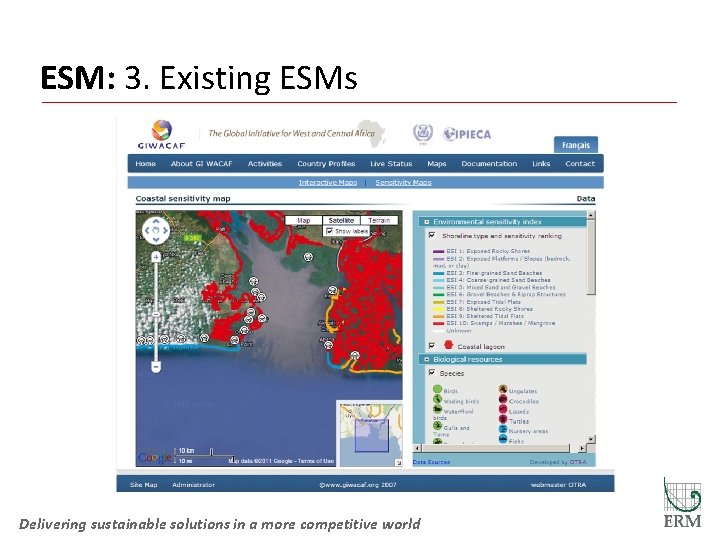
ESM: 3. Existing ESMs Delivering sustainable solutions in a more competitive world
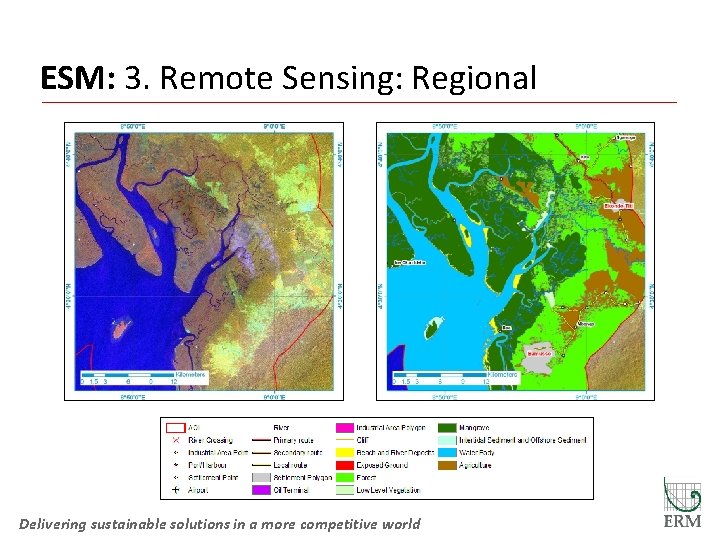
ESM: 3. Remote Sensing: Regional Delivering sustainable solutions in a more competitive world
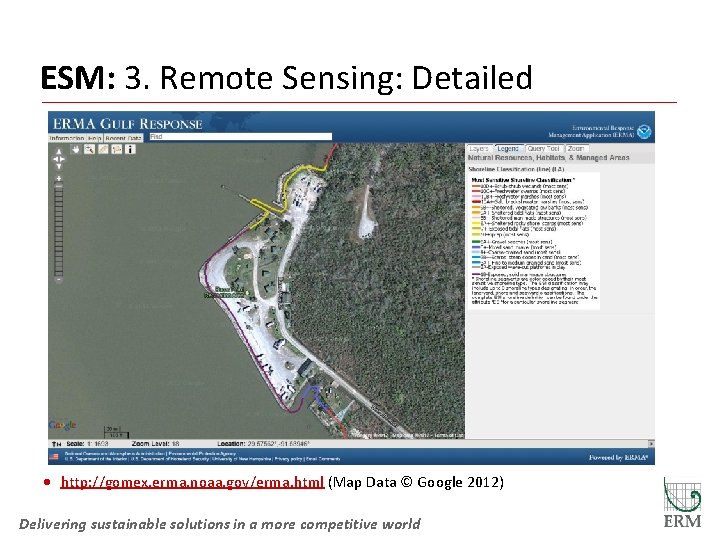
ESM: 3. Remote Sensing: Detailed · http: //gomex. erma. noaa. gov/erma. html (Map Data © Google 2012) Delivering sustainable solutions in a more competitive world
ESM: 4. Sensitivity Assessment · Map resources with respect to sensitivity to spill · Sensitivity criteria will vary by location/environment/project · Existing international guidelines define maps not methods w Standard symbology w Standardized terminology w High/Medium/Low etc. requires definition Delivering sustainable solutions in a more competitive world
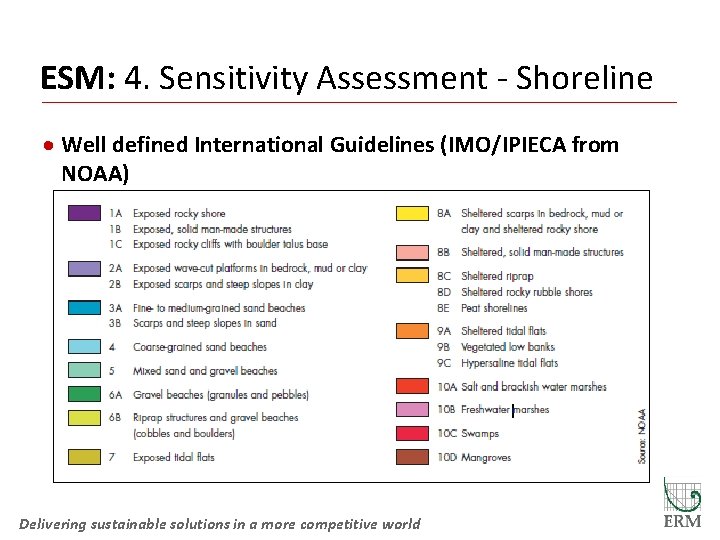
ESM: 4. Sensitivity Assessment - Shoreline · Well defined International Guidelines (IMO/IPIECA from NOAA) Delivering sustainable solutions in a more competitive world
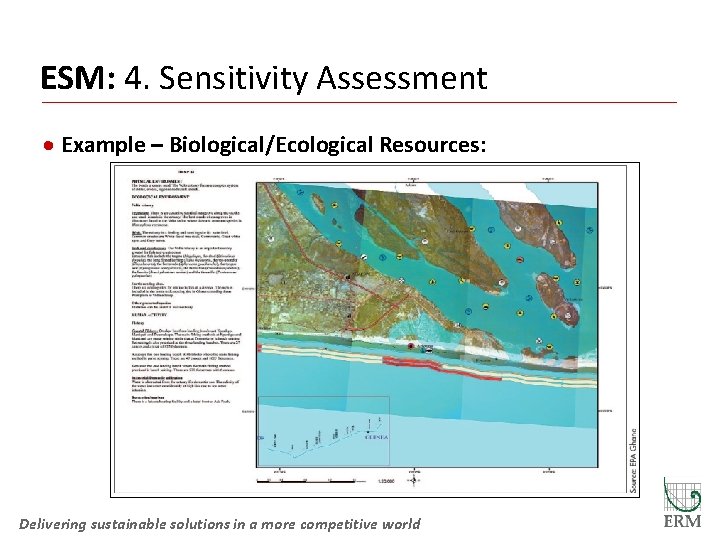
ESM: 4. Sensitivity Assessment · Example – Biological/Ecological Resources: Delivering sustainable solutions in a more competitive world
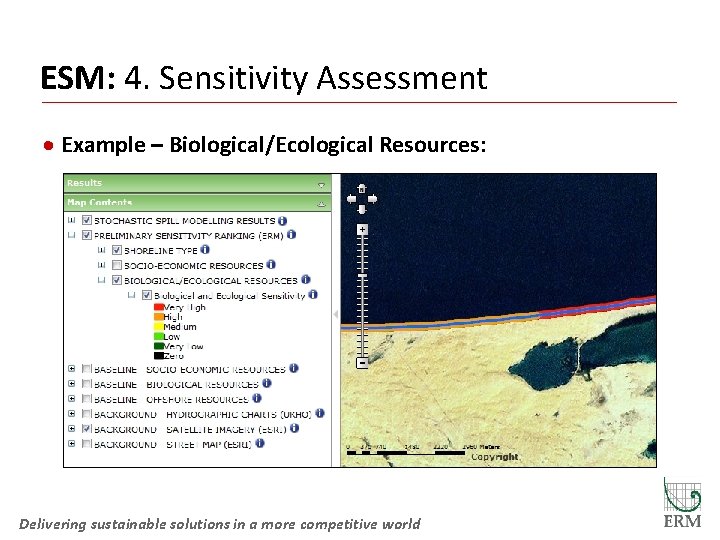
ESM: 4. Sensitivity Assessment · Example – Biological/Ecological Resources: Delivering sustainable solutions in a more competitive world
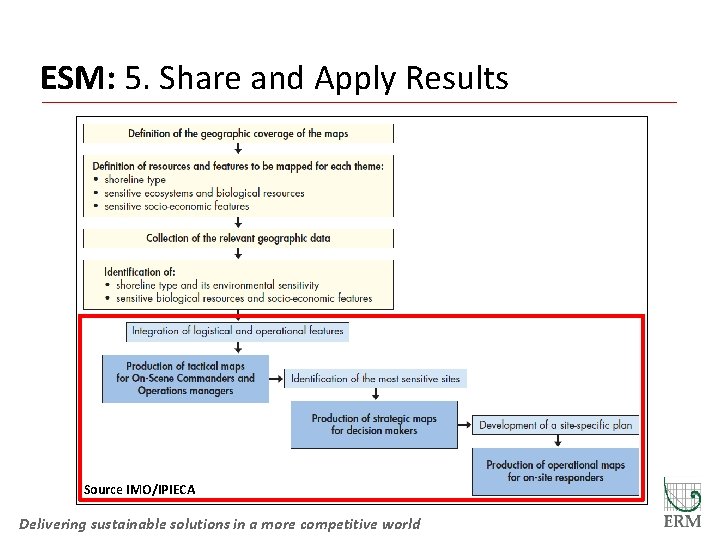
ESM: 5. Share and Apply Results Source IMO/IPIECA Delivering sustainable solutions in a more competitive world
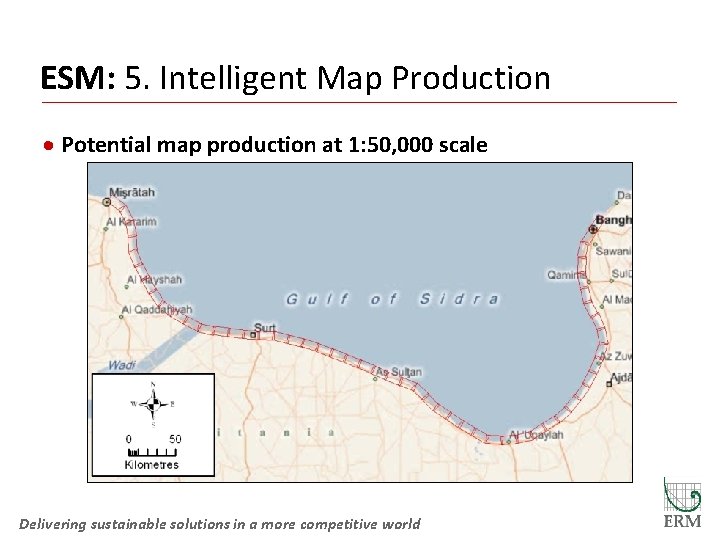
ESM: 5. Intelligent Map Production · Potential map production at 1: 50, 000 scale Delivering sustainable solutions in a more competitive world
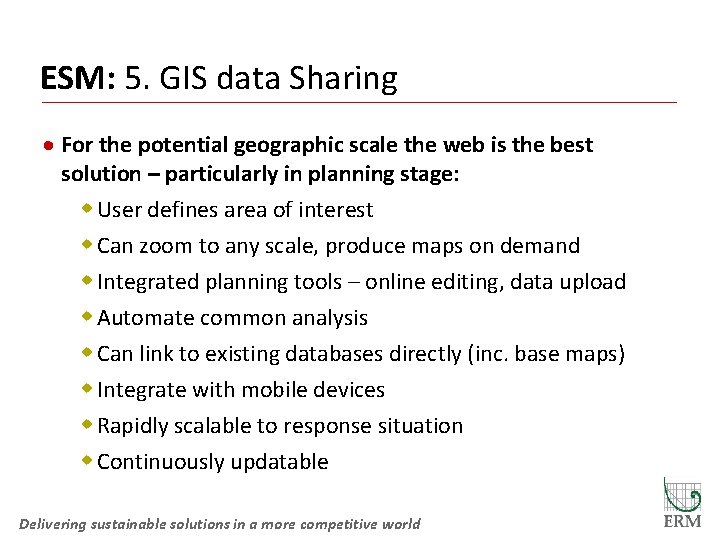
ESM: 5. GIS data Sharing · For the potential geographic scale the web is the best solution – particularly in planning stage: w User defines area of interest w Can zoom to any scale, produce maps on demand w Integrated planning tools – online editing, data upload w Automate common analysis w Can link to existing databases directly (inc. base maps) w Integrate with mobile devices w Rapidly scalable to response situation w Continuously updatable Delivering sustainable solutions in a more competitive world
Lessons learned and next developments · Defining GIS data standards, data models and workflows is critical for a successful ESM project · Use existing standards wherever possible · Identify potential project stakeholders early in the process (data providers, regulators, responders) · Maintain flexibility for different operating environments (countries, clients, new guidelines, new GIS platforms) · Questions Delivering sustainable solutions in a more competitive world