
OIL NATURAL GAS FORMATION Tiny sea plants animals

- Slides: 7
OIL & NATURAL GAS
FORMATION • Tiny sea plants & animals died & were buried on the ocean floor. Over time , they were covered by layers of sand & silt. • Over millions of years , the remains were buried deeper & deeper. The enormous heat & pressure turned them into oil & gas. • Today , we drill down through layers of sand , silt & rock to reach the rock formations that contains oil & gas deposits.
ADVANTAGES Oil & natural gas are more efficient to burn , easier to transport (by pipes & tankers) & distribute & they are also less harmful to the environment than coal , with gas being even cheaper & cleaner than oil. Both are used for electricity with gas increasingly the most favored of all the non-renewable sources. Oil is basis of the huge petrochemical industry.
DISADVANTAGES • Environmental damage can be caused when building the rig & by accidental oil spillages. • Oil & gas are not renewable, so once supplies are used, they will run out. • Burning these fuels releases greenhouses gases into air. This may effect to global warming. • The price of oil & gas will increase because supplies are running out & lots of people want it. • Working on an oil or gas rig can be dangerous due to risk of explosion & bad weather.
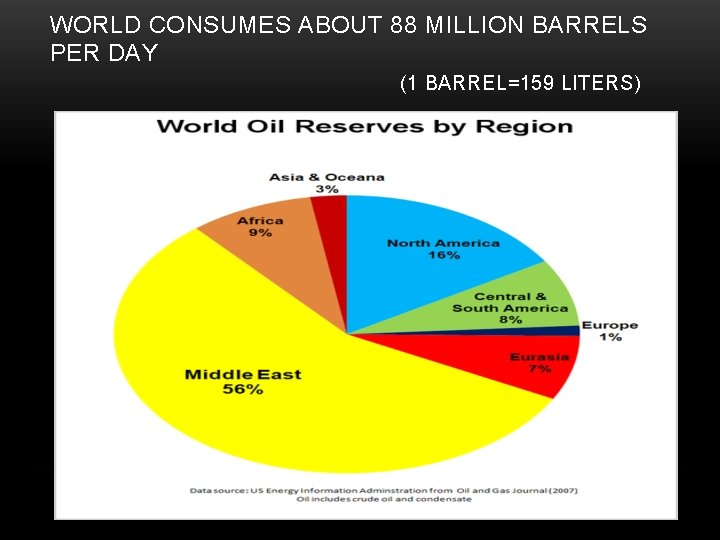
WORLD CONSUMES ABOUT 88 MILLION BARRELS PER DAY (1 BARREL=159 LITERS)
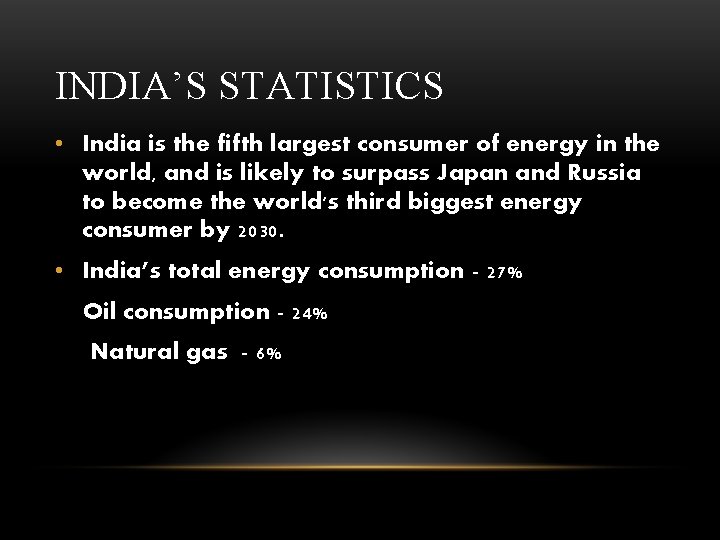
INDIA’S STATISTICS • India is the fifth largest consumer of energy in the world, and is likely to surpass Japan and Russia to become the world's third biggest energy consumer by 2030. • India’s total energy consumption - 27% Oil consumption - 24% Natural gas - 6%
THANX A LOL!!! -jneil