
OHT 12 1 Marketing channels and logistics Brassington
OHT 12. 1 Marketing channels and logistics Brassington and Pettitt: Principles of Marketing, 3 rd Edition © Pearson Education Limited 2003
OHT 12. 2 Defining marketing channels A marketing channel is a structure that links a group of individuals or organisations through which products/services are made available to the consumer or industrial user. The structure of channels can vary depending on the type of market, the needs of the end consumer, and the type of product. Brassington and Pettitt: Principles of Marketing, 3 rd Edition © Pearson Education Limited 2003

OHT 12. 3 Intermediaries • Play an important role in increasing efficiency and reducing costs. • There are several different types of intermediary who come together to create different kinds of distribution channels between manufacturer and consumer. • Each intermediary adds a margin to the price of the goods handled. • Different functions are performed by the different intermediaries. • Not all intermediaries necessarily take legal title or physical possession of the goods. Brassington and Pettitt: Principles of Marketing, 3 rd Edition © Pearson Education Limited 2003
OHT 12. 4 Types of intermediary • Wholesalers - do not normally deal with the end consumer instead deal with other intermediaries, usually retailers. Exception to this is in the B 2 B market. Wholesalers do not take legal title to the goods. • Retailers - sell direct to the consumer and may purchase direct from the manufacturer or wholesaler. Brassington and Pettitt: Principles of Marketing, 3 rd Edition © Pearson Education Limited 2003
OHT 12. 5 Types of intermediary cont. • Distributors and dealers - add value through services associated with stocking or selling inventory, credit and after sales service. • Franchises hold contracts to supply and market a product/service to the blueprint of the franchisee. • Agents and brokers have legal authority to act on behalf of the manufacturer without taking legal title to the goods or handling the products directly. Brassington and Pettitt: Principles of Marketing, 3 rd Edition © Pearson Education Limited 2003
OHT 12. 6 1. Channel structures 2. Channel structure = the route selected to move a product to market through the different intermediaries. Brassington and Pettitt: Principles of Marketing, 3 rd Edition © Pearson Education Limited 2003
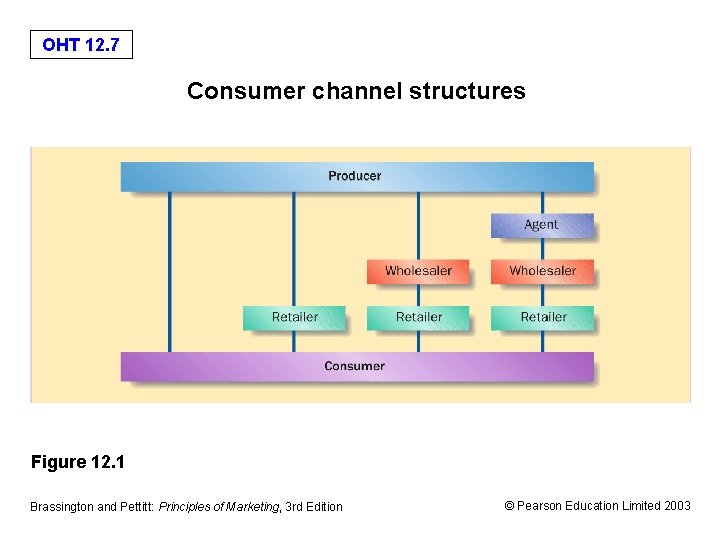
OHT 12. 7 Consumer channel structures Figure 12. 1 Brassington and Pettitt: Principles of Marketing, 3 rd Edition © Pearson Education Limited 2003
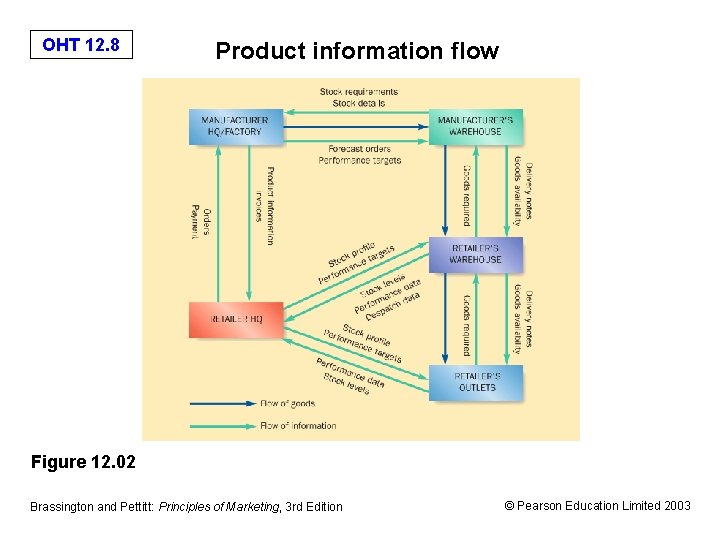
OHT 12. 8 Product information flow Figure 12. 02 Brassington and Pettitt: Principles of Marketing, 3 rd Edition © Pearson Education Limited 2003
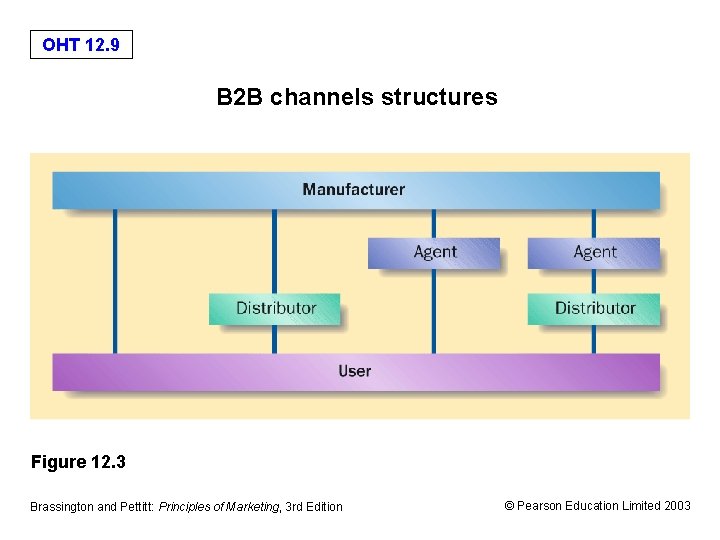
OHT 12. 9 B 2 B channels structures Figure 12. 3 Brassington and Pettitt: Principles of Marketing, 3 rd Edition © Pearson Education Limited 2003
OHT 12. 10 Role of intermediaries (1 of 2) • Increase efficiency. • Reduce costs of individual transactions. • Provide value added services. Brassington and Pettitt: Principles of Marketing, 3 rd Edition © Pearson Education Limited 2003
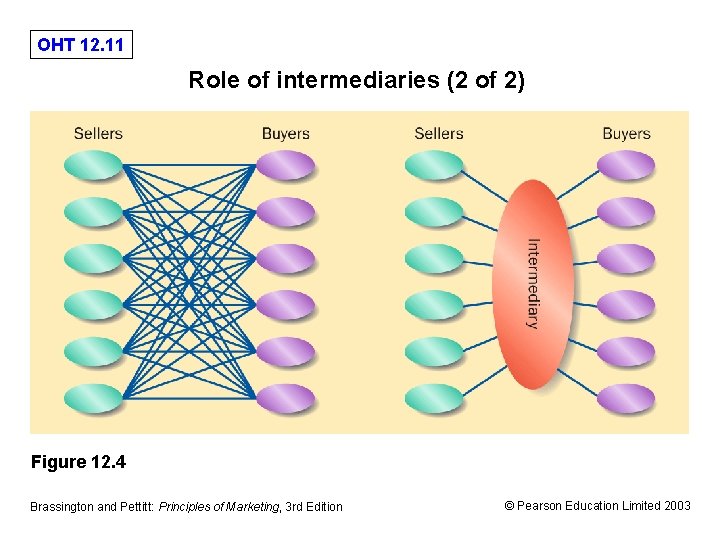
OHT 12. 11 Role of intermediaries (2 of 2) Figure 12. 4 Brassington and Pettitt: Principles of Marketing, 3 rd Edition © Pearson Education Limited 2003
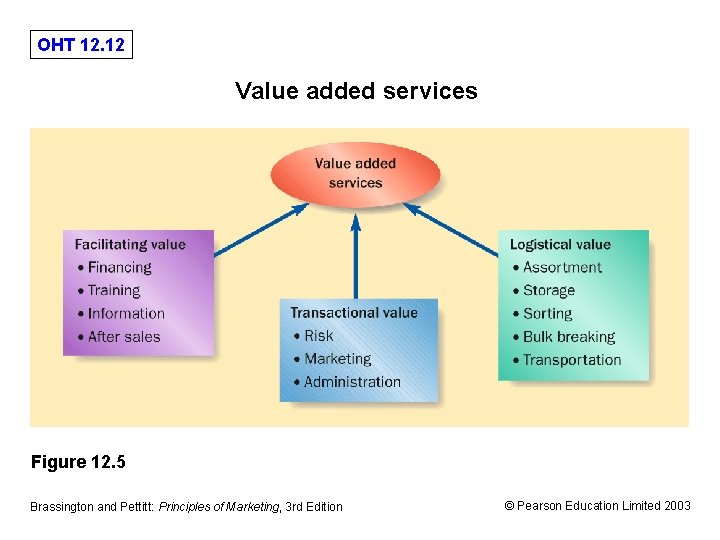
OHT 12. 12 Value added services Figure 12. 5 Brassington and Pettitt: Principles of Marketing, 3 rd Edition © Pearson Education Limited 2003
OHT 12. 13 Channel strategy • Channel structure - this should reflect the market and product characteristics (market coverage, value, quantity sold, margin available, etc. ). • Market coverage - considerations here include who the end customer is, demand patterns, frequency of ordering, degree of comparison shopping, associated services required, etc. Brassington and Pettitt: Principles of Marketing, 3 rd Edition © Pearson Education Limited 2003
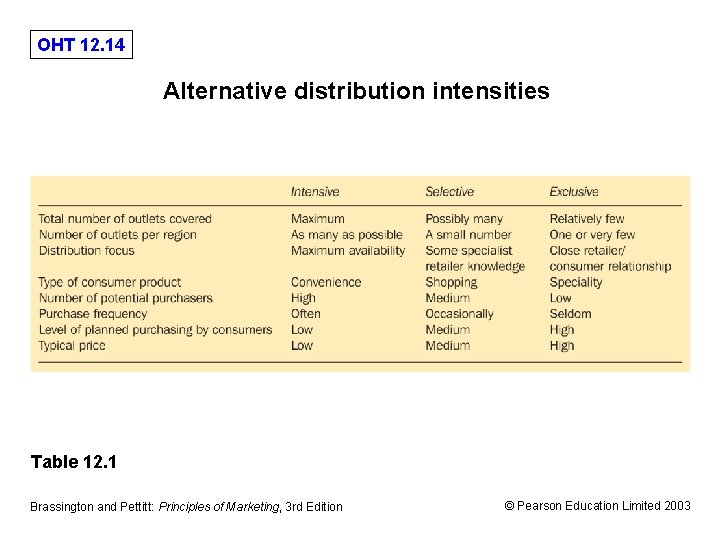
OHT 12. 14 Alternative distribution intensities Table 12. 1 Brassington and Pettitt: Principles of Marketing, 3 rd Edition © Pearson Education Limited 2003
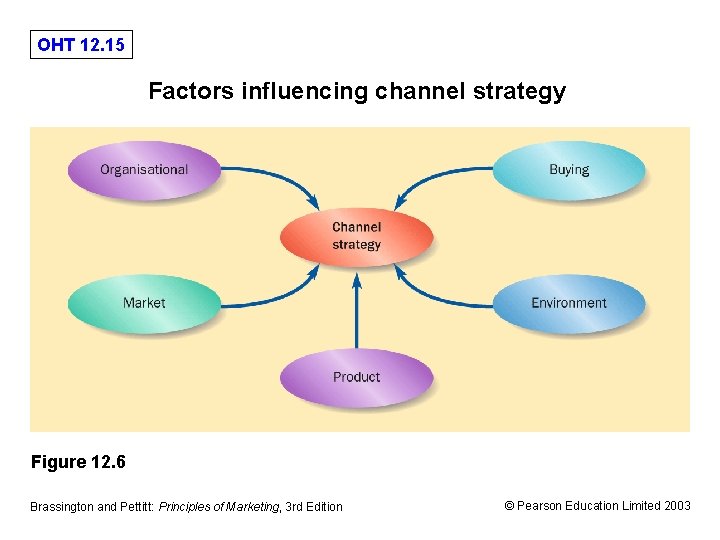
OHT 12. 15 Factors influencing channel strategy Figure 12. 6 Brassington and Pettitt: Principles of Marketing, 3 rd Edition © Pearson Education Limited 2003
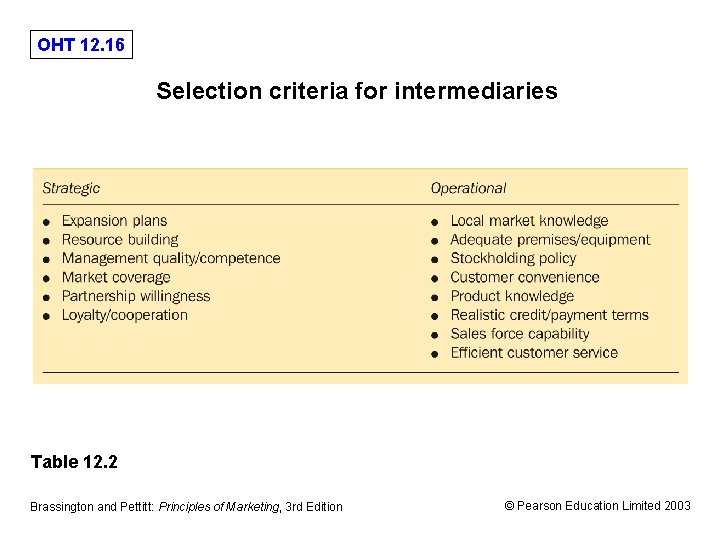
OHT 12. 16 Selection criteria for intermediaries Table 12. 2 Brassington and Pettitt: Principles of Marketing, 3 rd Edition © Pearson Education Limited 2003
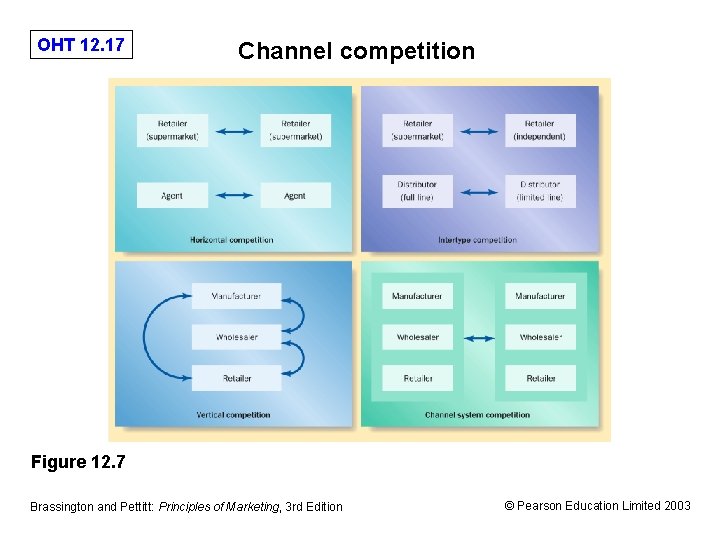
OHT 12. 17 Channel competition Figure 12. 7 Brassington and Pettitt: Principles of Marketing, 3 rd Edition © Pearson Education Limited 2003
OHT 12. 18 1. Vertical marketing systems 2. Channel members who want to co-operate and maximise possible benefits from channel membership form close vertical marketing systems (VMS). Brassington and Pettitt: Principles of Marketing, 3 rd Edition © Pearson Education Limited 2003
OHT 12. 19 Types of VMS • Corporate VMS exist where an organisation owns and operates other levels in the channel. • Contractual VMS is the most prevalent form of VMS. Members retain their independence but negotiate contractual agreements specifying their rights, duties, and obligations. • Administered VMS achieve co-ordination and control through the power of one of the channel members. Brassington and Pettitt: Principles of Marketing, 3 rd Edition © Pearson Education Limited 2003
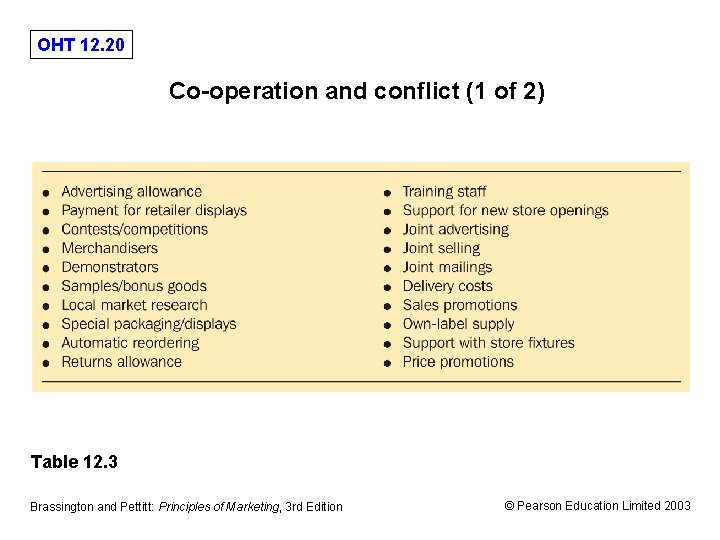
OHT 12. 20 Co-operation and conflict (1 of 2) Table 12. 3 Brassington and Pettitt: Principles of Marketing, 3 rd Edition © Pearson Education Limited 2003
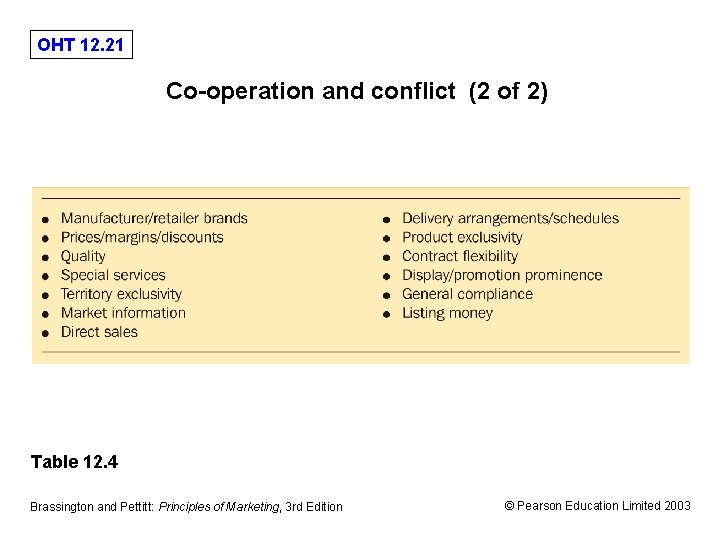
OHT 12. 21 Co-operation and conflict (2 of 2) Table 12. 4 Brassington and Pettitt: Principles of Marketing, 3 rd Edition © Pearson Education Limited 2003
OHT 12. 22 Physical distribution management (PDM) The organisation and management of the storage and movement of goods from the production line to the end customer. Functions include receiving and processing orders, picking and packing, managing the infrastructure, and physical distribution. Distribution can be direct using company owned transport or indirect using external agencies. Brassington and Pettitt: Principles of Marketing, 3 rd Edition © Pearson Education Limited 2003
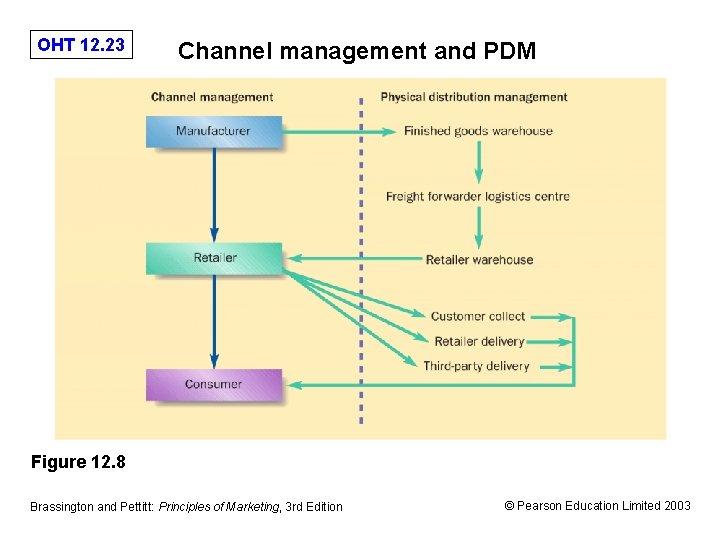
OHT 12. 23 Channel management and PDM Figure 12. 8 Brassington and Pettitt: Principles of Marketing, 3 rd Edition © Pearson Education Limited 2003
OHT 12. 24 Logistics Focuses on the physical movement and transformation of goods all the way from the source of supply to the point of consumption. Concerned with inbound raw materials and other supplies and their movement through the plant. Also concerned with outbound goods and the strategic issues of warehouse location, and the management of stock levels and information systems. Can lower costs and raise standards of service to customers. Brassington and Pettitt: Principles of Marketing, 3 rd Edition © Pearson Education Limited 2003
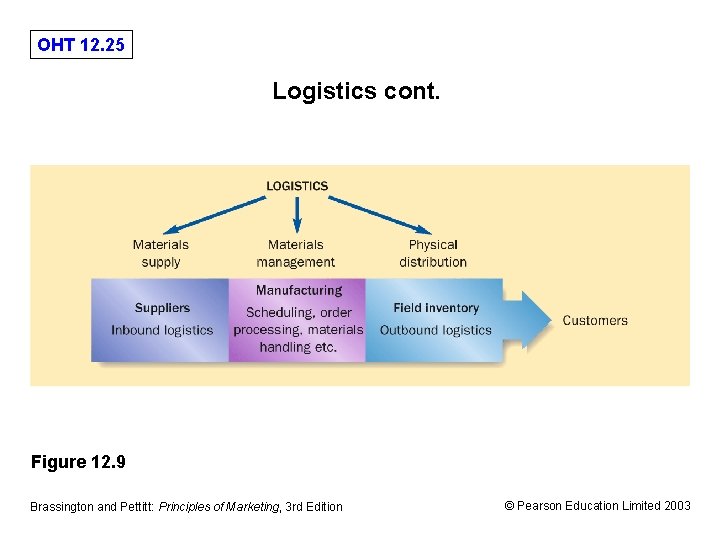
OHT 12. 25 Logistics cont. Figure 12. 9 Brassington and Pettitt: Principles of Marketing, 3 rd Edition © Pearson Education Limited 2003
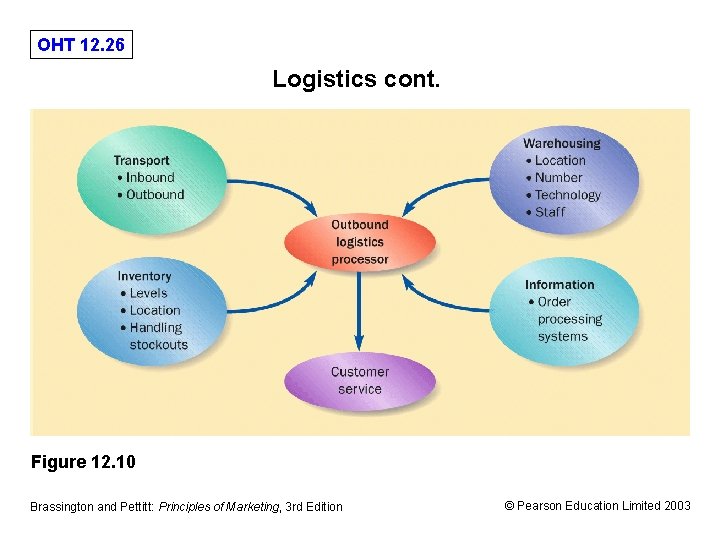
OHT 12. 26 Logistics cont. Figure 12. 10 Brassington and Pettitt: Principles of Marketing, 3 rd Edition © Pearson Education Limited 2003
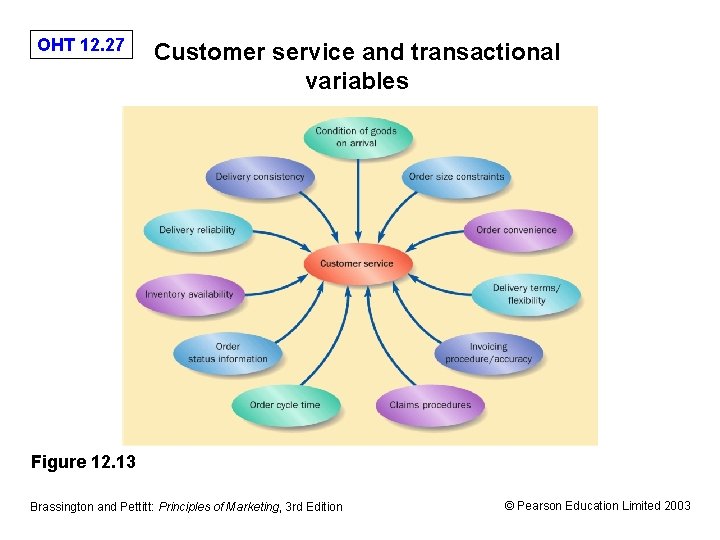
OHT 12. 27 Customer service and transactional variables Figure 12. 13 Brassington and Pettitt: Principles of Marketing, 3 rd Edition © Pearson Education Limited 2003
- Slides: 27