
OHIO CROP PRODUCTION STARTERS AND FOLIAR FERTILIZERS Robert
OHIO CROP PRODUCTION, STARTERS, AND FOLIAR FERTILIZERS Robert Mullen Director of Agronomy
Overview • Changing yield levels • Does fertilization practices need to change? • Impact on soil test levels • In-furrow fertilization • Guidelines • Foliar fertilization • Nutrient uptake/absorption
Changing Yield Levels
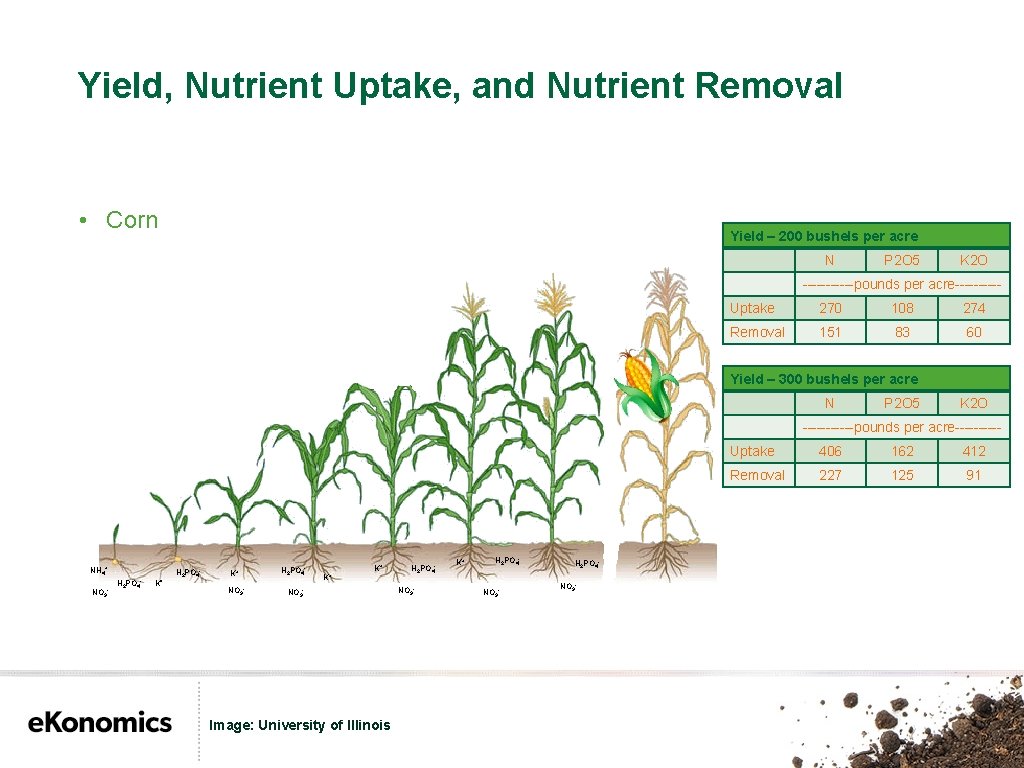
Yield, Nutrient Uptake, and Nutrient Removal • Corn Yield – 200 bushels per acre N P 2 O 5 K 2 O ------pounds per acre-----Uptake 270 108 274 Removal 151 83 60 Yield – 300 bushels per acre N P 2 O 5 K 2 O ------pounds per acre----- NH 4+ NO 3 - H 2 PO 4 - K+ H 2 PO 4 - NO 3 - K+ K+ Image: University of Illinois H 2 PO 4 NO 3 - K+ H 2 PO 4 - NO 3 - H 2 PO 4 NO 3 - Uptake 406 162 412 Removal 227 125 91
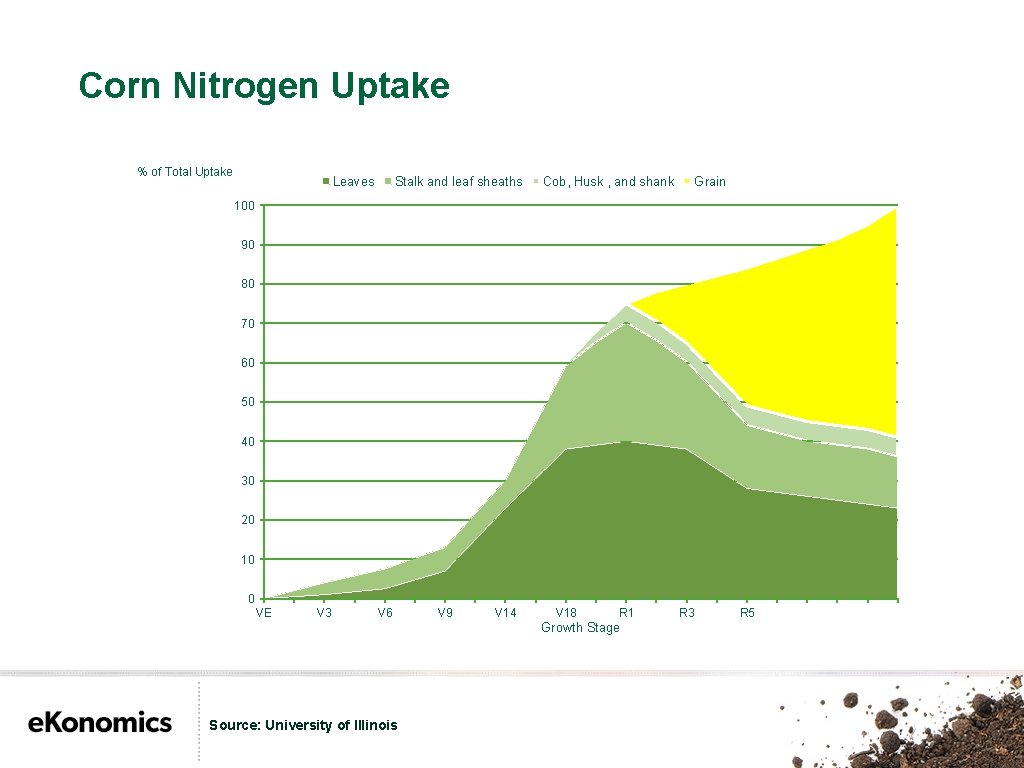
Corn Nitrogen Uptake % of Total Uptake Leaves Stalk and leaf sheaths Cob, Husk , and shank Grain 100 90 80 70 60 50 40 30 20 10 0 VE V 3 V 6 V 9 V 14 V 18 R 1 Growth Stage Source: University of Illinois R 3 R 5
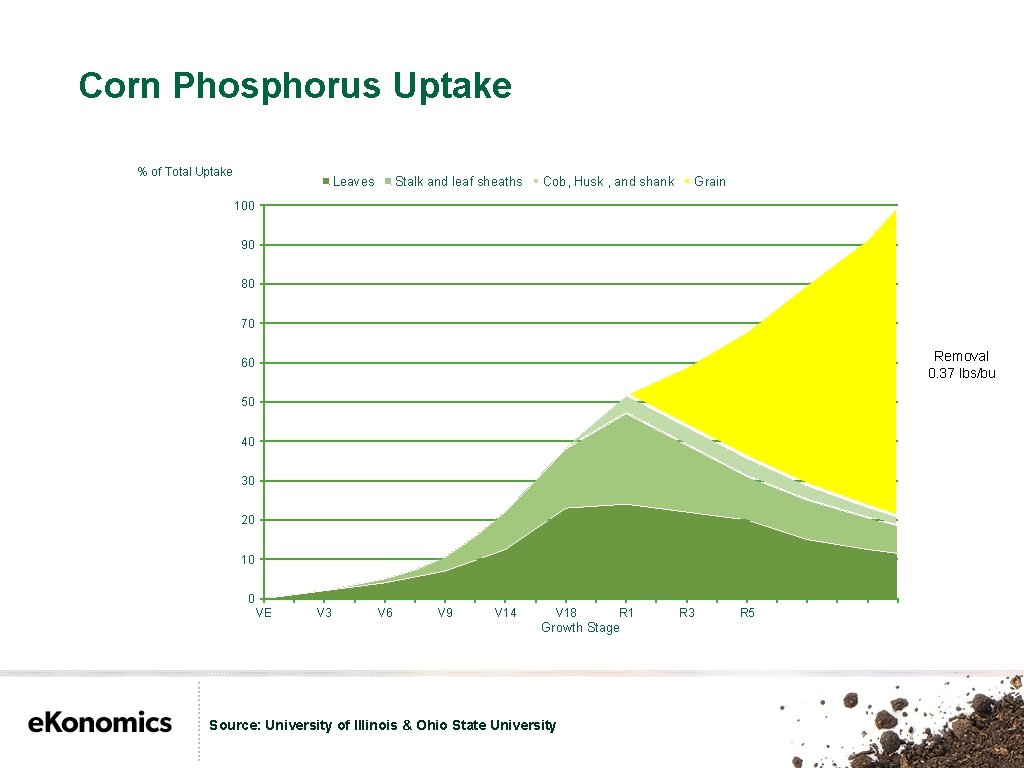
Corn Phosphorus Uptake % of Total Uptake Leaves Stalk and leaf sheaths Cob, Husk , and shank Grain 100 90 80 70 Removal 0. 37 lbs/bu 60 50 40 30 20 10 0 VE V 3 V 6 V 9 V 14 V 18 R 1 Growth Stage Source: University of Illinois & Ohio State University R 3 R 5
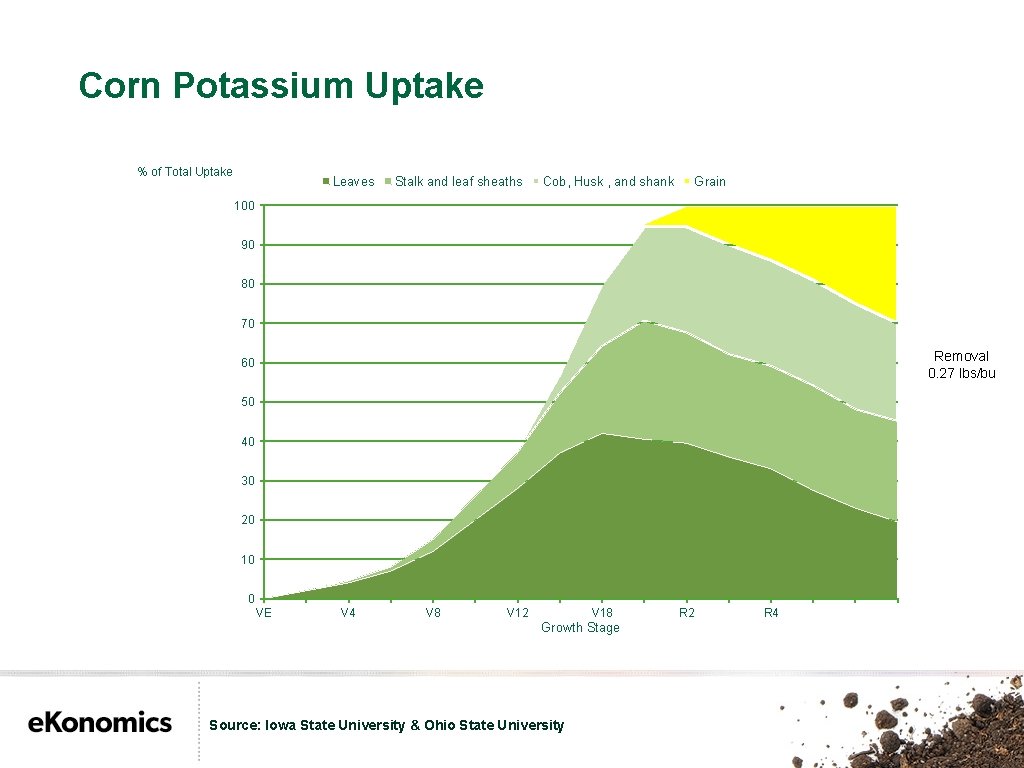
Corn Potassium Uptake % of Total Uptake Leaves Stalk and leaf sheaths Cob, Husk , and shank Grain 100 90 80 70 Removal 0. 27 lbs/bu 60 50 40 30 20 10 0 VE V 4 V 8 V 12 V 18 Growth Stage Source: Iowa State University & Ohio State University R 2 R 4
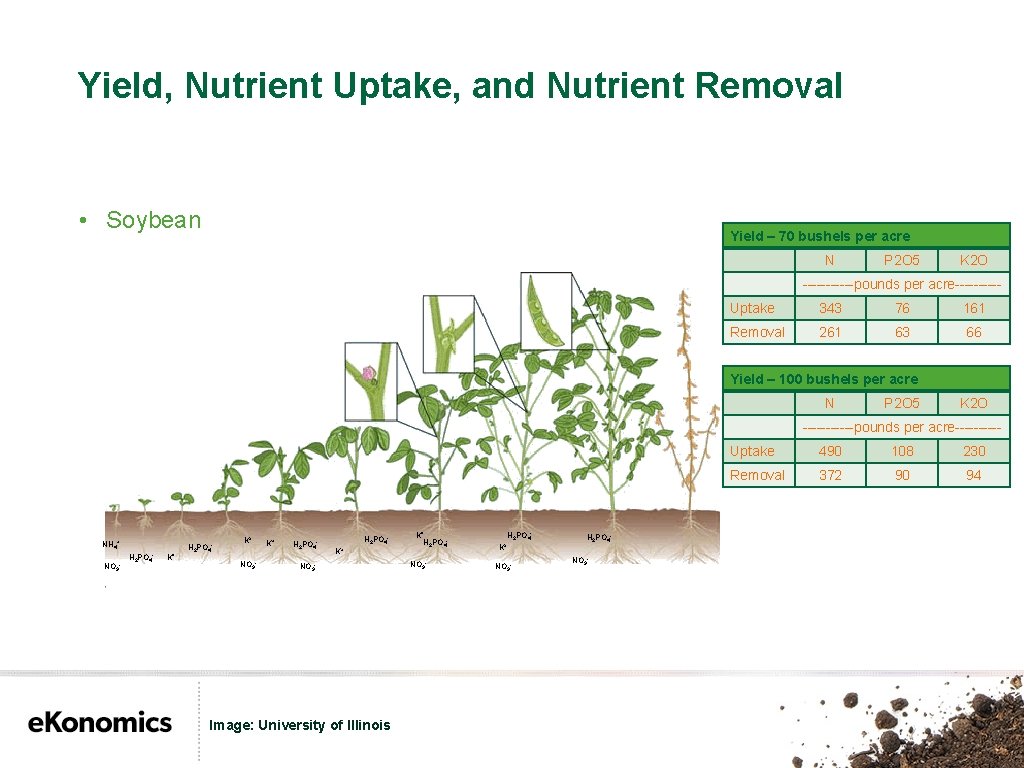
Yield, Nutrient Uptake, and Nutrient Removal • Soybean Yield – 70 bushels per acre N P 2 O 5 K 2 O ------pounds per acre-----Uptake 343 76 161 Removal 261 63 66 Yield – 100 bushels per acre N P 2 O 5 K 2 O ------pounds per acre----- NH 4+ NO 3 - H 2 PO 4 - K+ NO 3 - K+ H 2 PO 4 - H 2 PO 4 K+ NO 3 - Image: University of Illinois K+ H 2 PO 4 NO 3 - H 2 PO 4 K+ NO 3 - H 2 PO 4 NO 3 - Uptake 490 108 230 Removal 372 90 94
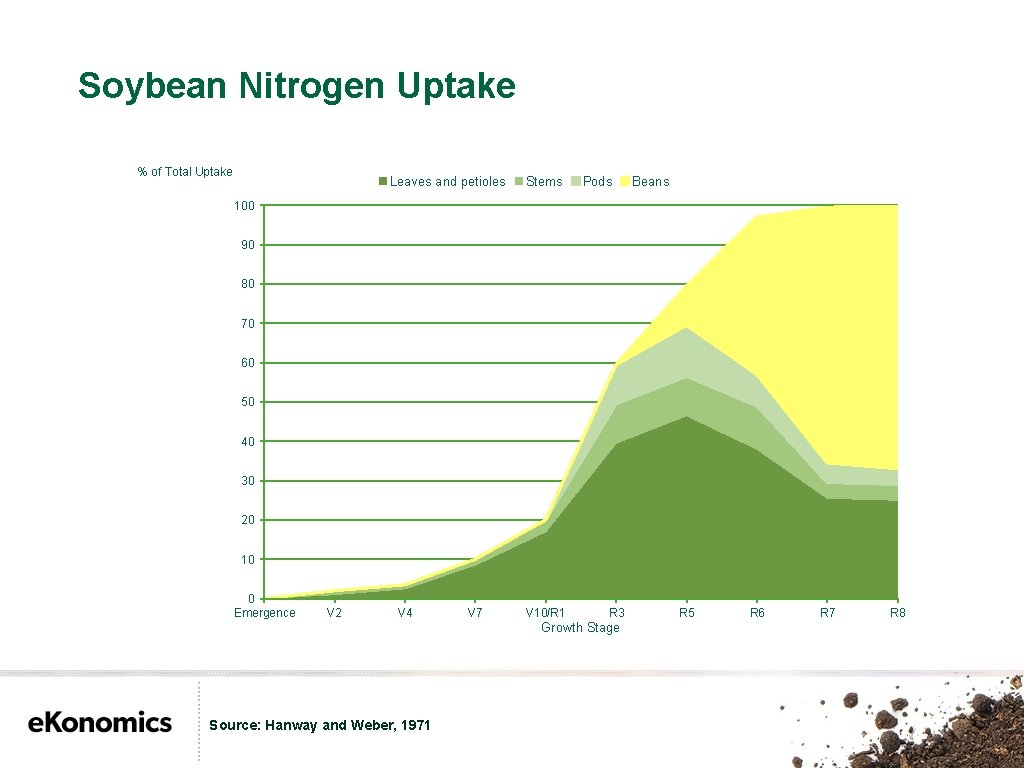
Soybean Nitrogen Uptake % of Total Uptake Leaves and petioles Stems Pods Beans 100 90 80 70 60 50 40 30 20 10 0 Emergence V 2 V 4 V 7 V 10/R 1 R 3 Growth Stage Source: Hanway and Weber, 1971 R 5 R 6 R 7 R 8
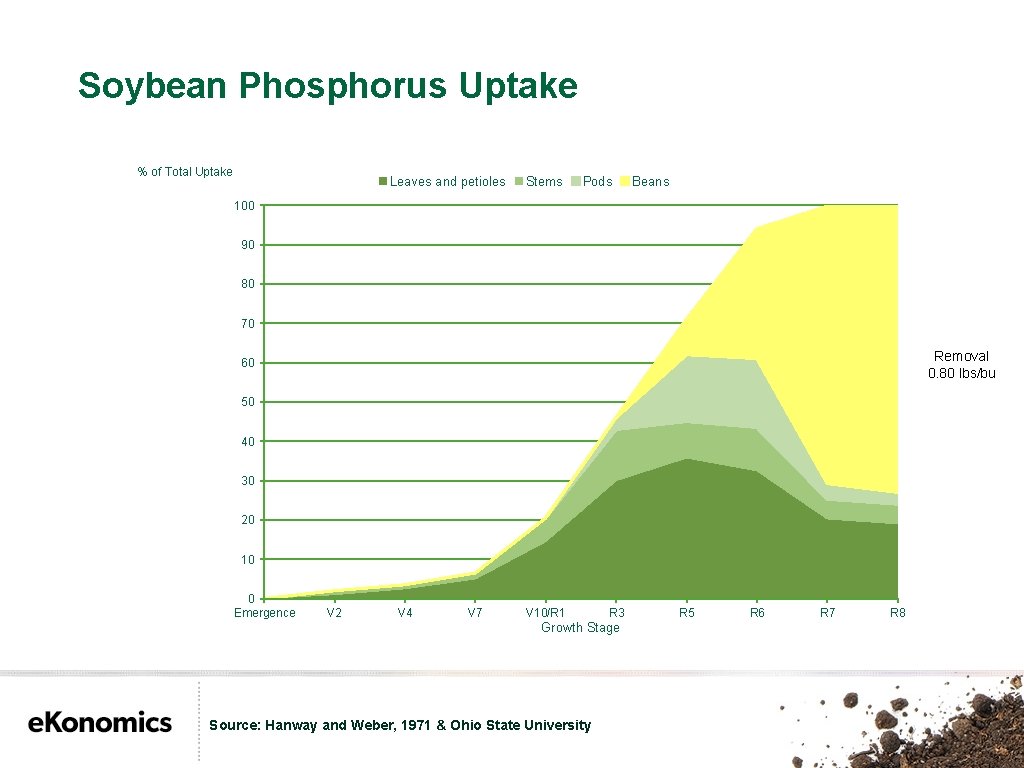
Soybean Phosphorus Uptake % of Total Uptake Leaves and petioles Stems Pods Beans 100 90 80 70 Removal 0. 80 lbs/bu 60 50 40 30 20 10 0 Emergence V 2 V 4 V 7 V 10/R 1 R 3 Growth Stage Source: Hanway and Weber, 1971 & Ohio State University R 5 R 6 R 7 R 8
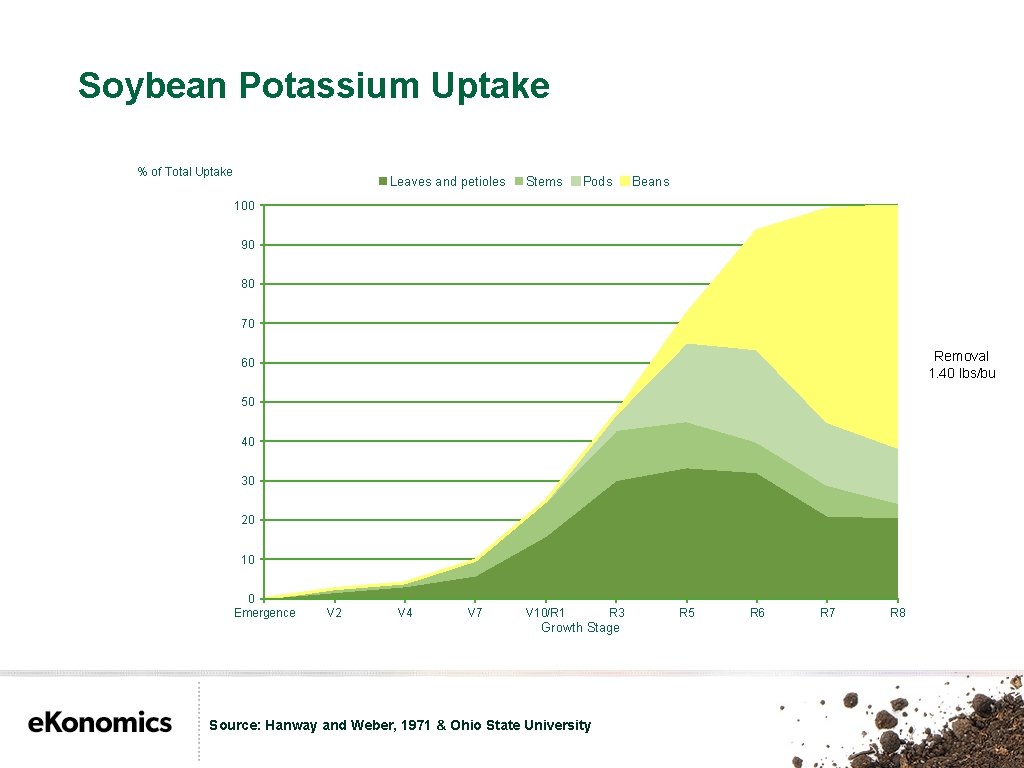
Soybean Potassium Uptake % of Total Uptake Leaves and petioles Stems Pods Beans 100 90 80 70 Removal 1. 40 lbs/bu 60 50 40 30 20 10 0 Emergence V 2 V 4 V 7 V 10/R 1 R 3 Growth Stage Source: Hanway and Weber, 1971 & Ohio State University R 5 R 6 R 7 R 8
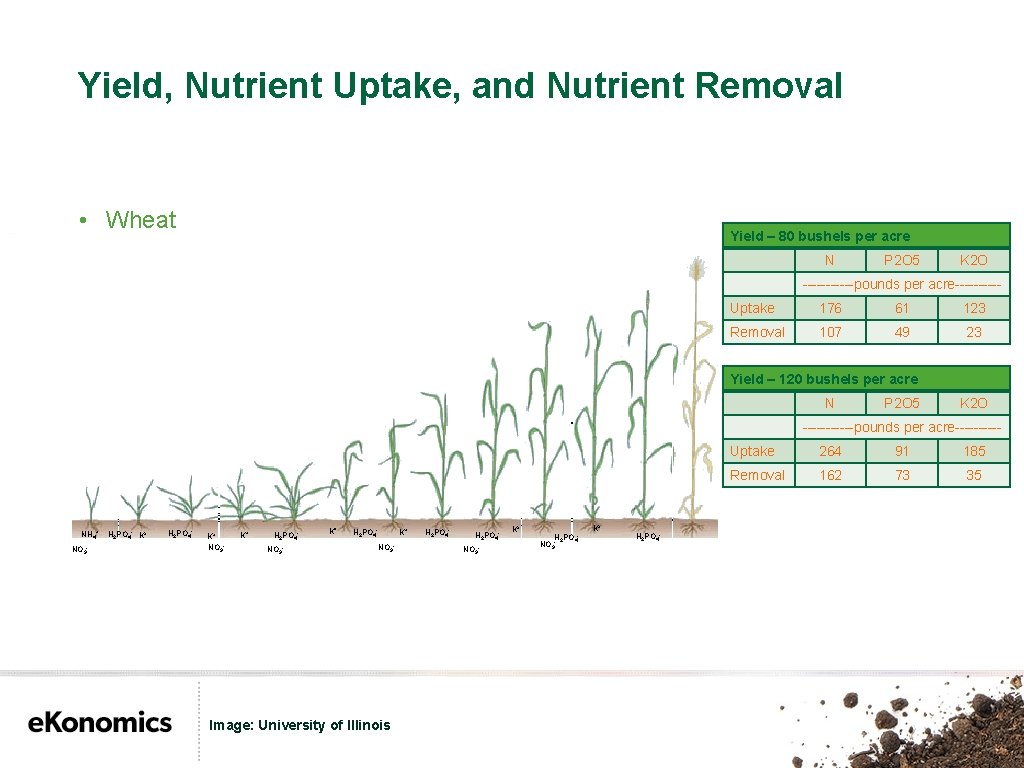
Yield, Nutrient Uptake, and Nutrient Removal • Wheat Yield – 80 bushels per acre N P 2 O 5 K 2 O ------pounds per acre-----Uptake 176 61 123 Removal 107 49 23 Yield – 120 bushels per acre N P 2 O 5 K 2 O ------pounds per acre----- NH 4+ NO 3 - H 2 PO 4 - K+ NO 3 - K+ H 2 PO 4 - K+ NO 3 - Image: University of Illinois H 2 PO 4 - H 2 PO 4 NO 3 - K+ K+ H 2 PO 4 - NO 3 - H 2 PO 4 - Uptake 264 91 185 Removal 162 73 35
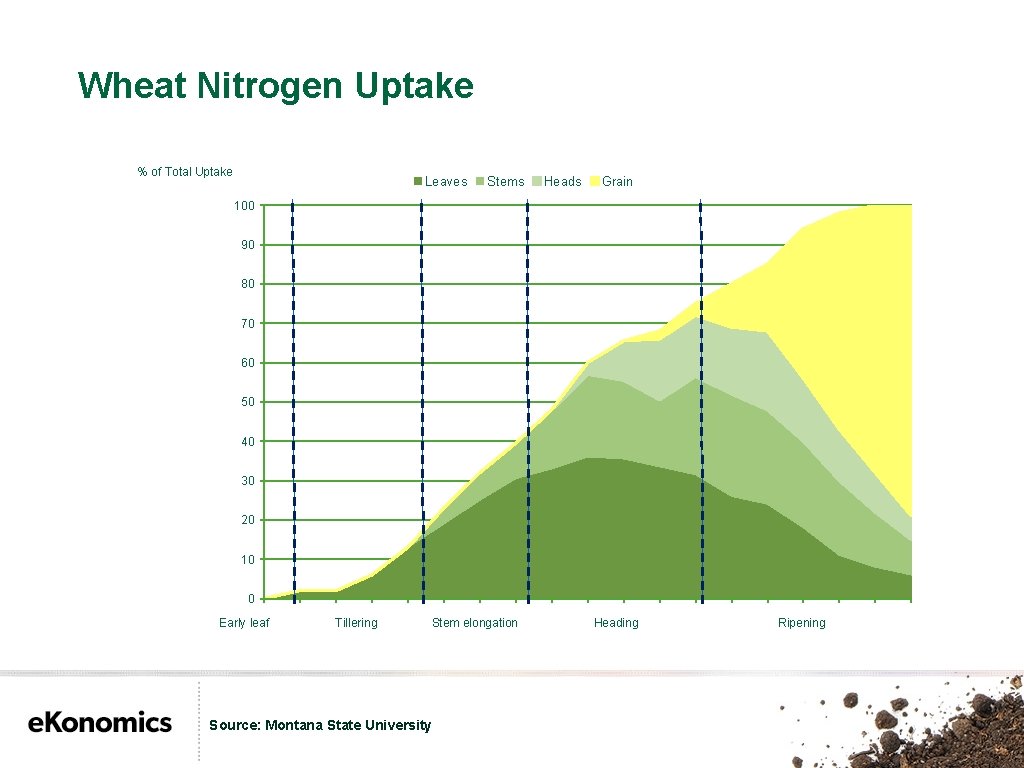
Wheat Nitrogen Uptake % of Total Uptake Leaves Stems Heads Grain 100 90 80 70 60 50 40 30 20 10 0 Early leaf Tillering Stem elongation Source: Montana State University Heading Ripening
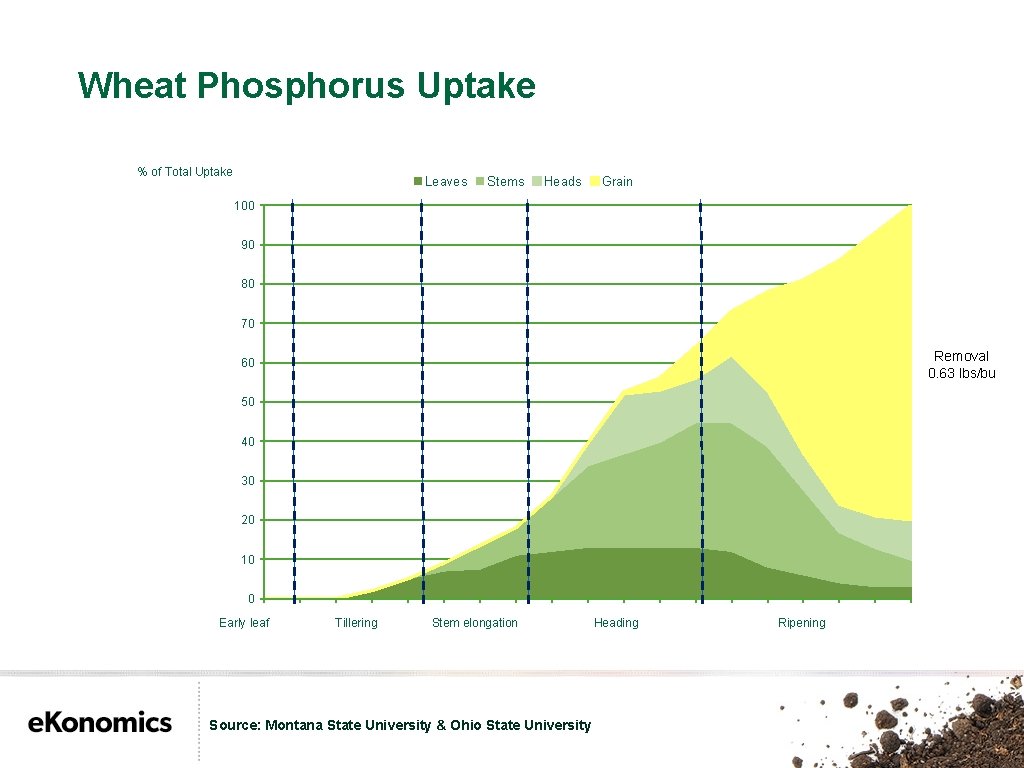
Wheat Phosphorus Uptake % of Total Uptake Leaves Stems Heads Grain 100 90 80 70 Removal 0. 63 lbs/bu 60 50 40 30 20 10 0 Early leaf Tillering Stem elongation Source: Montana State University & Ohio State University Heading Ripening
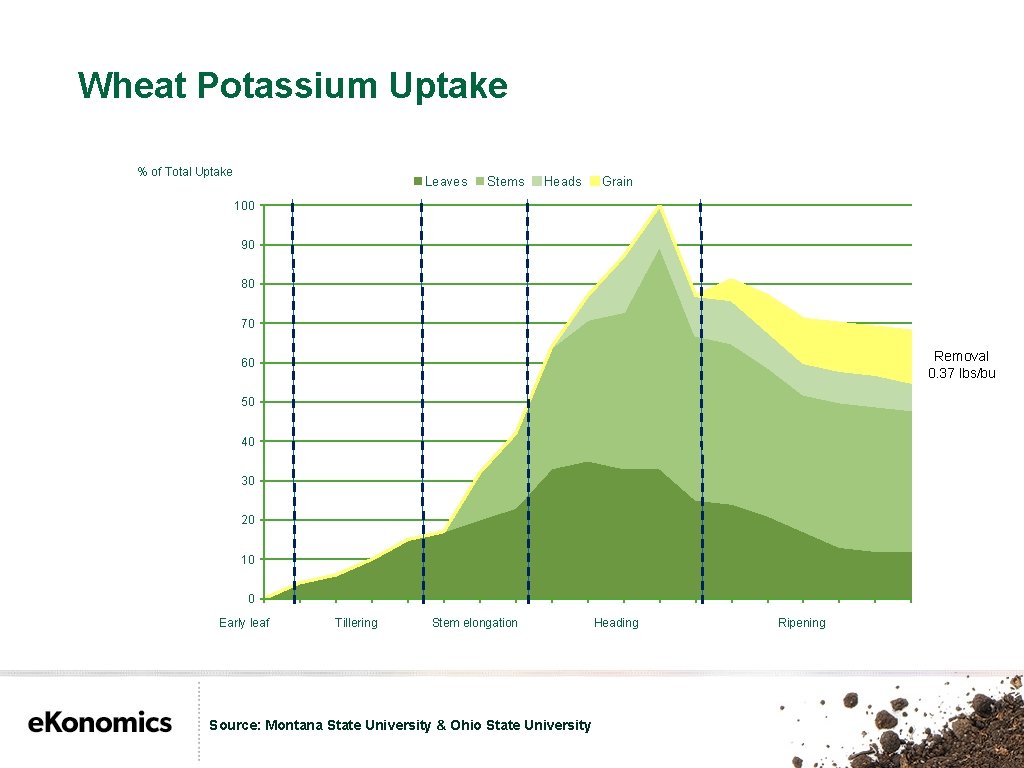
Wheat Potassium Uptake % of Total Uptake Leaves Stems Heads Grain 100 90 80 70 Removal 0. 37 lbs/bu 60 50 40 30 20 10 0 Early leaf Tillering Stem elongation Source: Montana State University & Ohio State University Heading Ripening
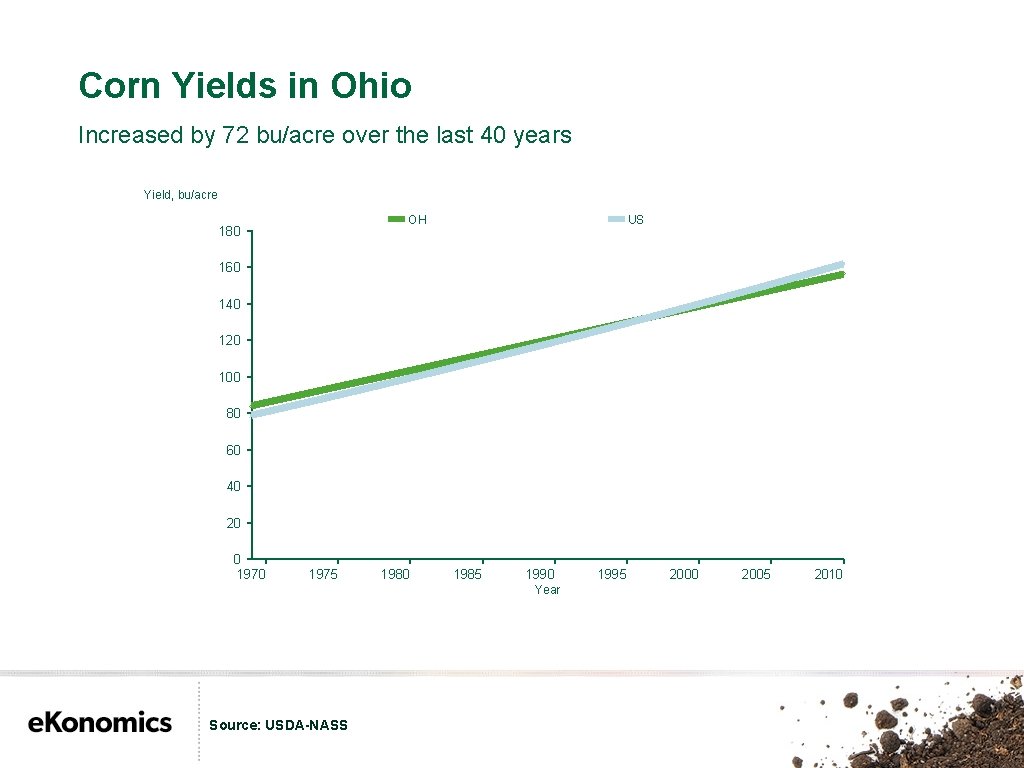
Corn Yields in Ohio Increased by 72 bu/acre over the last 40 years Yield, bu/acre OH 180 US 160 140 120 100 80 60 40 20 0 1975 1980 1985 1990 Year Source: USDA-NASS 1995 2000 2005 2010
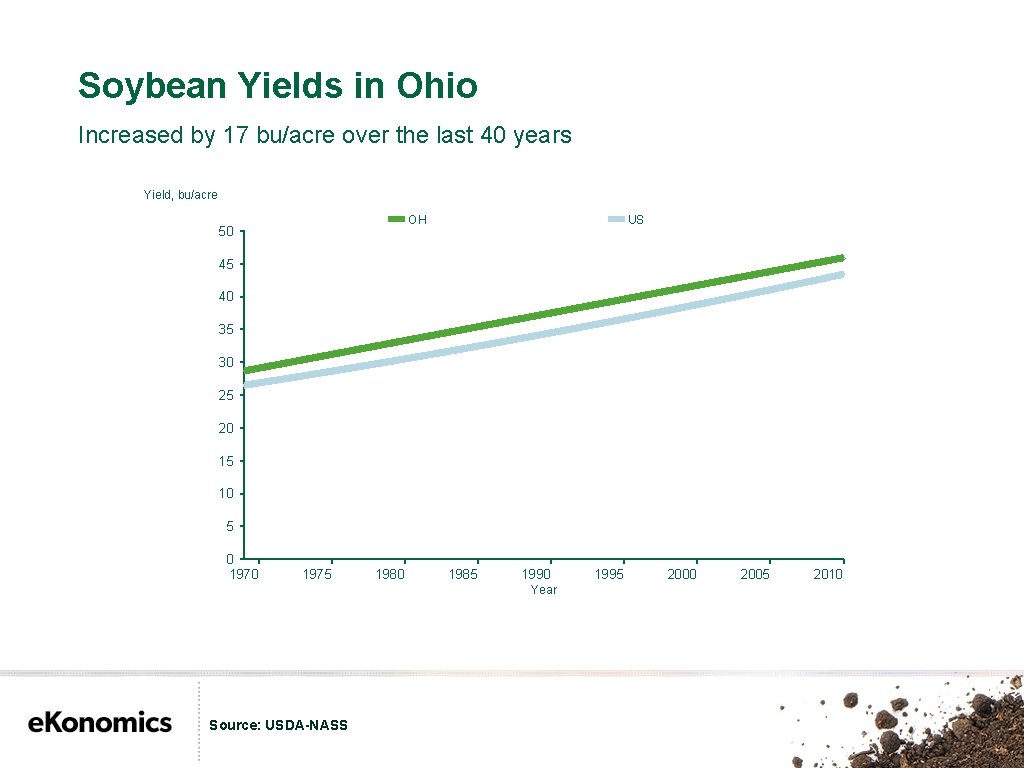
Soybean Yields in Ohio Increased by 17 bu/acre over the last 40 years Yield, bu/acre OH 50 US 45 40 35 30 25 20 15 10 5 0 1975 1980 1985 1990 Year Source: USDA-NASS 1995 2000 2005 2010
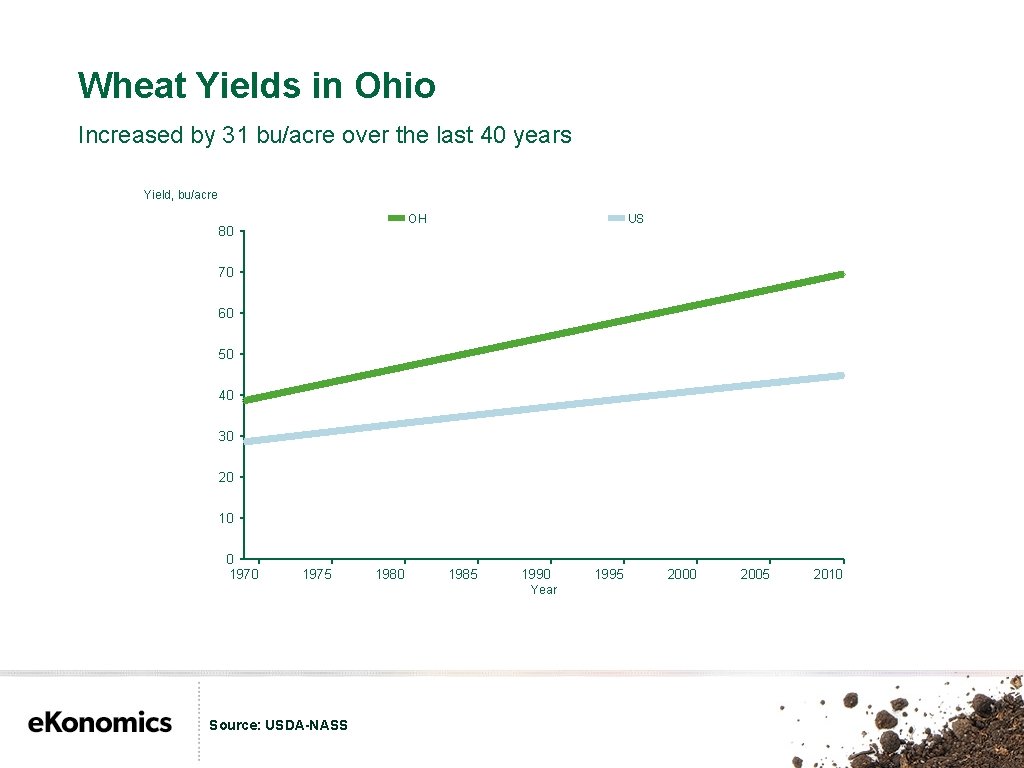
Wheat Yields in Ohio Increased by 31 bu/acre over the last 40 years Yield, bu/acre OH 80 US 70 60 50 40 30 20 10 0 1975 1980 1985 1990 Year Source: USDA-NASS 1995 2000 2005 2010
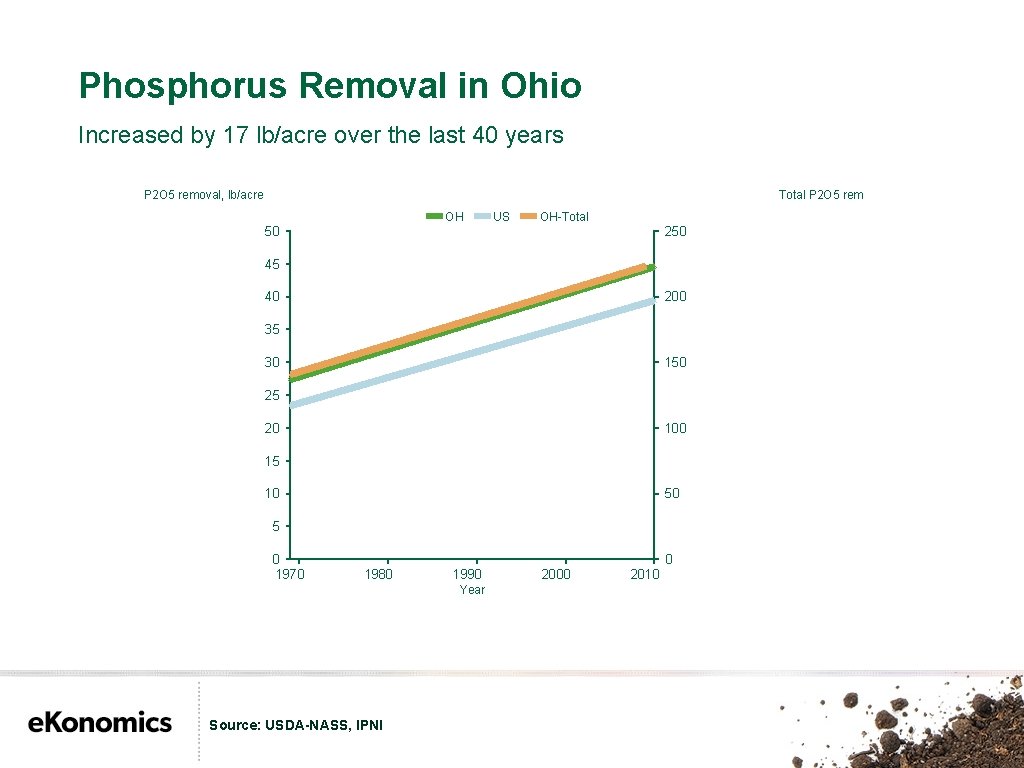
Phosphorus Removal in Ohio Increased by 17 lb/acre over the last 40 years P 2 O 5 removal, lb/acre Total P 2 O 5 removal, tons x 1000 OH US OH-Total 50 250 45 40 200 35 30 150 25 20 100 15 10 50 5 0 1970 0 1980 1990 Year Source: USDA-NASS, IPNI 2000 2010
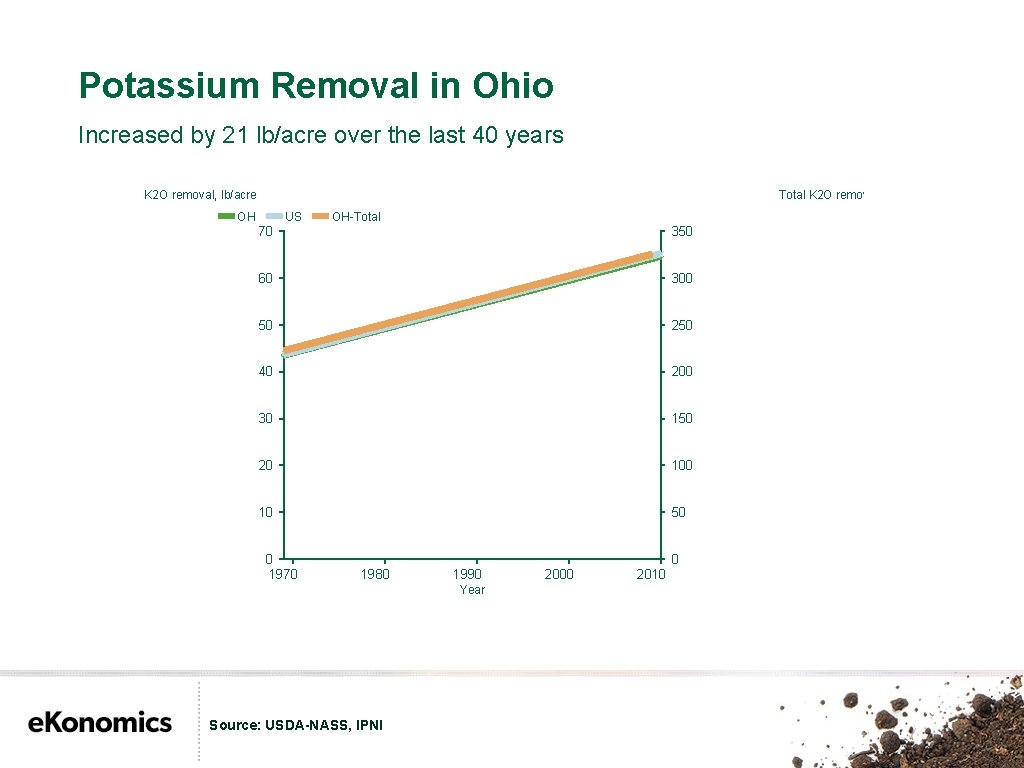
Potassium Removal in Ohio Increased by 21 lb/acre over the last 40 years K 2 O removal, lb/acre Total K 2 O removal, tons x 1000 OH US OH-Total 70 350 60 300 50 250 40 200 30 150 20 10 50 0 1970 0 1980 1990 Year Source: USDA-NASS, IPNI 2000 2010
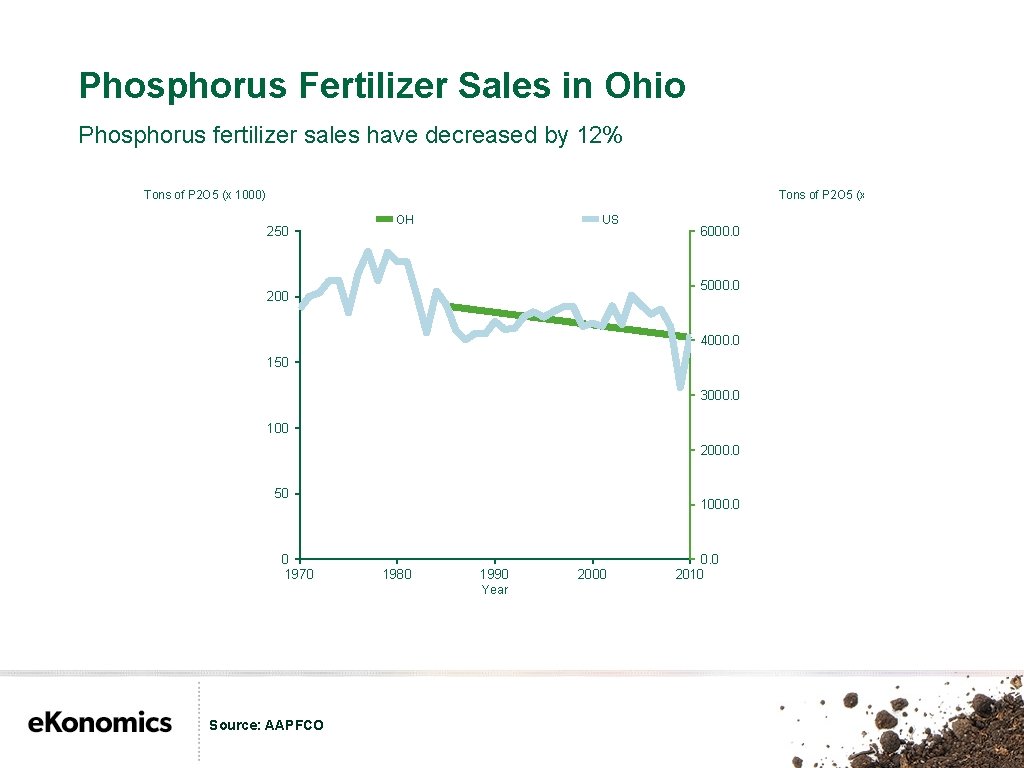
Phosphorus Fertilizer Sales in Ohio Phosphorus fertilizer sales have decreased by 12% Tons of P 2 O 5 (x 1000) 250 OH US 6000. 0 5000. 0 200 4000. 0 150 3000. 0 100 2000. 0 50 0 1970 1000. 0 1980 1990 Year Source: AAPFCO 2000 0. 0 2010
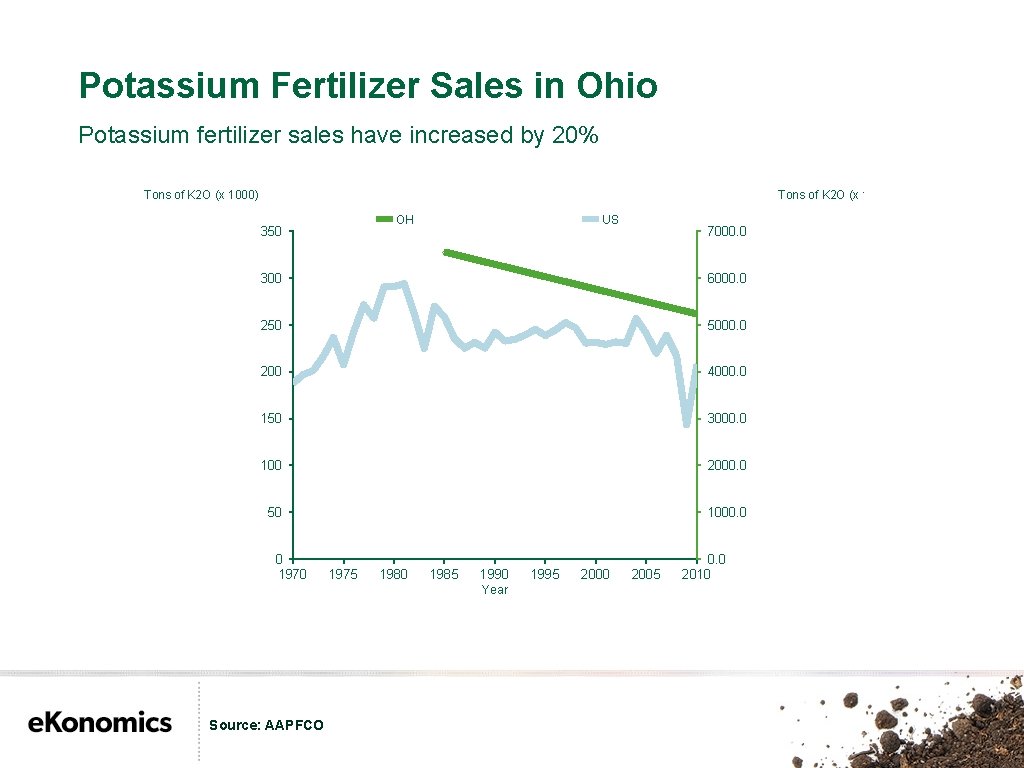
Potassium Fertilizer Sales in Ohio Potassium fertilizer sales have increased by 20% Tons of K 2 O (x 1000) OH 350 US 7000. 0 300 6000. 0 250 5000. 0 200 4000. 0 150 3000. 0 100 2000. 0 50 1000. 0 0 1975 1980 1985 1990 Year Source: AAPFCO 1995 2000 2005 0. 0 2010
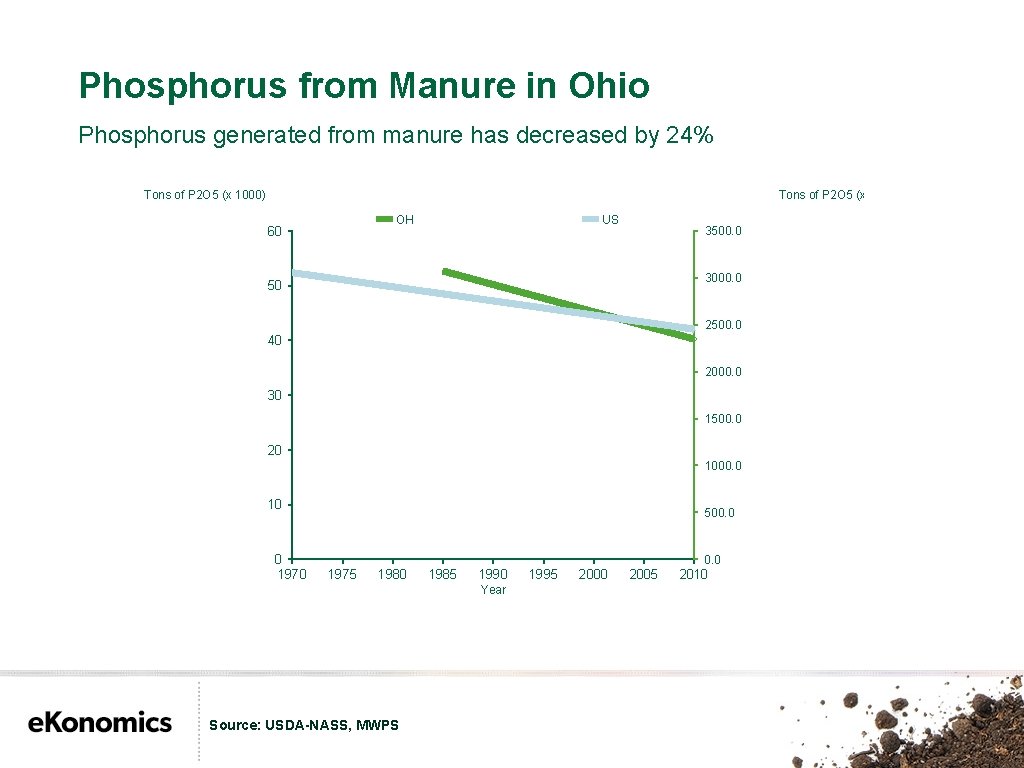
Phosphorus from Manure in Ohio Phosphorus generated from manure has decreased by 24% Tons of P 2 O 5 (x 1000) OH 60 US 3500. 0 3000. 0 50 2500. 0 40 2000. 0 30 1500. 0 20 1000. 0 10 0 1970 500. 0 1975 1980 1985 1990 Year Source: USDA-NASS, MWPS 1995 2000 2005 2010
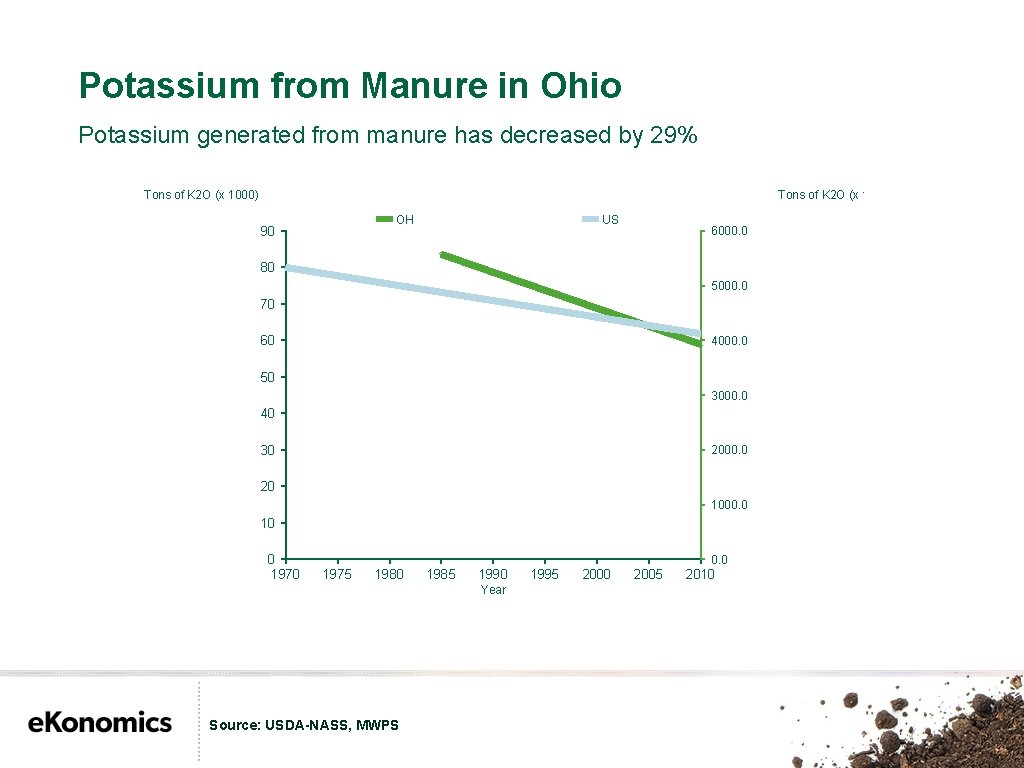
Potassium from Manure in Ohio Potassium generated from manure has decreased by 29% Tons of K 2 O (x 1000) OH 90 US 6000. 0 80 5000. 0 70 60 4000. 0 50 3000. 0 40 30 2000. 0 20 1000. 0 10 0 1970 0. 0 1975 1980 1985 1990 Year Source: USDA-NASS, MWPS 1995 2000 2005 2010
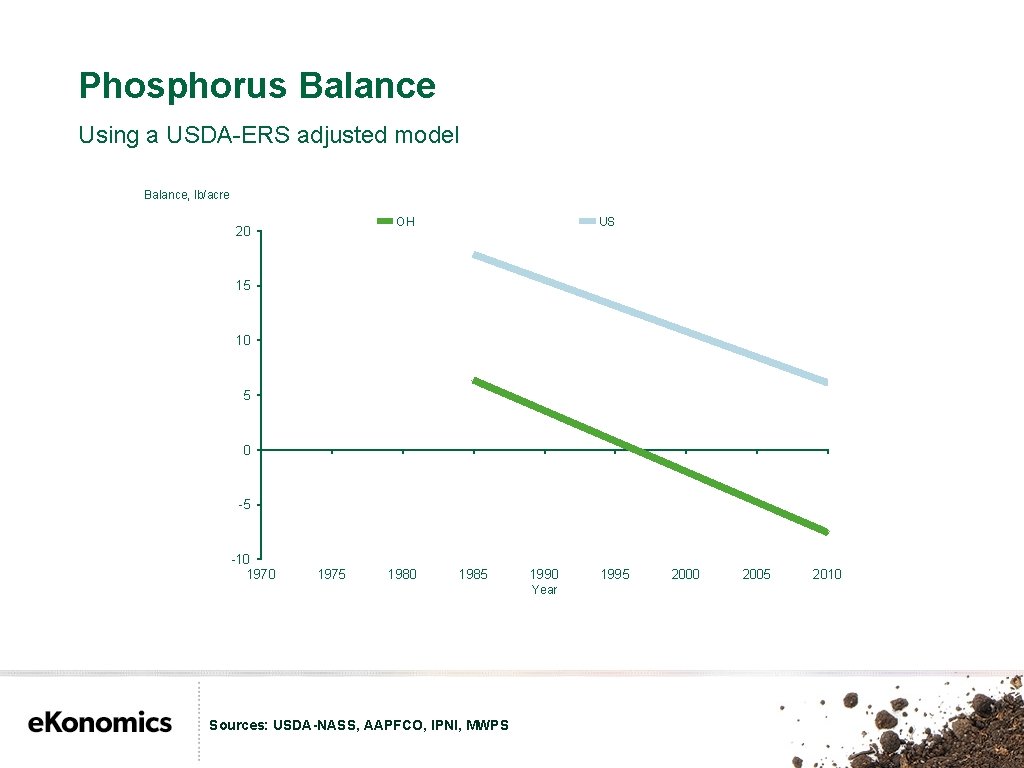
Phosphorus Balance Using a USDA-ERS adjusted model Balance, lb/acre OH 20 US 15 10 5 0 -5 -10 1975 1980 1985 1990 Year Sources: USDA-NASS, AAPFCO, IPNI, MWPS 1995 2000 2005 2010
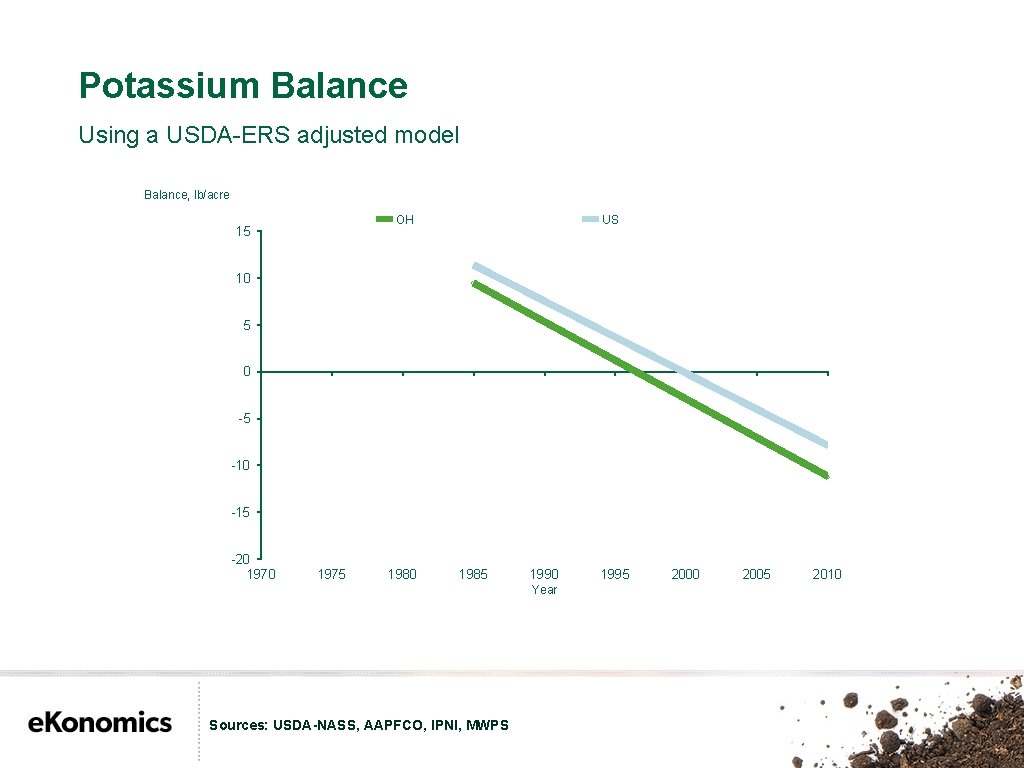
Potassium Balance Using a USDA-ERS adjusted model Balance, lb/acre OH 15 US 10 5 0 -5 -10 -15 -20 1975 1980 1985 1990 Year Sources: USDA-NASS, AAPFCO, IPNI, MWPS 1995 2000 2005 2010
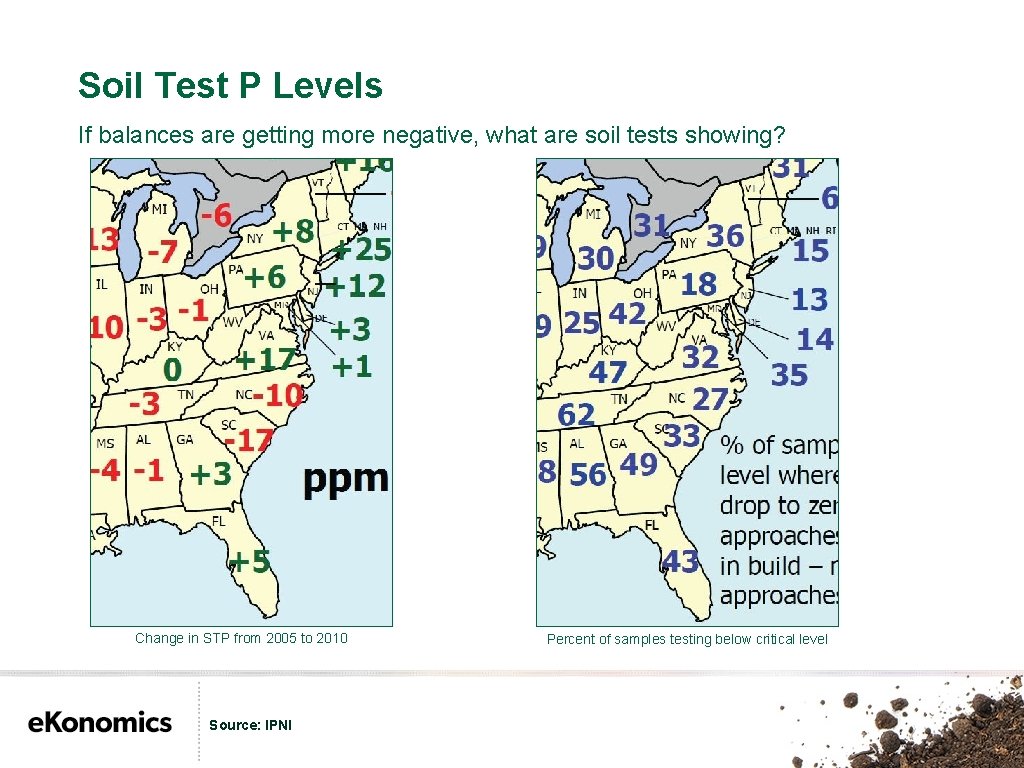
Soil Test P Levels If balances are getting more negative, what are soil tests showing? Change in STP from 2005 to 2010 Source: IPNI Percent of samples testing below critical level
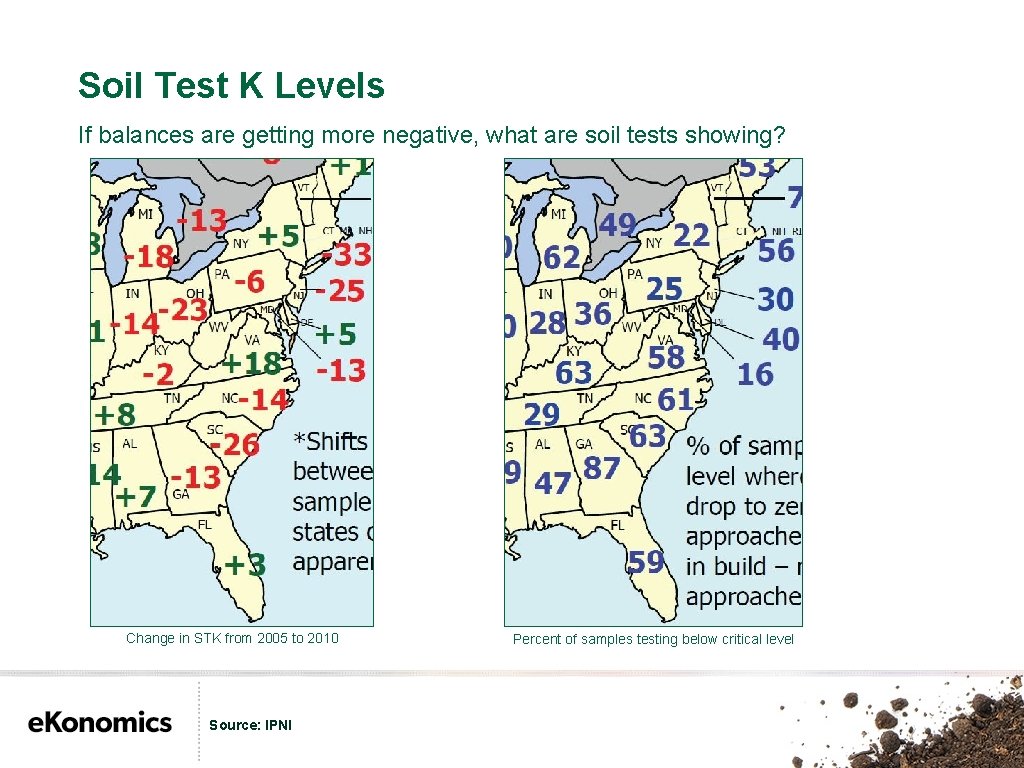
Soil Test K Levels If balances are getting more negative, what are soil tests showing? Change in STK from 2005 to 2010 Source: IPNI Percent of samples testing below critical level
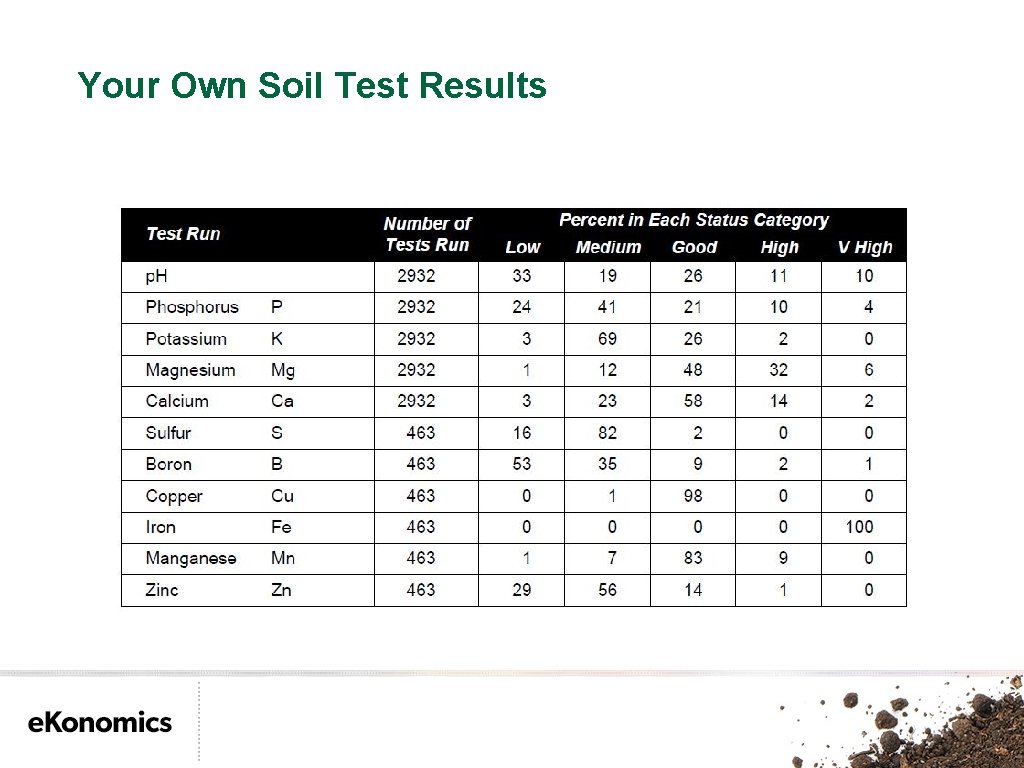
Your Own Soil Test Results

Starters
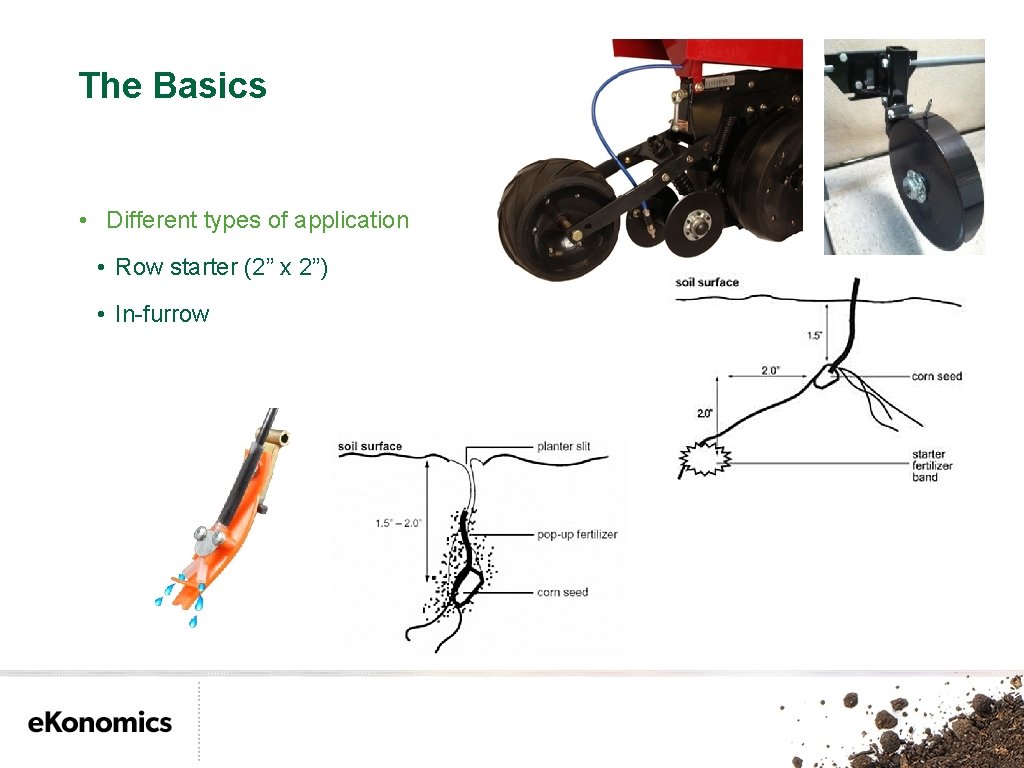
The Basics • Different types of application • Row starter (2” x 2”) • In-furrow
Row Starters • Positives: • Higher application rates (seed safety always a concern with starters) • App rates can be as high as 80 to 100 pounds of total salt (N + K 2 O) • Less concern with salt index of materials • Negatives: • Requires additional application equipment and weight
In-Furrow Starters • Positives: • Does not require much in the way of additional equipment • Better proximal availability of less mobile nutrients (specifically micronutrients) • Negatives: • Dramatically lower rates of application • Total salt applications should not exceed 5 lbs/acre for coarse soils and 8 -10 lb/acre for fine soils • Greater concerns of salt index of materials
What Does Salt Index Mean? • Whenever you add a salt to a solution, some (or all) of it dissolves • When it dissolves it alters the osmotic potential of the solution • Osmotic potential dictates where water will move (always moves down a concentration gradient) • Water moves from an area with lower salt concentration to an area with higher salt concentration • Osmotic potential is always negative, so an area with higher concentration of salts will have a more negative number
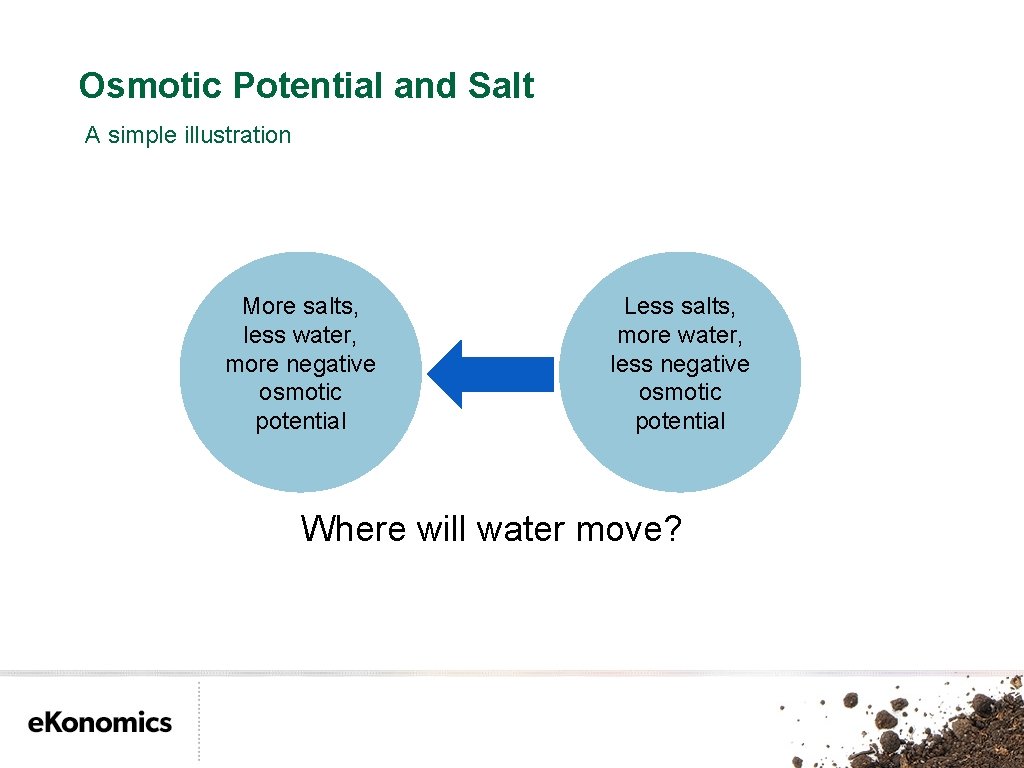
Osmotic Potential and Salt A simple illustration More salts, less water, more negative osmotic potential Less salts, more water, less negative osmotic potential Where will water move?
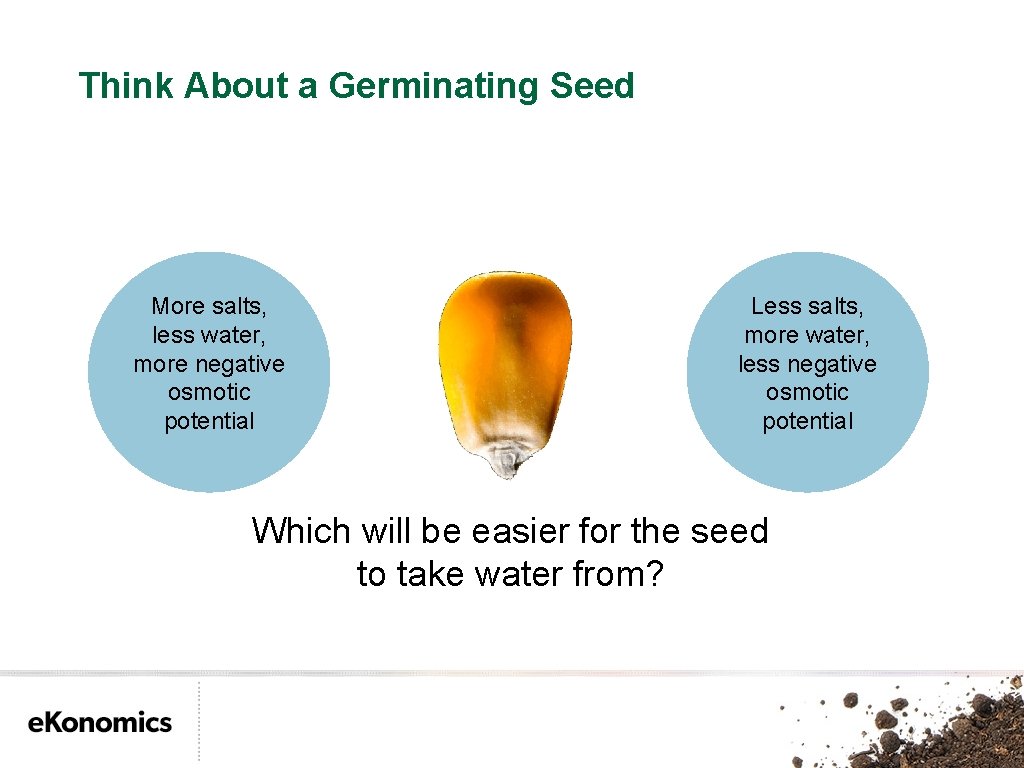
Think About a Germinating Seed More salts, less water, more negative osmotic potential Less salts, more water, less negative osmotic potential Which will be easier for the seed to take water from?
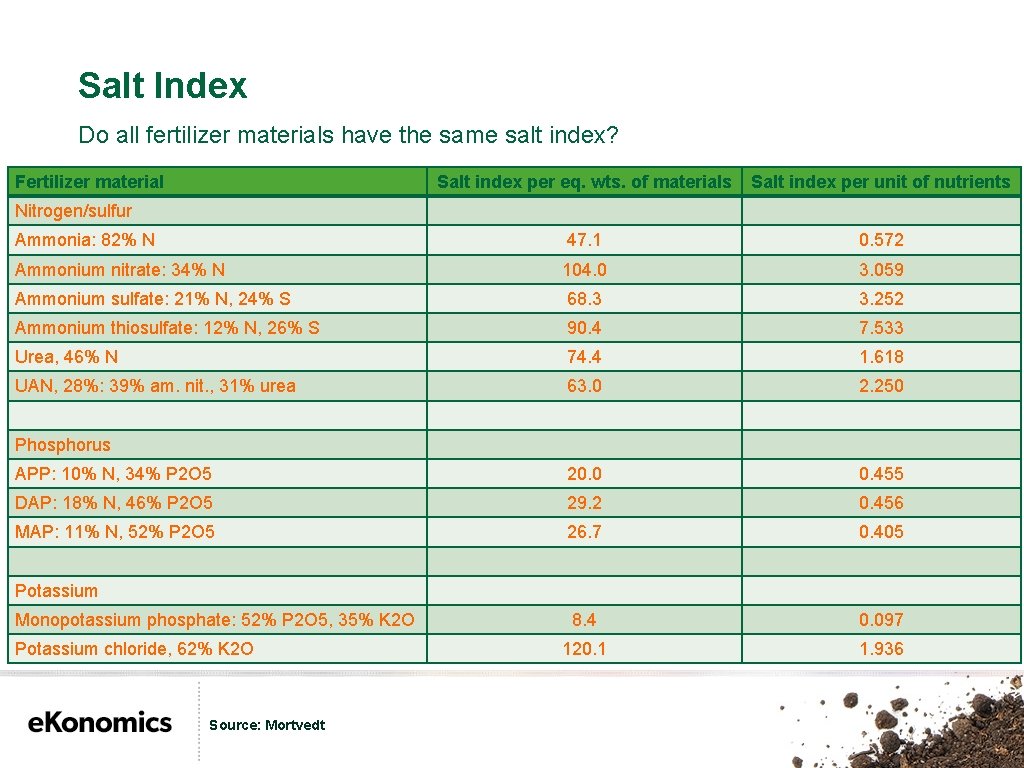
Salt Index Do all fertilizer materials have the same salt index? Fertilizer material Salt index per eq. wts. of materials Salt index per unit of nutrients Ammonia: 82% N 47. 1 0. 572 Ammonium nitrate: 34% N 104. 0 3. 059 Ammonium sulfate: 21% N, 24% S 68. 3 3. 252 Ammonium thiosulfate: 12% N, 26% S 90. 4 7. 533 Urea, 46% N 74. 4 1. 618 UAN, 28%: 39% am. nit. , 31% urea 63. 0 2. 250 APP: 10% N, 34% P 2 O 5 20. 0 0. 455 DAP: 18% N, 46% P 2 O 5 29. 2 0. 456 MAP: 11% N, 52% P 2 O 5 26. 7 0. 405 8. 4 0. 097 120. 1 1. 936 Nitrogen/sulfur Phosphorus Potassium Monopotassium phosphate: 52% P 2 O 5, 35% K 2 O Potassium chloride, 62% K 2 O Source: Mortvedt
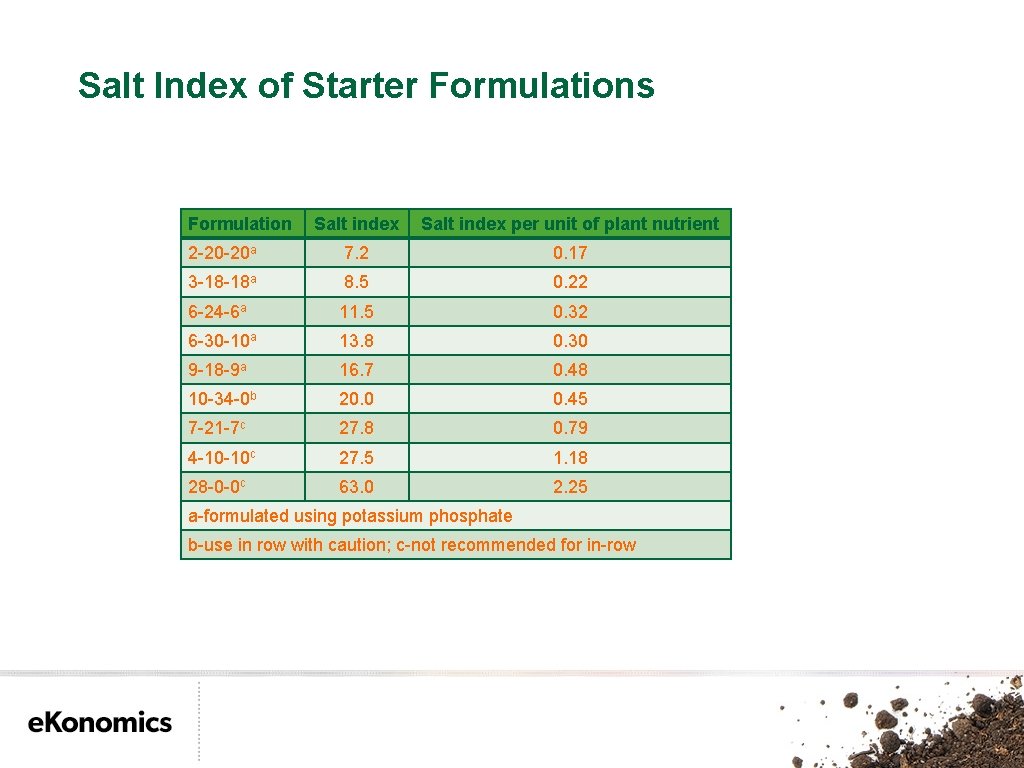
Salt Index of Starter Formulations Formulation Salt index per unit of plant nutrient 2 -20 -20 a 7. 2 0. 17 3 -18 -18 a 8. 5 0. 22 6 -24 -6 a 11. 5 0. 32 6 -30 -10 a 13. 8 0. 30 9 -18 -9 a 16. 7 0. 48 10 -34 -0 b 20. 0 0. 45 7 -21 -7 c 27. 8 0. 79 4 -10 -10 c 27. 5 1. 18 28 -0 -0 c 63. 0 2. 25 a-formulated using potassium phosphate b-use in row with caution; c-not recommended for in-row
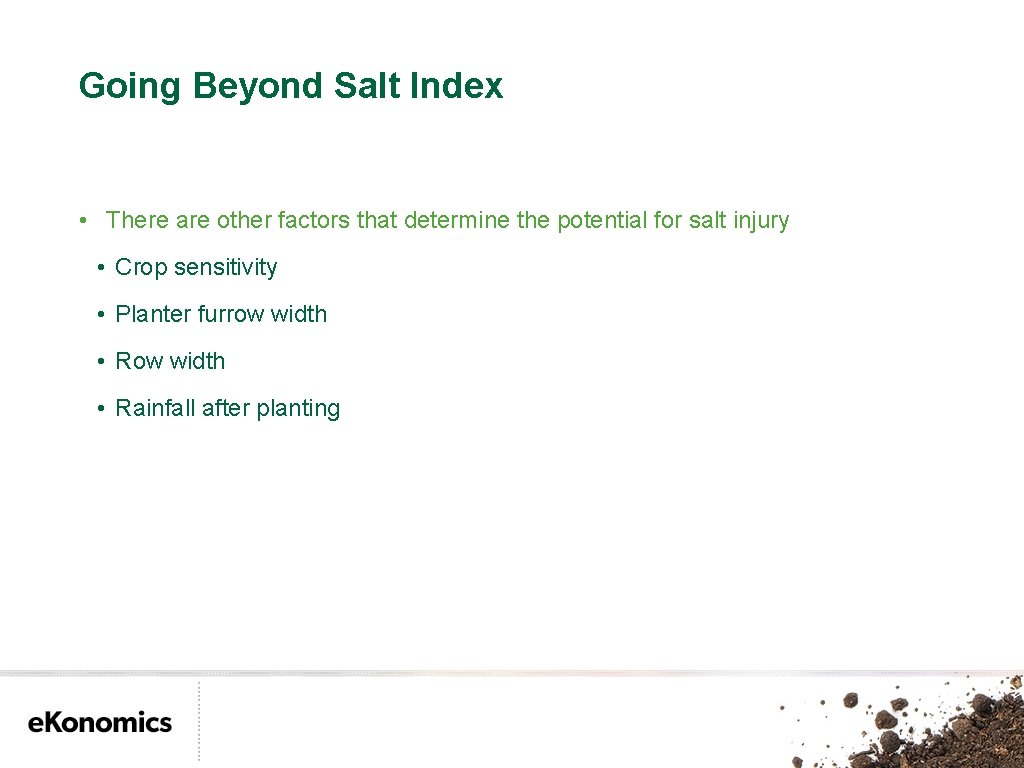
Going Beyond Salt Index • There are other factors that determine the potential for salt injury • Crop sensitivity • Planter furrow width • Rainfall after planting
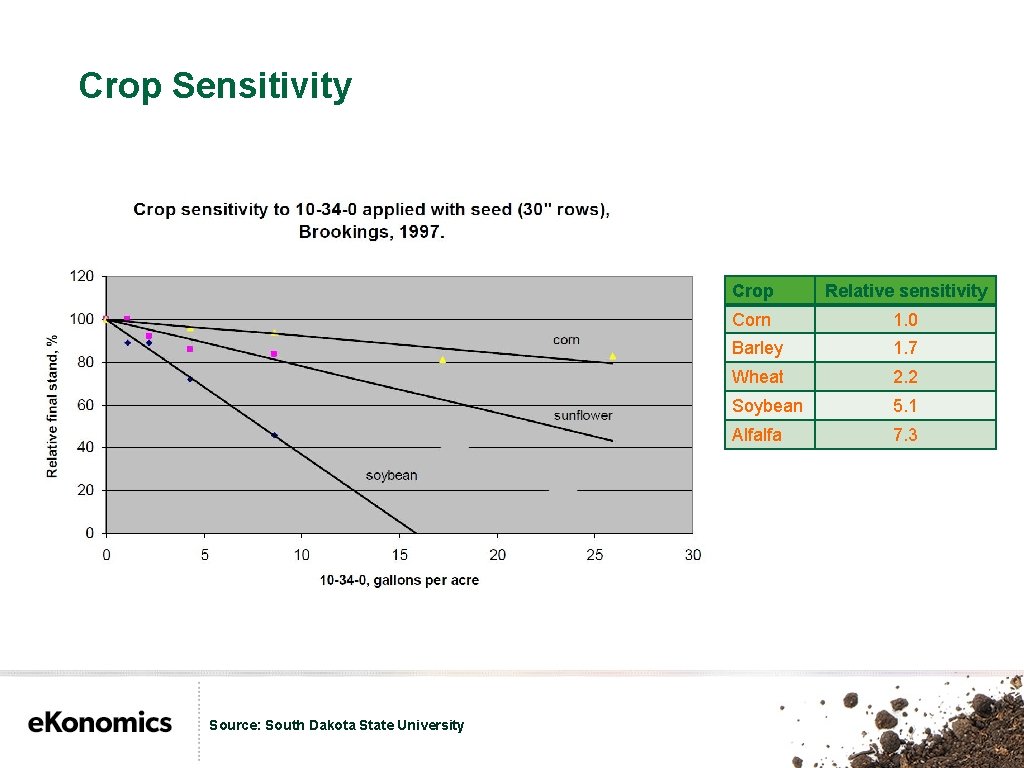
Crop Sensitivity Source: South Dakota State University Crop Relative sensitivity Corn 1. 0 Barley 1. 7 Wheat 2. 2 Soybean 5. 1 Alfalfa 7. 3
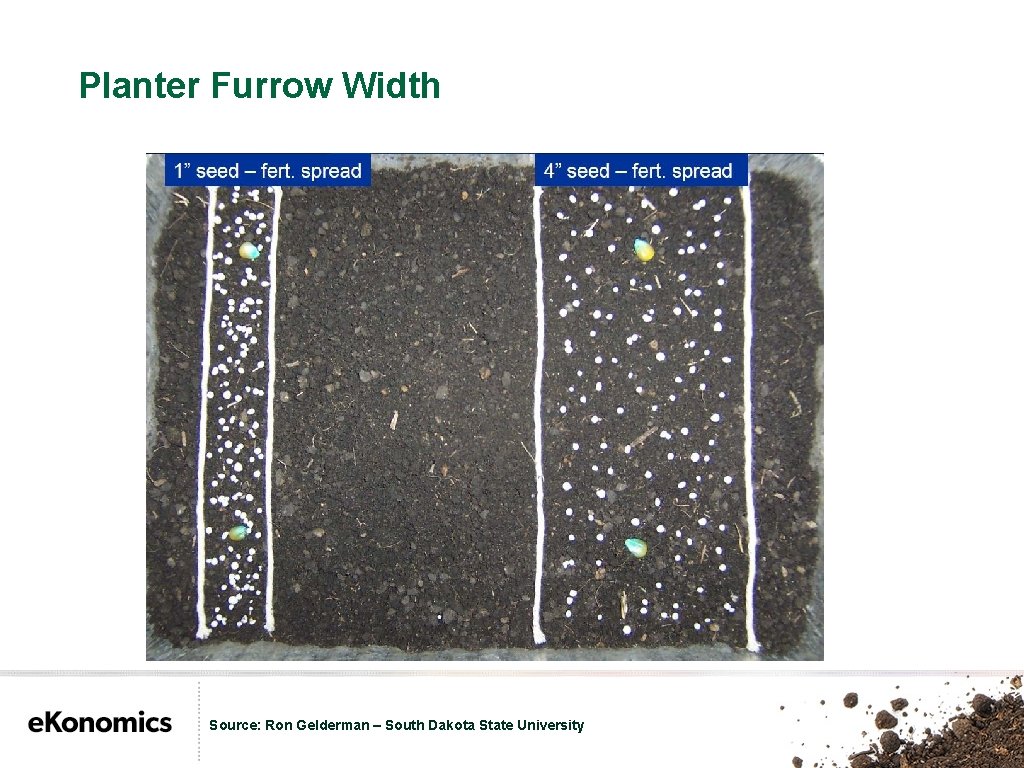
Planter Furrow Width Source: Ron Gelderman – South Dakota State University
Agronomic Benefits • Without question, visual responses are very evident early during the growing season that starters are beneficial • More vigorous growth, slightly advanced stage of growth • Can have lower grain moisture level at harvest • Does not always translate into a yield benefit • Dictated by • Growing season (cooler temperatures – greater potential for yield benefit) • Soil test levels (lower soil test levels – greater potential for yield benefit) • Tillage (high residue systems – greater potential for yield benefit)
Foliar Fertilizers
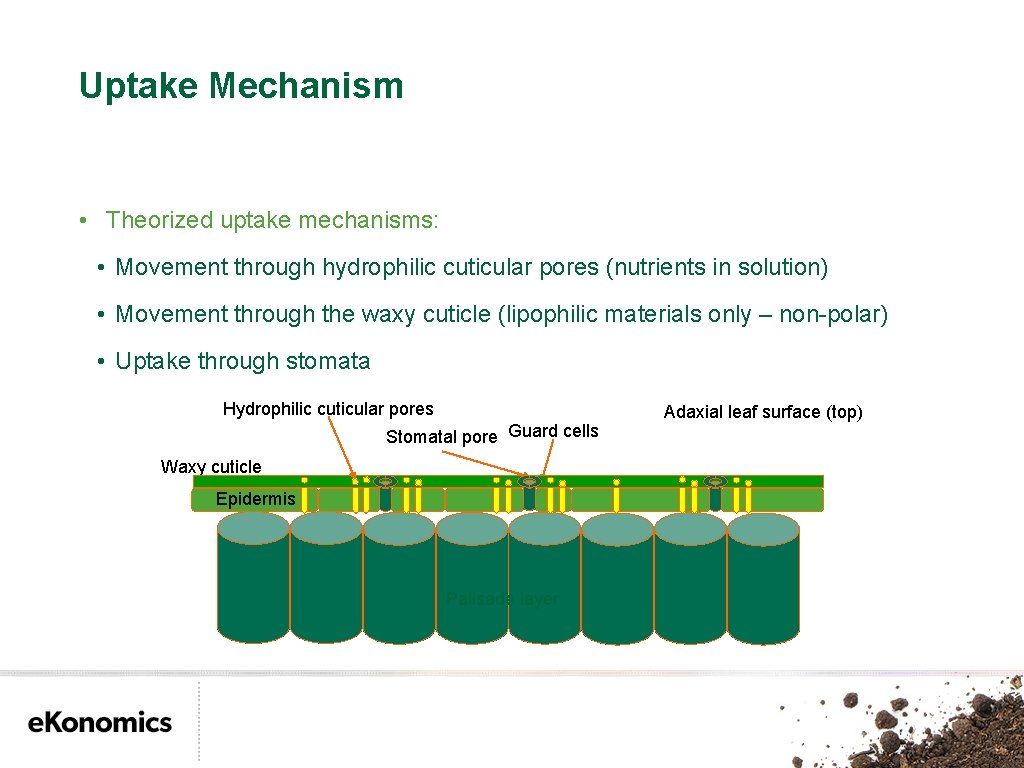
Uptake Mechanism • Theorized uptake mechanisms: • Movement through hydrophilic cuticular pores (nutrients in solution) • Movement through the waxy cuticle (lipophilic materials only – non-polar) • Uptake through stomata Hydrophilic cuticular pores Stomatal pore Guard cells Waxy cuticle Epidermis Palisade layer Adaxial leaf surface (top)
Uptake Mechanism • Despite a good understanding of just how a nutrient moves into the leaf, we do know that they can and do get in • Cotton research demonstrated that 30% of applied foliar N moved into the leaf within an hour, and it moved to the nearest boll within 6 to 48 hours • Soybean research has demonstrated that foliar applied K can increase yield when the crop is K deficient • Micronutrient research has demonstrated that foliar applications can increase nutrient concentration and yield when the nutrient is deficient
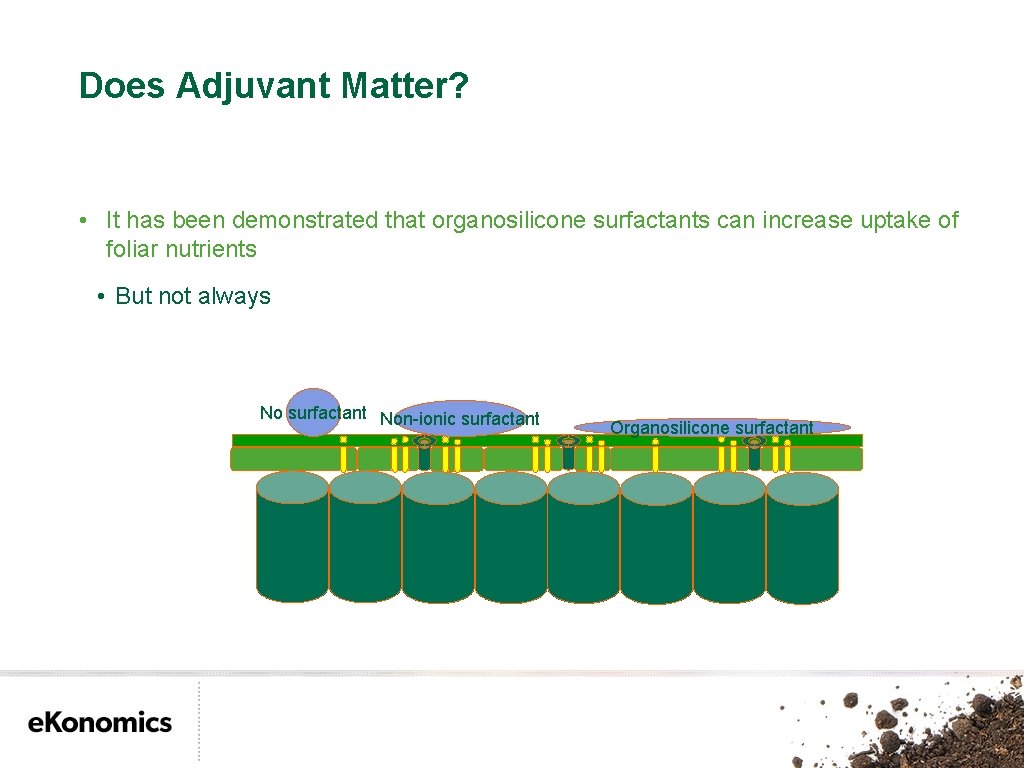
Does Adjuvant Matter? • It has been demonstrated that organosilicone surfactants can increase uptake of foliar nutrients • But not always No surfactant Non-ionic surfactant Organosilicone surfactant
Agronomic Benefits • What determines if there is a benefit? • From the plant demand side: • Plant demand exceeds the soil’s ability to supply due to: • Unfavorable p. H, poor root growth, unfavorable environment • Periods of peak demand • Plant demand cannot be satisfied due to: • Conditions that precluded application of materials to soil (wet, costly, etc. )
Agronomic Benefits • What determines if there is a benefit? • From the supply side (application of the foliar nutrient) • Limit to how much can actually be applied • Concerns with foliar burn, physiological limitation to uptake (nutrient size, charge, solution p. H) • Environmental conditions at the time of application • Rain-free period, humidity, wind speed, etc. • Use of adjuvants • Improves leaf wetness by decreasing surface tension of solution

Thank you There’s more online: Potash. Corp. com Visit us online Facebook. com/Potash. Corp Find us on Facebook Twitter. com/Potash. Corp Follow us on Twitter
- Slides: 49