
Oh Me Oh Meiosis Objective To learn how

Oh Me, Oh Mei-osis! Objective: To learn how gametes pass on characteristics Bell work: Looking back at protein synthesis, describe in your own words how you used a strand of DNA to create a protein. There are several steps to synthesizing proteins. The first step is transcription. During transcription, a copy of DNA is made in a single strand called m. RNA but in RNA, thymine is replaced with uracil. m. RNA then leaves the nucleus to join the ribosomes in the cytoplasm. At the ribosome, r. RNA helps t. RNA link amino acids together to make a polypeptide (protein) chain. © Getting Nerdy, LLC
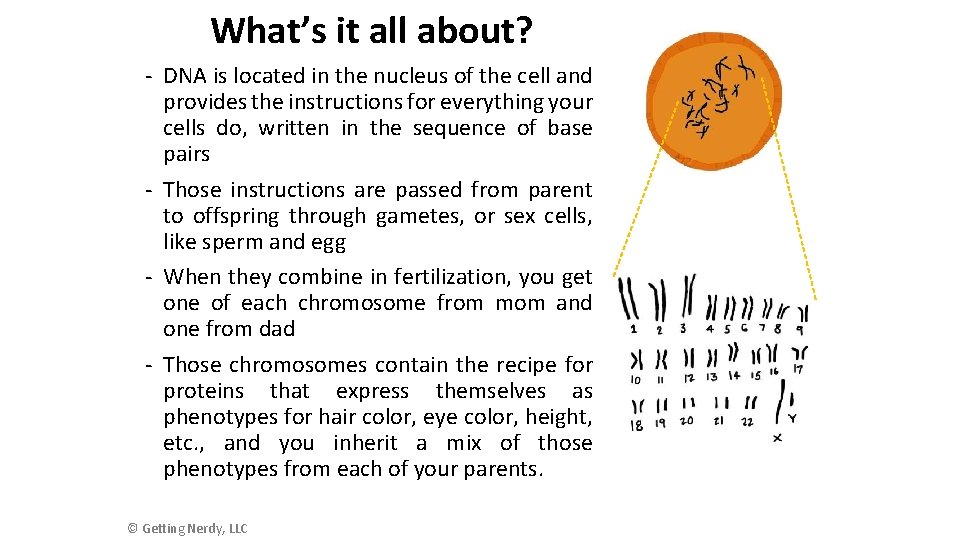
What’s it all about? - DNA is located in the nucleus of the cell and provides the instructions for everything your cells do, written in the sequence of base pairs - Those instructions are passed from parent to offspring through gametes, or sex cells, like sperm and egg - When they combine in fertilization, you get one of each chromosome from mom and one from dad - Those chromosomes contain the recipe for proteins that express themselves as phenotypes for hair color, eye color, height, etc. , and you inherit a mix of those phenotypes from each of your parents. © Getting Nerdy, LLC
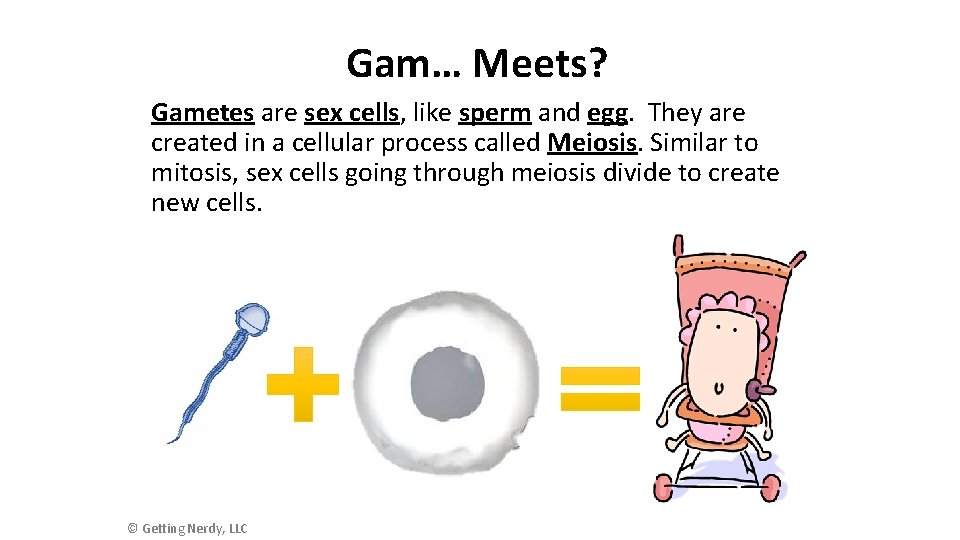
Gam… Meets? Gametes are sex cells, like sperm and egg. They are created in a cellular process called Meiosis. Similar to mitosis, sex cells going through meiosis divide to create new cells. © Getting Nerdy, LLC

There are two main differences between mitosis and meiosis: FIRST, they go through the division process TWICE! SECOND, when they divide, they create cells that have HALF the number of CHROMOSOMES than all of the other cells in your body! That’s 23 CHROMOSOMES and we call that HAPLOID! DIPLOID CELLS HAPLOID CELLS © Getting Nerdy, LLC

Male Parent Female Parent Diploid cells contain two (doubled) copies of each chromosome. Diploid Cells Meiosis: creation of sex cells (gametes) Haploid Cells Fertilization Sperm Cell Diploid Embryo © Getting Nerdy, LLC Meiosis creates haploid (halved) gametes or sex cells containing only one member of each chromosome pair from the diploid parent cells. Egg Cell Fertilization results in the formation of a diploid embryo, which contains chromosomes donated by both parents.

This way, when the sperm and egg join in fertilization, you get 23 chromosomes from mom and 23 chromosomes from dad – a total of 46 chromosomes in ALL (DIPLOID or DOUBLE)! This DNA combination is in every one of your body cells and is unique to YOU! © Getting Nerdy, LLC
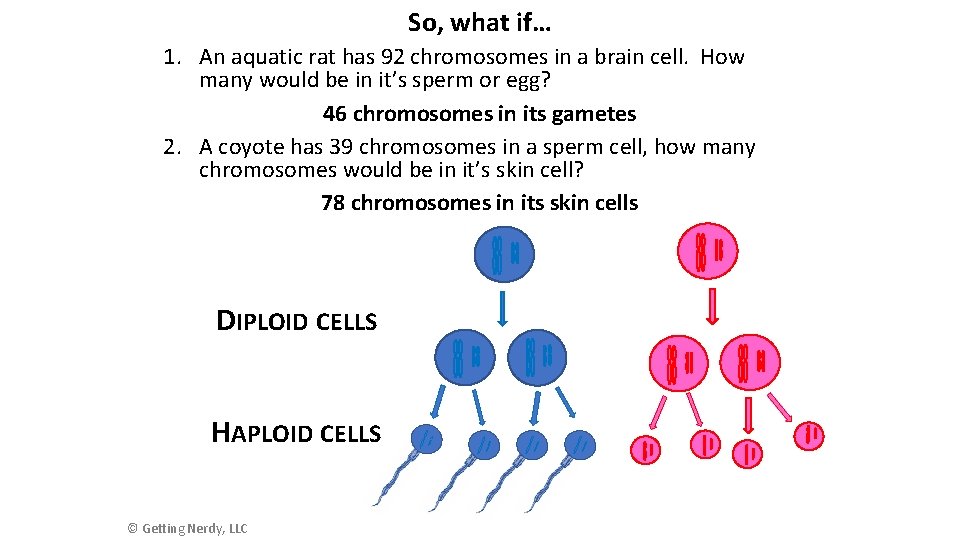
So, what if… 1. An aquatic rat has 92 chromosomes in a brain cell. How many would be in it’s sperm or egg? 46 chromosomes in its gametes 2. A coyote has 39 chromosomes in a sperm cell, how many chromosomes would be in it’s skin cell? 78 chromosomes in its skin cells DIPLOID CELLS HAPLOID CELLS © Getting Nerdy, LLC
- Slides: 7