
Office Safety Recognizing and correcting hazards Introduction We
- Slides: 17
Office Safety Recognizing and correcting hazards
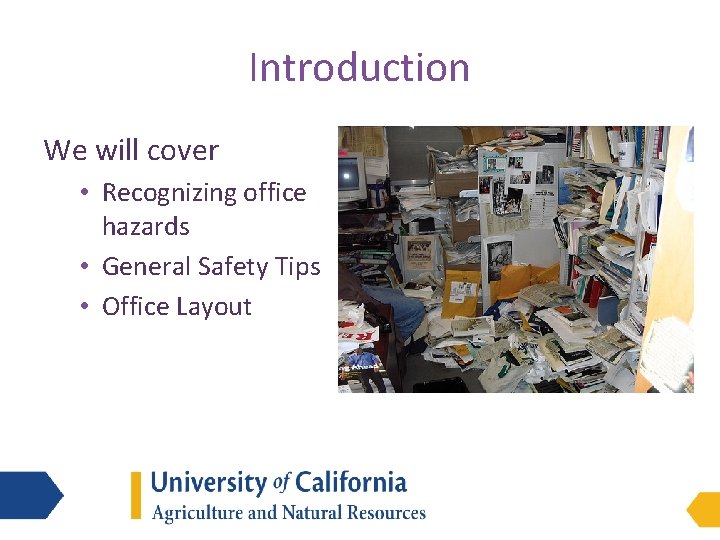
Introduction We will cover • Recognizing office hazards • General Safety Tips • Office Layout
Other Hazards
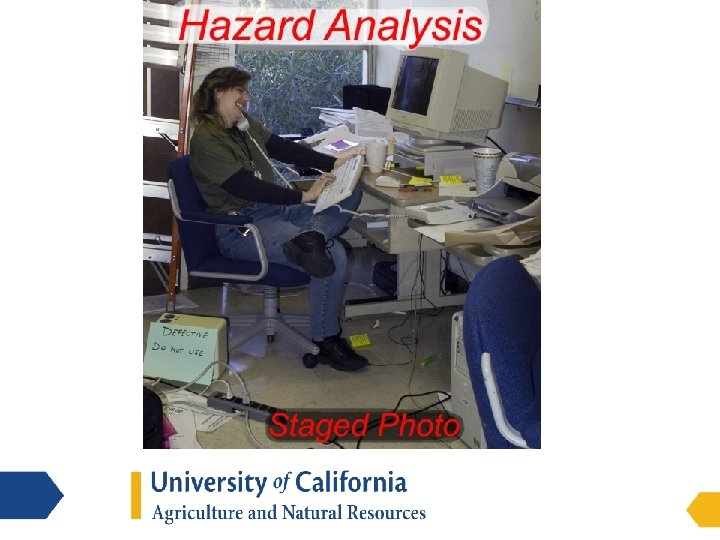
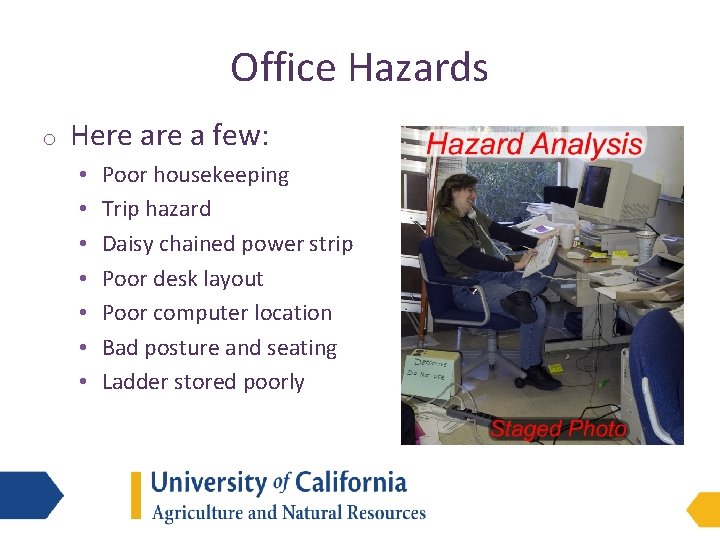
Office Hazards o Here a few: • • Poor housekeeping Trip hazard Daisy chained power strip Poor desk layout Poor computer location Bad posture and seating Ladder stored poorly
Office Hazards o Why is it bad: • Poor housekeeping • This also can block an emergency escape route or lead to falls • Trip hazard • Slips/Trips/Falls is a leading cause of injuries in ANR • Daisy chained power strip • Overload the circuit and/or cause one strip to over heat
Office Hazards o Why is it bad: • Poor desk layout, computer location, bad posture and seating § Can lead to pain and ergonomic-related injuries • Ladder stored poorly § Outdoor equipment, as with other equipment, should be stored in its proper place where it will not pose a hazard
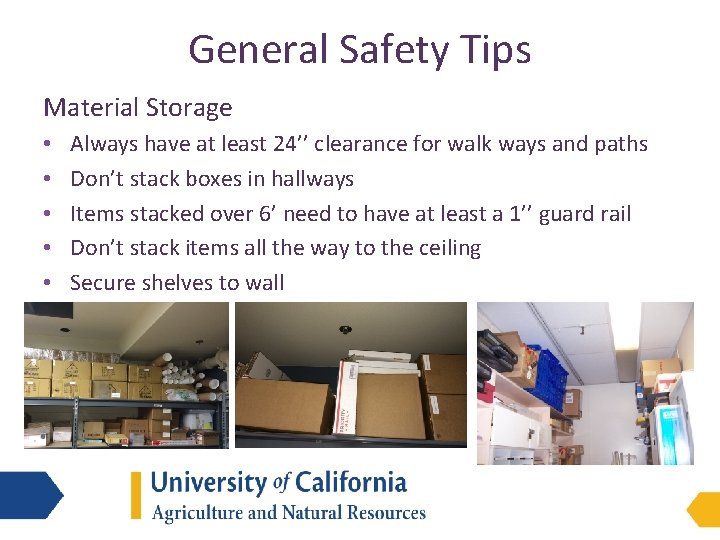
General Safety Tips Material Storage • • • Always have at least 24’’ clearance for walk ways and paths Don’t stack boxes in hallways Items stacked over 6’ need to have at least a 1’’ guard rail Don’t stack items all the way to the ceiling Secure shelves to wall
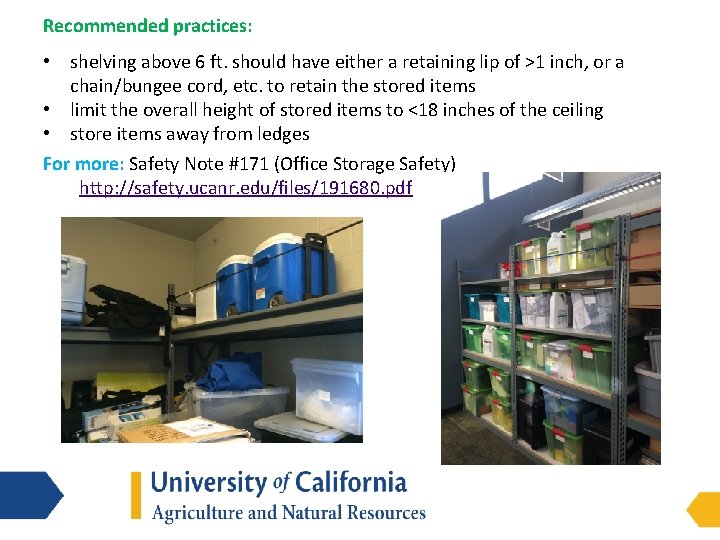
Recommended practices: • shelving above 6 ft. should have either a retaining lip of >1 inch, or a chain/bungee cord, etc. to retain the stored items • limit the overall height of stored items to <18 inches of the ceiling • store items away from ledges For more: Safety Note #171 (Office Storage Safety) http: //safety. ucanr. edu/files/191680. pdf
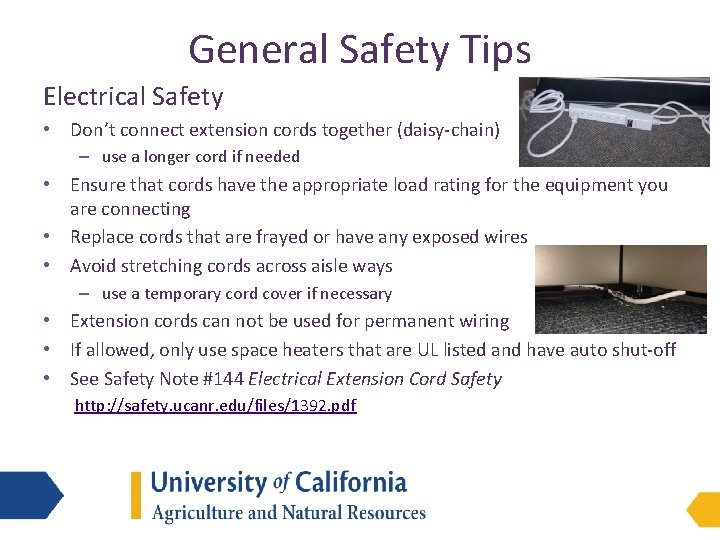
General Safety Tips Electrical Safety • Don’t connect extension cords together (daisy-chain) – use a longer cord if needed • Ensure that cords have the appropriate load rating for the equipment you are connecting • Replace cords that are frayed or have any exposed wires • Avoid stretching cords across aisle ways – use a temporary cord cover if necessary • Extension cords can not be used for permanent wiring • If allowed, only use space heaters that are UL listed and have auto shut-off • See Safety Note #144 Electrical Extension Cord Safety http: //safety. ucanr. edu/files/1392. pdf
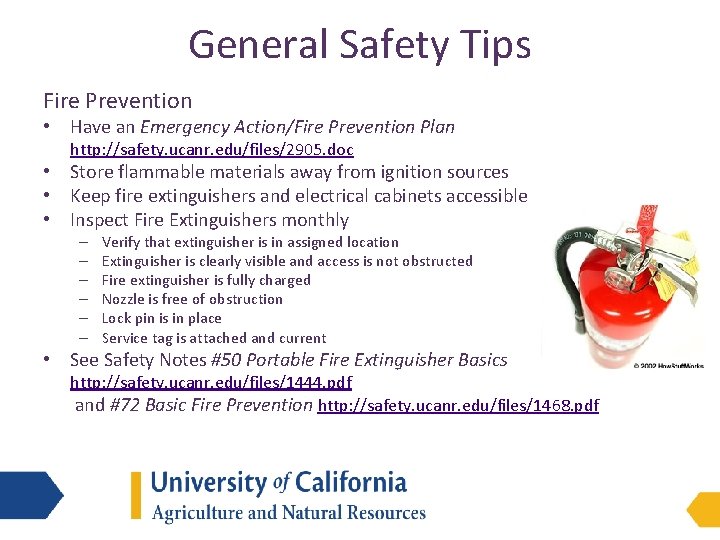
General Safety Tips Fire Prevention • Have an Emergency Action/Fire Prevention Plan http: //safety. ucanr. edu/files/2905. doc • Store flammable materials away from ignition sources • Keep fire extinguishers and electrical cabinets accessible • Inspect Fire Extinguishers monthly – – – Verify that extinguisher is in assigned location Extinguisher is clearly visible and access is not obstructed Fire extinguisher is fully charged Nozzle is free of obstruction Lock pin is in place Service tag is attached and current • See Safety Notes #50 Portable Fire Extinguisher Basics http: //safety. ucanr. edu/files/1444. pdf and #72 Basic Fire Prevention http: //safety. ucanr. edu/files/1468. pdf
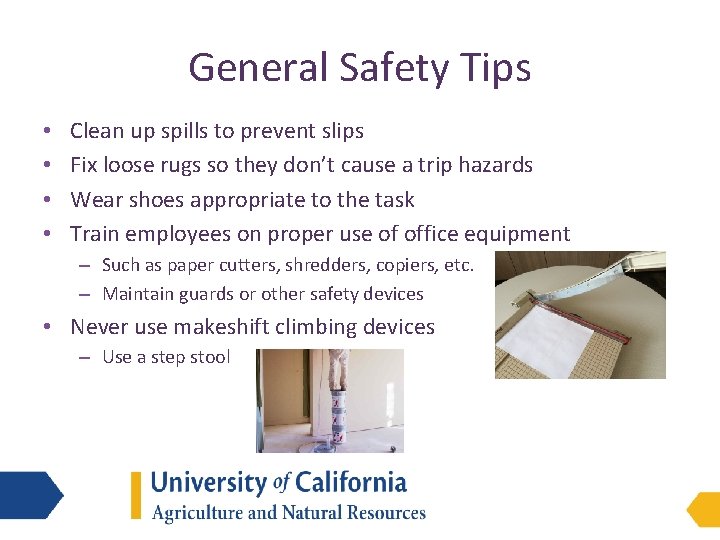
General Safety Tips • • Clean up spills to prevent slips Fix loose rugs so they don’t cause a trip hazards Wear shoes appropriate to the task Train employees on proper use of office equipment – Such as paper cutters, shredders, copiers, etc. – Maintain guards or other safety devices • Never use makeshift climbing devices – Use a step stool
General Safety Tips • Know emergency procedures for your facility – Evacuation routes and assembly area – Exits marked and kept clear – Perform evacuation drills • Manage hazardous materials properly – Maintain an inventory of hazardous materials – Keep safety data sheets for chemicals – Store chemicals properly and manage wastes
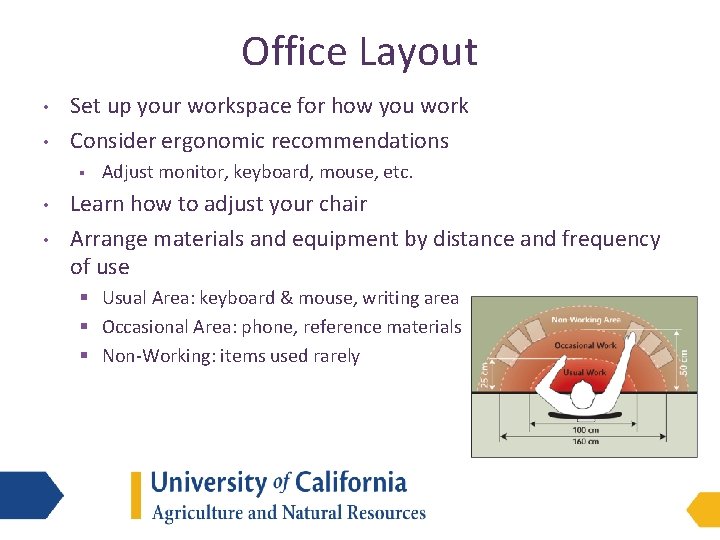
Office Layout • • Set up your workspace for how you work Consider ergonomic recommendations § • • Adjust monitor, keyboard, mouse, etc. Learn how to adjust your chair Arrange materials and equipment by distance and frequency of use § Usual Area: keyboard & mouse, writing area § Occasional Area: phone, reference materials § Non-Working: items used rarely
Office Layout • And for the rest of the stuff… § If possible, place items on either side of you, try to have a balance § Organized documents help reduce clutter, and can help in time management § Have the area around your feet clear, give yourself some stretching room § If you are not comfortable, change it, don’t just live with the way it was
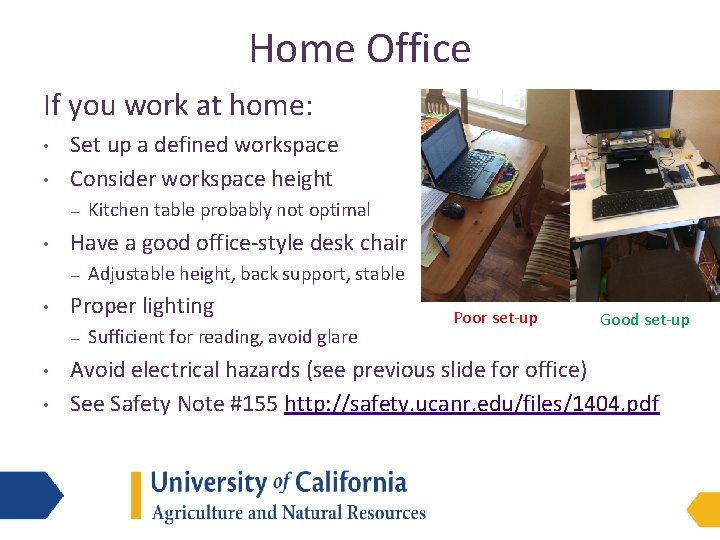
Home Office If you work at home: • • Set up a defined workspace Consider workspace height – • Have a good office-style desk chair – • • Adjustable height, back support, stable Proper lighting – • Kitchen table probably not optimal Sufficient for reading, avoid glare Poor set-up Good set-up Avoid electrical hazards (see previous slide for office) See Safety Note #155 http: //safety. ucanr. edu/files/1404. pdf
Reducing Stress • Adjust your workstation and tasks for comfort • Get organized • Take breaks • move around • do stretches at your desk • Relax your body
What Can You Do? • Be aware of hazards around you in the workplace – – • • Fix the ones you can Report the hazards that need attention Set up your space so it works for you not against you Keep up on housekeeping – In your space and in shared space