
OFFICE OF THE PRIME MINISTERS CHIEF SCIENCE ADVISOR
- Slides: 30
OFFICE OF THE PRIME MINISTER’S CHIEF SCIENCE ADVISOR Science advice in a Troubled World Sir Peter Gluckman ONZ FRS Chief Science Advisor to the Prime Minister of New Zealand Chair, International Network of Government Science Advice 15 Jan 2017, Ottawa
My starting premise » That governments are more likely to make better decisions when they use welldeveloped evidence wisely » But …. . . .
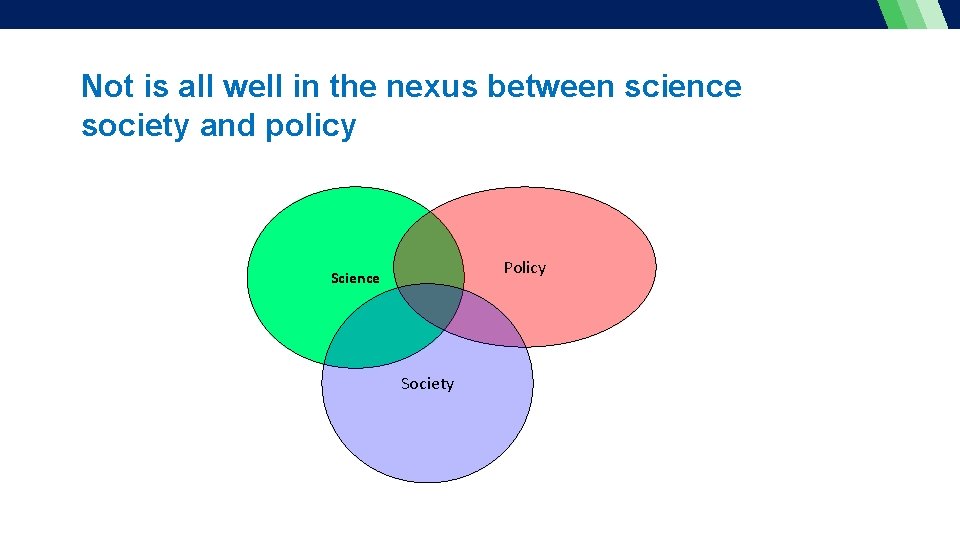
Not is all well in the nexus between science society and policy Policy Science Society
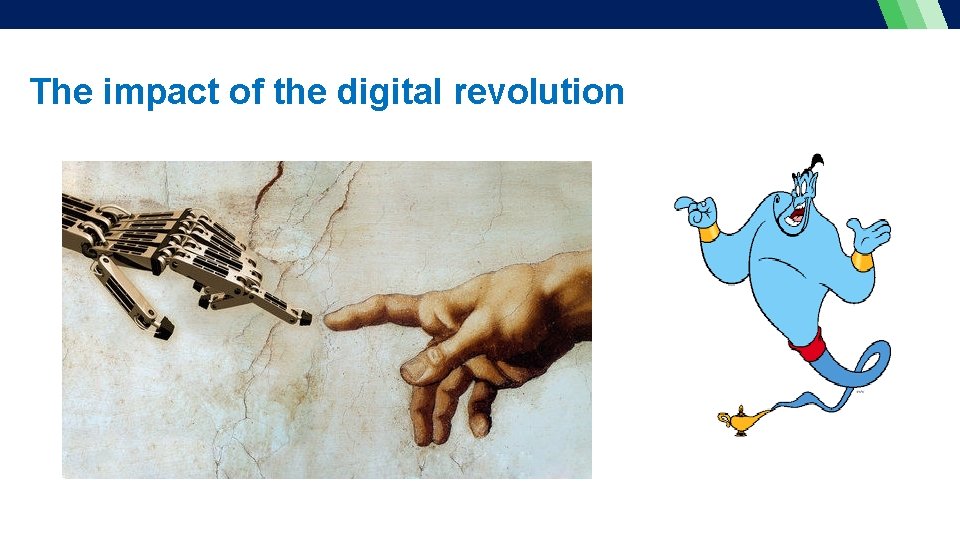
The impact of the digital revolution
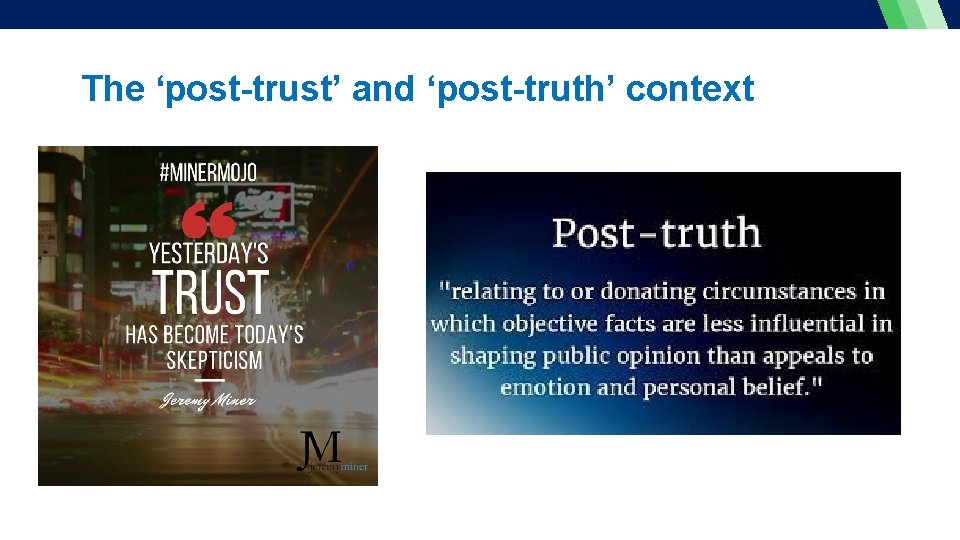
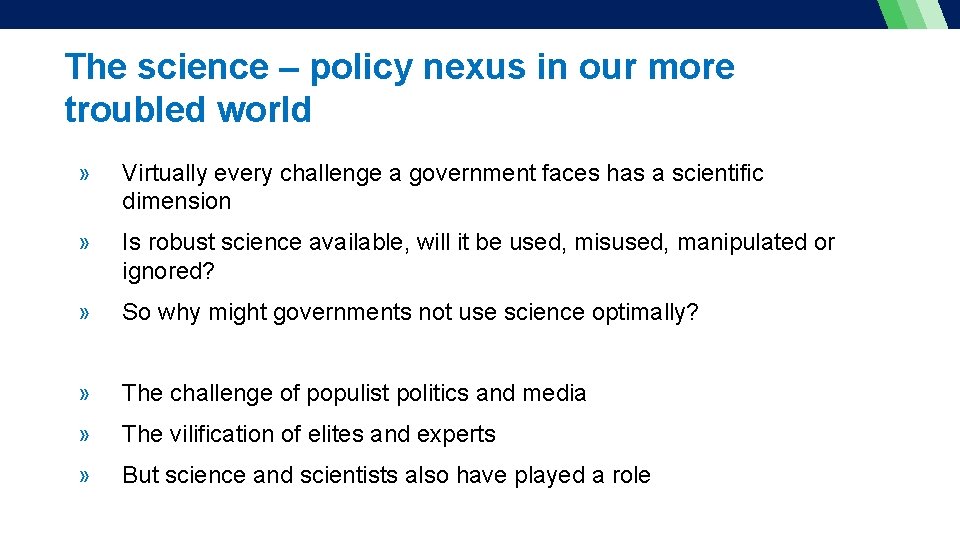
The ‘post-trust’ and ‘post-truth’ context
The science – policy nexus in our more troubled world » Virtually every challenge a government faces has a scientific dimension » Is robust science available, will it be used, misused, manipulated or ignored? » So why might governments not use science optimally? » The challenge of populist politics and media » The vilification of elites and experts » But science and scientists also have played a role
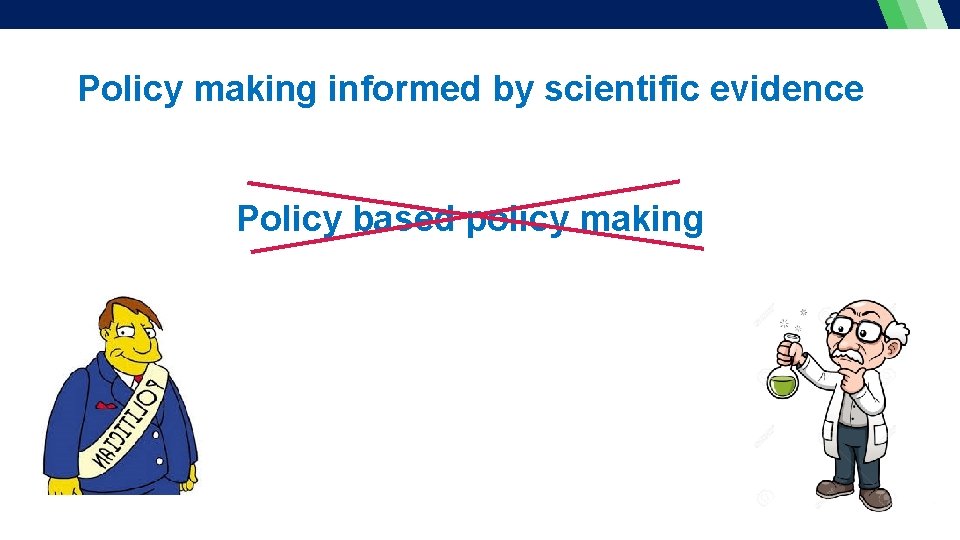
Policy making informed by scientific evidence Policy based policy making
What is evidence • Politicians and policy makers have many sources of evidence – – Tradition Prior belief Anecdote and observation Science • Scientific evidence is argument supported by information produced according to a set of formal processes • Scientific processes aim to obtain relatively objective understandings of the natural and built world. Science is defined by its processes which are designed to reduce bias and enhance objectivity. – But important value judgments lie within science especially over what question and how to study it. But the most important in the context of policy is the sufficiency and quality of evidence.
There are many questions byond science in making even science-informed policy • It is often assumed that if a study shows that intervention A changes outcome B and therefore a government must invetsin intervention A • But what is the evidence? – – • Normative or empirical? What kind of empirical study; in contexts that matter? Is it scalable? What is the effect size ( vs nothing, current approaches, alternate approaches But what are the non -scientific questions that must be asked – – – – Cost Risks and to whom Tradeoffs Spillover costs and benefits Possible unintended consequences Priority to a government Public opinion, electoral contral, diplomatic considerations etc
Scientists and policy making • Scientists are – Very good at problem definition – Less so at finding workable, scalable and meaningful solutions
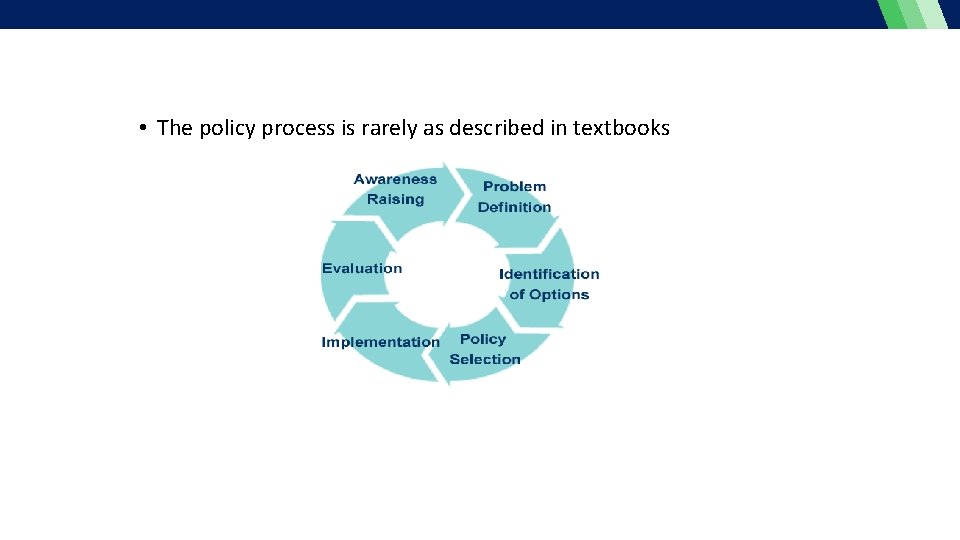
• The policy process is rarely as described in textbooks
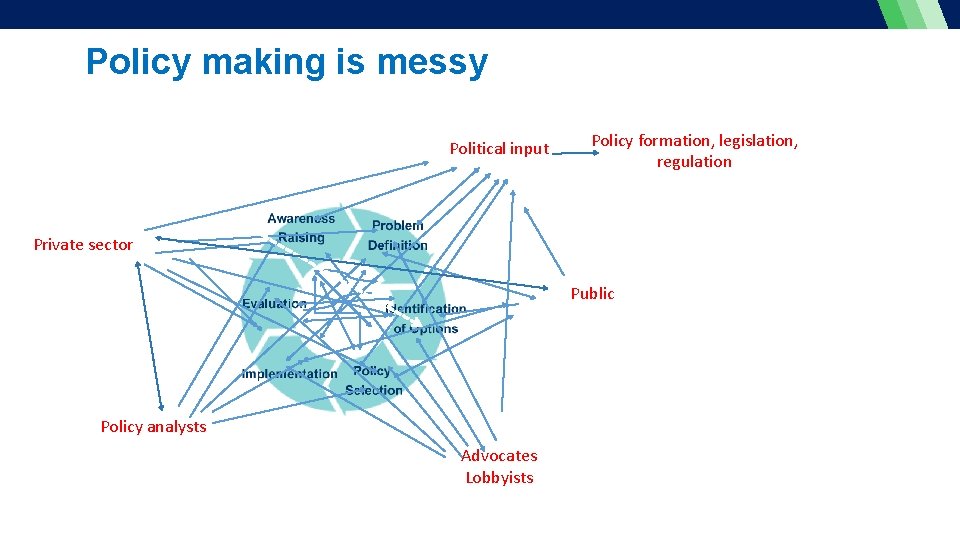
Policy making is messy Political input Policy formation, legislation, regulation Private sector Public Policy analysts Advocates Lobbyists
Policy makers » Have limited bandwidth and often limited manouvrability » They lurch to problems » The policy cycle is generally very short and getting shorter » Most relevant science incomplete and much is ambiguous » They cannot be expected to be scientific referees » » The need for translation and brokerage Policy makers see evidence is one of a number of inputs » In what sense is it privileged and how is that privilege maintained? The role of the broker.
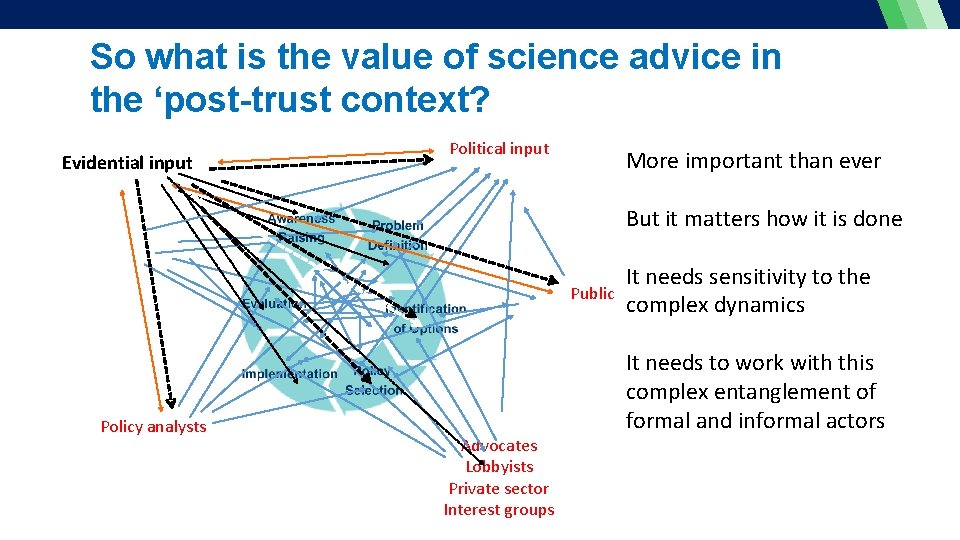
So what is the value of science advice in the ‘post-trust context? Evidential input Political input More important than ever But it matters how it is done Public Policy analysts Advocates Lobbyists Private sector Interest groups It needs sensitivity to the complex dynamics It needs to work with this complex entanglement of formal and informal actors
The challenge of science at the policysocietal nexus • Too much science • The changed nature of science • The post-normal nature of much science • The utilitarian poistioning of science • Implications for the future of public science
The challenge of information and ideas in a post-truth world www. pmcsa. org. nz
The perception of risk: implications at the science - policy - society nexus • Actuarial (probabilistic calculation of risk) • Perceptional – The role of cognitive biases • Availability • Representational • Confirmational • Anchoring • Asymmetry – Perception of gains and losses, benefits and burdens • Political
The importance of individual and societal values • Cultural, political and religious • Egoistic, social-altruistic or biospheric • Hierarchal vs individualistic • Past experience • Indigenous and local knowledge • Cognitive biases
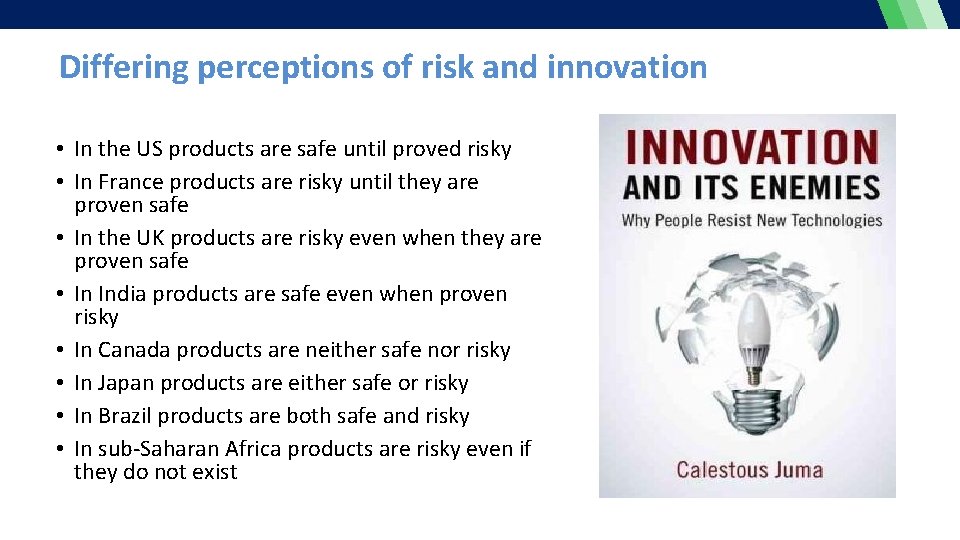
Differing perceptions of risk and innovation • In the US products are safe until proved risky • In France products are risky until they are proven safe • In the UK products are risky even when they are proven safe • In India products are safe even when proven risky • In Canada products are neither safe nor risky • In Japan products are either safe or risky • In Brazil products are both safe and risky • In sub-Saharan Africa products are risky even if they do not exist
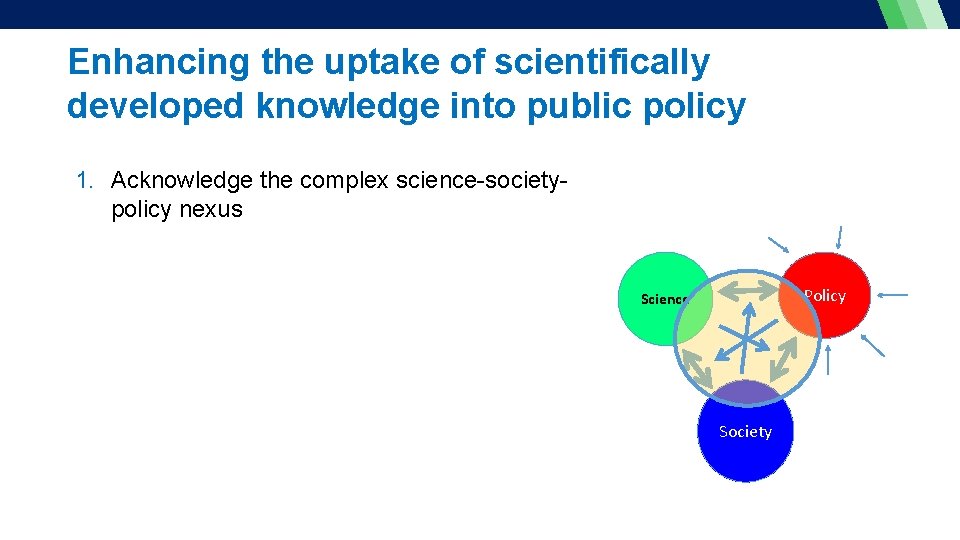
Enhancing the uptake of scientifically developed knowledge into public policy 1. Acknowledge the complex science-societypolicy nexus Policy Science Society
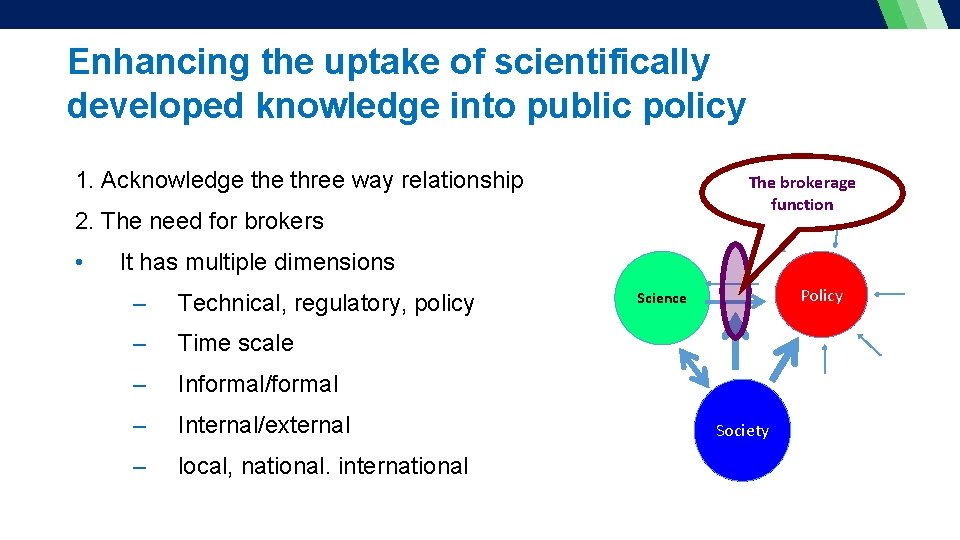
Enhancing the uptake of scientifically developed knowledge into public policy 1. Acknowledge three way relationship The brokerage function 2. The need for brokers • It has multiple dimensions – Technical, regulatory, policy – Time scale – Informal/formal – Internal/external – local, national. international Policy Science Society
The nature of brokerage • • What is known, what is the expert consensus What is not known Other caveats The inferential gap, risk management • How it relates to other considerations, alertness to social implications • Options and tradeoffs • Avoiding hubris
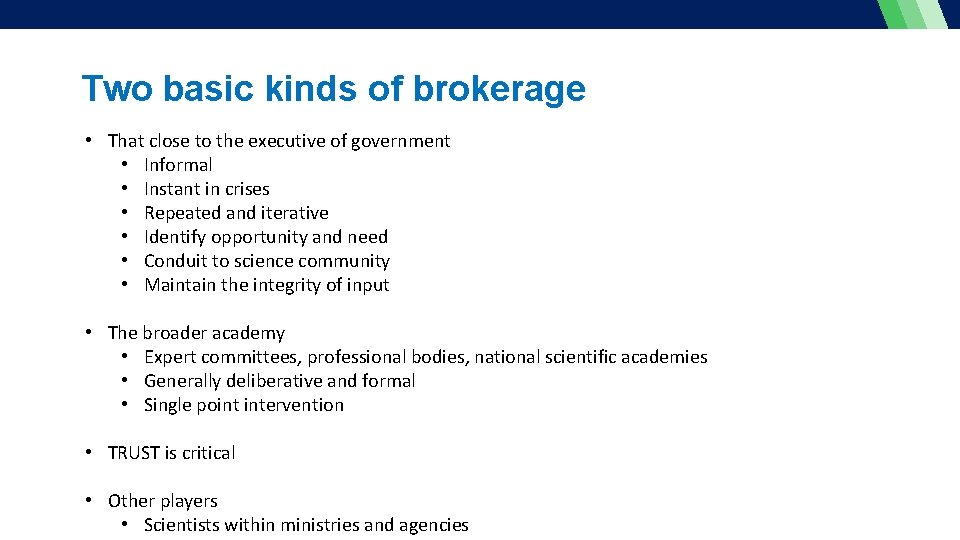
Two basic kinds of brokerage • That close to the executive of government • Informal • Instant in crises • Repeated and iterative • Identify opportunity and need • Conduit to science community • Maintain the integrity of input • The broader academy • Expert committees, professional bodies, national scientific academies • Generally deliberative and formal • Single point intervention • TRUST is critical • Other players • Scientists within ministries and agencies
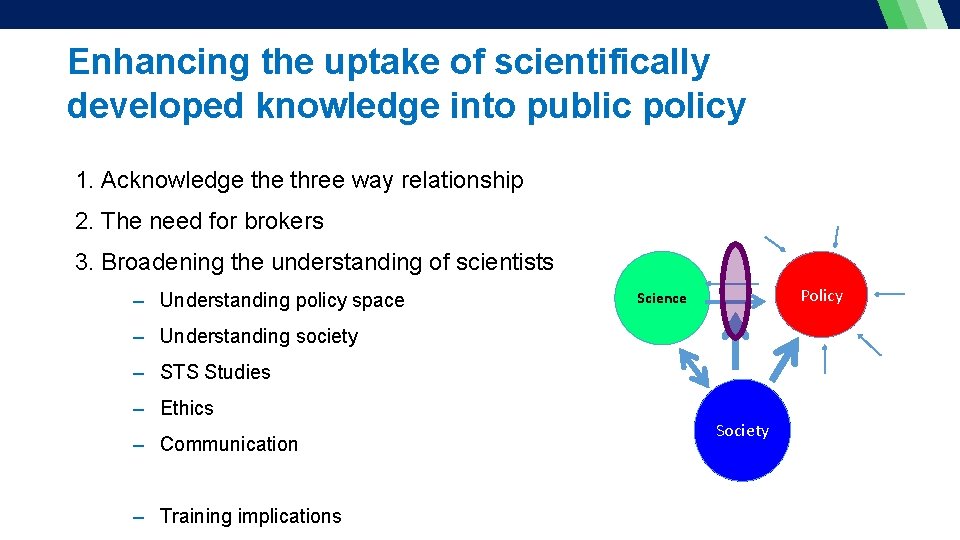
Enhancing the uptake of scientifically developed knowledge into public policy 1. Acknowledge three way relationship 2. The need for brokers 3. Broadening the understanding of scientists – Understanding policy space Policy Science – Understanding society – STS Studies – Ethics – Communication – Training implications Society
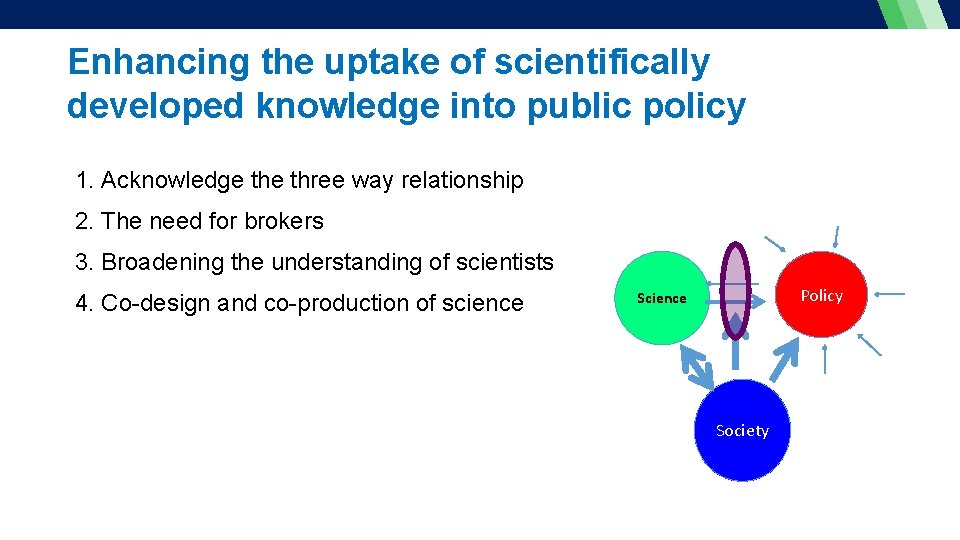
Enhancing the uptake of scientifically developed knowledge into public policy 1. Acknowledge three way relationship 2. The need for brokers 3. Broadening the understanding of scientists 4. Co-design and co-production of science Policy Science Society
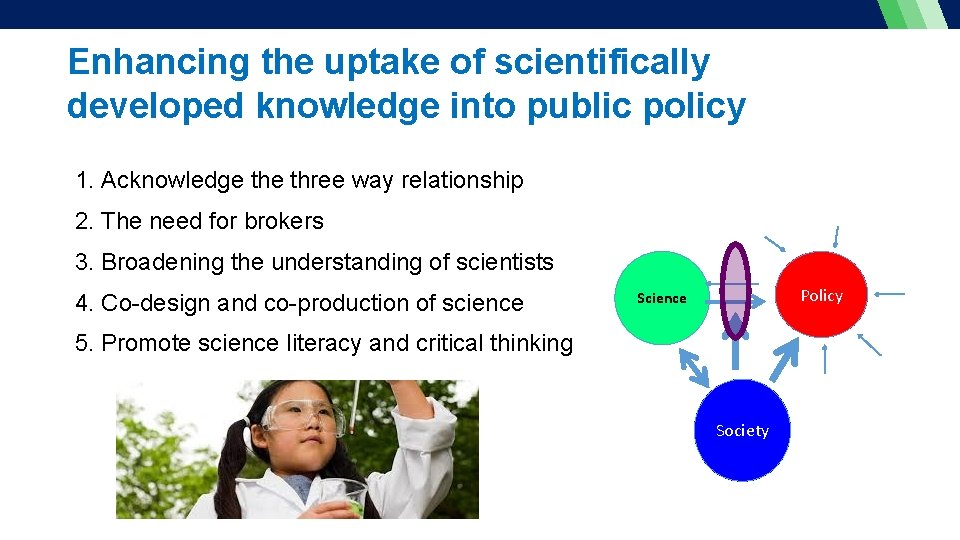
Enhancing the uptake of scientifically developed knowledge into public policy 1. Acknowledge three way relationship 2. The need for brokers 3. Broadening the understanding of scientists 4. Co-design and co-production of science Policy Science 5. Promote science literacy and critical thinking Society
INGSA founded in 2014 under the aegis of ICSU Memorandum of understanding with UNESCO Concerned with all dimensions of science advice Roles Networking Forum, resources, networking Capacity building workshops Principles of science advice (ICSU, UNESCO, WSF 2017) Integrity Brokerage Trustworthy Membership is free: academics, practitioners, policy makers www. ingsa. org
Trust is essential in an advisory ecosystem • • • The politician The policy maker The media The public The science community