
Office of Internal Audits KHALIL M ABDULLAH CPA
Office of Internal Audits KHALIL M. ABDULLAH CPA, CIA, CGAP, MACC
Office of Internal Audit Staff Mr. Khalil Abdullah Certified Internal Auditor (CIA); Certified Public Accountant (CPA); Certified Government Auditing Professional (CGAP) Mr. Jose Luis Silva Certified Internal Auditor (CIA); Certified Government Auditing Professional (CGAP); Certified Fraud Examiner (CFE)
Why is it important to have an Internal Audit Function? Internal Audit functions are considered to be a valuable element of management control, which provides assurance to the audit committee and management. Medium and large companies, banks, and other financial institutions with major fiduciary responsibilities are required to have an internal audit function. As an organization grows it becomes more challenging to conduct frequent and economical first-hand monitoring of controls by management.
Benefits of Internal Audit Identifies redundancies in operational and control procedures and provides recommendations to improve the efficiency and effectiveness of procedures; Serves as an early warning system, enabling deficiencies to be identified and remediated on a timely basis (e. g. prior to external, regulatory or compliance audits); Internal audits make the organization process-dependent rather than persondependent; Ultimately increases accountability within the organization
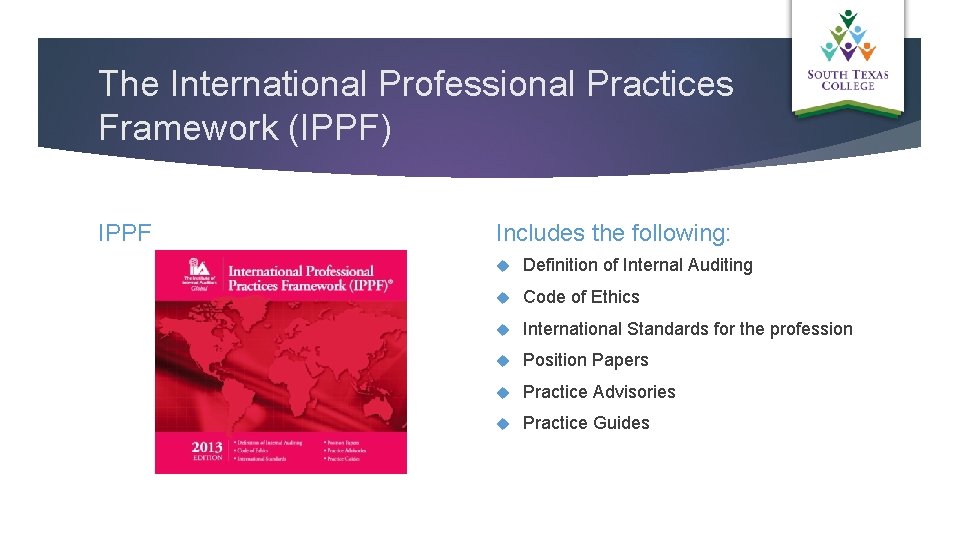
The International Professional Practices Framework (IPPF) IPPF Includes the following: Definition of Internal Auditing Code of Ethics International Standards for the profession Position Papers Practice Advisories Practice Guides

The IIA definition of Internal Auditing Internal auditing is an independent, objective assurance and consulting activity designed to add value and improve an organization’s operations. It helps an organization accomplish its objectives by bringing a systematic, disciplined approach to evaluate and improve the effectiveness of risk management, control, and governance processes.
Independence & Objectivity 1110 – Organizational Independence – the CAE must report to a level within the organization that allows the internal audit activity to fulfill its responsibilities. The CAE must confirm to the board, at least annually, the organizational independence of the internal audit activity. Interpretation: Organizational Independence is effectively achieved when the CAE reports functionally to the board. 1120 – Individual Objectivity – Internal auditors must have an impartial, unbiased attitude and avoid any conflicts of interest.
Internal Audit vs. External Audit Internal Audit External Audit IIA Standards AICPA Standards Employed by the organization (though independent of the activities they audit). Diverse background and skill set. Hired by the organization to provide a specific service. Test controls at a significantly lower level of materiality than do external auditors. Primarily accounting background Broad Focus Narrow Focus (i. e. accurate financial statements) Organizational efficiencies & effectiveness; Compliance with laws & policies; Organizational objectives;

Internal Audit vs. Compliance Internal Audit Compliance Function Independent of management A component of management Evaluates the control structure Part of the control structure Evaluates the internal control environment as to its adequacy, efficiency, and effectiveness. Ensures that the College complies with applicable laws, rule and regulations, as well as internal codes of conduct, policies and procedures.
What kind of work does Internal Audits do? Audits (Assurance Activities) – Examinations of audit evidence for the purpose of providing an independent assessment. Audit types include: Operational Audit – is a review of an organization’s usage of resources to ensure those resources are being utilized as efficiently and effectively as possible to accomplish a mission and goal. Compliance Audit – is performed to determine if an organization or program is operating in accordance with policies, procedures, laws & regulations. Financial Audit – Most commonly known form of audit and refers to the systematic review of a company’s financial reporting to ensure all information is valid and conforms to GAAP Standards. Investigative Audit – are typically asked for when there is an assumed violation of rules, regulations, or law.
What kind of work does Internal Audits do? Consulting (Advisory activities) – Are generally performed at the specific request of an engagement client. The nature and scope of the consulting engagement are subject to agreement with the engagement client. When performing consulting services, the internal auditor should maintain objectivity and NOT assume management responsibility. Assist on special projects; Provide feedback or advise on internal controls and risks; Investigate fraud or other allegations Management requests
COSO A voluntary private sector initiative dedicated to improving organizational performance and governance through effective internal control; enterprise risk management; and fraud deterrence. It is comprised of the following 5 sponsoring organizations: American Institute of Certified Public Accountants (AICPA); The Institute of Internal Auditors (IIA); American Accounting Association (AAA); Institute of Management Accountants (IMA); Financial Executives International (FEI)
COSO definition of Internal Control Internal control - A process, effected by an entity’s board of directors, management and other personnel, designed to provide reasonable assurance of the achievement of objectives in the following categories: Effectiveness and efficiency of operations; Reliability of financial reporting; Compliance with applicable laws and regulations” In an “effective” internal control system, there are 5 components working to support the achievement of an entity’s mission, strategies, and related business objectives.
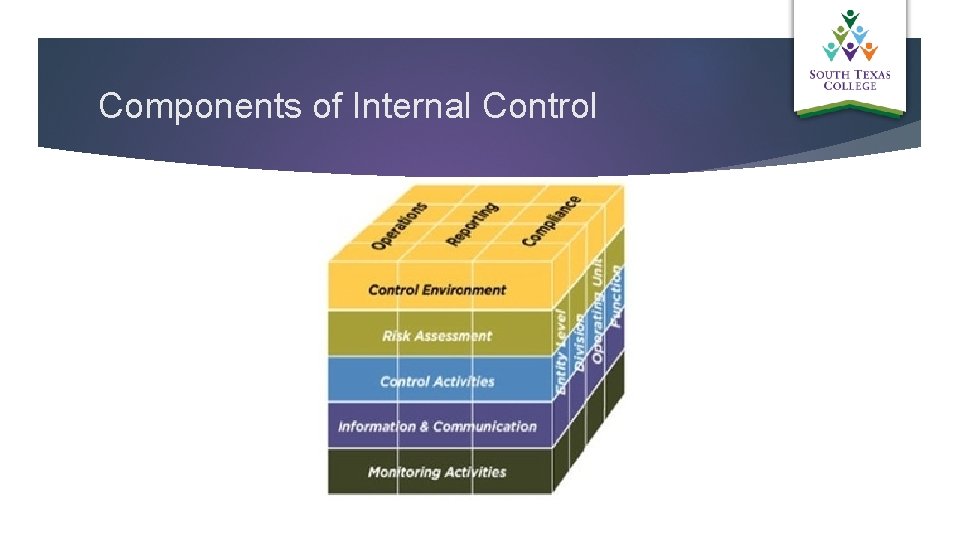
Components of Internal Control
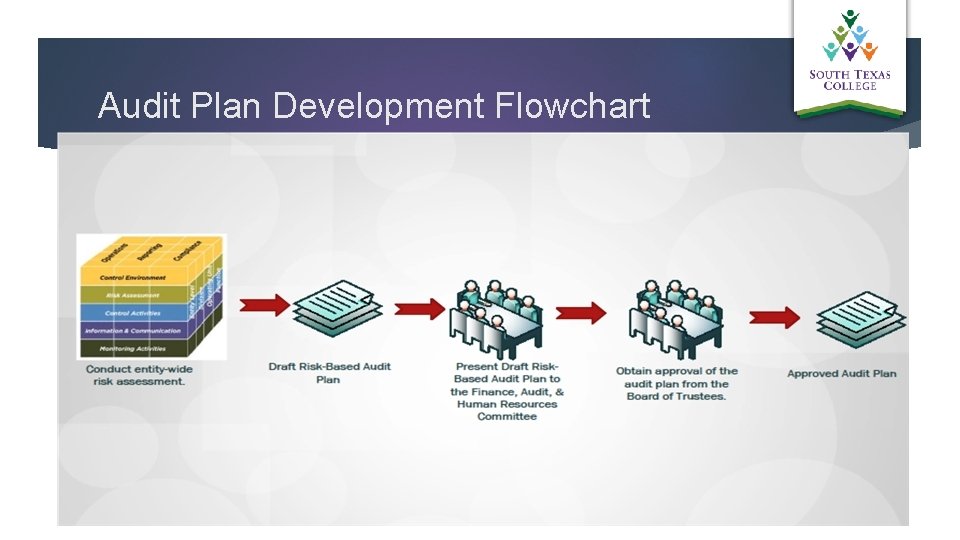
Audit Plan Development Flowchart
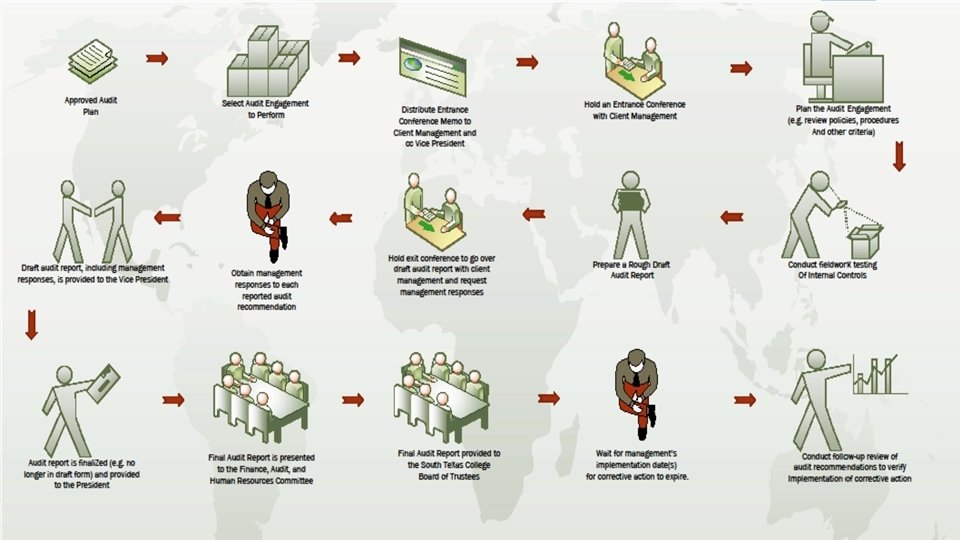
Audit Project Cycle Flowchart
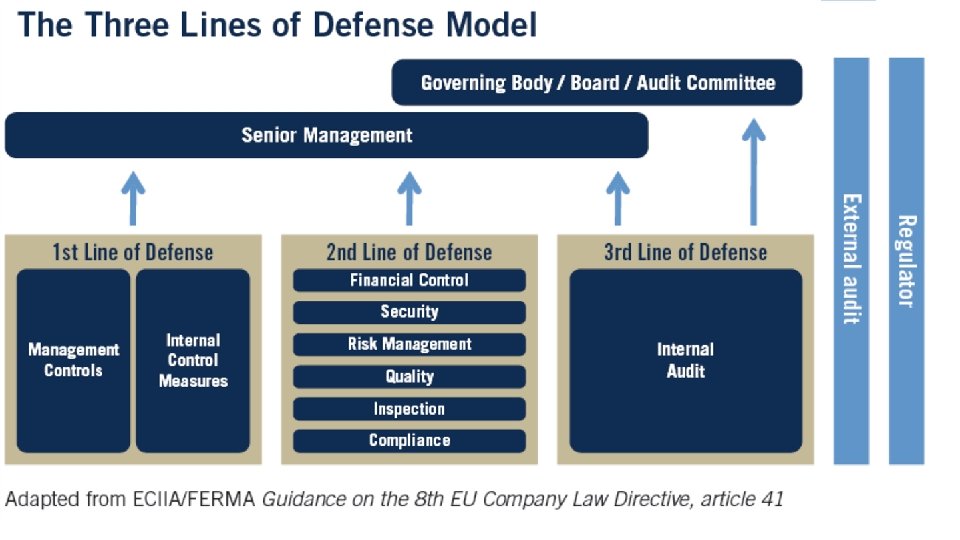
Three Lines of Defense 1 st line of defense – Mgmt. controls and Internal control measures; 2 nd line of defense – Financial Control, Security, Risk Management, Quality, Inspection, Compliance; 3 rd line of defense – Internal Audit
Office of Internal Audits Website http: //admin. southtexascollege. edu/audits/index. html
Works Cited 1. IIA Position Paper: The Three Lines of Defense in Effective Risk Management and Control January 2013 p. 2 2. COSO 2013 Internal Control Framework 3. International Professional Practices Framework (IPPF)
- Slides: 19