
Off the Shelf and Out of the Box
Off the Shelf and Out of the Box Saving Time, Meeting Outcomes and Reaching Students with Information Literacy Modules Jennifer Kelley, College of Du. Page 15 th Distance Library Services Conference Memphis, April 2012

Blackboard + Research 101 + Assessment = IL Modules
Information Literacy Modules vs Apollo Command Modules How to Tell Them Apart: A Primer Jenn Kelley Library not an astronaut

Apollo 14 Command Module image credit: Allen. Mc. Gregor
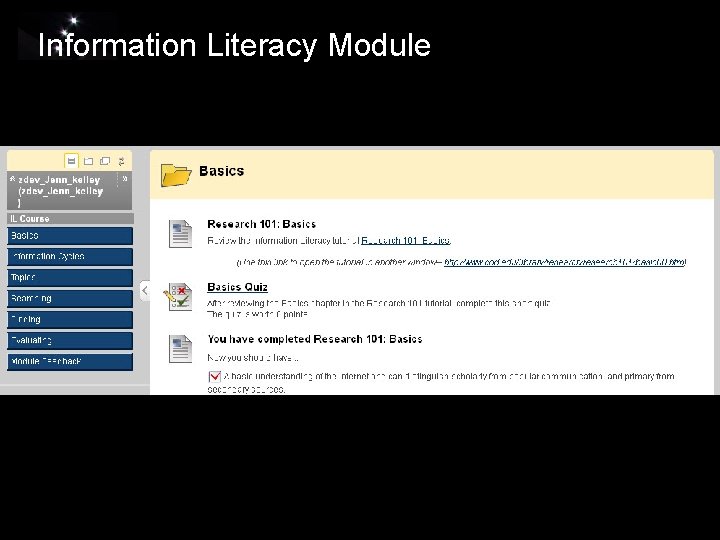
Information Literacy Module
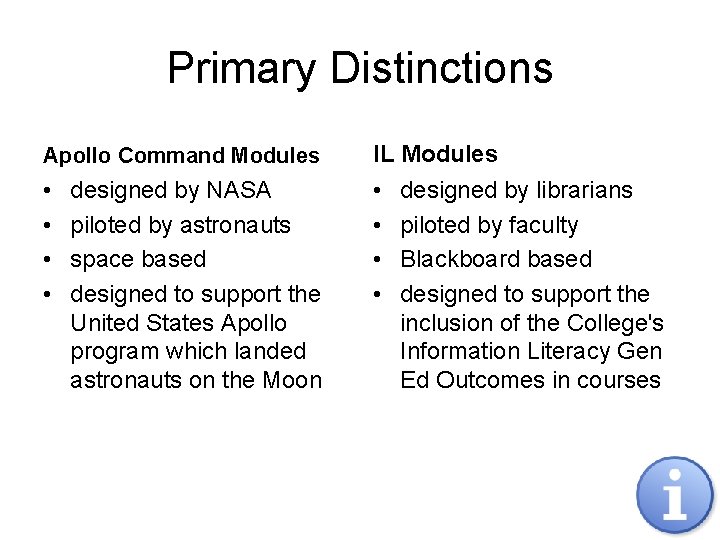
Primary Distinctions Apollo Command Modules IL Modules • • designed by NASA piloted by astronauts space based designed to support the United States Apollo program which landed astronauts on the Moon designed by librarians piloted by faculty Blackboard based designed to support the inclusion of the College's Information Literacy Gen Ed Outcomes in courses
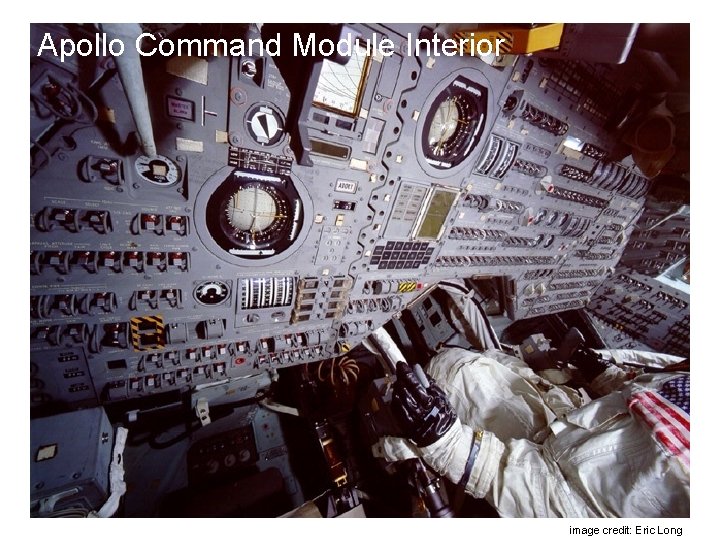
Apollo Command Module Interior image credit: Eric Long
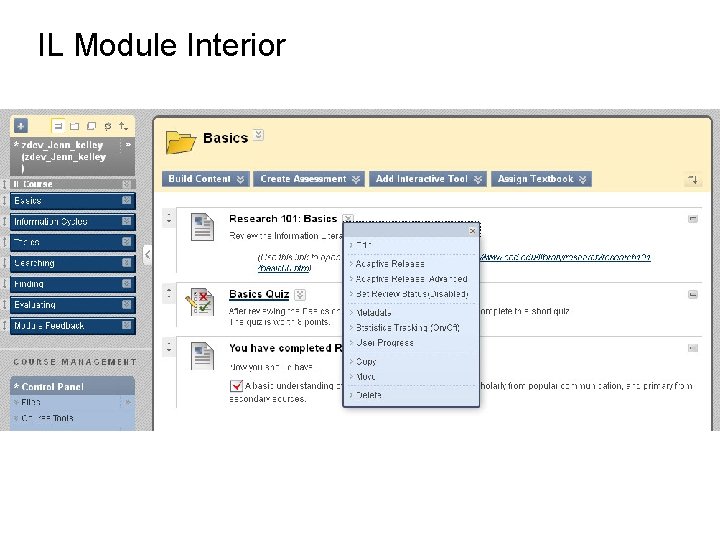
IL Module Interior
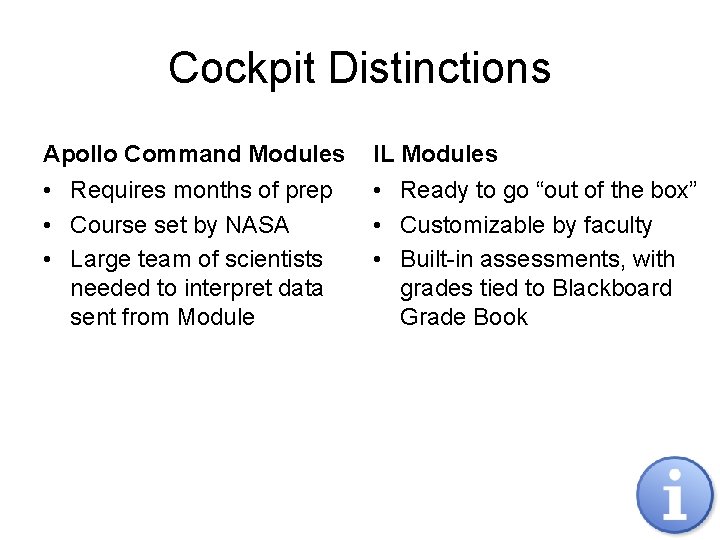
Cockpit Distinctions Apollo Command Modules IL Modules • Requires months of prep • Course set by NASA • Large team of scientists needed to interpret data sent from Module • Ready to go “out of the box” • Customizable by faculty • Built-in assessments, with grades tied to Blackboard Grade Book
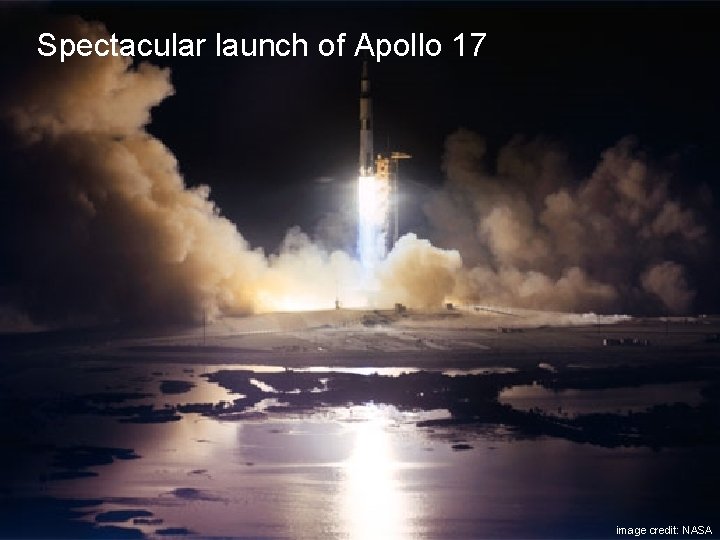
Spectacular launch of Apollo 17 image credit: NASA
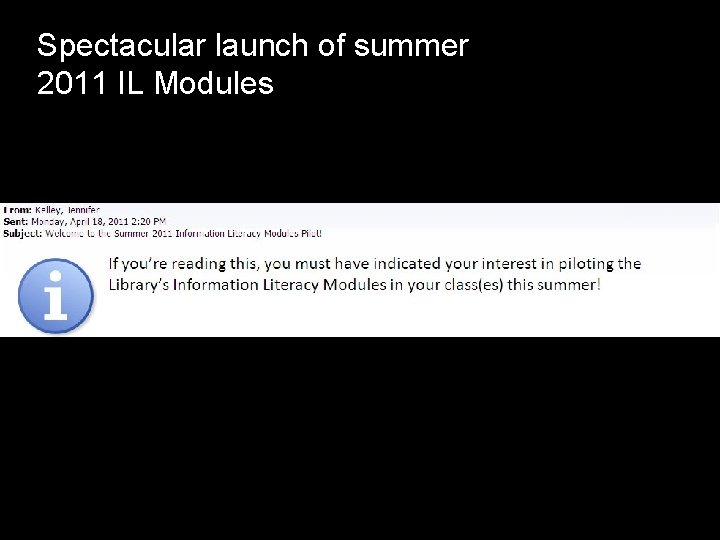
Spectacular launch of summer 2011 IL Modules
• This is Apollo Saturn Launch Control at T minus 1 hour, 48 minutes, 55 seconds and counting. We are still Go with our countdown for Apollo 12 at this time. We are aiming toward our planned T-zero of 11: 22 am Eastern Standard Time. The spacecraft commander Astronaut Pete Conrad still busy aboard the Apollo 12 spacecraft, going through the final checks of the various modes of the emergency detection system of the space vehicle. The other astronauts are keeping an eye on activities inside the cabin as we continue our purge and leak checks. That is bringing the cabin atmosphere to the 6040 oxygen nitrogen atmosphere that we desire for lift-off. The astronauts are breathing of course 100 percent oxygen through their suit circuits. Our countdown picked up at T minus 9 hour Mark at 1: 22 am Eastern Standard Time this morning, and we then proceeded here in the firing room to begin the final propellant loading of the Saturn V Launch vehicle. As it stood on the pad at that time, it already had its RP 1 fuel aboard the first stage. However, we spent 4½ hours or so bringing in more than three quarters of a million gallons of the cryogenic propellants the liquid oxygen and liquid hydrogen. We started loading oxygen to all three stages from the top down, and then went into the final phase of propellant loading bringing the hydrogen fuel first aboard the second stage and finally aboard the S-IVB, or third stage. All of this work was accomplished by the time we went into our planned built in hold at T minus 3 hours, and 30 minutes. As far as the prime crew is concerned, after a good 8 hours of sleep, they were awakened in the crew quarters by Astronaut, Chief of the Astronaut Office, Tom Stafford, at 6: 05 am Eastern this morning. The crew then went down the hall to take their customary brief medical exam on launch morning; they were examined by doctors Alan C. Harder and John T. Teegan. Following the brief examination Dr. Harder declared the astronauts were in great shape and everything is normal. The crew then received a weather briefing from Tom Stafford; his briefing still stands at this time as far as the weather forecast is concerned. The astronauts were told that they would expect the following conditions at launch time; scattered clouds in the Cape Kennedy area of about 2, 500 feet, a broken ceiling at about 10, 000 feet, we would have winds from the southwest about 15 knots with gusts to 25 knots, a temperature in the launch area of 67 degrees. All of these conditions are acceptable for a launch attempt. Weather on the round the world track in some places a little rough; in the Western Atlantic, particularly; we have 7 foot seas, and winds up to 25 knots. However, looking at all the abort contingency areas, weather is acceptable in those areas also, for a flight attempt this morning. The astronauts sat down to the normal breakfast menu of steak, eggs, orange juice, coffee and toast. They had 5 guests for breakfast. The guests included Tom Stafford, the backup lunar module pilot, Astronaut Jim Irwin, Jim Mc. Divitt, who is the Apollo Program Manager for the Manned Spacecraft Center, Astronaut Paul Weitz is the Support Lunar Module Pilot for the Apollo 12 mission, and also sits in as the Capsule Communicator with the call sign "Stoney" here in the firing room. The 5 th man to join the group was Mr. Chuck Tringali, Mr. Tringali is head of the support-training group for the Apollo 12 crew. A 6 th individual in the room was a life size gorilla from what we understand- a stuffed gorilla - that was sent to Pete Conrad by one of his friends. This gorilla had been adopted as a mascot by the crew and he was rigged up in a flight smock and crash helmet. He was seated on the side in the breakfast room when the crew came in. The crew then departed the quarters after donning and checking out their space suits at the appointed time, 8: 10 am Eastern Standard Time, and preceded to the launch pad, up to the 310 foot level where in order, they boarded the spacecrafts follows: First the Commander Pete Conrad, who sits in the left hand seat, followed about 6 minutes later by Astronaut Alan Bean, the Lunar Launching Distinctions IL Modules • Download Module zip file • Import package into Blackboard course Apollo Command Modules
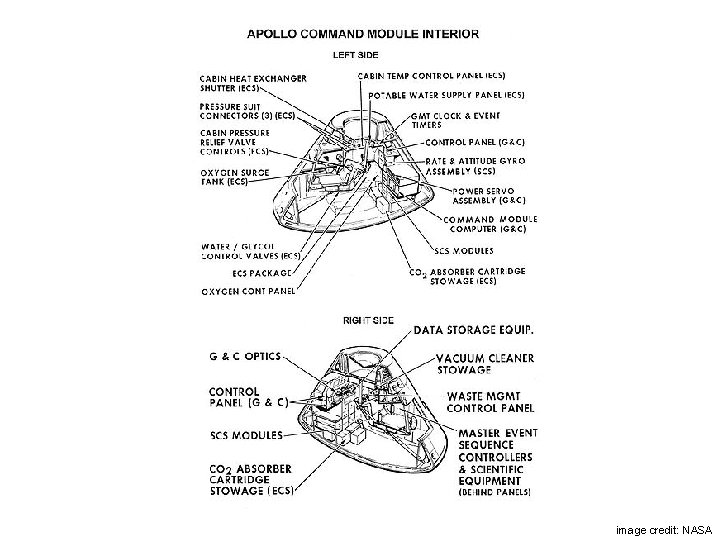
image credit: NASA
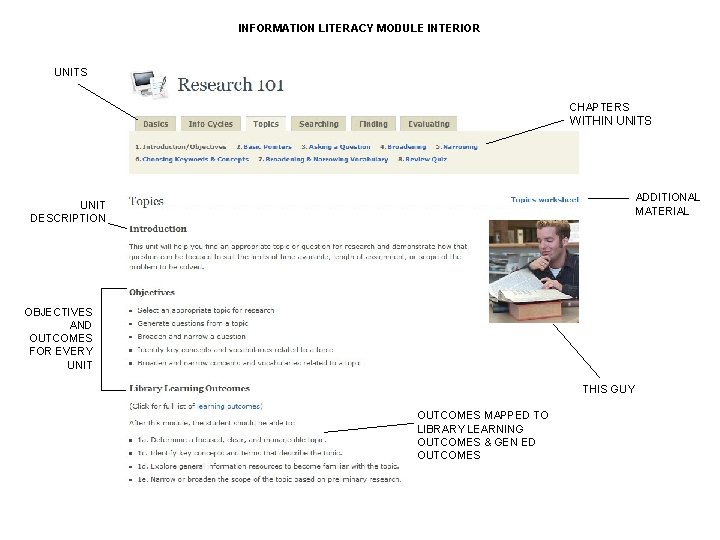
INFORMATION LITERACY MODULE INTERIOR UNITS CHAPTERS WITHIN UNITS ADDITIONAL MATERIAL UNIT DESCRIPTION OBJECTIVES AND OUTCOMES FOR EVERY UNIT THIS GUY OUTCOMES MAPPED TO LIBRARY LEARNING OUTCOMES & GEN ED OUTCOMES
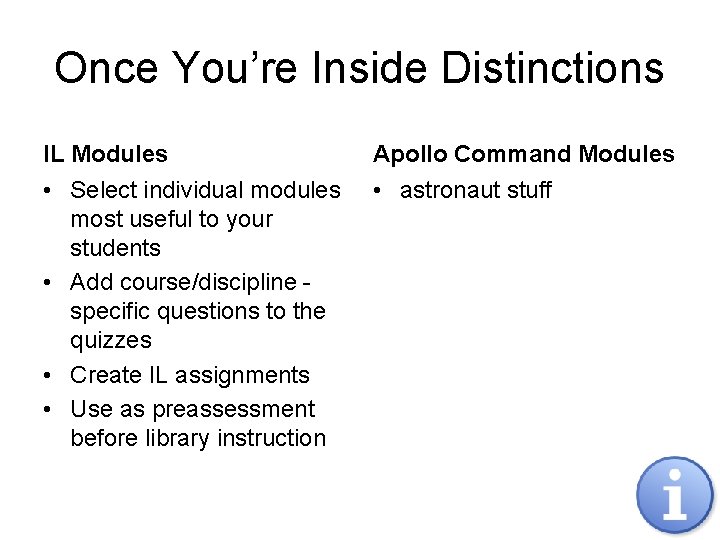
Once You’re Inside Distinctions IL Modules Apollo Command Modules • Select individual modules most useful to your students • Add course/discipline specific questions to the quizzes • Create IL assignments • Use as preassessment before library instruction • astronaut stuff
Sometimes things go wrong
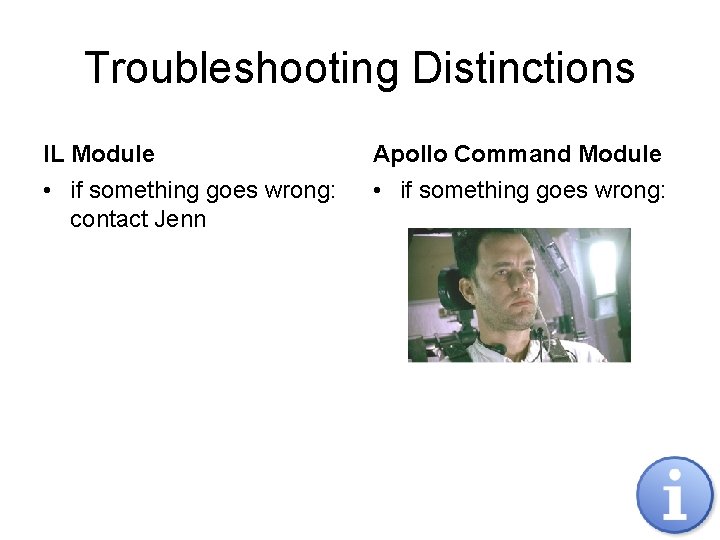
Troubleshooting Distinctions IL Module Apollo Command Module • if something goes wrong: contact Jenn • if something goes wrong:
Future Distinctions Apollo Command Modules IL Modules • Apollo Program cancelled after 17 missions • in development • create additional modules • update Research 101 tutorials • share ideas for integrating and customizing modules • get feedback from faculty and students
IL Modules plug-and-play information literacy for all students in all classes it’s not rocket science
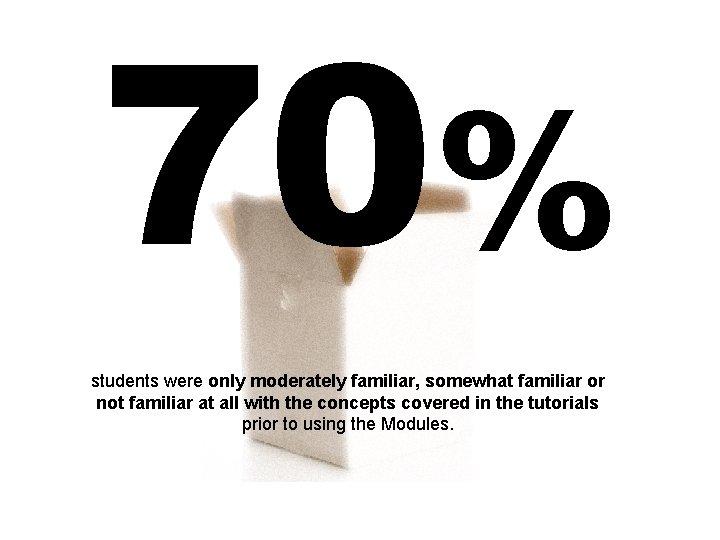
70% students were only moderately familiar, somewhat familiar or not familiar at all with the concepts covered in the tutorials prior to using the Modules.
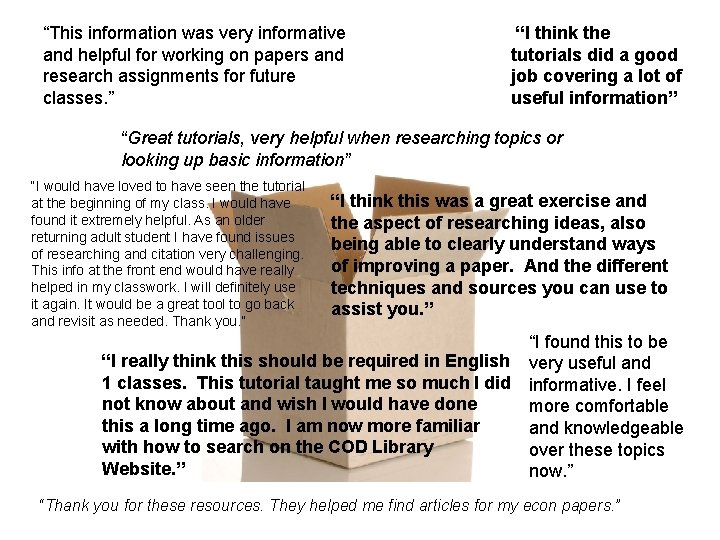
“This information was very informative and helpful for working on papers and research assignments for future classes. ” “I think the tutorials did a good job covering a lot of useful information” “Great tutorials, very helpful when researching topics or looking up basic information” “I would have loved to have seen the tutorial at the beginning of my class. I would have found it extremely helpful. As an older returning adult student I have found issues of researching and citation very challenging. This info at the front end would have really helped in my classwork. I will definitely use it again. It would be a great tool to go back and revisit as needed. Thank you. ” “I think this was a great exercise and the aspect of researching ideas, also being able to clearly understand ways of improving a paper. And the different techniques and sources you can use to assist you. ” “I found this to be “I really think this should be required in English very useful and 1 classes. This tutorial taught me so much I did informative. I feel not know about and wish I would have done more comfortable this a long time ago. I am now more familiar and knowledgeable with how to search on the COD Library over these topics Website. ” now. ” “Thank you for these resources. They helped me find articles for my econ papers. ”
What would we have done differently?
Thank you! Jennifer Kelley College of Du. Page kelleyj@cod. edu COD IL Program http: //library. codlibrary. org/IL Jenn Kelley @Genneaux
EI T. Information Icon. 2006. Wikimedia Commons. Web. 19 Apr. 2012. Fotalia. An Open Carton. nd. Microsoft Office Images. Web. 19 Apr. 2012. Cryteria. The Famous Red Eye of Hal 9000. 2010. Wikimedia Commons. Web. 19 Apr. 2012. Long, Eric. Apollo Command Module, Interior (Cockpit). nd. National Air and Space Museum, Smithsonian Institution. Web. 19 Apr. 2012. Mc. Gregor, Allen. Apollo 14 Command Module. 2011. Flickr. Web. 19 Apr. 2012. NASA. Apollo 17 Launch. nd. NASA. Web. 19 Apr. 2012. NASA. Command Module Interior. 1968. NASA. Web. 19 Apr. 2012. NASA Insignia. nd. Wikimedia Commons. Web. 19 Apr. 2012. Untitled Photo of Tom Hanks. nd. AMC. Web. 19 Apr. 2012. <http: //blogs. amctv. com/movie-blog/2008/08/tom-hanks-space-geek. php>
- Slides: 25