
OFDM Orthogonal Frequency Division Multiplexing Channel multipath Amplitude






- Slides: 19
OFDM (Orthogonal Frequency Division Multiplexing)
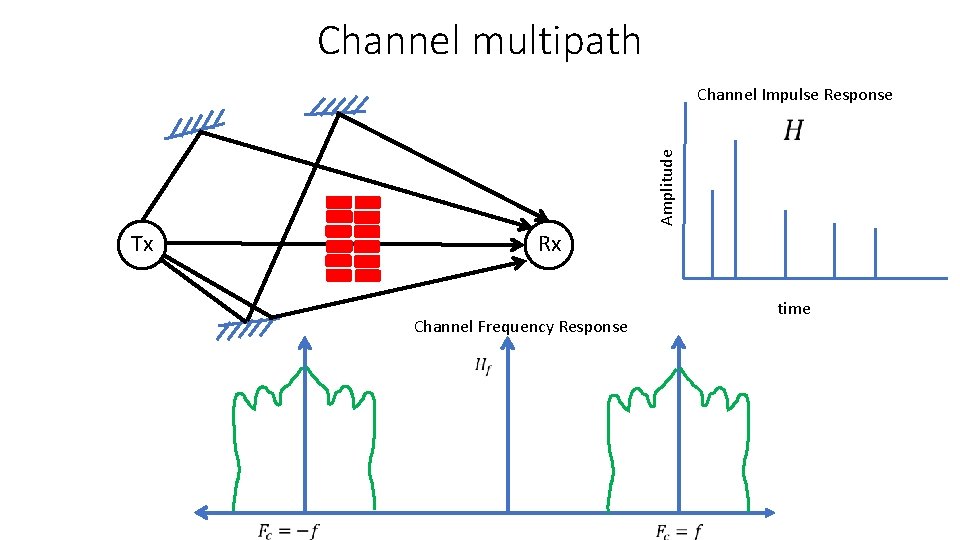
Channel multipath Amplitude Channel Impulse Response Tx Rx Channel Frequency Response time
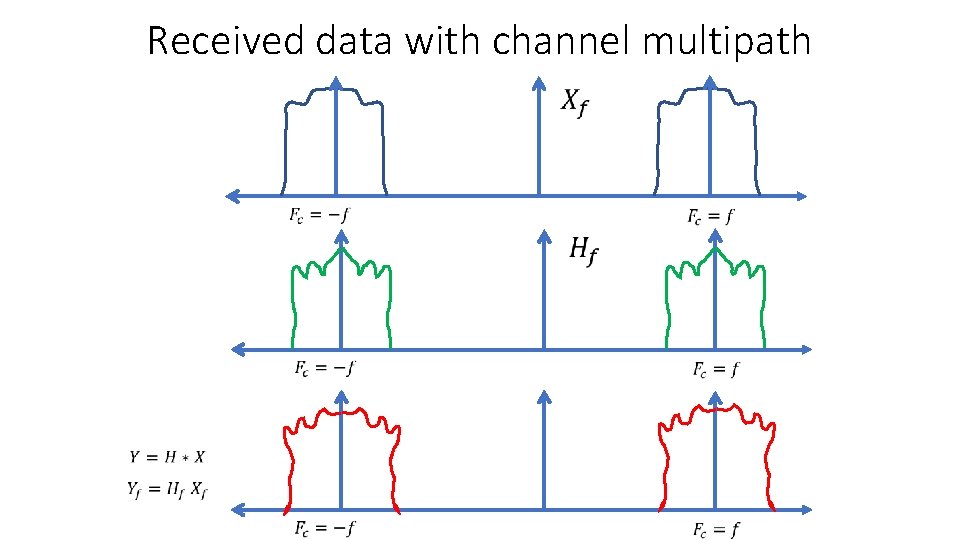
Received data with channel multipath
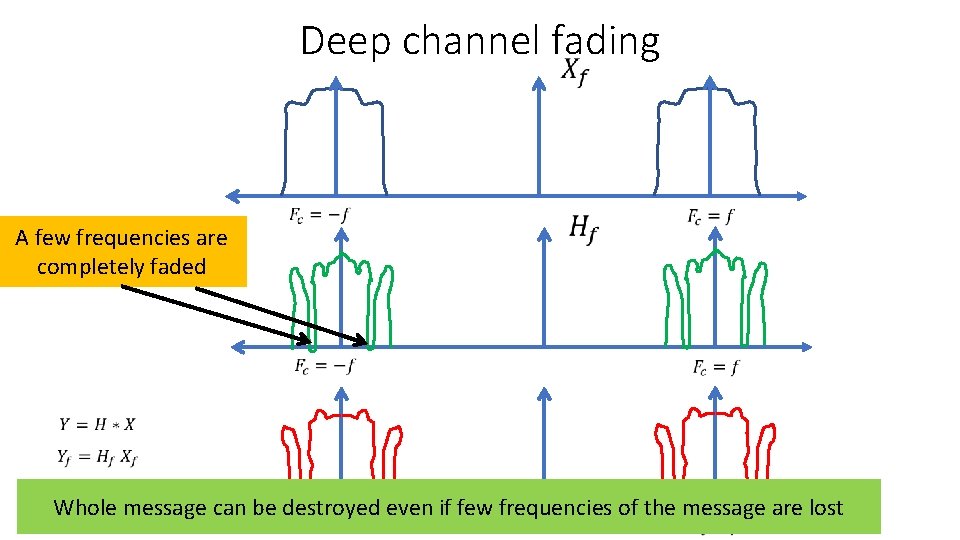
Deep channel fading A few frequencies are completely faded Whole message can be destroyed even if few frequencies of the message are lost
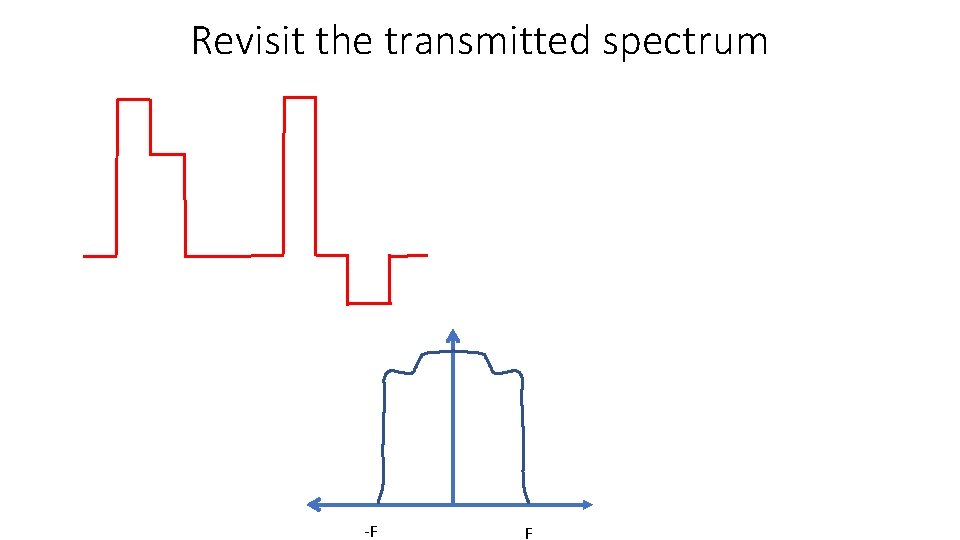
Revisit the transmitted spectrum -F F
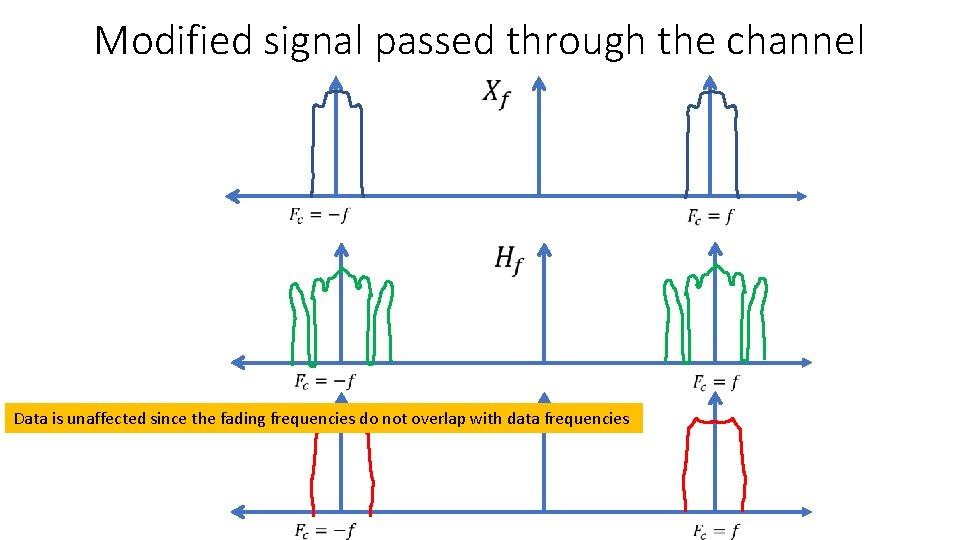
Increase the symbol duration Decreases the bandwidth of the signal -F F
Modified signal passed through the channel Data is unaffected since the fading frequencies do not overlap with data frequencies
Coping with fading • Decrease bandwidth so that data frequencies do not overlap with fading frequencies • This helped eliminate the effect of fading • Disadvantage: This would waste a lot of available bandwidth • Can we do better to achieve throughput proportional to the channel quality, without wasting any bandwidth
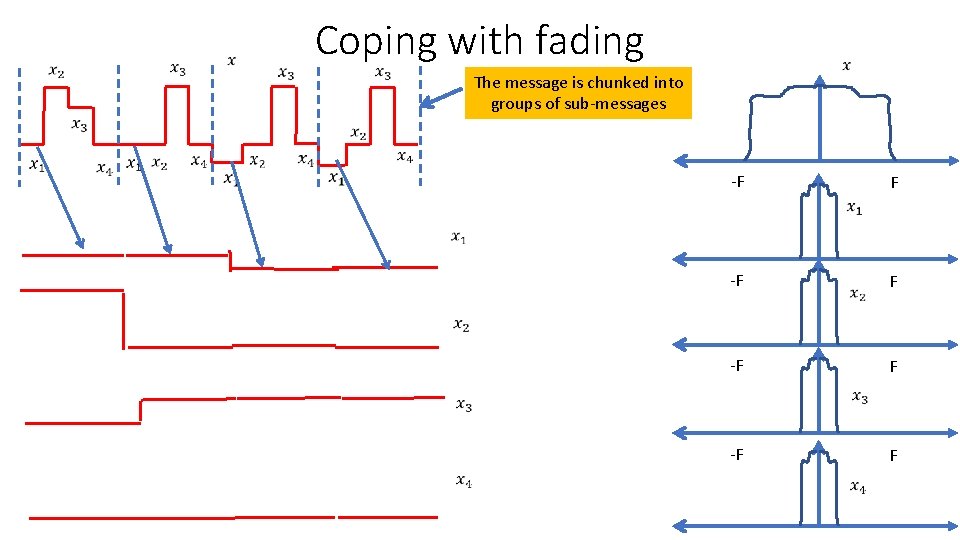
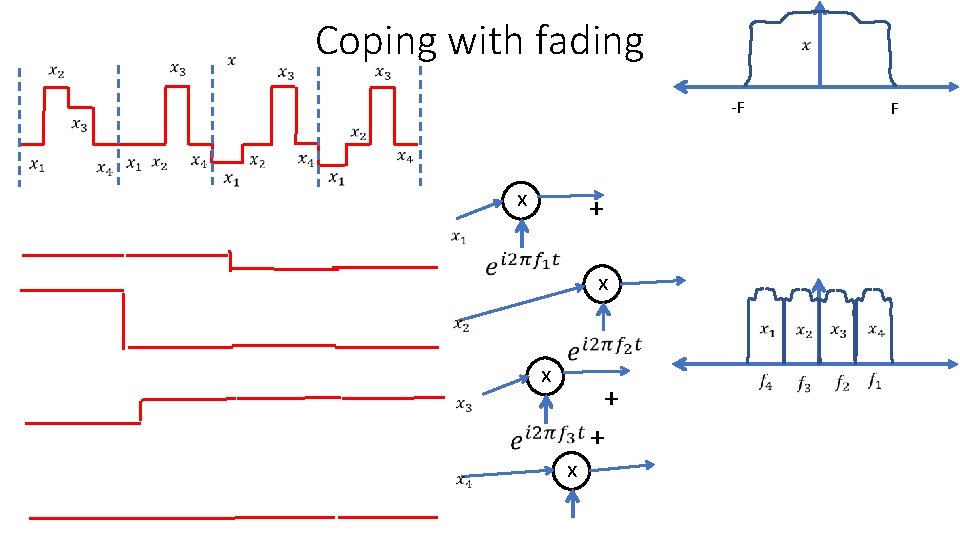
Coping with fading The message is chunked into groups of sub-messages -F F
Coping with fading -F F x x
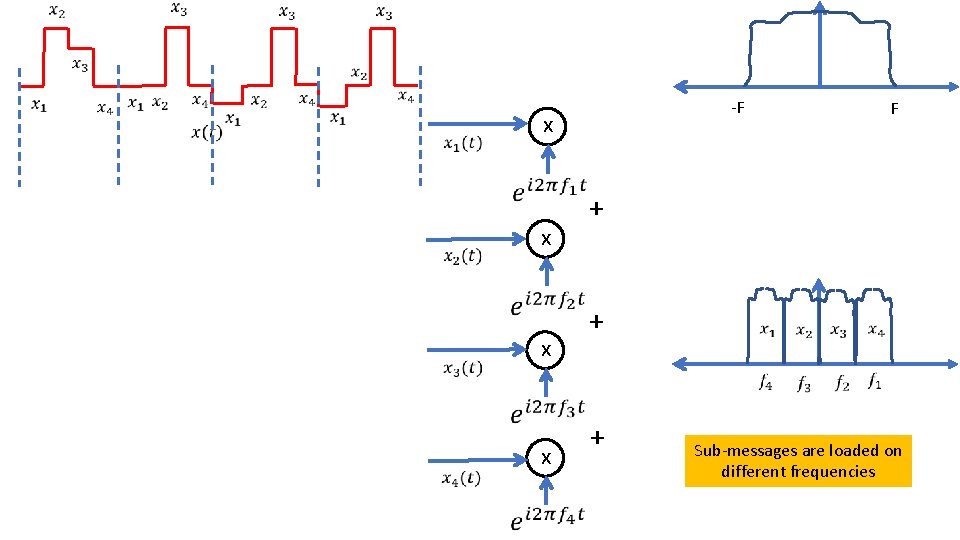
Coping with fading -F x + x x x + + F
-F x x F + + + Sub-messages are loaded on different frequencies
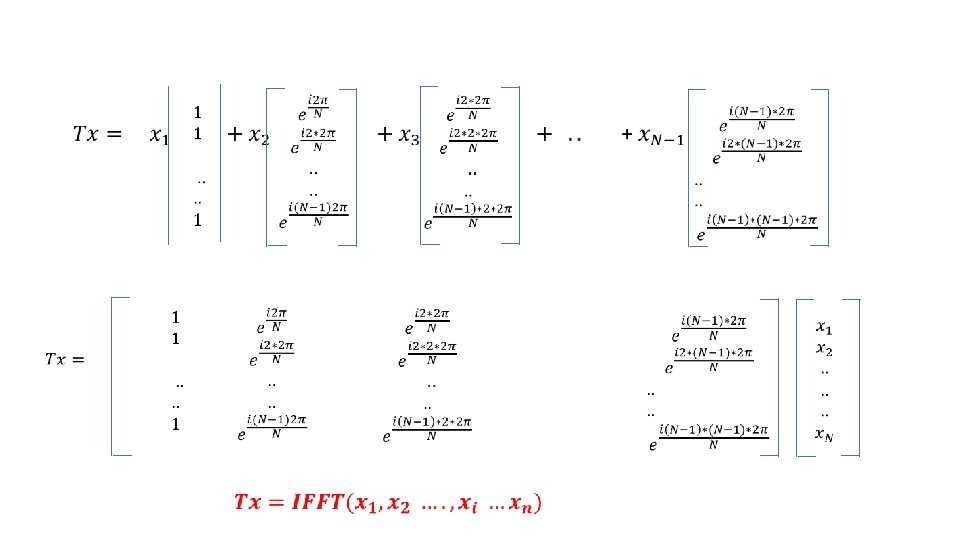
-F F
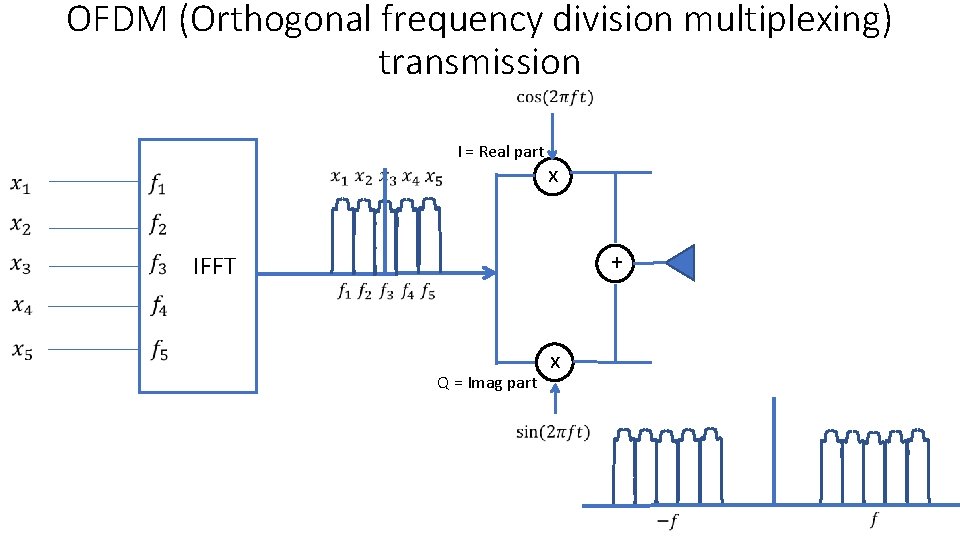
OFDM (Orthogonal frequency division multiplexing) transmission I = Real part x + IFFT Q = Imag part x
OFDM performance under deep fading
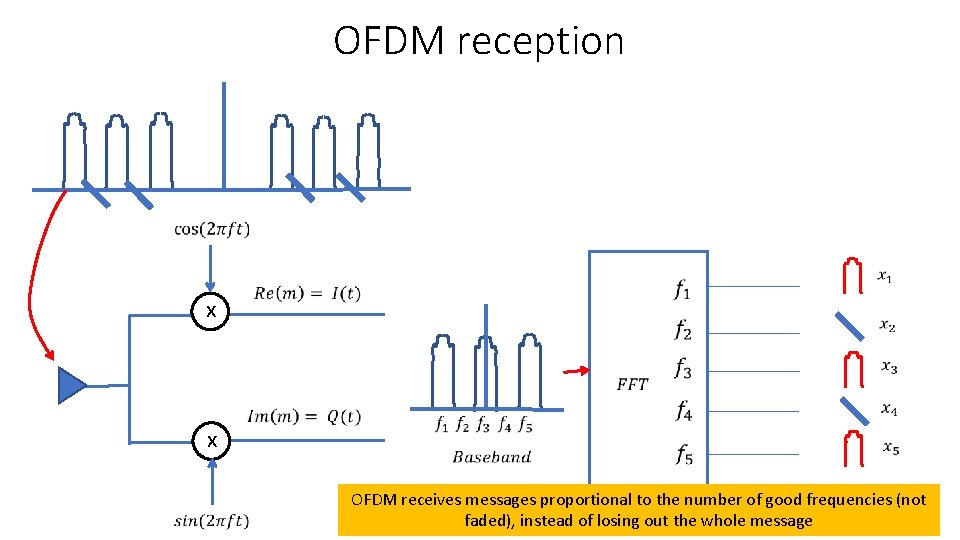
OFDM reception x x OFDM receives messages proportional to the number of good frequencies (not faded), instead of losing out the whole message
OFDM vs • Robust to deep fading • Very efficient, achieves capacity limits, used widely in LTE/Wi. Fi • Robust to synchronization errors • Requires FFT/IFFT power intensive • High variation in signal amplitude – needs better h/w Conventional • Complete loss of performance under deep fading • Cannot reach maximum capacity • High synchronization overhead • Suitable for low power/batteryless communication • Low variation in signal amplitude