
OECD ECONOMIC SURVEY OF MEXICO 2017 Reforms are


- Slides: 30
OECD ECONOMIC SURVEY OF MEXICO 2017 Reforms are paying off 10 January 2017, Ciudad Mexico www. oecd. org/eco/surveys/economic-survey-mexico. htm
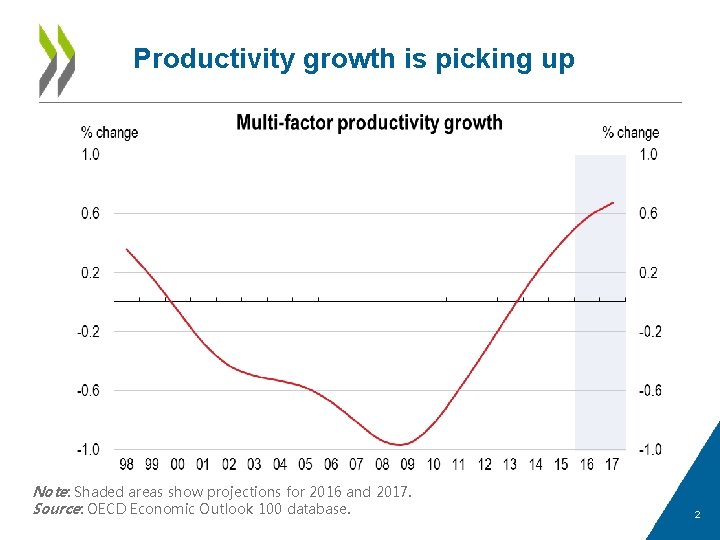
Productivity growth is picking up Note: Shaded areas show projections for 2016 and 2017. Source: OECD Economic Outlook 100 database. 2
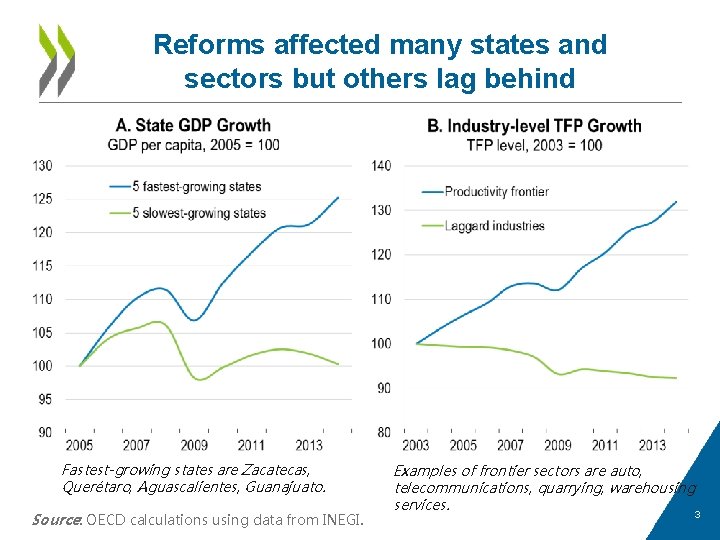
Reforms affected many states and sectors but others lag behind Fastest-growing states are Zacatecas, Querétaro, Aguascalientes, Guanajuato. Source: OECD calculations using data from INEGI. Examples of frontier sectors are auto, telecommunications, quarrying, warehousing services. 3
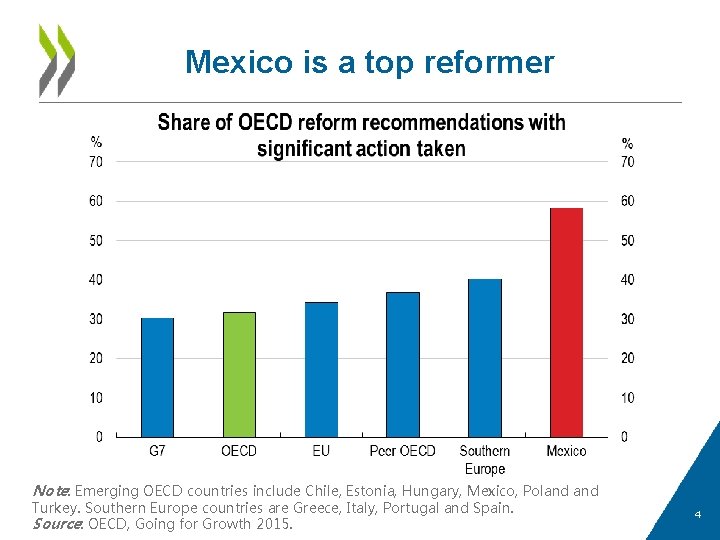
Mexico is a top reformer Note: Emerging OECD countries include Chile, Estonia, Hungary, Mexico, Poland Turkey. Southern Europe countries are Greece, Italy, Portugal and Spain. Source: OECD, Going for Growth 2015. 4
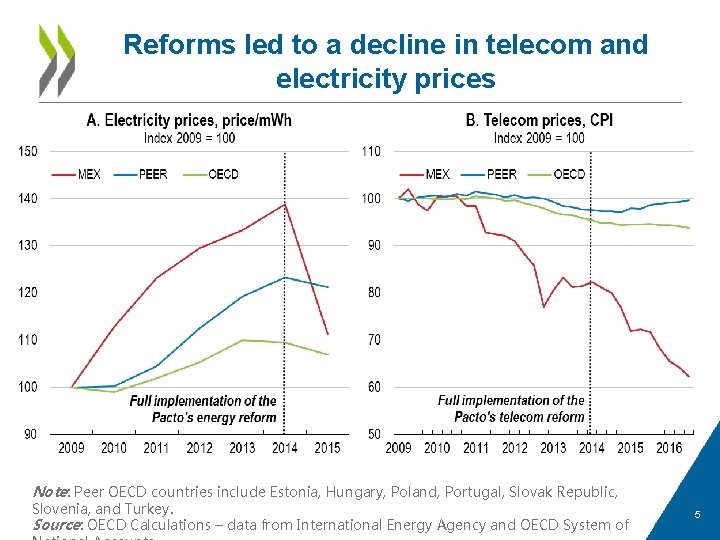
Reforms led to a decline in telecom and electricity prices Note: Peer OECD countries include Estonia, Hungary, Poland, Portugal, Slovak Republic, Slovenia, and Turkey. Source: OECD Calculations – data from International Energy Agency and OECD System of 5
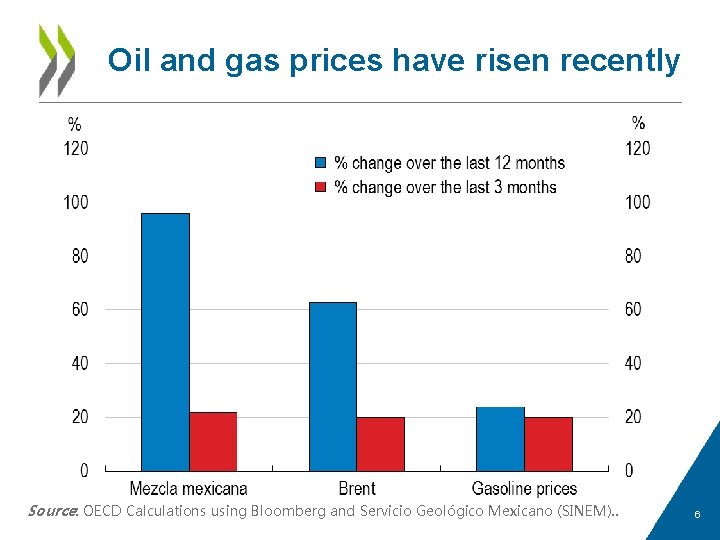
Oil and gas prices have risen recently Source: OECD Calculations using Bloomberg and Servicio Geológico Mexicano (SINEM). . 6
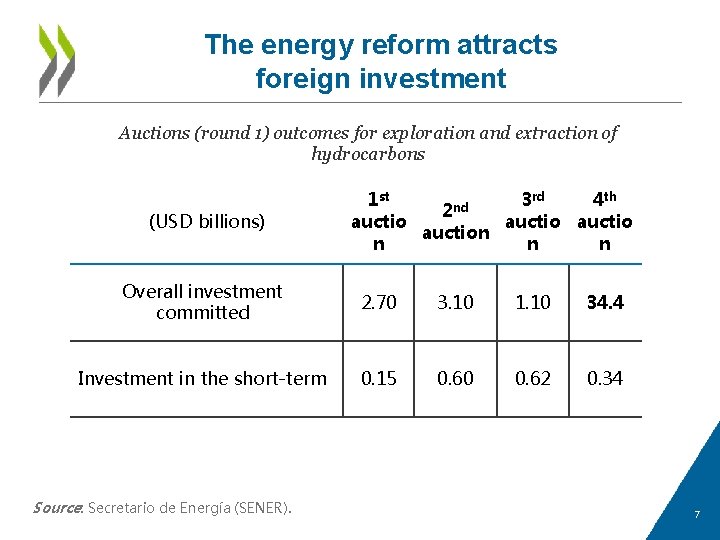
The energy reform attracts foreign investment Auctions (round 1) outcomes for exploration and extraction of hydrocarbons (USD billions) 1 st 3 rd 4 th nd 2 auction n Overall investment committed 2. 70 3. 10 1. 10 34. 4 Investment in the short-term 0. 15 0. 60 0. 62 0. 34 Source: Secretario de Energía (SENER). 7
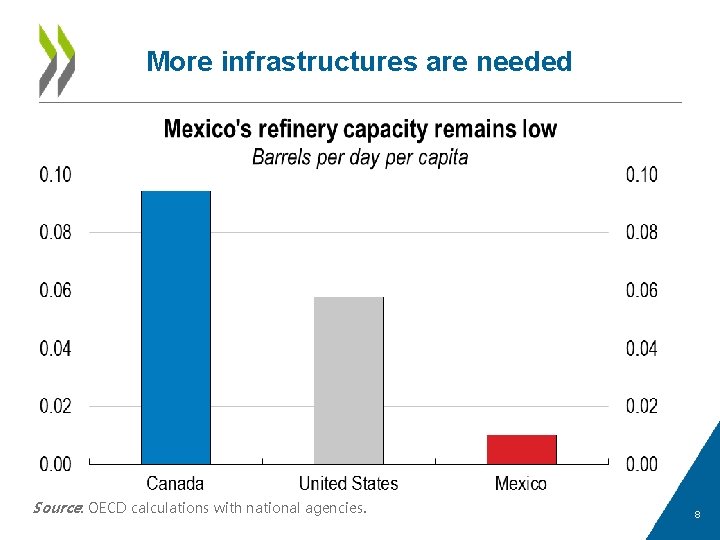
More infrastructures are needed Source: OECD calculations with national agencies. 8
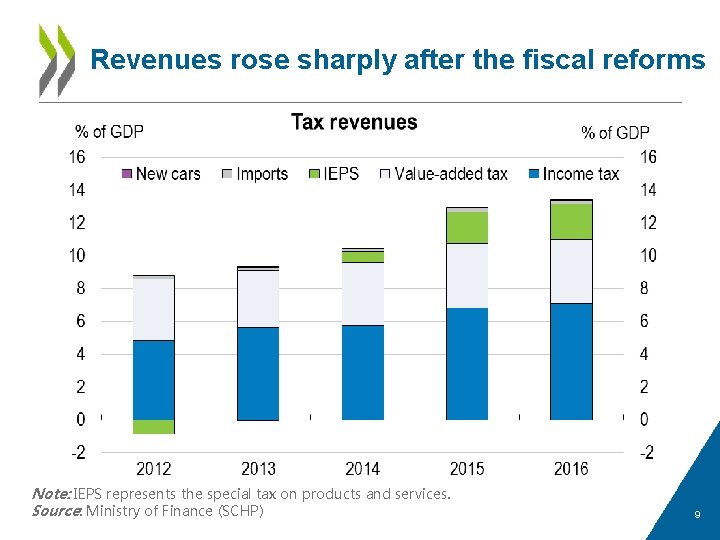
Revenues rose sharply after the fiscal reforms Note: IEPS represents the special tax on products and services. Source: Ministry of Finance (SCHP) 9
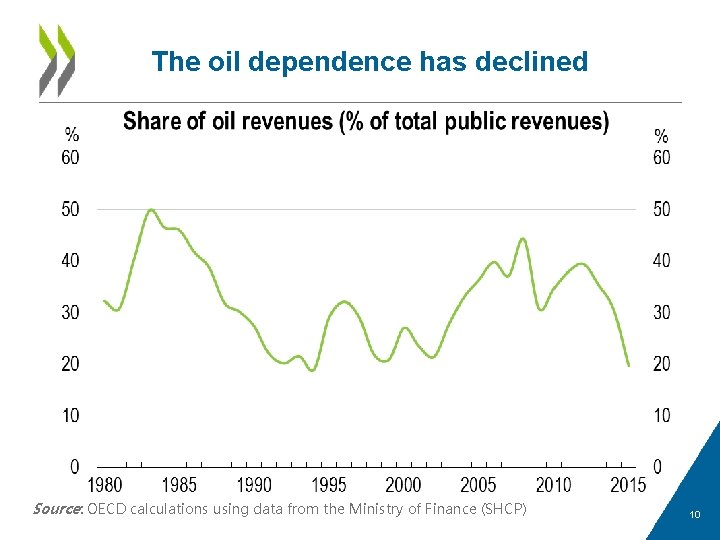
The oil dependence has declined Source: OECD calculations using data from the Ministry of Finance (SHCP) 10
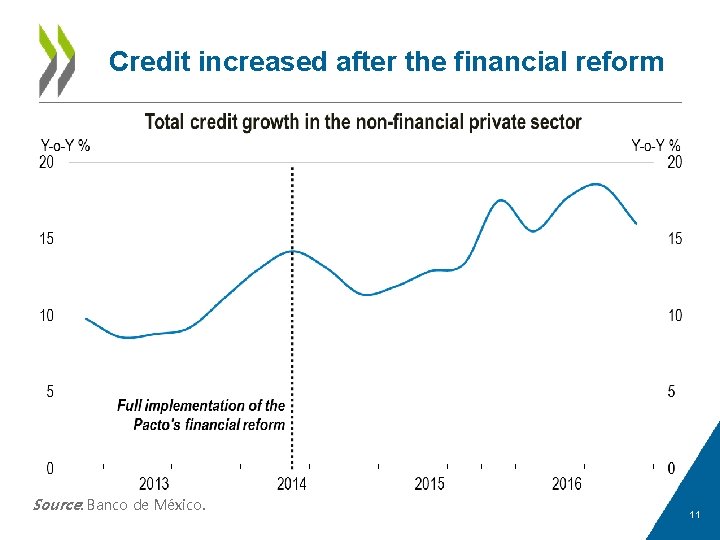
Credit increased after the financial reform Source: Banco de México. 11
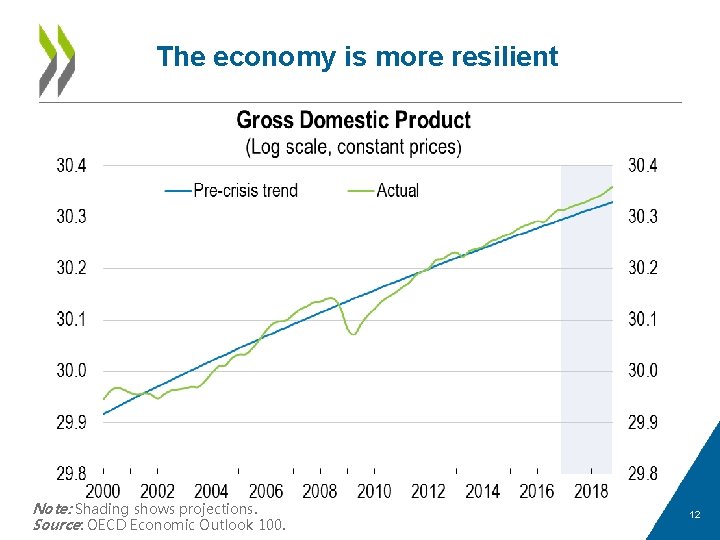
The economy is more resilient Note: Shading shows projections. Source: OECD Economic Outlook 100. 12
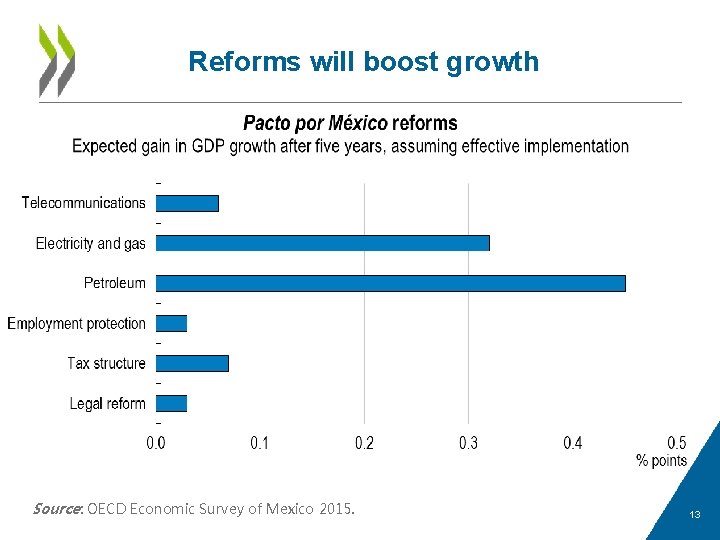
Reforms will boost growth Source: OECD Economic Survey of Mexico 2015. 13
WHAT IS LEFT TO DO 14
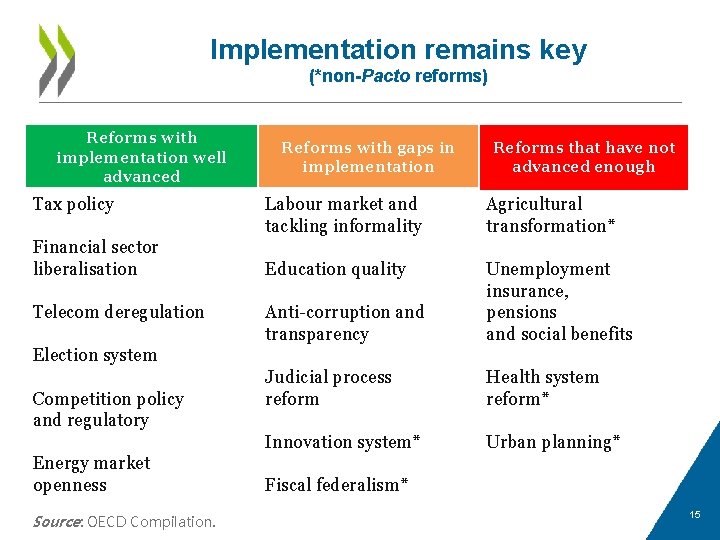
Implementation remains key (*non-Pacto reforms) Reforms with implementation well advanced Tax policy Financial sector liberalisation Telecom deregulation Reforms with gaps in implementation Reforms that have not advanced enough Labour market and tackling informality Agricultural transformation* Education quality Anti-corruption and transparency Unemployment insurance, pensions and social benefits Judicial process reform Health system reform* Innovation system* Urban planning* Election system Competition policy and regulatory Energy market openness Source: OECD Compilation. Fiscal federalism* 15
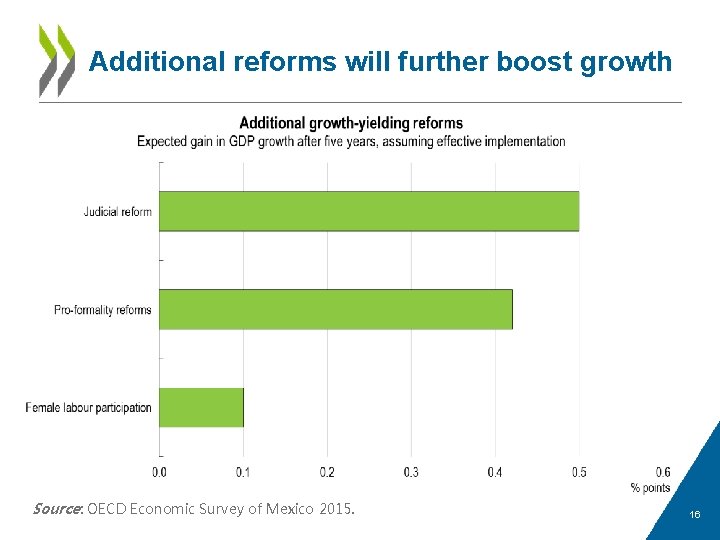
Additional reforms will further boost growth Source: OECD Economic Survey of Mexico 2015. 16
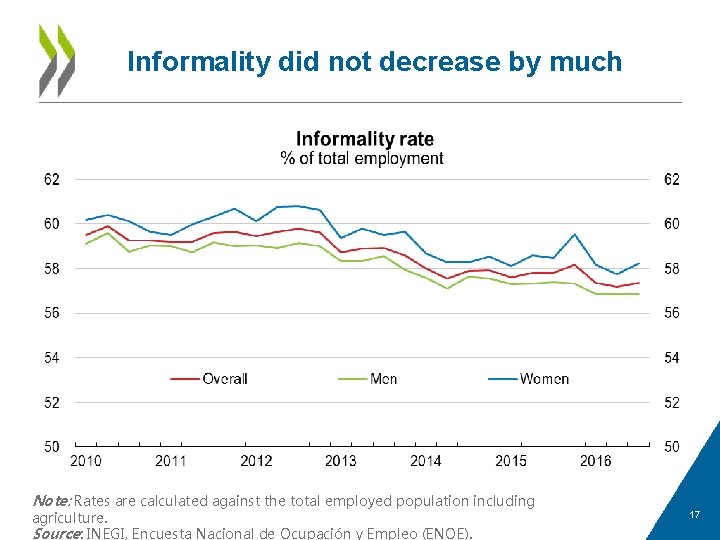
Informality did not decrease by much Note: Rates are calculated against the total employed population including agriculture. Source: INEGI, Encuesta Nacional de Ocupación y Empleo (ENOE). 17
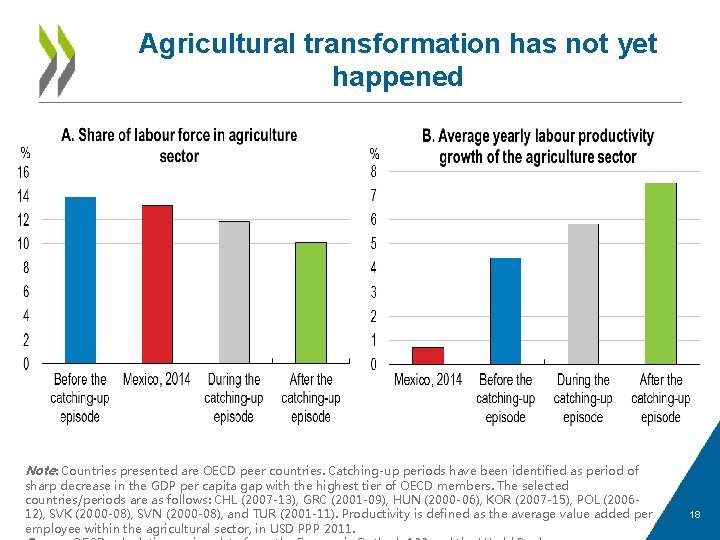
Agricultural transformation has not yet happened Note: Countries presented are OECD peer countries. Catching-up periods have been identified as period of sharp decrease in the GDP per capita gap with the highest tier of OECD members. The selected countries/periods are as follows: CHL (2007 -13), GRC (2001 -09), HUN (2000 -06), KOR (2007 -15), POL (200612), SVK (2000 -08), SVN (2000 -08), and TUR (2001 -11). Productivity is defined as the average value added per employee within the agricultural sector, in USD PPP 2011. 18
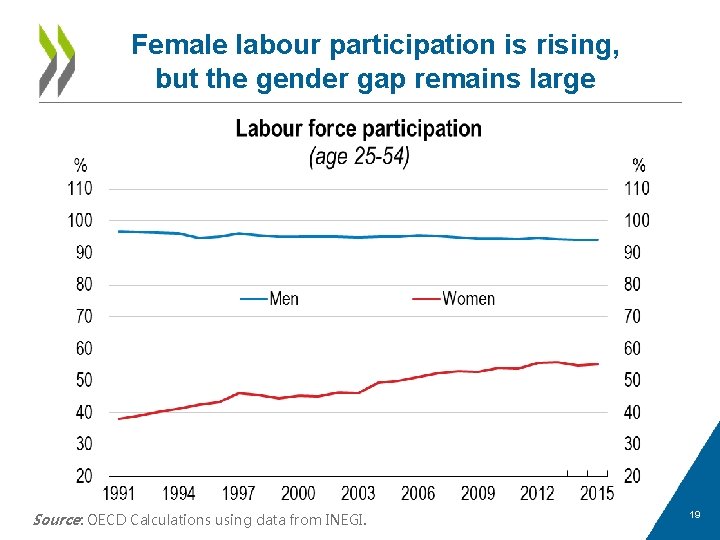
Female labour participation is rising, but the gender gap remains large Source: OECD Calculations using data from INEGI. 19
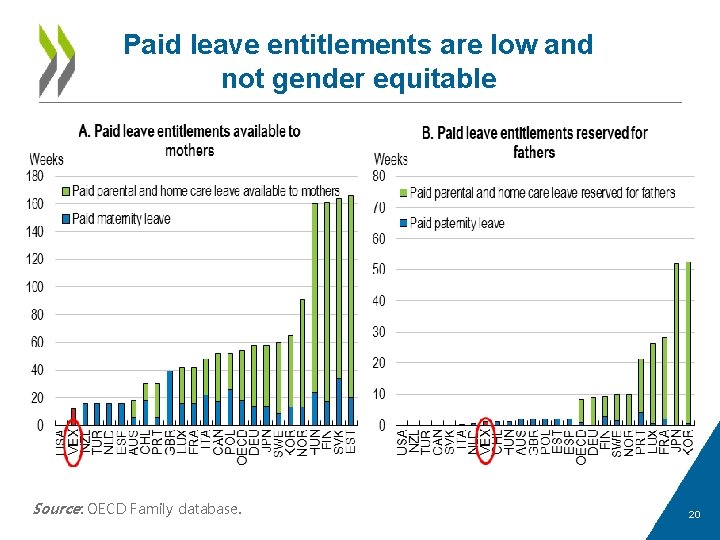
Paid leave entitlements are low and not gender equitable Source: OECD Family database. 20
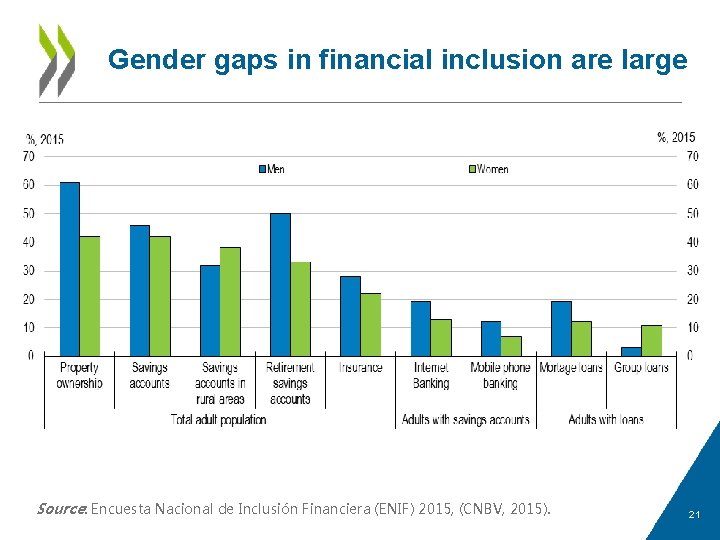
Gender gaps in financial inclusion are large Source: Encuesta Nacional de Inclusión Financiera (ENIF) 2015, (CNBV, 2015). 21
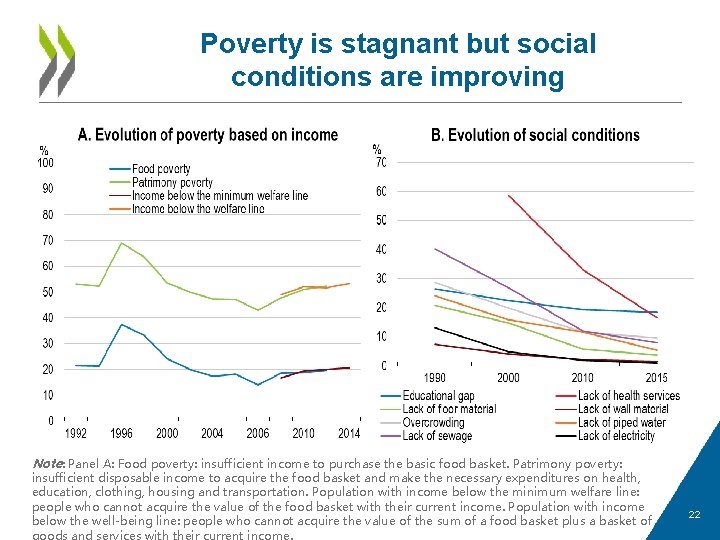
Poverty is stagnant but social conditions are improving Note: Panel A: Food poverty: insufficient income to purchase the basic food basket. Patrimony poverty: insufficient disposable income to acquire the food basket and make the necessary expenditures on health, education, clothing, housing and transportation. Population with income below the minimum welfare line: people who cannot acquire the value of the food basket with their current income. Population with income below the well-being line: people who cannot acquire the value of the sum of a food basket plus a basket of goods and services with their current income. 22
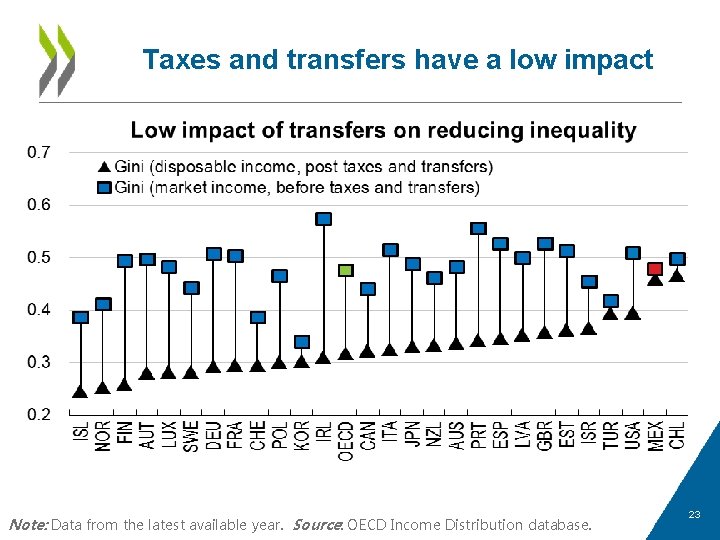
Taxes and transfers have a low impact Note: Data from the latest available year. Source: OECD Income Distribution database. 23
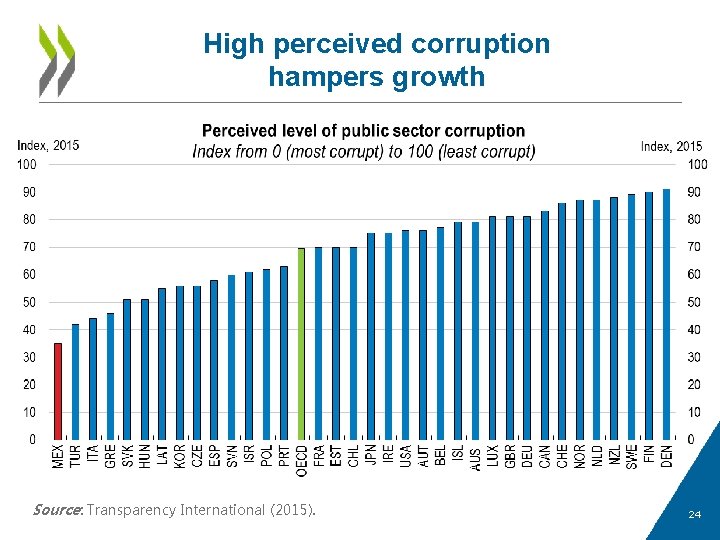
High perceived corruption hampers growth Source: Transparency International (2015). 24
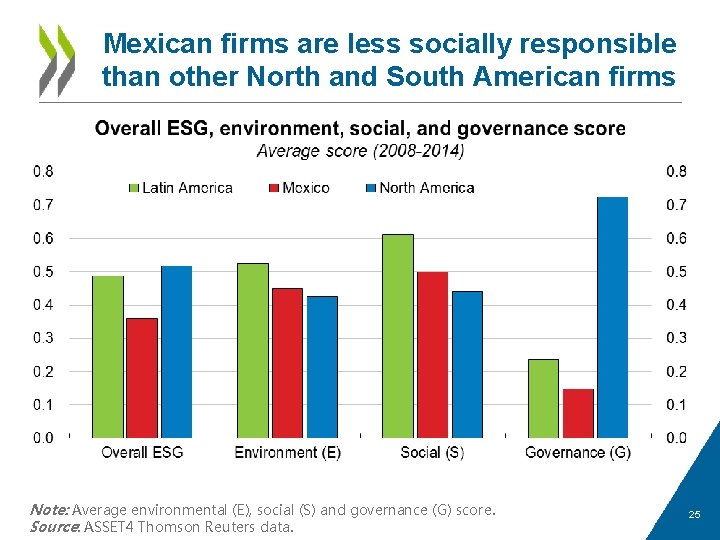
Mexican firms are less socially responsible than other North and South American firms Note: Average environmental (E), social (S) and governance (G) score. Source: ASSET 4 Thomson Reuters data. 25
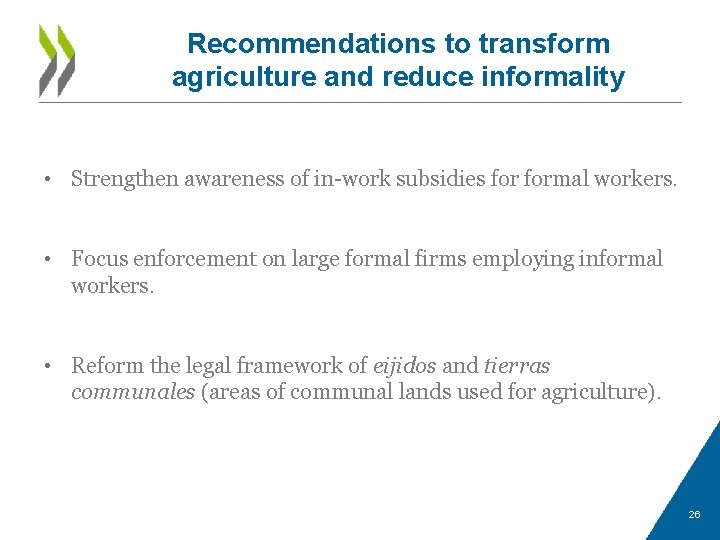
Recommendations to transform agriculture and reduce informality • Strengthen awareness of in-work subsidies formal workers. • Focus enforcement on large formal firms employing informal workers. • Reform the legal framework of eijidos and tierras communales (areas of communal lands used for agriculture). 26
Recommendations to improve female participation • Expand public early childcare and pre-school coverage. • Extend the length of paternity and maternity leaves. • Better enforce the constitutional provision on gender discrimination, particularly in the workplace, boardrooms and credit markets. 27
Recommendations to tackle poverty • Simplify the administrative procedures for accessing cash transfers. • Increase the role of social workers in reaching out to marginalised families. • Strengthen social expenditure on programmes to eradicate extreme poverty, such as Prospera. • Raise and broaden the minimum pension to expand the oldage safety net. 28
Recommendations to fight corruption and crime • Build capacity of the sub-national level entities involved in the new anti-corruption system. • Encourage more states to establish integrated state-wide police forces. • Extend oral trials to all civil and commercial cases. • Boost training, resources and technology for the judiciary. 29
Follow us on: OECD Economic Surveys: Mexico 2017 • Read this publication • Website with additional information Compare your country data visualization tool Follow us on twitter: OECD Economics OECD OCDE en Español 30