
OD Lecture 2 The Organization Development Practitioner The
- Slides: 19
OD Lecture 2 The Organization Development Practitioner
The Organization Development Practitioner • Internal and External Consultants • Professionals from other disciplines who apply OD practices (e. g. , TQM managers, IT/IS managers, compensation and benefits managers) • Managers and Administrators who apply OD from their line or staff positions
• Competencies of an OD Practitioner Intrapersonal skills – Self-awareness • Interpersonal skills – Ability to work with others and groups • General consultation skills – Ability to manage consulting process • Organization development theory – Knowledge of change processes
Role Demands on OD Practitioners • Position – Internal vs. External • Marginality – Ability to straddle boundaries • Emotional Demands – Emotional Intelligence • Use of Knowledge and Experience
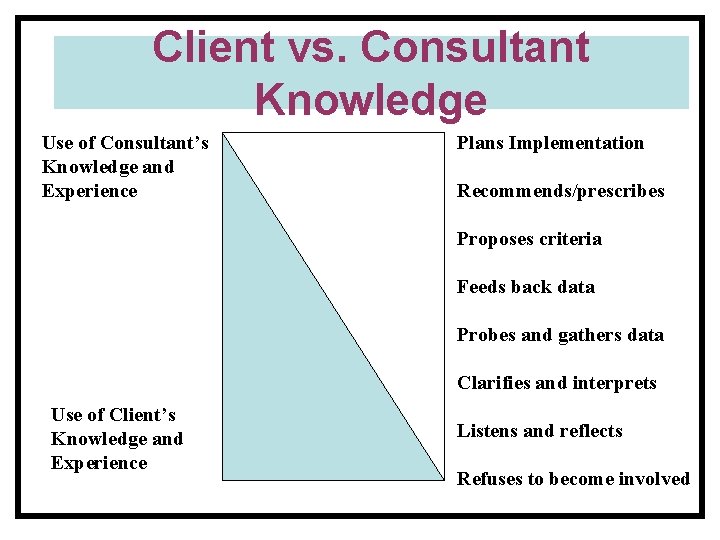
Client vs. Consultant Knowledge Use of Consultant’s Knowledge and Experience Plans Implementation Recommends/prescribes Proposes criteria Feeds back data Probes and gathers data Clarifies and interprets Use of Client’s Knowledge and Experience Listens and reflects Refuses to become involved
Professional Ethics • Ethical Guidelines • Ethical Dilemmas – Misrepresentation – Misuse of Data – Coercion – Value and Goal Conflicts – Technical Ineptness
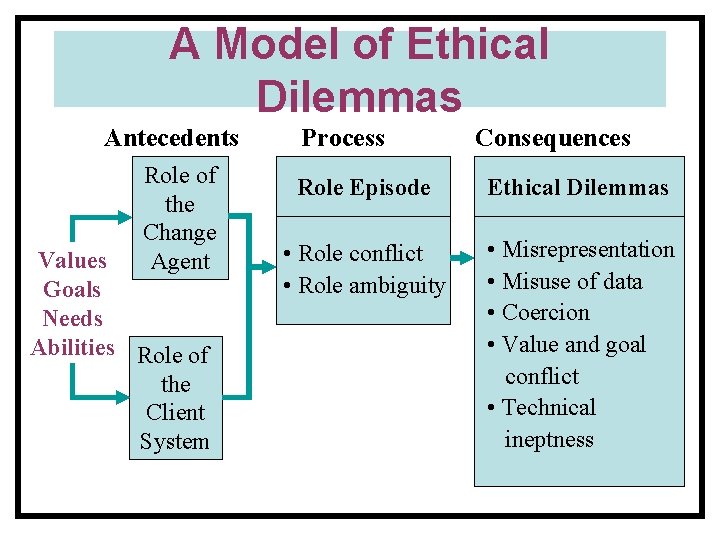
A Model of Ethical Dilemmas Antecedents Role of the Change Agent Values Goals Needs Abilities Role of the Client System Process Consequences Role Episode Ethical Dilemmas • Role conflict • Role ambiguity • Misrepresentation • Misuse of data • Coercion • Value and goal conflict • Technical ineptness
Diagnosing Organizations
Diagnosis Defined Diagnosis is a collaborative process between organizational members and the OD consultant to collect relevant information, analyze it, and draw conclusions for action planning and intervention.
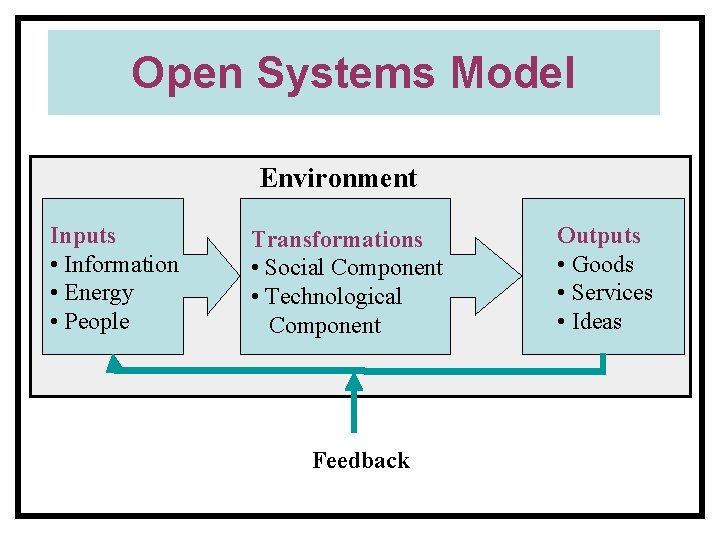
Open Systems Model Environment Inputs • Information • Energy • People Transformations • Social Component • Technological Component Feedback Outputs • Goods • Services • Ideas
Properties of Systems • Inputs, Transformations, and Outputs • Boundaries • Feedback • Equifinality (similar results from different conditions and different approaches) • Alignment
Diagnosing Organizational Systems • The key to effective diagnosis is… – Know what to look for at each organizational level – Recognize how the levels affect each other
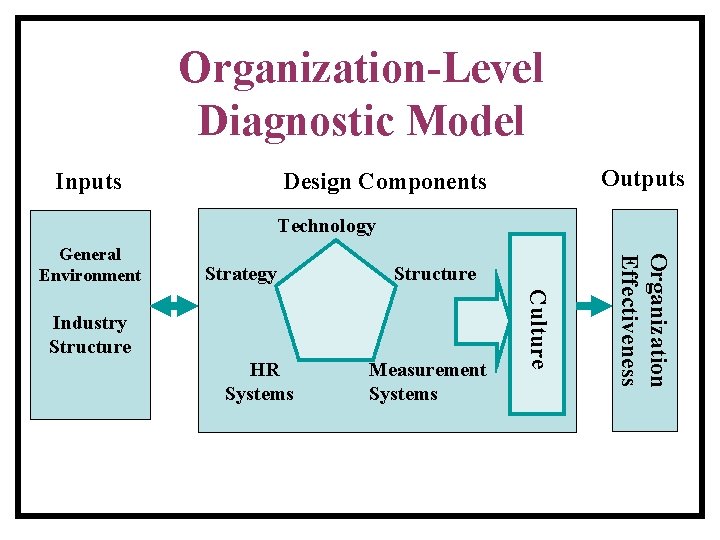
Organization-Level Diagnostic Model Inputs Outputs Design Components Technology Strategy Structure HR Systems Measurement Systems Culture Industry Structure Organization Effectiveness General Environment
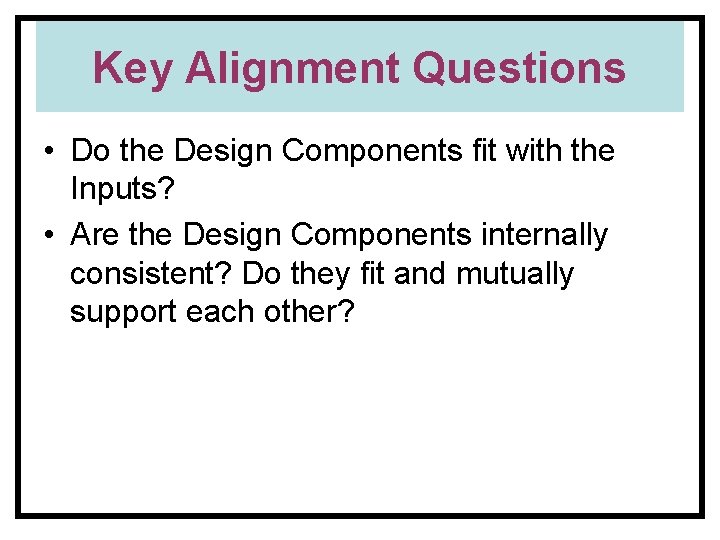
Key Alignment Questions • Do the Design Components fit with the Inputs? • Are the Design Components internally consistent? Do they fit and mutually support each other?
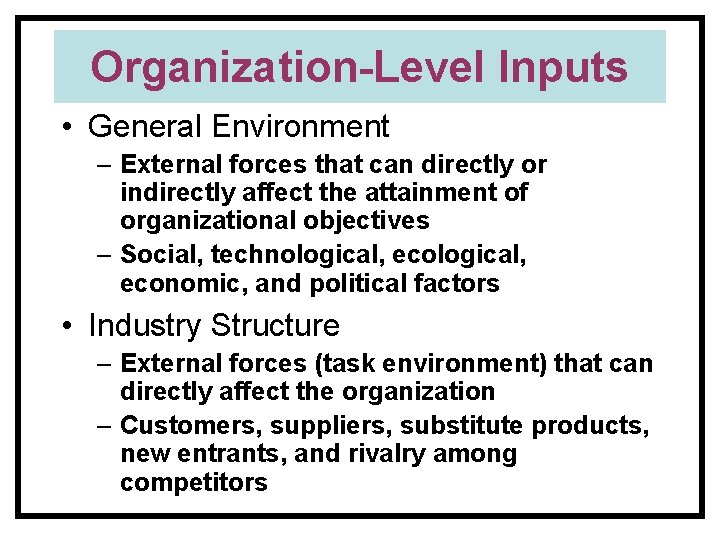
Organization-Level Inputs • General Environment – External forces that can directly or indirectly affect the attainment of organizational objectives – Social, technological, economic, and political factors • Industry Structure – External forces (task environment) that can directly affect the organization – Customers, suppliers, substitute products, new entrants, and rivalry among competitors
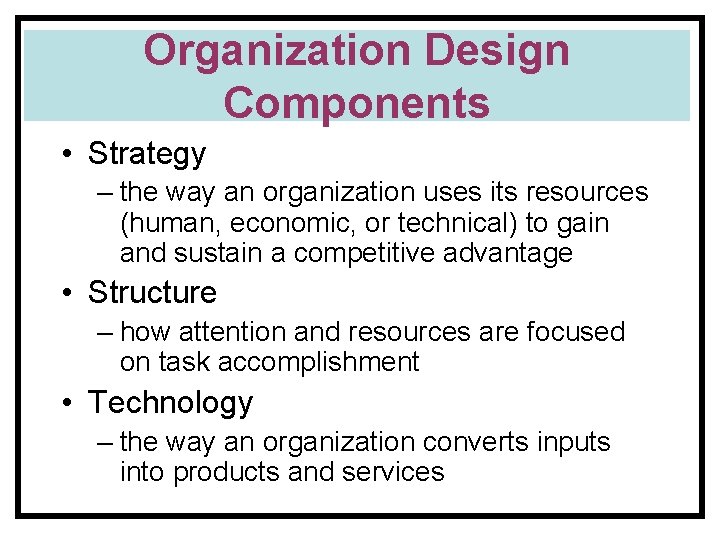
Organization Design Components • Strategy – the way an organization uses its resources (human, economic, or technical) to gain and sustain a competitive advantage • Structure – how attention and resources are focused on task accomplishment • Technology – the way an organization converts inputs into products and services
Organization Design Components • Human Resource Systems – the mechanisms for selecting, developing, appraising, and rewarding organization members • Measurement Systems – methods of gathering, assessing, and disseminating information on the activities of groups and individuals in organizations
Organization Design Components • Organization Culture – The basic assumptions, values, and norms shared by organization members – Represents both an “outcome” of organization design and a “foundation” or “constraint” to change
Outputs • Organization Performance – e. g. , profits, profitability, stock price • Productivity – e. g. , cost/employee, cost/unit, error rates, quality • Stakeholder Satisfaction – e. g. , market share, employee satisfaction, regulation compliance