
OCULOMOTOR TROCHLEAR ABDUCENS AND FACIAL NERVE Dr Gallatz
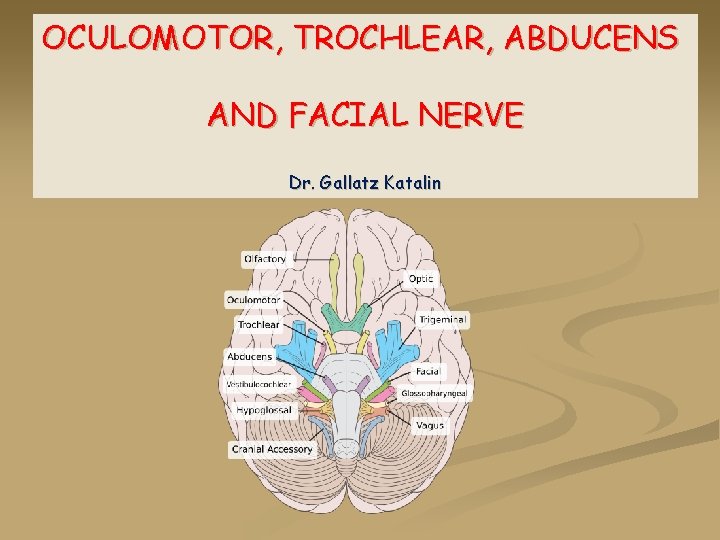
OCULOMOTOR, TROCHLEAR, ABDUCENS AND FACIAL NERVE Dr. Gallatz Katalin
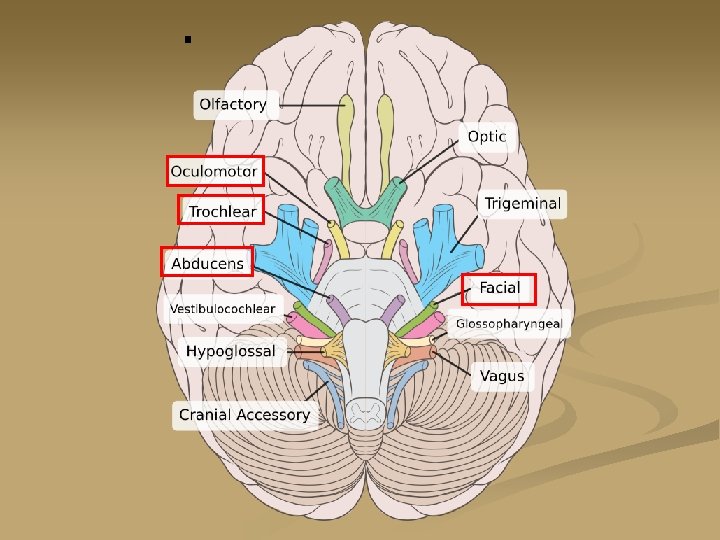

NUCLEI OF THE OCULOMOTOR, TROCHLEAR, AND ABDUCENT NERVE Oculomotor nucleus – rostral midrain Trochlear nucleus – caudal midbrain Abducens nucleus –caudal pons Accessory oculomotor nucleus or Edinger-Westfal nucleus parasympathetic nucleus GVE SOMATOMOTOR NUCLEI GSE (GSM)

CGM nucl. mesenceph. n. V nucl. oculomot. accessorius nucl. oculomotorius su bs t. n nucl. ruber igr a n. oculomotorius Oculomotor nucleus (GSE) - striated muscles of the eyeball except the sup. oblique (IV. n. ) and lat. rectus (VI. n. ) Accessory oculomotor nucleus (GVE) - Edinger-Westphal nucleus – ciliary ganglion short ciliary nerves constrictor muscle of pupil, ciliary muscles
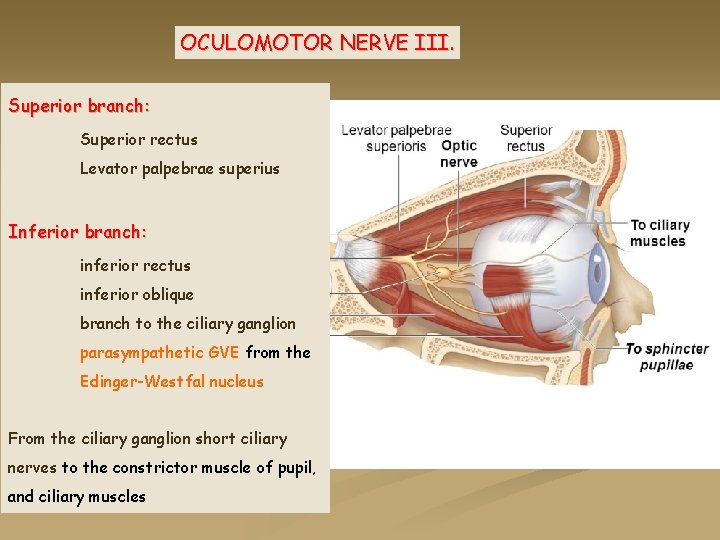
OCULOMOTOR NERVE III. Superior branch: Superior rectus Levator palpebrae superius Inferior branch: inferior rectus inferior oblique branch to the ciliary ganglion parasympathetic GVE from the Edinger-Westfal nucleus From the ciliary ganglion short ciliary nerves to the constrictor muscle of pupil, and ciliary muscles
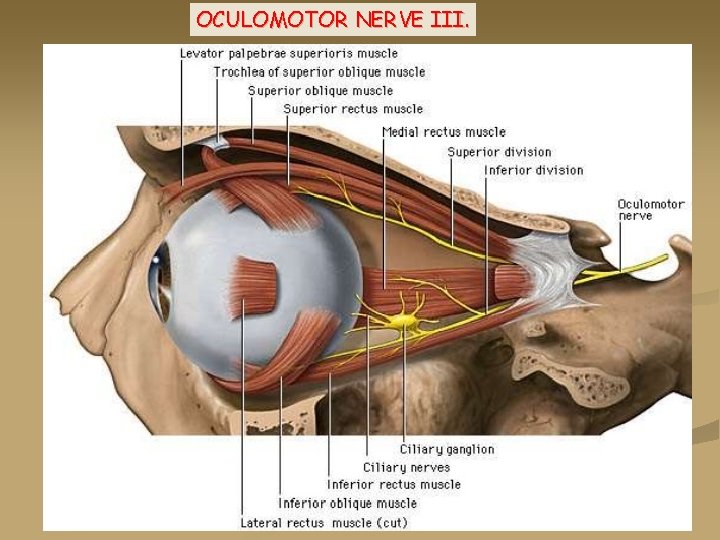
OCULOMOTOR NERVE III.

GVM nucleus
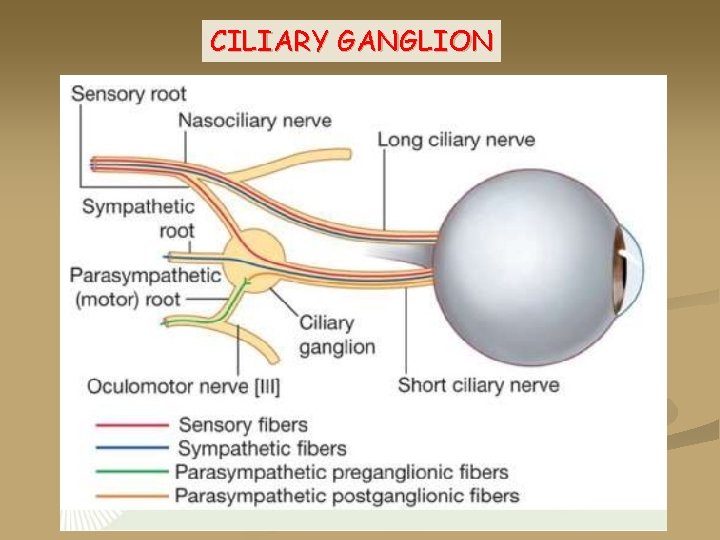
CILIARY GANGLION
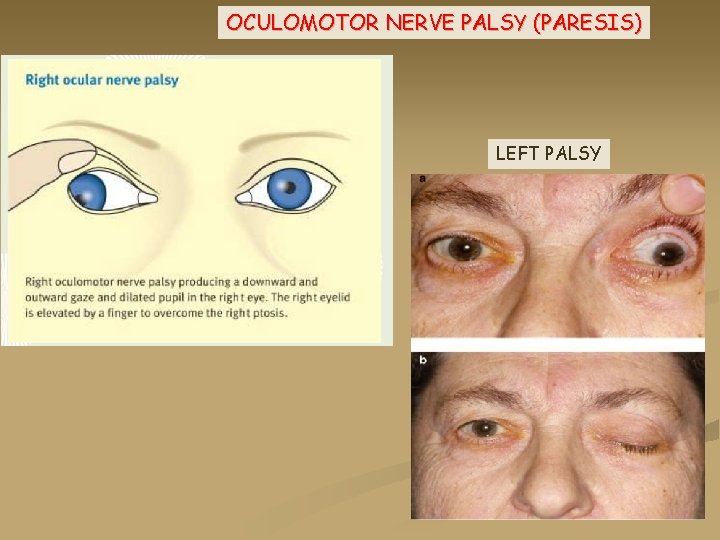
OCULOMOTOR NERVE PALSY (PARESIS) LEFT PALSY
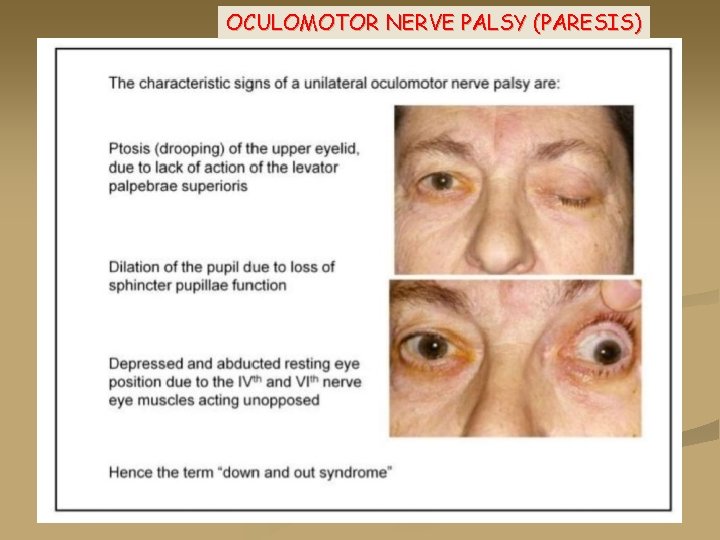
OCULOMOTOR NERVE PALSY (PARESIS)
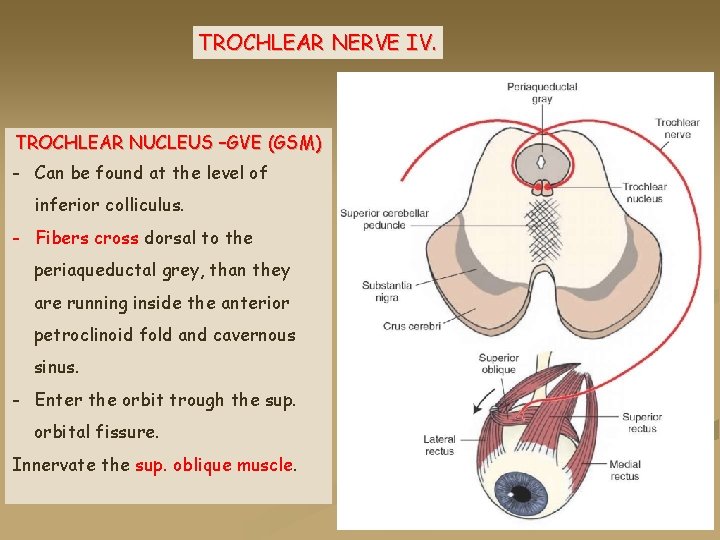
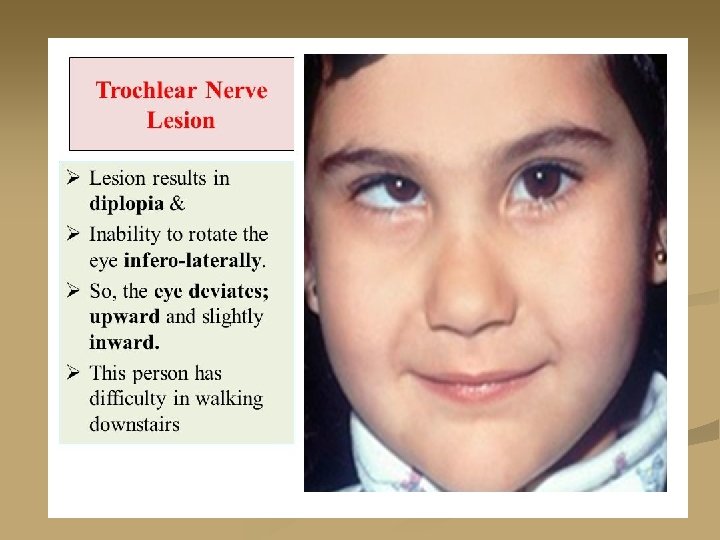
TROCHLEAR NERVE IV. TROCHLEAR NUCLEUS –GVE (GSM) - Can be found at the level of inferior colliculus. - Fibers cross dorsal to the periaqueductal grey, than they are running inside the anterior petroclinoid fold and cavernous sinus. - Enter the orbit trough the sup. orbital fissure. Innervate the sup. oblique muscle.
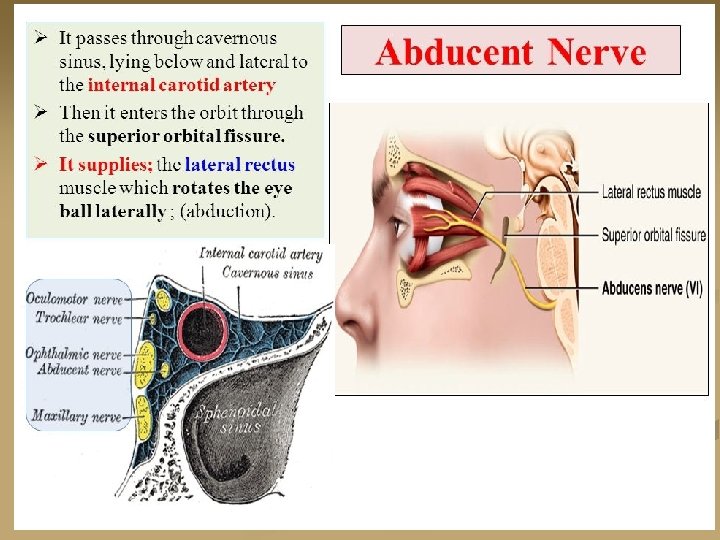
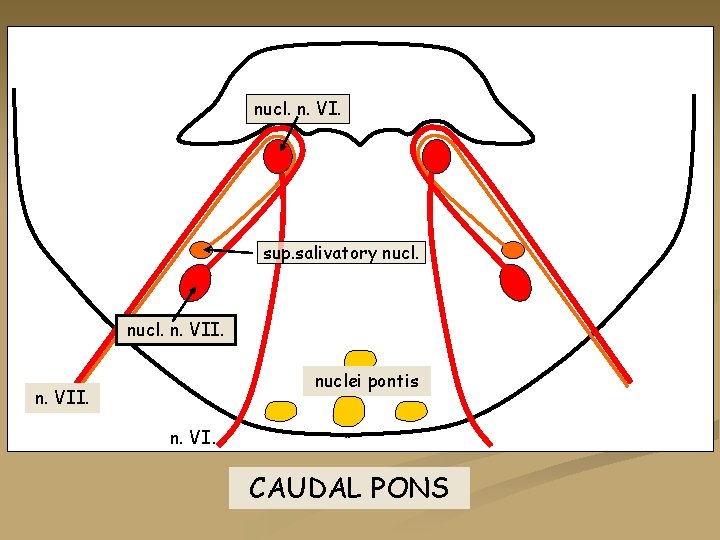
nucl. n. VI. sup. salivatory nucl. n. VII. nuclei pontis n. VII. n. VI. CAUDAL PONS
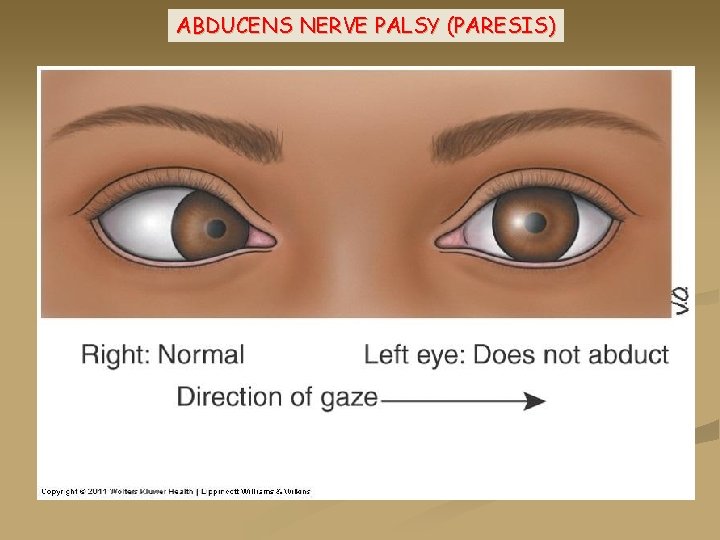
ABDUCENS NERVE PALSY (PARESIS)
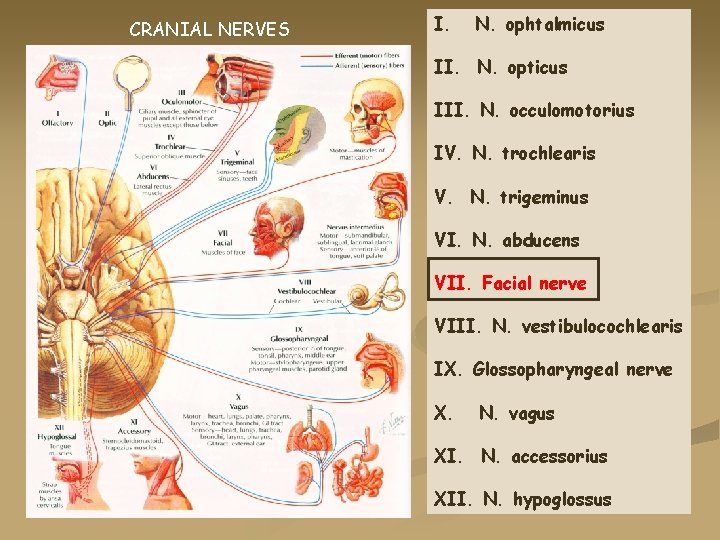
CRANIAL NERVES I. N. ophtalmicus II. N. opticus III. N. occulomotorius IV. N. trochlearis V. N. trigeminus VI. N. abducens VII. Facial nerve VIII. N. vestibulocochlearis IX. Glossopharyngeal nerve X. N. vagus XI. N. accessorius XII. N. hypoglossus
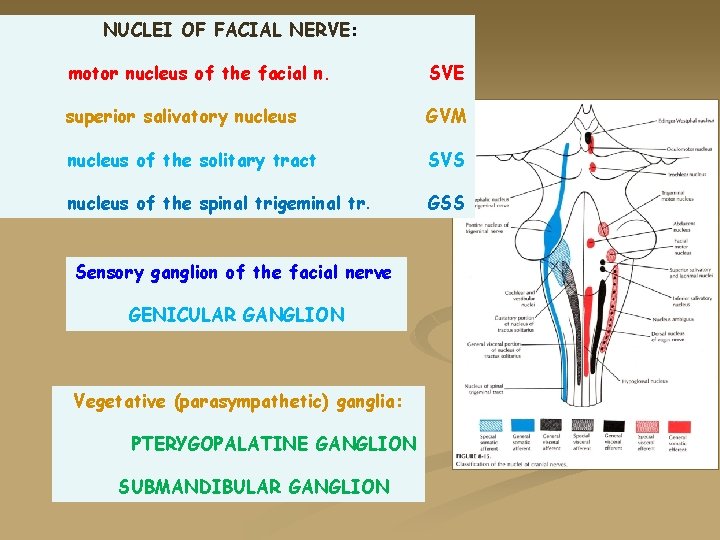
NUCLEI OF FACIAL NERVE: motor nucleus of the facial n. SVE superior salivatory nucleus GVM nucleus of the solitary tract SVS nucleus of the spinal trigeminal tr. GSS Sensory ganglion of the facial nerve GENICULAR GANGLION Vegetative (parasympathetic) ganglia: PTERYGOPALATINE GANGLION SUBMANDIBULAR GANGLION
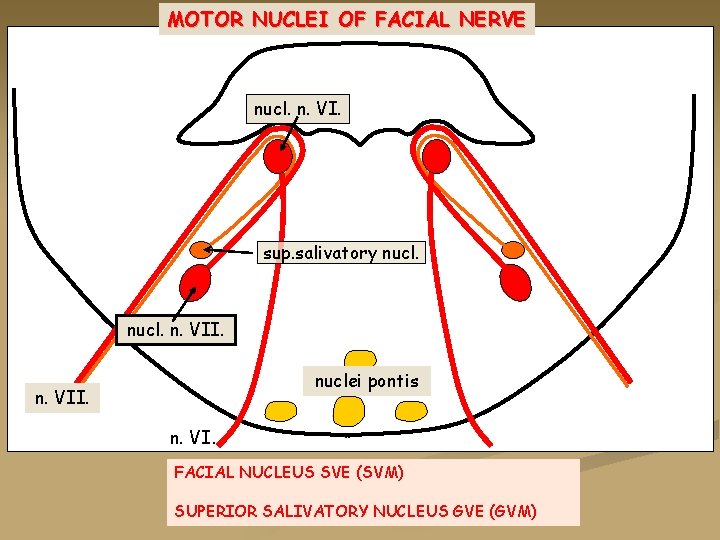
MOTOR NUCLEI OF FACIAL NERVE nucl. n. VI. sup. salivatory nucl. n. VII. nuclei pontis n. VII. n. VI. FACIAL NUCLEUS SVE (SVM) SUPERIOR SALIVATORY NUCLEUS GVE (GVM)
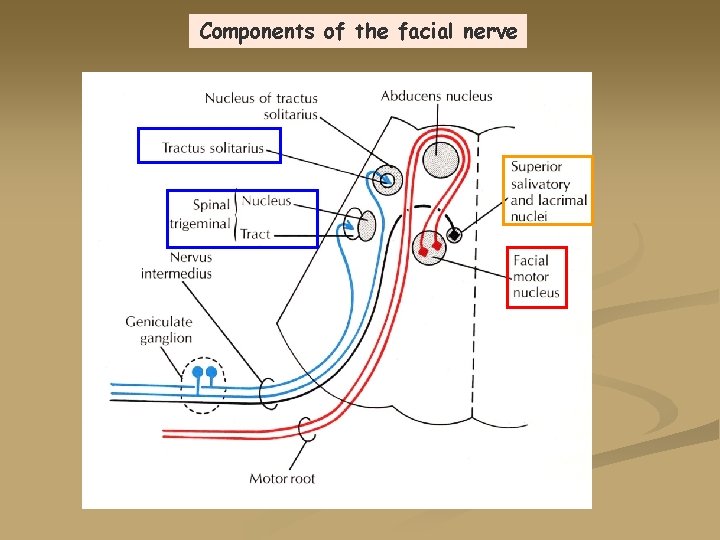
Components of the facial nerve
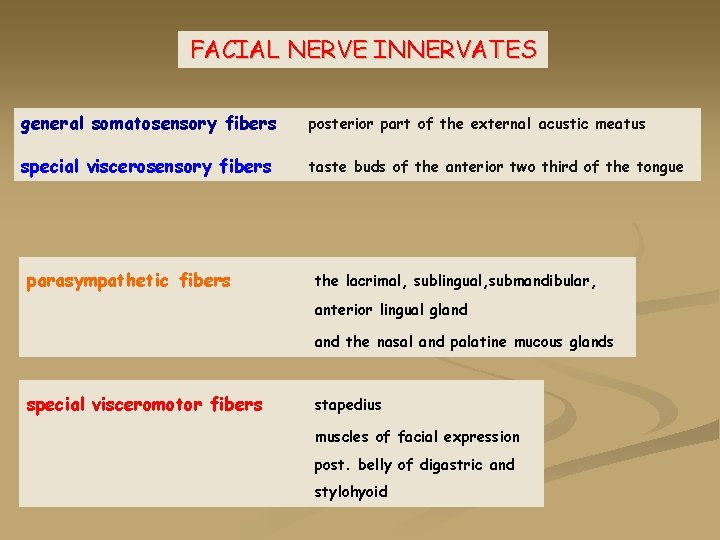
FACIAL NERVE INNERVATES general somatosensory fibers posterior part of the external acustic meatus special viscerosensory fibers taste buds of the anterior two third of the tongue parasympathetic fibers the lacrimal, sublingual, submandibular, anterior lingual gland the nasal and palatine mucous glands special visceromotor fibers stapedius muscles of facial expression post. belly of digastric and stylohyoid
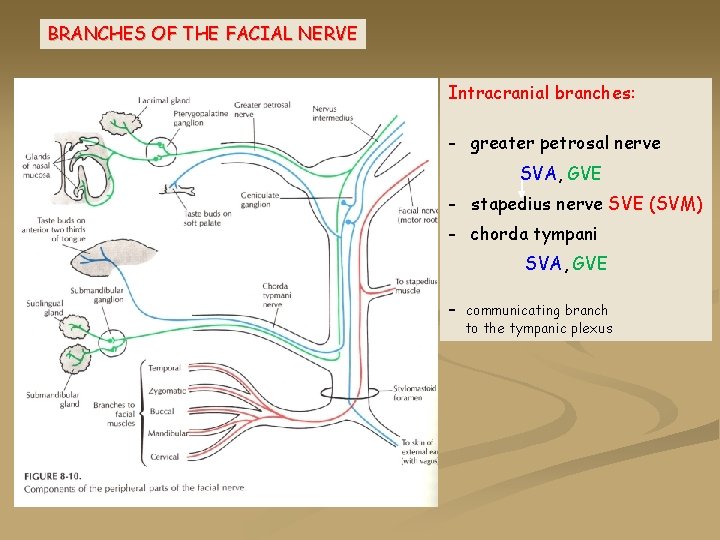
BRANCHES OF THE FACIAL NERVE Intracranial branches: - greater petrosal nerve SVA, GVE - stapedius nerve SVE (SVM) - chorda tympani SVA, GVE - communicating branch to the tympanic plexus
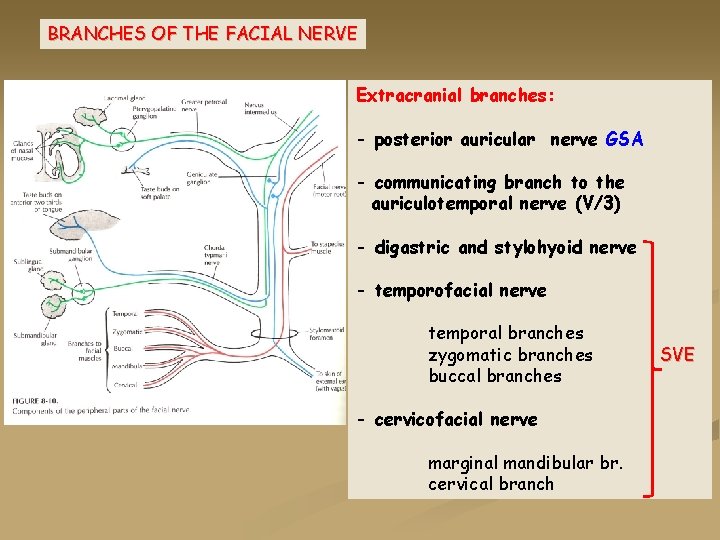
BRANCHES OF THE FACIAL NERVE Extracranial branches: - posterior auricular nerve GSA - communicating branch to the auriculotemporal nerve (V/3) - digastric and stylohyoid nerve - temporofacial nerve temporal branches zygomatic branches buccal branches - cervicofacial nerve marginal mandibular br. cervical branch SVE
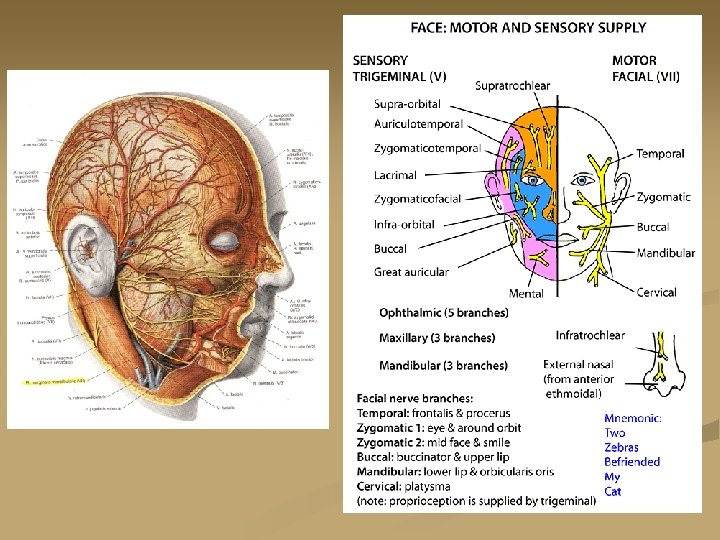
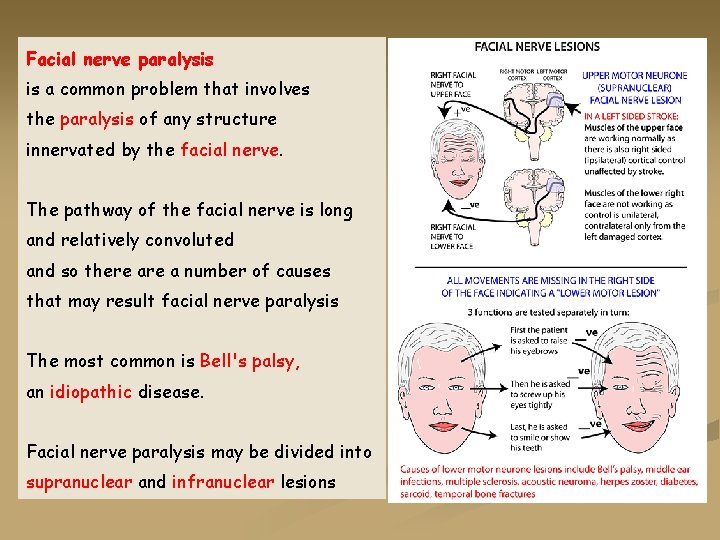
Facial nerve paralysis is a common problem that involves the paralysis of any structure innervated by the facial nerve. The pathway of the facial nerve is long and relatively convoluted and so there a number of causes that may result facial nerve paralysis The most common is Bell's palsy, an idiopathic disease. Facial nerve paralysis may be divided into supranuclear and infranuclear lesions
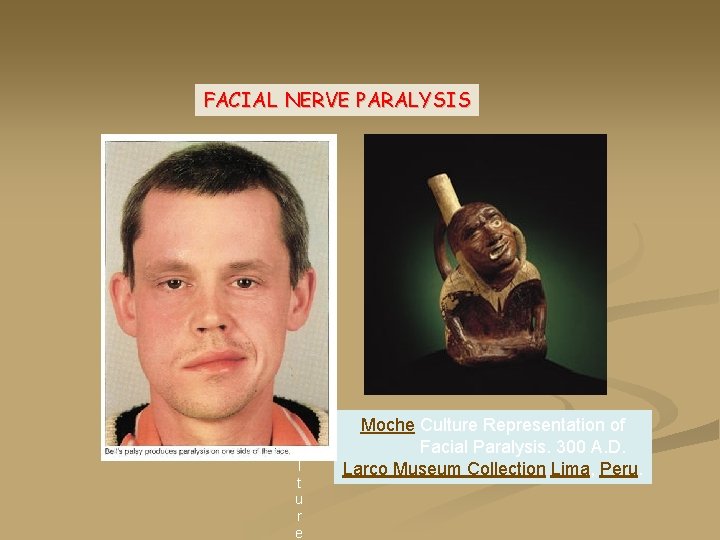
FACIAL NERVE PARALYSIS M o c h e C u l t u r e Moche Culture Representation of Facial Paralysis. 300 A. D. Larco Museum Collection Lima, Peru.
Thank you for your attention!
- Slides: 26