
Ocular Examination and Pharmacology INTERNATIONAL CENTRE FOR EYE


- Slides: 33
Ocular Examination and Pharmacology
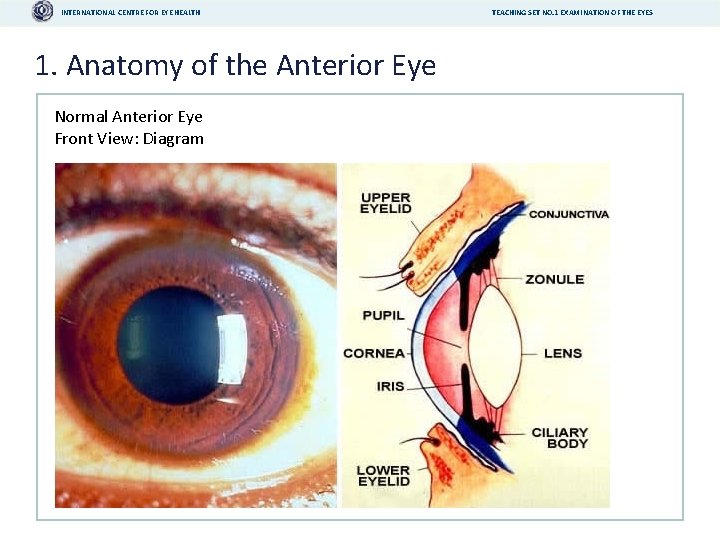
INTERNATIONAL CENTRE FOR EYE HEALTH 1. Anatomy of the Anterior Eye Normal Anterior Eye Front View: Diagram TEACHING SET NO. 1 EXAMINATION OF THE EYES
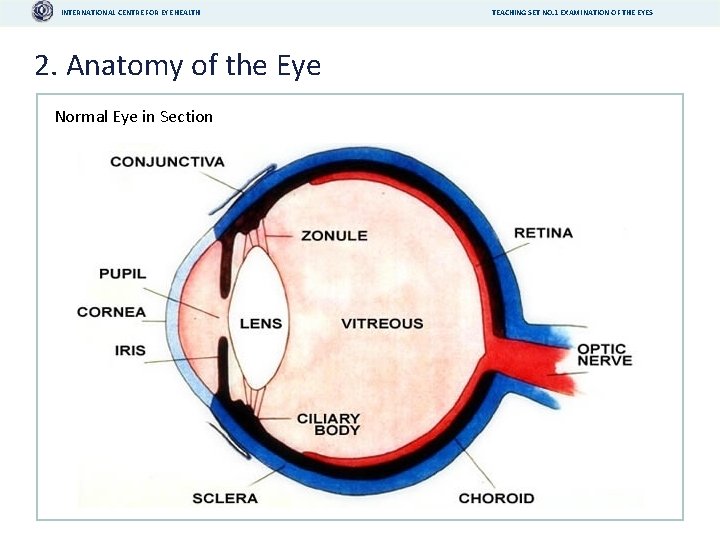
INTERNATIONAL CENTRE FOR EYE HEALTH 2. Anatomy of the Eye Normal Eye in Section TEACHING SET NO. 1 EXAMINATION OF THE EYES
INTERNATIONAL CENTRE FOR EYE HEALTH 3. Instruments for Examination Equipment for Eye Examination TEACHING SET NO. 1 EXAMINATION OF THE EYES
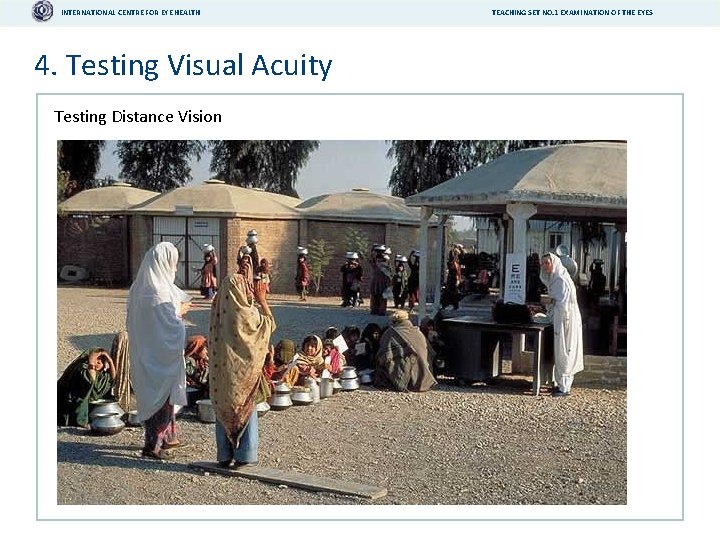
INTERNATIONAL CENTRE FOR EYE HEALTH 4. Testing Visual Acuity Testing Distance Vision TEACHING SET NO. 1 EXAMINATION OF THE EYES
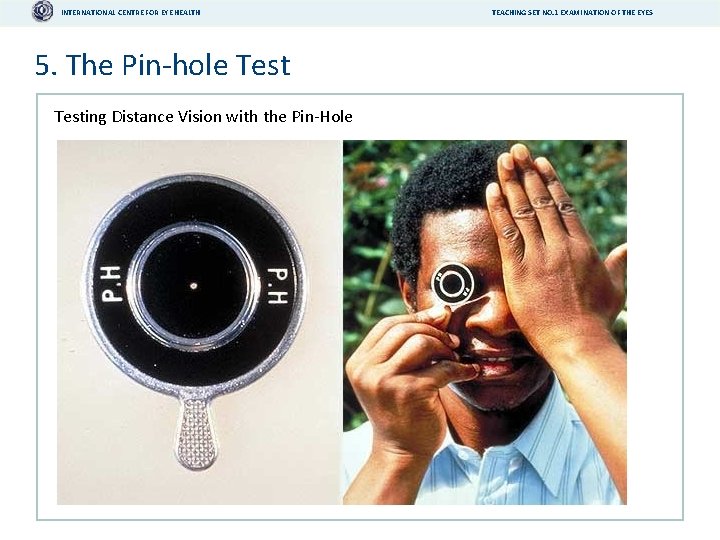
INTERNATIONAL CENTRE FOR EYE HEALTH 5. The Pin-hole Testing Distance Vision with the Pin-Hole TEACHING SET NO. 1 EXAMINATION OF THE EYES
INTERNATIONAL CENTRE FOR EYE HEALTH 6. Testing Near Vision TEACHING SET NO. 1 EXAMINATION OF THE EYES
INTERNATIONAL CENTRE FOR EYE HEALTH TEACHING SET NO. 1 EXAMINATION OF THE EYES 7. History of the Complaint The Patient's History What is the major complaint? What is its duration? Was the onset of the complaint gradual or sudden? Is there any loss of vision? Is there any pain? Is the condition improving or getting worse? Is there any history of trauma? Is there any family history of a similar complaint or other eye problems?
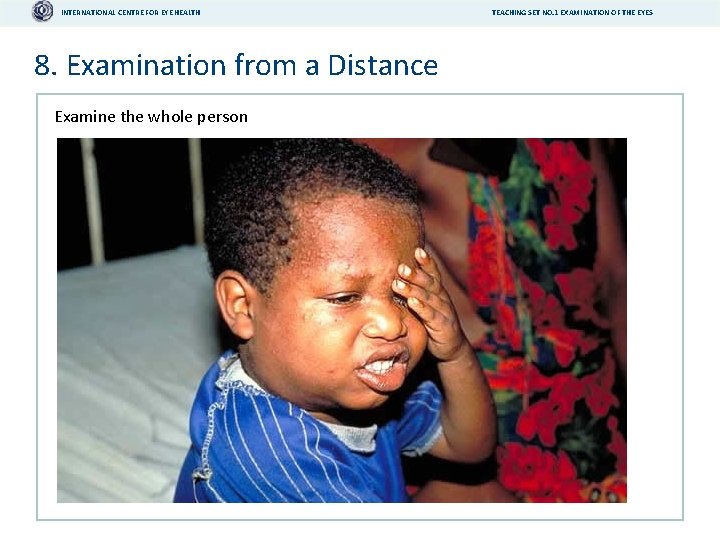
INTERNATIONAL CENTRE FOR EYE HEALTH 8. Examination from a Distance Examine the whole person TEACHING SET NO. 1 EXAMINATION OF THE EYES
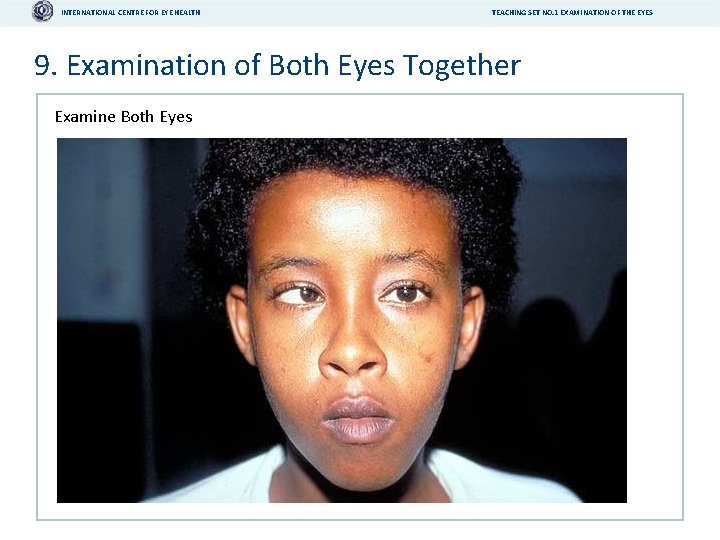
INTERNATIONAL CENTRE FOR EYE HEALTH TEACHING SET NO. 1 EXAMINATION OF THE EYES 9. Examination of Both Eyes Together Examine Both Eyes
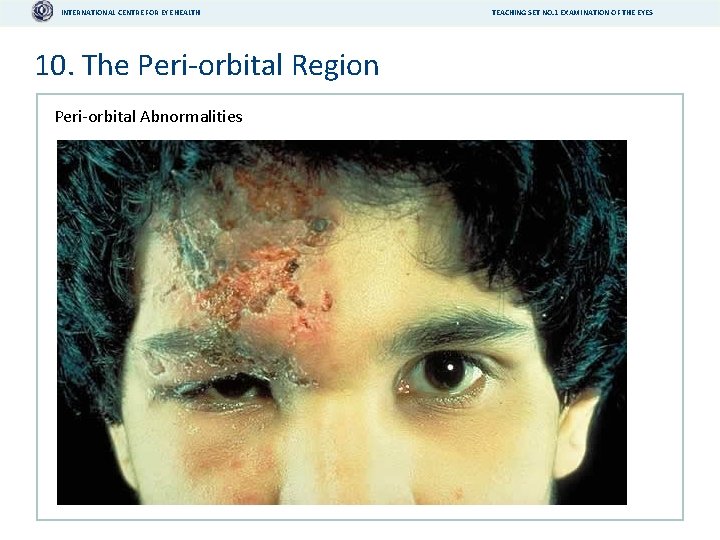
INTERNATIONAL CENTRE FOR EYE HEALTH 10. The Peri-orbital Region Peri-orbital Abnormalities TEACHING SET NO. 1 EXAMINATION OF THE EYES
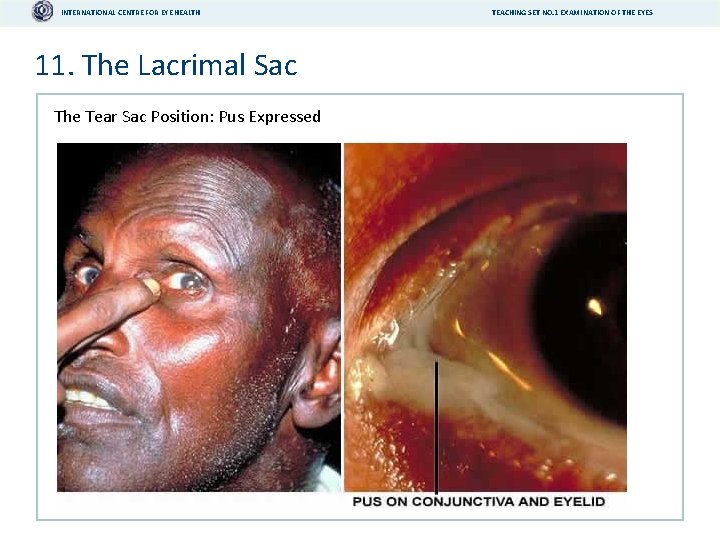
INTERNATIONAL CENTRE FOR EYE HEALTH 11. The Lacrimal Sac The Tear Sac Position: Pus Expressed TEACHING SET NO. 1 EXAMINATION OF THE EYES
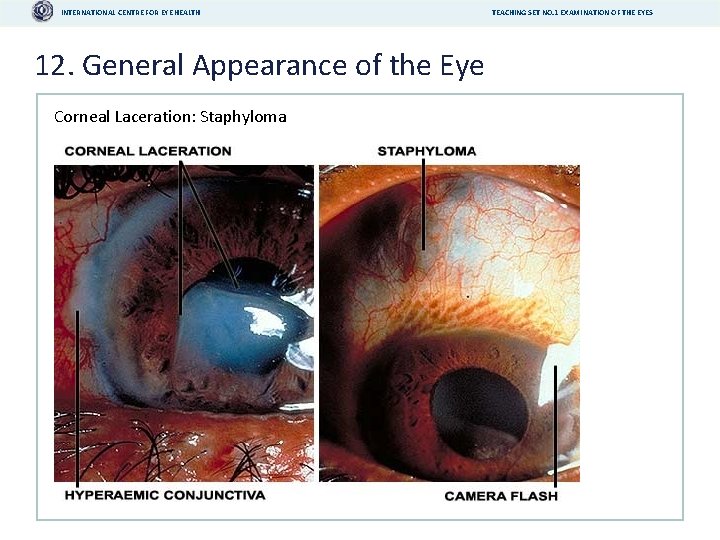
INTERNATIONAL CENTRE FOR EYE HEALTH 12. General Appearance of the Eye Corneal Laceration: Staphyloma TEACHING SET NO. 1 EXAMINATION OF THE EYES
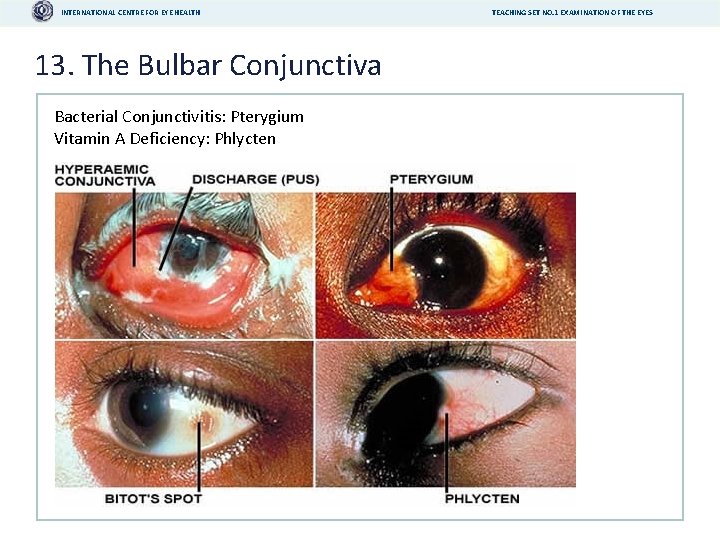
INTERNATIONAL CENTRE FOR EYE HEALTH 13. The Bulbar Conjunctiva Bacterial Conjunctivitis: Pterygium Vitamin A Deficiency: Phlycten TEACHING SET NO. 1 EXAMINATION OF THE EYES
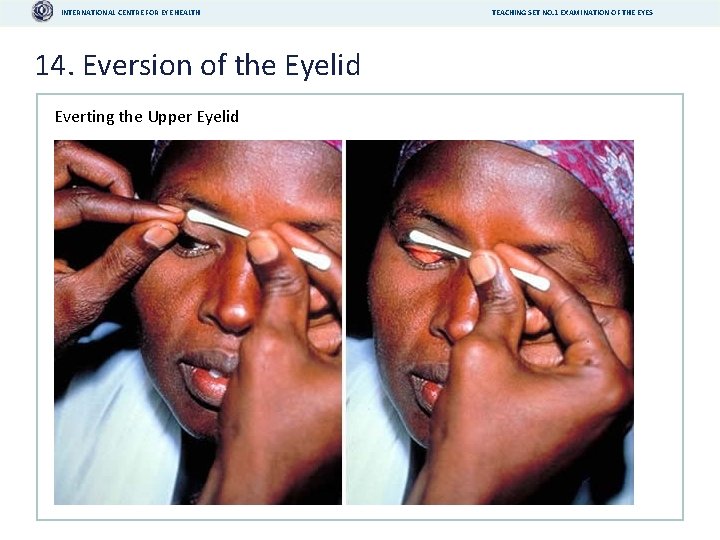
INTERNATIONAL CENTRE FOR EYE HEALTH 14. Eversion of the Eyelid Everting the Upper Eyelid TEACHING SET NO. 1 EXAMINATION OF THE EYES
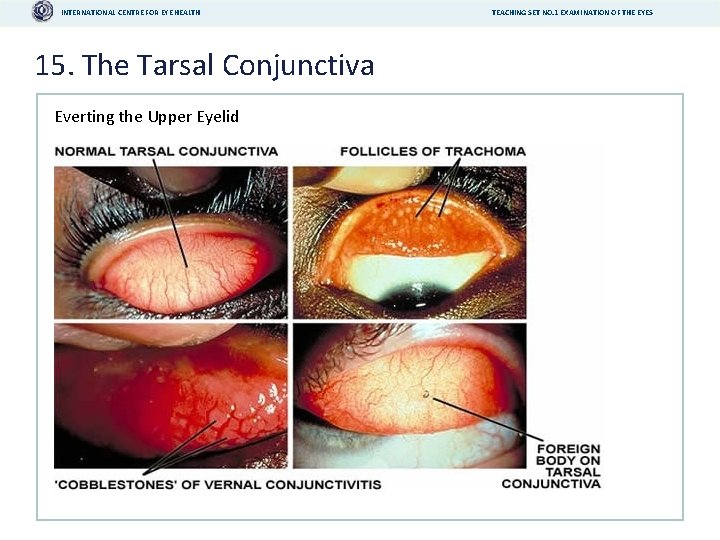
INTERNATIONAL CENTRE FOR EYE HEALTH 15. The Tarsal Conjunctiva Everting the Upper Eyelid TEACHING SET NO. 1 EXAMINATION OF THE EYES
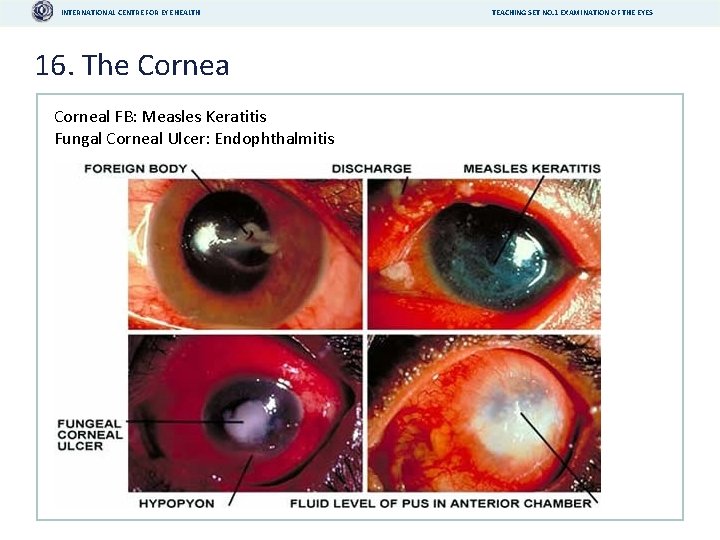
INTERNATIONAL CENTRE FOR EYE HEALTH 16. The Corneal FB: Measles Keratitis Fungal Corneal Ulcer: Endophthalmitis TEACHING SET NO. 1 EXAMINATION OF THE EYES
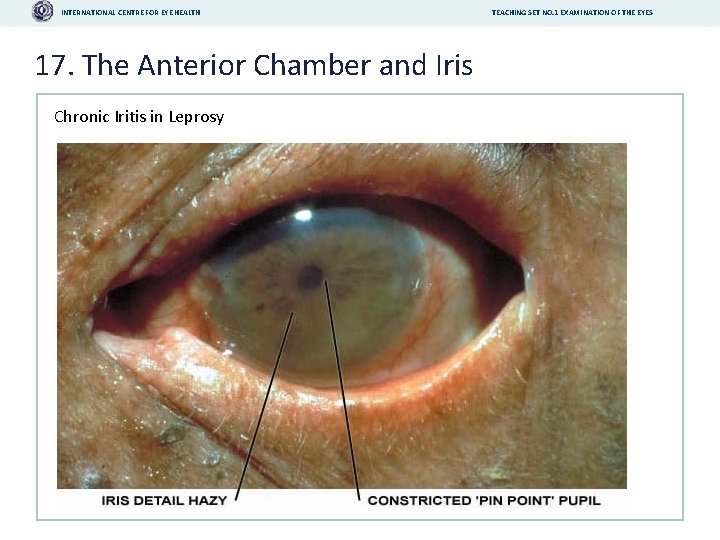
INTERNATIONAL CENTRE FOR EYE HEALTH 17. The Anterior Chamber and Iris Chronic Iritis in Leprosy TEACHING SET NO. 1 EXAMINATION OF THE EYES
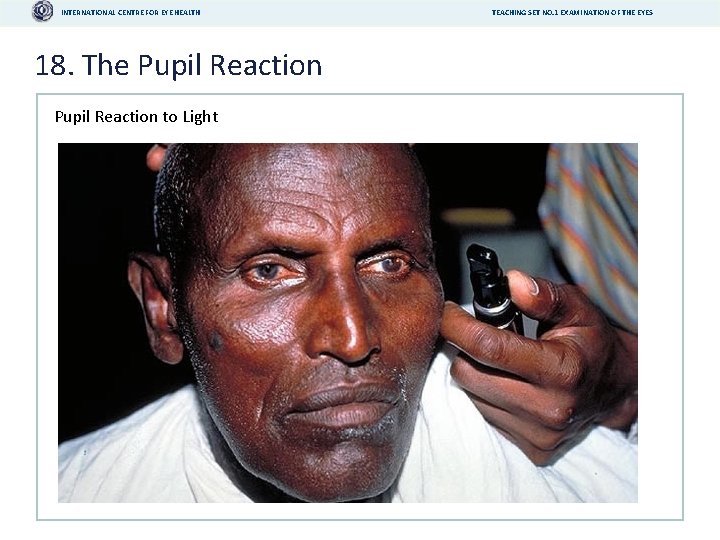
INTERNATIONAL CENTRE FOR EYE HEALTH 18. The Pupil Reaction to Light TEACHING SET NO. 1 EXAMINATION OF THE EYES
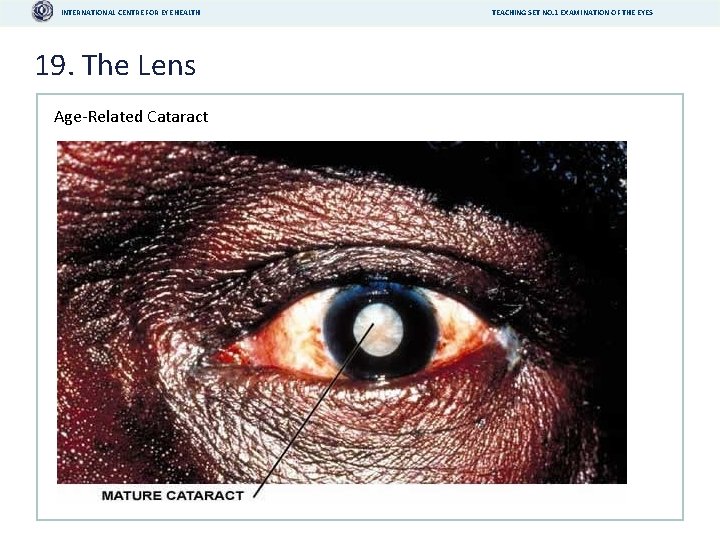
INTERNATIONAL CENTRE FOR EYE HEALTH 19. The Lens Age-Related Cataract TEACHING SET NO. 1 EXAMINATION OF THE EYES
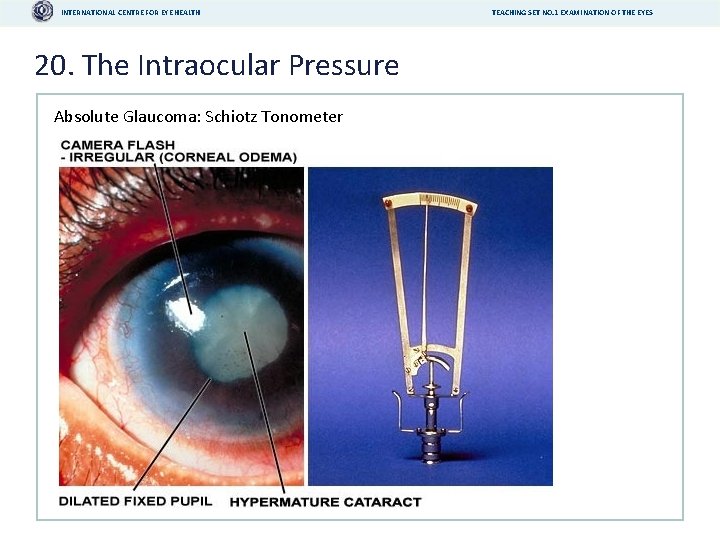
INTERNATIONAL CENTRE FOR EYE HEALTH 20. The Intraocular Pressure Absolute Glaucoma: Schiotz Tonometer TEACHING SET NO. 1 EXAMINATION OF THE EYES
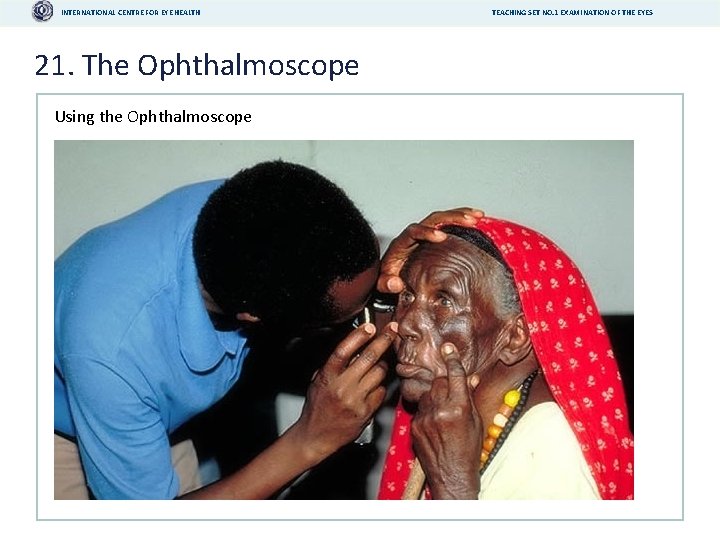
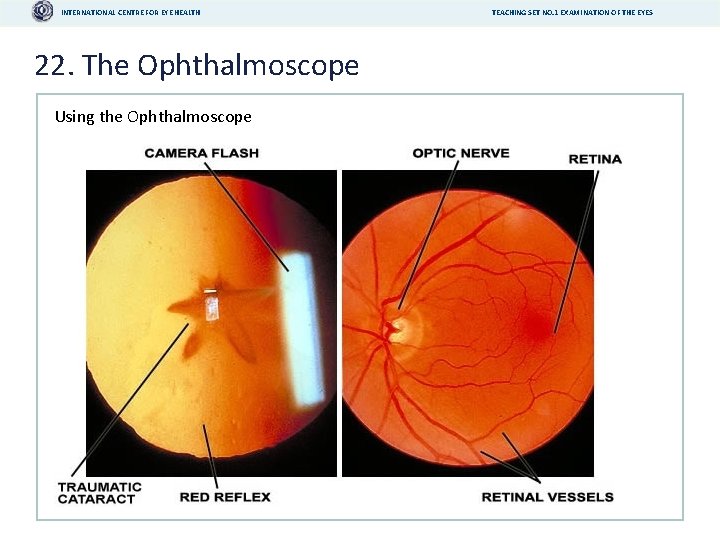
INTERNATIONAL CENTRE FOR EYE HEALTH 21. The Ophthalmoscope Using the Ophthalmoscope TEACHING SET NO. 1 EXAMINATION OF THE EYES
INTERNATIONAL CENTRE FOR EYE HEALTH 22. The Ophthalmoscope Using the Ophthalmoscope TEACHING SET NO. 1 EXAMINATION OF THE EYES
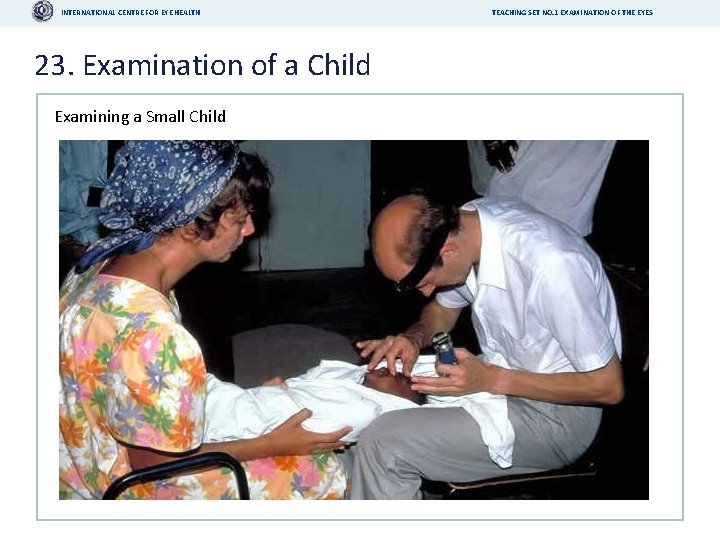
INTERNATIONAL CENTRE FOR EYE HEALTH 23. Examination of a Child Examining a Small Child TEACHING SET NO. 1 EXAMINATION OF THE EYES
INTERNATIONAL CENTRE FOR EYE HEALTH TEACHING SET NO. 1 EXAMINATION OF THE EYES 24. Examination of a Child Examining a Small Child • Take a careful history • Record the distance vision in each eye - with distance glasses if worn or with a pin-hole • Examine first from a distance - a general impression of health or systemic disease • Examine both eyes together • Examine the peri-orbital region of each eye • Examine from the front of each eye through to the back of each eye • Record your findings • Treat if possible • Refer to the Eye Specialist whenever in doubt
Ocular Pharmacology • • • Antibiotics Antivirals Anti-allergics Diagnostic- flourescein Pressure lowering drugs
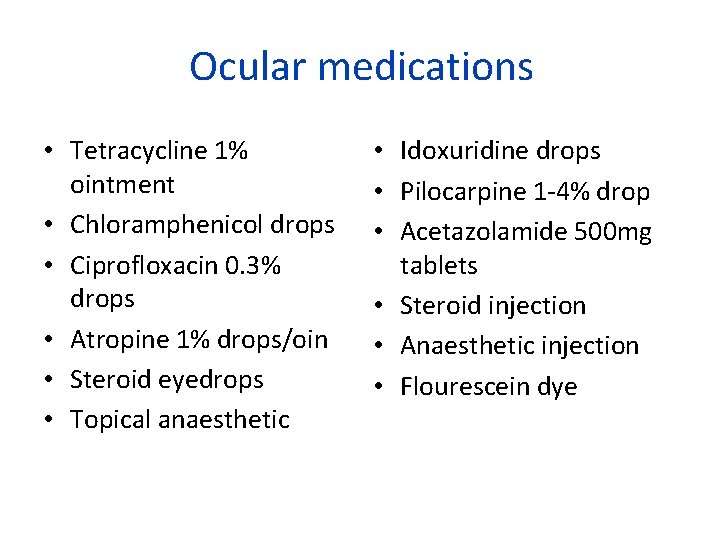
Ocular medications • Tetracycline 1% ointment • Chloramphenicol drops • Ciprofloxacin 0. 3% drops • Atropine 1% drops/oin • Steroid eyedrops • Topical anaesthetic • Idoxuridine drops • Pilocarpine 1 -4% drop • Acetazolamide 500 mg tablets • Steroid injection • Anaesthetic injection • Flourescein dye
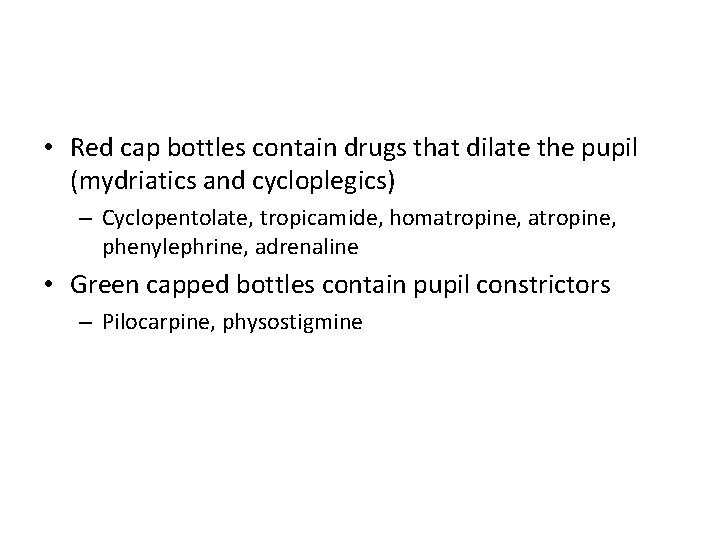
• Red cap bottles contain drugs that dilate the pupil (mydriatics and cycloplegics) – Cyclopentolate, tropicamide, homatropine, phenylephrine, adrenaline • Green capped bottles contain pupil constrictors – Pilocarpine, physostigmine
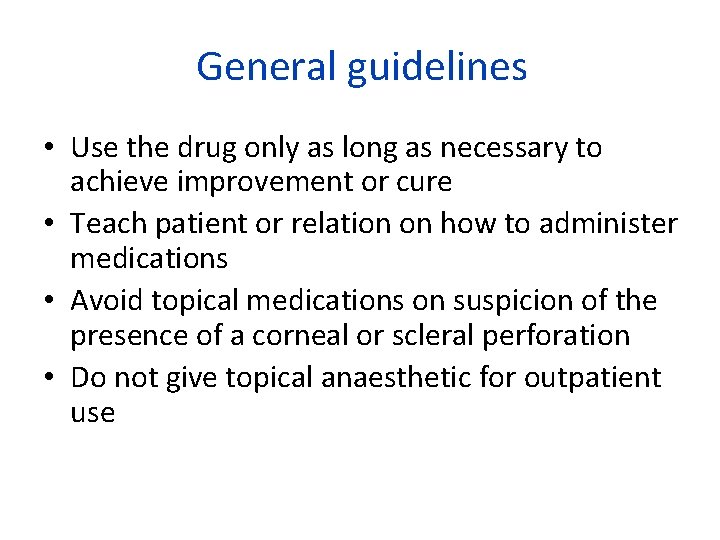
General guidelines • Use the drug only as long as necessary to achieve improvement or cure • Teach patient or relation on how to administer medications • Avoid topical medications on suspicion of the presence of a corneal or scleral perforation • Do not give topical anaesthetic for outpatient use
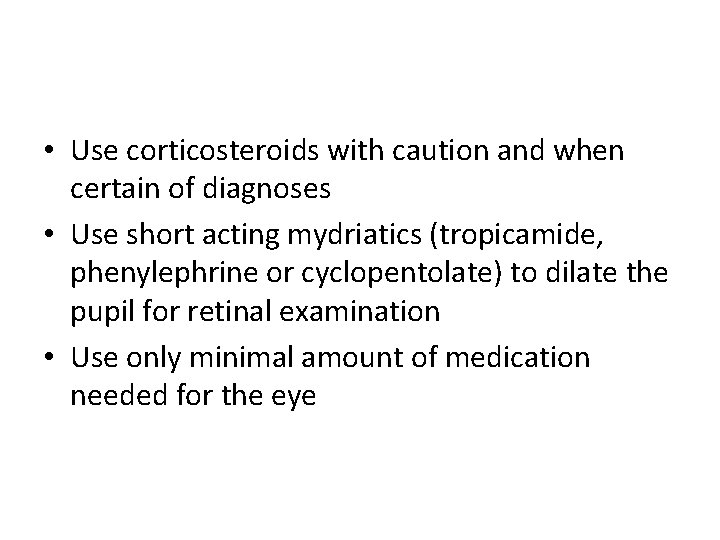
• Use corticosteroids with caution and when certain of diagnoses • Use short acting mydriatics (tropicamide, phenylephrine or cyclopentolate) to dilate the pupil for retinal examination • Use only minimal amount of medication needed for the eye
Corticosteroids • Effects – Activate an otherwise dormant herpes simplex keratitis – Provide an ideal environment for fungal keratitis especially after vegetable injury – Cause posterior subcapsular cataract – Produce secondary open angle glaucoma – Reduce ocular inflammation
• Do not use in: – Herpes simplex keratitis dendritic ulcer – Corneal abrasion – Red eye of unknown diagnoses – In bacterial corneal ulceration – Do not use in allergic conjunctivitis except there is an acute allergic reaction
• Can be used in: – Tarsal and limbal vernal conjunctivitis – Non-herpetic and noninfectious keratitis – Uveitis (iritis, iridocyclitis, cyclitis and choroiditis) – Extraocular and intraocular postoperative inflammation