
OCT Vulnerable Plaque Natural History Studies Sergio Waxman
OCT & Vulnerable Plaque: Natural History Studies Sergio Waxman, M. D. Lahey Clinic, Burlington, MA Tufts University School of Medicine, Boston, MA
Sergio Waxman, MD I have no real or apparent conflicts of interest to report.
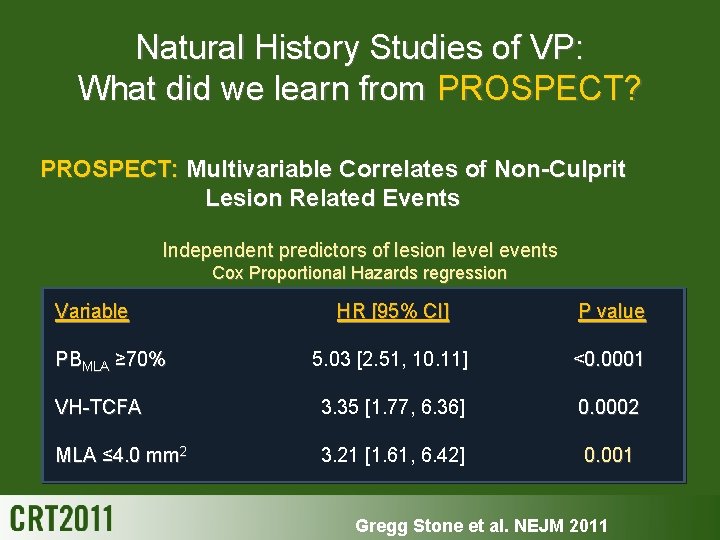
Natural History Studies of VP: What did we learn from PROSPECT? PROSPECT: Multivariable Correlates of Non-Culprit Lesion Related Events Independent predictors of lesion level events Cox Proportional Hazards regression Variable HR [95% CI] P value 5. 03 [2. 51, 10. 11] <0. 0001 VH-TCFA 3. 35 [1. 77, 6. 36] 0. 0002 MLA ≤ 4. 0 mm 2 3. 21 [1. 61, 6. 42] 0. 001 PBMLA ≥ 70% Gregg Stone et al. NEJM 2011
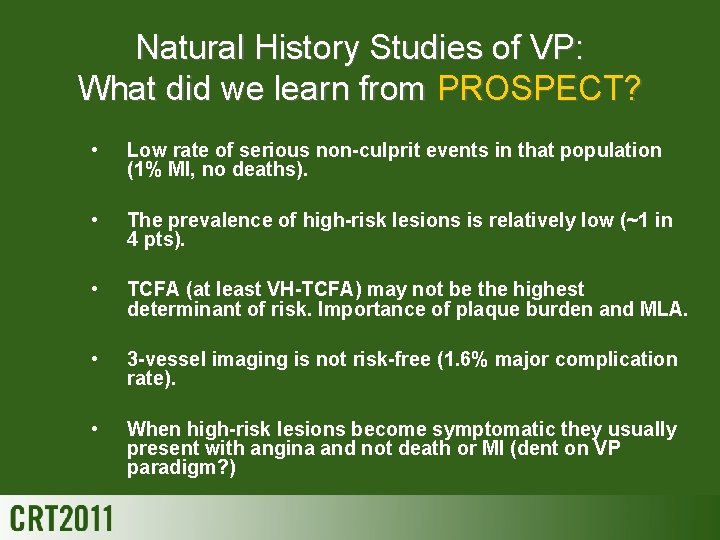
Natural History Studies of VP: What did we learn from PROSPECT? • Low rate of serious non-culprit events in that population (1% MI, no deaths). • The prevalence of high-risk lesions is relatively low (~1 in 4 pts). • TCFA (at least VH-TCFA) may not be the highest determinant of risk. Importance of plaque burden and MLA. • 3 -vessel imaging is not risk-free (1. 6% major complication rate). • When high-risk lesions become symptomatic they usually present with angina and not death or MI (dent on VP paradigm? )
Importance of Natural History Studies • Understand progression/behavior of CAD, define vulnerable plaque • Optimize treatment of culprit lesions: – Lesion-specific treatment algorithms - Stent selection, antiplatelet therapy duration, extent of stenting • Prevention of target lesion-related events (TLR and ST) Optimize treatment of non-culprit/non-target disease: – Development of treatment algorithms: - Intensity of systemic therapy, thresholds for non-culprit intervention • Guide efforts for non-invasive screening (mortality benefit? ): – Imaging (CT/MRI/Nuclear), biomarkers
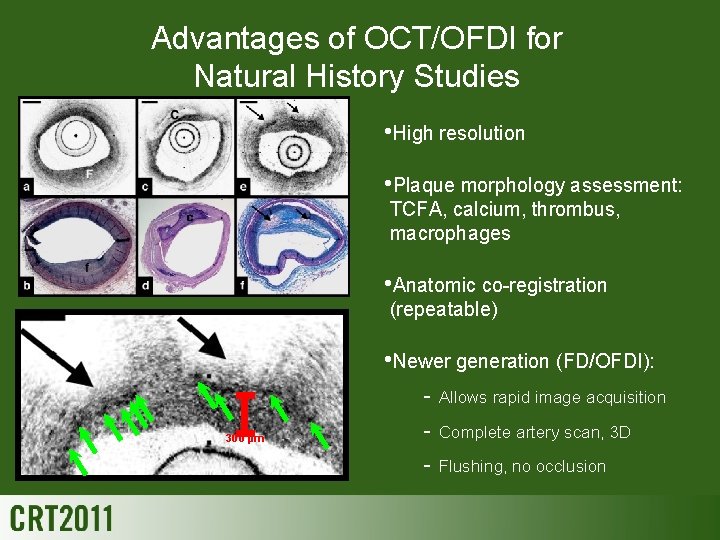
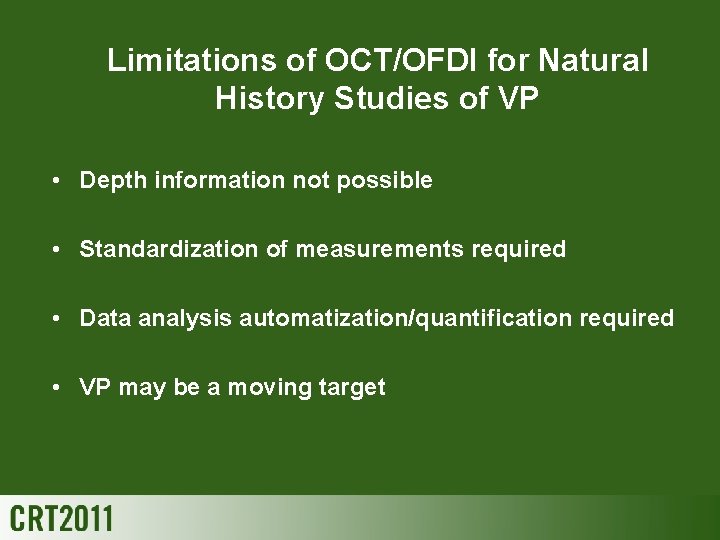
Advantages of OCT/OFDI for Natural History Studies • High resolution • Plaque morphology assessment: TCFA, calcium, thrombus, macrophages • Anatomic co-registration (repeatable) • Newer generation (FD/OFDI): 300 µm - Allows rapid image acquisition - Complete artery scan, 3 D - Flushing, no occlusion
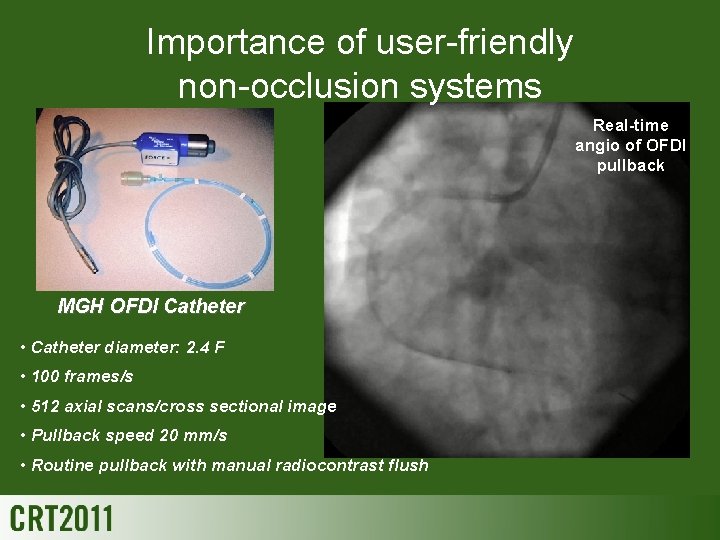
Importance of user-friendly non-occlusion systems Real-time angio of OFDI pullback MGH OFDI Catheter • Catheter diameter: 2. 4 F • 100 frames/s • 512 axial scans/cross sectional image • Pullback speed 20 mm/s • Routine pullback with manual radiocontrast flush
Natural History Study • NIH-funded (NHLBI R 01 HL 076398) • • PI: Guillermo Tearney, M. D. OFDI to investigate the natural history of coronary plaque (VP) and stent healing • Summary • • • OFDI screen 3 main coronary arteries 100 ACS patients (IVUS + Angiography) Follow-up exam repeat procedure after an interval of 1 -2 years Prevalence, incidence, evolution, clinical significance
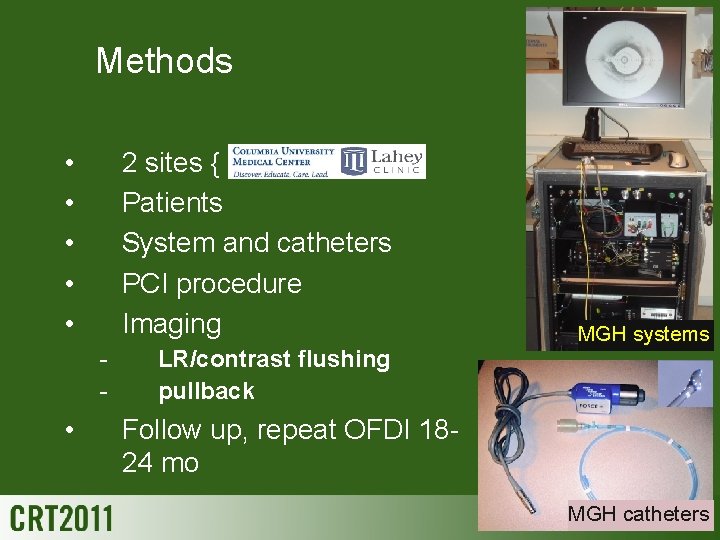
Methods • • • 2 sites { Patients System and catheters PCI procedure Imaging - • LR/contrast flushing pullback MGH systems Follow up, repeat OFDI 1824 mo MGH catheters
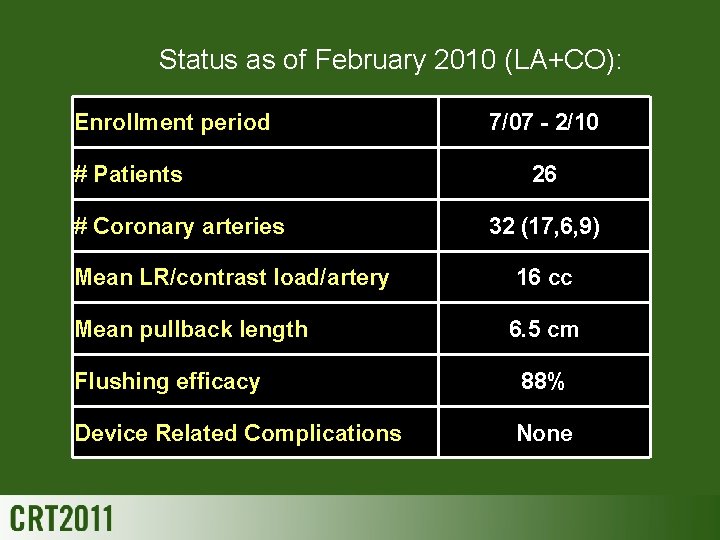
Status as of February 2010 (LA+CO): Enrollment period # Patients # Coronary arteries Mean LR/contrast load/artery Mean pullback length 7/07 - 2/10 26 32 (17, 6, 9) 16 cc 6. 5 cm Flushing efficacy 88% Device Related Complications None
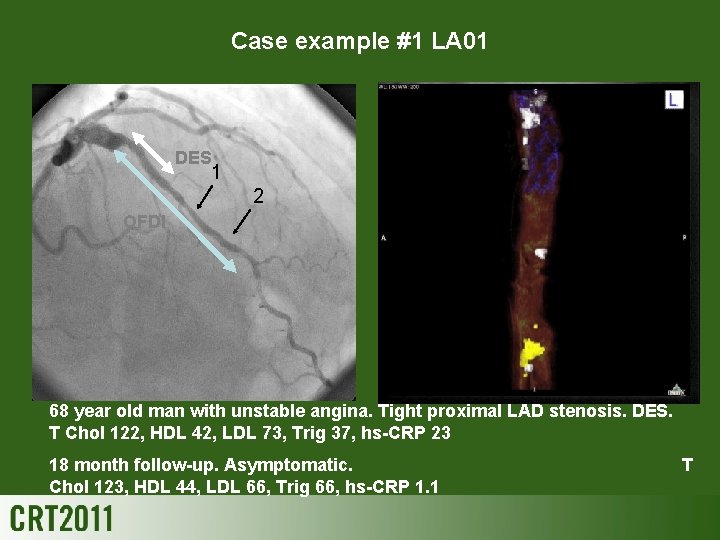
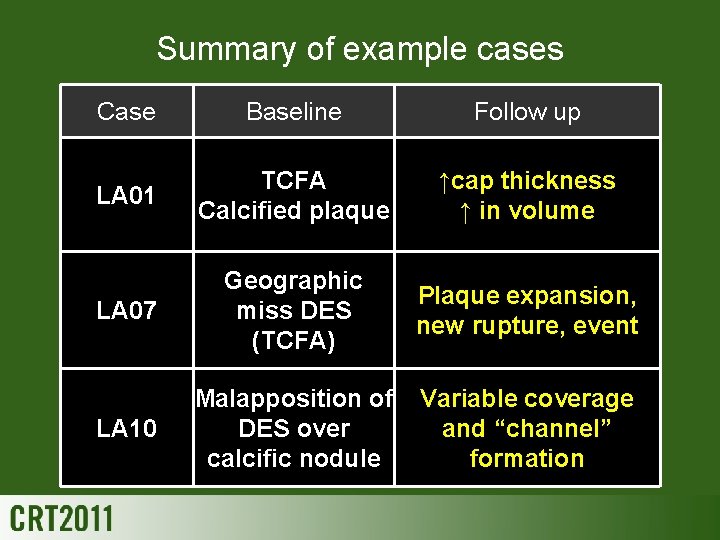
Case example #1 LA 01 DES 1 1 2 2 OFDI 68 year old man with unstable angina. Tight proximal LAD stenosis. DES. T Chol 122, HDL 42, LDL 73, Trig 37, hs-CRP 23 18 month follow-up. Asymptomatic. Chol 123, HDL 44, LDL 66, Trig 66, hs-CRP 1. 1 T
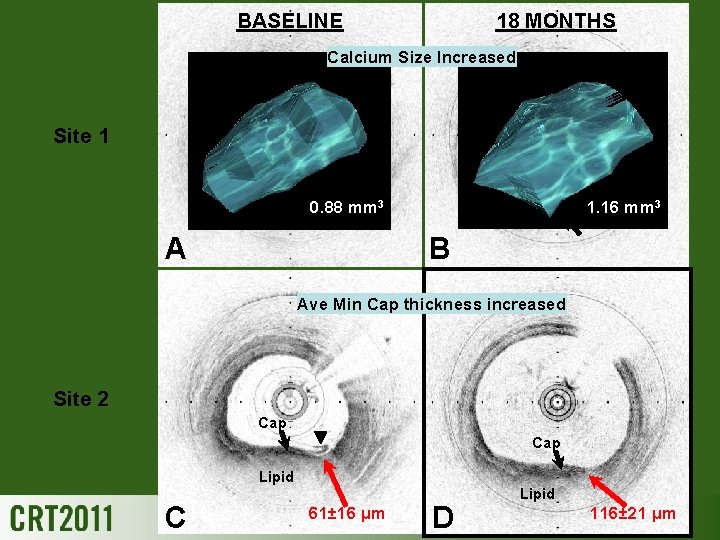
BASELINE 18 MONTHS Calcium Size Increased Site 1 0. 88 mm 3 A 1. 16 mm 3 B Ave Min Cap thickness increased Site 2 Cap Lipid C 61± 16 µm D Lipid 116± 21 µm
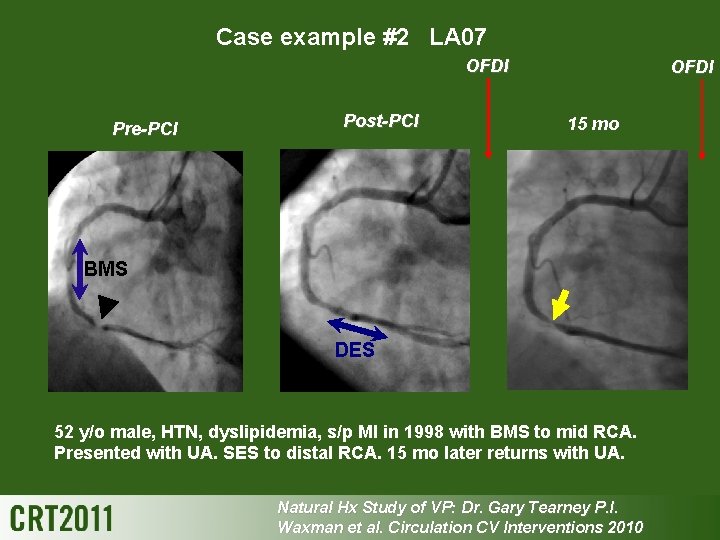
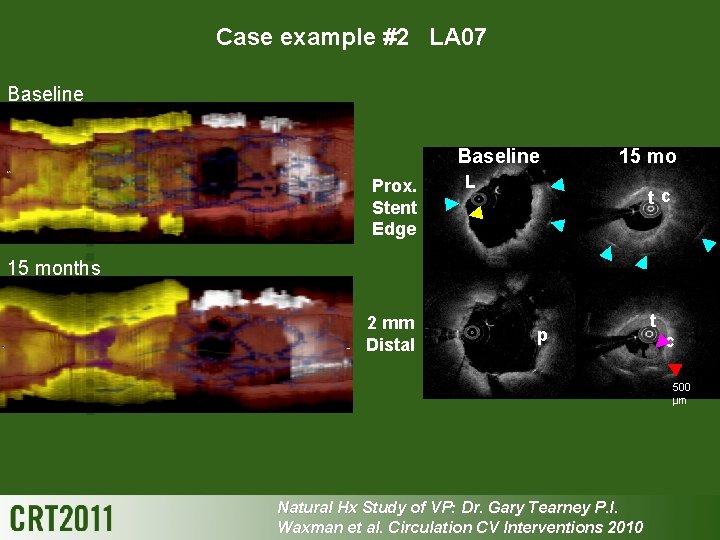
Case example #2 LA 07 OFDI Pre-PCI Post-PCI OFDI 15 mo BMS DES 52 y/o male, HTN, dyslipidemia, s/p MI in 1998 with BMS to mid RCA. Presented with UA. SES to distal RCA. 15 mo later returns with UA. Natural Hx Study of VP: Dr. Gary Tearney P. I. Waxman et al. Circulation CV Interventions 2010
Baseline 15 month f/u
Case example #2 LA 07 Baseline Prox. Stent Edge 15 mo L t c L L 15 months 2 mm Distal L p t t L Natural Hx Study of VP: Dr. Gary Tearney P. I. Waxman et al. Circulation CV Interventions 2010 c 500 µm L
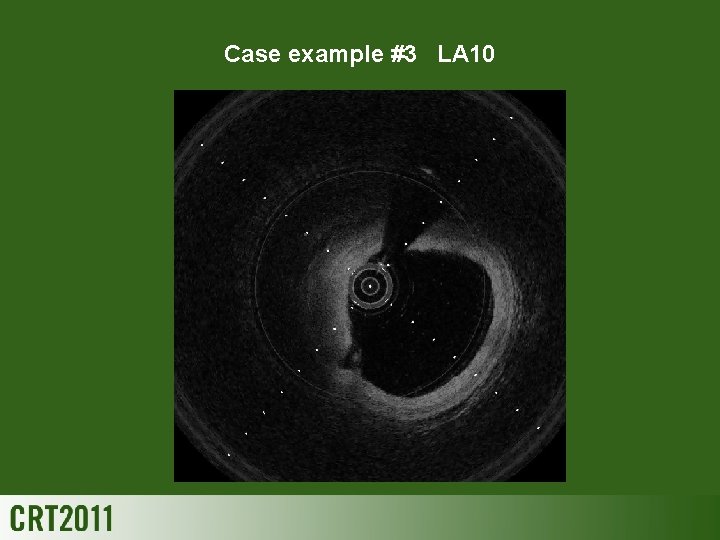
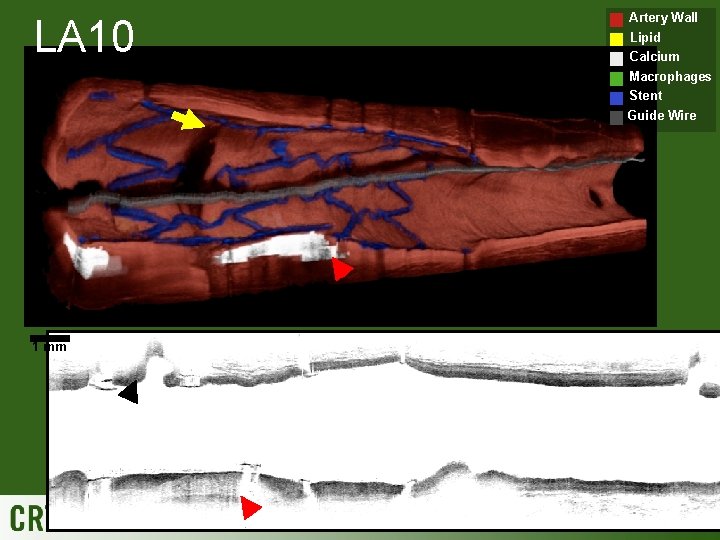
Case example #3 LA 10 s • • 79 y/o male Risk factors: diabetes, HTN, ↑LDL Chest pain at rest RCA stented with DES ps Lahey Clinic, Sergio Waxman
Case example #3 LA 10
LA 10 Artery Wall Lipid Calcium Macrophages Stent Guide Wire 1 mm
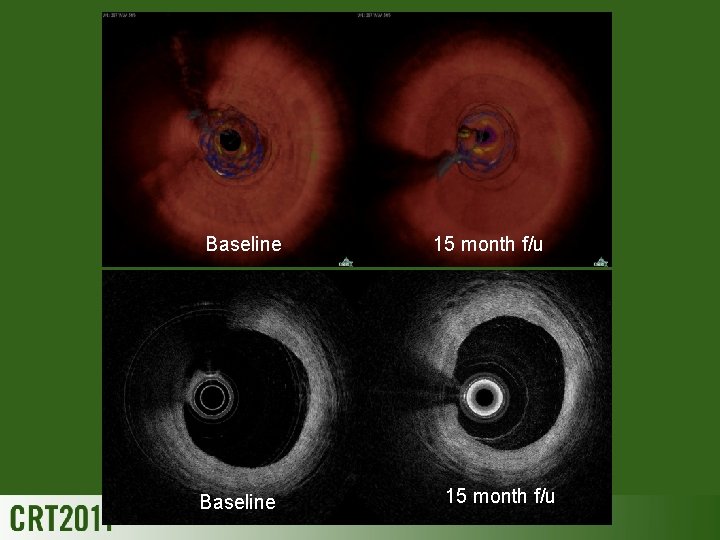
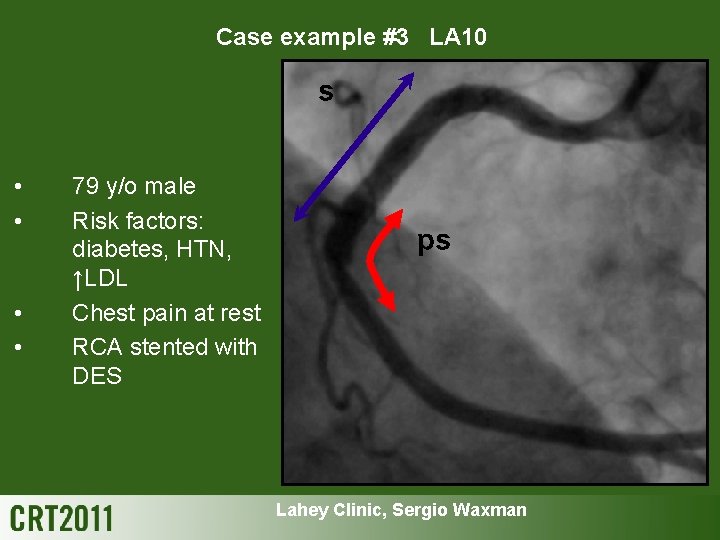
Summary of example cases Case Baseline Follow up LA 01 TCFA Calcified plaque ↑cap thickness ↑ in volume LA 07 Geographic miss DES (TCFA) Plaque expansion, new rupture, event LA 10 Malapposition of DES over calcific nodule Variable coverage and “channel” formation
Limitations of OCT/OFDI for Natural History Studies of VP • Depth information not possible • Standardization of measurements required • Data analysis automatization/quantification required • VP may be a moving target
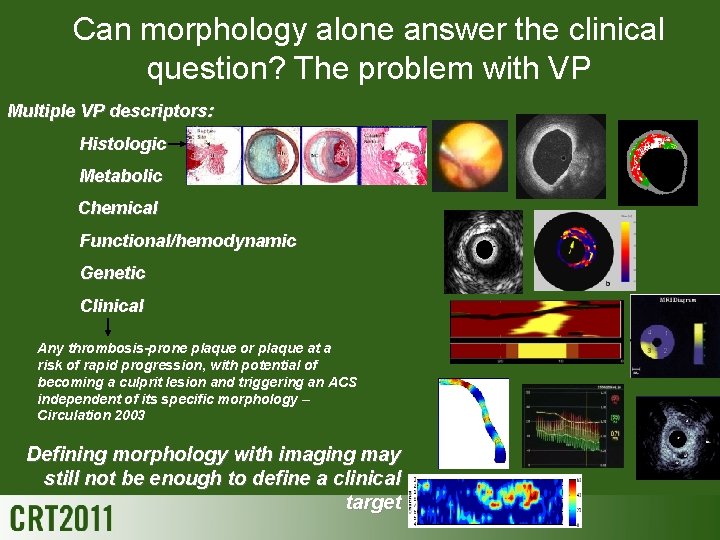
Can morphology alone answer the clinical question? The problem with VP Multiple VP descriptors: Histologic Metabolic Chemical Functional/hemodynamic Genetic Clinical Any thrombosis-prone plaque or plaque at a risk of rapid progression, with potential of becoming a culprit lesion and triggering an ACS independent of its specific morphology – Circulation 2003 Defining morphology with imaging may still not be enough to define a clinical target
Conclusion • FD-OCT/OFDI has great potential as a tool to carry out natural history studies of VP/CAD • Overcomes some of the limitations of VH-IVUS and other imaging technologies (higher resolution, more detail) • Likely that findings of this and other NHx studies will impact treatment strategies beyond and before VP
Acknowledgments Wellman Center for Photomedicine: W. Warger G. J. Tearney K. Bate B. E. Bouma L. Bartlett M. Suter P. Jillela B. Vakoc J. Namati M. Shishkov M. Rosenberg A. Desjardins S. Houser W. Oh Columbia Medical Center: J. Moses G. Weisz M. Leon A. Maehara G. Mintz C. Castellanos Lahey Clinic: B. Bell M. Freilich P. Baum J. Pendelton
- Slides: 23