
OCT IVUS Derived FFR Simultaneous Morphology and Physiology


- Slides: 23
OCT & IVUS Derived FFR: Simultaneous Morphology and Physiology Assessment Hector M. Garcia-Garcia, MD, Ph. D March 4 th, 2018
Disclosures None
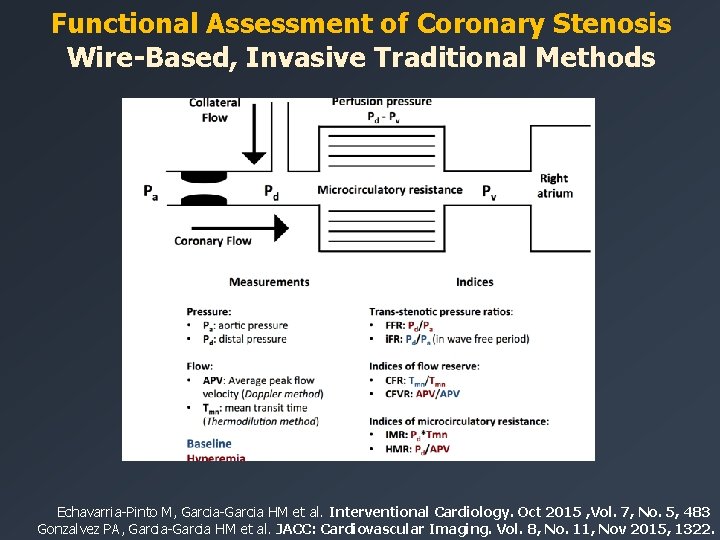
Functional Assessment of Coronary Stenosis Wire-Based, Invasive Traditional Methods Echavarria-Pinto M, Garcia-Garcia HM et al. Interventional Cardiology. Oct 2015 , Vol. 7, No. 5, 483 Gonzalvez PA, Garcia-Garcia HM et al. JACC: Cardiovascular Imaging. Vol. 8, No. 11, Nov 2015, 1322.
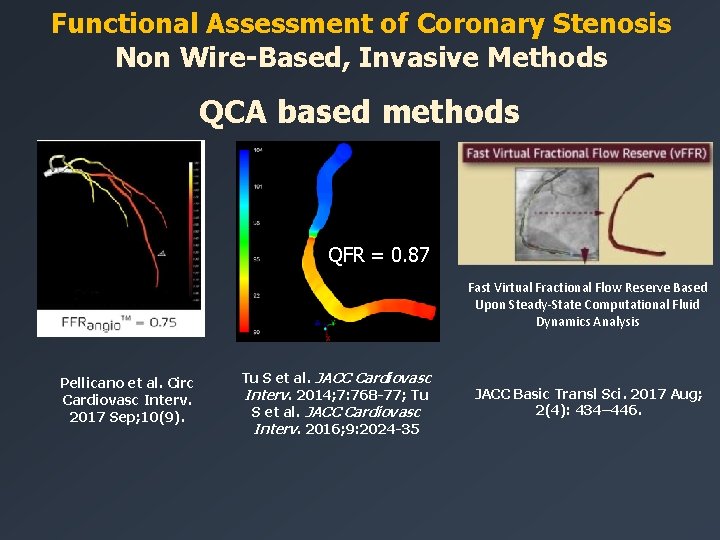
Functional Assessment of Coronary Stenosis Non Wire-Based, Invasive Methods QCA based methods QFR = 0. 87 Fast Virtual Fractional Flow Reserve Based Upon Steady-State Computational Fluid Dynamics Analysis Pellicano et al. Circ Cardiovasc Interv. 2017 Sep; 10(9). Tu S et al. JACC Cardiovasc Interv. 2014; 7: 768 -77; Tu S et al. JACC Cardiovasc Interv. 2016; 9: 2024 -35 JACC Basic Transl Sci. 2017 Aug; 2(4): 434– 446.
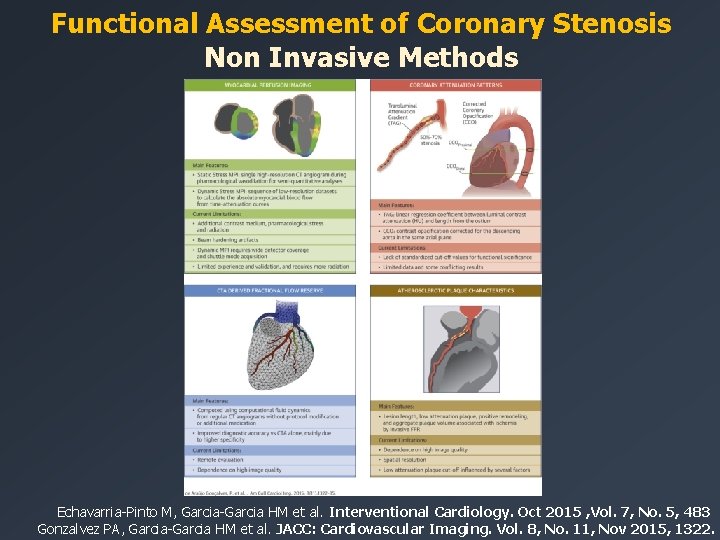
Functional Assessment of Coronary Stenosis Non Invasive Methods Echavarria-Pinto M, Garcia-Garcia HM et al. Interventional Cardiology. Oct 2015 , Vol. 7, No. 5, 483 Gonzalvez PA, Garcia-Garcia HM et al. JACC: Cardiovascular Imaging. Vol. 8, No. 11, Nov 2015, 1322.
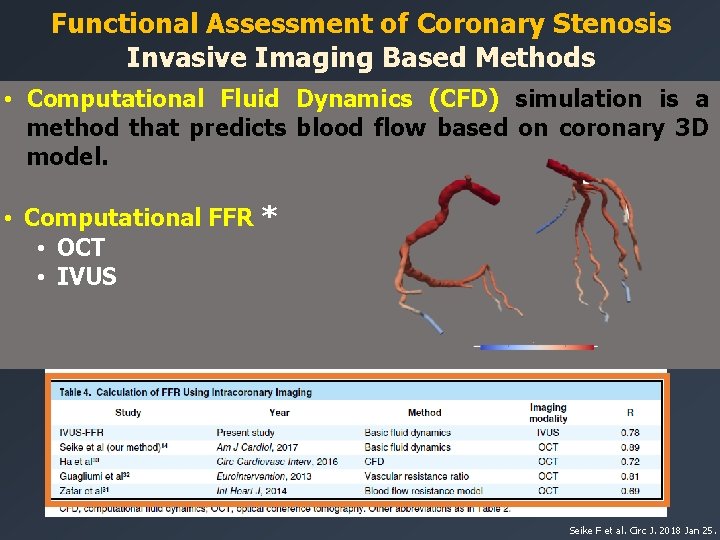
Functional Assessment of Coronary Stenosis Invasive Imaging Based Methods • Computational Fluid Dynamics (CFD) simulation is a method that predicts blood flow based on coronary 3 D model. • Computational FFR * • OCT • IVUS Seike F et al. Circ J. 2018 Jan 25.
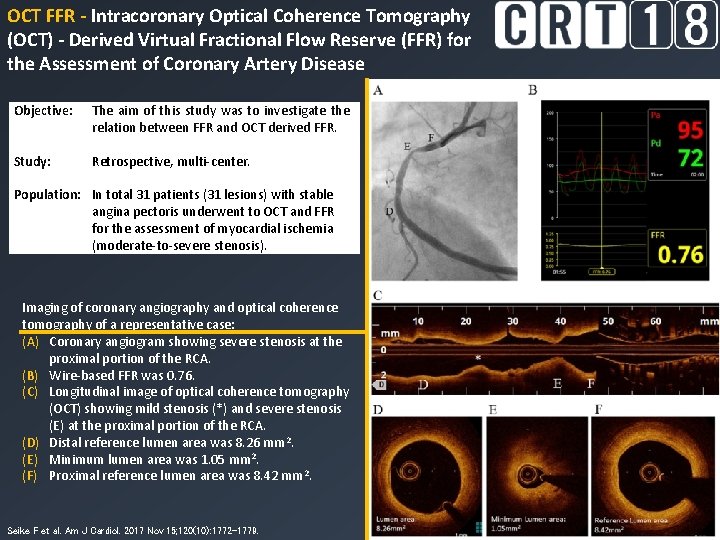
OCT FFR - Intracoronary Optical Coherence Tomography (OCT) - Derived Virtual Fractional Flow Reserve (FFR) for the Assessment of Coronary Artery Disease Objective: The aim of this study was to investigate the relation between FFR and OCT derived FFR. Study: Retrospective, multi-center. Population: In total 31 patients (31 lesions) with stable angina pectoris underwent to OCT and FFR for the assessment of myocardial ischemia (moderate-to-severe stenosis). Imaging of coronary angiography and optical coherence tomography of a representative case: (A) Coronary angiogram showing severe stenosis at the proximal portion of the RCA. (B) Wire-based FFR was 0. 76. (C) Longitudinal image of optical coherence tomography (OCT) showing mild stenosis (*) and severe stenosis (E) at the proximal portion of the RCA. (D) Distal reference lumen area was 8. 26 mm 2. (E) Minimum lumen area was 1. 05 mm 2. (F) Proximal reference lumen area was 8. 42 mm 2. Seike F et al. Am J Cardiol. 2017 Nov 15; 120(10): 1772 -1779.
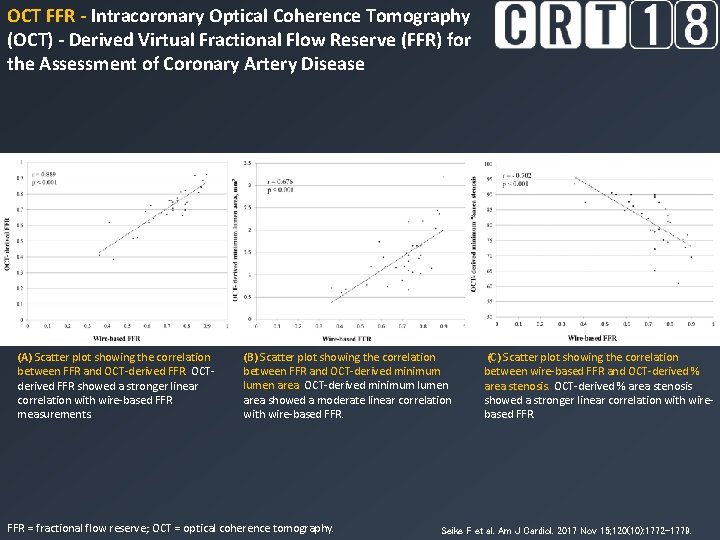
OCT FFR - Intracoronary Optical Coherence Tomography (OCT) - Derived Virtual Fractional Flow Reserve (FFR) for the Assessment of Coronary Artery Disease (A) Scatter plot showing the correlation between FFR and OCT-derived FFR. OCTderived FFR showed a stronger linear correlation with wire-based FFR measurements. (B) Scatter plot showing the correlation between FFR and OCT-derived minimum lumen area showed a moderate linear correlation with wire-based FFR = fractional flow reserve; OCT = optical coherence tomography. (C) Scatter plot showing the correlation between wire-based FFR and OCT-derived % area stenosis showed a stronger linear correlation with wirebased FFR. Seike F et al. Am J Cardiol. 2017 Nov 15; 120(10): 1772 -1779.
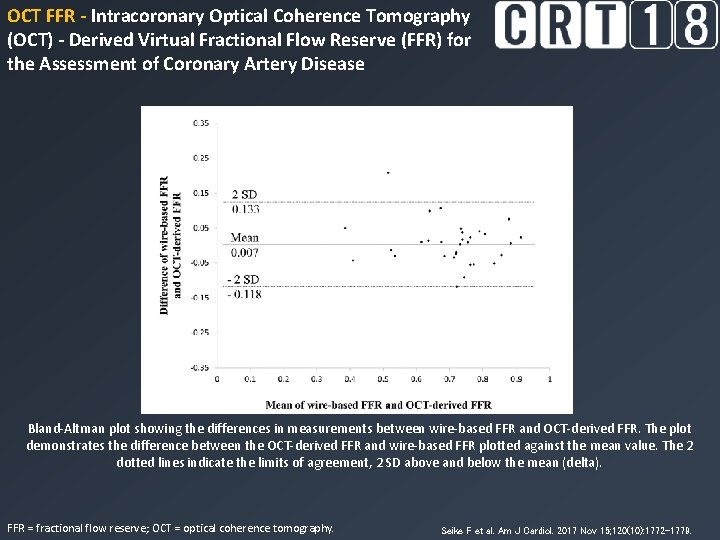
OCT FFR - Intracoronary Optical Coherence Tomography (OCT) - Derived Virtual Fractional Flow Reserve (FFR) for the Assessment of Coronary Artery Disease Bland-Altman plot showing the differences in measurements between wire-based FFR and OCT-derived FFR. The plot demonstrates the difference between the OCT-derived FFR and wire-based FFR plotted against the mean value. The 2 dotted lines indicate the limits of agreement, 2 SD above and below the mean (delta). FFR = fractional flow reserve; OCT = optical coherence tomography. Seike F et al. Am J Cardiol. 2017 Nov 15; 120(10): 1772 -1779.
Computational FFR derived from 3 D IVUS: a new algorithm of fusion between anatomy and physiology Cristiano Guedes Bezerra, MD Fábio Pinton, MD; Breno Falcão, MD Ph. D; José Mariani Jr, MD; Carlos Bulant, DSc; Gonzalo Maso Talou, DSc; Antônio Esteves, MD; Pablo Blanco, DSc; Pedro Lemos, MD, Ph. D
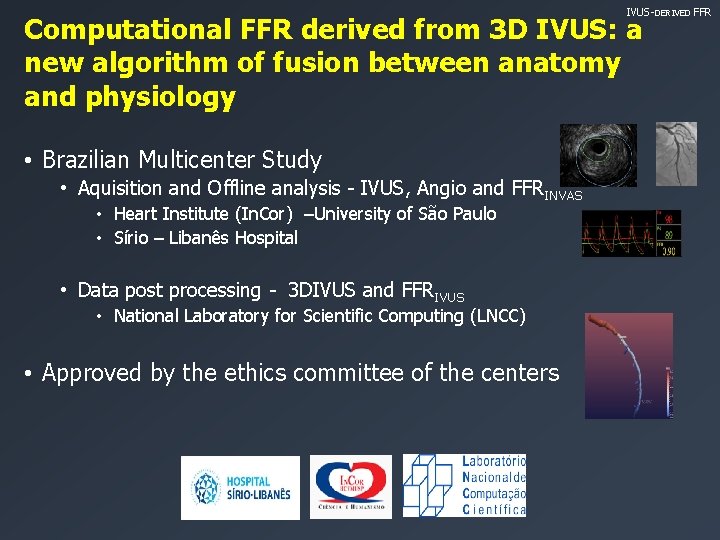
IVUS-DERIVED FFR Computational FFR derived from 3 D IVUS: a new algorithm of fusion between anatomy and physiology • Brazilian Multicenter Study • Aquisition and Offline analysis - IVUS, Angio and FFRINVAS • Heart Institute (In. Cor) –University of São Paulo • Sírio – Libanês Hospital • Data post processing - 3 DIVUS and FFRIVUS • National Laboratory for Scientific Computing (LNCC) • Approved by the ethics committee of the centers
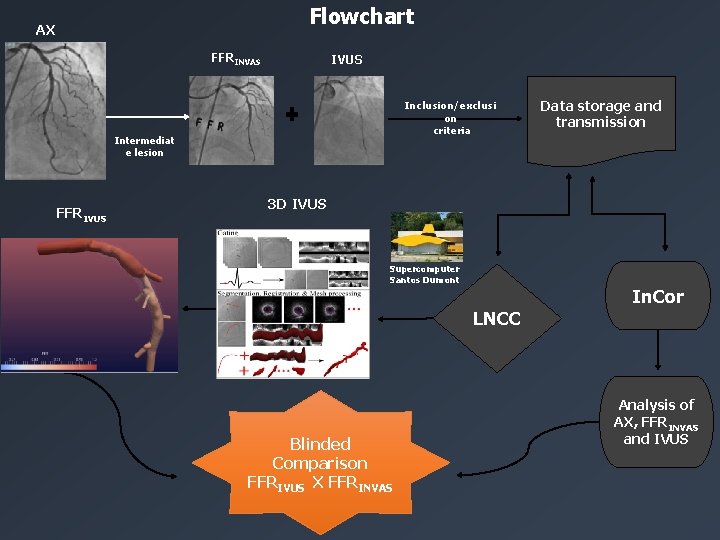
Flowchart AX FFRINVAS IVUS Inclusion/exclusi on criteria Intermediat e lesion FFRIVUS Data storage and transmission 3 D IVUS Supercomputer Santos Dumont In. Cor LNCC Blinded Comparison FFRIVUS X FFRINVAS Analysis of AX, FFRINVAS and IVUS
Development – 3 D IVUS Bezerra CG et al. Rev Bras Cardiol Invasiva, 2015 Talou GM; Bezerra CG at al. IEEE Trans Biomed Eng, 2015 Talou GM; Bezerra CG et al. IEEE Trans Biomed Eng, 2016 IVUS-DERIVED FFR
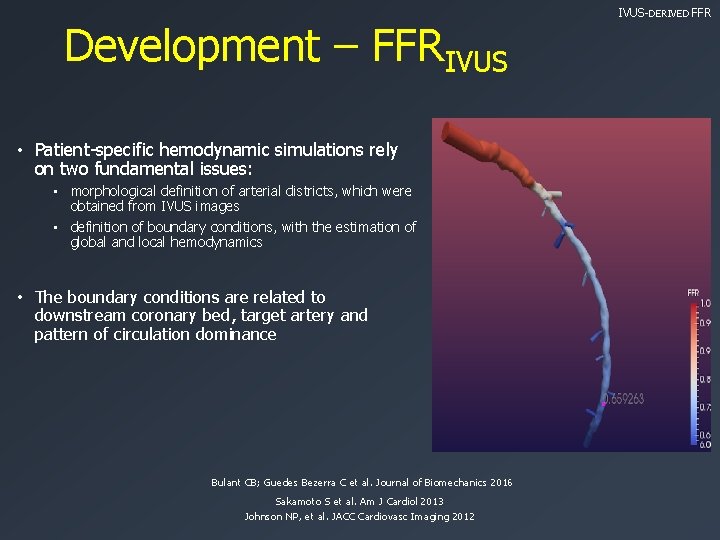
Development – FFRIVUS • Patient-specific hemodynamic simulations rely on two fundamental issues: • morphological definition of arterial districts, which were obtained from IVUS images • definition of boundary conditions, with the estimation of global and local hemodynamics • The boundary conditions are related to downstream coronary bed, target artery and pattern of circulation dominance Bulant CB; Guedes Bezerra C et al. Journal of Biomechanics 2016 Sakamoto S et al. Am J Cardiol 2013 Johnson NP, et al. JACC Cardiovasc Imaging 2012 IVUS-DERIVED FFR
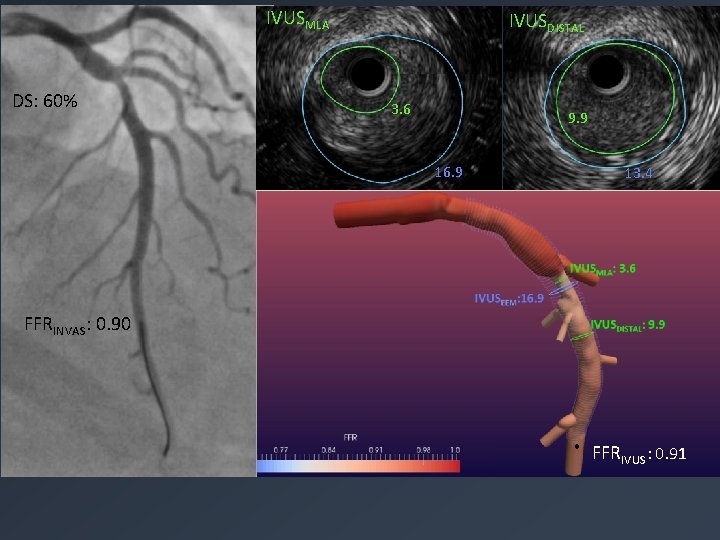
IVUSMLA DS: 60% IVUSDISTAL 3. 6 9. 9 16. 9 13. 4 FFRINVAS: 0. 90 FFRIVUS: 0. 91
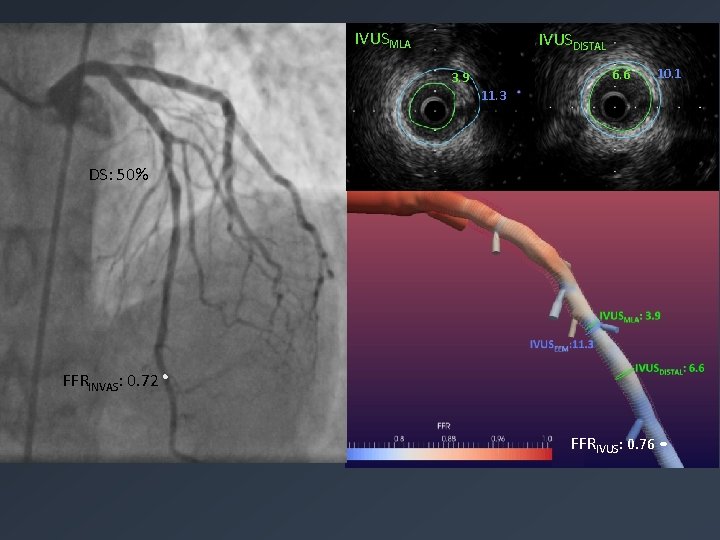
IVUSMLA IVUSDISTAL 6. 6 3. 9 11. 3 DS: 50% FFRINVAS: 0. 72 FFRIVUS: 0. 76 10. 1
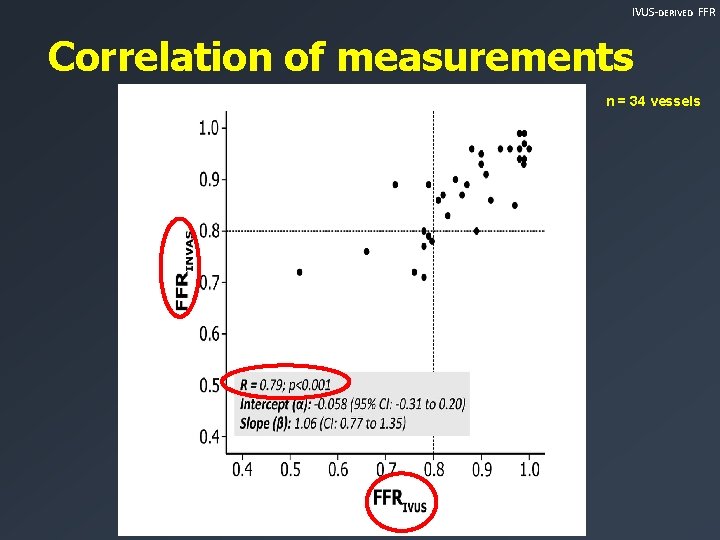
IVUS-DERIVED FFR Correlation of measurements n = 34 vessels
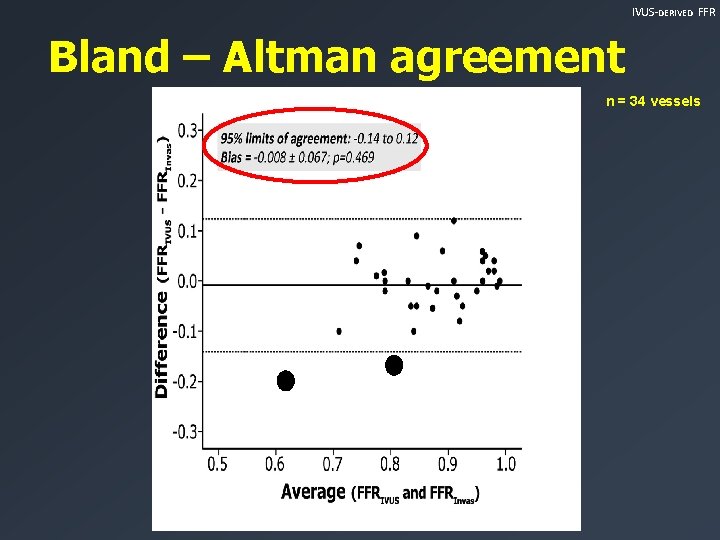
IVUS-DERIVED FFR Bland – Altman agreement n = 34 vessels
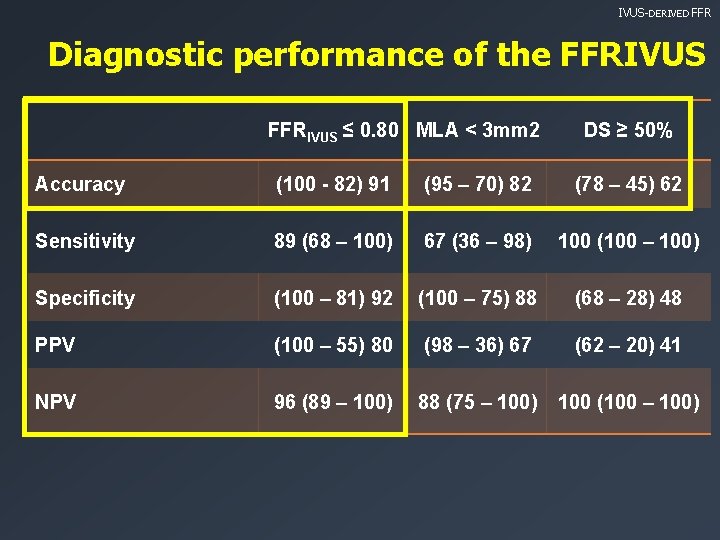
IVUS-DERIVED FFR Diagnostic performance of the FFRIVUS ≤ 0. 80 MLA < 3 mm 2 DS ≥ 50% Accuracy (100 - 82) 91 (95 – 70) 82 (78 – 45) 62 Sensitivity 89 (68 – 100) 67 (36 – 98) 100 (100 – 100) Specificity (100 – 81) 92 (100 – 75) 88 (68 – 28) 48 PPV (100 – 55) 80 (98 – 36) 67 (62 – 20) 41 NPV 96 (89 – 100) 88 (75 – 100) 100 (100 – 100)
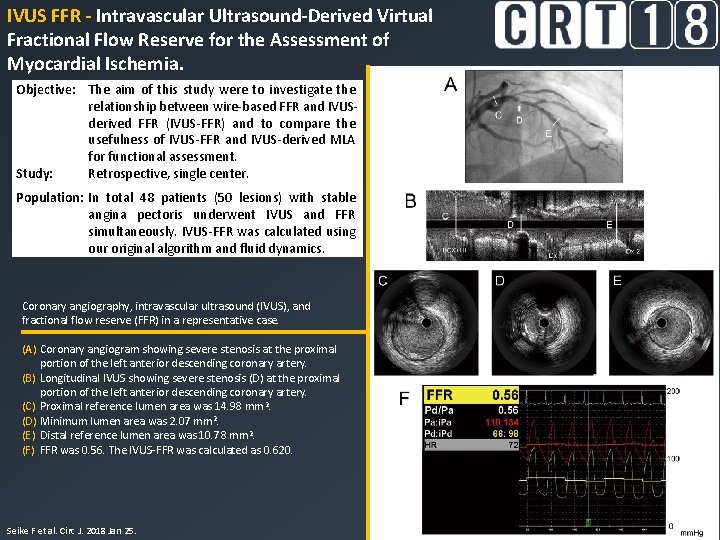
IVUS FFR - Intravascular Ultrasound-Derived Virtual Fractional Flow Reserve for the Assessment of Myocardial Ischemia. Objective: The aim of this study were to investigate the relationship between wire-based FFR and IVUSderived FFR (IVUS-FFR) and to compare the usefulness of IVUS-FFR and IVUS-derived MLA for functional assessment. Study: Retrospective, single center. Population: In total 48 patients (50 lesions) with stable angina pectoris underwent IVUS and FFR simultaneously. IVUS-FFR was calculated using our original algorithm and fluid dynamics. Coronary angiography, intravascular ultrasound (IVUS), and fractional flow reserve (FFR) in a representative case. (A) Coronary angiogram showing severe stenosis at the proximal portion of the left anterior descending coronary artery. (B) Longitudinal IVUS showing severe stenosis (D) at the proximal portion of the left anterior descending coronary artery. (C) Proximal reference lumen area was 14. 98 mm 2. (D) Minimum lumen area was 2. 07 mm 2. (E) Distal reference lumen area was 10. 78 mm 2. (F) FFR was 0. 56. The IVUS-FFR was calculated as 0. 620. Seike F et al. Circ J. 2018 Jan 25.
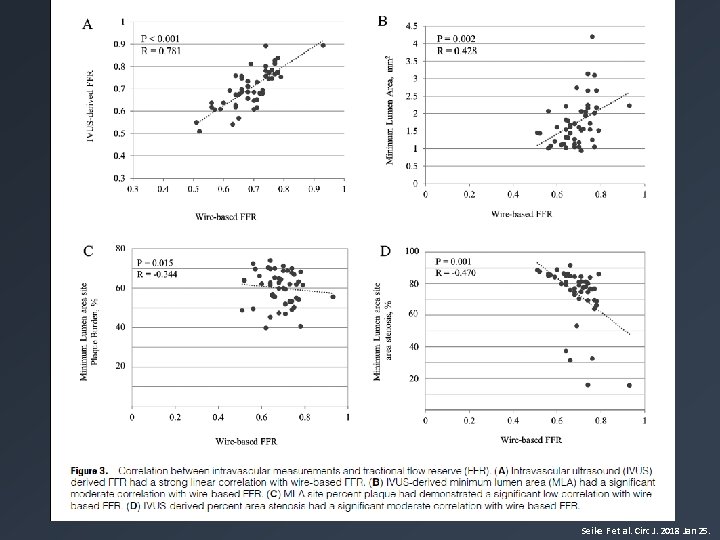
Seike F et al. Circ J. 2018 Jan 25.
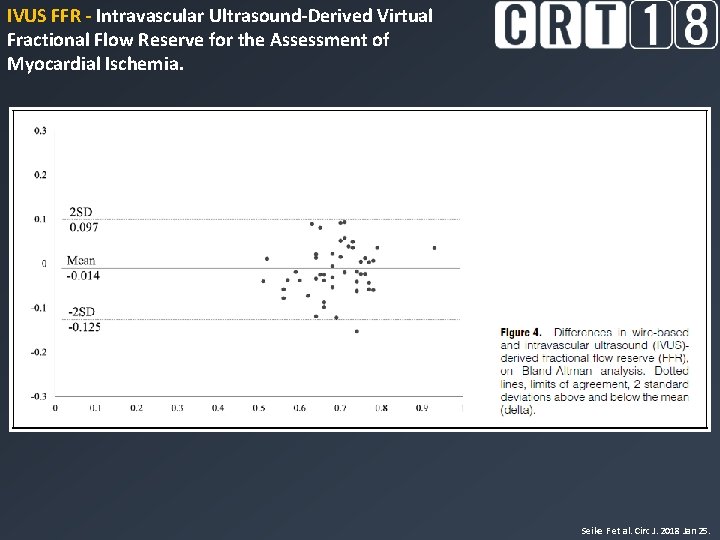
IVUS FFR - Intravascular Ultrasound-Derived Virtual Fractional Flow Reserve for the Assessment of Myocardial Ischemia. Seike F et al. Circ J. 2018 Jan 25.
Conclusions • The computational processing of FFROCT and FFRIVUS are new methods that allow functional evaluation, enriching the anatomical information of OCT and IVUS. • Thus, through OCT/IVUS morphological and flow data, we can obtain a more comprehensive view of atherosclerotic disease, influencing diagnosis and treatment. • FFROCT and FFRIVUS require intense and sophisticated computational work which make them not readily available in the cath lab.