
OCM Lessons Learned PRFT Gen TaxTAP Release 1
- Slides: 8
OCM Lessons Learned PRFT Gen. Tax/TAP Release 1 BPD Management Meeting March 2, 2016
Lessons Learned - Background � Release 1 (R 1) Prorate and Fuel Tax (PRFT) Modernization Project Lessons Learned were derived from survey responses and group discussions. � All R 1 Lessons Learned were considered while planning for Release 2. � Today’s goal is to provide a highlight of the OCM Lessons Learned. 2
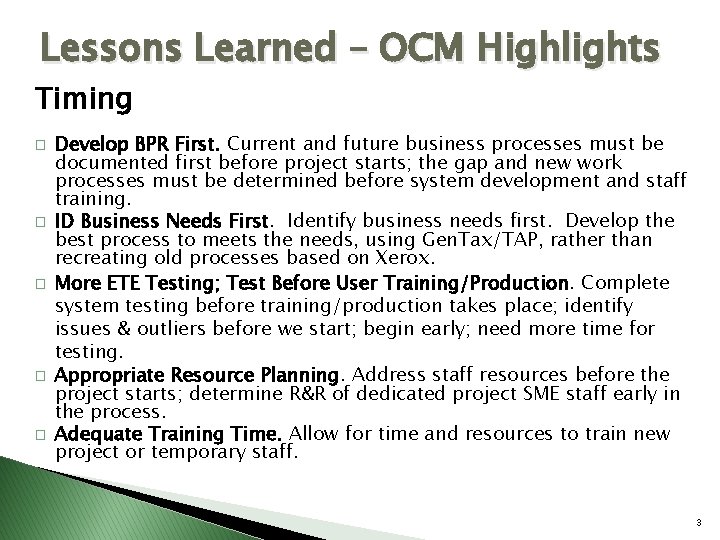
Lessons Learned – OCM Highlights Timing � � � Develop BPR First. Current and future business processes must be documented first before project starts; the gap and new work processes must be determined before system development and staff training. ID Business Needs First. Identify business needs first. Develop the best process to meets the needs, using Gen. Tax/TAP, rather than recreating old processes based on Xerox. More ETE Testing; Test Before User Training/Production. Complete system testing before training/production takes place; identify issues & outliers before we start; begin early; need more time for testing. Appropriate Resource Planning. Address staff resources before the project starts; determine R&R of dedicated project SME staff early in the process. Adequate Training Time. Allow for time and resources to train new project or temporary staff. 3
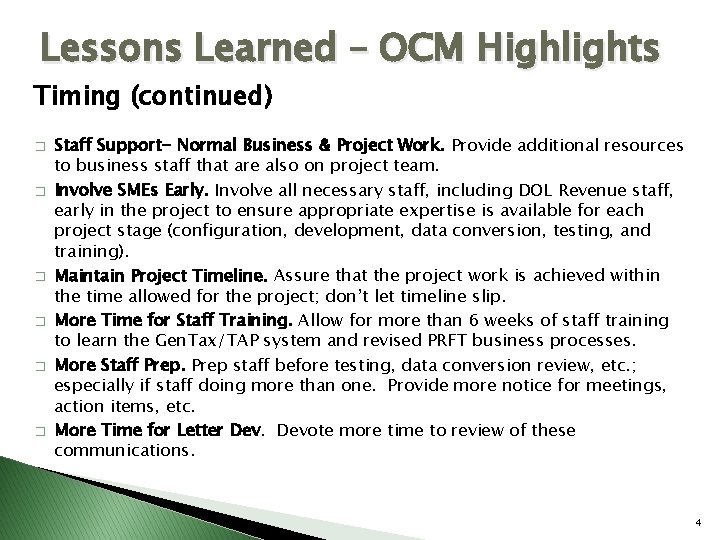
Lessons Learned – OCM Highlights Timing (continued) � � � Staff Support- Normal Business & Project Work. Provide additional resources to business staff that are also on project team. Involve SMEs Early. Involve all necessary staff, including DOL Revenue staff, early in the project to ensure appropriate expertise is available for each project stage (configuration, development, data conversion, testing, and training). Maintain Project Timeline. Assure that the project work is achieved within the time allowed for the project; don’t let timeline slip. More Time for Staff Training. Allow for more than 6 weeks of staff training to learn the Gen. Tax/TAP system and revised PRFT business processes. More Staff Prep staff before testing, data conversion review, etc. ; especially if staff doing more than one. Provide more notice for meetings, action items, etc. More Time for Letter Devote more time to review of these communications. 4
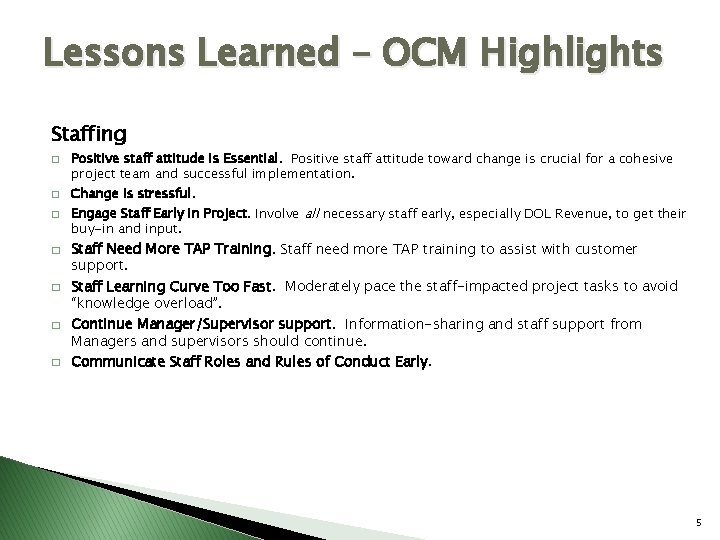
Lessons Learned – OCM Highlights Staffing � � � � Positive staff attitude is Essential. Positive staff attitude toward change is crucial for a cohesive project team and successful implementation. Change is stressful. Engage Staff Early in Project. Involve all necessary staff early, especially DOL Revenue, to get their buy-in and input. Staff Need More TAP Training. Staff need more TAP training to assist with customer support. Staff Learning Curve Too Fast. Moderately pace the staff-impacted project tasks to avoid “knowledge overload”. Continue Manager/Supervisor support. Information-sharing and staff support from Managers and supervisors should continue. Communicate Staff Roles and Rules of Conduct Early. 5
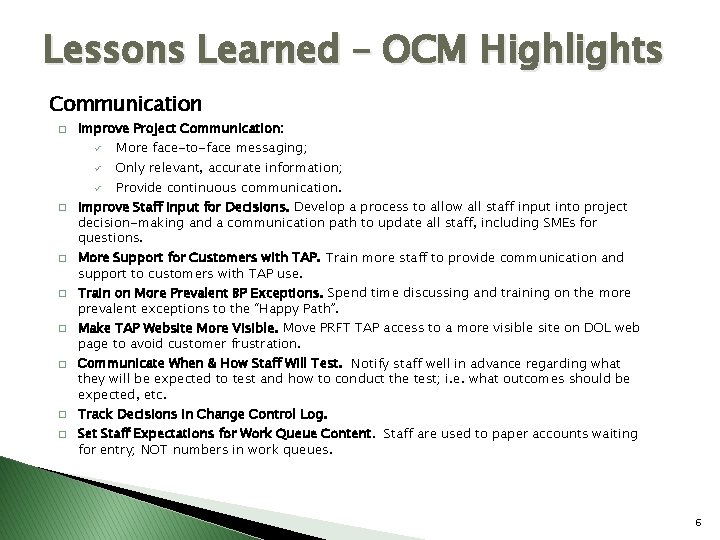
Lessons Learned – OCM Highlights Communication � Improve Project Communication: ü ü ü � � � � More face-to-face messaging; Only relevant, accurate information; Provide continuous communication. Improve Staff Input for Decisions. Develop a process to allow all staff input into project decision-making and a communication path to update all staff, including SMEs for questions. More Support for Customers with TAP. Train more staff to provide communication and support to customers with TAP use. Train on More Prevalent BP Exceptions. Spend time discussing and training on the more prevalent exceptions to the “Happy Path”. Make TAP Website More Visible. Move PRFT TAP access to a more visible site on DOL web page to avoid customer frustration. Communicate When & How Staff Will Test. Notify staff well in advance regarding what they will be expected to test and how to conduct the test; i. e. what outcomes should be expected, etc. Track Decisions in Change Control Log. Set Staff Expectations for Work Queue Content. Staff are used to paper accounts waiting for entry; NOT numbers in work queues. 6
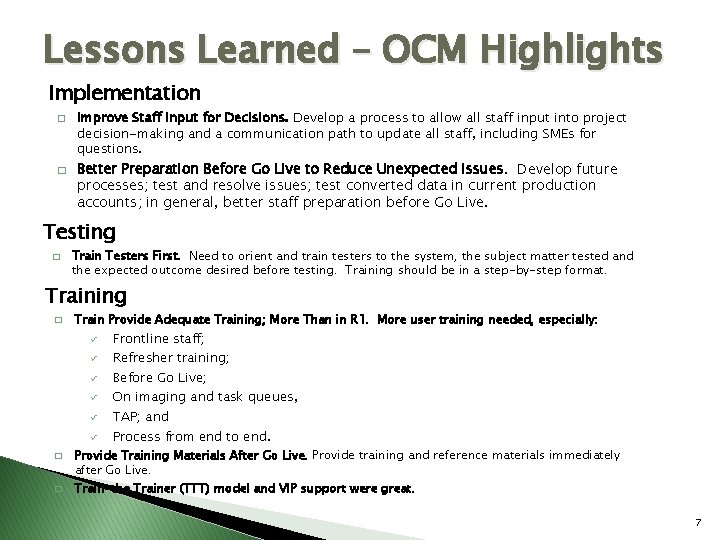
Lessons Learned – OCM Highlights Implementation � � Improve Staff Input for Decisions. Develop a process to allow all staff input into project decision-making and a communication path to update all staff, including SMEs for questions. Better Preparation Before Go Live to Reduce Unexpected Issues. Develop future processes; test and resolve issues; test converted data in current production accounts; in general, better staff preparation before Go Live. Testing � Train Testers First. Need to orient and train testers to the system, the subject matter tested and the expected outcome desired before testing. Training should be in a step-by-step format. Training � Train Provide Adequate Training; More Than in R 1. More user training needed, especially: ü ü ü � � Frontline staff; Refresher training; Before Go Live; On imaging and task queues, TAP; and Process from end to end. Provide Training Materials After Go Live. Provide training and reference materials immediately after Go Live. Train-the Trainer (TTT) model and VIP support were great. 7
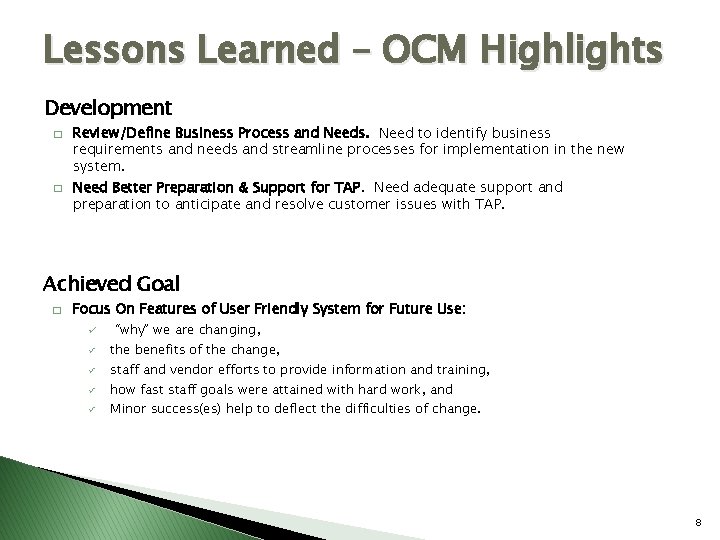
Lessons Learned – OCM Highlights Development � � Review/Define Business Process and Needs. Need to identify business requirements and needs and streamline processes for implementation in the new system. Need Better Preparation & Support for TAP. Need adequate support and preparation to anticipate and resolve customer issues with TAP. Achieved Goal � Focus On Features of User Friendly System for Future Use: ü ü ü “why” we are changing, the benefits of the change, staff and vendor efforts to provide information and training, how fast staff goals were attained with hard work, and Minor success(es) help to deflect the difficulties of change. 8