
OCM CONTEXT MAP DS TREN L A ERN
- Slides: 1
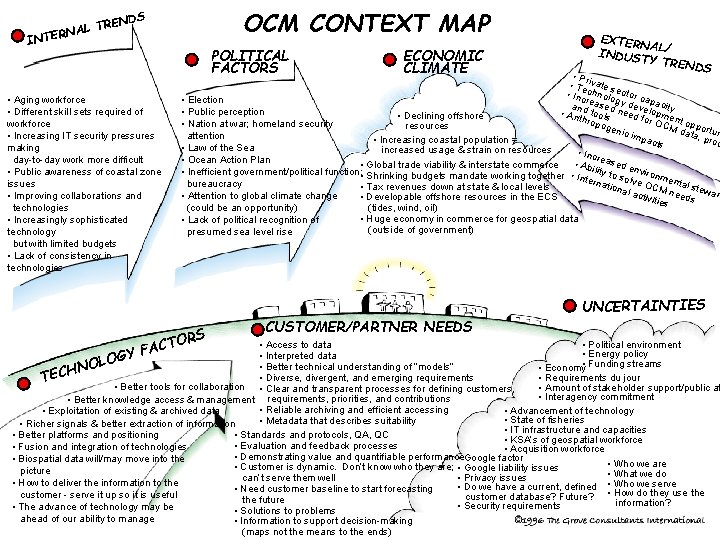
OCM CONTEXT MAP DS TREN L A ERN INT POLITICAL FACTORS • Aging workforce • Different skill sets required of workforce • Increasing IT security pressures making day-to-day work more difficult • Public awareness of coastal zone issues • Improving collaborations and technologies • Increasingly sophisticated technology but with limited budgets • Lack of consistency in technologies ECONOMIC CLIMATE EXTERN AL INDUST / Y TREN DS • P • Terivate se • Inc chnolo ctor ca g • Election r and eased ny develpacity t • Public perception • o Anth ols eed fo opmen • Declining offshore ropo r OC t opp • Nation at war; homeland security resources gen Md i ata, ortun c impa attention prod • Increasing coastal population = cts • Law of the Sea increased usage & strain on resources • Inc reas • Ocean Action Plan ed • Global trade viability & interstate commerce • A • Inefficient government/political function; • Shrinking budgets mandate working together • I bility to s environm nter natio olve OC ental s bureaucracy • Tax revenues down at state & local levels tewa nal a M ne rd ctivi • Attention to global climate change • Developable offshore resources in the ECS ties eds (tides, wind, oil) (could be an opportunity) • Huge economy in commerce for geospatial data • Lack of political recognition of (outside of government) presumed sea level rise UNCERTAINTIES RS CTO CUSTOMER/PARTNER NEEDS • Political environment • Access to data • Energy policy • Interpreted data • Funding streams • Better technical understanding of “models” O • Economy N H C • Diverse, divergent, and emerging requirements • Requirements du jour TE • Better tools for collaboration • Clear and transparent processes for defining customers, • Amount of stakeholder support/public at • Interagency commitment • Better knowledge access & management requirements, priorities, and contributions • Reliable archiving and efficient accessing • Advancement of technology • Exploitation of existing & archived data • State of fisheries • Metadata that describes suitability • Richer signals & better extraction of information • IT infrastructure and capacities • Better platforms and positioning • Standards and protocols, QA, QC • KSA’s of geospatial workforce • Evaluation and feedback processes • Fusion and integration of technologies • Acquisition workforce • Demonstrating value and quantifiable performance • Google factor • Biospatial data will/may move into the • Who we are • Customer is dynamic. Don’t know who they are; • Google liability issues picture • What we do • Privacy issues can’t serve them well • How to deliver the information to the • Do we have a current, defined • Who we serve • Need customer baseline to start forecasting customer - serve it up so it is useful customer database? Future? • How do they use the future information? • Security requirements • The advance of technology may be • Solutions to problems ahead of our ability to manage • Information to support decision-making (maps not the means to the ends) Y FA LOG