
OCEARCH Physics Part 2 Tagging Great White Sharks



- Slides: 27
OCEARCH Physics Part 2 Tagging Great White Sharks, Parts 1 & 2
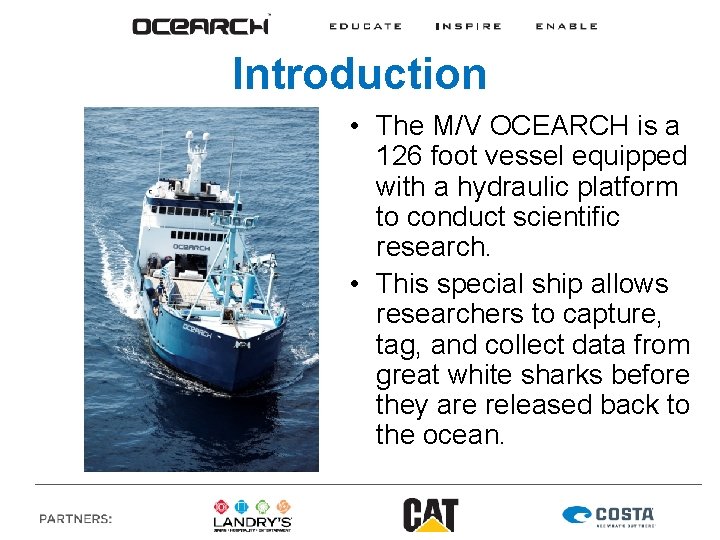
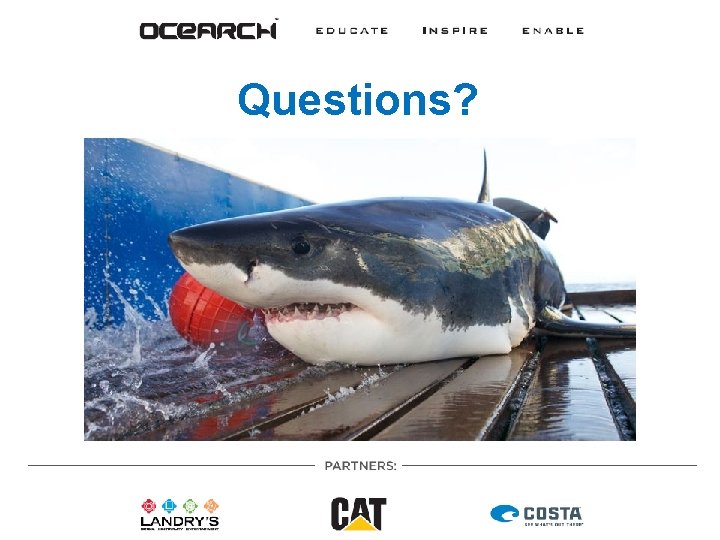
Introduction • The M/V OCEARCH is a 126 foot vessel equipped with a hydraulic platform to conduct scientific research. • This special ship allows researchers to capture, tag, and collect data from great white sharks before they are released back to the ocean.
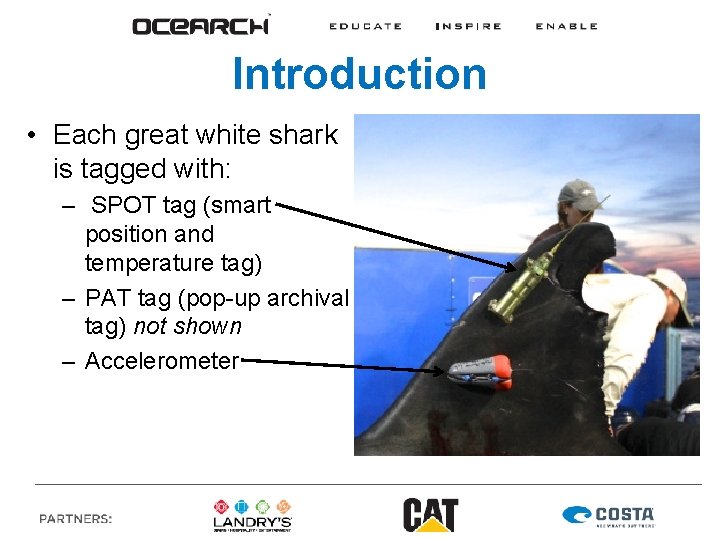
Introduction • Each great white shark is tagged with: – SPOT tag (smart position and temperature tag) – PAT tag (pop-up archival tag) not shown – Accelerometer
SPOT Tags • A SPOT tag regularly sends signals to satellites using powerful transmitters every time a shark swims to the surface. • The SPOT tag starts recording data, such as temperature of the water, depth the shark is swimming, and salinity immediately after the shark is released back to the ocean.
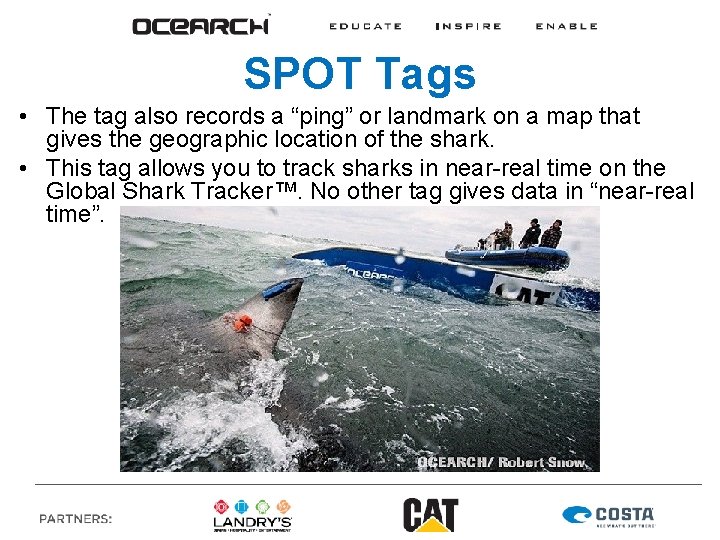
SPOT Tags • The tag also records a “ping” or landmark on a map that gives the geographic location of the shark. • This tag allows you to track sharks in near-real time on the Global Shark Tracker™. No other tag gives data in “near-real time”.
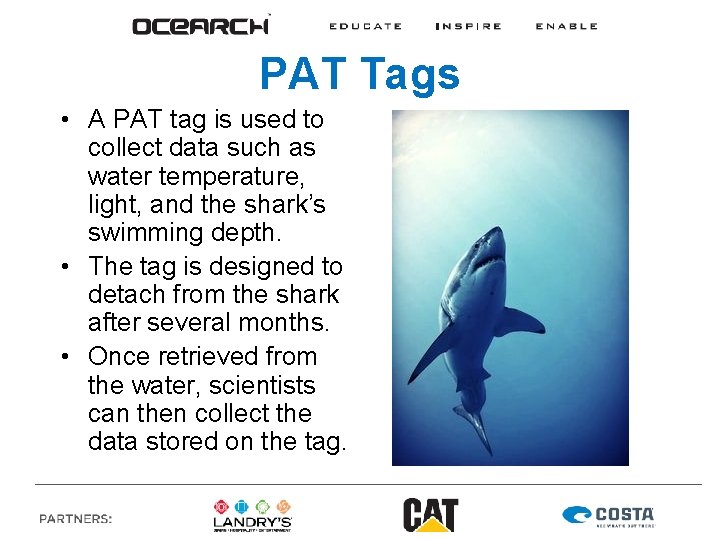
PAT Tags • A PAT tag is used to collect data such as water temperature, light, and the shark’s swimming depth. • The tag is designed to detach from the shark after several months. • Once retrieved from the water, scientists can then collect the data stored on the tag.
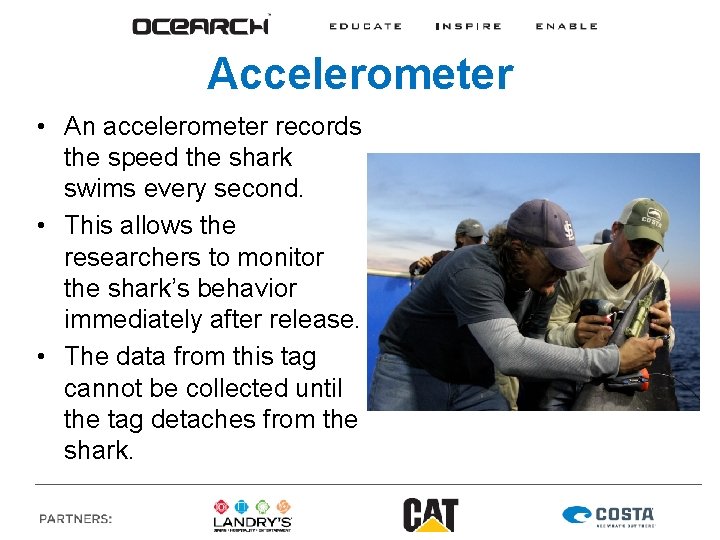
Accelerometer • An accelerometer records the speed the shark swims every second. • This allows the researchers to monitor the shark’s behavior immediately after release. • The data from this tag cannot be collected until the tag detaches from the shark.
Questions?
OCEARCH Physics Part 2 Tagging Great White Sharks, Part 3
How do satellites work? • The time it takes for a satellite to complete one full orbit around Earth is called its orbital period. • A satellite must travel at a certain radius and period in order to maintain its orbit, thus collecting and relaying important data to the marine researchers. • Some satellites must stay “stationary” over a point on Earth and therefore must orbit at the same rate the planet turns. This is how most communications and GPS satellites operate. • So it is very important to know how to calculate the forces that keep a satellite in orbit.
Acceleration The rate of change of velocity. Velocity The rate and direction of motion.
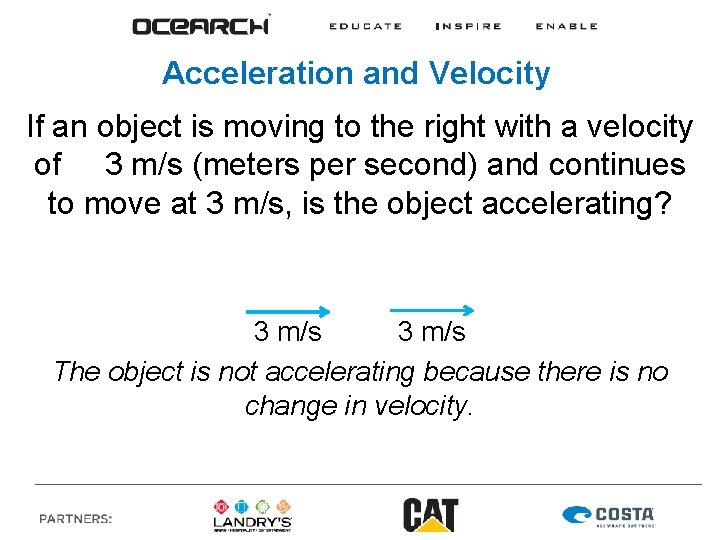
Acceleration and Velocity If an object is moving to the right with a velocity of 3 m/s (meters per second) and continues to move at 3 m/s, is the object accelerating? 3 m/s The object is not accelerating because there is no change in velocity.
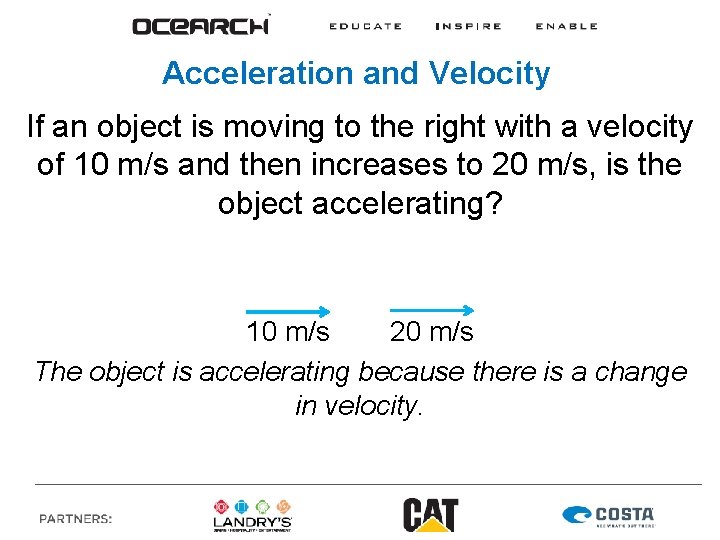
Acceleration and Velocity If an object is moving to the right with a velocity of 10 m/s and then increases to 20 m/s, is the object accelerating? 10 m/s 20 m/s The object is accelerating because there is a change in velocity.
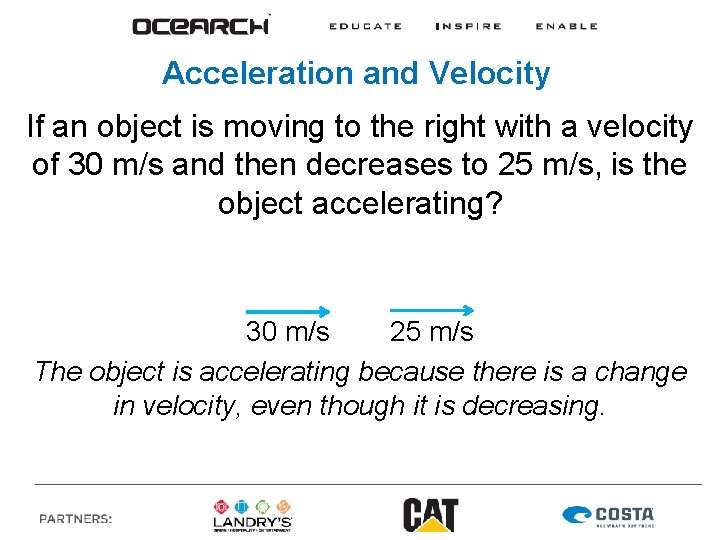
Acceleration and Velocity If an object is moving to the right with a velocity of 30 m/s and then decreases to 25 m/s, is the object accelerating? 30 m/s 25 m/s The object is accelerating because there is a change in velocity, even though it is decreasing.
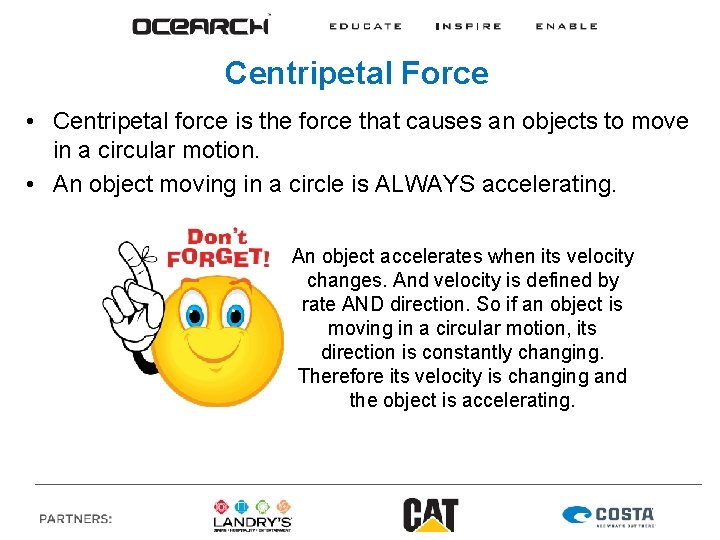
Centripetal Force • Centripetal force is the force that causes an objects to move in a circular motion. • An object moving in a circle is ALWAYS accelerating. An object accelerates when its velocity changes. And velocity is defined by rate AND direction. So if an object is moving in a circular motion, its direction is constantly changing. Therefore its velocity is changing and the object is accelerating.
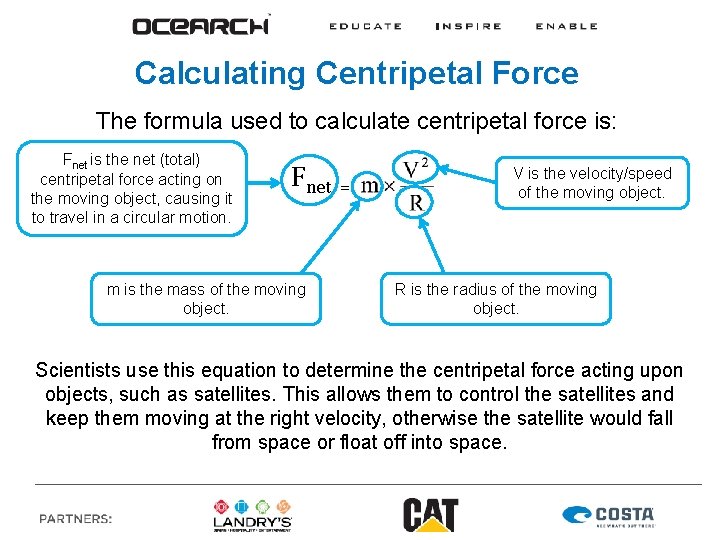
Calculating Centripetal Force The formula used to calculate centripetal force is: Fnet is the net (total) centripetal force acting on the moving object, causing it to travel in a circular motion. Fnet = m is the mass of the moving object. V is the velocity/speed of the moving object. R is the radius of the moving object. Scientists use this equation to determine the centripetal force acting upon objects, such as satellites. This allows them to control the satellites and keep them moving at the right velocity, otherwise the satellite would fall from space or float off into space.
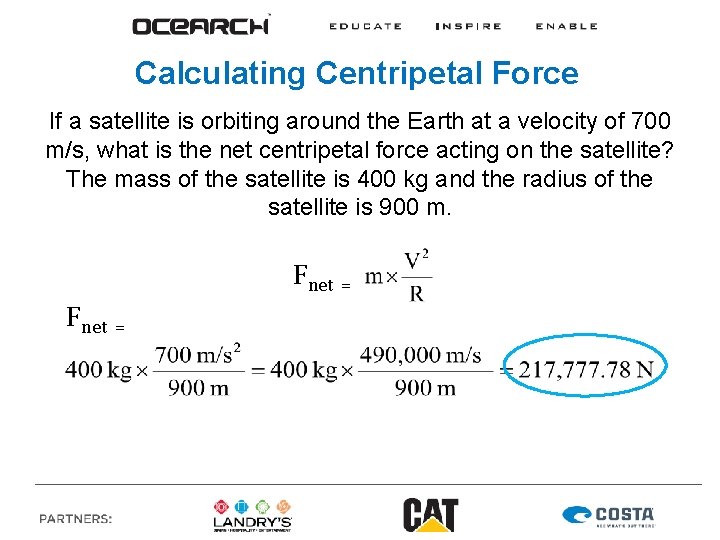
Calculating Centripetal Force If a satellite is orbiting around the Earth at a velocity of 700 m/s, what is the net centripetal force acting on the satellite? The mass of the satellite is 400 kg and the radius of the satellite is 900 m. Fnet =
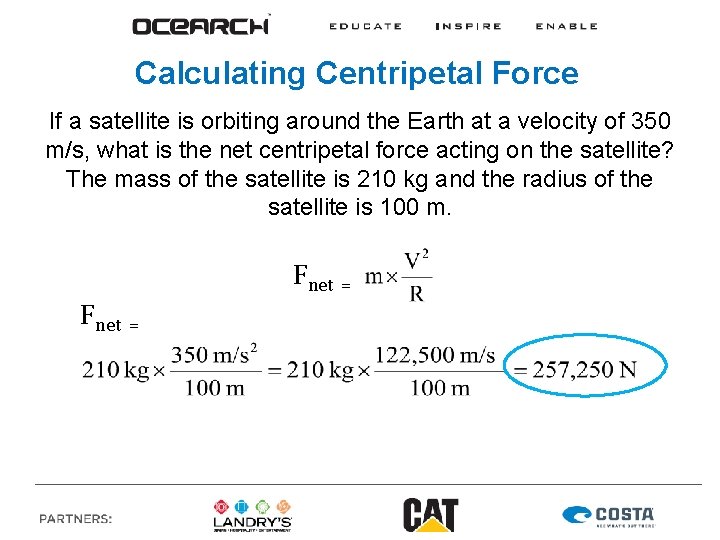
Calculating Centripetal Force If a satellite is orbiting around the Earth at a velocity of 350 m/s, what is the net centripetal force acting on the satellite? The mass of the satellite is 210 kg and the radius of the satellite is 100 m. Fnet =
Review • Every time an OCEARCH shark’s dorsal fin breaks the surface of the water, its SPOT tag sends a signal to overhead satellites. • The satellites process the signal, determine the shark’s location using the Doppler Effect, and relay the data to the Global Shark Tracker™. • Centripetal force is the force that causes an object to move in a circular motion, such as a satellite orbiting around the Earth. • If an object is moving in a circle, it is constantly changing direction. Therefore, its velocity is changing and the object is accelerating. • It is important for physicists to know how to calculate centripetal force. This allows them to control the satellites and keep them moving at the correct velocity, otherwise the satellite would fall from space or float off into space. • If this happened, OCEARCH would not be able to receive its valuable data to research and ultimately conserve sharks!
Questions?
OCEARCH Physics Part 2 Tagging Great White Sharks, Parts 4 & 5
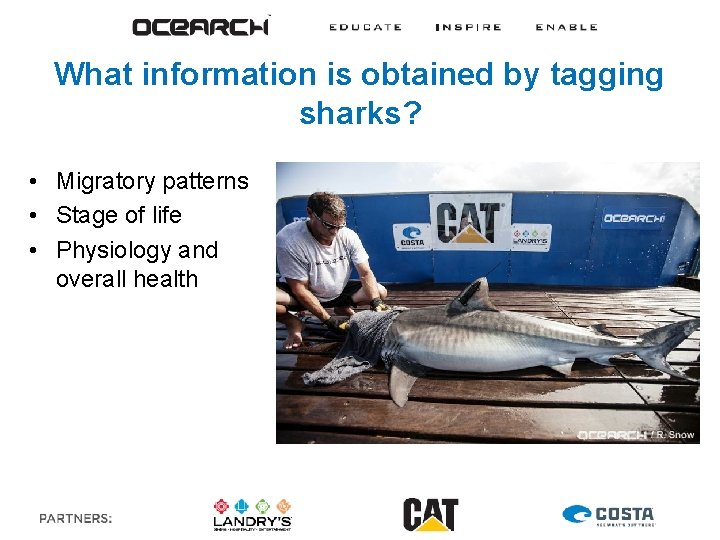
What information is obtained by tagging sharks? • Migratory patterns • Stage of life • Physiology and overall health
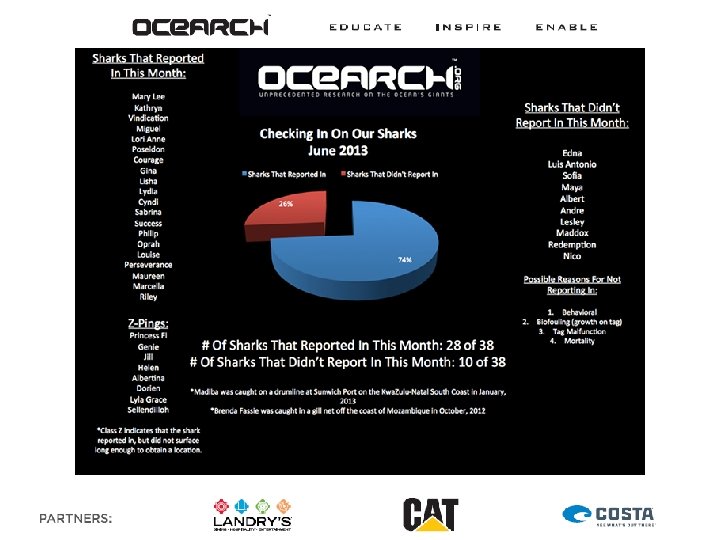
How do researchers monitor the tagged sharks? • Once a great white shark is tagged, OCEARCH monitors the near-real time data received from the tags to determine the shark’s migratory patterns. • Each month the researchers record which sharks “reported in”, meaning a shark surfaced long enough for its tag to send a signal to a satellite to record its location. Not all sharks report in each month.
How do researchers monitor the tagged sharks? • If a shark did not report in for the month, possible reasons are investigated. – Behavioral – The shark did not swim near the surface allowing the tag to send a signal. – Biofouling – Plants, bacteria, and/or other organisms (mussels, barnacles, and algae) attach to the tag which interferes with the signal. – Tag malfunctions – Just like all technology, sometimes it just quits working. – Shark mortality – The shark died from natural causes or was caught in a net or on a long line.
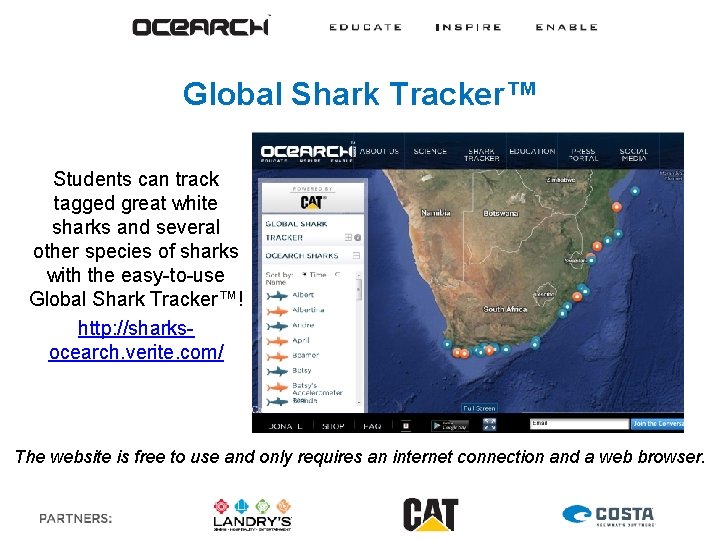
Global Shark Tracker™ Students can track tagged great white sharks and several other species of sharks with the easy-to-use Global Shark Tracker™! http: //sharksocearch. verite. com/ The website is free to use and only requires an internet connection and a web browser.
Questions?