
Oceans in the UN and international arena The
- Slides: 15
Oceans in the UN and international arena The role of WMO WSIS, Geneva, 10 June 2014 www. wmo. int
WMO’s mission § Protect life and property § Provide user-friendly weather and climate services § Promote research and sound science to inform policy for all sensitive socioeconomic sectors § Ensure rapid and global exchange of weather and water observations and information WMO and Ocean Affairs 2
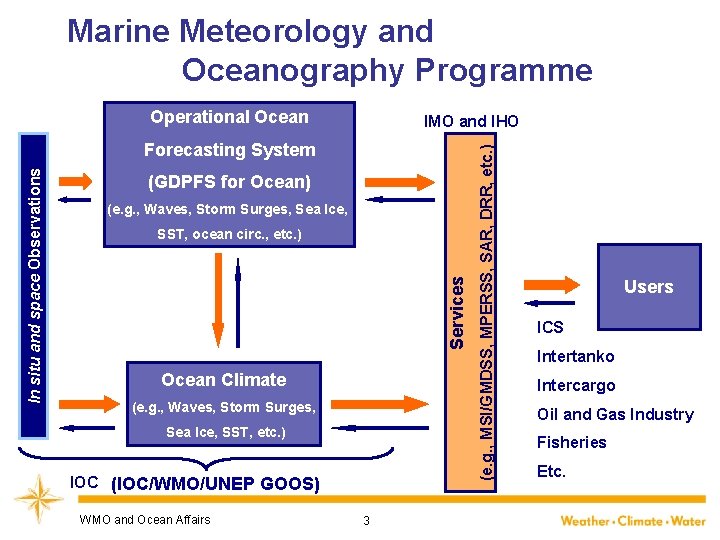
Marine Meteorology and Oceanography Programme Operational Ocean (GDPFS for Ocean) (e. g. , Waves, Storm Surges, Sea Ice, SST, ocean circ. , etc. ) Services In situ and space Observations Forecasting System Ocean Climate (e. g. , Waves, Storm Surges, Sea Ice, SST, etc. ) IOC (IOC/WMO/UNEP GOOS) WMO and Ocean Affairs 3 (e. g. , MSI/GMDSS, MPERSS, SAR, DRR, etc. ) IMO and IHO Users ICS Intertanko Intercargo Oil and Gas Industry Fisheries Etc.
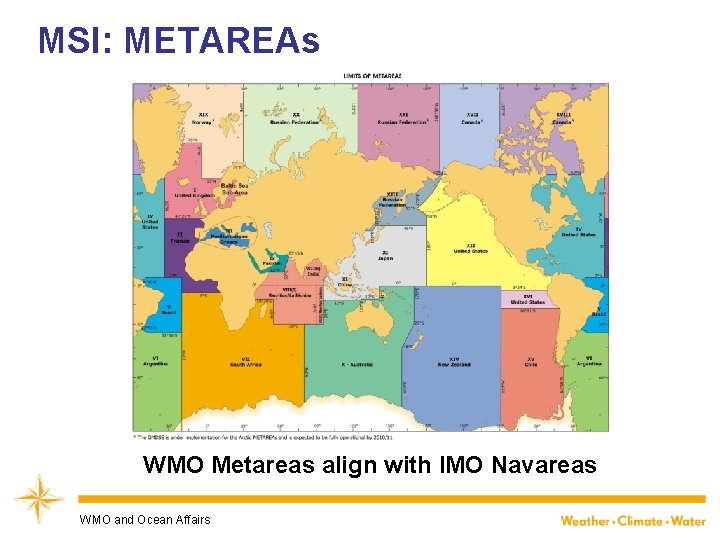
MSI: METAREAs WMO Metareas align with IMO Navareas WMO and Ocean Affairs
MSI: WWMIWS World-Wide Metocean Information & Warnings Service § § WMO EC 62 (June 2010), requested WMO to “establish and develop, in collaboration with the IMO, terms of reference for an IMO/WMO World‑Wide Met-ocean Information and Warning Service (WWMIWS)” to complement the existing IMO/IHO World-Wide Navigational Warning Services (WWNWS, IMO resolution A. 706(17)) METAREA Coordinator role IMO resolution adopted at IMO Assembly in November 2011 WMO and Ocean Affairs
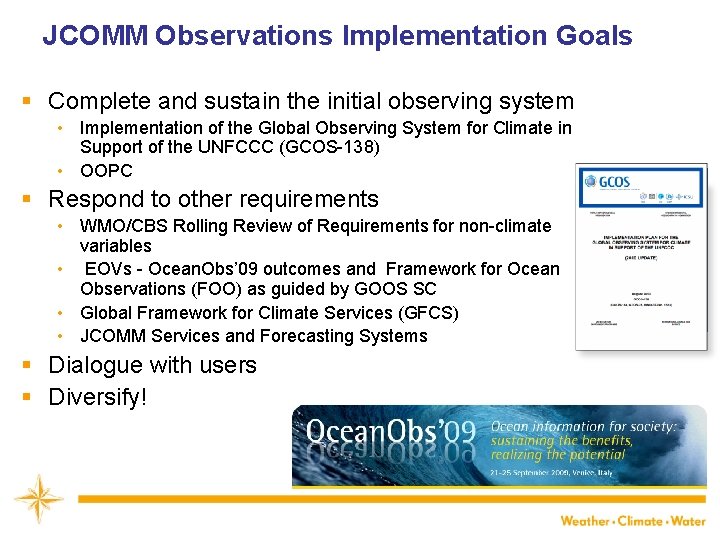
JCOMM Observations Implementation Goals § Complete and sustain the initial observing system • Implementation of the Global Observing System for Climate in Support of the UNFCCC (GCOS-138) • OOPC § Respond to other requirements • WMO/CBS Rolling Review of Requirements for non-climate variables • EOVs - Ocean. Obs’ 09 outcomes and Framework for Ocean Observations (FOO) as guided by GOOS SC • Global Framework for Climate Services (GFCS) • JCOMM Services and Forecasting Systems § Dialogue with users § Diversify!
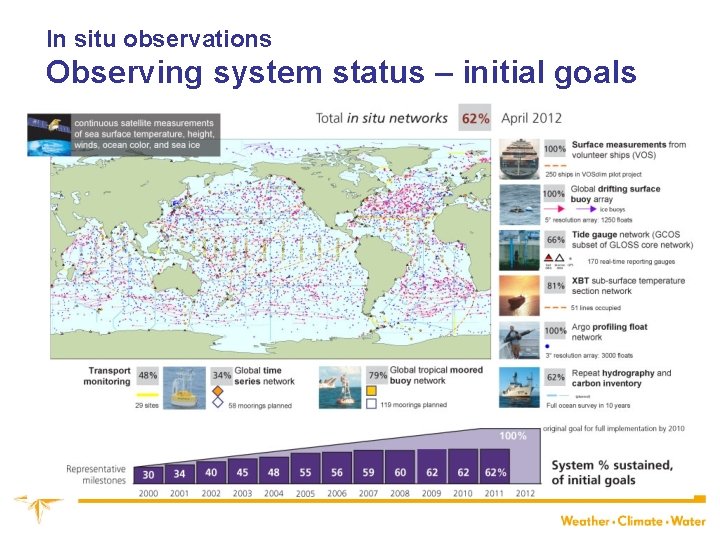
In situ observations Observing system status – initial goals
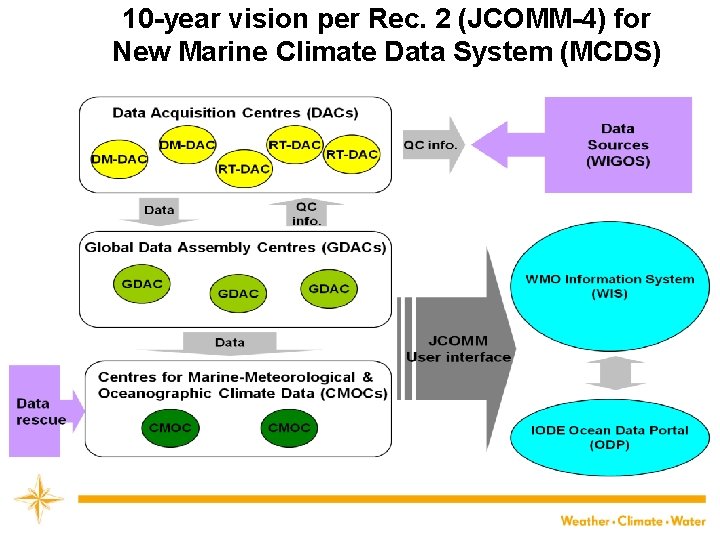
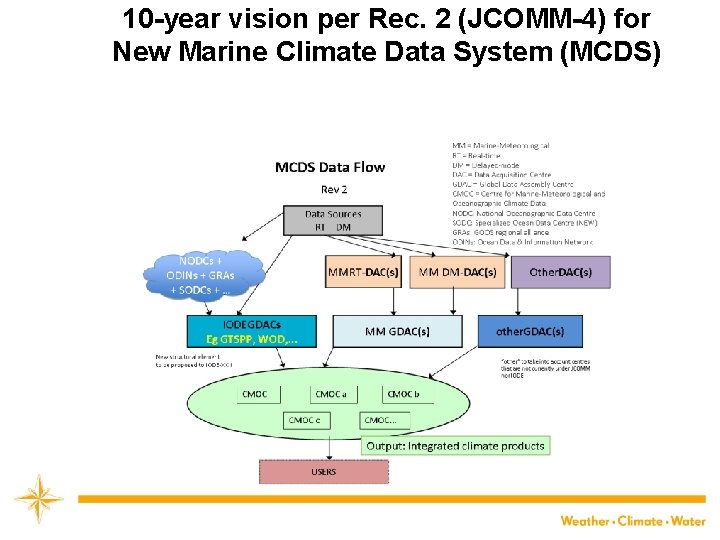
10 -year vision per Rec. 2 (JCOMM-4) for New Marine Climate Data System (MCDS)
10 -year vision per Rec. 2 (JCOMM-4) for New Marine Climate Data System (MCDS)
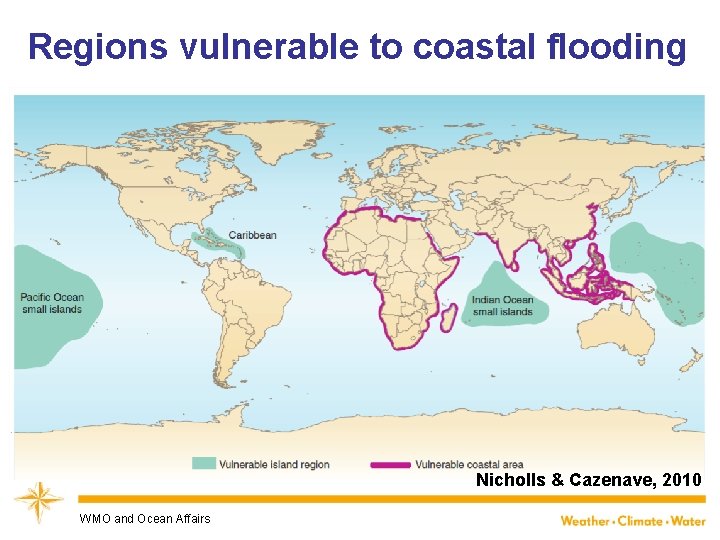
Regions vulnerable to coastal flooding Nicholls & Cazenave, 2010 WMO and Ocean Affairs
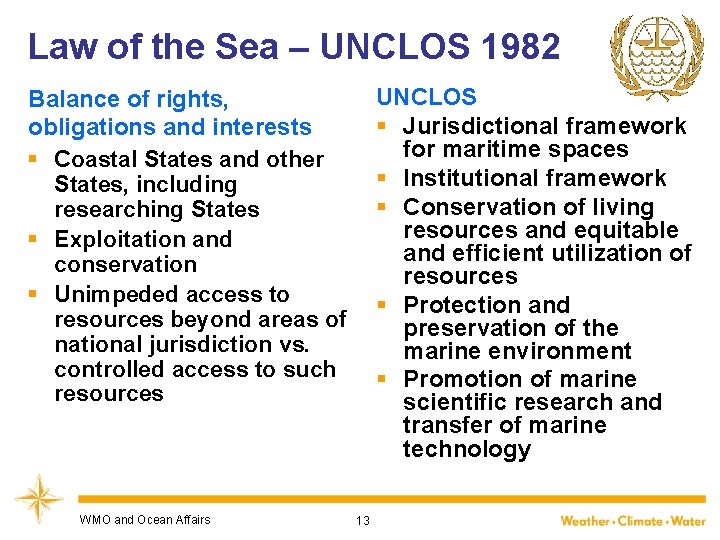
Law of the Sea – UNCLOS 1982 UNCLOS § Jurisdictional framework for maritime spaces § Institutional framework § Conservation of living resources and equitable and efficient utilization of resources § Protection and preservation of the marine environment § Promotion of marine scientific research and transfer of marine technology Balanceofof rights, Balance rights, obligations and obligations interests and interests § Coastal States and other States, including researching States § Exploitation and conservation § Unimpeded access to resources beyond areas of national jurisdiction vs. controlled access to such resources WMO and Ocean Affairs 13
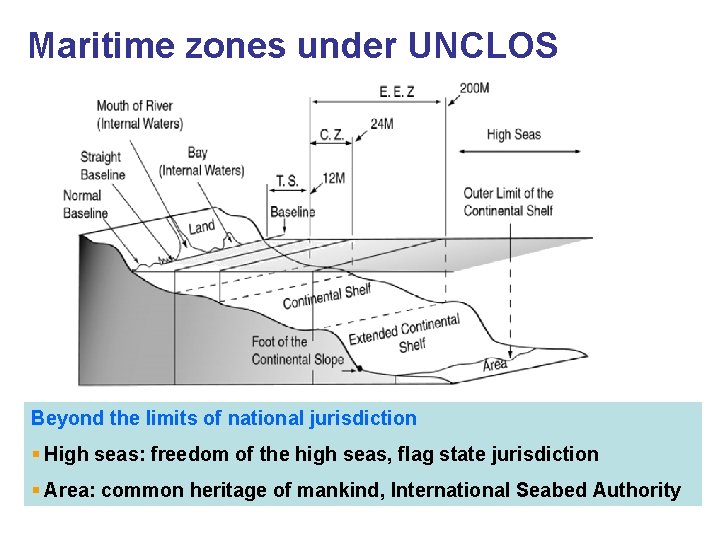
Maritime zones under UNCLOS Beyond the limits of national jurisdiction § High seas: freedom of the high seas, flag state jurisdiction § Area: common heritage of mankind, International Seabed Authority
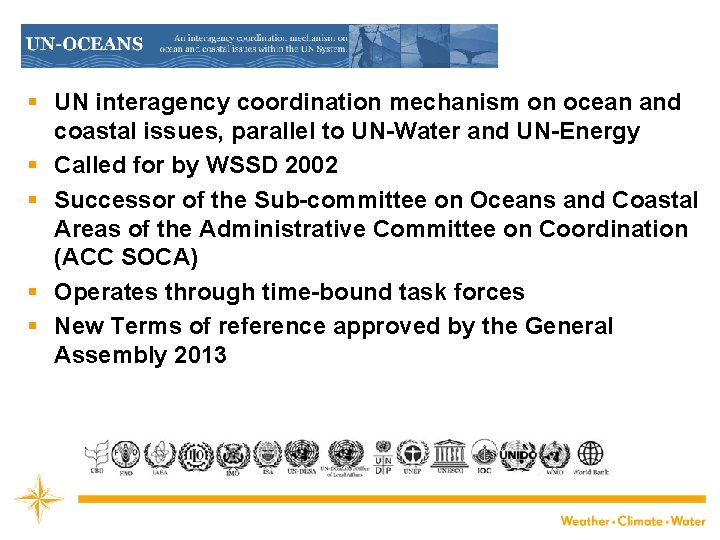
§ UN interagency coordination mechanism on ocean and coastal issues, parallel to UN-Water and UN-Energy § Called for by WSSD 2002 § Successor of the Sub-committee on Oceans and Coastal Areas of the Administrative Committee on Coordination (ACC SOCA) § Operates through time-bound task forces § New Terms of reference approved by the General Assembly 2013
Opportunities for WMO § By fostering systematic observations, contributing to the knowledge base for addressing marine climate issues § Facilitating capacity building and transfer of technology for met ocean services § Co-leading a thematic session of the Informal Consultative Process on oceans and climate services § Participate in other relevant event (e. g. , Barbados+20 and SIDS conference) WMO and Ocean Affairs
Thank you! Marine Meteorology and Ocean Affairs Division E-mail: mmo@wmo. int http: //www. wmo. int/oceans/ WMO and Ocean Affairs 17