
Oceans and Currents Recognize that the Sun provides
- Slides: 77
Oceans and Currents Recognize that the Sun provides the energy that drives convection within the atmosphere and oceans, producing winds and ocean currents.
What You Need To Know All energy on Earth starts with the Sun Major ocean currents and wind patterns create climates Solar energy, climate and ocean systems are interrelated. Oceans can affect the climate of an area. Cycles can be modified by nature or human interaction
Ocean System Cycle Our oceans influence weather, climate and living conditions all around the world.
What is a system? You’ve heard the term “system”. Give an example of a system? What are the parts of that system? How do the parts work together to make the system work? Is the system linear or circular? Or ___?
Ocean Currents Basics 1. Stream like movements of water in oceans 2. Heat is transferred around the world by ocean currents through convection. -Over ½ the heat that reaches the Earth from the Sun is absorbed by the ocean’s surface. 3. This heat affects the Earth’s weather and climate.
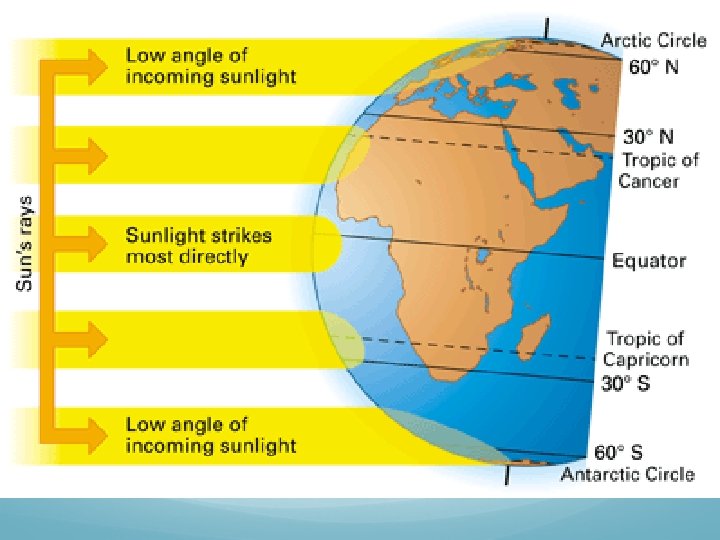
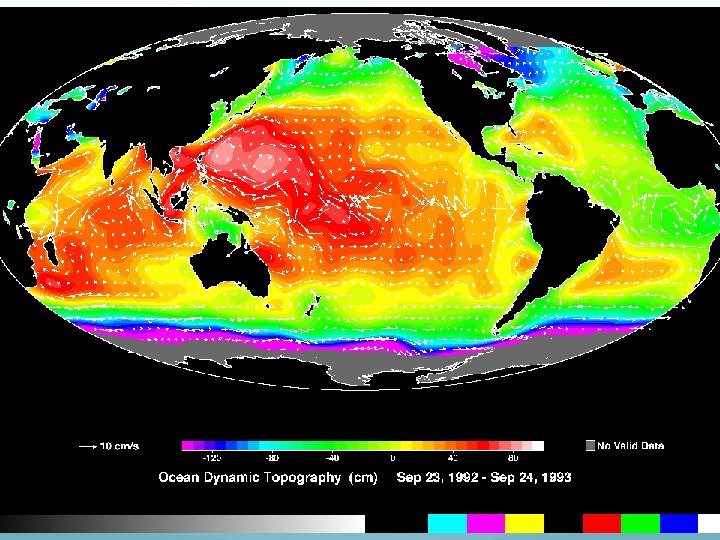
Surface Currents ÜCurrents at or near the surface of the ocean ÜAffect weather and climate for coastal regions around the world. -Warm currents originate at the Equator and warm coastal areas -Cold currents originate at the Poles and cool coastal areas
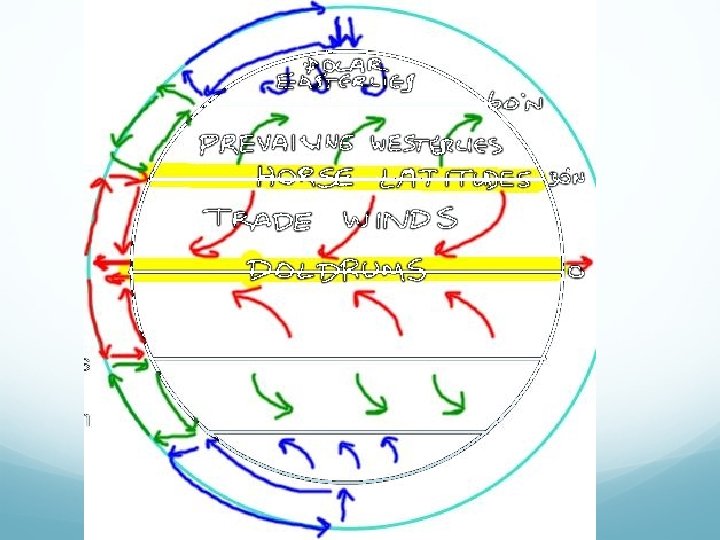
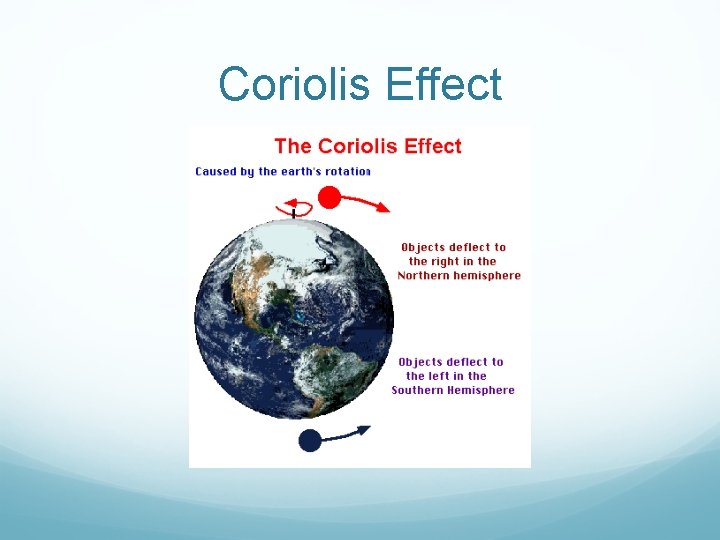
Surface Currents Controlled by 3 factors: 1. Global winds 2. Coriolis effect - curving of moving objects from a straight path due to the rotation of the Earth. Northern Hemisphere turn clockwise. Southern Hemisphere turn counter clockwise. 3. Continental deflections
Coriolis Effect
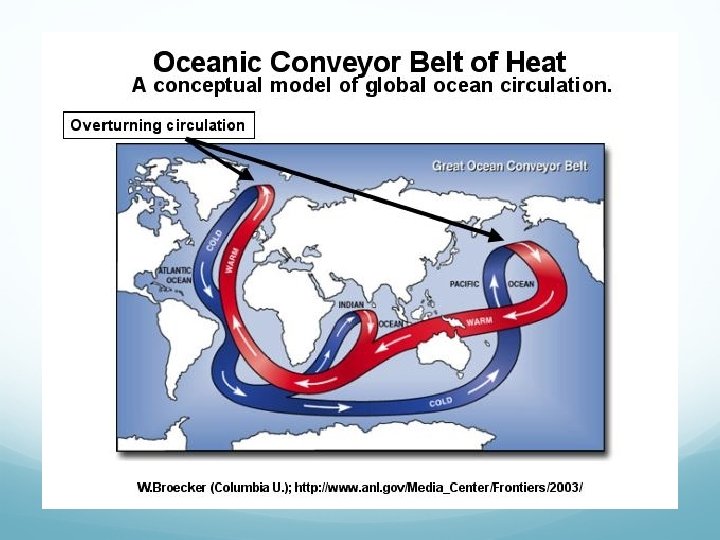
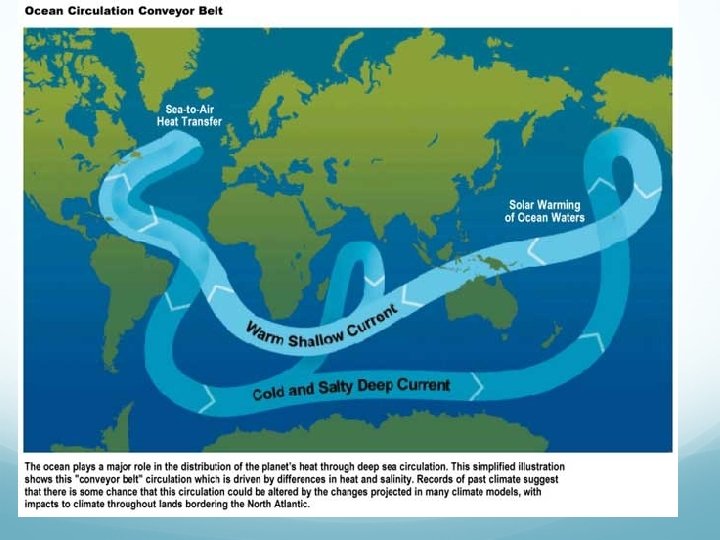
Deep Water Currents § Happen far below the ocean surface § Carry cold, dense water along the ocean floor from polar regions to equatorial regions § Form in parts of the ocean where water density increases. Density increases by: ² A. Decrease water temperature ² B. Increased Salinity-the amount of salt in the water
Specific Heat Capacity of Our Oceans Ocean water has a high specific heat capacityamount of energy needed to change it’s temperature It takes far more energy to change the temperature of water than land or air Water cools down & warms up slowly This keeps coastal areas cooler in the summer and warmer in the winter.
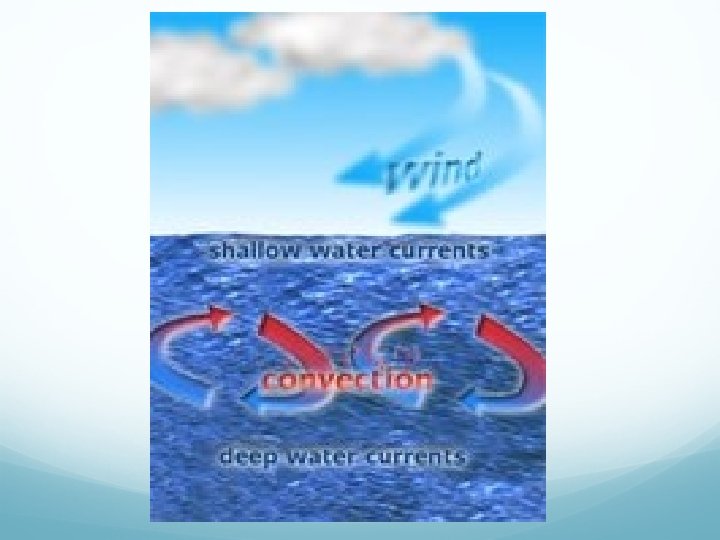
How Currents Trade Places Heat is transferred by convection currents, continually moving from deep currents to surface currents A. Water from deep currents (COLD) gets warmer as it nears the equator and begins to rise because it is warm. B. Water from surface currents (WARM) get colder as they reach the poles and starts to sink because it is getting cold.
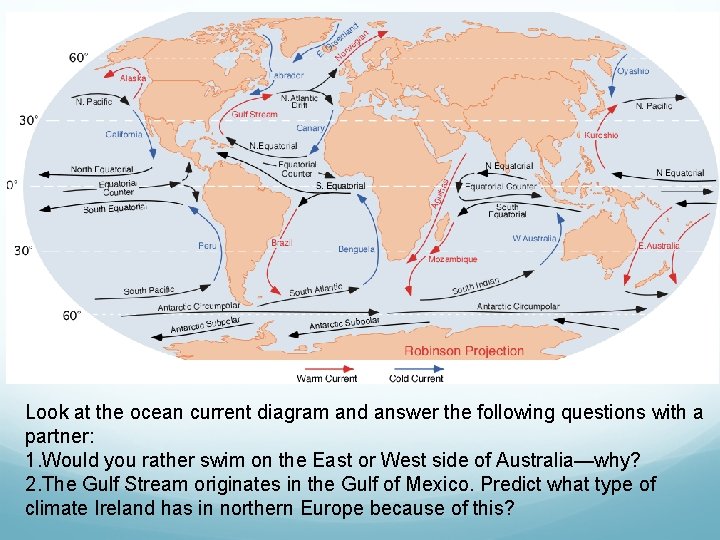
Look at the ocean current diagram and answer the following questions with a partner: 1. Would you rather swim on the East or West side of Australia—why? 2. The Gulf Stream originates in the Gulf of Mexico. Predict what type of climate Ireland has in northern Europe because of this?
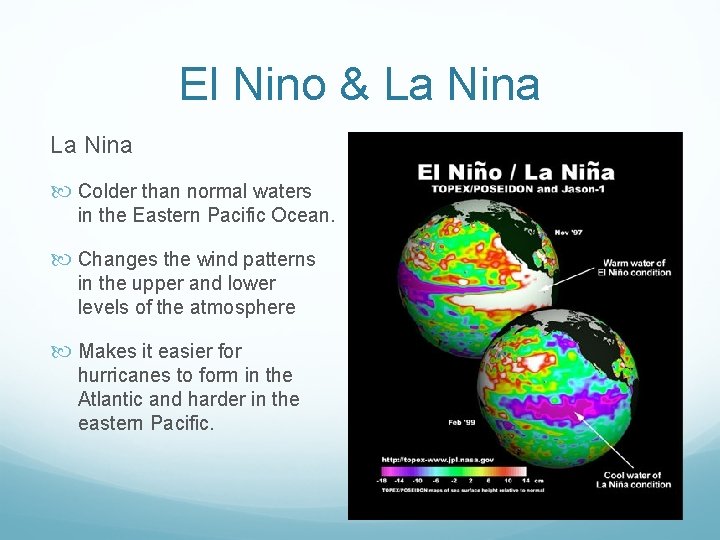
Changes in Ocean Currents El Nino An abnormal warming of surface ocean waters in the eastern tropical Pacific A disruption of the ocean-atmosphere system having important consequences for weather and climate around the globe. Contributes to higher temperatures, floods, hurricanes, droughts around the world Usually occurs every four years and lasts for about 18 months at a time. Predict the economic effects El Niño will have on the areas it affects. http: //www. pmel. noaa. gov/tao/elnino/nino-home. html
El Nino & La Nina Colder than normal waters in the Eastern Pacific Ocean. Changes the wind patterns in the upper and lower levels of the atmosphere Makes it easier for hurricanes to form in the Atlantic and harder in the eastern Pacific.
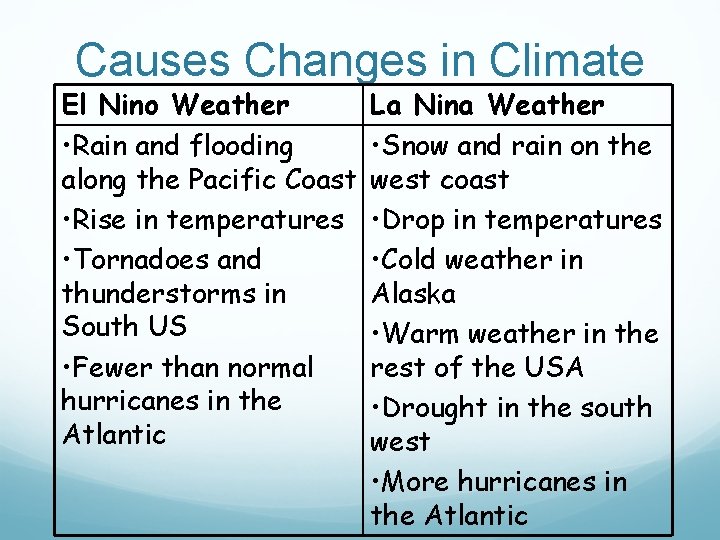
Causes Changes in Climate El Nino Weather • Rain and flooding along the Pacific Coast • Rise in temperatures • Tornadoes and thunderstorms in South US • Fewer than normal hurricanes in the Atlantic La Nina Weather • Snow and rain on the west coast • Drop in temperatures • Cold weather in Alaska • Warm weather in the rest of the USA • Drought in the south west • More hurricanes in the Atlantic
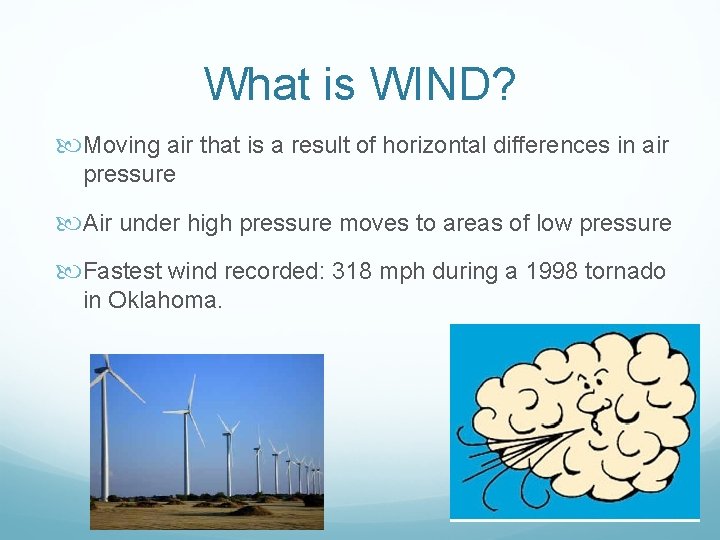
What is WIND? Moving air that is a result of horizontal differences in air pressure Air under high pressure moves to areas of low pressure Fastest wind recorded: 318 mph during a 1998 tornado in Oklahoma.
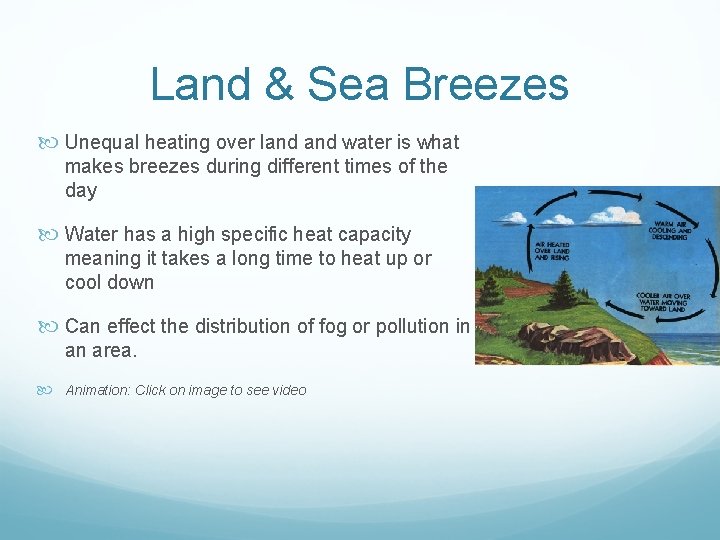
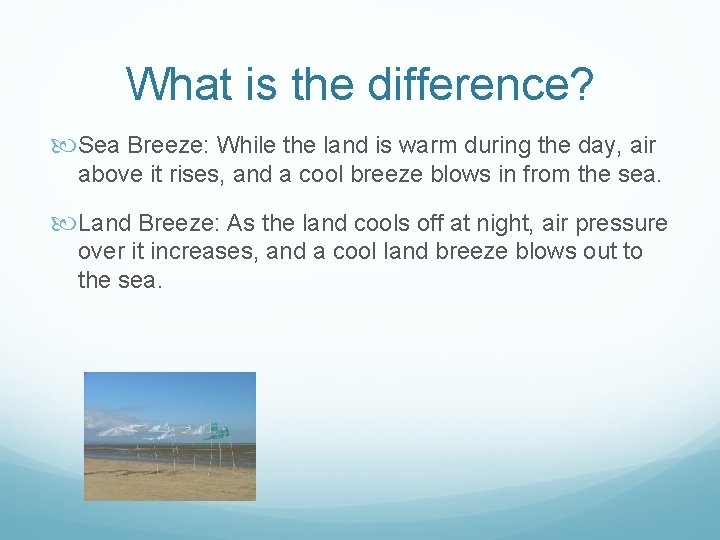
Land & Sea Breezes Unequal heating over land water is what makes breezes during different times of the day Water has a high specific heat capacity meaning it takes a long time to heat up or cool down Can effect the distribution of fog or pollution in an area. Animation: Click on image to see video
What is the difference? Sea Breeze: While the land is warm during the day, air above it rises, and a cool breeze blows in from the sea. Land Breeze: As the land cools off at night, air pressure over it increases, and a cool land breeze blows out to the sea.
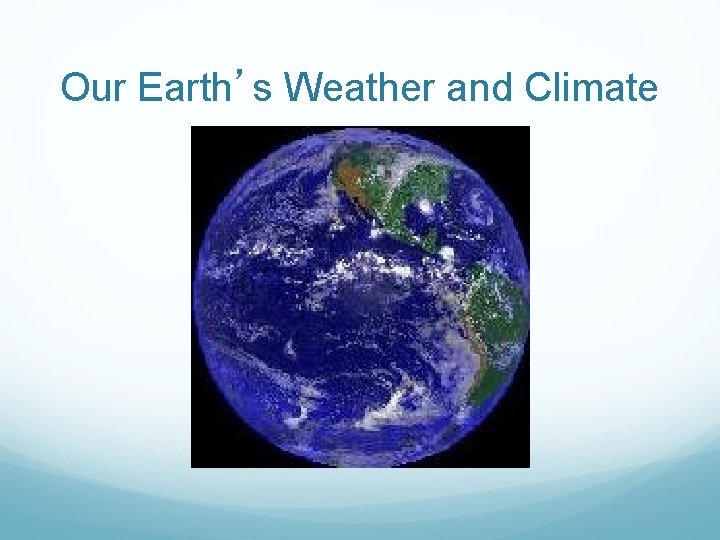
Our Earth’s Weather and Climate
Weather and Climate Ü Complex interactions between the sun (energy) and the oceans, the land, and the atmosphere (matter) Ü Weather Ü The condition of the atmosphere at a certain time and place. Ü Continually changes dynamically (daily) Ü Climate Ü The overall weather patterns of an area during periods of seasons or years. Ü Changes occur over long periods of geologic time (last ice age ended about 10, 000 years ago).
Causes of Weather and Climate Changes Amount of Solar energy from the sun. Natural events from Volcanoes and Fires Human impacts contributing to global warming
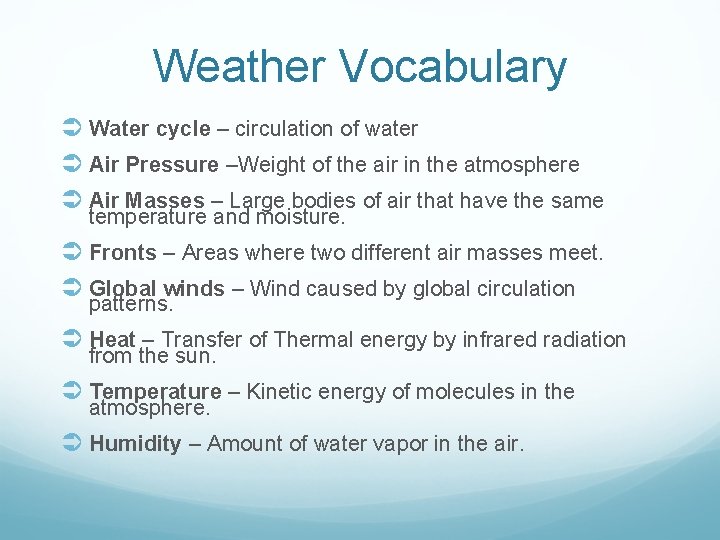
Weather Vocabulary Ü Water cycle – circulation of water Ü Air Pressure –Weight of the air in the atmosphere Ü Air Masses – Large bodies of air that have the same temperature and moisture. Ü Fronts – Areas where two different air masses meet. Ü Global winds – Wind caused by global circulation patterns. Ü Heat – Transfer of Thermal energy by infrared radiation from the sun. Ü Temperature – Kinetic energy of molecules in the atmosphere. Ü Humidity – Amount of water vapor in the air.
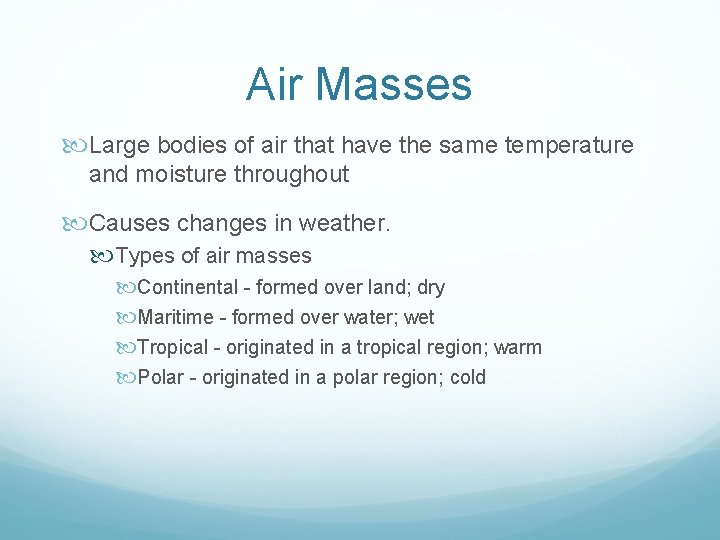
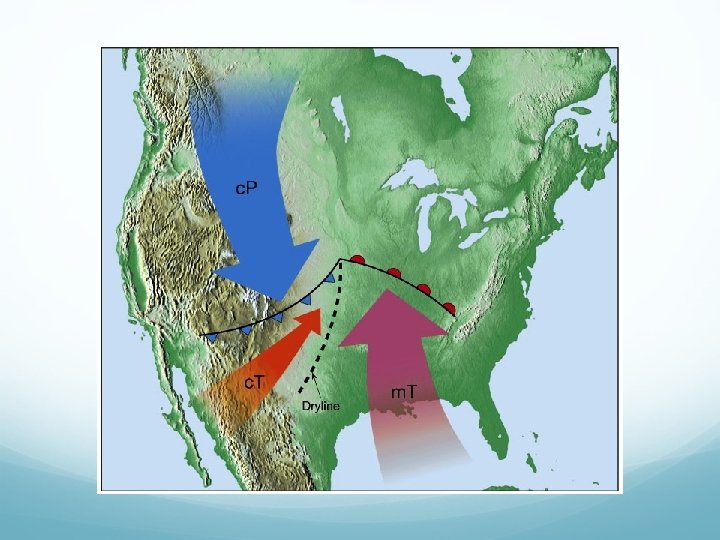
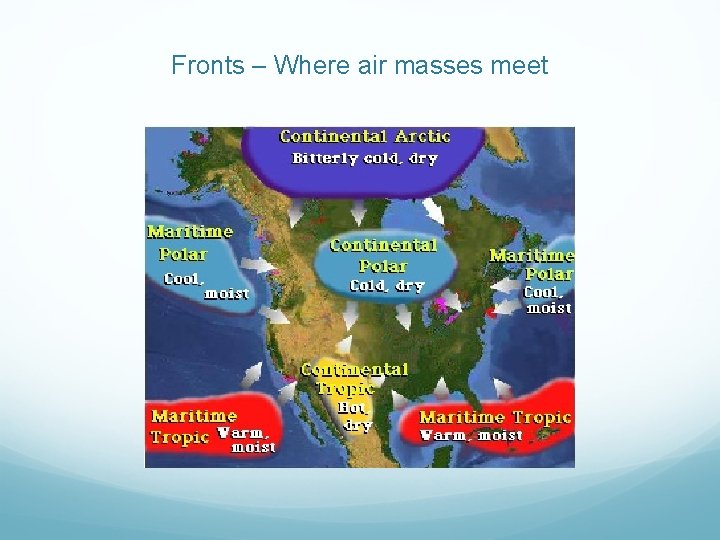
Air Masses Large bodies of air that have the same temperature and moisture throughout Causes changes in weather. Types of air masses Continental - formed over land; dry Maritime - formed over water; wet Tropical - originated in a tropical region; warm Polar - originated in a polar region; cold
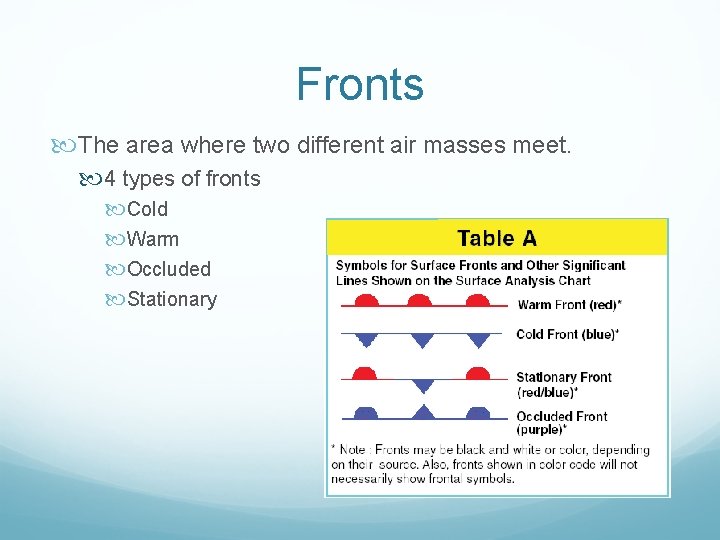
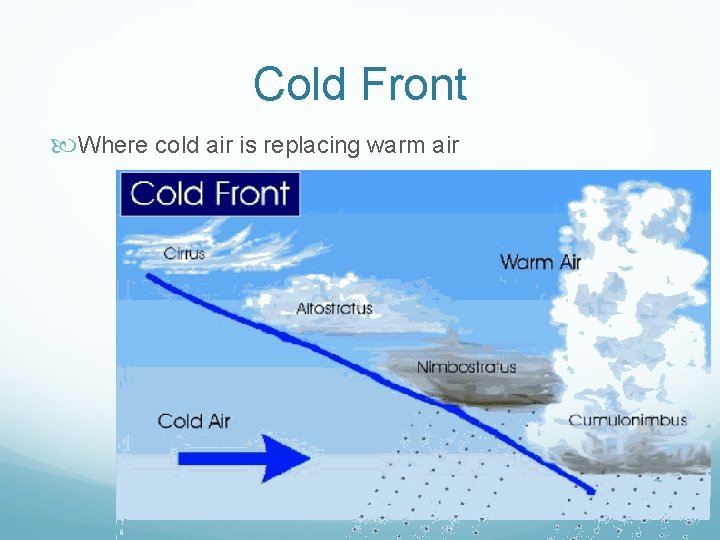
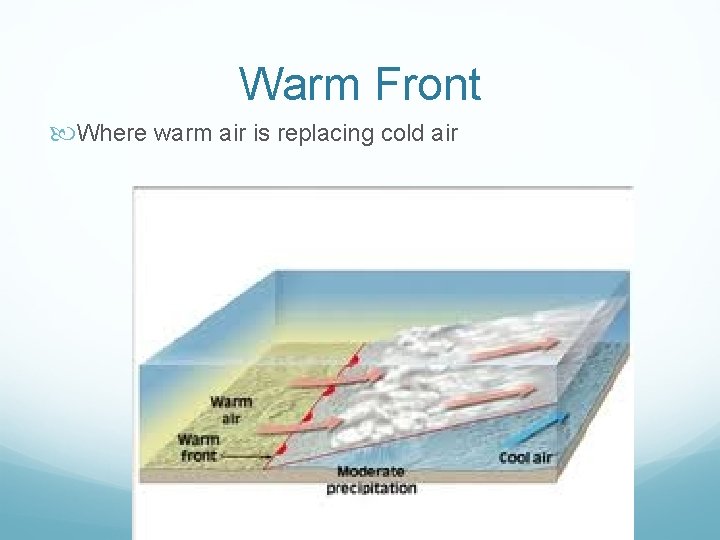
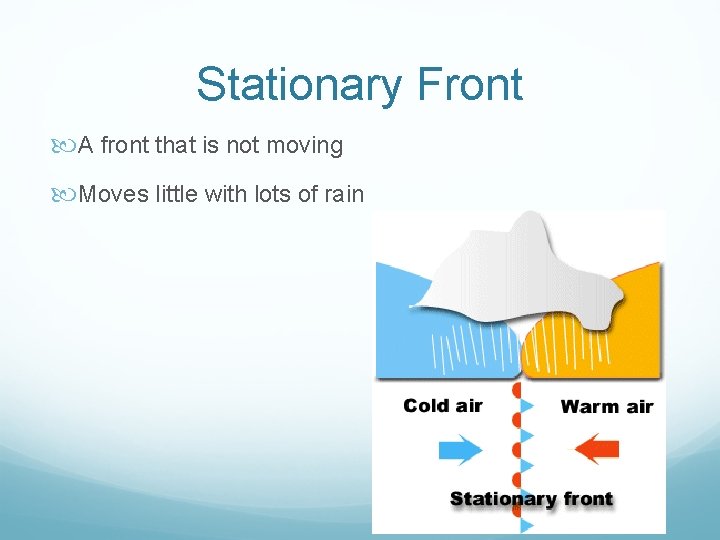
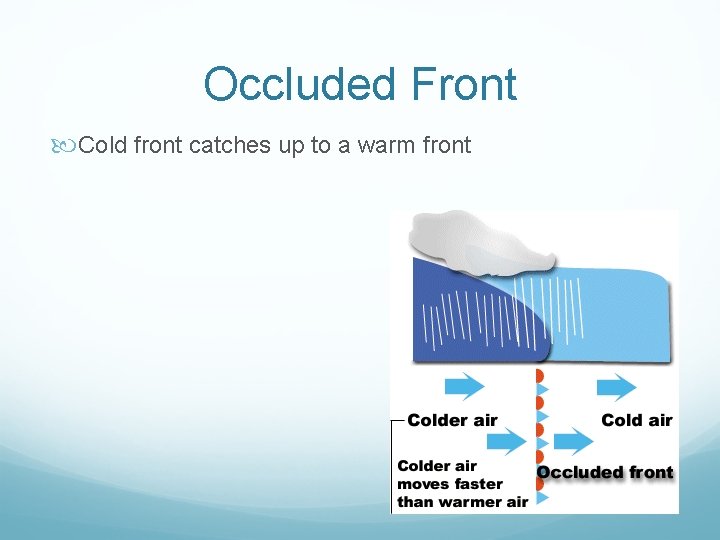
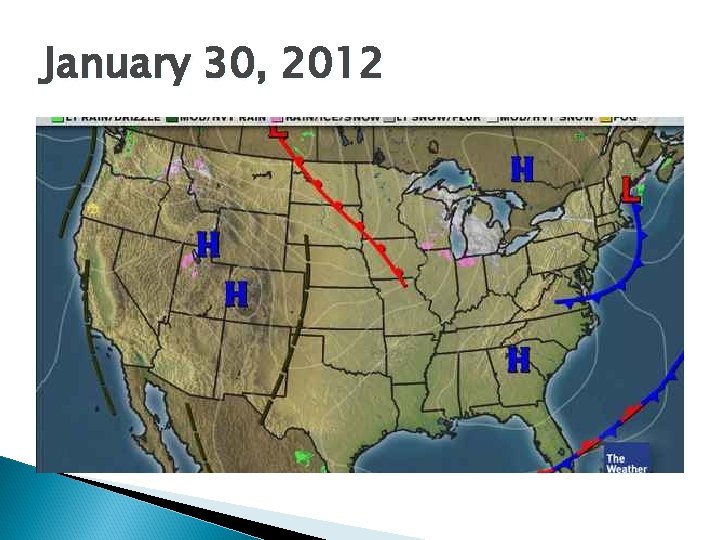
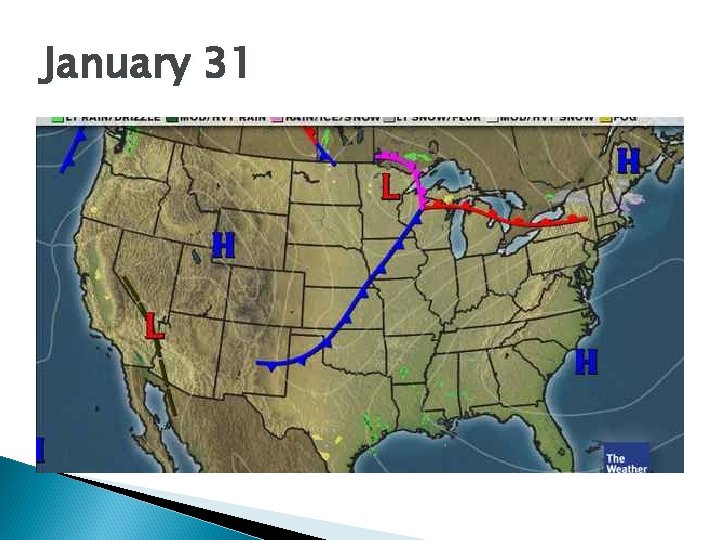
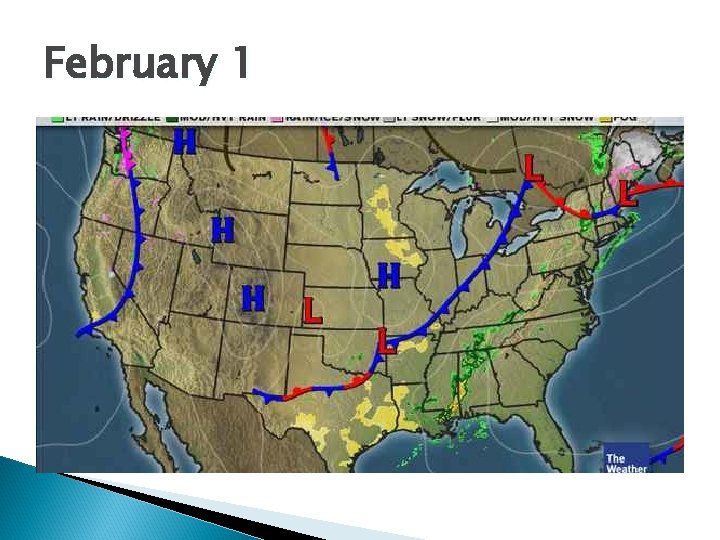
Fronts The area where two different air masses meet. 4 types of fronts Cold Warm Occluded Stationary
Cold Front Where cold air is replacing warm air
Warm Front Where warm air is replacing cold air
Stationary Front A front that is not moving Moves little with lots of rain
Occluded Front Cold front catches up to a warm front
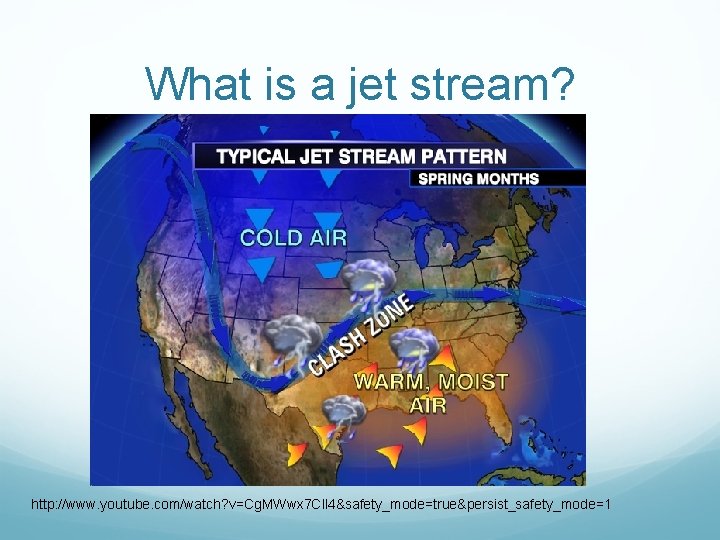
What is a jet stream? http: //www. youtube. com/watch? v=Cg. MWwx 7 Cll 4&safety_mode=true&persist_safety_mode=1
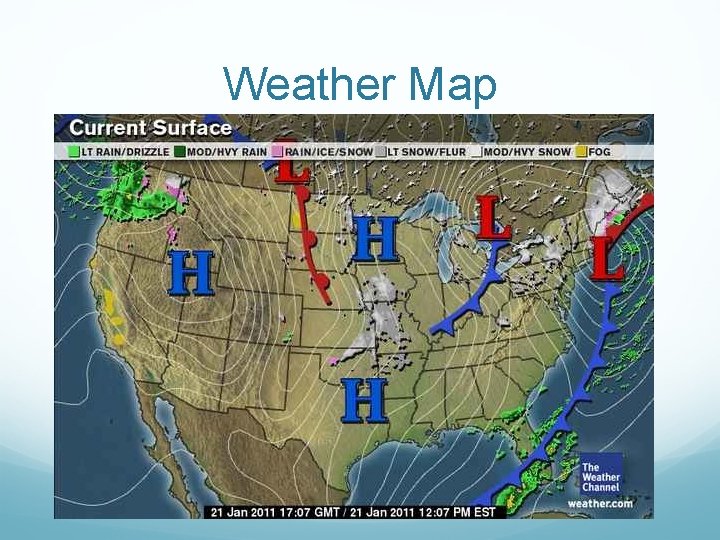
Fronts – Where air masses meet
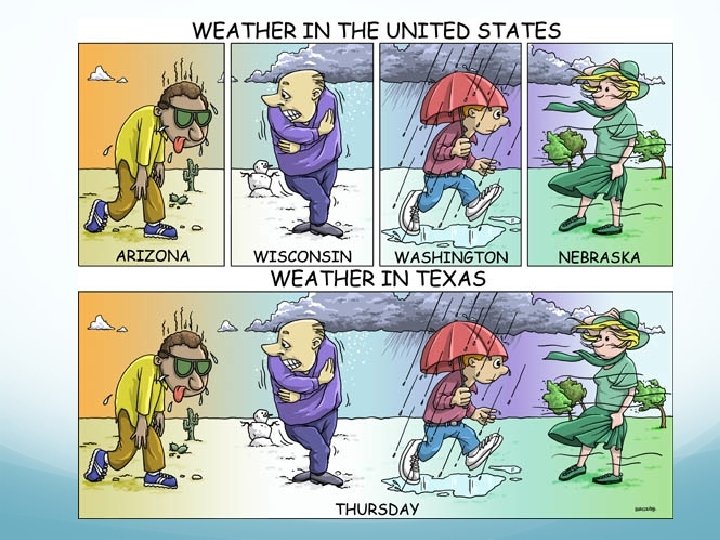
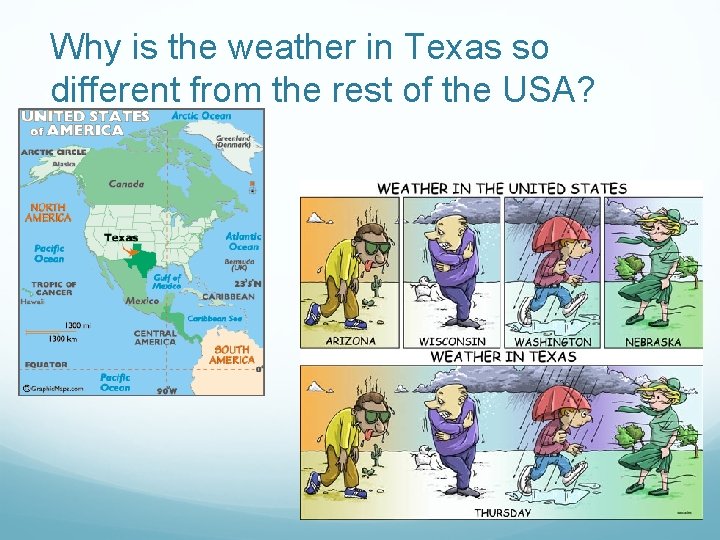
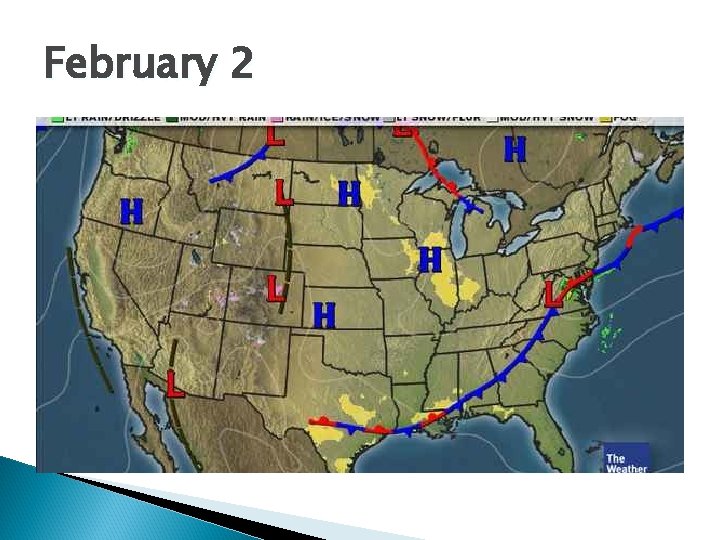
Why is the weather in Texas so different from the rest of the USA?
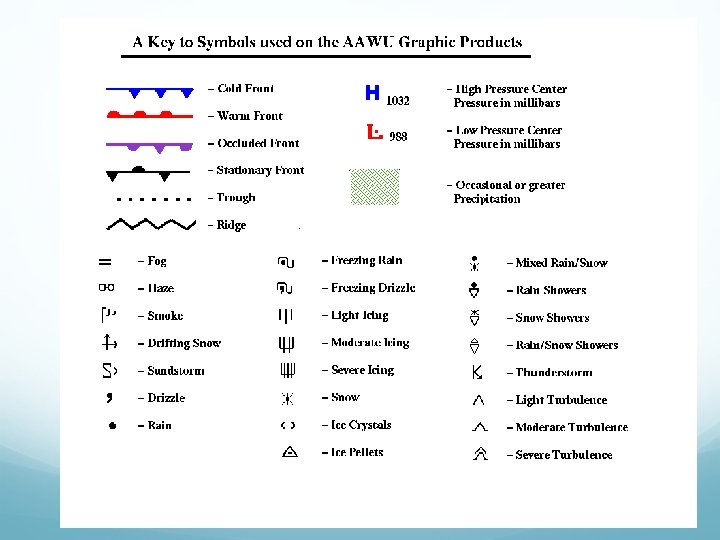
Weather Map
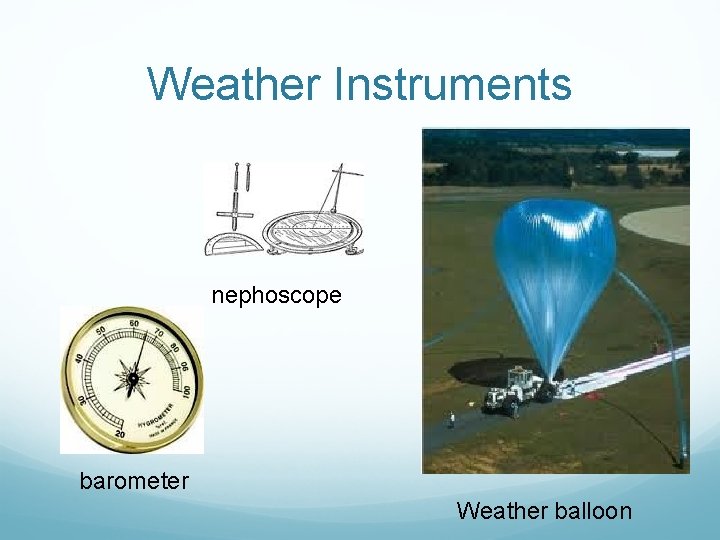
Weather Instruments nephoscope barometer Weather balloon
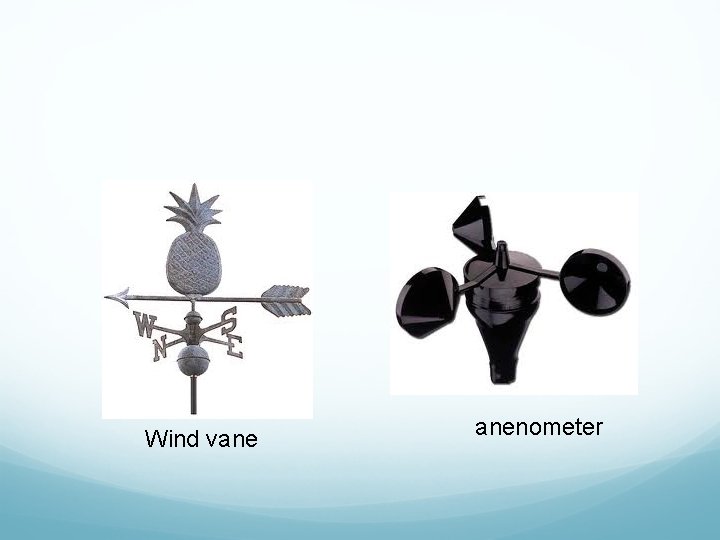
Wind vane anenometer
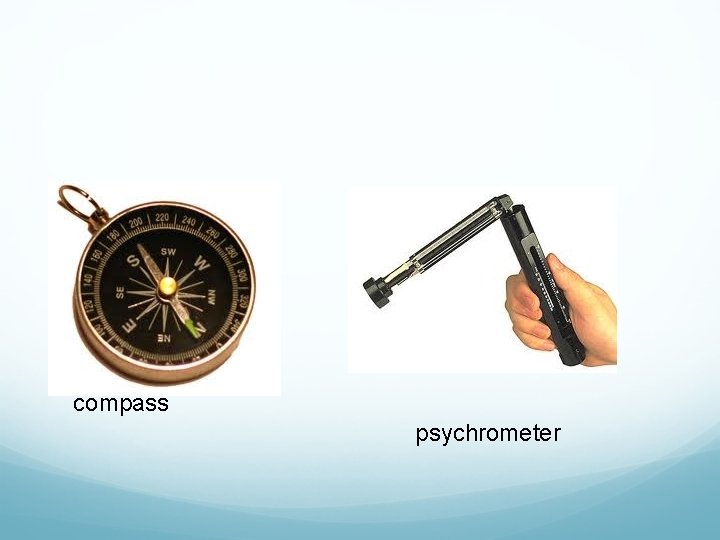
compass psychrometer
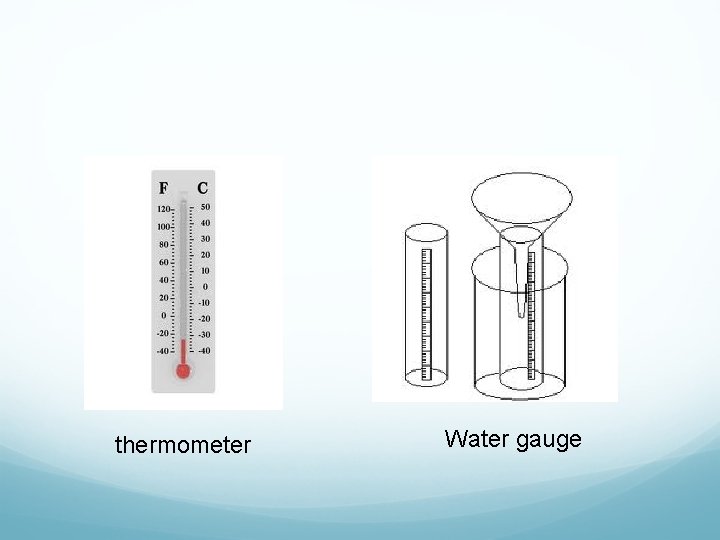
thermometer Water gauge
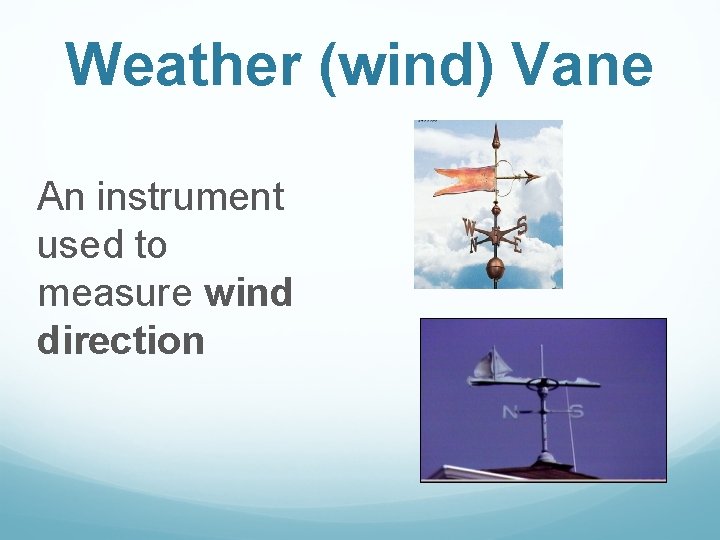
Weather (wind) Vane An instrument used to measure wind direction
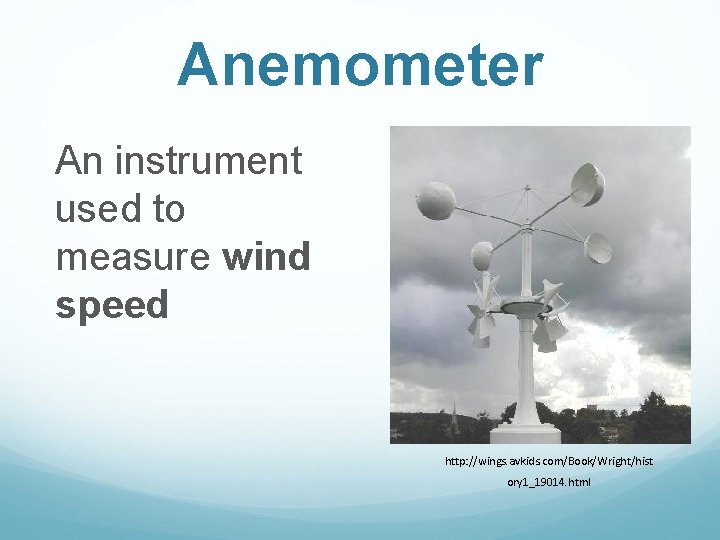
Anemometer An instrument used to measure wind speed http: //wings. avkids. com/Book/Wright/hist ory 1_19014. html
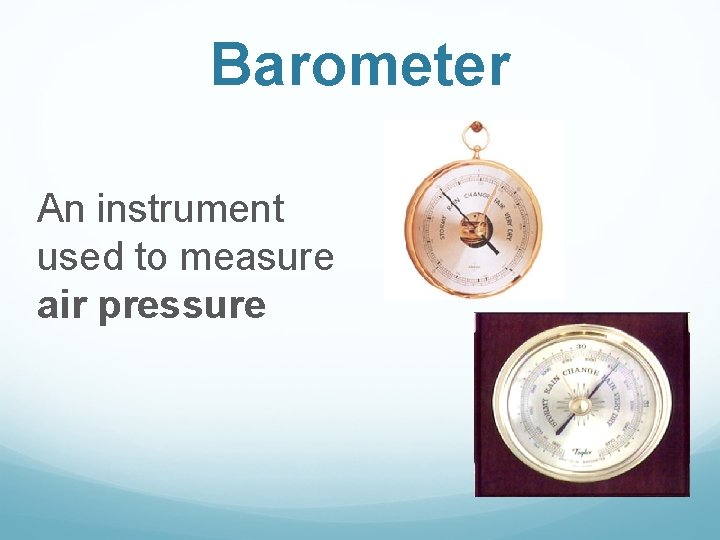
Barometer An instrument used to measure air pressure
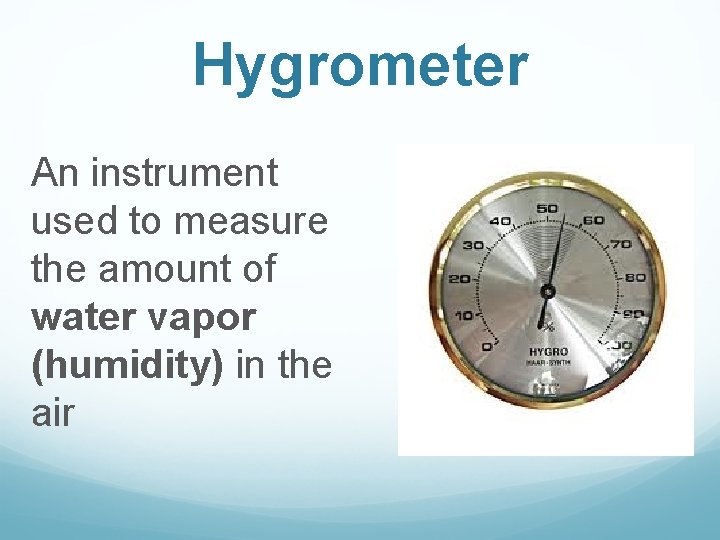
Hygrometer An instrument used to measure the amount of water vapor (humidity) in the air
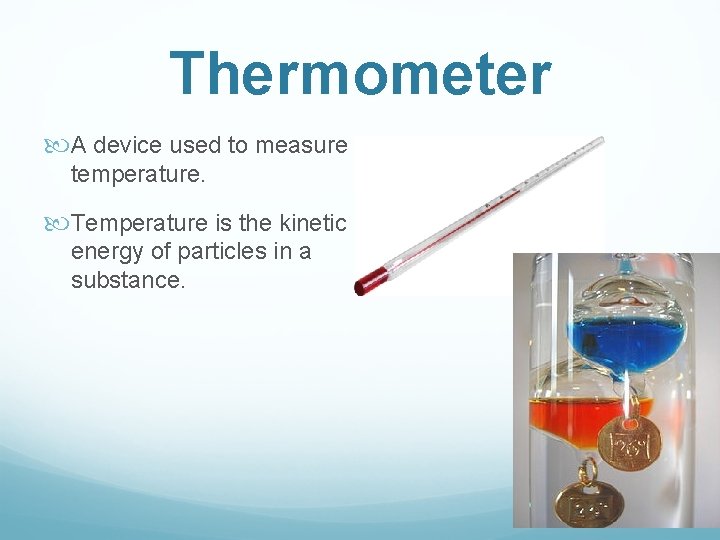
Thermometer A device used to measure temperature. Temperature is the kinetic energy of particles in a substance.
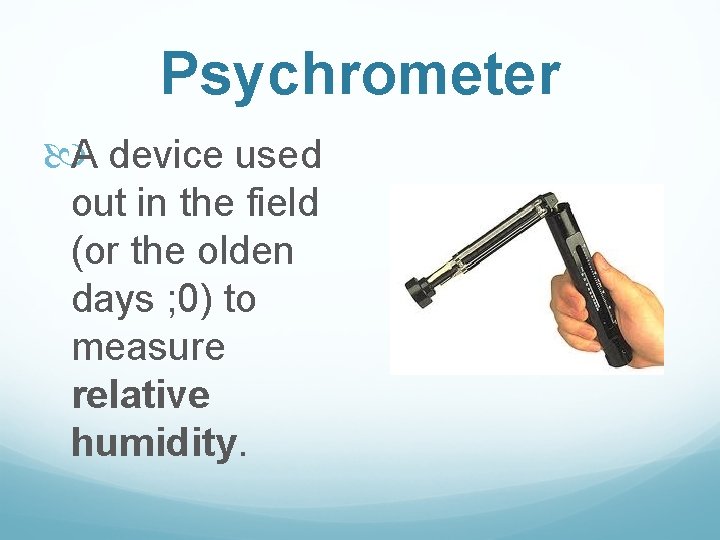
Psychrometer A device used out in the field (or the olden days ; 0) to measure relative humidity.
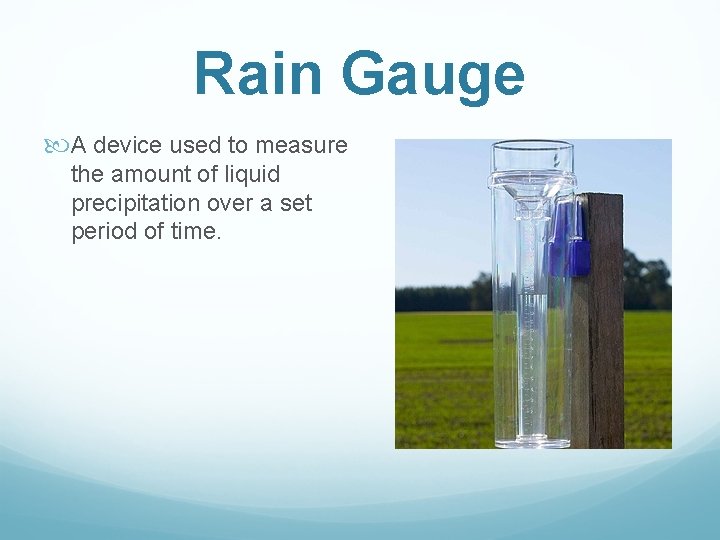
Rain Gauge A device used to measure the amount of liquid precipitation over a set period of time.
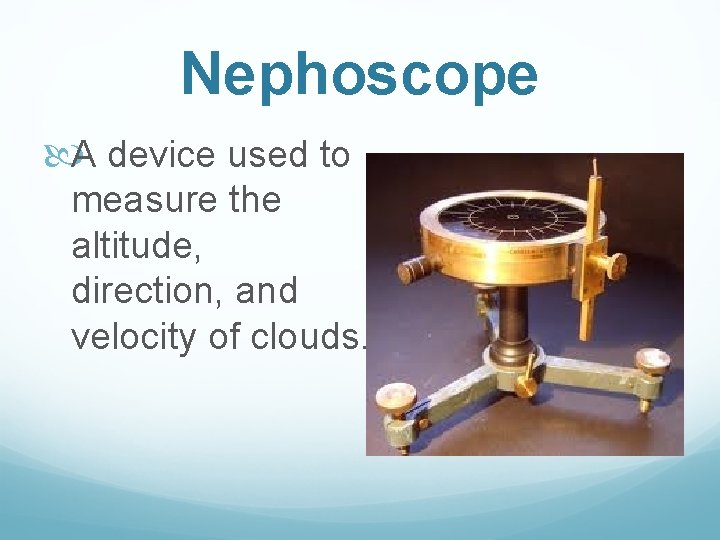
Nephoscope A device used to measure the altitude, direction, and velocity of clouds.
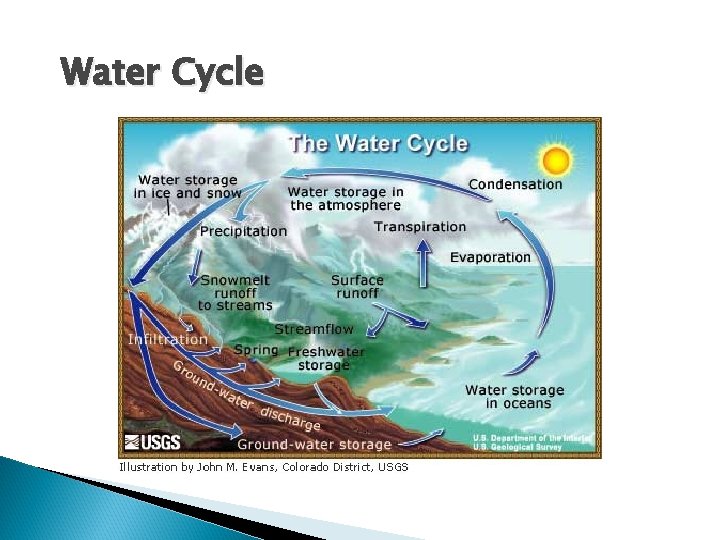
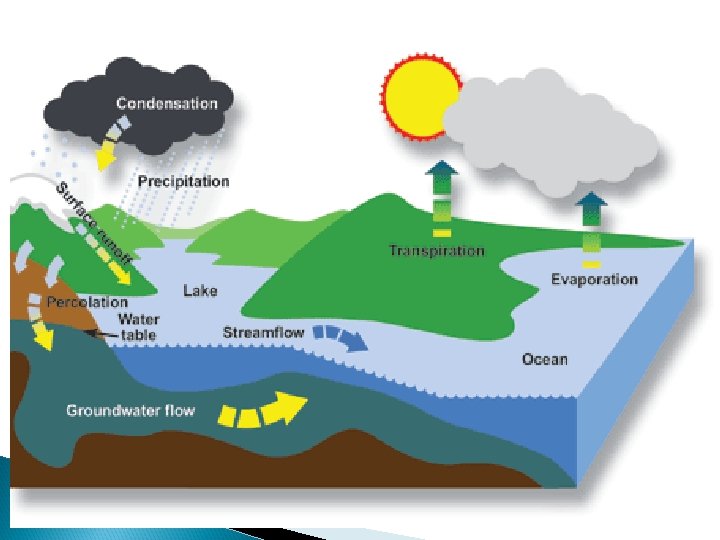
The Water Cycle Ü Condensation - water vapor cools and changes back into liquid drops Ü Precipitation - rain, snow, sleet or hail falls from clouds Ü Evaporation - liquid water changes into water vapor (gas) in the air. Ü Ground water and runoff – water stored underground, in soil, streams, rivers and oceans. Ü Transpiration – living organisms release water vapor into the atmosphere.
Water Cycle
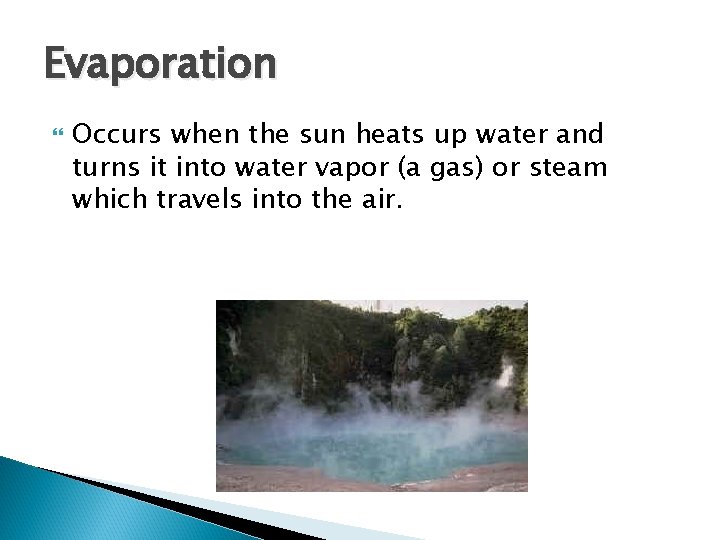
Evaporation Occurs when the sun heats up water and turns it into water vapor (a gas) or steam which travels into the air.
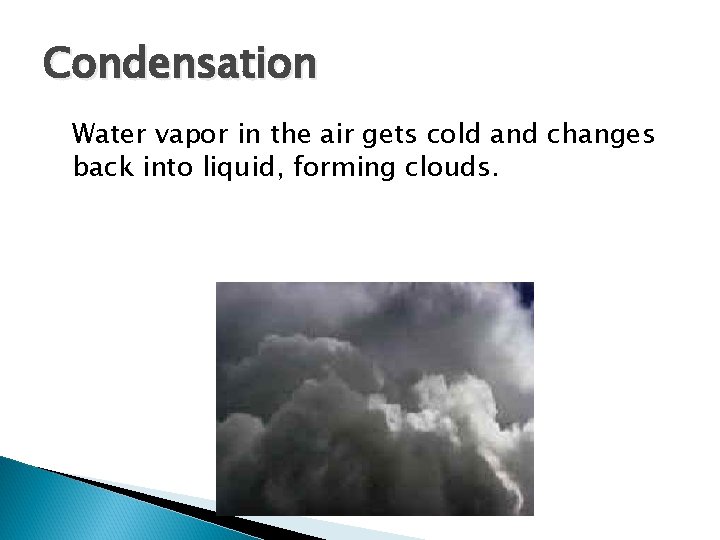
Condensation Water vapor in the air gets cold and changes back into liquid, forming clouds.
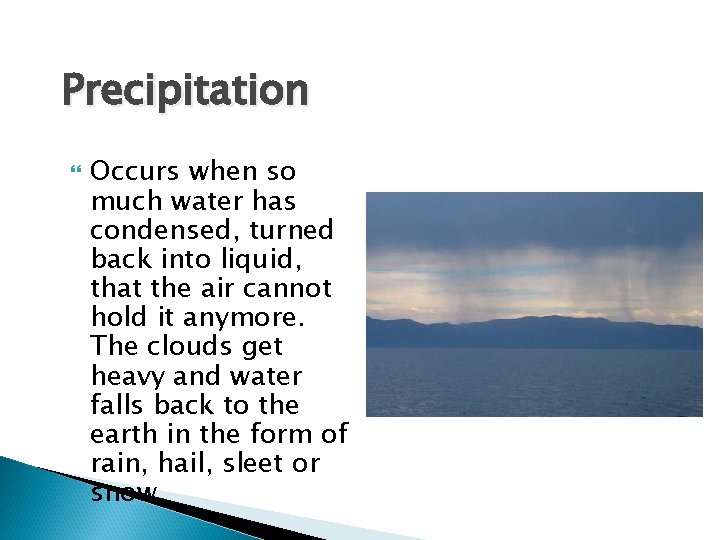
Precipitation Occurs when so much water has condensed, turned back into liquid, that the air cannot hold it anymore. The clouds get heavy and water falls back to the earth in the form of rain, hail, sleet or snow.
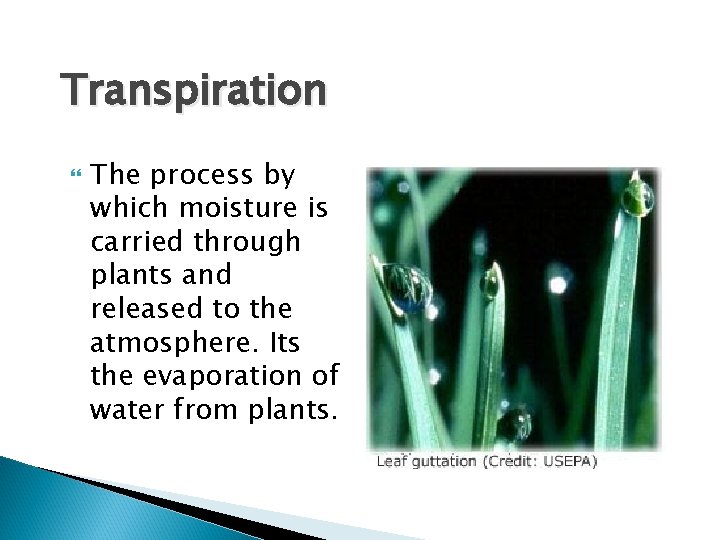
Transpiration The process by which moisture is carried through plants and released to the atmosphere. Its the evaporation of water from plants.
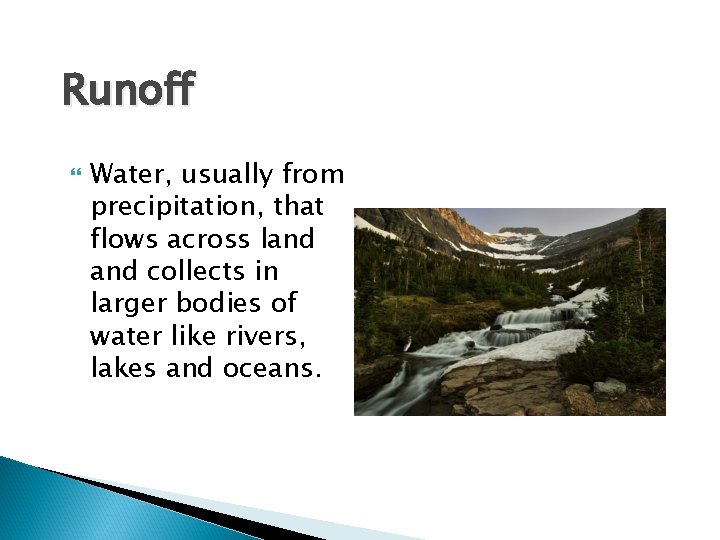
Runoff Water, usually from precipitation, that flows across land collects in larger bodies of water like rivers, lakes and oceans.
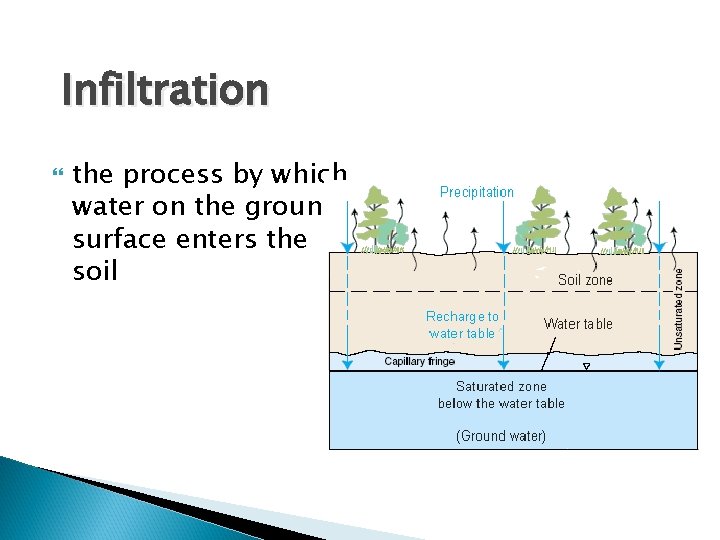
Infiltration the process by which water on the ground surface enters the soil
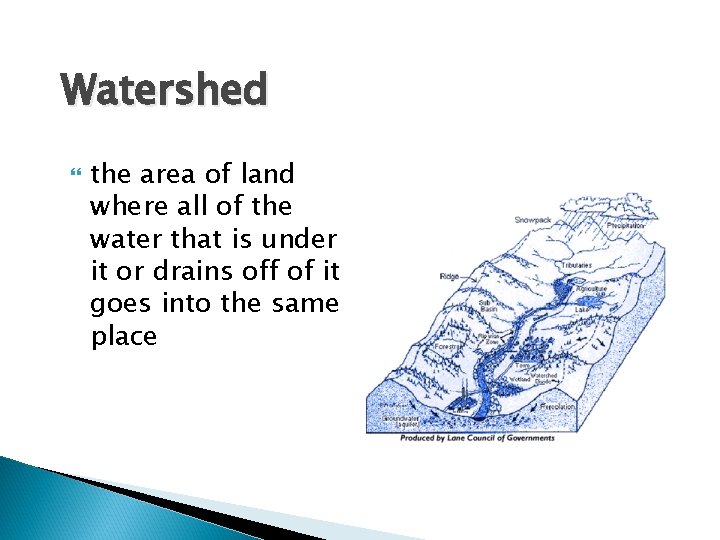
Watershed the area of land where all of the water that is under it or drains off of it goes into the same place
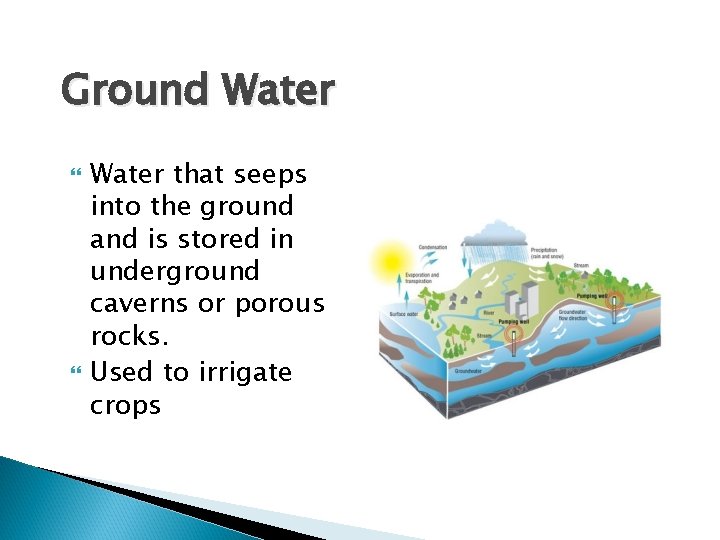
Ground Water that seeps into the ground and is stored in underground caverns or porous rocks. Used to irrigate crops
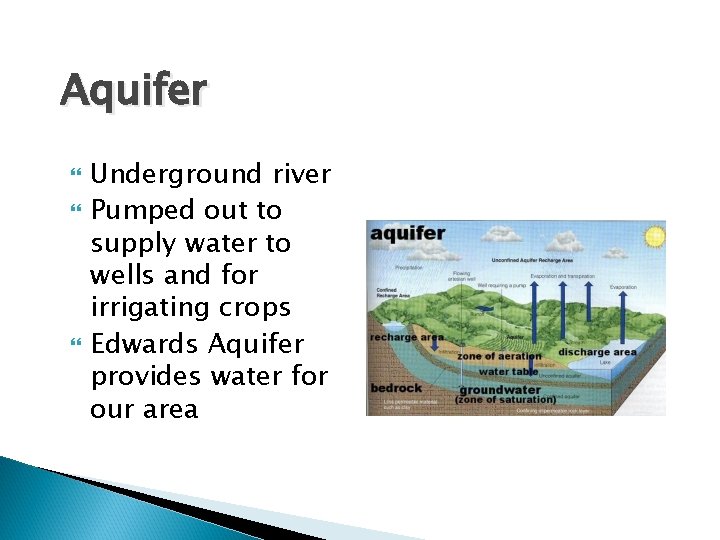
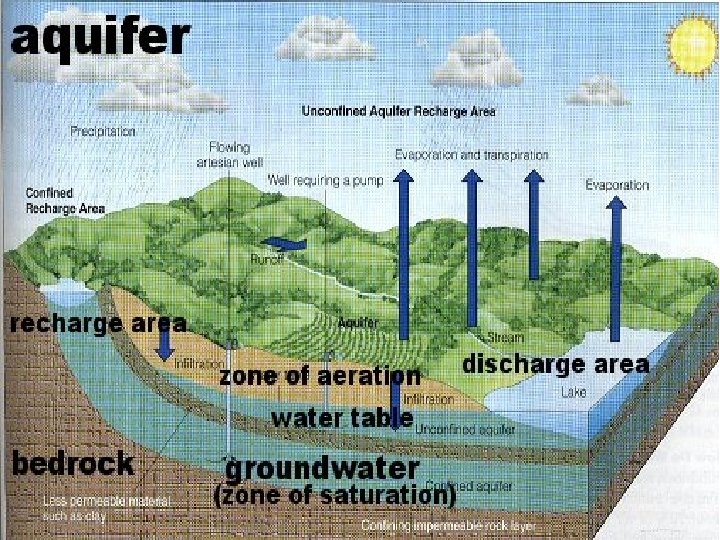
Aquifer Underground river Pumped out to supply water to wells and for irrigating crops Edwards Aquifer provides water for our area
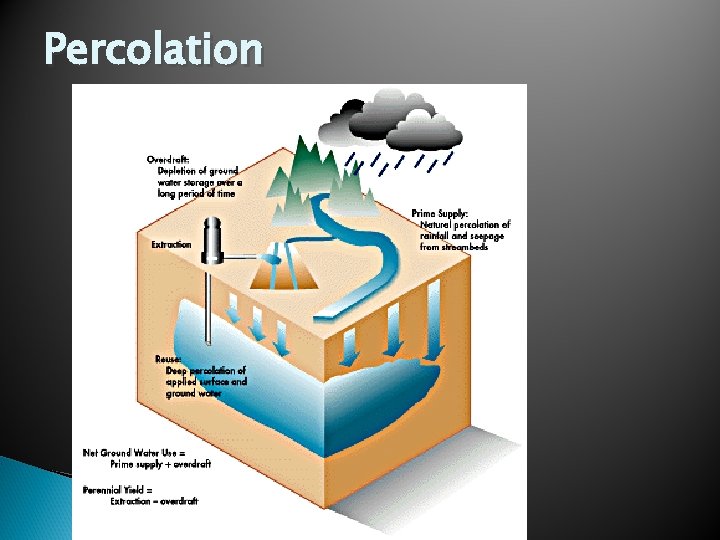
Percolation
Percolation
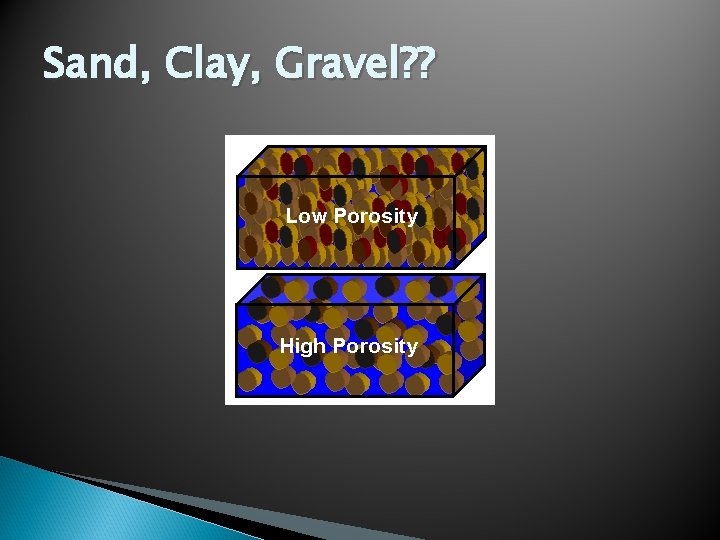
Sand, Clay, Gravel? ?
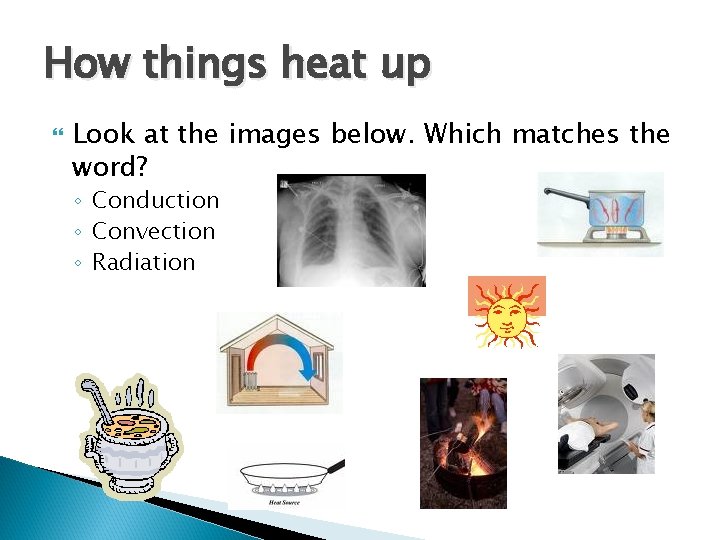
How things heat up Look at the images below. Which matches the word? ◦ Conduction ◦ Convection ◦ Radiation
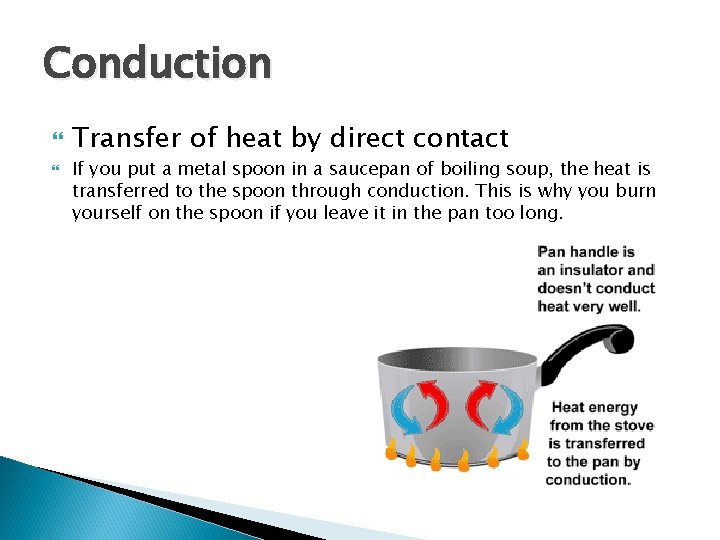
Conduction Transfer of heat by direct contact If you put a metal spoon in a saucepan of boiling soup, the heat is transferred to the spoon through conduction. This is why you burn yourself on the spoon if you leave it in the pan too long.
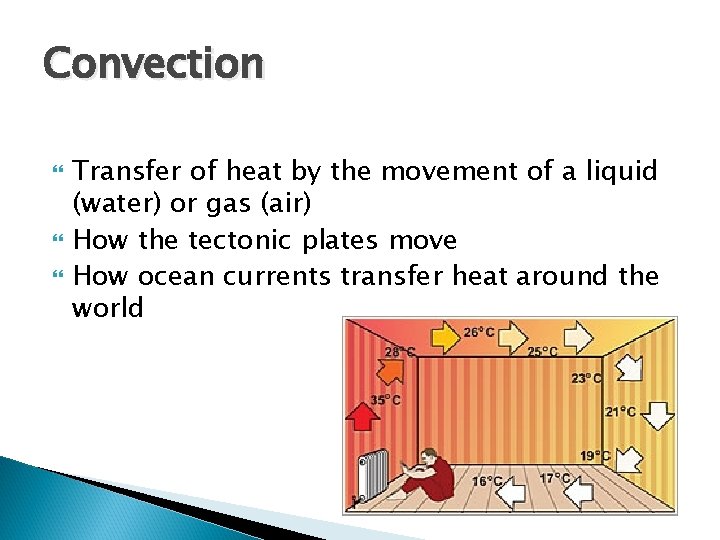
Convection Transfer of heat by the movement of a liquid (water) or gas (air) How the tectonic plates move How ocean currents transfer heat around the world
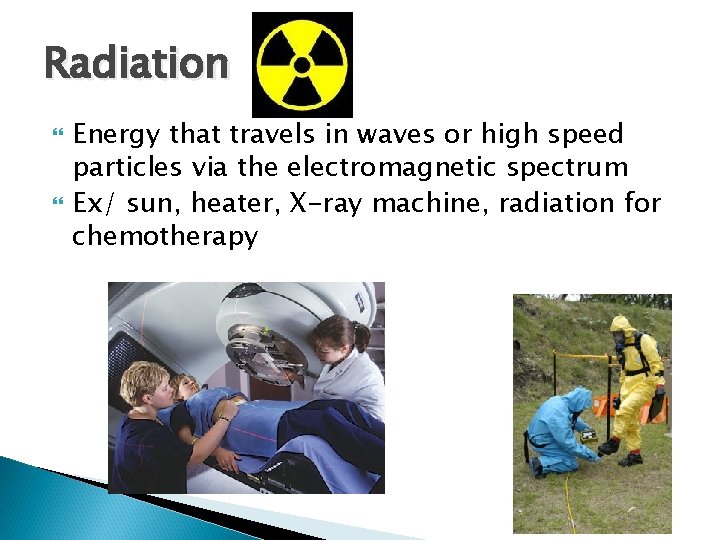
Radiation Energy that travels in waves or high speed particles via the electromagnetic spectrum Ex/ sun, heater, X-ray machine, radiation for chemotherapy
January 30, 2012
January 31
February 1
February 2