
OCEANS 5 th grade Amazing Earth Oceans cover
- Slides: 10
OCEANS 5 th grade Amazing Earth
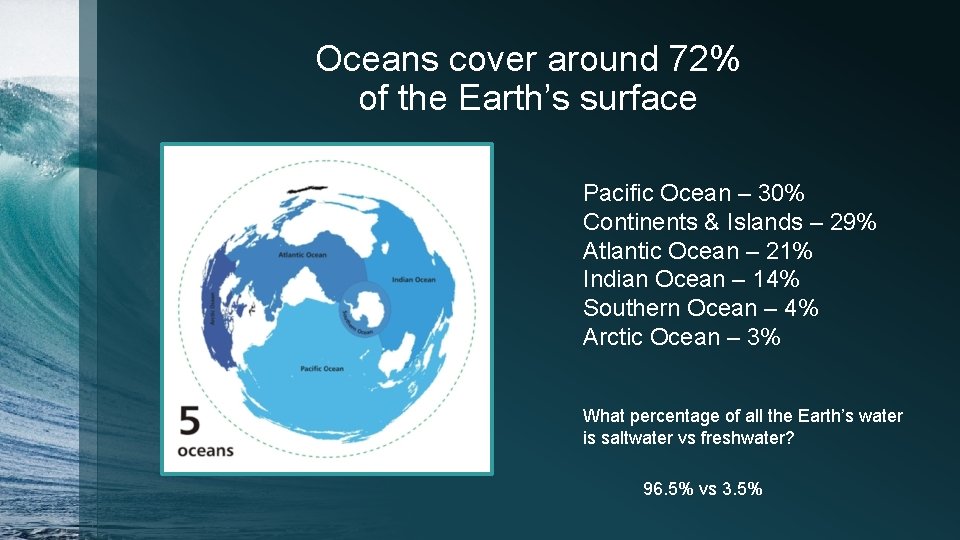
Oceans cover around 72% of the Earth’s surface Pacific Ocean – 30% Continents & Islands – 29% Atlantic Ocean – 21% Indian Ocean – 14% Southern Ocean – 4% Arctic Ocean – 3% What percentage of all the Earth’s water is saltwater vs freshwater? 96. 5% vs 3. 5%
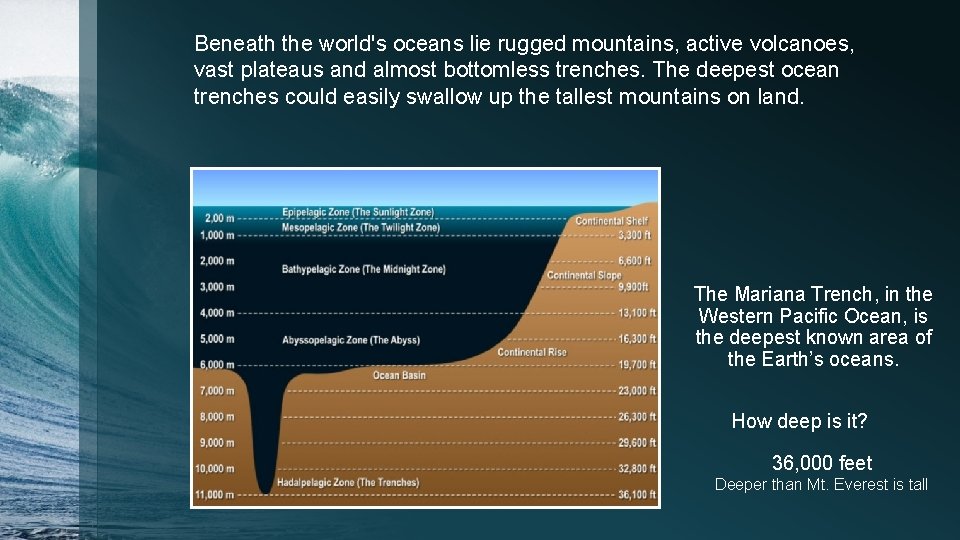
Beneath the world's oceans lie rugged mountains, active volcanoes, vast plateaus and almost bottomless trenches. The deepest ocean trenches could easily swallow up the tallest mountains on land. The Mariana Trench, in the Western Pacific Ocean, is the deepest known area of the Earth’s oceans. How deep is it? 36, 000 feet Deeper than Mt. Everest is tall
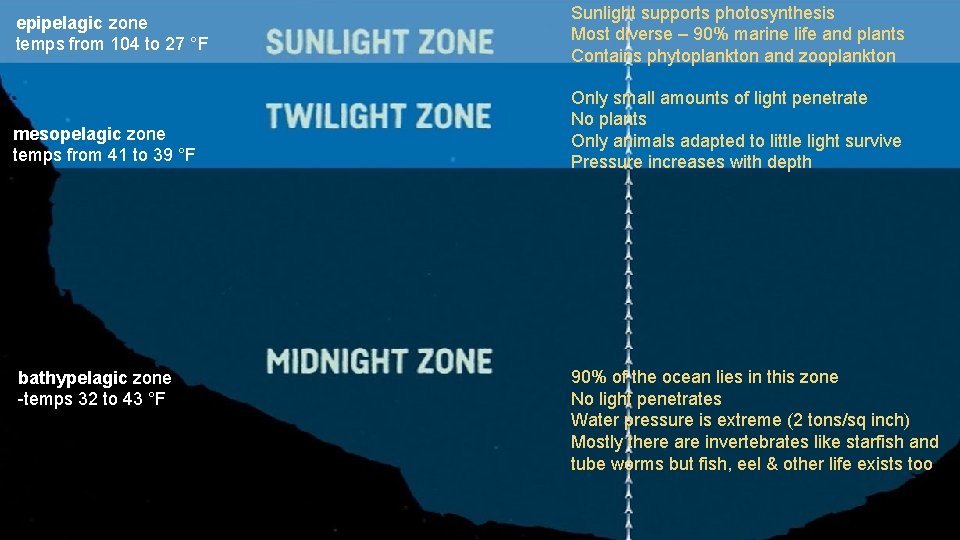
epipelagic zone temps from 104 to 27 °F mesopelagic zone temps from 41 to 39 °F bathypelagic zone temps 32 to 43 °F Sunlight supports photosynthesis Most diverse – 90% marine life and plants Contains phytoplankton and zooplankton Only small amounts of light penetrate No plants Only animals adapted to little light survive Pressure increases with depth 90% of the ocean lies in this zone No light penetrates Water pressure is extreme (2 tons/sq inch) Mostly there are invertebrates like starfish and tube worms but fish, eel & other life exists too
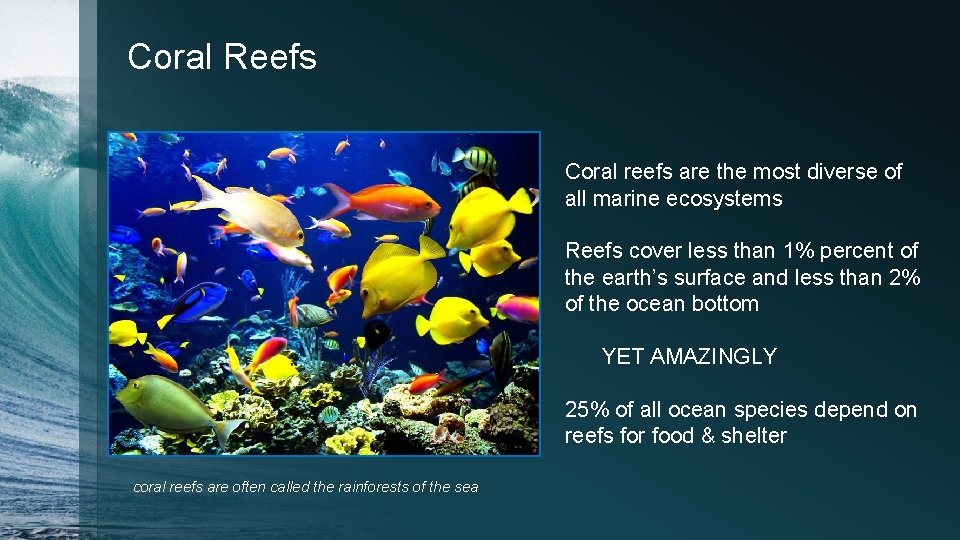
Coral Reefs Coral reefs are the most diverse of all marine ecosystems Reefs cover less than 1% percent of the earth’s surface and less than 2% of the ocean bottom YET AMAZINGLY 25% of all ocean species depend on reefs for food & shelter coral reefs are often called the rainforests of the sea
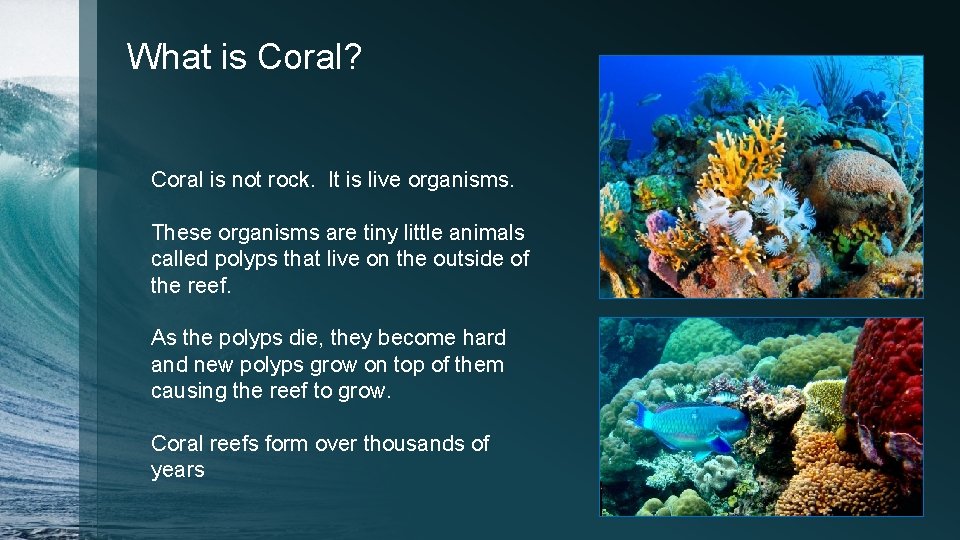
What is Coral? Coral is not rock. It is live organisms. These organisms are tiny little animals called polyps that live on the outside of the reef. As the polyps die, they become hard and new polyps grow on top of them causing the reef to grow. Coral reefs form over thousands of years
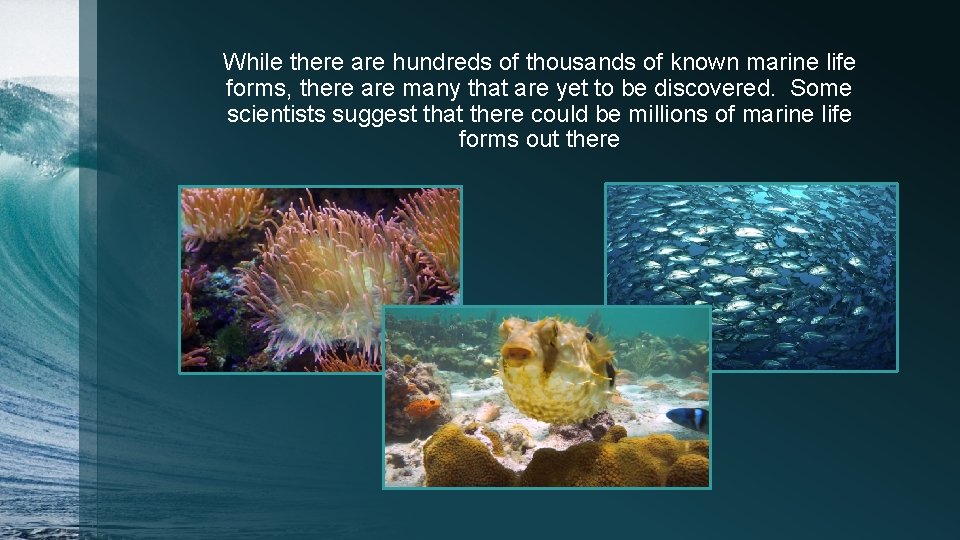
While there are hundreds of thousands of known marine life forms, there are many that are yet to be discovered. Some scientists suggest that there could be millions of marine life forms out there
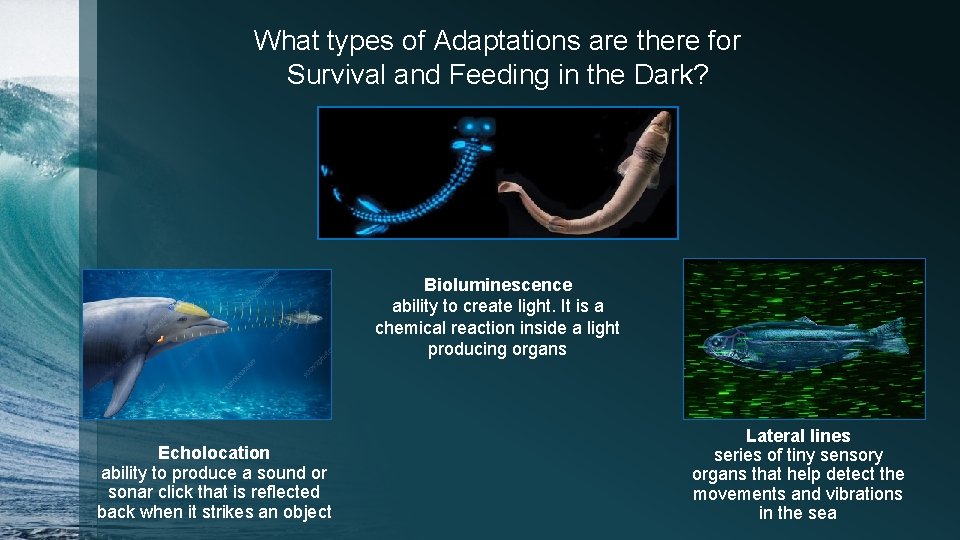
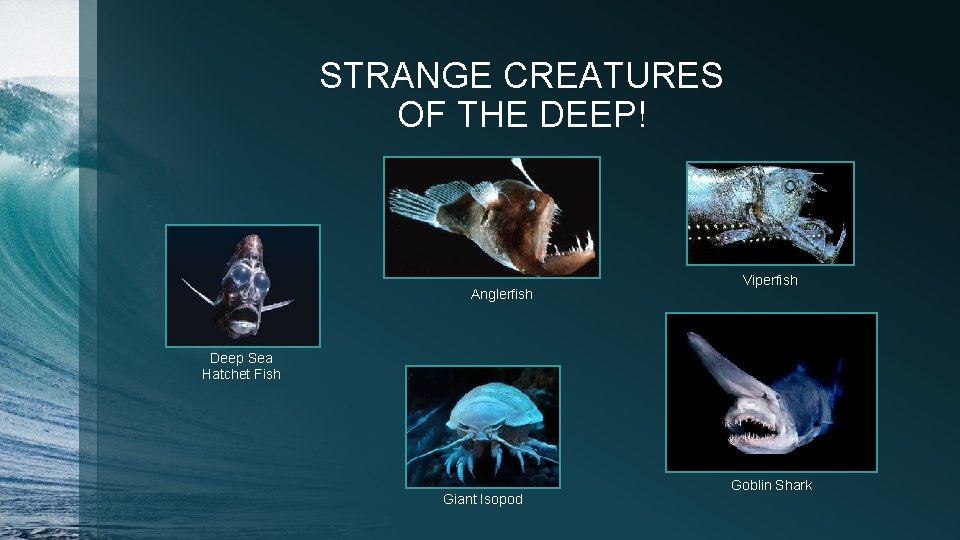
What types of Adaptations are there for Survival and Feeding in the Dark? Bioluminescence ability to create light. It is a chemical reaction inside a light producing organs Echolocation ability to produce a sound or sonar click that is reflected back when it strikes an object Lateral lines series of tiny sensory organs that help detect the movements and vibrations in the sea
STRANGE CREATURES OF THE DEEP! Anglerfish Viperfish Deep Sea Hatchet Fish Giant Isopod Goblin Shark
Ocean Activity Stations Three Stations: Sink or Float? A closer look at buoyancy and salinity The Salty Seas: How does salt content affect the weight of seawater? Oh the Pressure! A closer look at the effects of low and high pressure environments