
Oceanography notes part 1 Ocean size and names

- Slides: 23
Oceanography notes (part 1):
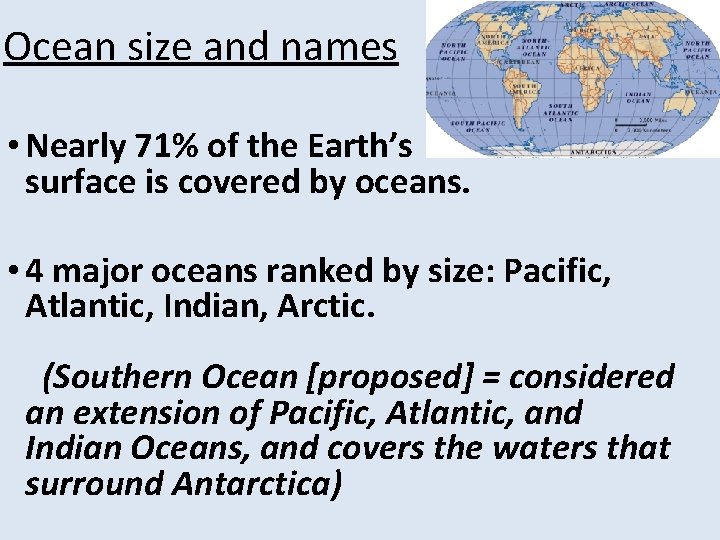
Ocean size and names • Nearly 71% of the Earth’s surface is covered by oceans. • 4 major oceans ranked by size: Pacific, Atlantic, Indian, Arctic. (Southern Ocean [proposed] = considered an extension of Pacific, Atlantic, and Indian Oceans, and covers the waters that surround Antarctica)
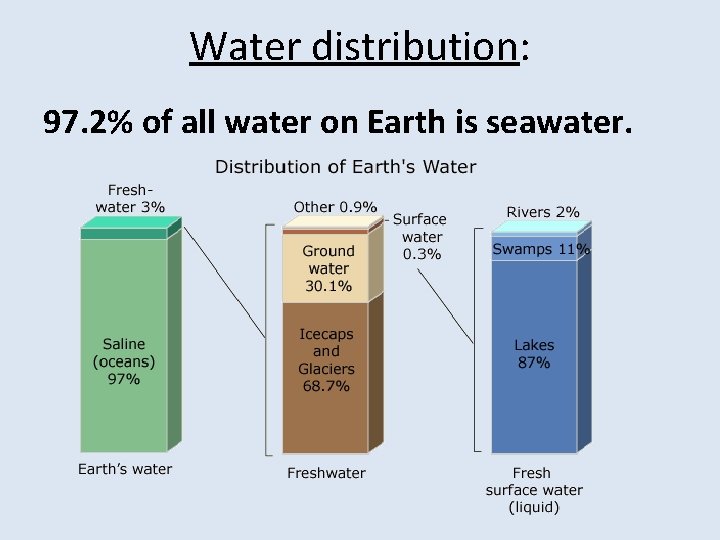
Water distribution: 97. 2% of all water on Earth is seawater.
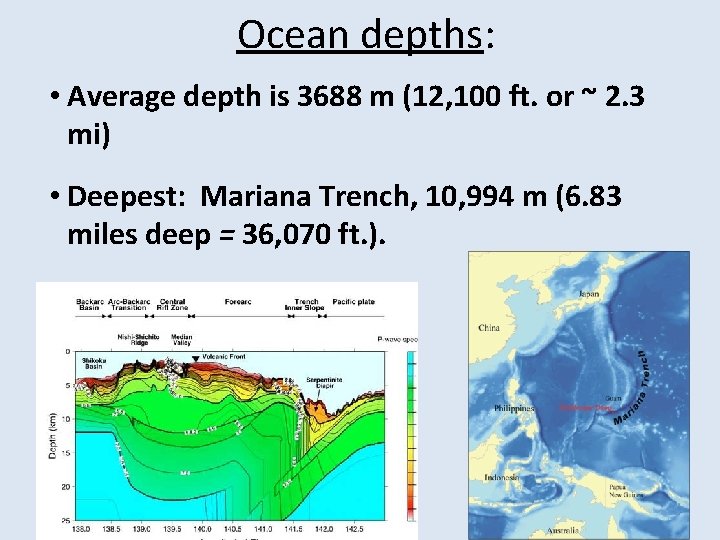
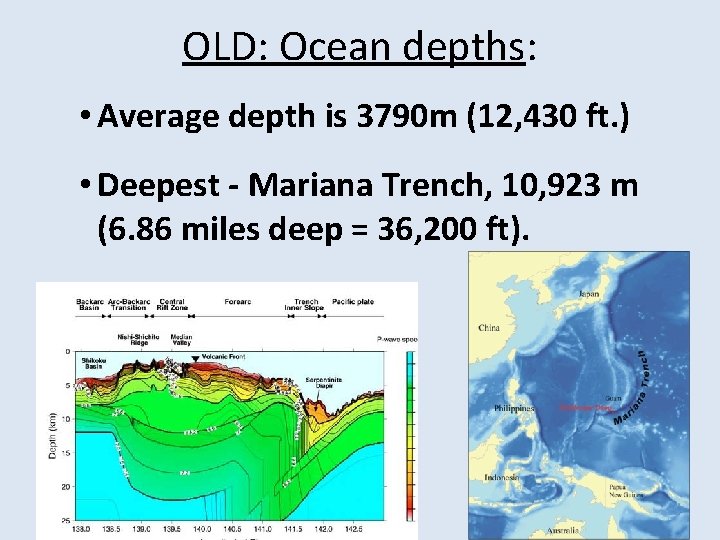
Ocean depths: • Average depth is 3688 m (12, 100 ft. or ~ 2. 3 mi) • Deepest: Mariana Trench, 10, 994 m (6. 83 miles deep = 36, 070 ft. ).
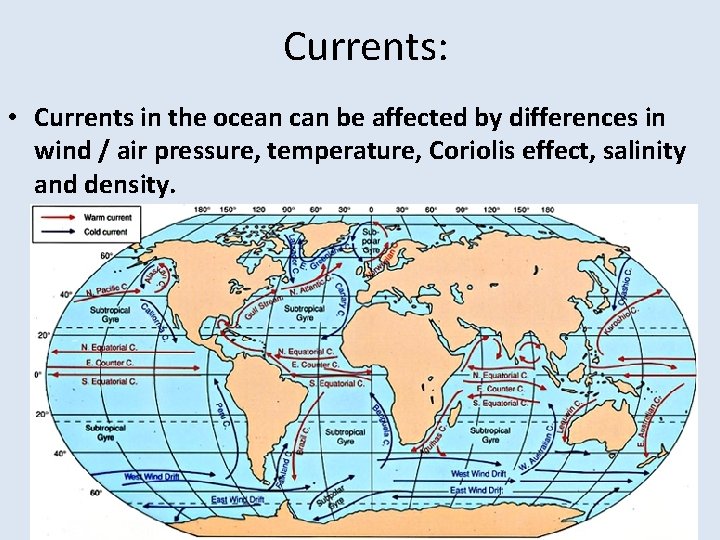
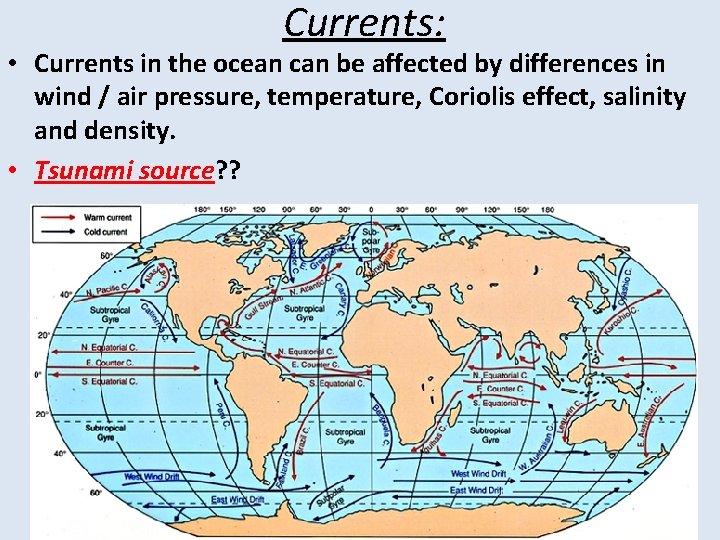
Currents: • Currents in the ocean can be affected by differences in wind / air pressure, temperature, Coriolis effect, salinity and density.
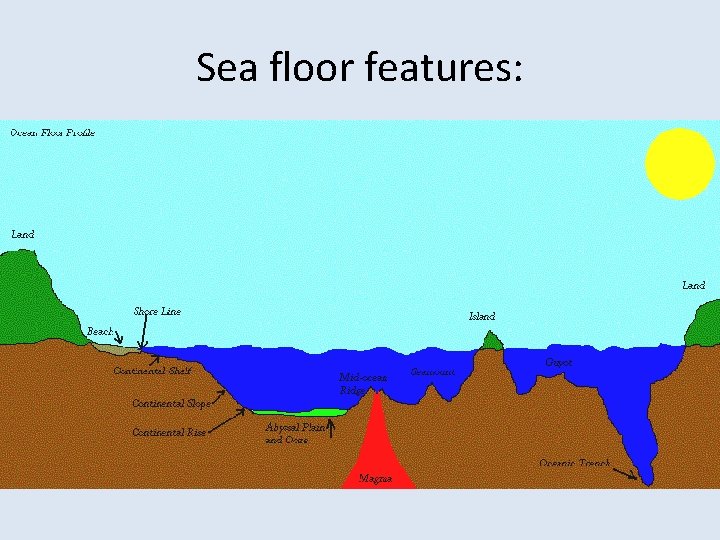
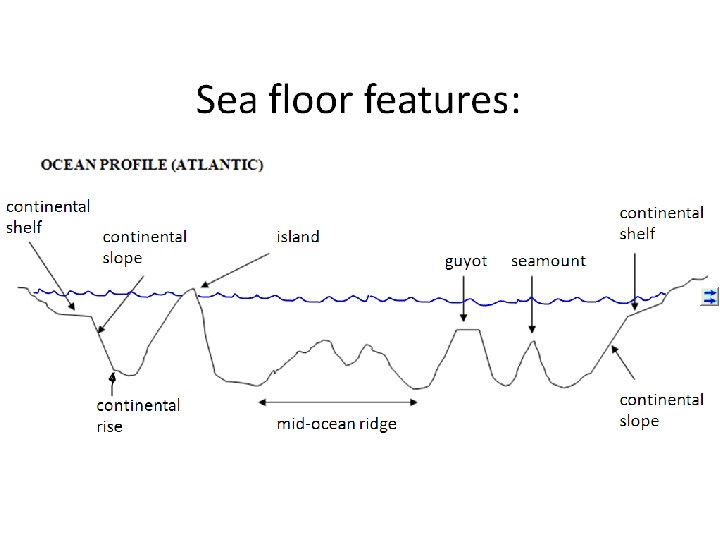
Sea floor features:
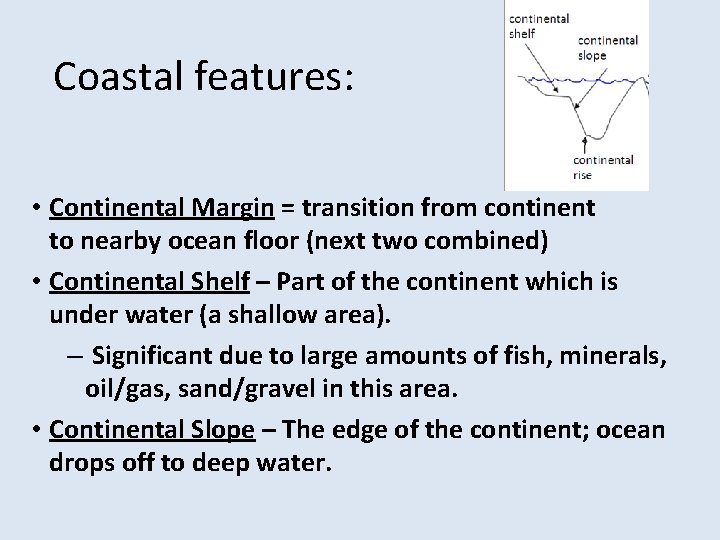
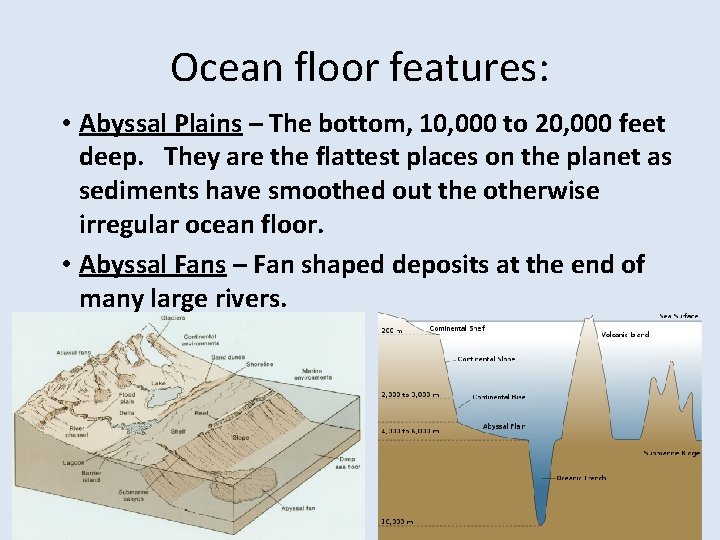
Coastal features: • Continental Margin = transition from continent to nearby ocean floor (next two combined) • Continental Shelf – Part of the continent which is under water (a shallow area). – Significant due to large amounts of fish, minerals, oil/gas, sand/gravel in this area. • Continental Slope – The edge of the continent; ocean drops off to deep water.
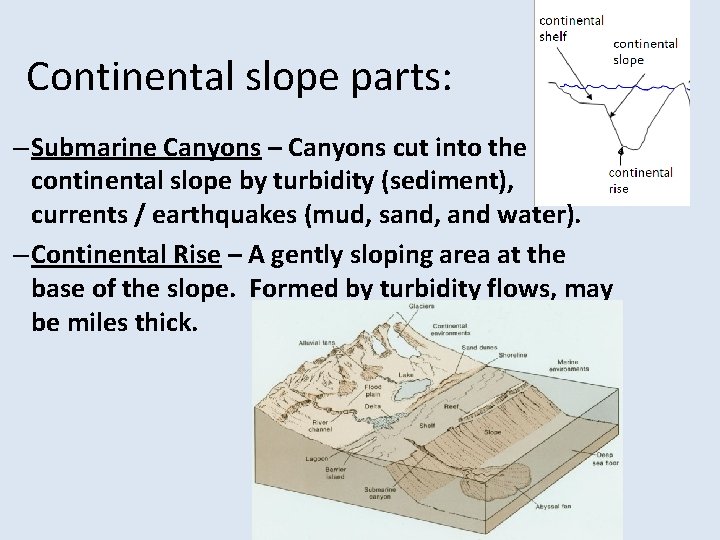
Continental slope parts: – Submarine Canyons – Canyons cut into the continental slope by turbidity (sediment), currents / earthquakes (mud, sand, and water). – Continental Rise – A gently sloping area at the base of the slope. Formed by turbidity flows, may be miles thick.
Ocean floor features: • Abyssal Plains – The bottom, 10, 000 to 20, 000 feet deep. They are the flattest places on the planet as sediments have smoothed out the otherwise irregular ocean floor. • Abyssal Fans – Fan shaped deposits at the end of many large rivers.
continental shelf continental slope continental rise continental shelf island guyot mid-ocean ridge seamount continental slope
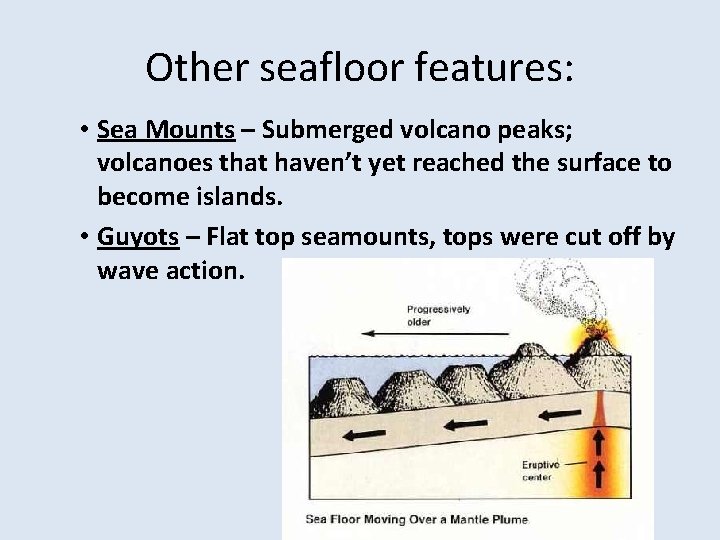
Other seafloor features: • Sea Mounts – Submerged volcano peaks; volcanoes that haven’t yet reached the surface to become islands. • Guyots – Flat top seamounts, tops were cut off by wave action.
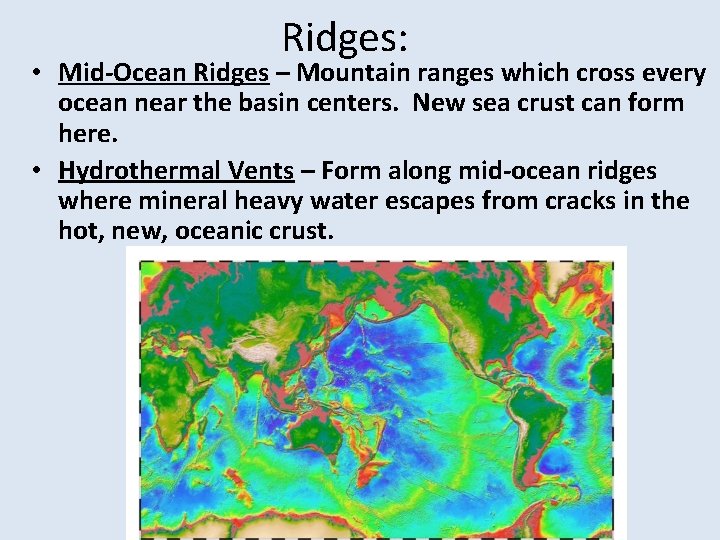
Ridges: • Mid-Ocean Ridges – Mountain ranges which cross every ocean near the basin centers. New sea crust can form here. • Hydrothermal Vents – Form along mid-ocean ridges where mineral heavy water escapes from cracks in the hot, new, oceanic crust.
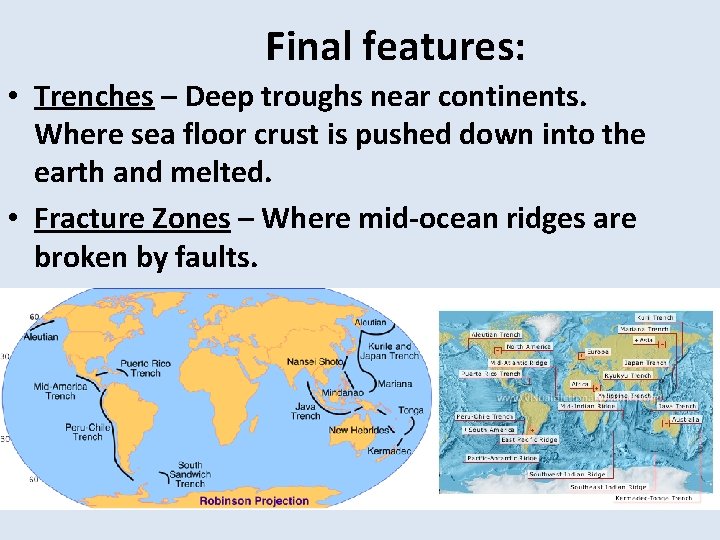
Final features: • Trenches – Deep troughs near continents. Where sea floor crust is pushed down into the earth and melted. • Fracture Zones – Where mid-ocean ridges are broken by faults.
Oceanography notes (part 2):
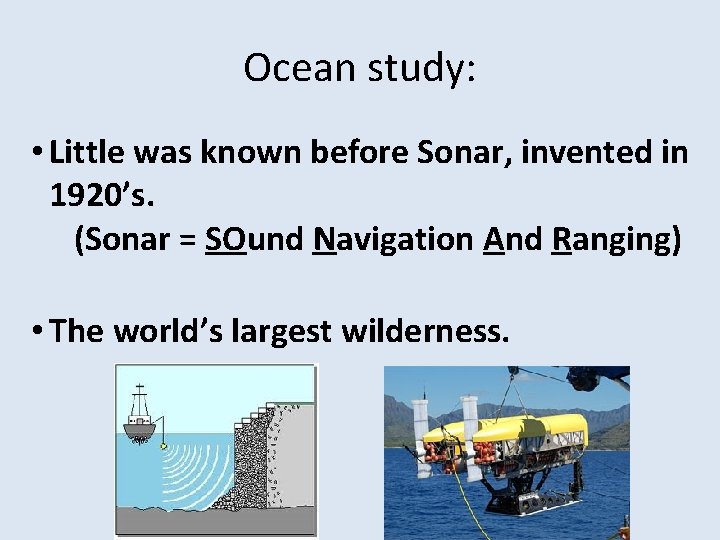
Ocean study: • Little was known before Sonar, invented in 1920’s. (Sonar = SOund Navigation And Ranging) • The world’s largest wilderness.
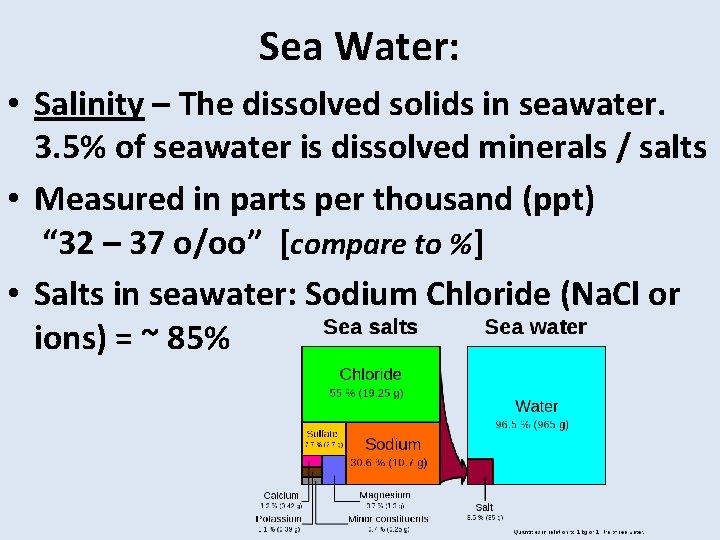
Sea Water: • Salinity – The dissolved solids in seawater. 3. 5% of seawater is dissolved minerals / salts • Measured in parts per thousand (ppt) “ 32 – 37 o/oo” [compare to %] • Salts in seawater: Sodium Chloride (Na. Cl or ions) = ~ 85%
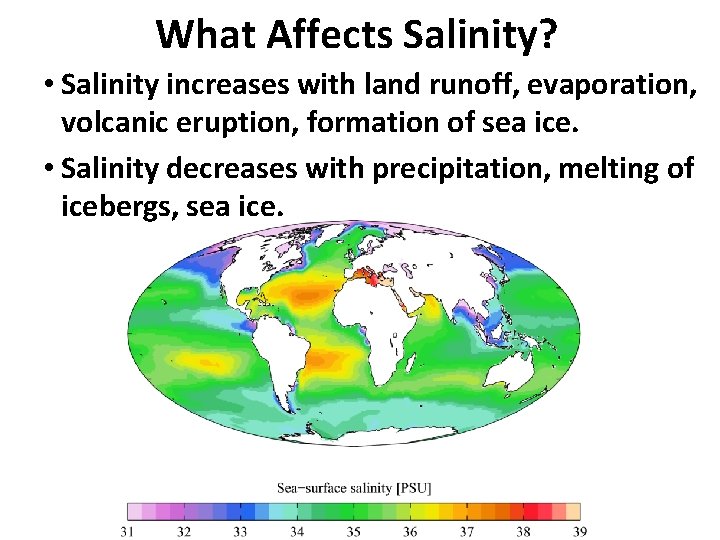
What Affects Salinity? • Salinity increases with land runoff, evaporation, volcanic eruption, formation of sea ice. • Salinity decreases with precipitation, melting of icebergs, sea ice.
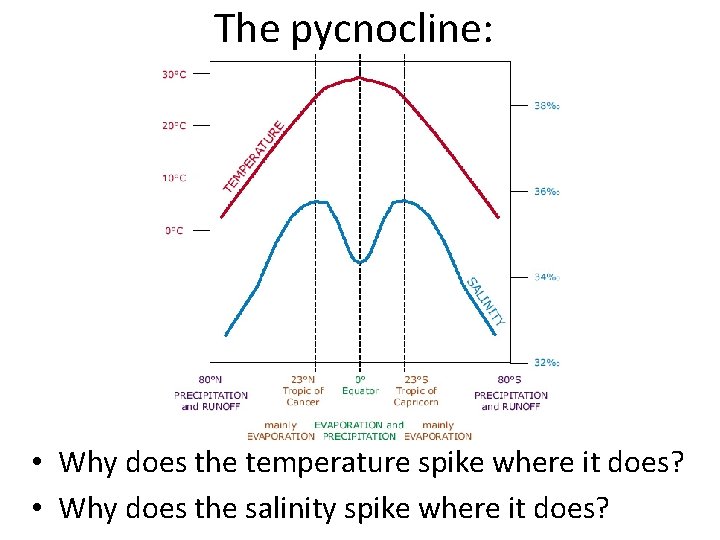
The pycnocline: • Why does the temperature spike where it does? • Why does the salinity spike where it does?
Currents: • Currents in the ocean can be affected by differences in wind / air pressure, temperature, Coriolis effect, salinity and density. • Tsunami source? ?
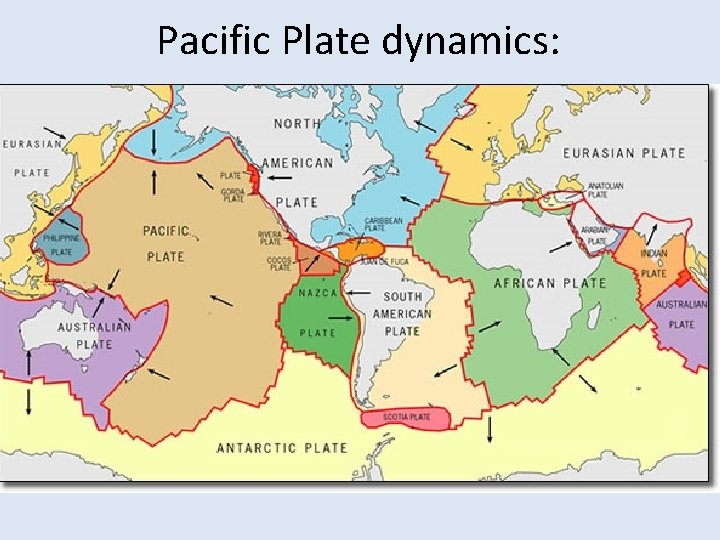
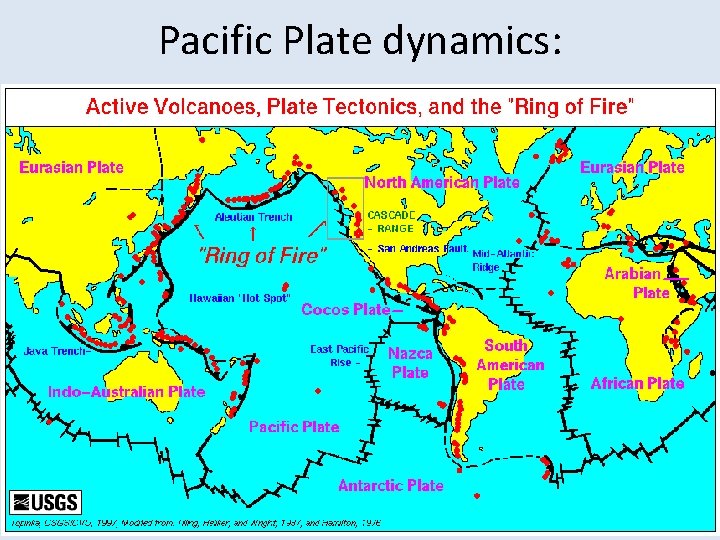
Pacific Plate dynamics:
Pacific Plate dynamics:
OLD: Ocean depths: • Average depth is 3790 m (12, 430 ft. ) • Deepest - Mariana Trench, 10, 923 m (6. 86 miles deep = 36, 200 ft).