
Oceanography 1 How does temperature pressure and amount
- Slides: 21
Oceanography 1. How does temperature, pressure and amount of light change in each zone of the ocean? 2. How does life change in each zone of the ocean?
Oceans • Largest reservoir of heat – Stored heat drives weather/climate • Ocean currents are a source of large scale distribution of energy and resources
Ocean Water • Sodium chloride • Salinity: A measure of the amount of dissolved solids in water. – Evaporation increases salinity – Fresh water decreases salinity
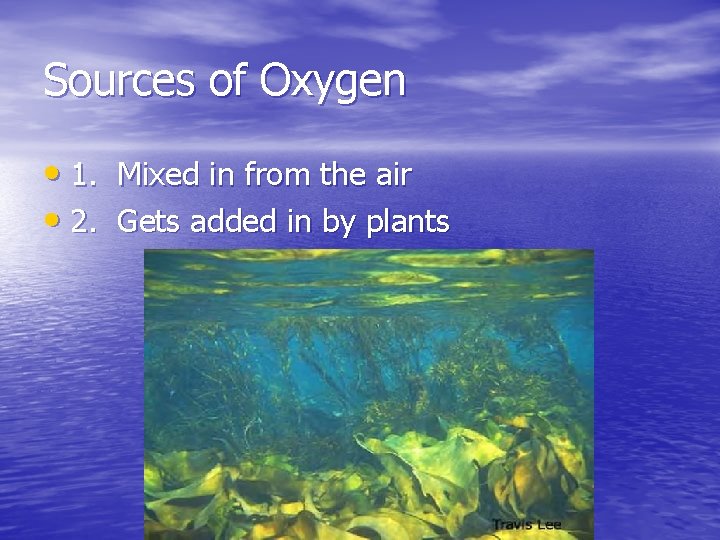
Sources of Oxygen • 1. Mixed in from the air • 2. Gets added in by plants
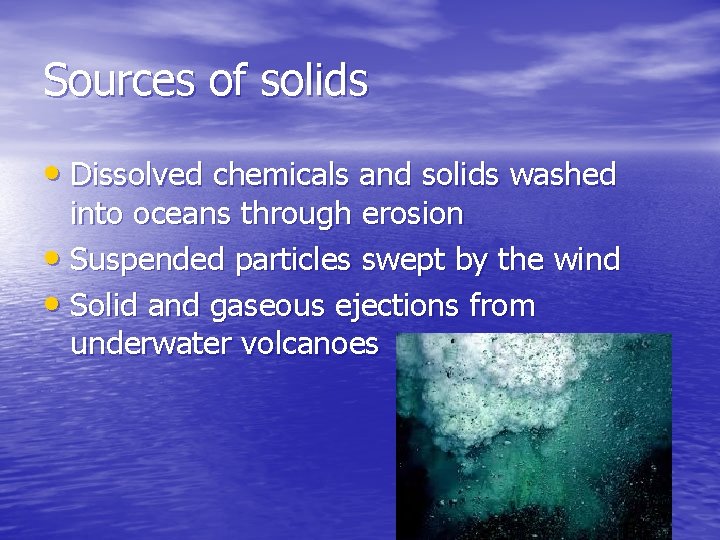
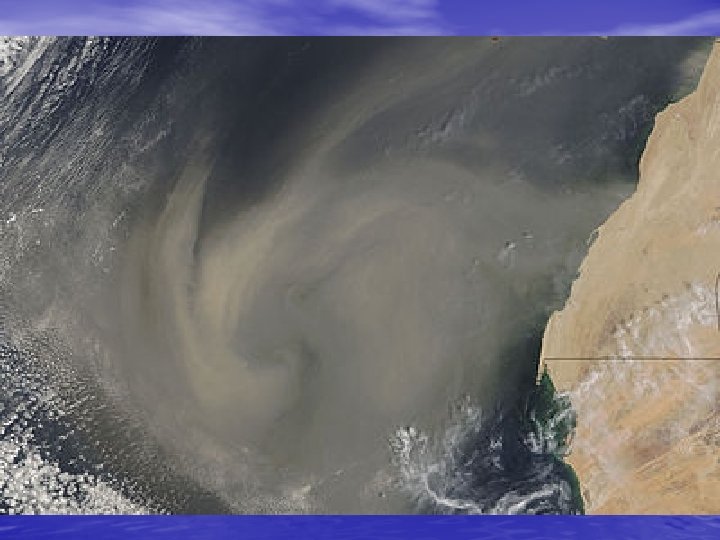
Sources of solids • Dissolved chemicals and solids washed into oceans through erosion • Suspended particles swept by the wind • Solid and gaseous ejections from underwater volcanoes
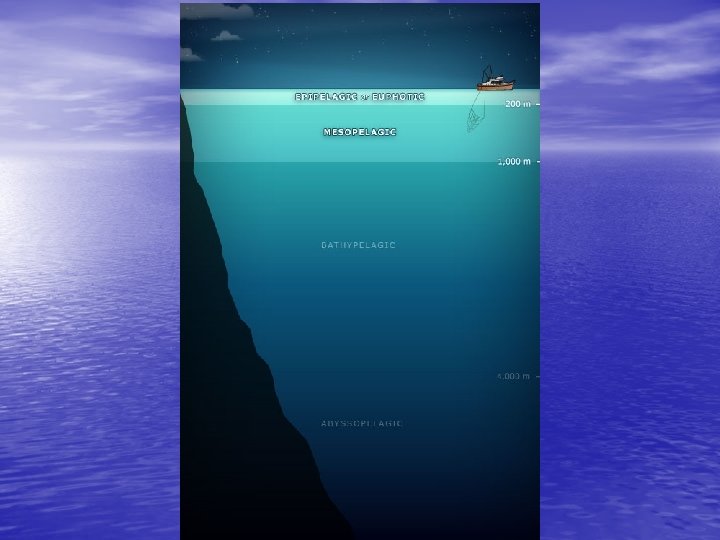
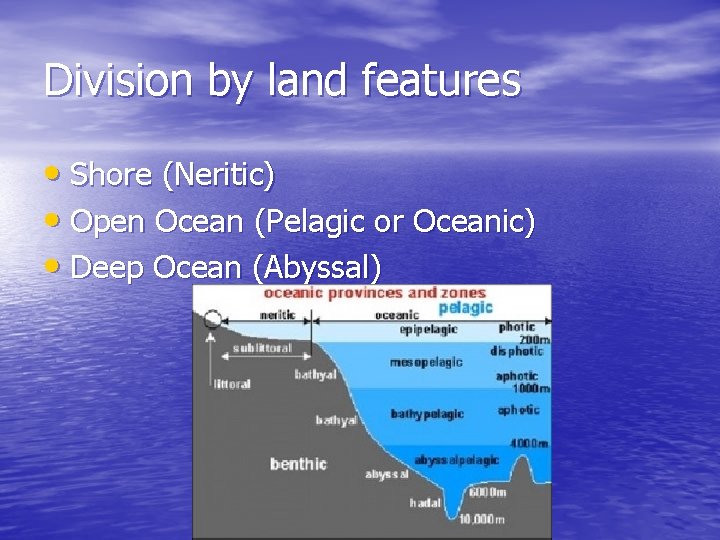
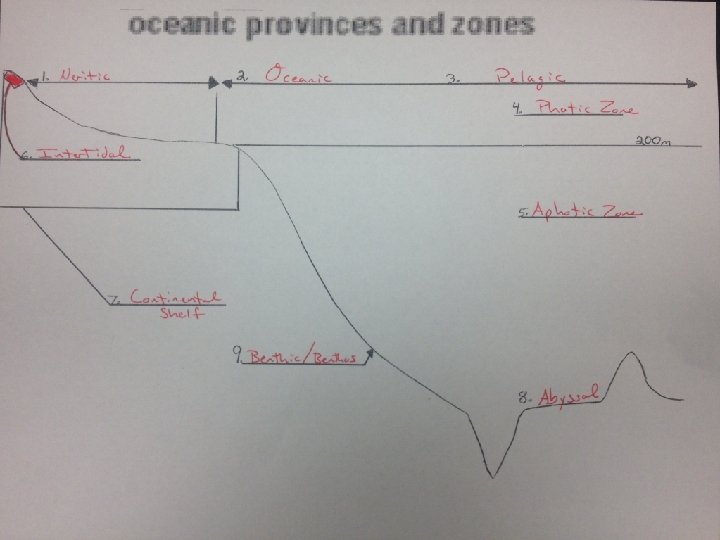
Division by light levels • Photic – light • Euphotic – upper 200 meters – Majority of life and economic activity • Aphotic – aka midnight zone
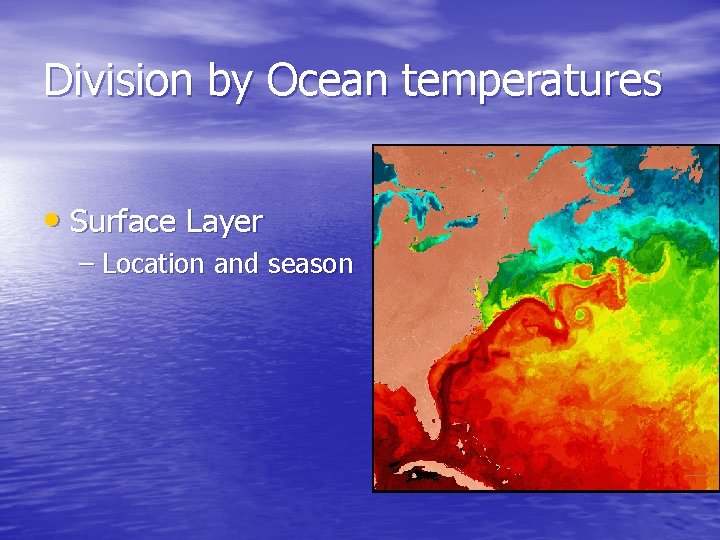
Division by Ocean temperatures • Surface Layer – Location and season
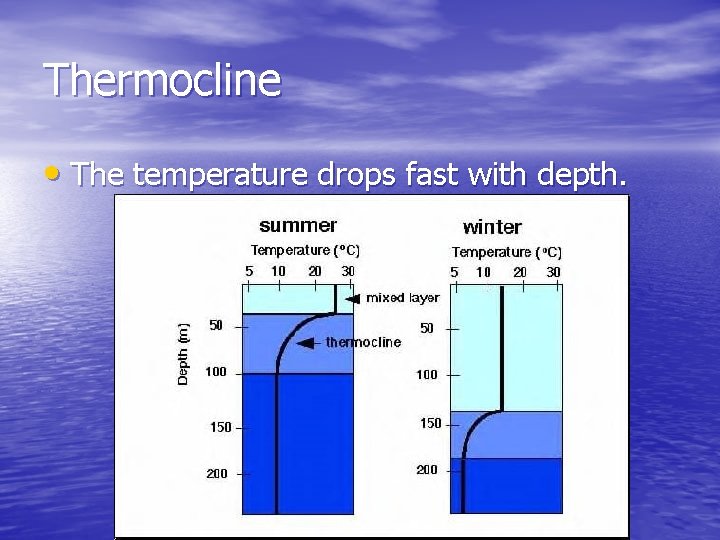
Thermocline • The temperature drops fast with depth.
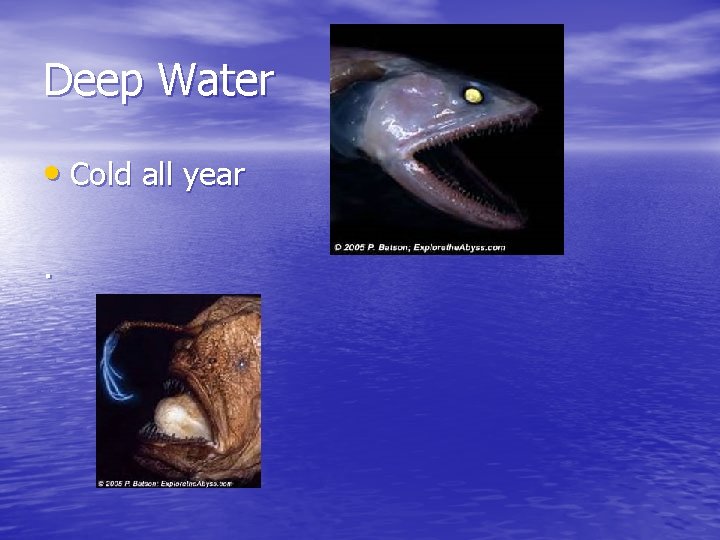
Deep Water • Cold all year.
Division by land features • Shore (Neritic) • Open Ocean (Pelagic or Oceanic) • Deep Ocean (Abyssal)
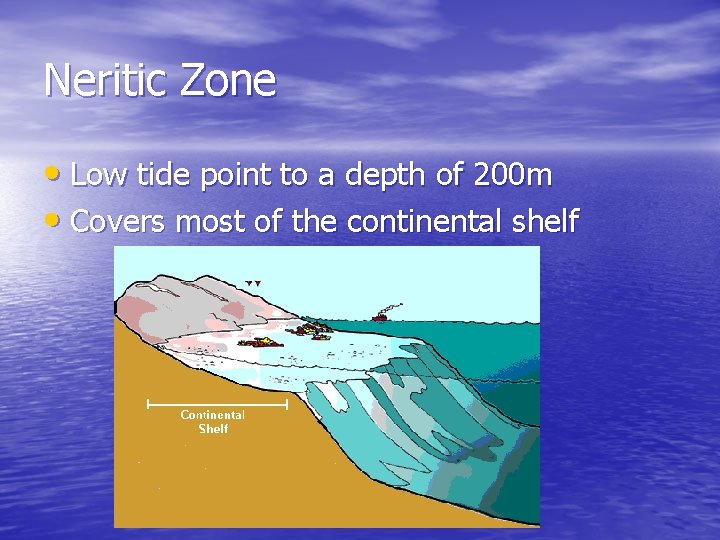
Neritic Zone • Low tide point to a depth of 200 m • Covers most of the continental shelf
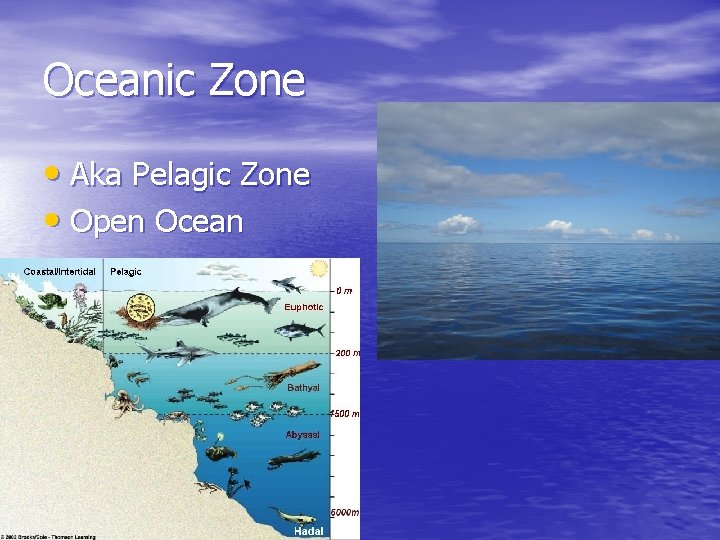
Oceanic Zone • Aka Pelagic Zone • Open Ocean
Deep Ocean • Abyssal Plains • Marianas Trench (11, 000 m/56, 000 ft. )
Other Oceanic Terms to Know • Benthic – bottom dwelling • Nekton – animals that are able to actively swim • Plankton – plants/animals that are unable to fight currents • Intertidal – between the tides
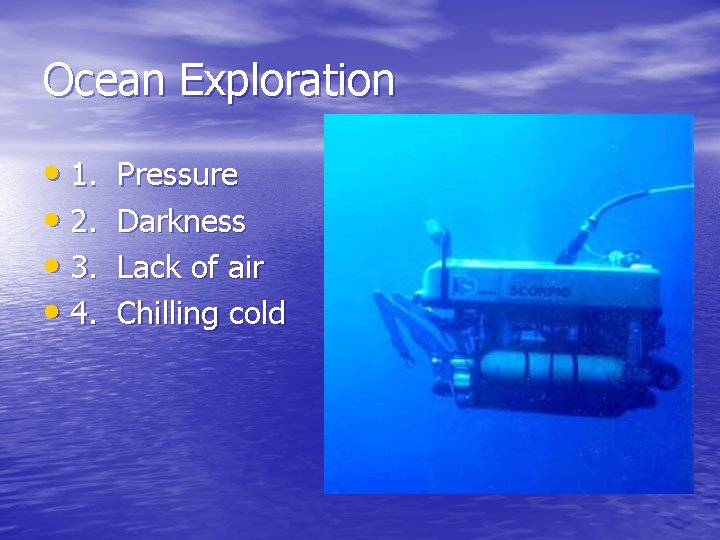
Ocean Exploration • 1. • 2. • 3. • 4. Pressure Darkness Lack of air Chilling cold
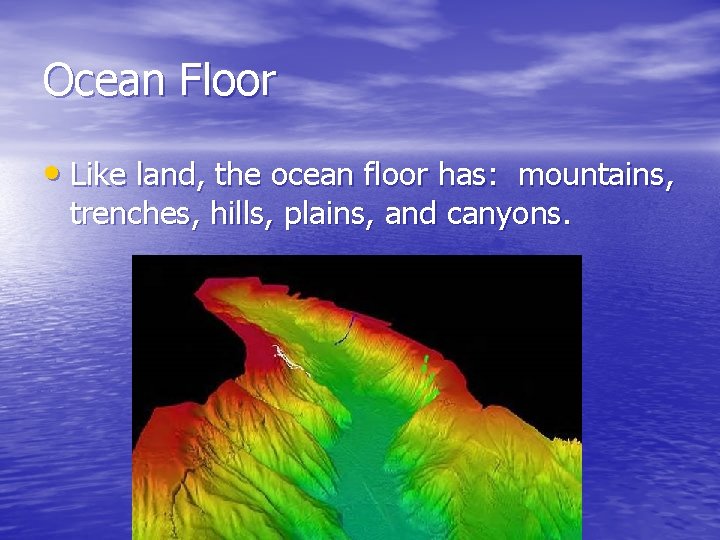
Ocean Floor • Like land, the ocean floor has: mountains, trenches, hills, plains, and canyons.
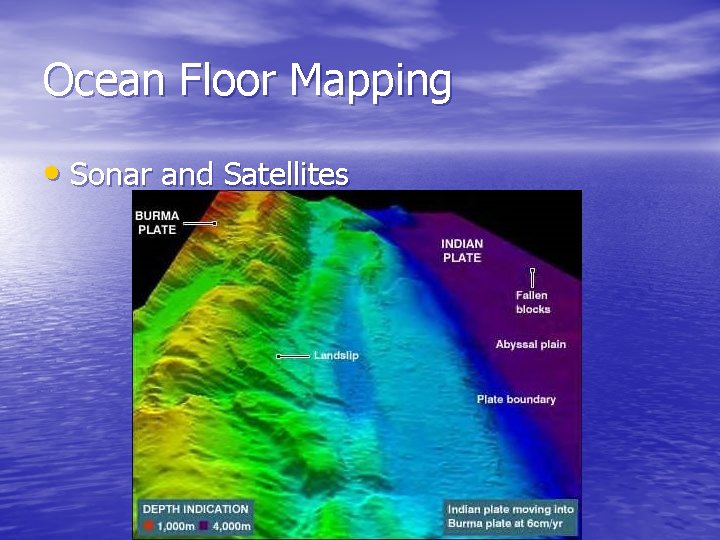
Ocean Floor Mapping • Sonar and Satellites