
Oceanic Microplastic Pollution Where it comes from and
- Slides: 61
Oceanic Microplastic -Pollution Where it comes from and the troubles it causes By Stefan Barot
INTENTIONS OF THIS PRESENTATION IS AN ATTEMPT TO UNDERSTAND SUMMARIZE THE CURRENT INFORMATION ABOUT MICROPLASTICS IN THE OCEAN. WHILE THE INFORMATION IS FROM PUBLIC SOURCES, IT IS SOMETIMES CONTROVERSIAL. TO RAISE THE AWARENESS OF THIS LACK OF DATA IS ONE PURPOSE OF THIS PRESENTATION. March 18, 2018 2
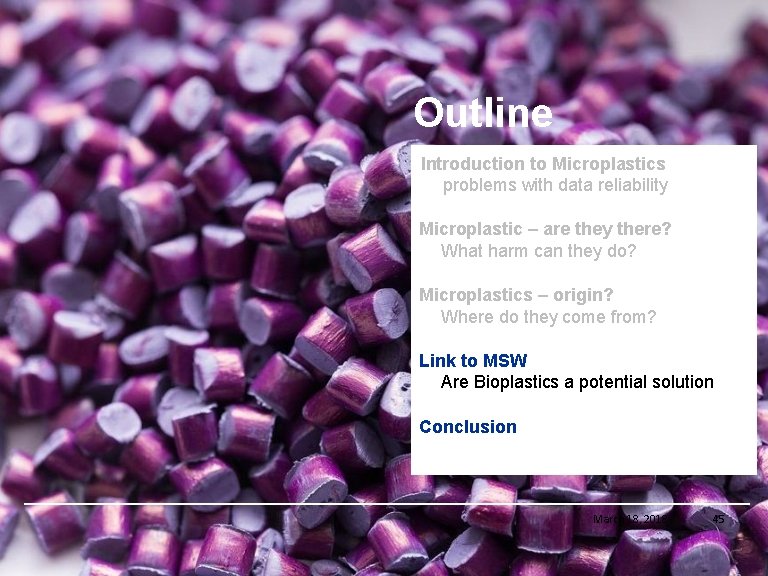
Outline Introduction to Microplastics problems with data reliability Microplastic – are they there? What harm can they do? Microplastics – origin? Where do they come from? Link to MSW Are Bioplastics a potential solution Conclusion March 18, 2018 3
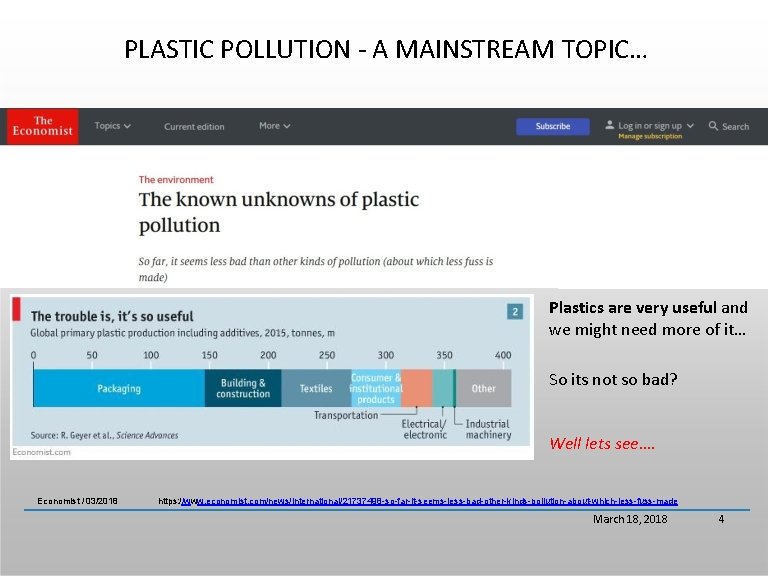
PLASTIC POLLUTION - A MAINSTREAM TOPIC… Plastics are very useful and we might need more of it… So its not so bad? Well lets see…. Economist / 03/2018 https: //www. economist. com/news/international/21737498 -so-far-it-seems-less-bad-other-kinds-pollution-about-which-less-fuss-made March 18, 2018 4
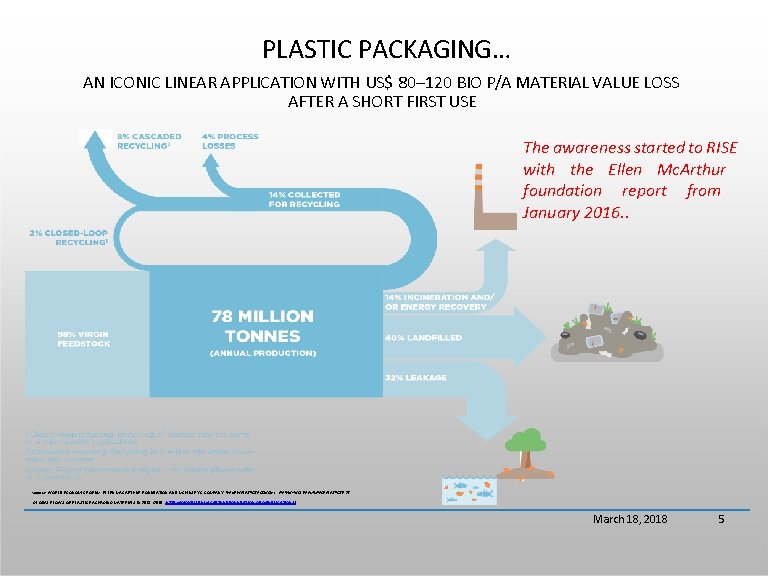
PLASTIC PACKAGING… AN ICONIC LINEAR APPLICATION WITH US$ 80– 120 BIO P/A MATERIAL VALUE LOSS AFTER A SHORT FIRST USE The awareness started to RISE with the Ellen Mc. Arthur foundation report from January 2016. . SOURCE: WORLD ECONOMIC FORUM, ELLEN MACARTHUR FOUNDATION AND MCKINSEY & COMPANY, THENEW PLASTICS ECONOMY – RETHINKING THEFUTUREOF PLASTICS P. 27 “GLOBAL FLOWS OF PLASTIC PACKAGING MATERIALS IN 2013” (2016, HTTP: //WWW. ELLENMACARTHURFOUNDATION. ORG/PUBLICATIONS). March 18, 2018 5
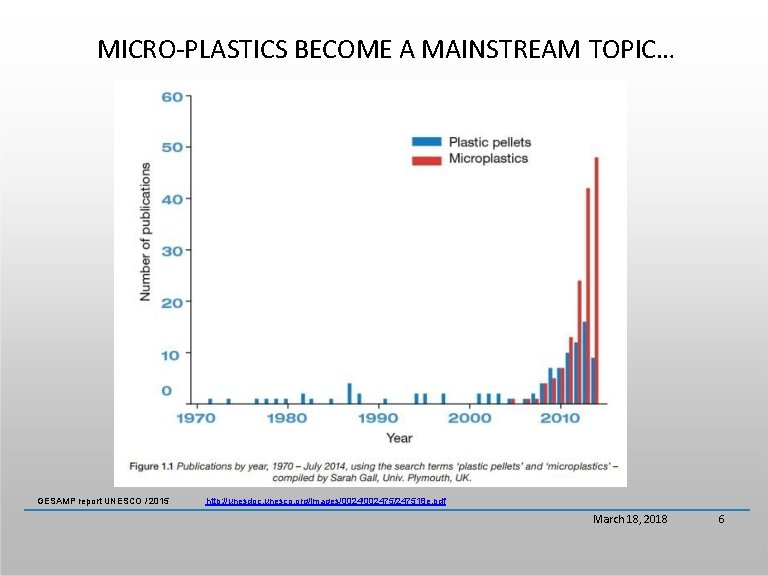
MICRO-PLASTICS BECOME A MAINSTREAM TOPIC… GESAMP report UNESCO / 2015 http: //unesdoc. unesco. org/images/002475/247518 e. pdf March 18, 2018 6
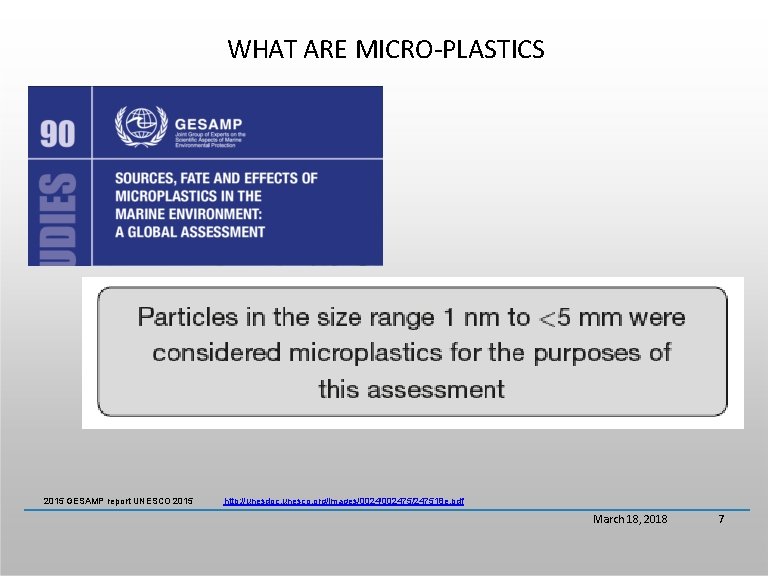
WHAT ARE MICRO-PLASTICS 2015 GESAMP report UNESCO 2015 http: //unesdoc. unesco. org/images/002475/247518 e. pdf March 18, 2018 7
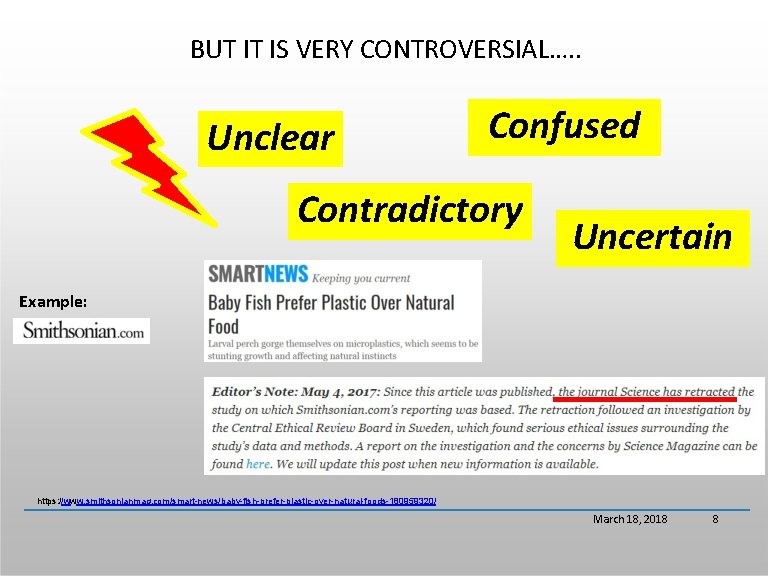
BUT IT IS VERY CONTROVERSIAL…. . Unclear Confused Contradictory Uncertain Example: https: //www. smithsonianmag. com/smart-news/baby-fish-prefer-plastic-over-natural-foods-180959320/ March 18, 2018 8
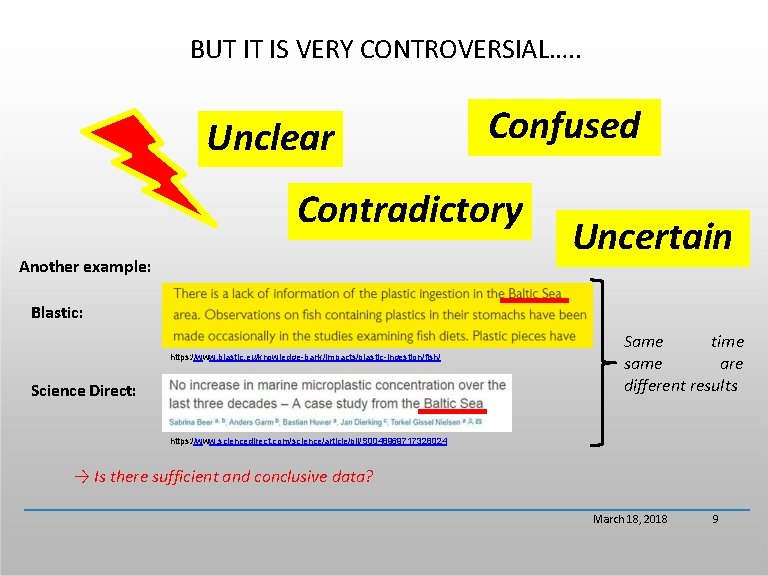
BUT IT IS VERY CONTROVERSIAL…. . Unclear Confused Contradictory Another example: Uncertain Blastic: https: //www. blastic. eu/knowledge-bank/impacts/plastic-ingestion/fish/ Science Direct: Same time same are different results https: //www. sciencedirect. com/science/article/pii/S 0048969717328024 → Is there sufficient and conclusive data? March 18, 2018 9
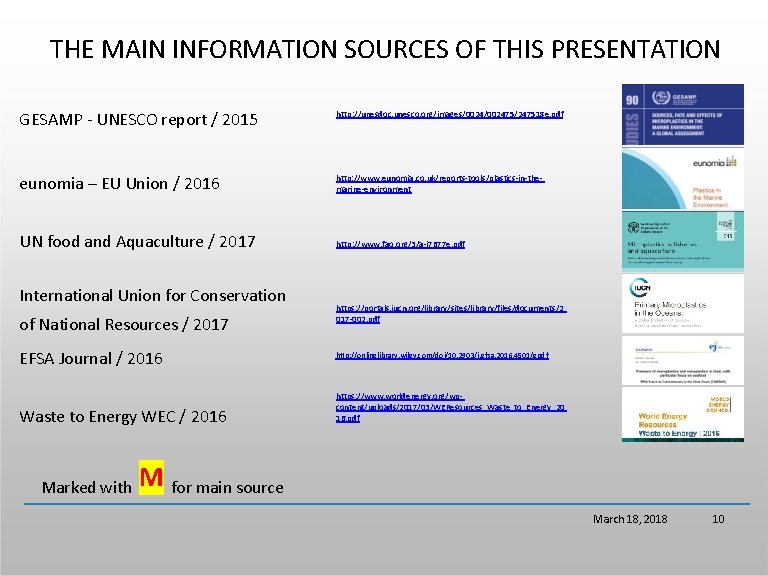
THE MAIN INFORMATION SOURCES OF THIS PRESENTATION GESAMP - UNESCO report / 2015 http: //unesdoc. unesco. org/images/002475/247518 e. pdf eunomia – EU Union / 2016 http: //www. eunomia. co. uk/reports-tools/plastics-in-themarine-environment UN food and Aquaculture / 2017 http: //www. fao. org/3/a-i 7677 e. pdf International Union for Conservation of National Resources / 2017 EFSA Journal / 2016 Waste to Energy WEC / 2016 Marked with https: //portals. iucn. org/library/sites/library/files/documents/2 017 -002. pdf http: //onlinelibrary. wiley. com/doi/10. 2903/j. efsa. 2016. 4501/epdf https: //www. worldenergy. org/wpcontent/uploads/2017/03/WEResources_Waste_to_Energy_20 16. pdf M for main source March 18, 2018 10
Outline Introduction to Microplastics problems with data reliability Microplastic – are they there? What harm can they do? Microplastics – origin? Where do they come from? Link to MSW Are Bioplastics a potential solution Conclusion March 18, 2018 11
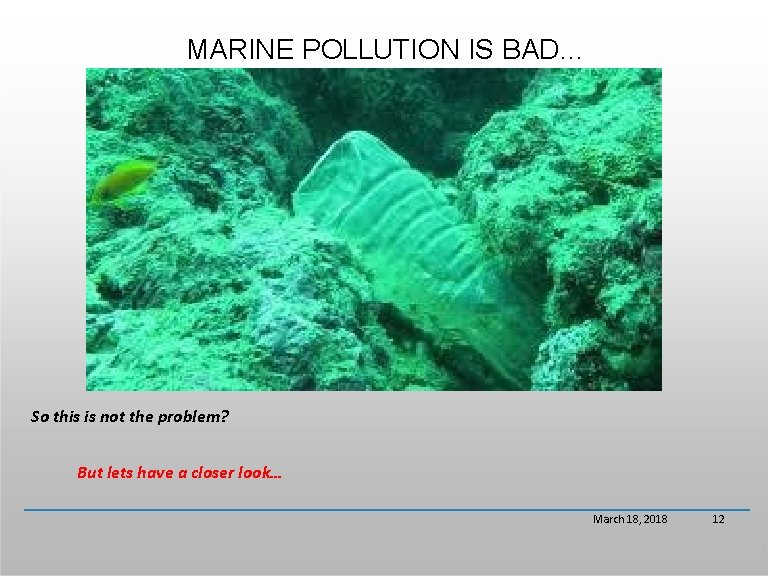
MARINE POLLUTION IS BAD… So this is not the problem? But lets have a closer look… March 18, 2018 12
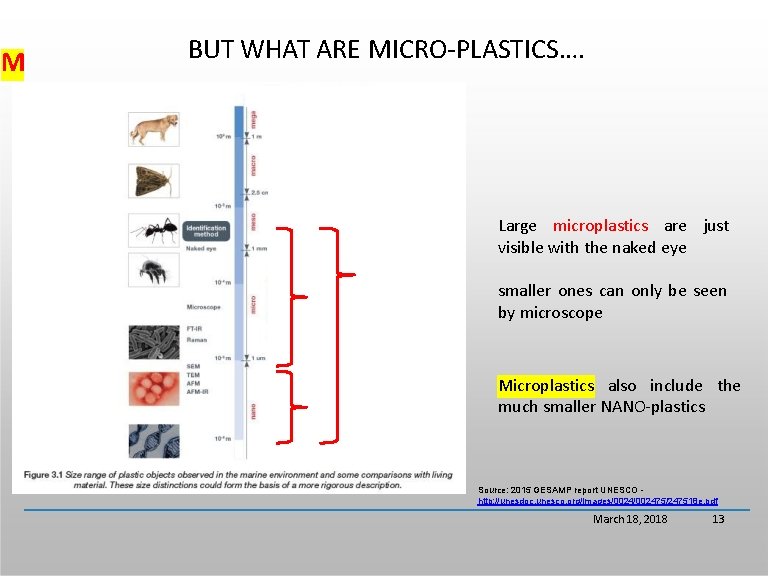
M BUT WHAT ARE MICRO-PLASTICS…. Large microplastics are just visible with the naked eye smaller ones can only be seen by microscope Microplastics also include the much smaller NANO-plastics Source: 2015 GESAMP report UNESCO http: //unesdoc. unesco. org/images/002475/247518 e. pdf March 18, 2018 13
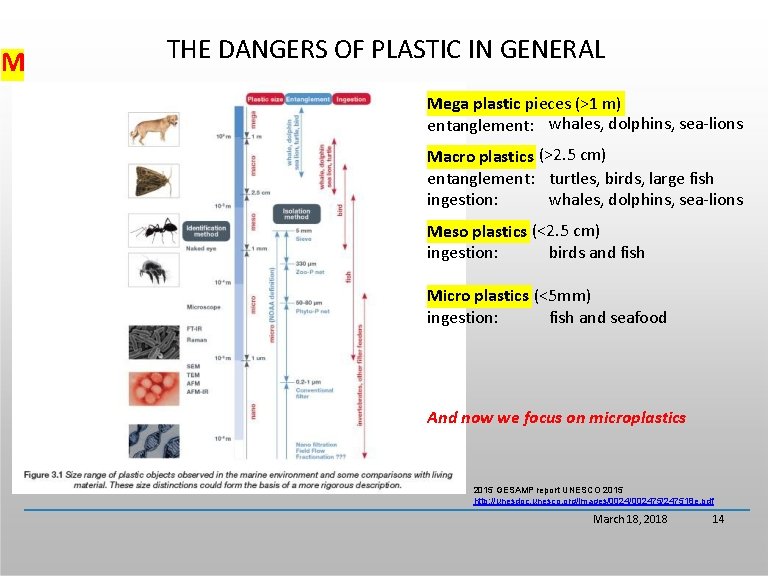
M THE DANGERS OF PLASTIC IN GENERAL Mega plastic pieces (>1 m) entanglement: whales, dolphins, sea-lions Macro plastics (>2. 5 cm) entanglement: turtles, birds, large fish whales, dolphins, sea-lions ingestion: Meso plastics (<2. 5 cm) birds and fish ingestion: Micro plastics (<5 mm) fish and seafood ingestion: And now we focus on microplastics 2015 GESAMP report UNESCO 2015 http: //unesdoc. unesco. org/images/002475/247518 e. pdf March 18, 2018 14
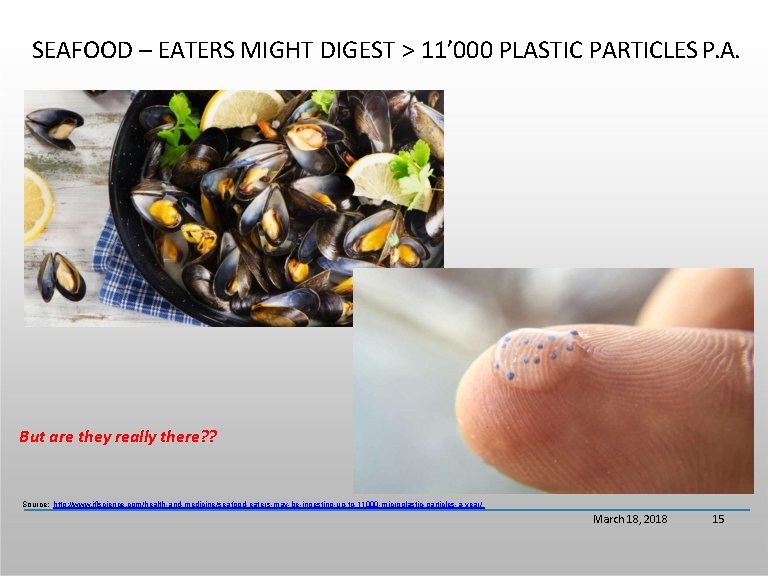
SEAFOOD – EATERS MIGHT DIGEST > 11’ 000 PLASTIC PARTICLES P. A. But are they really there? ? Source: http: //www. iflscience. com/health-and-medicine/seafood-eaters-may-be-ingesting-up-to-11000 -microplastic-particles-a-year/ March 18, 2018 15
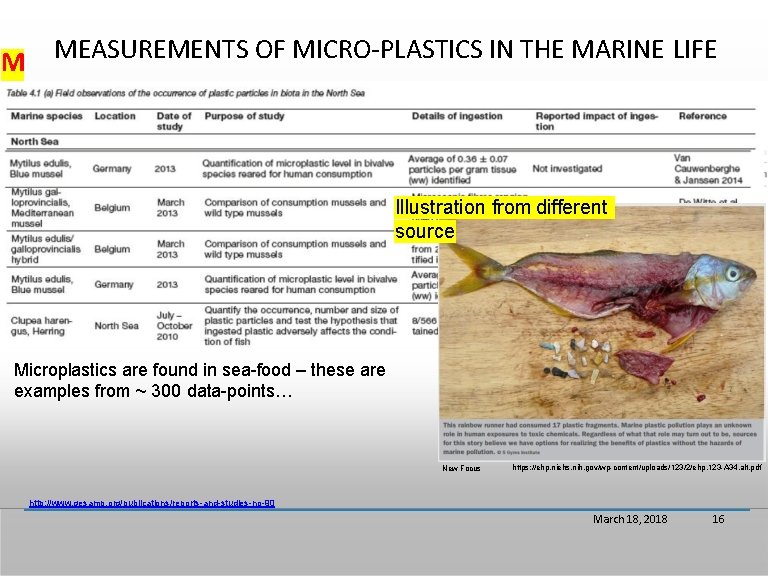
M MEASUREMENTS OF MICRO-PLASTICS IN THE MARINE LIFE Illustration from different source Microplastics are found in sea-food – these are examples from ~ 300 data-points… New Focus https: //ehp. niehs. nih. gov/wp-content/uploads/123/2/ehp. 123 -A 34. alt. pdf http: //www. gesamp. org/publications/reports-and-studies-no-90 March 18, 2018 16
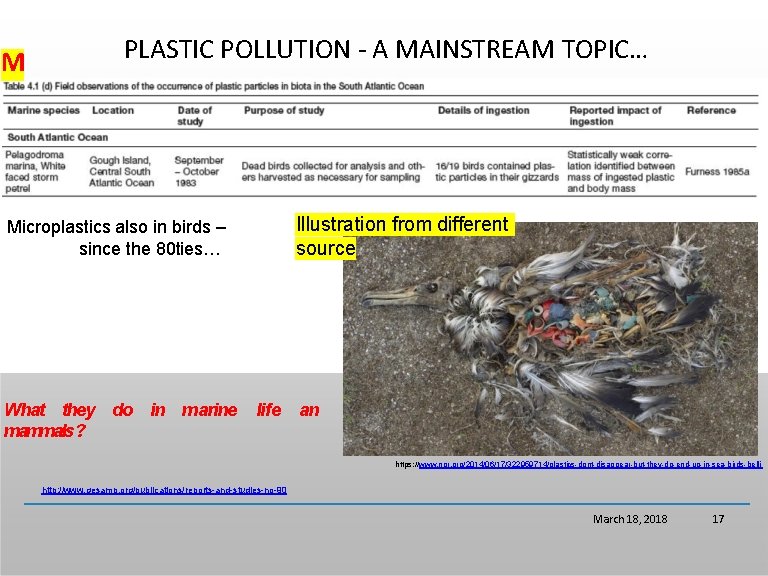
M PLASTIC POLLUTION - A MAINSTREAM TOPIC… MEASUREMENTS OF MICROPLASTICS IN THE MARINE LIFE Illustration from different source Microplastics also in birds – since the 80 ties… What they do in marine mammals ? life an https: //www. npr. org/2014/06/17/322959714/plastics-dont-disappear-but-they-do-end-up-in-sea-birds-belli http: //www. gesamp. org/publications/reports-and-studies-no-90 March 18, 2018 17
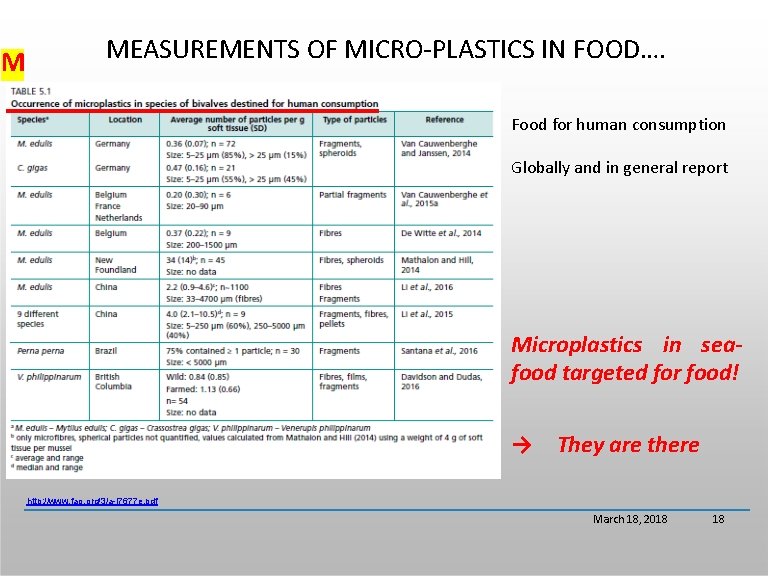
M MEASUREMENTS OF MICRO-PLASTICS IN FOOD…. Food for human consumption Globally and in general report Microplastics in seafood targeted for food! → They are there http: //www. fao. org/3/a-i 7677 e. pdf March 18, 2018 18
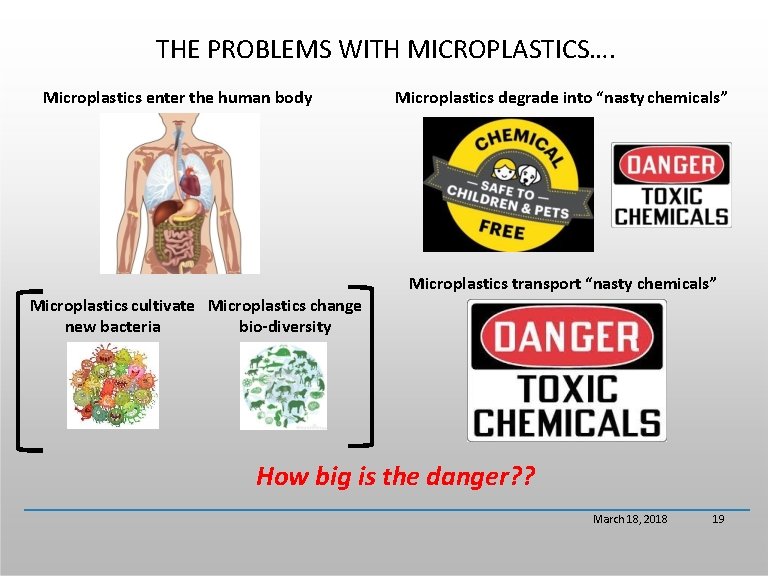
THE PROBLEMS WITH MICROPLASTICS…. Microplastics enter the human body Microplastics cultivate Microplastics change new bacteria bio-diversity Microplastics degrade into “nasty chemicals” Microplastics transport “nasty chemicals” How big is the danger? ? March 18, 2018 19
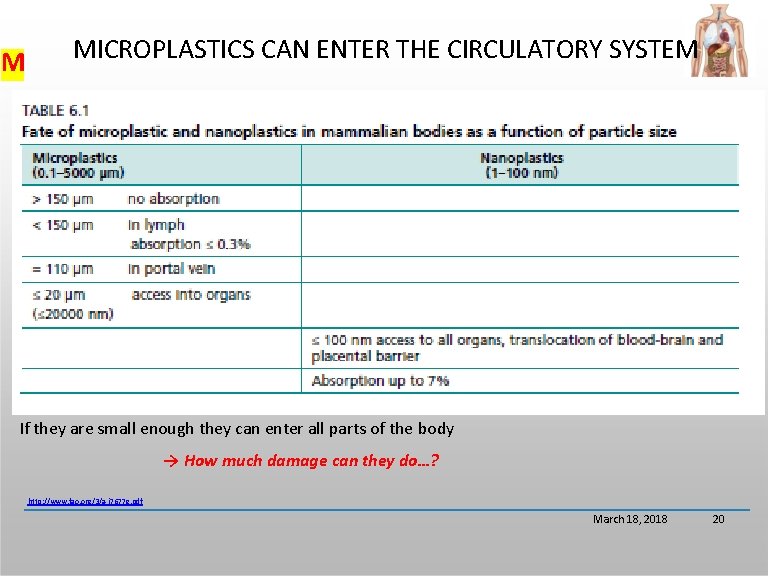
M MICROPLASTICS CAN ENTER THE CIRCULATORY SYSTEM If they are small enough they can enter all parts of the body → How much damage can they do…? http: //www. fao. org/3/a-i 7677 e. pdf March 18, 2018 20
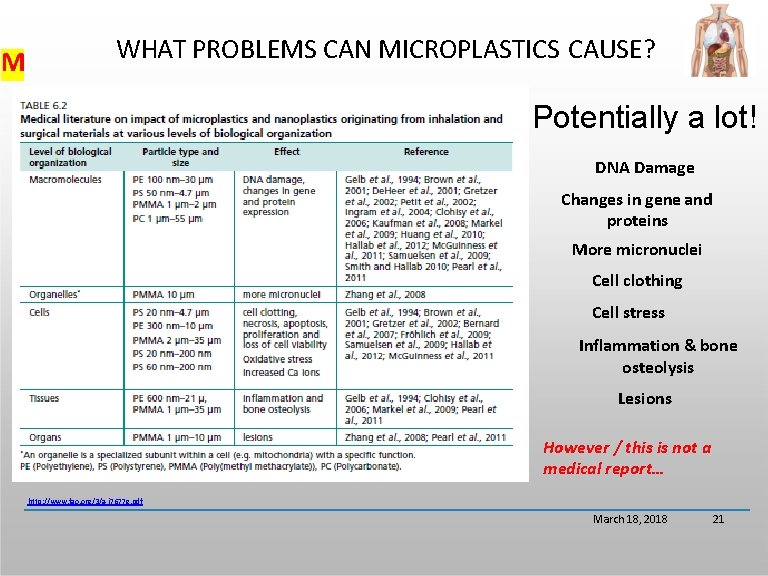
M WHAT PROBLEMS CAN MICROPLASTICS CAUSE? Potentially a lot! DNA Damage Changes in gene and proteins More micronuclei Cell clothing Cell stress Inflammation & bone osteolysis Lesions However / this is not a medical report… http: //www. fao. org/3/a-i 7677 e. pdf March 18, 2018 21
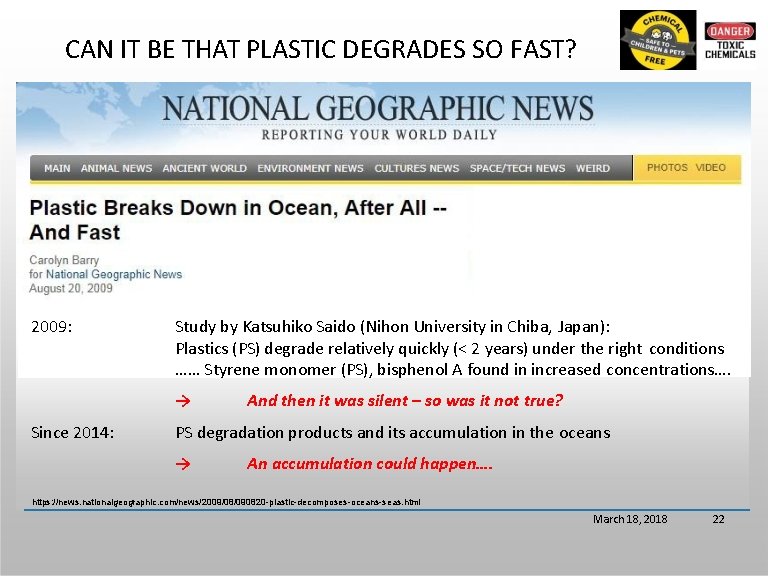
CAN IT BE THAT PLASTIC DEGRADES SO FAST? 2009: https: //news. nationalgeographic. c om/2017/08/ocean-life-eats-plastic-larvaceans-anchovy-environment/ Study by Katsuhiko Saido (Nihon University in Chiba, Japan): Plastics (PS) degrade relatively quickly (< 2 years) under the right conditions ……. Styrene monomer (PS), bisphenol A found in increased concentrations…. → Since 2014: And then it was silent – so was it not true? PS degradation products and its accumulation in the oceans → An accumulation could happen…. https: //news. nationalgeographic. com/news/2009/08/090820 -plastic-decomposes-oceans-seas. html March 18, 2018 22
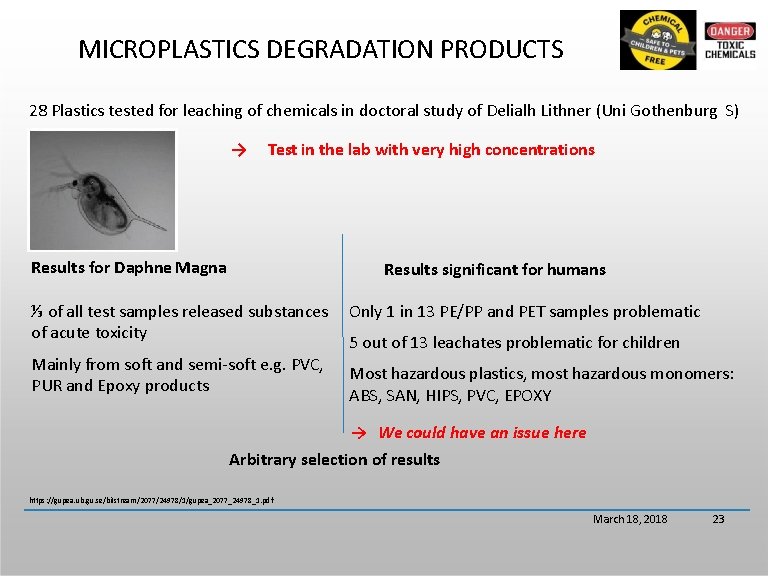
MICROPLASTICS DEGRADATION PRODUCTS 28 Plastics tested for leaching of chemicals in doctoral study of Delialh Lithner (Uni Gothenburg S) → Test in the lab with very high concentrations Results for Daphne Magna Results significant for humans ⅓ of all test samples released substances of acute toxicity Mainly from soft and semi-soft e. g. PVC, PUR and Epoxy products Only 1 in 13 PE/PP and PET samples problematic 5 out of 13 leachates problematic for children Most hazardous plastics, most hazardous monomers: ABS, SAN, HIPS, PVC, EPOXY → We could have an issue here Arbitrary selection of results https: //gupea. ub. gu. se/bitstream/2077/24978/1/gupea_2077_24978_1. pdf March 18, 2018 23
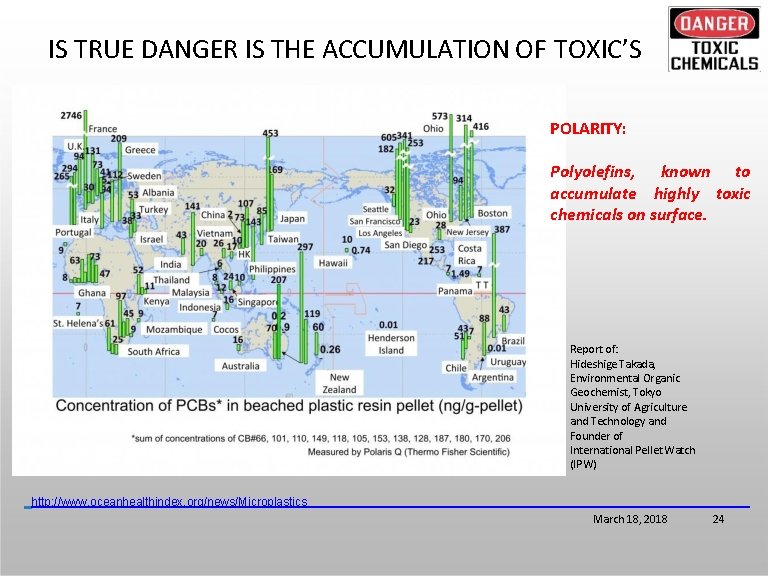
IS TRUE DANGER IS THE ACCUMULATION OF TOXIC’S POLARITY: Polyolefins, known to accumulate highly toxic chemicals on surface. Report of: Hideshige Takada, Environmental Organic Geochemist, Tokyo University of Agriculture and Technology and Founder of International Pellet Watch (IPW) http: //www. oceanhealthindex. org/news/Microplastics March 18, 2018 24
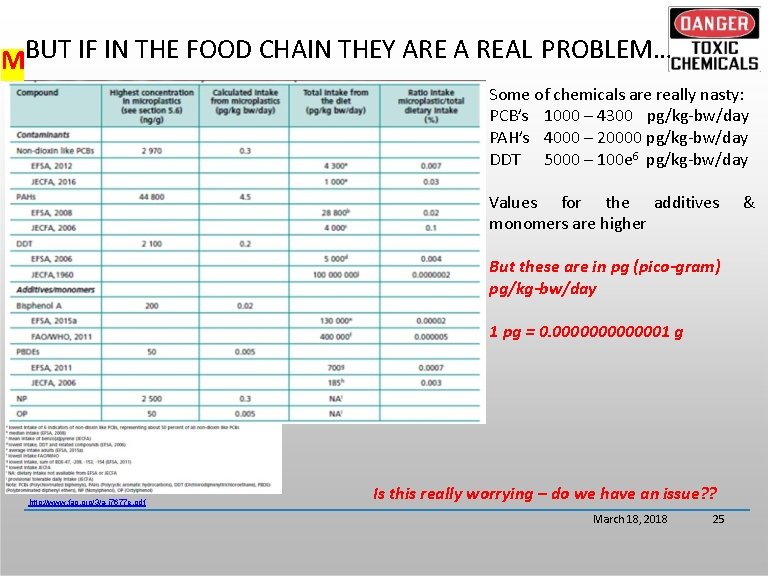
MBUT IF IN THE FOOD CHAIN THEY ARE A REAL PROBLEM… Some of chemicals are really nasty: PCB’s 1000 – 4300 pg/kg-bw/day PAH’s 4000 – 20000 pg/kg-bw/day DDT 5000 – 100 e 6 pg/kg-bw/day Values for the additives monomers are higher But these are in pg (pico-gram) pg/kg-bw/day 1 pg = 0. 0000001 g http: //www. fao. org/3/a-i 7677 e. pdf Is this really worrying – do we have an issue? ? March 18, 2018 25 &
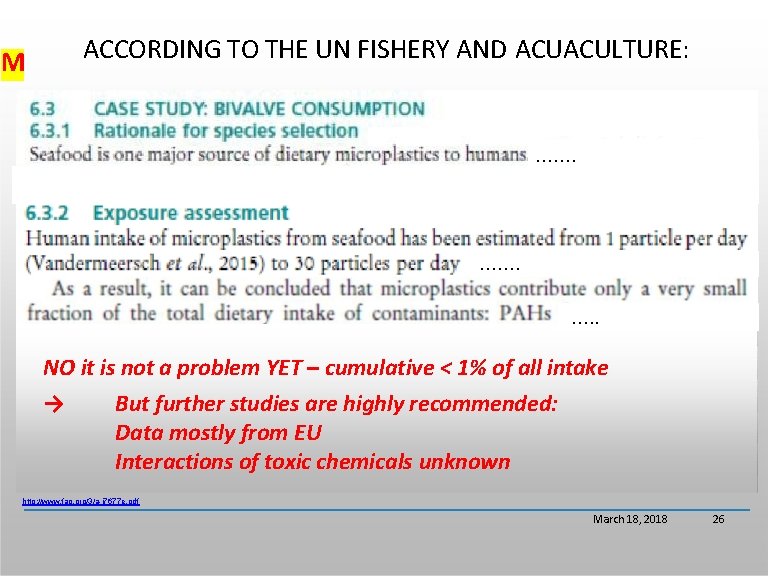
ACCORDING TO THE UN FISHERY AND ACUACULTURE: M ……. …. . NO it is not a problem YET – cumulative < 1% of all intake → But further studies are highly recommended: Data mostly from EU Interactions of toxic chemicals unknown http: //www. fao. org/3/a-i 7677 e. pdf March 18, 2018 26
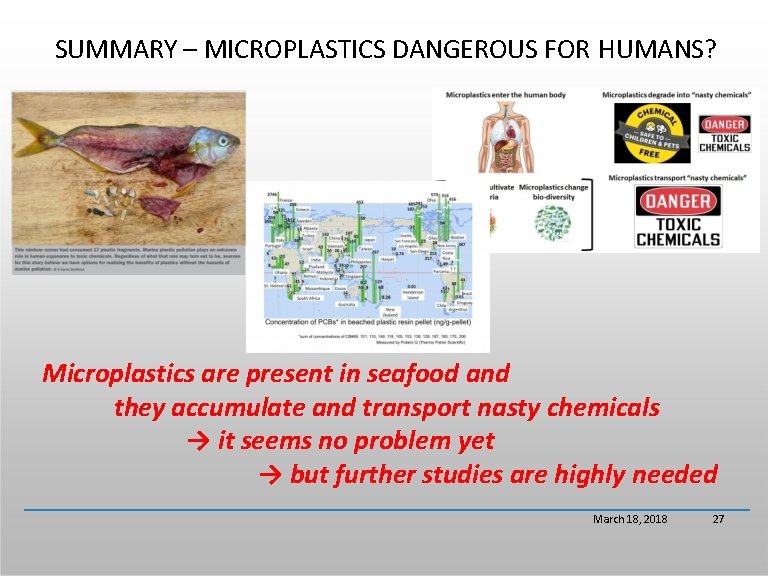
SUMMARY – MICROPLASTICS DANGEROUS FOR HUMANS? Microplastics are present in seafood and they accumulate and transport nasty chemicals → it seems no problem yet → but further studies are highly needed March 18, 2018 27
Outline Introduction to Microplastics problems with data reliability Microplastic – are they there? What harm can they do? Microplastics – origin? Where do they come from? Link to MSW Are Bioplastics a potential solution Conclusion March 18, 2018 28
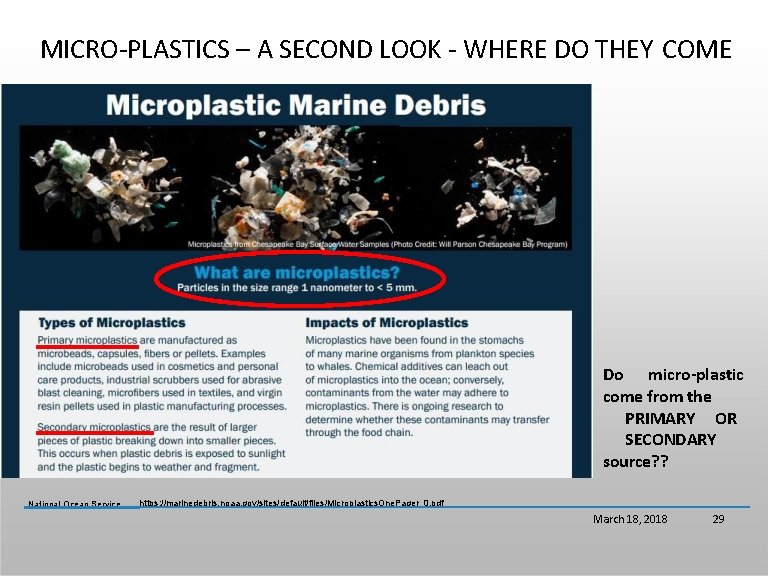
MICRO-PLASTICS – A SECOND LOOK - WHERE DO THEY COME Do micro-plastic come from the PRIMARY OR SECONDARY source? ? National Ocean Service https: //marinedebris. noaa. gov/sites/default/files/Microplastics. One. Pager_0. pdf March 18, 2018 29
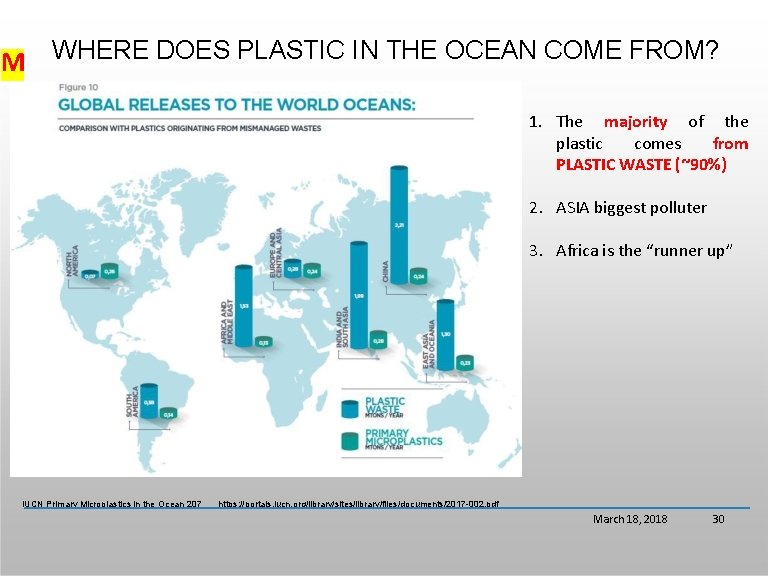
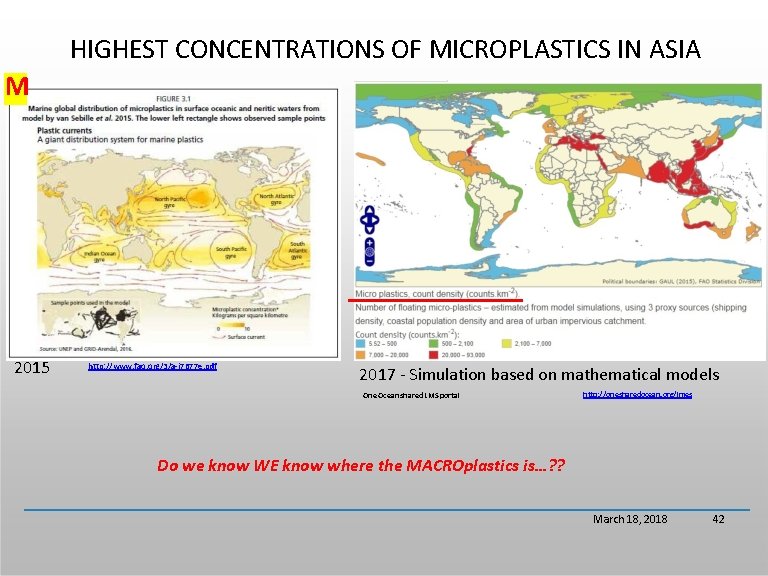
M WHERE DOES PLASTIC IN THE OCEAN COME FROM? 1. The majority of the comes from plastic PLASTIC WASTE (~90%) 2. ASIA biggest polluter 3. Africa is the “runner up” IUCN Primary Microplastics in the Ocean 207 https: //portals. iucn. org/library/sites/library/files/documents/2017 -002. pdf March 18, 2018 30
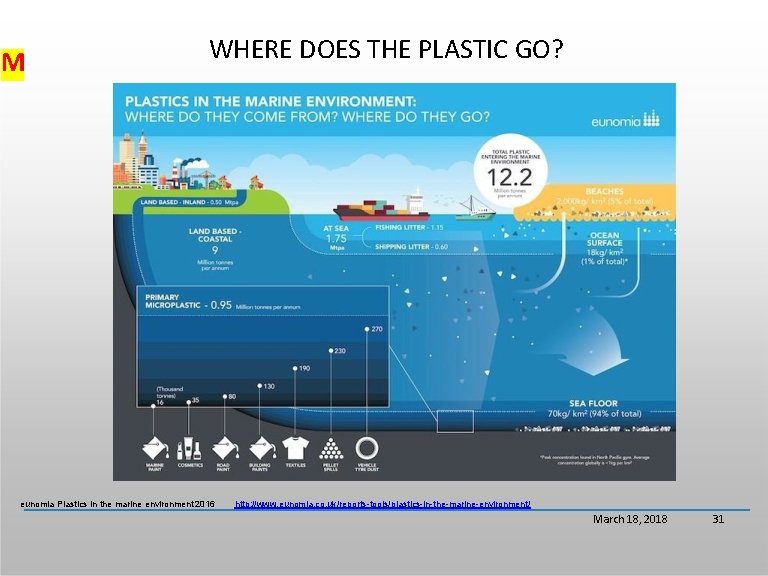
M WHERE DOES THE PLASTIC GO? eunomia Plastics in the marine environment 2016 http: //www. eunomia. co. uk/reports-tools/plastics-in-the-marine-environment/ March 18, 2018 31
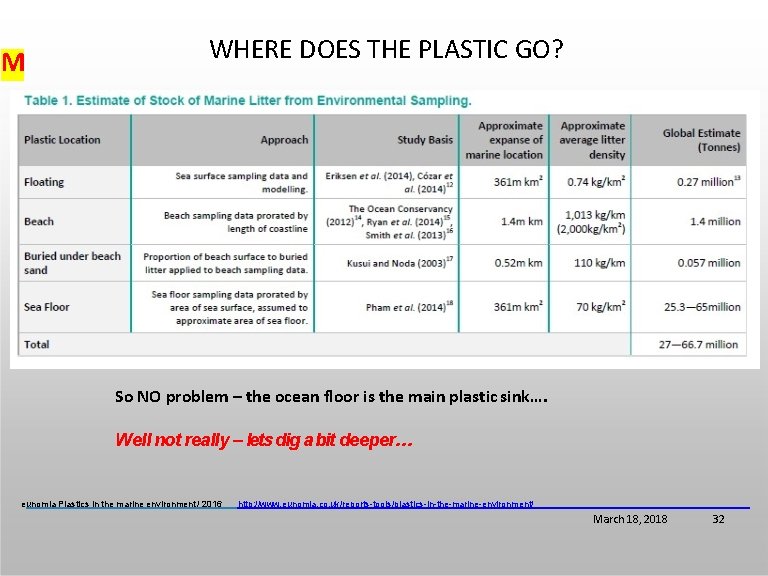
M WHERE DOES THE PLASTIC GO? So NO problem – the ocean floor is the main plastic sink…. Well not really – lets dig a bit deeper… eunomia Plastics in the marine environment / 2016 http: //www. eunomia. co. uk/reports-tools/plastics-in-the-marine-environment/ March 18, 2018 32
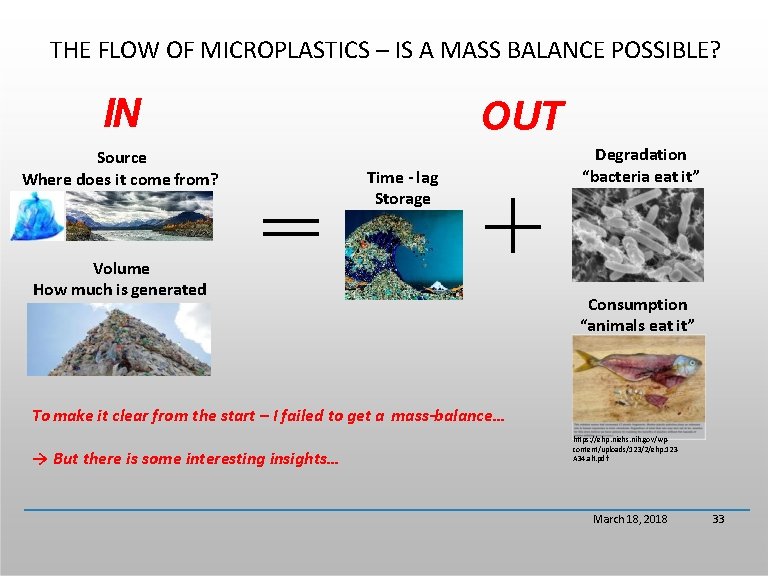
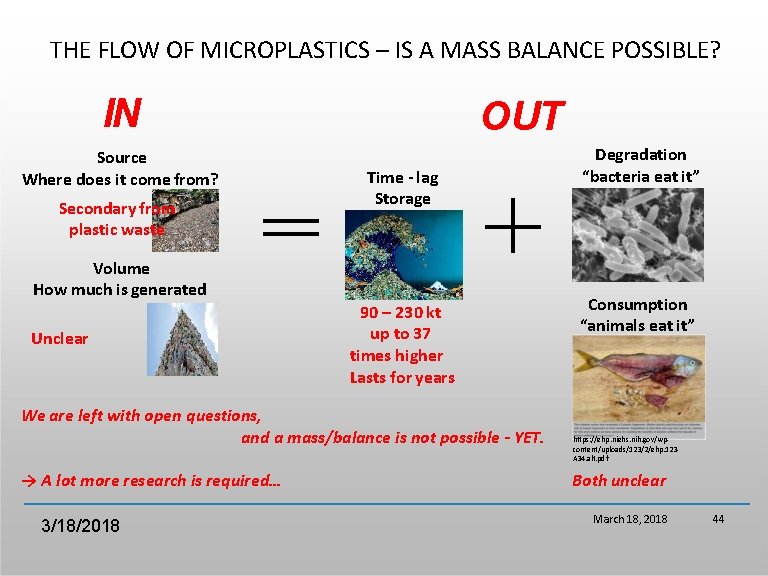
THE FLOW OF MICROPLASTICS – IS A MASS BALANCE POSSIBLE? IN Source Where does it come from? OUT Time - lag Storage Volume How much is generated Degradation “bacteria eat it” Consumption “animals eat it” To make it clear from the start – I failed to get a mass-balance… → But there is some interesting insights… https: //ehp. niehs. nih. gov/wpcontent/uploads/123/2/ehp. 123 A 34. alt. pdf March 18, 2018 33
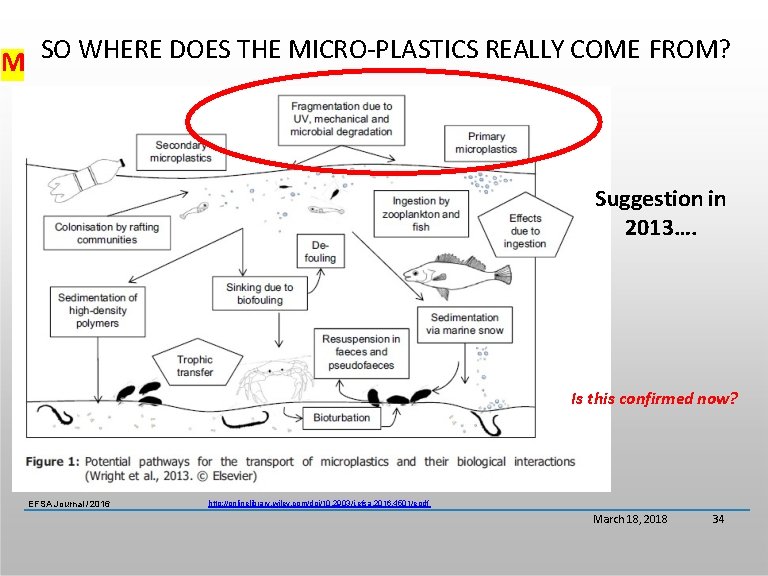
M SO WHERE DOES THE MICRO-PLASTICS REALLY COME FROM? Suggestion in 2013…. Is this confirmed now? EFSA Journal / 2016 http: //onlinelibrary. wiley. com/doi/10. 2903/j. efsa. 2016. 4501/epdf March 18, 2018 34
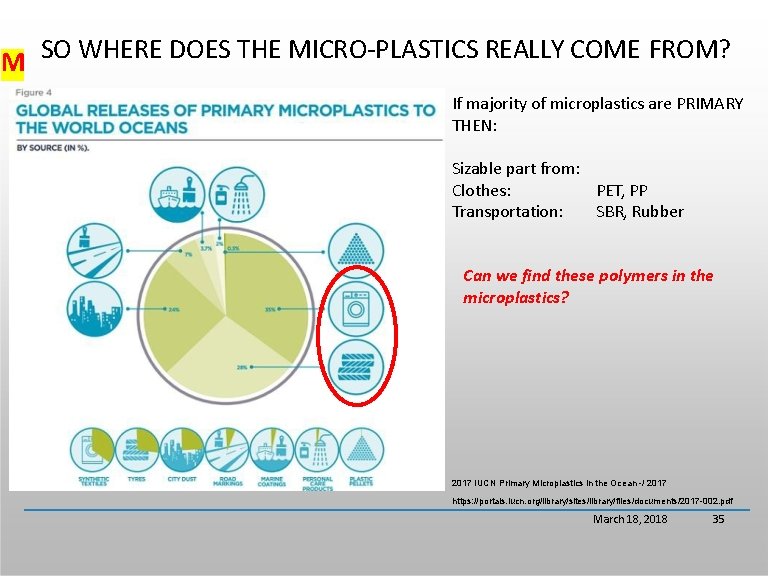
M SO WHERE DOES THE MICRO-PLASTICS REALLY COME FROM? If majority of microplastics are PRIMARY THEN: Sizable part from: Clothes: PET, PP Transportation: SBR, Rubber Can we find these polymers in the microplastics? 2017 IUCN Primary Microplastics in the Ocean -/ 2017 https: //portals. iucn. org/library/sites/library/files/documents/2017 -002. pdf March 18, 2018 35
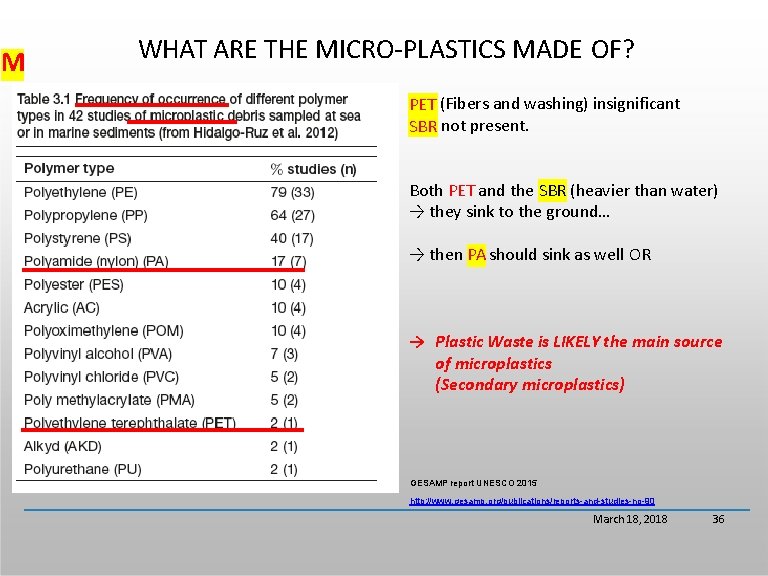
M WHAT ARE THE MICRO-PLASTICS MADE OF? PET (Fibers and washing) insignificant SBR not present. Both PET and the SBR (heavier than water) → they sink to the ground… → then PA should sink as well OR → Plastic Waste is LIKELY the main source of microplastics (Secondary microplastics) GESAMP report UNESCO 2015 http: //www. gesamp. org/publications/reports-and-studies-no-90 March 18, 2018 36
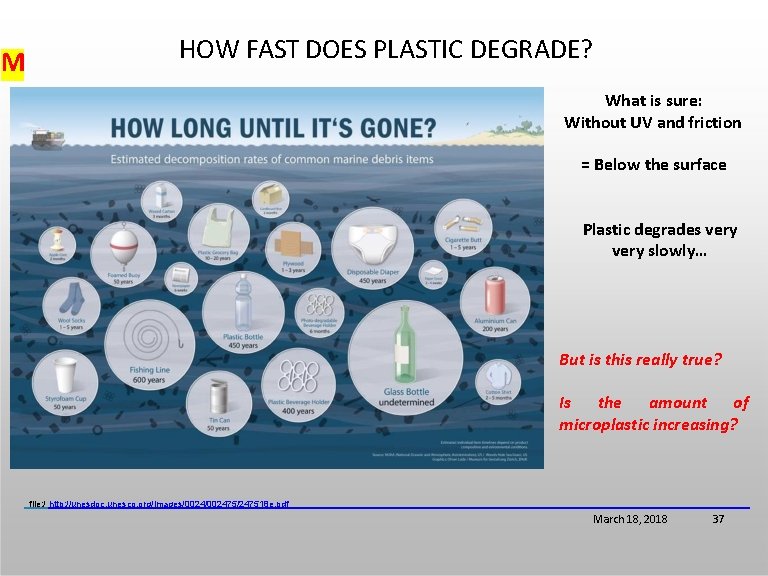
M HOW FAST DOES PLASTIC DEGRADE? What is sure: Without UV and friction = Below the surface Plastic degrades very slowly… But is this really true? Is the amount of microplastic increasing? file: / http: //unesdoc. unesco. org/images/002475/247518 e. pdf March 18, 2018 37
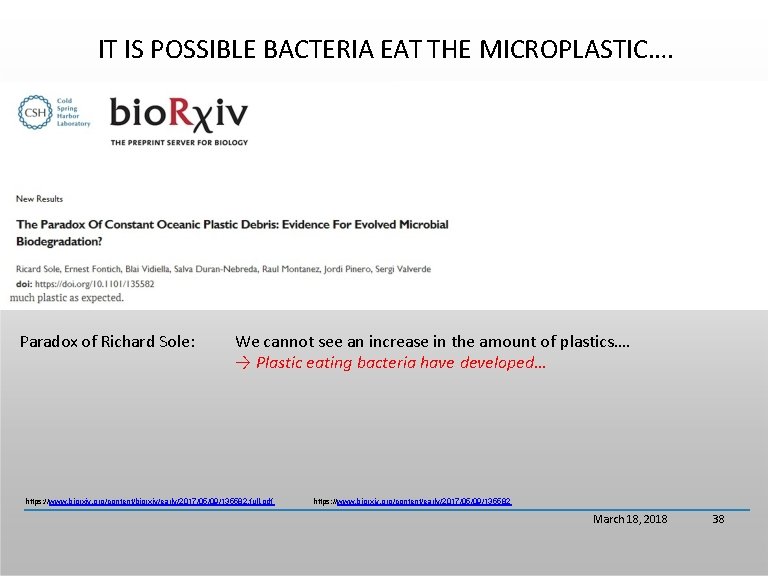
IT IS POSSIBLE BACTERIA EAT THE MICROPLASTIC…. Paradox of Richard Sole: We cannot see an increase in the amount of plastics…. → Plastic eating bacteria have developed… https: //www. biorxiv. org/content/biorxiv/early/2017/05/09/135582. full. pdf https: //www. biorxiv. org/content/early/2017/05/09/135582 March 18, 2018 38
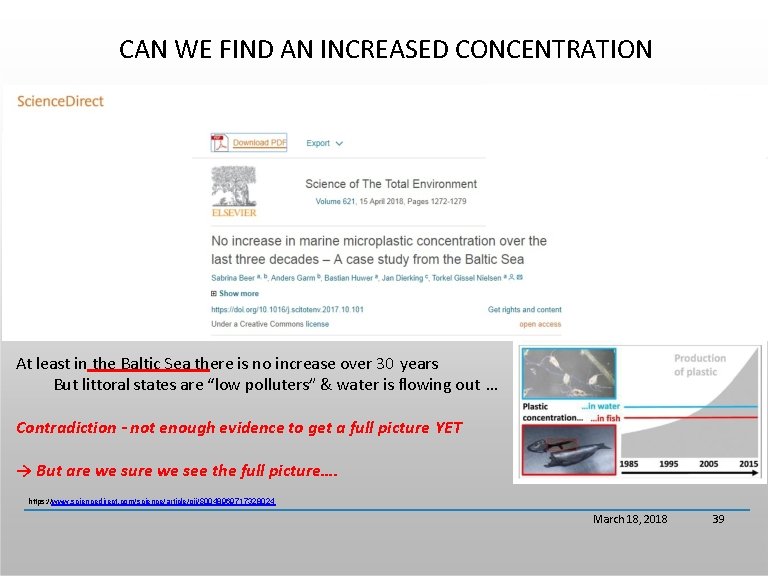
CAN WE FIND AN INCREASED CONCENTRATION At least in the Baltic Sea there is no increase over 30 years But littoral states are “low polluters” & water is flowing out … Contradiction - not enough evidence to get a full picture YET → But are we sure we see the full picture…. https: //www. sciencedirect. com/science/article/pii/S 0048969717328024 March 18, 2018 39
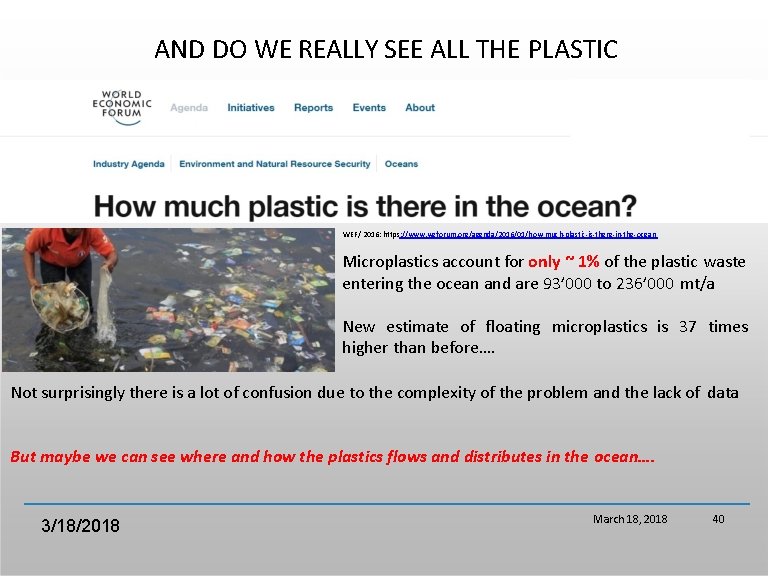
AND DO WE REALLY SEE ALL THE PLASTIC WEF/ 2016: https: //www. weforum. org/agenda/2016/01/how-much-plastic-is-there-in-the-ocean Microplastics account for only ~ 1% of the plastic waste entering the ocean and are 93’ 000 to 236’ 000 mt/a New estimate of floating microplastics is 37 times higher than before…. Not surprisingly there is a lot of confusion due to the complexity of the problem and the lack of data But maybe we can see where and how the plastics flows and distributes in the ocean…. 3/18/2018 March 18, 2018 40
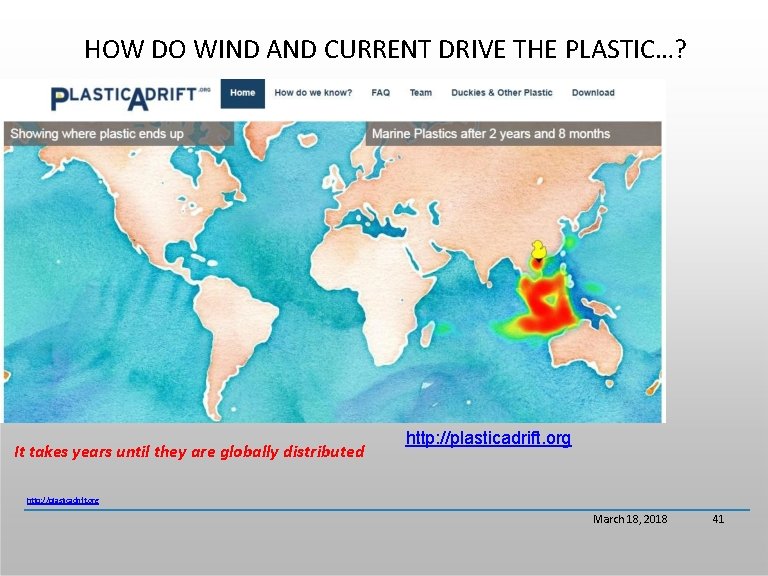
HOW DO WIND AND CURRENT DRIVE THE PLASTIC…? It takes years until they are globally distributed http: //plasticadrift. org March 18, 2018 41
HIGHEST CONCENTRATIONS OF MICROPLASTICS IN ASIA M 2015 http: //www. fao. org/3/a-i 7677 e. pdf 2017 - Simulation based on mathematical models One Ocean shared LMS portal http: //onesharedocean. org/lmes Do we know WE know where the MACROplastics is…? ? March 18, 2018 42
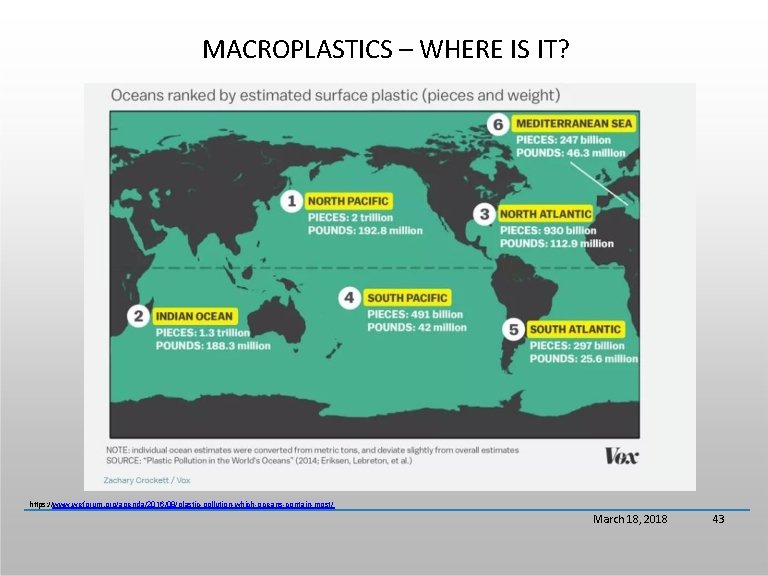
MACROPLASTICS – WHERE IS IT? https: //www. weforum. org/agenda/2016/08/plastic-pollution-which-oceans-contain-most/ March 18, 2018 43
THE FLOW OF MICROPLASTICS – IS A MASS BALANCE POSSIBLE? IN Source Where does it come from? Secondary from plastic waste OUT Time - lag Storage Volume How much is generated Unclear 90 – 230 kt up to 37 times higher Lasts for years We are left with open questions, and a mass/balance is not possible - YET. → A lot more research is required… 3/18/2018 Degradation “bacteria eat it” Consumption “animals eat it” https: //ehp. niehs. nih. gov/wpcontent/uploads/123/2/ehp. 123 A 34. alt. pdf Both unclear March 18, 2018 44
Outline Introduction to Microplastics problems with data reliability Microplastic – are they there? What harm can they do? Microplastics – origin? Where do they come from? Link to MSW Are Bioplastics a potential solution Conclusion March 18, 2018 45
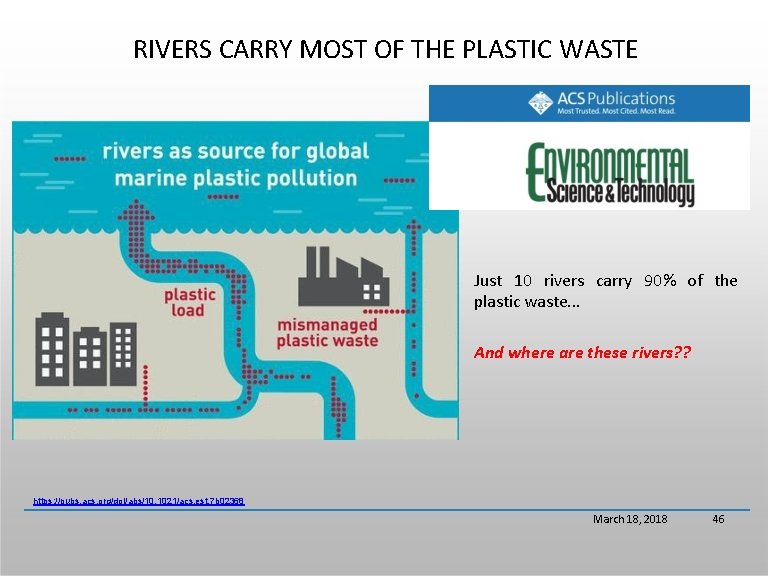
RIVERS CARRY MOST OF THE PLASTIC WASTE Just 10 rivers carry 90% of the plastic waste. . . And where are these rivers? ? https: //pubs. acs. org/doi/abs/10. 1021/acs. est. 7 b 02368 March 18, 2018 46
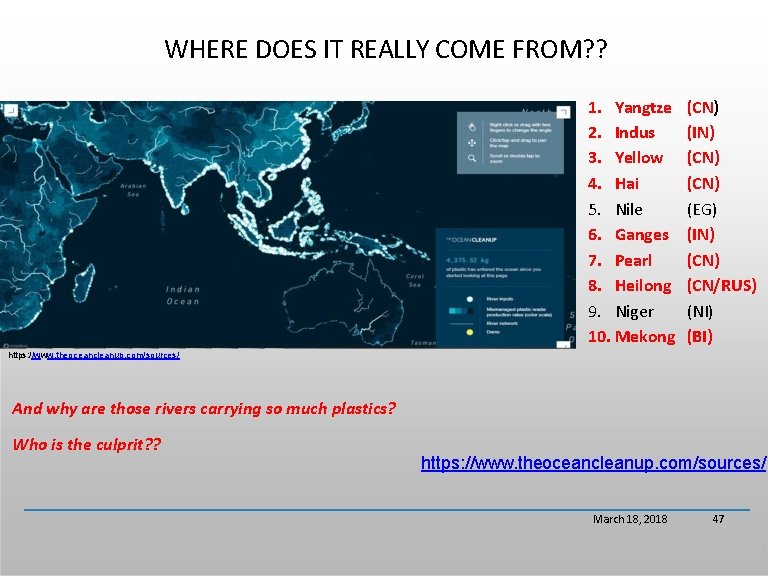
WHERE DOES IT REALLY COME FROM? ? 1. Yangtze 2. Indus 3. Yellow 4. Hai 5. Nile 6. Ganges 7. Pearl 8. Heilong 9. Niger 10. Mekong (CN) (IN) (CN) (EG) (IN) (CN/RUS) (NI) (BI) https: //www. theoceancleanup. com/sources/ And why are those rivers carrying so much plastics? Who is the culprit? ? https: //www. theoceancleanup. com/sources/ March 18, 2018 47
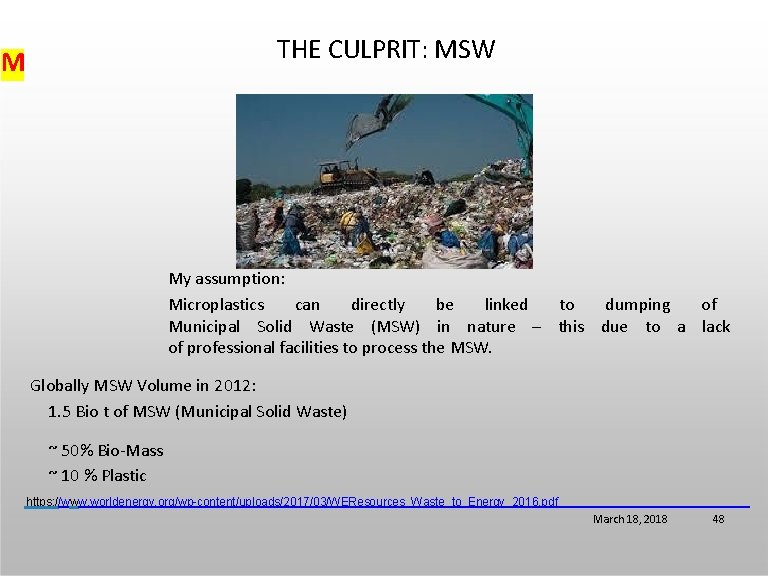
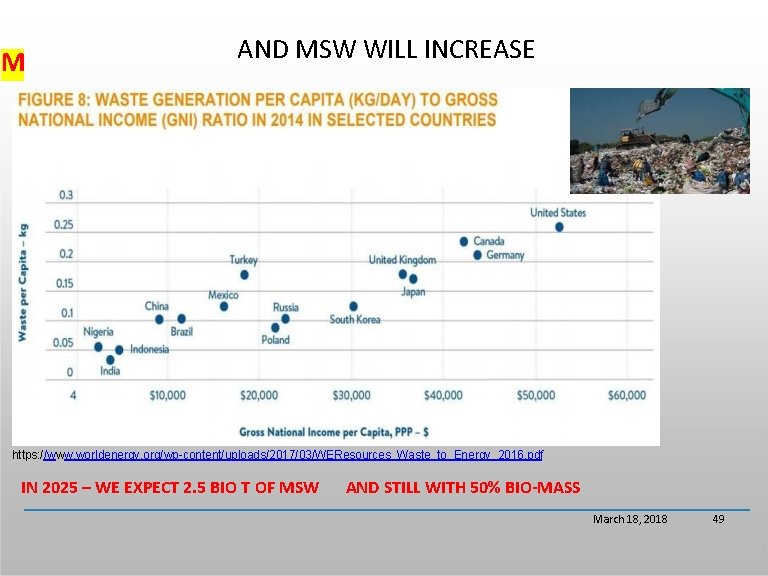
THE CULPRIT: MSW M My assumption: Microplastics can directly be linked to dumping of Municipal Solid Waste (MSW) in nature – this due to a lack of professional facilities to process the MSW. Globally MSW Volume in 2012: 1. 5 Bio t of MSW (Municipal Solid Waste) ~ 50% Bio-Mass ~ 10 % Plastic https: //www. worldenergy. org/wp-content/uploads/2017/03/WEResources_Waste_to_Energy_2016. pdf March 18, 2018 48
M AND MSW WILL INCREASE https: //www. worldenergy. org/wp-content/uploads/2017/03/WEResources_Waste_to_Energy_2016. pdf IN 2025 – WE EXPECT 2. 5 BIO T OF MSW AND STILL WITH 50% BIO-MASS March 18, 2018 49
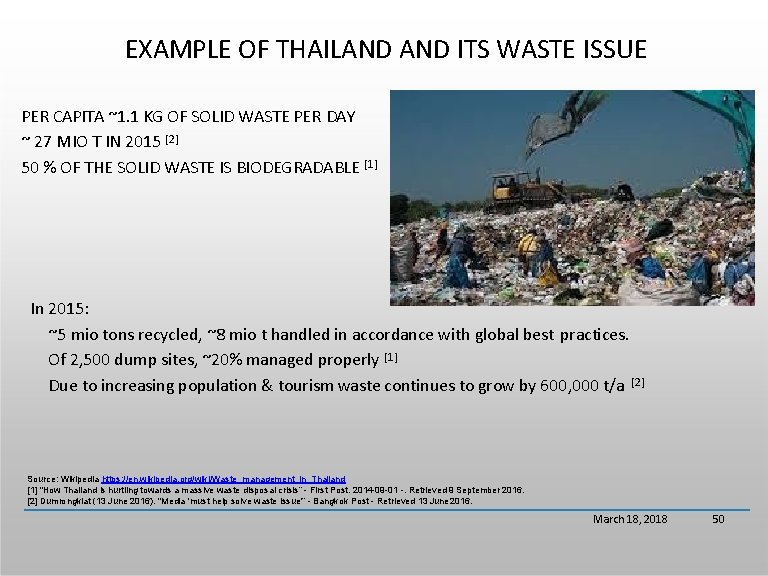
EXAMPLE OF THAILAND ITS WASTE ISSUE PER CAPITA ~1. 1 KG OF SOLID WASTE PER DAY ~ 27 MIO T IN 2015 [2] 50 % OF THE SOLID WASTE IS BIODEGRADABLE [1] In 2015: ~5 mio tons recycled, ~8 mio t handled in accordance with global best practices. Of 2, 500 dump sites, ~20% managed properly [1] Due to increasing population & tourism waste continues to grow by 600, 000 t/a [2] Source: Wikipedia https: //en. wikipedia. org/wiki/Waste_management_in_Thailand [1] "How Thailand is hurtling towards a massive waste disposal crisis“ - First Post. 2014 -09 -01 -. Retrieved 9 September 2016. [2] Dumrongkiat (13 June 2016). "Media 'must help solve waste issue'“ - Bangkok Post - Retrieved 13 June 2016. March 18, 2018 50
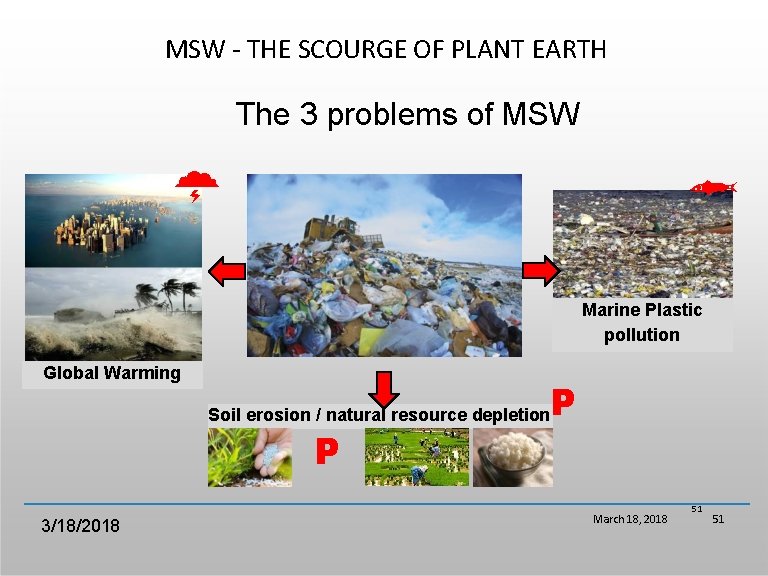
MSW - THE SCOURGE OF PLANT EARTH The 3 problems of MSW Marine Plastic pollution Global Warming P Soil erosion / natural resource depletion P 3/18/2018 March 18, 2018 51 51
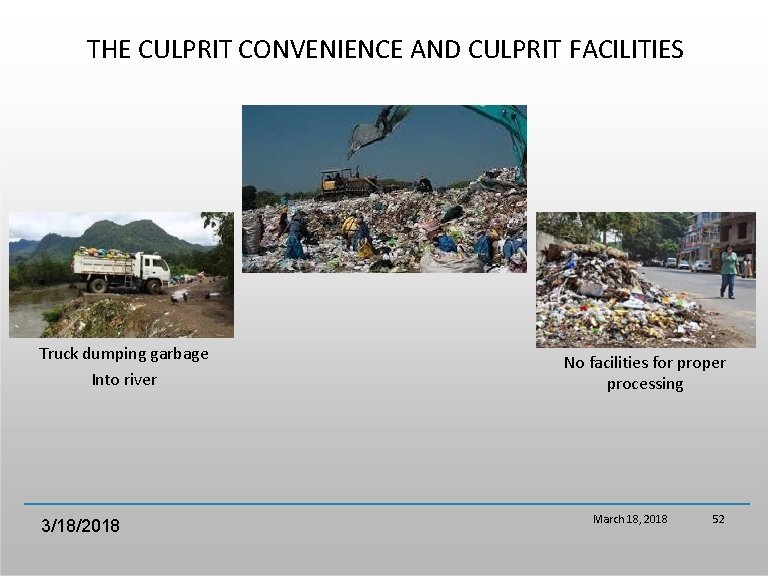
THE CULPRIT CONVENIENCE AND CULPRIT FACILITIES Truck dumping garbage Into river 3/18/2018 No facilities for proper processing March 18, 2018 52
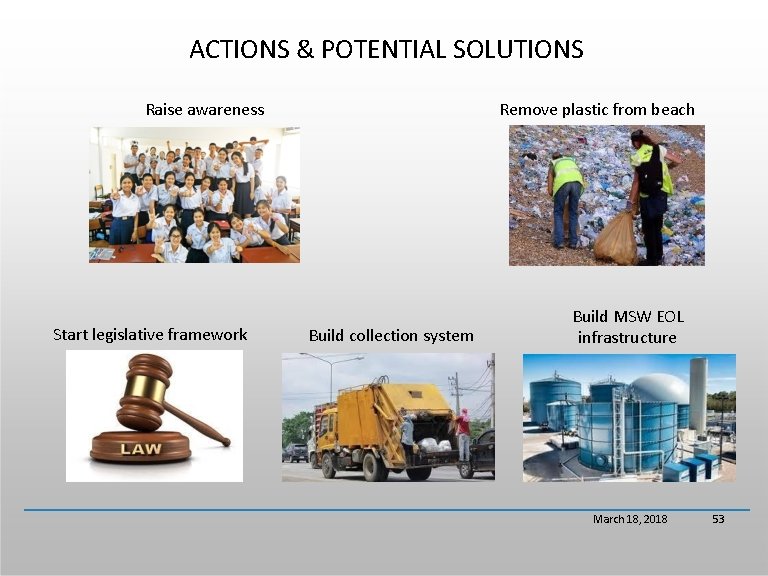
ACTIONS & POTENTIAL SOLUTIONS Raise awareness Start legislative framework Remove plastic from beach Build collection system Build MSW EOL infrastructure March 18, 2018 53
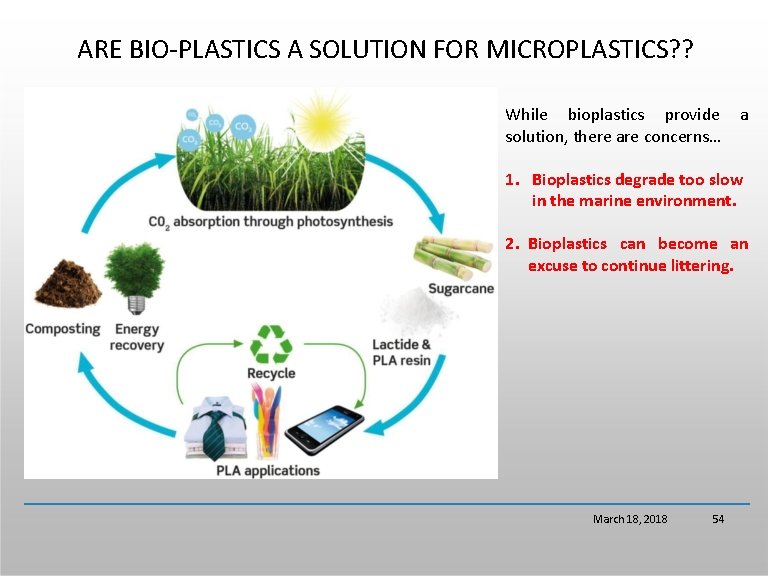
ARE BIO-PLASTICS A SOLUTION FOR MICROPLASTICS? ? While bioplastics provide solution, there are concerns… a 1. Bioplastics degrade too slow in the marine environment. 2. Bioplastics can become an excuse to continue littering. March 18, 2018 54
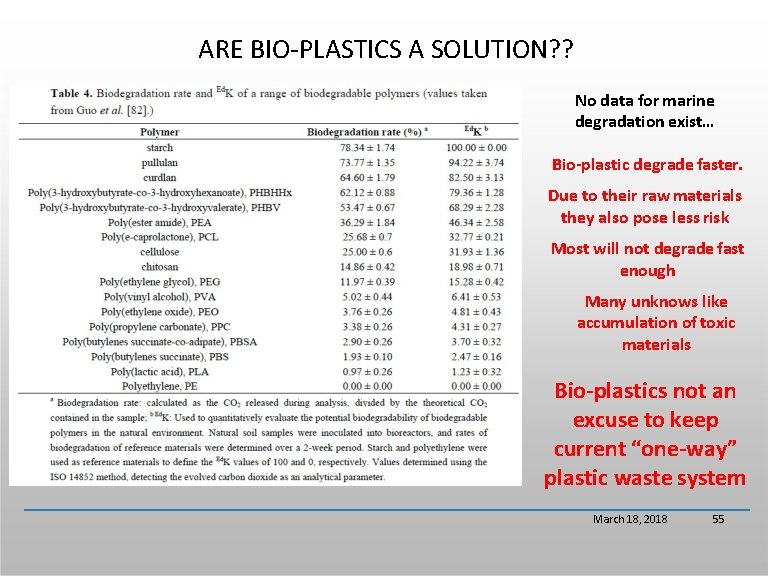
ARE BIO-PLASTICS A SOLUTION? ? No data for marine degradation exist… Bio-plastic degrade faster. Due to their raw materials they also pose less risk Most will not degrade fast enough Many unknows like accumulation of toxic materials Bio-plastics not an excuse to keep current “one-way” plastic waste system March 18, 2018 55
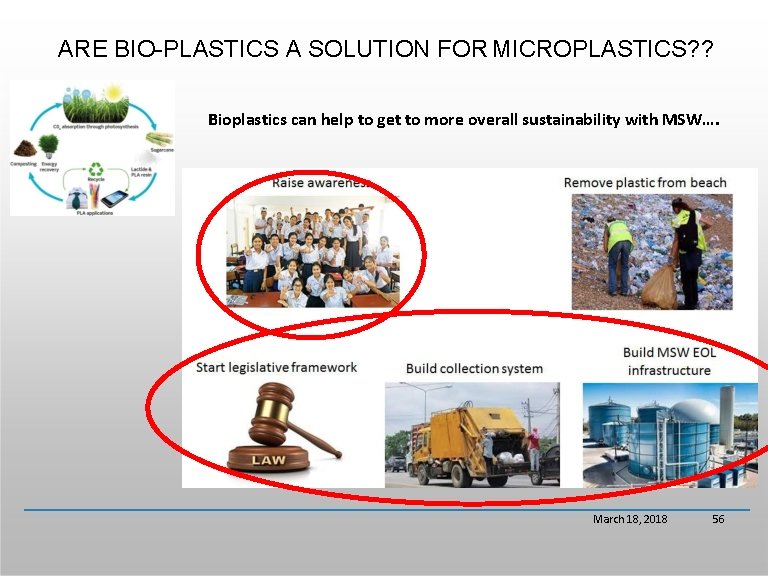
ARE BIO-PLASTICS A SOLUTION FOR MICROPLASTICS? ? Bioplastics can help to get to more overall sustainability with MSW…. March 18, 2018 56
Outline Introduction to Microplastics problems with data reliability Microplastic – are they there? What harm can they do? Microplastics – origin? Where do they come from? Link to MSW Are Bioplastics a potential solution Conclusion March 18, 2018 57
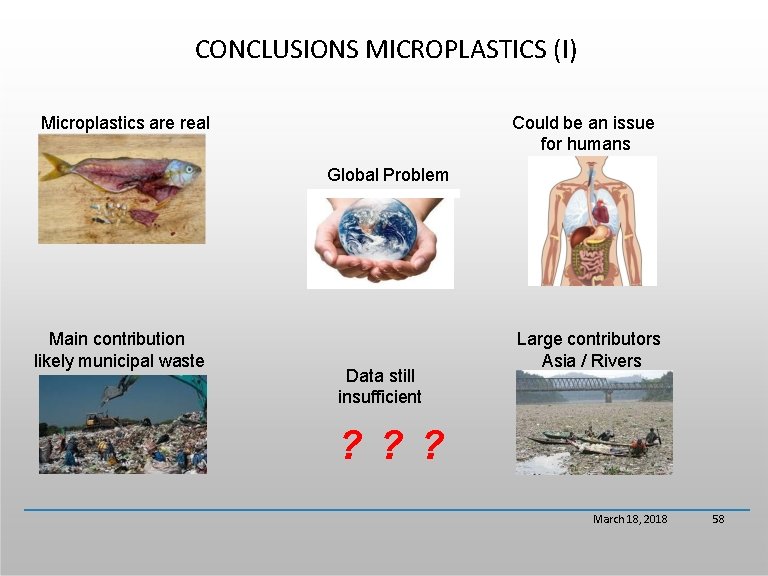
CONCLUSIONS MICROPLASTICS (I) Microplastics are real Could be an issue for humans Global Problem Main contribution likely municipal waste Data still insufficient Large contributors Asia / Rivers ? ? ? March 18, 2018 58
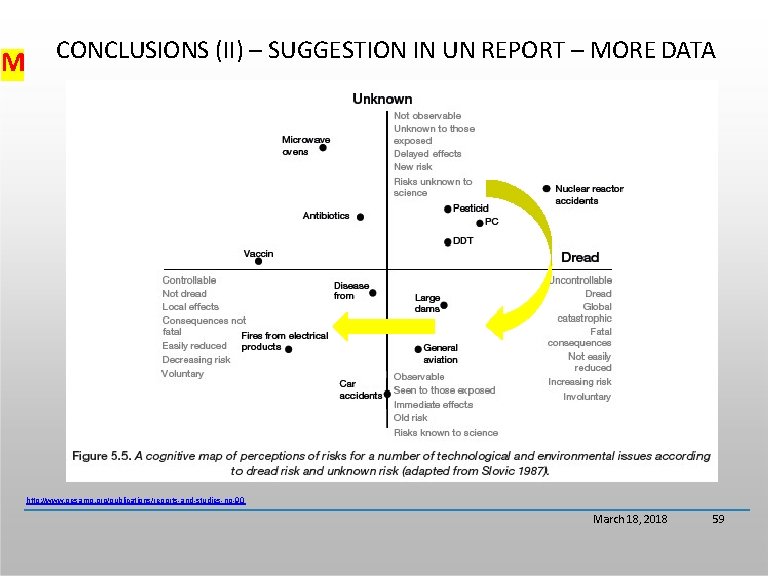
M CONCLUSIONS (II) – SUGGESTION IN UN REPORT – MORE DATA http: //www. gesamp. org/publications/reports-and-studies-no-90 March 18, 2018 59
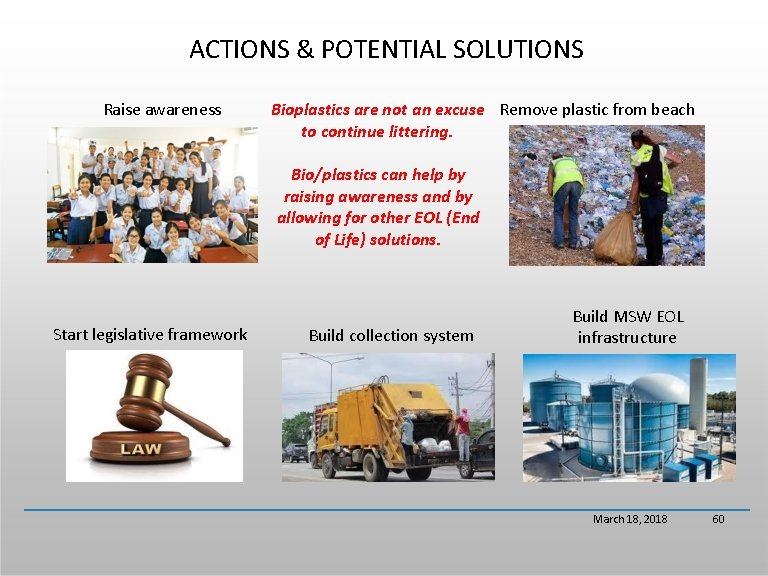
ACTIONS & POTENTIAL SOLUTIONS Raise awareness Bioplastics are not an excuse Remove plastic from beach to continue littering. Bio/plastics can help by raising awareness and by allowing for other EOL (End of Life) solutions. Start legislative framework Build collection system Build MSW EOL infrastructure March 18, 2018 60
THANK YOU March 18, 2018 61