
Ocean Vector Wind Experience Joe Sienkiewicz NOAA Ocean
- Slides: 12
Ocean Vector Wind Experience Joe Sienkiewicz NOAA Ocean Prediction Center
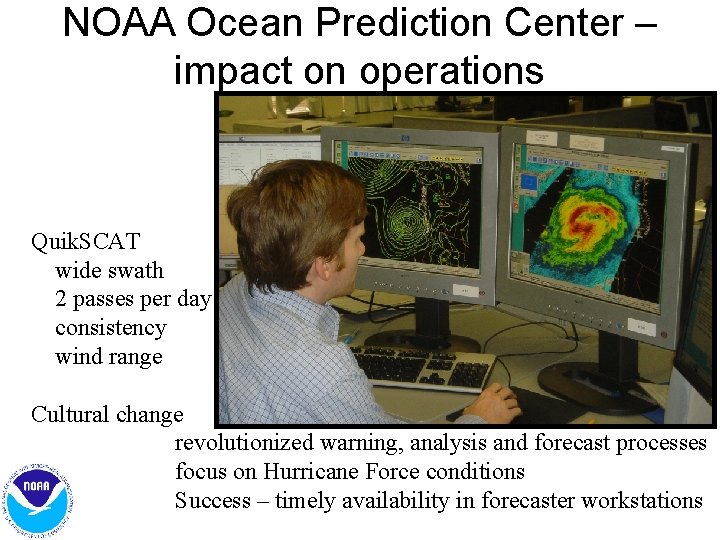
NOAA Ocean Prediction Center – impact on operations Quik. SCAT wide swath 2 passes per day consistency wind range Cultural change revolutionized warning, analysis and forecast processes focus on Hurricane Force conditions Success – timely availability in forecaster workstations
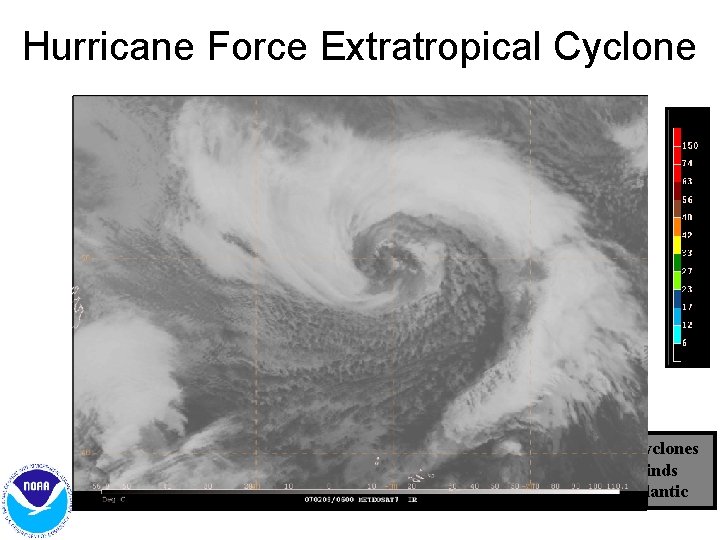
Hurricane Force Extratropical Cyclone kts Intense, non-tropical cyclones with hurricane force winds Feb 09, 2007, North Atlantic
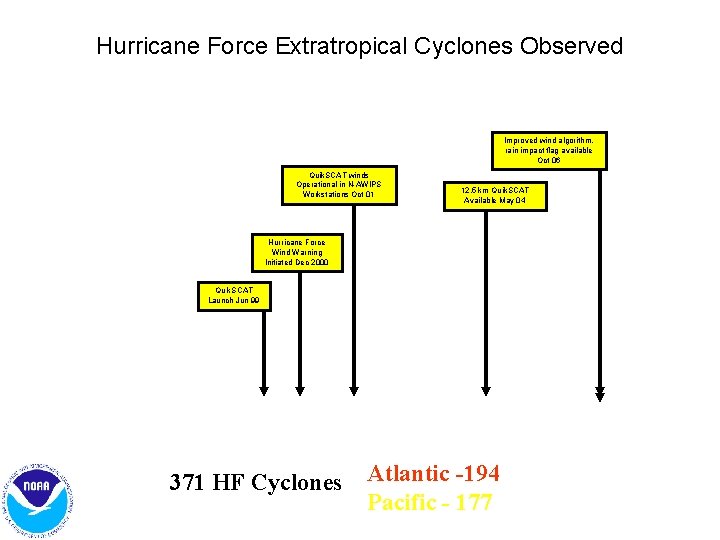
Hurricane Force Extratropical Cyclones Observed Improved wind algorithm, rain impact flag available Oct 06 Quik. SCAT winds Operational in N-AWIPS Workstations Oct 01 12. 5 km Quik. SCAT Available May 04 Hurricane Force Wind Warning Initiated Dec 2000 Quik. SCAT Launch Jun 99 371 HF Cyclones Atlantic -194 Pacific - 177
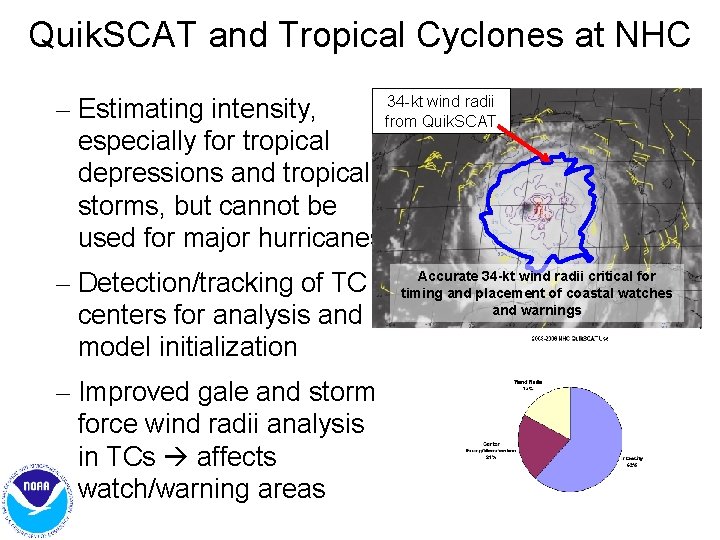
Quik. SCAT and Tropical Cyclones at NHC 34 -kt wind radii – Estimating intensity, from Quik. SCAT especially for tropical depressions and tropical storms, but cannot be used for major hurricanes – Detection/tracking of TC centers for analysis and model initialization – Improved gale and storm force wind radii analysis in TCs affects watch/warning areas Accurate 34 -kt wind radii critical for timing and placement of coastal watches and warnings
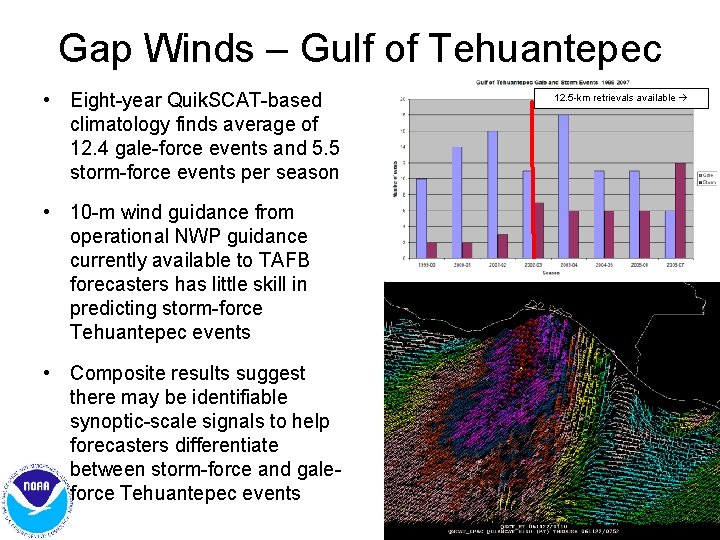
Gap Winds – Gulf of Tehuantepec • Eight-year Quik. SCAT-based climatology finds average of 12. 4 gale-force events and 5. 5 storm-force events per season • 10 -m wind guidance from operational NWP guidance currently available to TAFB forecasters has little skill in predicting storm-force Tehuantepec events • Composite results suggest there may be identifiable synoptic-scale signals to help forecasters differentiate between storm-force and galeforce Tehuantepec events 12. 5 -km retrievals available
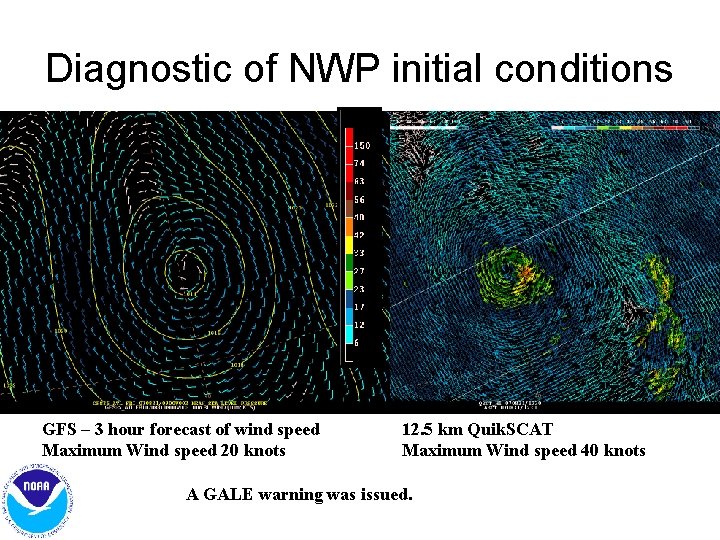
Diagnostic of NWP initial conditions kts GFS – 3 hour forecast of wind speed Maximum Wind speed 20 knots 12. 5 km Quik. SCAT Maximum Wind speed 40 knots A GALE warning was issued.
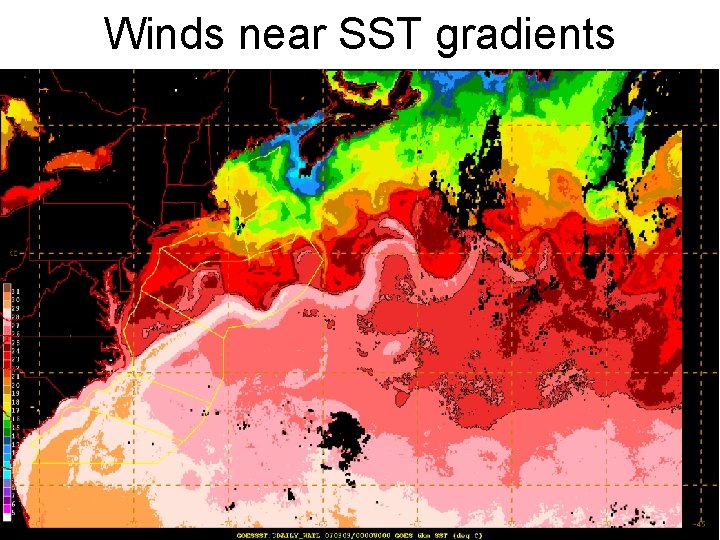
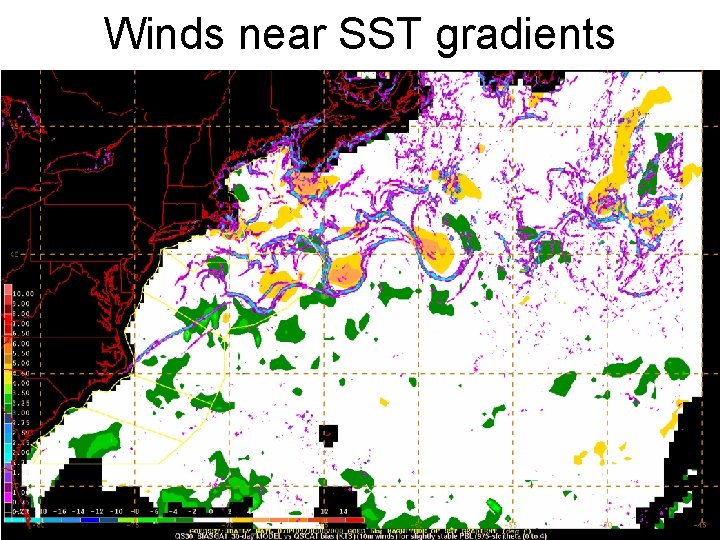
Winds near SST gradients Magnitude SST gradient GOES SST of composite
Winds near SST gradients GFS wind speed bias for marginally stable PBL
OSVW Measurements • Benefit - mainly to offices with large areas of ocean responsibility • Limitations to date – coastal waters, rain, resolution, and retrievals in high winds
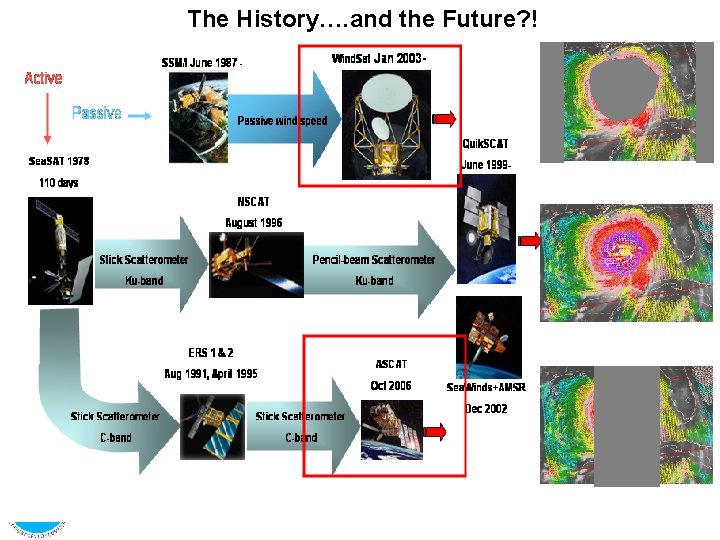
The History…. and the Future? !
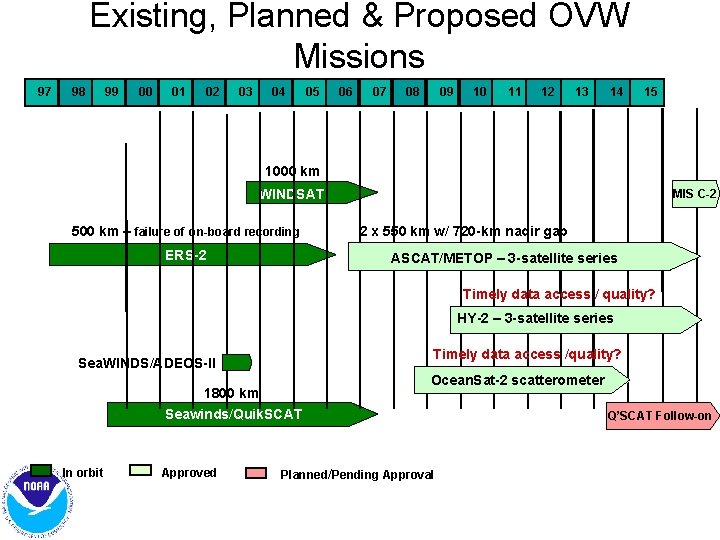
Existing, Planned & Proposed OVW Missions 97 98 99 00 01 02 03 04 05 06 07 08 09 10 11 12 13 14 15 1000 km WINDSAT 500 km – failure of on-board recording ERS-2 MIS C-2 2 x 550 km w/ 720 -km nadir gap ASCAT/METOP – 3 -satellite series AMI/ERS-2 Timely data access / quality? HY-2 – 3 -satellite series Timely data access /quality? Sea. WINDS/ADEOS-II Ocean. Sat-2 scatterometer 1800 km Seawinds/Quik. SCAT In orbit Approved Planned/Pending Approval Q’SCAT Follow-on